
New Delhi, 18th of February 2013
Please find here the link to download the report.
Executive Summary
With the sun gradually setting on the Kyoto Protocol (Phase One), it has become quite apparent that the global response to resource scarcity and climate change is going to be variable and disaggregated. Increasingly, countries and businesses across the globe are adopting various financial mechanisms and policies in order to manage such challenges. However, many such responses are restricted to advanced, developed countries, whereas the effects of climate change and the increasing cost of resources such as fossil fuels are likely to be more severe for developing countries. This dichotomy in response measures needs to be urgently addressed, and this report is an attempt to highlight the benefits of an inclusive growth oriented financial response mechanism with particular focus on India.
In its first chapter the report briefly outlines the relevance of GHG emissions mitigation through in- clusive market based mechanisms in India. With shifting patterns of economic growth and increased global demand volatility companies and investors in emerging economies, such as India, need to rec- ognise the value created through the supply chain of business deliverables by mitigating emissions. Mechanisms which exclude companies that do not meet global benchmarks, whether by way of share- holder advocacy and investment exclusion, or regulatory policies, will have a significant impact on the way that these companies choose to grow.
Low carbon strategies can only be implemented if the emissions landscape and its effects on sustainable growth are clearly defined and understood. The second chapter outlines emissions trends in India in order to map the carbon landscape and set the context for the rest of the discourse. Chapter 3 examines the trends of energy consumption and emissions at a sector specific and firm specific level (within the assessed sector). It is found that firms in the assessed sector (cement) are operating in sub optimal con- ditions, along with a lack of policy frameworks and market based emissions reduction incentives – there are no indigenous market based mechanisms to incentivise and stimulate change.
A firm level case study of one of the bigger private players in the Indian cement sector has revealed that the firm’s financial performance could have been better. At the same time, capacity additions and increased output have caused the total emissions of the company to increase, which is not sufficiently offset by the revenue gains. As a result, the firm’s emissions intensity has been rising consistently for clinker production. However, enhanced use of additives has kept the overall GHG intensity of cement based revenue lower. The average emissions intensity of the company was higher for three years than the sector average for the same period. The high correlation between the firm’s environmental perfor- mance and its financial performance has been highlighted.
The results of chapter 3 are aligned with the philosophy that environmental performance must not be excluded from the range of parameters that are used by investors while choosing a stock, especially a long term investment. This is true since the two concepts are inherently interlinked under the overall aegis of sustainable growth. It highlights the need for developing market based mechanisms to signal investment opportunities based upon carbon efficiency and financial performance, as both tend to complement each other in the medium to long term.
Chapter four concludes that; companies preparing for risk are not risk averse, but rather are risk prepared. The difference is subtle but important. Market based mechanisms which incentivise good performance by channelling investments to firms that respond to risk better than their competitors in a given environment, help investors realise this distinction clearly. For “green” market mechanisms and investment vehicles to be viable and effective, they must efficiently ensure that the transmission mecha- nism works and only performance based, credible signals are relayed to the open markets. This becomes even more important in the context of a developing country due to the nascent capital markets, and urgent need for scaling up sustainability initiatives – both at the firm and policy levels.
Capital generation should not be looked at as the problem. Rather, redirecting existing and planned capital flows from traditional high-carbon to low-emission; resilient investment is the key challenge of financing transition to a low-emission economy. In order to facilitate such transitions, a universally replicable model will be used – a multipronged approach to achieve the above objectives. This would involve creation of innovative financial products based on purely quantitative data, create and publish sector wise and cross sectoral market reports, and facilitate progressive policy advocacy in order to en- able market realisation for its products. It will further seek to replicate the model in other developing countries through a hub and spoke approach to expansion.


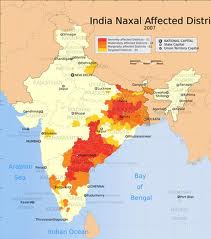
 Assessing the current strategies adopted by the Centre and various affected State Governments to counter the spread of the left wing extremist in more than 200 districts of India, a participant pointed out that the Salva Judum strategy of the government has been one of the main causes of the growth of Naxalism. It was pointed out that no rehabilitation and compensation has been made by the government of Chattisgarh to the people who had lost everything.
 The discussion questioned the “elitist development model” in tribal areas. It was noted that the current development model measured only by GDP growth and encourages corporate interests has destroyed the livelihood of the tribal people as most of their land were taken away for mining and other industrial projects. Both government and corporate had gone and uproot the tribals in their own land without showing any respect for the tribal people, their culture, their traditional knowledge, their civilisational strengths and their land.
 On the political front, it was suggested that there was a need to re-look at the current governmental structures at the district and block levels. A participant suggested that the first priority of the government has to be to restore civil administration in the affected states and districts. A participant noted that change in government structures at the block level could be an effective way to ensure better representation of local people who are better placed to understand local issues and problems. Also, such as gesture could also give a sense of justice to the people. It was also suggested some autonomous areas could be created for the tribal people through that a sense of local control over its own people and resources could be ensured.
 A participant noted that there was a need to re-look at the Salva Judum policy. Another participant pointed out that the traditional police force cannot deal with the Maoist challenge and there was a need for special training. A participant felt that there was a need for appropriate security force to deal with the Maoist problem to minimize collateral damage. Most of the participants felt the army should not be used also against the Maoists.


 Samir Saran