In the News, Water / Climate

Samir Saran in MINT discussion on “Making sense of sustainability”

Mint conclave on the ways to promote sustainability in business
New Delhi, 16th of July 2012
Please find here the original link to the article

New Delhi: Ravi Narain, managing director and chief executive of National Stock Exchange of India Ltd; Rajat Kathuria, economist and in-coming director, Icrier; Sivasubramanian Ramann, executive director of Securities and Exchange Board of India (Sebi); Seema Arora, executive director at CII-ITC Centre of Excellence for Sustainable Development; and Samir Saran, vice-president at Observer Research Foundation, were the panellists who took part in a Mint debate on sustainable development. The panellists discussed the ways to promote sustainability in business. Mint’s deputy managing editor Anil Padmanabhan moderated the discussion. Edited excerpts:

Padmanabhan: Sustainability is not possible without inclusion. Environment has to be seen holistically. Is there a business case for sustainability?

(Left) Ravi Narain, Managing director and CEO, NSE and Seema Arora, Executive director, CIIITC Centre of Excellence. Photos: Pradeep Gaur/Mint

(Left) Ravi Narain, Managing director and CEO, NSE and Seema Arora, Executive director, CIIITC Centre of Excellence. Photos: Pradeep Gaur/Mint

Arora: There is certainly a case for sustainability. As the minister (M. Veerappa Moily) said, it is not that business has to do it for anyone else. Business has to do it for its own survival. And that’s how we advocate it. That’s why mainstreaming sustainability into corporate decision-making. Sustainability here includes social and governance issues. Corporates need to look at it from this lens as well as from long-term perspective. Typically businesses look at it from short-term lens because they are driven by certain rewards they get. For this movement to actually succeed, that reward mechanism has to have a long-term lens. This is what we are trying to do with different stakeholders. Coming back to your question, there is certainly a business case, that is why we see many corporates already doing it. They are creating value for themselves and their stakeholders.

Saran: I am not sure about there being a business case for sustainability because there is no agreement on how we define sustainability. You saw Rio +20, there was no agreement among various nations on what sustainability is. But governance is something that can be measured. We have tried to create a method where we measure energy and emissions. We see these two as a proxy for governance. Any company with good governance will be efficient with its fuel consumption.

Padmanabhan: If we look at the guidelines laid by the (ministry of corporate affairs) ministry, they are more holistic.

Saran: Here again, we have to separate sustainability from social enterprise. If you were to tag your social ventures as corporate social responsibility, CSR, then I think you are confusing the cost of employee with CSR and that’s not right. That’s what most of the companies do. They try to project workforce infrastructure development as giving back to larger society. I think, these two have to be segregated. Up to the 90s, companies were hiding that they were making profit. Because the companies were projecting themselves as not profitable, they didn’t have to do much for others. Post 90s, profit became the mantra and then inclusion didn’t matter. And until 2007-08, it was the mantra. Only in 2009, social inclusion was introduced in the budget by UPA (United Progressive Alliance). The issue is, social transformation and growth are not linked.

From Left to Right: Samir Saran, VP, Observer Research Foundation; Rajat Kathuria, Economist, Icrier and Sivasubramanian Ramann, Executive director, Sebi

From Left to Right: Samir Saran, VP, Observer Research Foundation; Rajat Kathuria, Economist, Icrier and Sivasubramanian Ramann, Executive director, Sebi

Narain: There is a very clear business case, but it is not explicit enough. The so called enlightened businesses see it as a business case, but it is not out there in all our faces. We need to help bring out the cases of successful businesses who managed to see it as a business case and that has the ability to move it forward. There is empirical and anecdotal evidence that companies can get a premium if they are able to demonstrate good governance. It gets fuzzier when you come to non-governance part of sustainability. That’s about markets and investors. The other half is funders. I think the banks need to do a lot more to align their interests with corporates in making a business case.

Padmanabhan: As a regulator, how do you see it?

Ramann: I agree there is a business case in this whole move towards sustainability. If inputs are costed correctly, that is where a company is going to go forward, and make the best of whatever inputs are available and discard the expensive one and take on what is cheaper. We should bring that out more clearly.

Padmanabhan: You mean include the environment and social cost in the price?

Ramann: We are talking about moving ahead, looking clearly ahead at cost, which is real. One good thing that happened was the BSE green index. So, why not put out a simple number on which companies could be graded. That would certainly be good step forward.

Kathuria: One of the classic reasons for market failure has been that the externalities. It is not the inability but the complete dissociation from firms’ point of view to include those costs, those externalities into cost of production, which gives rise to market failure issue. The question is how to get firms to do that. There are two ways, one is voluntarily, or force companies to include those costs and therefore get the desirable results. The world is experimenting with carbon credits and standard for environmental sustainability and jury is still out there. But the problem is market failure and addressing that market failure, culture is also important. Do we have the culture of compliance in our country or not. So getting the firms to do it is a long road ahead. One of the ways in which compliance happens is through a strong institutional structure. Nor are we that sanguine about market any more, that the market is going to lead to the outcomes that are desirable, neither is the world. The way, to get the market to achieve the desirable outcome, is the institution structure that has sound enforcement and the right market incentives.

Padmanabhan: Samir you said growth and social inclusion are delinked at this point of time. Do you think these incentives can be a bridge?

Saran: I am not a believer in carrots. I think sometimes sticks are needed too. Now, I am not saying that should be done. The Greenex is a good way of doing it, you are listing good performers. Then, like Ravi (Narain) mentioned, hopefully we can ensure that funds flow to these performers. What is not happening today is that you are creating institutions and standards, but funds are not necessarily being driven to those performers in that framework. I completely agree with Ravi, unless bankers start backing good performers, good governance and social practices, you are not going to see companies either hurt enough or incentivize enough to change.

Padmanabhan: It is clear that we need incentive structure. Now the big debate is whether you follow stick approach or a carrot approach.

Arora: In our country pressures and dilemmas are completely different at the moment. I don’t think we can say that this is the only route by which we will get the results we really want. Also, culture has to play a major role here in a way we change the behaviour and the way industry responds to certain things. There is certainly a case in providing some kind of incentives for good performances. They could be different types of incentives, market-based incentives, financial incentives or recognitional incentives, we can start and experiment with. The important point is the entire ecosystem at this moment is rewarding corporate performance on quarterly performance. If that is going to be the main metrics, then obviously the ecosystem is not rewarding anything else the corporates do in terms of value creation on sustainability. So, the system has to work together to make that happen. We need to bring consumers on to the table. We need to have mix of incentives and gradually move to disincentives. But we are not mature enough to start immediately with it.

Ravi: Can we ask every institutional investors to put out in public domain what their assessment is for each corporate they have invested in, on their ESG (Environment, Social and Corporate) view, ESG action and sustainability.

Padmanabhan: Raman, as a regulator, can the disclosure be expanded to include these?

Raman: Most certainly. The facts is the initiative of ministry of corporate affairs has given the way forward for regulators like us. And it is something that is probably going to come out soon on how to get companies to make better disclosures. It is active work in progress, be it a listing agreement or any other form, the companies will be bound legally to bring out disclosure with regards to ESG.

Padmanabhan: What can be the collaborative mechanism that can be put in place, which will incentivise whether through carrot or stick, or its combination.

Rajat: It can’t be either carrot or stick approach. It has to be both. What works better is a carrot approach. A stick approach would work well in trying to establish culture of compliance if you have credible enforcement. Unless you are going to be able to enforce standards on whether environment or carbon, the stick approach is going to be difficult. But it can’t be either-or approach. Some good case studies show that carrot approach is a good approach, but a stick, enforcement and penalizing the non compliers is going to create compliance culture in the future.

moulishree.s@livemint.com

Standard
Columns/Op-Eds

Samir responds to the The Hindu “Who governs the high sea?”

by Samir Saran
July 2nd 2012, New Delhi
Please find here the original link to the article.
Please find here the original link to the article, Samir responded to.

At the outset it is misplaced to suggest the original opinion in any way lauded the use of firearms or the actions of the Italian Marines. It expresses apprehension that such incidents are likely to recur as armed response to threats on the high seas is seen as a viable one.

The reference to SUA is entirely misplaced. SUA was enacted pursuant to a U.N. Convention to contain acts of terrorism. The application of SUA requires sanction of the Union government. The Kerala government has for this reason made a statement in the Kerala High Court that it will withdraw the charges of SUA against the Marines.

However, one fact may clear the air further and that is the reality that St. Antony (the vessel from Kerala) is a fishing vessel and Enrica Lexie is a merchant vessel with Military Vessel Protection Detachments deployed to protect against piracy in accordance with U.N. Conventions and other laws.

“Incidents of navigation”, should not be misread as the term is interpreted in accordance with the scheme of UNCLOS, especially Article 94(7) which describes various “incidents of navigation” and includes within its fold instances such as the present one. While Article 97 applies to the High seas, Article 58(2) of UNCLOS pertaining to the EEZ specifically incorporates and extends Article 97 and others to the EEZ.

The flag state jurisdiction under UNCLOS is based on the floating territory principle viz., a ship under the flag of a state is under the protection of that state and is subject to the laws of that state. The Indian Merchant Shipping Act excludes fishing vessels from flying the Indian flag. St. Antony is not registered under the Merchant Shipping Act and was not flying the Indian flag. St. Anthony in fact is registered as a mechanised fishing boat and was authorised to ply only within Indian territorial waters, i.e. within 12 nautical miles. Thus the fact that the incident occurred outside Indian territorial waters is not in dispute. Thus there is absolutely no dispute about the jurisdiction of the flag state.

The reliance on the Lotus case is erroneous. The evolution of international law after the 1927 Lotus case has eluded the authors and UNCLOS, 1982 specifically derogated from the principles laid down in the Lotus case and gives exclusive jurisdiction to the flag state (Italy).

Italy is on thin ground on the high seas

Please find here the original link to the article.

Samir Saran and Samya Chatterjee have argued in their article “Who governs the high seas?” (June 26) that India is wrong in prosecuting the two Italian marines aboard the tanker Enrica Lexie for shooting two Indian fishermen. Italy’s contention — which Saran and Chatterjee have echoed — is that Enrica Lexie was under its flag. Hence, in accordance with the U.N. Convention of Law of Seas (UNCLOS), Italy should try the two marines. India’s position is that St. Anthony, the fishing vessel aboard which the two fishermen were killed, was an Indian vessel; and under Indian law and the Convention for the Suppression of Unlawful Acts of Violence Against the Safety of Maritime Navigation (SUA Convention), India has jurisdiction. India and Italy are signatories to both these conventions. But while Italy needs to show exclusive jurisdiction, India only needs to show that it also has jurisdiction.

Saran and Chatterjee do not discuss a larger question that provides a context to this case. This is the issue of Somali piracy and the danger of putting armed guards on board merchant vessels. In their view, the Italian marines were doing something laudable — controlling Somali piracy. What they overlook is the complaint of Somali fishermen that trigger-happy armed guards have been preventing them from fishing.

The collapse of the Somalian state meant that it was no longer able to protect its waters. To a great extent, the present problem of piracy has its origins in the complete collapse of the fishing industry. This collapse can be clearly linked to illegal fishing in Somali waters by foreign fleets and the dumping of toxic wastes.

For the rest of the world, the collapse gained importance only because the consequence — Somali piracy — threatens the trillion-dollar maritime industry. International piracy caused an estimated loss of about $7 billion in 2011 globally. As against this, the total annual illegal fishing losses worldwide is between $10 billion and $23.5 billion. This is the other “piracy” to which the international community is turning a blind eye.

The trial question

In the Enrica Lexie imbroglio, the controversy is not about the facts of the case, but about the question of who has the right to try the two Italian marines. The Italian side — which Saran and Chatterjee endorse — has invoked UNCLOS to assert its jurisdiction. Article 97 of UNCLOS, which Saran and Chatterjee quote, refers to a “collision or incident arising out of navigation” on the “high seas”. The shooting of Indian fishermen was not a collision; nor was it an incident arising out of navigation. It also did not take place on the high seas. At best it took place in India’s economic zone, which under UNCLOS is not defined as “high seas”. Italy is on thin ground here. Even if UNCLOS were applicable, the question of which is the flag state under UNCLOS remains. This requires a legal examination of where the “incident” occurred — on the Enrica Lexie or on the St. Anthony.

A case similar to the Enrica Lexie one was previously adjudicated by the Permanent Court of International Justice in 1927. In this case, a French steamer, the Lotus, collided with a Turkish vessel, the Boz-Kourt, on the high seas, killing eight of her crew and passengers. Upon the French vessel’s arrival in Istanbul, the French crew was tried by the Turkish authorities. France adopted arguments similar to those used by Italy in the present matter.

Holding against the French, the court, inter alia, observed that:

“What occurs on board a vessel on the high seas must be regarded as if it occurred on the territory of the State whose flag the ship flies. If, therefore, a guilty act committed on the high seas produces its effects on a vessel flying another flag or in foreign territory, the same principles must be applied as if the territories of two different States were concerned, and the conclusion must therefore be drawn that there is no rule of international law prohibiting the State to which the ship on which the effects of the offence have taken place belongs, from regarding the offence as having been committed in its territory and prosecuting, accordingly, the delinquent” (Emphases added).

India has also claimed its jurisdiction under the SUA Convention. Dennis Hollis, who writes a well-known legal blog Opinio Juris, writes that under Article 6 read with 3 of SUA, India can claim jurisdiction — an opinion also endorsed by a number of experts in international maritime law.

What remains of Saran and Chatterjee’s argument is that the Italian marines are in the service of the Italian state and so have “sovereign immunity”. If we accept that Indian courts have jurisdiction over the matter, then we should leave it to the courts to decide on this claim.

Prabir Purkayastha is with the Delhi Science Forum. Rishab Bailey is a lawyer.

Standard
Books / Papers, Water / Climate

Identity and Energy Access in India – Setting contexts for Rio+20

by Samir Saran and Vivan Sharan

Please find here the original article as pdf file (starting from page 14): TERI Energy Security Insights.

In the two decades following the Rio Earth Summit of 1992, India has changed dramatically. It has transformed from a closed economy with empty coffers to one that is now far more integrated with the world and is widely viewed as one of the most important ’emerging economies’ that are shaping the 21st century. This year in June, stakeholders from across the globe will convene in Rio once again to discuss what is destined to be amongst the most important contemporary theme-sustainable development. The Rio+20 Summit, otherwise known as the United Nations Conference on Sustainable Development (UNCSD), will serve as an introspective pause, a chance to review development trajectories, and to realign priorities with reality and ambitions. India will find itself in the uncomfortable position of demanding greater development space and equity as a nation from the developed world, while having to reconcile stark domestic inequities amongst different social groups and income classes.
India’s views on the priorities outlined by the UNCSD were communicated in an official submission sent to the UNCSD Secretariat on 28th October, 2011. According to the document, India views universal access to modern energy1 as “essential for improving the quality of life of the poor”. Yet the nation’s achievements in building capacities to generate or distribute energy in its various forms have been far from remarkable, and indeed far from what is needed to ensure universal access.

India produced around 811 billion units of electricity in 2010-2011,2 with about 300 million people with no access to electricity3 and many more with only notional access. The per capita energy consumption in the country remained around 500 kilograms of oil equivalent, compared with a global average of 1800 (MoEF 2007).

India’s National Electricity Policy, which was notified in 2005, outlined the objective of ensuring “power for all” by 2012, an ambition which still remains far from fulfilled. The fact that only about half of the planned 78,577 megawatts of capacity additions took place over the course of the 11th Five Year Plan,4 exemplified an abject failure in implementation of transformational energy sector projects.

Such failures in implementing capacity-addition programmes, alongside attracting sufficient domestic and foreign private sector investments in the energy sector, are indicative of a larger political failure. The policy deadlocks that result in the lack of progressive reforms on land use and acquisition, foreign capital flows, and environmental norms have created an uncertainty that adversely affects investment decisions. This uncertainty, coupled with bureaucratic hurdles and the threat of disruptive regulatory and tariff policies, has managed to keep both local and international investors away from large scale, capitalintensive energy projects. This economic environment is also keeping away investments into smaller, off-grid solutions, which already suffer from an inherent lack of scalability and from the weak absorptive capacities within local communities.

This capability gap (in execution), due to a variety of reasons, is also why India is unable to commit to timelines and sought development space (read ‘time’) at the most recent international forum. The virtual deadlock at the Durban Climate Change Conference5 is, in part, a result of the inability of India to commit (or even envision) timelines to peak energy emissions, even for achieving global energy poverty thresholds.6 This is the real and hidden story of ‘Emerging India’. Perhaps it is time that this is placed on the table at Rio+20 and beyond, and that Indian positions on mitigation and capping of emissions are understood in this light.

The emphasis on universal access to ‘modern energy’ is an important aspect of the Rio+20 agenda, and it may be useful to understand the Indian landscape. According to 2009-10 Indian National Sample Survey (NSS) data from households, 75 per cent of rural India still relies on traditional energy, such as firewood, for cooking fuel; while over 33 per cent in the same category rely on kerosene for lighting (as a substitute for electricity).7

Over the period 2004-05 to 2009-10, as a result of focused rural electrification programmes such as the Rajiv Gandhi Vidyutikaran Yojna, access to electricity in rural areas did increase by over 10 per cent; and over the same period, access to LPG (for cooking) in urban areas has also shown significant improvement.8

While such numbers indicate that efforts to transform the energy demography have not completely stalled, the dependence on traditional and inefficient forms of fuels has not shown substantial decline. A case in point is the minimal 1.85 per cent decrease in dependence on firewood for cooking across India over the five-year period as shown in Table 1.

Yet these numbers only convey a macro position on energy access. Even cursory examinations of some of the surveys and reports suggest that there are deep and complex socio-economic issues at play that must be addressed and resolved by the policymaking apparatus in order to achieve real progress.

Identity and Access

India is a diverse country, with multiple identities gleaned through the prisms of religion, social groups, regions, language, ethnicity, economic capability, and many more. For the purpose of this paper, it is our intention to examine the state of energy access across social groups and economic classes: the two most prominent identities of modern India.

Even as India aspires to work within a more balanced and stable multilateral framework, and seeks the enhancement of local institutional capacities and capabilities, these alone are unlikely to address the fundamental causes of lack of energy access, and will require substantial levels of organic social transformation through local and national programs. These would need to focus on means of delinking energy access from income class so as to offer a modest quantum of modern energy as a universal right alongside food and education. This may allow certain transformations in the causal relationship that exists today between social groups and income classes (Table 2) and could potentially assist in bridging the socio-economic wedge between marginalized groups and the rest.

On studying the patterns of energy access in Table 3, it is quite apparent that Scheduled Castes (SCs), Scheduled Tribes (STs), and Other Ba ckward Classes (OBCs)10 in rural areas are more reliant on firewood-a traditional cooking fuel, than ‘other’ social groups who increasingly use modern fuels such as LPG. Firewood has low cooking efficiency, and its use has detrimental effects on health (due to the proximate smoke that is generated) and environment (owing to deforestation and greenhouse gas emissions). The average dependency on firewood is between 76 and 88 per cent across the aforementioned disadvantaged groups, compared to close to 66 per cent for all ‘other’ groups11 in rural areas. The data shows (Table 3) that the dependency on firewood has only increased over time12 (between 2004-05 and 2009-10) in rural areas amongst the disadvantaged groups, while it has simultaneously shown a marginal decrease for ‘other’ groups.

Alongside the divergences amongst social groups, the difference in energy access across income groups also becomes instructive. The lowest income class is as reliant on firewood in urban areas as it is in rural areas. The startling fact is that the inequity in the urban areas has become more pronounced over the five-year period for the lowest income group shown in Table 4, with reliance on firewood increasing from around 69 per cent to around 76 per cent, and access to LPG decreasing from 5.8 to 1.83 per cent. Although absolute numbers in the lowest income groups have decreased significantly,13 affordability is still a key challenge.

Asymmetric patterns of access to electricity are also prevalent in the country. The percentage of households still using kerosene for lighting in rural areas averages between 30 to 40 per cent for disadvantaged groups-a striking figure considering that typical kerosene lamps deliver between 1 and 6 lumens per square meter (lux) of useful light, as opposed to typical western standards of 300 lux for basic tasks such as reading (Mills 2003).

A pronounced inequity of access among social groups is also observable across rural-urban areas in Table

5. While approximately 60 per cent of STs have access to electricity in rural areas (lower than the rural average as given in Table 1), around 87 per cent within the same social group have access to electricity in urban areas. The electricity access divide between the SCs, which are a significant social group in terms of urban population (Table 2), and the ‘others’ is around 9 per cent.

It is interesting to note that the level of access to electricity for SCs in urban areas is roughly equivalent to level of access for urban citizens in the MPCE bracket of INR 675 – INR 790 per month (Table 6), which is representative of a level much below even the conservative World Bank extreme poverty threshold (defined at US$ 1.25 a day).

In terms of energy access, the statistics suggest that SCs are pegged at a level of access for income classes below the average income of this social group. The share of kerosene for lighting has reduced significantly amongst the lowest income classes in rural areas over 2004-05 to 2009-10 (Table 6).

Meanwhile this trend is not witnessed in urban areas, where the inequity is starker over the same period with an increase in dependency on this fuel by 16.32 percentage points. Access to electricity for the lowest income class in urban areas has decreased from 62.1 to 44.56 per cent. This mirrors the trends in cooking fuels and is indicative of inherent inequities in the provision of access to modern energy in urban areas, alongside the implications of price rise and inflation.

While rural areas tend to suffer from an overall lack of access to modern energy, poor inhabitants in urban areas experience discriminatory barriers usually based on economic capacity. Such trends would challenge policies in the context of a sustainable development agenda, as India is likely to witness sustained and rapid urbanization in this current decade and beyond.

According to the provisional numbers released by the Census of India last year, 90,986,070 people were added to the urban population of the country,14 more than the number added to the rural population. The pace of movement to cities in India is unprecedented, and is on a scale that, outside of China, is unparalleled; with over 30 per cent of the total population already living in urban agglomerations. Our estimates suggest that around 44.5 per cent of the total decadal increase in urban population was a result of migration.15

Urban centres in India are veritable microcosms of the entire country-with a diverse mix of communities, cultures, and income classes ranging from the marginalized, disadvantaged classes to the expanding middle class-which is the primary driver of consumption and economic growth. Table 7 suggests that the share of OBCs in the overall urban population mix has increased substantially over the previous decade, while the proportions of the rest of the disadvantaged groups has almost remained the same, and ‘others’ have shown a marked decrease.16 The way that the various sections of society interact with each other, and perceive each other’s spaces and priorities would be an essential ingredient in India’s growth story going forward.

Conclusion

The trends highlighted in this paper demonstrate that existing inequities in access to modern energy amongst the lowest income classes and the disadvantaged groups tend to reinforce each other. The causal relationship between income classes and social groups acts as a self-fulfilling spiral, breeding inter-generational infirmities. Our analysis suggests that this is particularly true in urban areas. Given the fact that India will add over 200 million urban citizens over the next twenty years,17 increased policy emphasis must be given to urban areas by creating new ways to allow access to energy, especially for those who cannot afford it. The Rio Earth Summit of 1992 coincided with the beginning of India’s increased engagements with the international community. This current decade is likely to determine whether or not the country will succeed in narrowing income gaps, overcoming socio-economic inequities, and reducing poverty through decisive domestic actions. An economy and country which uses a majority of its scarce resources and limited infrastructure to serve only a minority of its people will find it increasingly hard to deflect arguments which suggest that its elite hide behind its poverty. India’s macro position on equity at international fora such as Rio +20 must be reflected in its domestic resolve to offer energy equitably to its diverse population. The imperatives of creating a ‘green economy’ must only follow and complement such efforts.

References

MoEF (2007) India: addressing energy security and climate change. Available at
http://www.moef.nic.in/divisions/ccd/

Addressing_CC_09-10-07.pdf.

IEA (2010) World Energy Outlook, Paris: International Energy Agency. Mills E (2003) Technical and Economic Performance Analysis of Kerosene Lamps and Alternative Approaches to Illumination in Developing Countries, California: Lawrence Berkley National Laboratory.

(Samir Saran is a Vice President and Vivan Sharan an Associate Fellow at Observer Research Foundation)

Courtesy: Energy Security Insights, TERI (January-March 2012)


1 The International Energy Agency describes modern energy access as “a household having reliable and affordable access to clean cooking facilities, a first connection to electricity and then an increasing level of electricity consumption over time to reach the regional average”. The initial threshold level of electricity for rural households is assumed to be 250 kWh, while urban households are assumed to use 500 kWh per year on average. For more information, see
http://www.iea.org/papers/2011/weo2011_energy_for_all.pdf

2 According to the Central Electricity Authority:
http://www.cea.nic.in/reports/yearly/energy_generation_10_11.pdf

3 The latest figure for the number of people without access to electricity is 272 million. This is calculated from the 66th round of the National Sample Survey.

4 34,462 megawatts were added by the end of FY 2011.

5 The 17th Conference of Parties held in November, 2011, in Durban, South Africa.

6 The 2010 edition of the “World Energy Outlook” published by the International Energy Agency assesses two primary indicators of energy poverty at the household level-the lack of access to electricity and the reliance on the traditional use of biomass for cooking. As is highlighted in this report, India fares badly across both the indicators.

7 Data obtained from ‘India Data Labs’ at the Observer Research Foundation.

8 Throughout the paper we make the assumption that electrification is the closest available proxy for access to electricity and we acknowledge that access to the grid may not necessarily imply access to energy. In this context, we make conservative estimates of the overall lack of access to electricity.

9 The Government of India uses MPCE as proxy for income for households to identify the poor (who tend to have minimal savings).The proxy works well given that expenditure= income – savings. Similarly, we use MPCE throughout this paper to define income classes.

10 To be referred to as “disadvantaged groups” henceforth.

11 2010 Data obtained from ‘India Data Labs’ at the Observer Research Foundation

12 Given that LPG use has increased in rural and urban areas, the simultaneous increase in the use of firewood can also be attributed to the substitution of other low efficiency cooking fuels such as dung cake. It is instructive to note that according to NSS data, the use of dung cake for cooking (all India) has decreased significantly over the discussed five year period amongst SCs and OBCs showing a 3.1 per cent and 5.51 per cent decline in each of the respective social groups.

13 According to NSS data

14 Provisional Population Tools, Census of India
http://censusindia.gov.in/2011census/censusinfodashboard/index.html

15 According to Census 2011, total decadal growth rate of population is 17.64 per cent. Using this conservative benchmark (urban decadal growth rate is 31.8 per cent); the total population increase in urban areas should have equalled 50,471,513, whereas the figure stands at 90,986,071.

16 It is important to note the caveat that the NSS relies on self-reporting of people about their Other Backward Classes (OBC).

17 According to the United Nation’s World Urbanization Prospects, 2009.

Standard
In the News

Samir featured in the Financial Express: “Watch the Green Ticker”

New Delhi, 29th of May 2012
Please find here the link to the original article and the website of g-Trade.

When you are investing in a company next time, just do not go for cash-rich companies. Rather choose the corporates that are ‘green’ efficient. And there is help too, to guide you make this decision. Three months back, Bombay Stock Exchange(BSE) along with g-Trade, a privately held company in India, had come up with a Green Index called Greenex. This is India’s first carbon-efficient live index listing the top 20 companies which are carbon efficient. As of now, only the carbon emission of top 100 BSE companies is assessed by this partnership and the index is created. But the aspirations of Samir Saran, founder and CEO, g-Trade are high. “We are in the process of creating a similar index across BSE 500 companies in the next six months,” he says.

The idea of creating something like Greenex came to Saran while he was studying in Cambridge and working on a project on energy efficiency. “I knew that we needed to reduce carbon emission intensity in our country and corporates will have to do this first. Thus, this was the best way to measure how environmentally efficient companies are and how they can improve themselves,” he says.

Now, the fact sheet: India is fourth largest carbon emitter in the world, behind China, USA and Russia. The European Union put together would be above Russia. Japan is after India. And to add on, Indian corporates (business and industry as a whole) contribute almost two-thirds of carbon emissions, other major contributors are transport, agriculture and waste sectors.

Saran spent 16 years in the energy sector. For a long time, he was working with Reliance Industries in the policy space especially with oil and gas and petrochemical sector. He feels that the corporate behaviour towards climate and environment of top corporates needs to be checked. “The main issue is that we need to manage emissions. Emission efficient and carbon efficient companies will manage the growth of our economy. And investment towards these companies should be encouraged. They should be given priority over companies that are less efficient by investors.” Even the government has committed voluntarily to improve the emission intensity of the country’s economy (GHG emissions/GDP) by 20-25% during 2005-2020.

Usually large companies come out with reports of disclosure of their carbon emissions under Form A of The Companies Act. The Companies (Disclosure of Particulars in the Report of Board of Directors) Rules, 1988 mandates a company to disclose, in its Director’s report, the energy conservation, technology absorption, foreign exchange earnings and outgo.

Form A does not include sectors like retail and supply chain. The government has identified the high energy industries and included it for disclosures by companies. It does not include new industries which have come up.

It also does not include all energy intensive sectors like electric utilities and oil and gas exploration and production firms. Saran says, “To derive a meaningful emission, we have derived our index by giving 50% weight-age to emission intensity and 50% to financial performance.”

Green effect on the balance sheet

Companies that are low on emission intensity (GHG/revenue) also generally perform well on financials—mainly due to their lower energy costs, better operational controls, better resource management, better general sensitivity, and better market image. This is a global trend. “Companies that have less carbon emissions are more efficient and are likely to succeed in the future,” says Saran.

Sample this: IDFC, a financial services company, being least efficient in the low emission intensity group, has underperformed the BSE Sensex by 31% between January 2010 and January 2012. The Green Index does not include big names like Reliance Industries, Oil and Natural Gas Corporation (ONGC), cigarette maker ITC and even IT companies like Wipro and Infosys. However, the names topped in the list are BHEL, GAIL, DLF and L&T.

Companies must realise that there are many benefits to be on the Green Index. Saran says that based on this index, banks would lend to green efficient companies on better interest rates. It would also help the insurance sector in giving pension funds. In the west, insurance funds and pension funds usually invest in green stocks only. This trend could also be followed in India. And in Europe, this kind of an index was developed 11 years ago called FTSE4good. This means that our country still has a lot to catch up!

But, what would make revenues for g-Trade? Saran is clear on this front too. “Some companies want us to create a customised index for them so that they know where can they invest. We also come out with exhaustive reports where we inform lenders and investors that where should they invest in India. This will help in foreign investment in India. We create structured products for big hedge funds etc who want to invest in different countries.”

Let us hope the Indian companies get green rich and realise that they will be incentivised on their efforts to reduce carbon emissions.

Standard
BRICS, Columns/Op-Eds

Article in “Russia & India Report”: Putin 3.0: Creating hedges for the next decade?

Is Putin going to lessen the Russian dependence on stagnant European demand for oil and gas despite the favourable terms of trade and rely on the hard-bargaining China?

May 17th 2012, New Delhi
Please find here the link to the original publication

The Kremlin has recently announced that Vladimir Putin will be skipping the upcoming G8 meeting in the US sighting domestic concerns and will be visiting China on June 5-7 as his first foreign trip since being inaugurated as President. It is clear that Putin views Chinese demand for Russian oil and gas as a hedge against stagnant Western demand, particularly European demand for Russian exports which showed a huge 47% negative year on year variation in 2009 and is unlikely to grow at rates that will sustain the Russian economy for too long. However, China drives a hard bargain and its quest for energy security through import diversification and oil equity means that it will not accommodate for more than a minimum amount of dependence on Russian raw material linkages.

While his predecessor and protégé Dmitry Medvedev repeatedly emphasised the need for Russia to diversify away from its “primitive” focus on the oil and gas sector, Putin seems to be doggedly set on continuing his outlined profit maximisation doctrine by largely relying on the sector to fulfil social spending promises made during his election campaign. Russia recently surpassed Saudi Arabia as the largest producer of crude oil, and holds the world’s largest natural gas reserves.  Approximately 40 percent of the Russian Government’s tax comes from oil and gas related businesses. While Putin has been able to successfully leverage Russia’s natural resource endowments in the past, he is now faced with burgeoning structural problems including huge manufacturing sector inefficiencies, negative demographic trends, deepened socio-economic inequities and populist rebuttals to alleged systemic corruption under his oversight.

The European Union (EU) is Russia’s biggest market and the EU also accounts for around 75 percent of FDI into Russia. According to the European Commission, Russia accounted for 47 percent of overall trade turnover in 2010; a trend which has normalised after the brief disruptions caused by the global financial crisis. However Russia’s competitive advantage with the EU is largely restricted to the trade of fuels and minerals. Even with its massive oil reserves, Russia has lagged behind in the production of petrochemicals and refined oil. While the margins earned on refined oil based products in a globally integrated oil market may not justify expansion of production facilities and there is a distinct competitive advantage in favour of the “Global South” in terms of labour costs and environmental tariffs there are few explanations for the lack of emphasis on developing a profitable export oriented petrochemicals sector in the country. It doesn’t help that the recent socio-political turmoil adds to the disincentives created for any FDI investment flowing into the country.

Indeed Russia exhibits many of the symptoms of the “Dutch Disease”, a term that broadly refers to the deleterious effects of large asymmetric increases in a country’s income, most commonly associated with discovery of natural resources such as crude oil. While there is no consensus about whether the country suffers this affliction and indeed there have been significant per capita income gains as a result of exploitation of raw material wealth, there are real and palpable threats to sustained growth that need to be proactively mitigated by the establishment. A 2007 IMF Working Paper found that some of the exhibited symptoms included a slowdown in the manufacturing sector, an expansion of the services sector and high real wage growth in all sectors. Simultaneously, oil exports have increased by close to 70 percent over the last decade and the value of exports has gone up by around 620 percent during the same time span. Russian crude oil production recently hit an all time high, and Putin is determined to maintain production levels above 10 million barrels per day (about a third of OPEC’s total production) for a “fairly long time”.

In many ways, resource based linkages have guided and defined Russian foreign policy since the disintegration of the Soviet Union. Resources have also dictated Russia’s economic fortunes, which have traditionally fluctuated with the price of crude oil. Crude oil has quadrupled in value since the early 2000s, and at the same time, Russia has transitioned into becoming a Middle Income Economy with an incredible number of superrich. It is interesting to note however, that despite the asymmetric dependence on raw material exports, Russia’s currency has been depreciating. Due to the underinvestment in the manufacturing sector and the overall lack of competitiveness of the domestic goods, import growth has tended to outpace export growth. The current account balance as a percentage of GDP has declined substantially since the mid 2000s and with structural production ceilings being hit in the oil and gas industry, there is uncertainty about where the additional export growth is going to be generated. Putin seems certain that recently announced tax breaks for upstream oil and gas exploration projects and fiscal incentives for M&A activities will help fuel this production growth. Tax breaks have been provided for offshore energy projects with Western companies including Exxon Mobil Corp., Eni SpA and Statoil ASA.  Simultaneously he also plans to raise extra revenues from the resources sector to pacify some of the populist anger that is brewing through increased government spending, in particular by significantly increase extraction tax on gas suppliers.

Putin has an uphill task, to reassure foreign institutional investors of the legitimacy and stability of his political apparatus. In order to achieve competitive advantage in the export of petroleum related products, the Russian Government has ambitious goals to create six regional clusters of world class ethylene (the world’s most widely produced organic compound) production facilities and expects production capacity to reach 11.5 million tonnes per annum by 2030. This projection assumes a fundamental amount of investments and supporting infrastructure capacity building in the form of product pipelines, road and rail links. Distribution and feedstock concerns already plague the industry.

The seemingly irreversible economic meltdown in Europe must act as a trigger to stimulate new ideas and a break out of the traditional resource centric growth mindset in the Kremlin. Developing and emerging countries account for around 50 percent of global GDP in purchasing power parity terms and Russia must look to deepen integration through trade with these markets. China is but one of these and its sino-centric economic startegy may soon be an albatross around its neck. Moreover trade must be on the basis of a diversified basket of products on offer with emphasis on value addition.

The East Siberia-Pacific Ocean (ESPO) oil pipeline which is now operational has enabled Russia to bring oil to its remote eastern coast, from where it supplies to China, Japan and South Korea. The Chinese have been actively lobbying to get all of the oil transported through the ESPO, but Russian oil companies are naturally hesitant as they are unwilling to forgo the higher margins they receive by selling to Western countries. The Russian experience with the hard bargaining Chinese must not colour their prospective engagements with other emerging and developing countries. In the next few decades, global growth will be a function of how such economies in Asia and Africa perform, and in turn, so will Russia’s economic fortunes. Putin would do well to hedge away from dependence on European demand even though terms of trade may be favourable and fall in the comforting squeeze of the Chinese option.

Samir Saran is Vice-President and Vivan Sharan an Associate Fellow at the Observer Research Foundation, New Delhi.

Standard
Water / Climate

India Market and Environment Report (IMER)

Please find here the original link to the g-trade-website. 

Volume 1 of the IMER captures the financial performance and energy use efficiency of the top 100 Indian and Global companies for FY 2011. The report also details in brief, the market and environment performance metrics of 9 sectors of the Indian economy – Financial, Automotive, Machinery and Capital Goods, Pharmaceutical and Biotechnology, Textiles, Apparels and Accessories, Steel, Utilities, Cement and Oil and Gas. Volume 1 is the first in a series and a context setting precursor to sector specific corporate carbon performance reports by gTrade, which will aim to build greater ethical and sustainable investment sensibility in India, to steer businesses and investors towards an efficient market based framework which prices carbon risk appropriately.

gTrade is delighted to announce the launch of Volume 1 of the IMER. To purchase a hard copy now, click here

(Discounted rates are available for bulk orders/institutional buyers)

For the detailed Table of Contents, click here

For a snippet from Volume 1 of the IMER, click here

For institutional/bulk buying, email: reports@g-trade.in

Why you should purchase a copy:

  • Cutting edge business specific energy analytics developed at India’s premier research labs
  • Provides information on the carbon offset potential among the largest corporations in India for CDM and other substitution projects.
  • Provides data points and analyses outlining scope for renewable energy generation.
  • Ideal for businesses interested in profiting from increasing efficiency of operations, production or governance
  • A great tool for investors to immediately identify potentially undervalued stocks relative to sustainability performance
  • An instrument of verification of investment decisions for large institutional investors – both foreign and local,
  • A benchmarking and knowledge building tool – for entities involved in the business of carbon – through global carbon schemes such as CDM
  • An unparalleled learning tool for those looking to understand sectoral efficiency performance landscapes in India, for investment, research, capacity building, energy management and policymaking
Standard
BRICS, In the News

Discussion with Open Magazine on BRICS: “Not just a talk shop”

29th of March, 2012
Please find here the link to the original article.

It may be an idiosyncratic club, but should it therefore be written off? As leaders of BRICS—Brazil, Russia, India, China and South Africa—gather in New Delhi for a summit to prove that their five-member group is something ‘solid’ (a word Indian PM Manmohan Singh has used in an Indo-Pak context), rather than just another talk shop, critics across the world have not been able to hide their derision. The interests of these countries are far too divergent, they mutter, to result in anything that could matter.

For exponents of the idea, however, the five represent not just a fifth of global output, but also a dynamic geo-economic bloc on the ascendant. It owes its name to a 2001 Goldman Sachs report that projected a world economy under BRIC domination (South Africa was admitted only in 2010) within half a century. Today, it is a club more than a clever acronym, and one with an agenda too. “[The group] seeks political dialogue towards a more democratic multipolar order,” says senior Indian bureaucrat Sudhir Vyas, adding that the global power shift currently underway calls for “corresponding transformations in global governance”.

The buzzword at the Delhi summit is cooperation. Says Bipul Chatterjee of Consumer Unity & Trust Society: “These leaders are likely to float the idea of a development bank to be capitalised by BRICS, or perhaps all developing nations, to fund the development aspirations of the poor world.” This aim has its origin in Manmohan Singh’s 2010 suggestion that the world’s surplus savings be funnelled into emerging economies short of capital for investment in infrastructure and other public utility projects. Says Samir Saran, a BRICS expert with the Observer Research Foundation: “The proposed bank could tap these savings by creating sovereign guaranteed debt instruments to leverage more money for these economies.”

The other area of mutual interest is trade. As a booster, of help would be an agreement among the five countries’ central banks to grant one another access to loans in local currencies. Saran says the BRICS platform would “offer the five ‘R’s: rupee, rouble, renminbi, rand and real” for trade payments as part of a test settlement mechanism, “before internationalising these currencies”. The goal here is to reduce dependence on the US dollar as an international means of exchange.

Sceptics do not see much coming of it. Yet, it is worth noting that the five have managed to get this far as a club without letting bilateral bickering get in the way. This in itself is commendable. Perhaps BRICS bashers should wait a while before writing it off.

Standard
BRICS, Columns/Op-Eds

BRICS, Steel, Mortar….and Money – Analysis of the 4th BRICS Summit in New Delhi

by Samir Saran and Vivan Sharan
4th of April 2012
Please find here the original link to the article.

With the Delhi Declaration, BRICS nations, which met recently in the Indian capital, have shown that they have the steel to stand up to traditional power structures, a cohesive vision to jointly respond to development challenges through institutionalisation of concrete mechanisms, and the determination to channel monetary power to strengthen markets, businesses and trade. The Declaration indeed gives insight into the gradual transformation of BRICS, from essentially a response mechanism crafted to address the various development challenges posed by the global financial crisis, to a forward looking entity seeking to enact and enable real global transformation.

The Delhi Declaration extends over 50 paragraphs which are all encompassing in some sense and address many relevant themes for BRICS countries and the developing world at large. The Declaration is significantly more impressive and comprehensive than the 16 paragraph Joint Statement of the BRICS Leaders at the first summit held at Yekaterinburg in 2009 and the sketchy and macro statement of purpose at Sanya last year. The Action Plan within the Delhi Declaration consists of 17 steps which will deepen intra-BRICS engagements. There are three prominent narratives that define the Delhi Declaration – reaffirmation of the UN framework for global governance, disappointment with financial regimes shaped in the mid 20th century and a confidence to tap into economic opportunities that exist within BRICS.

The Delhi Declaration has stamped the intent of BRICS nations to coordinate and collectively respond to global security challenges within appropriate frameworks that give precedence to fundamental principles such as international law, transparency and sovereignty. BRICS members have recognised and re-emphasised the centrality of the UN in dealing with regional tensions and they have explicitly outlined this for specific cases including the Arab-Israeli conflict, the Syrian imbroglio and the contentious Iranian nuclear programme.

The Declaration unambiguously states that “plurilateral initiatives” that go against the fundamental principles outlined earlier, will not be supported by BRICS. The Declaration is clearly against actions such as asymmetric trade protectionism, unilaterally imposed sanctions and taxes imposed on businesses. The EU’s Aviation Tax is one such example from contemporary policymaking. In terms of trade, there is strong emphasis on operating within legal instruments such as the WTO and institutions such as the UNCTAD for furthering the inclusive development efforts through consensus and technical cooperation.

The aftershocks from the financial crisis are still a cause of concern to the BRICS nations. The pre-occupation with Europe has distracted attention from the social transformation programmes and poverty alleviation efforts among BRICS members. The Delhi Declaration has spelt out the “immediate priority” of restoring market confidence and getting global growth back on track. The steps to address such concerns will include attempts to rebalance global savings and consumption, furthering of regulatory and supervisory oversight in the financial markets, increasing the voice of developing and emerging nations in global financial governance and the institutionalisation of financial mechanisms to redirect existing capital to tackle development imperatives.

The BRICS members have therefore announced a working group led by the Finance Ministers of the individual nations, in order to examine the “feasibility and viability” of a BRICS Development Bank. When formed, such an institution will likely be able to shift and contextualise the development discourse within and outside BRICS and therefore is one of the most significant actionable outcomes. It is evident that such a multilateral institution is not meant to compete with existing ones, but rather, to enhance lending and investment to create sustainable development trajectories. Contrary to expectations several high ranking Chinese policymakers, including the Assistant Foreign Minister, Ma Zhaoxu, have supported the idea.

The BRICS members have clearly outlined that the purpose and nature of Bretton Woods Institutions such as the World Bank, must shift from being essentially a mediation instrument to enable North-South cooperation, to one which can actually prioritise “development issues” and overcome the “donor-recipient dichotomy”. They have also called upon the World Bank to mobilize greater directed resources and enable development financing at reduced costs through financial innovations and improved lending practices. Indeed for BRICS, the focus on World Bank and IMF reforms has remained constant through the years, yet the Delhi Declaration articulates these concerns more lucidly than ever before.

Given that intra-BRICS trade has been consistently on the rise over the past decade, BRICS Leaders have endorsed the conclusion of the Master Agreement on Extending Credit Facility in Local Currency under the BRICS Interbank Cooperation Mechanism and the Multilateral Letter of Credit Confirmation Facility Agreement between their respective EXIM/Development Banks. Such steps to mitigate market risks and enable local currency transactions will only add to the existing momentum and build resilience in BRICS economies to global business cycle fluctuations and exchange rate volatilities. Notably, BRICS have also endorsed the market led efforts to set up a BRICS Exchange Alliance between the major stock exchanges of BRICS, which will enable investors to efficiently allocate capital across BRICS economies and invest in the BRICS growth story.

The unity and purpose of BRICS has been the target of speculation and scepticism from various quarters. With the Delhi Declaration, BRICS members have been able to assuage such doubts as they have begun to create a credible hedge against traditional global narratives of security and development. They have simultaneously been able to project that there is resolution within the group to deal with issues that are not only of immediate concern but even those that will need attention in the future. The Delhi Declaration paves the way for the institutionalisation of BRICS cooperation, making BRICS a significant transcontinental and politically united force. In Sanya BRICS spread wide to include South Africa; in Delhi they went deep to include substance.

Samir Saran is Vice-President and Vivan Sharan an Associate Fellow at Observer Research Foundation. The Foundation hosted the BRICS Academic Forum in March this year. 

Standard
BRICS, In the News

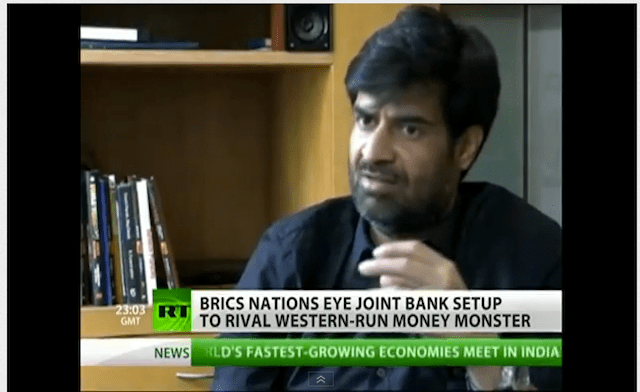
Samir on Russia TV: Interview on BRICS Summit, New Delhi.

http://www.youtube.com/watch?feature=player_embedded&v=wmS11HnNbk0#!

The BRICS countries’ leaders are preparing for their annual meeting. These countries make up 42 percent of the world’s population and a quarter of its landmass. They are also responsible for 20 percent of the Global GDP and
own a whopping 75 percent of the foreign reserve worldwide. In these tough times for world economics these countries are trying to find a solution for the situation.

Standard