Columns/Op-Eds, Non-Traditional Security, Politics / Globalisation

Column in The Economic Times: When the US dismembered Pakistan, 2009

by Samir Saran
February 27,2009
in: The Economic Times

The formal capitulation of the Pakistani government to the Taliban and the ‘liberation’ of the Swat valley evoked divided responses from within the region and outside. While voices emanating from India are concerned with this dangerous development, the US foreign policy team has predictably hedged its position and has begun testing the ‘Good Taliban-Bad Taliban’ dictum. The division of Pakistan has unfortunately legitimised the rule and role of two institutions in the politics of Pakistan; its religious extremists and its army and can be seen as a consequence of the US engagement with Pakistan post 9/11. To understand this situation and the initial US response, we must deconstruct the ‘war on terror’ policy of the US and analyse one of its key components: the engagement of the US with its ally Gen Pervez Musharraf. This engagement was political as it had the effect of demoralising the democratic presence in Pakistan.

It was also sociological as it redefined the western understanding of Pakistan and altered the space and voice available to the moderates and liberals. This engagement was articulated by the ‘Us vs Them’ foreign policy of the US, a description of the age-old identity discourse between the ‘self’ and the ‘other’. The description of the Muslim as the ‘other’ by the west (‘self’) is an area of historical interest. Much of the discussion establishes the act of describing the Muslims, as a means by which the west (and its media) seeks to define, assimilate and control them and is a result of the urge to create the identity of the ‘other’ through its own interpretative prisms.

This process not only fails to comprehend the ‘other’ in their entirety but diminishes their significance in any engagement. This practice is a political tool that has been consistently deployed in the past. The ‘secular wars’ or colonising endeavours of the western world were represented as a ‘solemn duty’, and as a British parliamentarian of yore put it, as a burden of the white man to civilise the east. The boundaries of this orientalist discussion, post 9/11 have been redefined and comprise of two dominant narratives, that of ‘Islamophobia’ on the one hand and the ‘war on terror’ on the other. Islamophobia arises from a lack of understanding and tolerance of the ‘other’. The ‘war on terror’ rhetoric of the US extends the understanding of the ‘other’ to that of ‘evil’ and justifies violence and war as the preferred means of engagement.

In its effort to punish the ‘evildoers’ (al Qaida), the US needed to depend on a Muslim ‘other’. The Pakistan army and Musharraf became its key ally. Their complicity in supporting global terror networks and the fundamentalist regime in Afghanistan were well known. However, strategic compulsions made it necessary to have them on board. The co-option of a Muslim and a dictator – an ‘other’ twice over – was an interesting challenge for the Bush administration. While it required the administration to discount the evil that Musharraf represented, something it has consistently done in its engagement with Muslim despots and royalty, it had to more importantly sell this unholy alliance to its own people, who were reeling under the ferocity of the 9/11 attacks.

Ironically, it was the military credentials of Musharraf that helped the US to achieve this. It was perhaps the only institution in the Islamic state that could be understood by the west from within the “irrational religiosity” the country was imagined to be. The development of the ‘western’ identity for Musharraf involved constructing him as a ‘moderate Muslim’ who shared the aspirations and virtues of the west (‘self’) and thereafter, justifying support for his dictatorial credentials. Co-option was achieved by projecting desirable qualities readily understood as virtues by the US citizens as attributes of Musharraf. Articles in newspapers across the political spectrum constructed the identity of Musharraf as a moderate, secular and progressive leader with zero tolerance for terrorism. Images of Musharraf lovingly playing with his pet dog struck a chord with western audiences.

Alongside this aggrandisement of the dictator, Pakistan, its civil society, their social and religious practices were subject to reductive portrayal by the western media. The description of the political and religious elements of Pakistan society was constructed around terms like corrupt, weak, fanatics, violent and backward. Their protests were irrational and did not deserve considered response. Many times anti-US demonstrations in Pakistan were presented as expressions of religious extremism and barbarism that pervaded the Pakistani society and what the good General was fighting against. The army rule was thus projected as an important component of Pakistan’s stability and Musharraf as the saviour leading his people towards modernity and peace.

By doing so, a dictator with strong extreme Islamist credentials – the stereotypical ‘other’ – was now imagined as the western ‘self’ while his countrymen, including the moderate and liberal citizens, were reduced to an irrationality whose voices and rights could be ignored. This denial of space and voice to the democratic forces allowed the spectacular rise of the Taliban, who now claim to speak for the ‘other’ who do not wear the uniform.

Standard
Columns/Op-Eds, Water / Climate

Column in The Financial Express: Climate’s Holy Trinity, 2010

by Samir Saran
May 13, 2010
in: The Financial Express

Over the last decade, climate narratives have been shaping social, political and economic beliefs—resulting in climate ideologies spread not dissimilar to religion. Like most religions, these frameworks have their share of rigidities, with each having discovered the ‘chosen path’ that offers a righteous response and lacks reflexivity. Interestingly a ruling by a UK court in November 2009 drew parallels between an individual’s views on climate change to his religious and philosophical beliefs.

The challenge of arriving at a common understanding of climate change and a common response to it is, therefore, akin to discovering a common religion for humanity. If climate is a religion, its holy script is dominated by the description of the holy trinity of finance, technology and equity. Equity remains in the realm of the spiritual; and concrete proposals towards a world that shares prosperity are confined to classrooms and social scientists even as the economists and technologists work to carve the new world.

Nonetheless, responses from each nation or a grouping seek to address these three central features in their arguments. The EU, for instance, believes that the European Trading Scheme and a carbon price would curtail emissions and serve the purpose of equity by redistributing capital through flow of funds from the developed world to the emerging and developing economies. The flaw with this is that the redistribution of wealth is only among entities located in different geographies with complex ownerships that could put the IPL team structures to shame. Critics portray this as a transaction among elites and the cost of adaptation, poverty alleviation and other development challenges remain at the periphery. And this is where the conflict lies, in the belief system of the EU and the imagination of its populace that it is the liberal market framework that offers the most efficient mechanism for redistributing wealth, historical evidence notwithstanding. The framework for allotting emission allowances and the trading of these alongside external carbon credits would need serious overhaul even if they were to have a nominal impact. Perhaps the proposal to auction EUA post 2013 would also enable national governments in the EU to commit some of the proceeds towards the adaptation challenges, state of their economies permitting.

The emerging and developing economies, however, make the case for direct fund transfers into their own treasuries that have historically (in most cases) been shown as incompetent in delivering development and governance to the millions they seek to serve. Do they have capacities to make use of the large cash transfers they so seek? And would they be better served in incentivising regulated markets and evolving state-centric capitalist frameworks for the same purpose? The cause of equity would be served only if the emerging world is able to receive funds from the complex maze of overseas funding mechanism and then enhance internal efficiency of delivery arrangements.

Technology continues to vex the global debate on climate and perhaps is the real non-negotiable, if global agreements and accords that emerge from climate conventions and summits are the frame for analysis. Over the last two decades, the language in these international documents has remained ambiguous on technology and the only certainty is that equity as an argument is not compelling for ceding intellectual property for the developed world. Pronouncements from President Obama and policies and legislations in the UK and EU clearly position green technology and high-tech industries as the basis for re-industrialisation as well as economic revival. The lavish incentive packages for low carbon business and research and the sheer subordination of policy making to corporate interests in this sector demonstrate the desire of the OECD economies to lead the race to the top in this low carbon game. The odds would have truly been stacked in their favour but for the economic meltdown.

The institutes of higher education, research and development in the developed world continue to lend them a distinct edge. They also benefit from a steady stream of the brightest minds from Asia, Latin America and Africa, who after acquiring basic education assist in furthering the research in these institutes for want of similar professional opportunities at home. Thus, even in this post-colonial world, the West continues to benefit from the resource provisions of its former colonies. Thus large pool of human talent backed by unmatched funding assists these countries to incubate innovation and invention, the two pillars of the new economy.

Much of the developing world is still caught up in the semantics surrounding technology transfer. For its sake, it must resist the temptation of being lured into conditional (indirectly priced) technology handouts and post-its-prime technology transfers. It must also realise, as the Chinese have come to realise recently that intellectual property vis-à-vis climate is not a rigid defined product but is more about tacit human knowledge. The centrality of human resources needs to be over-emphasised here. In the last 5 years, Chinese efforts to attract overseas Chinese back to its industrial and research institutes have gained momentum. Through landmark programmes such as the ‘Thousand talents programme’ it is rightly pricing and attracting human intellect located overseas.

It is also determined to tap into the Chinese diasporas that are part of the research and technology industry. Their policy initiative ‘Chinese serving China’ seeks to reverse the traditional flow of knowledge to western shores. The results of these initiatives are bearing fruit and there are reports that tens of thousands of non-resident Chinese have returned home; the process no doubt aided by the financial crisis and shortage of research funding in the US and EU. But the key learning here is that the Chinese are pricing the human capital right and offering salaries far in excess of their business as usual salary structures. They, unlike India, have realised that human resource is at the core of the IPR chain and they are now unwilling to reduce talent and merit to a UGC prescribed salary handout that India seeks to attract and retain talent with. A recent management reports has cautioned that US hegemony in scientific innovation can no longer be taken for granted. China will be investing over half a trillion dollars on green technology research in the next decade and furthermore has committed to deploy 2.5% of their GDP annually by 2012 towards R&D in line with the OECD levels. As a part of the economic stimulus China deployed $221 bn towards the green economy as against $112 bn by the US. Though much of this was for rail transport and water infrastructure, significant efficiency innovations and applications were in the mix as well.

India is committing to increase its outlay for research and is looking to be at par with OECD standards in a decade. However, outlays alone would not help. The systems that feed into the research agenda would need to be overhauled as well. Both China and India would need to improve the quality and spread of education, health of the population, social indicators and infrastructure will all need to be best in class if the environment for innovation needs to be created. There is great equity in this endeavour. Else we can live the dictum that constraint incubates innovation and hope for the ‘Slumdog Millionaires’.

Please find here the link to the original page.

Standard
BRICS, In the News, Politics / Globalisation

In Economic Crisis, Conference Points to New Needs in Global Governance and Redistribution of Wealth

March 15, 2009
Brown University, RI, USA

Link of the video of Samir Saran speaking at the event (video II, 4.09 min onwards)

In the runup to the economic crisis meeting of the Group of 20 nations in April, a major international conference at the Watson Institute last week looked into global governance issues hindering the search for solutions, as well as ways in which a fundamental restructuring of the world system may in fact occur. The event, “Regional Powers, New Developmental States, and Global Governance: BRICSA in the New World Order,” was co-sponsored with the University of Wisconsin Law School. It focused on the role of the newly emergent regional and continental powers of Brazil, Russia, India, China and South Africa in this time of economic crisis, highlighting the risks and opportunities they face.

In addition to global governance reform, themes emerging from the two-day meeting also included a move toward redistribution of wealth – with a new emphasis in such countries as China and India on solving internal inequalities while refocusing on domestic growth. On governance, Nehru University Professor Bhupinder Chimni, a visiting professor at the Institute, said: “The way forward is for countries like India, in alliance with the BRICSA countries, to frame and articulate an alternative discourse on the future of global governance relying on its own experiences – pre-colonial, colonial, and post colonial. It should not simply react to Western proposals.” On the redistribution of wealth, Former Austrian Chancellor and Institute Visiting Professor Alfred Gusenbauer said: “If you want to have a recovery of the world economy, it only can work if there is a redistribution of wealth.”

Short videos below expand capture these two themes. Speakers in the videos include:
• “Conference Report I: Global Governance in an Economic Crisis”: Nehru University Professor Bhupinder Chimni, a visiting professor at the Institute; South African High Court Judge Dennis Martin Davis, a visiting professor at the Institute; and Watson Institute Professors David Kennedy ’75 and Barbara Stallings.
• “Conference Report II: Risks and Solutions in an Economic Crisis”: Universidade de São Paulo Professor Glauco Arbix; Former Austrian Chancellor and Institute Visiting Professor Alfred Gusenbauer; Indiana University Assistant Professor Ho-fung Hung; Observer Research Foundation Vice President Samir Saran; and attorney Leopold Specht, a visiting fellow at the Institute.

A summer institute at Watson on “Law, Social Thought and Global Governance,” organized under the new Brown International Advanced Research Institutes (BIARI) program, will explore these issues further as it convenes scholars from around the world for two weeks in June.

An in-depth report and video of the BRICSA conference will be posted in coming weeks.

Standard
In the News, Water / Climate

Energy News Monitor: Climate Change and Human Security: Building a Framework for Action

by Samir Saran
April 2011

’Climate and security’ is a narrative with multiple layers and irresolvable complexities. At the very core, it continues to remain a western narrative on a looming and enduring eastern reality. This very comprehension of climate and security lends to discussions an externality that both hemispheres find hard to reconcile. But before we discuss this inherent paradox within ’climate security’-a term used to broadly describe situations, discussions, and elements that constitute security within and resulting from climate discourse and global climate action (modest at best), it may be useful to shape the boundaries of what be the core tendencies, trends, and impulses that define it.

The use of the terms ’climate’ and ’security’ in popular literature conjures up images of apocalyptic storms, landslides, extreme weather conditions, deluge, rising sea levels, melting glaciers, droughts, floods, cyclones, and similar weather phenomena that will ravage countrysides, inflict loss of life and property on an unimaginable scale, and result in mass exodus of populations. Be it the Hadley Centre Report that feeds this imagery through a more scientific and nuanced approach (Department of Energy and Climate Change) or the Stern Review that deploys this description to urge action by the developed and developing worlds (Stern 2007), the correlation between climate and such threats is unmistakable. This continues to be the defining imagination of security within the climate debate-hotly contested in terms of scale, size, and timelines. Images of death and destruction remain the central argument in the arsenal of a section of the political class, both in the West and East, who are vociferously urging action, incentives, and commitments around green technology, carbon trade, and innovation.

The success of the approach of linking climate action to impending apocalypse is debatable. Also at doubt is its ability to elicit appropriate response from policymakers and institutions. Deploying images of death and destruction within the climate debate, some argue, is ’climate pornography.’ It is forcefully stating the obvious, and as some would argue, also the inevitable (Ereaut, Gill, and Segnit 2006).The semantics of this argument are clearly built on the ’fear for life’ and ’fear of the future’, and seek to compel political action on this basis by gaining support in the larger public sphere.

This approach seemed to have helped create a surge in the constituency of those seeking climate action, particularly in the Western countries. This has also resonated among a specific constituency in the emerging nations, prior to the Conference of Parties at Copenhagen last year. However, it has been unable to stem the disenchantment of the larger public from matters of climate, and ’climate fatigue’ is setting in. As per a 26-country survey conducted by GlobeScan, concern for climate change is dwindling both in Europe and North America (GlobeScan 2010).

According to the survey, support to climate efforts in the UK fell from 59% to 43%, and in Germany from 61% to 47%. This narrative was also unsuccessful in appealing to large constituencies in emerging countries and the developing world. This was a result of poor communication, hypocrisy, and inherent dichotomy in the construction of the debate. This predominantly western narrative on climate security describes the outcomes (floods, cyclones, and so on) through a matrix of predictive dates and probabilistic scenarios. This was an instance of science attempting to steer policy that, as some argue, failed. Science is comfortable with probability and percentages, but people are not.

Communications on the matter often sounded weak and convoluted and the messages lacked clarity. They also lacked a central appeal, but more importantly, they failed to offer a response to the challenge. This was perhaps the biggest failure in the communication of the imminent dangers of global inaction. The articulation lacked considered and feasible global responses without which communications were read as scare mongering or where there were indications of certain action (read technology as the saviour) it was read as lobbying by vested interests. Global inattentiveness to ’climate and security’, in some sense, is as much about a failure to communicate, as it is about political differences and high economic stakes.

However, the hypocrisy within the narrative surfaces when this debate seeks placing the occurrence of extreme climate events and disasters into the future and when action is urged for the benefit of future generations (such as the US President Barack Obama’s exhortation to act on climate change or risk ’… consigning future generations to an irreversible catastrophe’).1 If, as climate science suggests, man-made emissions are able to subvert some of earth’s natural systems, then why are the current extreme events also not a result of the last two centuries of industrialization and rampant mercantile capitalist production? To many, the answer is simple yet hypocritical. The rich would have to foot the bill today for having squatted and ravaged the limited carbon space available as a common resource for global citizenry.

The impact and solemnity of the climate and security argument would have far greater weight if developed nations were obligated to make good the costs of life and property that are lost in the poorer regions today due to floods, cyclones, hurricanes. Yet while we hear a call for action on pricing carbon (which allows the rich to usurp more carbon space), incentives for technology and securing intellectual property rights, a determined and unequivocal call for damages of past action is missing. Ensuring that the countries with the means to respond to the suffering caused by such climate-related disruptions in poor and emerging countries, are allowed to absolve themselves of any responsibilityy, adds to skepticism, and weakens the most important argument-that of security-for global action.

Calls for global action sound hollow for another reason-the quantum of commitment made by the affluent nations. While the rhetoric of preserving the planet and human life is pitched high, what we see in terms of response is tokenism. To save the planet, the mightiest nations in the world got together at Copenhagen last year and then at Cancun recently, and committed to a paltry $100 billion each year by the year 2020.2 Let us now place this pledged amount against another recent response by the world community.

It is estimated that over $3 trillion was committed by the US, China, EU, and other countries to help the world economy or as some suggest, to ’save a few banks and large corporations’ (Barbier 2010). Three trillion to save the financial system and a 100 billion to save the planet-a fact that will undermine any security discourse within the climate narrative.

The other extremity of the climate-security narrative is less popular, but fast shaping as a significant line of thought. It focuses on elements of human security outside of the ’life and property’ paradigm. This debate places the human right to develop, grow, and aspire for a better life as a primary objective of climate action (Saran 2010). Here, too, the western narrative seeks to focus the discourse on poverty reduction within the objectives of climate action, thereby reducing the aspirations of billions in the emerging world to that of survival and poverty-line existence.

The fact that the industrial economies of the OECD and their high income populations were assisted and subsidized by carbon-intensive fossil fuels is cast aside as an act of ignorance, and the importance of the use of coal and gas in determining the pace at which India and other emerging countries develop is undermined by real but superficial arguments on ethics and shared responsibility. Poverty and growing aspirations are the two imperatives for any political system in emerging economies, and there would be political unrest if the leadership in these nations were to compromise on these.

However, the climate narrative is beginning to exert itself in the development processes of poor countries. Last year, we saw the US EXIM Bank deny a loan to a coal project in South Africa, and dither on a similar proposal for India citing potential emissions as the reason.

If climate positions were to become barriers to trade and finance flows, we could perhaps be discussing the most significant and impending security paradigm for the emerging world. The impact of climate negotiations, and green capitalism that is rearing its head, are some elements that will define climate and security for India and other developing countries.

Let me conclude by posing some queries that policymakers in India and other developing countries will need to respond to. Can we ignore the real threat to life and property from extreme climate events? Can the actions of India reduce this threat? How can we compel the West to vacate carbon space, and cap and reduce lifestyle emissions? How will we be able to allow billions in India and the developing world to aspire and, seek homes, cars, holidays and infrastructure? Should we? Why should the first-time users of electricity in India (nearly 500 million) have to make do with token solar lamps that work for only a few hours? Why should the poorer 80% of the world’s population be made to bear responsibility for expensive climate action going forward? How do we ensure continued access to critical finance and technology required to develop infrastructure, and afford prosperity to millions? How do we carve out a global regime that removes carbon squatters and makes them pay for their historical retention of carbon space? Why should the emerging world support or incubate new technologies, when all major economies seek to place green technologies at the centre of their plans of re-industrialization and manufacturing competitiveness?

Lastly, can we ignore the ’green economy,’ and does it really provide India an opportunity to take a position of leadership in this new world?

These are some of the competing dynamics of the ’climate security’ narrative that we will need to navigate if we are to develop a robust framework that realizes the gravity of the climate and security narrative, and articulates the differentiated needs of the diversely developed regions of the world.

References:
Barbier E B. 2010. A Global Green New Deal: Rethinking the Economic Recovery. Cambridge University Press. 171 pp.
Ereaut, Gill, and Segnit. 2006. Warm Words: How are we telling the climate story and can we tell it better? London: Institute for Public Policy Research.
Department of Energy and Climate. Avoiding Dangerous Climate Change. Met Office, Hadley Centre. Available at http://www.metoffice.gov.uk/publications/brochures/cop14.pdf
GlobeScan. 2010. ’Climate Concerns Decline since Copenhagen Summit: Global Summit.’ [Press Release 2 December 2010]. Available at: http://www.globescan.com/news_archives/cancun_radar/Cancun_climate_release.pdf.
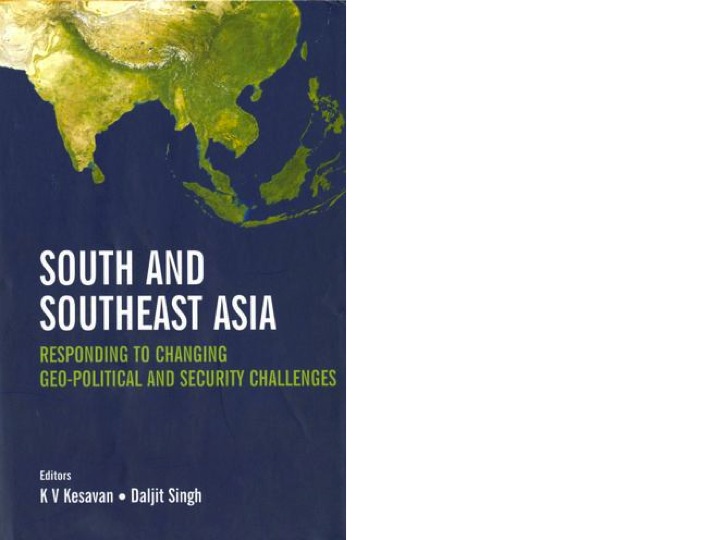
Saran S. 2010. The Globalisation and Climate Change Paradox: Implications for South Asian Security. In South and Southeast Asia: Responding to Changing Geo-Political and Security Challenges, edited by K V Kesavan and D Singh. New Delhi: ORF-Knowledge World. 141-161 pp.
Stern N. 2007. The Economics of Climate Change: The Stern Review. Cambridge, UK: Cambridge University Press.

Notes:
1Barack Obama’s Speech at the United Nations. 22 September 2009. The Sunday Times. Available at http://www.timesonline.co.uk/to1/news/environment/article6844525.ece
2See report on Outcome of the work of the ad hoc working group on further commitments for Annex I parties under the Kyoto Protocol at its fiftieth session. Available at http://unfccc.int/files/meetings/cop_16/application/pdf/cop16_lca.pdf

Original link to Observer Research Foundation website.
Standard
Books / Papers, Water / Climate

Responding to Change: Searching for a Path through the Climate Haze

by Samir Saran
2010
in: Chevening Fellowship – Economics of Climate Change: A global perspective, University of Cambridge

For an emerging economy like India, the response to climate change will be shaped by a number of dynamic factors, complementary and competing at different junctures. The contours of this response will be determined by geopolitical power-play; economic growth; consumer behaviour; poverty and social justice; the influence of incumbent and new businesses; governance and political leadership at the centre and the provinces – and most importantly the ability to attract and generate finances. This paper discusses the influence and interactions of these factors at three distinct levels. First it discusses the global (dis)agreements on climate and some of the boundaries of policymaking. Then the paper discusses the Indian domestic imperatives that are decisively influencing its carbon choices. Finally, it shows that – with the growth in the aspirations and affluence of the Indian middle class – the ‘consumption economy’ will increasingly influence India’s carbon profile.

Here the link to the entire chapter (pdf-file).
For more information on the publication “Chevening Fellowship – Economics of Climate Change: A global perspective”,University of Cambridge, please visit this link.

Standard
In the News, Non-Traditional Security, Politics / Globalisation, Water / Climate

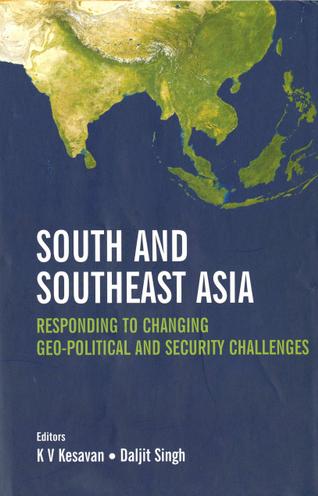
Book review on “South and Southeast Asia”, The Hindu, November 2010

Emerging geo-political and security challenges
by V. Suryanarayan
November 2, 2010

This compendium of 10 essays, presented at an interaction in 2009 among scholars of the Institute of Southeast Asian Studies, Singapore, and the Observer Research Foundation, New Delhi, covers a wide range of subjects related to the political and security trends in South Asia and Southeast Asia.. They include: the role of extra-regional powers and their growing naval presence in the Indian Ocean; the evolving Asian regionalism; India’s ‘Look East’ policy; the political situation in Myanmar; and the non-traditional security challenges to Asian security.

Since the end of World War II, the pattern of international relations in the two regions has undergone a radical transformation. This is particularly true of the role of external powers in Southeast Asia. Though the relative clout of the United States and Japan has declined, the ruling elite of the region would like Washington to maintain a high profile. The growing economic linkages between China and the United States and between India and China have a momentum of their own. However, China’s recent assertive postures in the Indian subcontinent and the South China Sea have created a sense of unease and have even given rise to suspicion about its intentions and objectives.

In South Asia, profound changes are taking place. The nuclearisation of India and Pakistan has added a new dimension to the troubled region. The struggle for democratic rights, the fight for justice by the ethnic minorities, and the secessionist movements, with covert support from external powers, pose grave challenges to the stability of South Asia.

Given the space constraints that preclude coverage of all the essays, only a limited review touching upon a few of the striking contributions is attempted here. In his analytical piece, “Major Powers in South Asia: What is their game?” Dilip Lahiri projects the scenario that is likely to emerge, one that will have profound consequences. Despite their divergent national interests, the U.S., India, Japan, South Korea, and Australia are likely to come together to ensure that the rise of China is non-threatening and does not disturb the peace and stability of the region. Admiral P.S. Das and Vijay Sakuja examine the roles of China and India as growing maritime powers. China’s deepening ties with the member-states of ASEAN and their consequences are highlighted. Equally interesting, the authors pinpoint the strengthening of the links China has established with India’s immediate neighbours — Pakistan, Bangladesh, Myanmar, and Sri Lanka. In this context, India’s ‘Look East’ policy assumes great significance. As Admiral Das points out, “looking East” is no longer an economic jargon; it is descriptive of the totality of India’s relations with Southeast Asia.

STRATEGIC UNEASE

Discussing the major powers vis-à-vis the security concerns of Southeast Asia, Daljit Singh makes the point that, while China’s image and standing in the region has “improved a great deal”, there is also a “strategic unease” about China on account of its “[huge] size, proximity, growing power, and uncertainty about its long-term intentions.” China’s bilateral relations are driven solely by considerations of realpolitik and strategic interests. Witness Beijing’s continuing support to the military regime in Myanmar, its military aid to Sri Lanka during the fourth Eelam War, and its covert support to Pakistan’s nuclear programme.

From India’s point of view, there is concern over a perceived shift in China’s position vis-à-vis Jammu and Kashmir. Hitherto, it had recognised India’s de facto control of J&K, while, at the same time, advocating a peaceful resolution of the contentious issues with Pakistan through bilateral negotiations. The recent denial of visa by China to Lieutenant General B.S. Jaswal is held out as a pointer to this subtle shift. Many scholars are so blind in their admiration for China and its remarkable achievements that they do not want to see any signal or be reminded of any historical evidence that shows it in a negative light. Such an approach will be detrimental to the interests of India. The essays — contributed among others by diplomats, naval officers and academics — are scholarly, absorbing and stimulating.

Link to original publication.

Standard
Books / Papers, Water / Climate

The Globalisation and Climate Change Paradox: Implications for South Asian Security

by Samir Saran
2010
in: “South and Southeast Asia: Responding to Changing Geo-Political and Security Challenges”

The essays in this volume provide the Indian and Southeast Asian perspectives on some of the geopolitical and security challenges facing South and Southeast Asia. These include the interests and role of major outside powers in the two regions and the relations between these powers; the trends in Asian regionalism, especially the ASEAN-led regionalism and India’s place in it; the growing maritime and naval interests of the two rising Asian powers, China and India; and the impact of climate change. Also addressed are two specific issues of great potential importance for the security calculus of the two regions: the South China Sea and Myanmar.

Here the link to the entire chapter (pdf-file).
For more information on the book “South and Southeast Asia”, please visit the publisher’s website.
Link to book review in “The Hindu”, November 2, 2010.

Standard
Columns/Op-Eds, Water / Climate

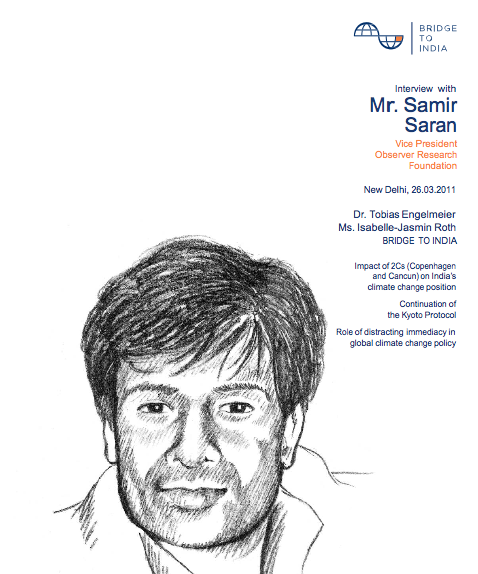
Interview: India blinked at the Cancun Climate Summit.


The Indian negotiating team, led by Environment Minister Jairam Ramesh shifted India’s position at the Cancun Conference on climate change, said Samir Saran, Vice President, Observer Research Foundation, in an interview to a website, bridgetoindia.com.

Asked whether India blinked at Cancun and the Indian Minister significantly shifted from India’s long-standing position that the developed economies take full responsibility for climate change by indicating that India would also take on binding emission targets, Samir Saran said “Yes, India blinked. Regrettably! I may add. Given that India has undertaken to contribute to the effort to limit temperature rise to a two-degree- limit, it may have opened itself to international pressure that will seek to both curb its’ emissions or direct its development pattern”.

He said this was not only unfair, given that Indians emit only a fraction of what the citizens of developed countries do, but it seemed part of a larger effort to weaken the obligations and commitments that the Annex 1 countries had undertaken after two decades of global negotiations and concerted efforts by the least developed countries and India. Samir Saran said the Minister and his team have not only shifted India’s negotiating position but have arguably undone the efforts of the past in an instant. “I hope we can salvage it,” he added.

He said the entire international climate debate is actually about national interests and power politics. “Take China, for example, now that they have built an industry that can export technology and the products needed for low carbon growth, such as renewable energies, there are signs that they are ready to support a more universal emission reduction regime. And perhaps that prompted India to play the part it did.. the fear of being alone… which, I believe, is greatly overstated. Perhaps there is no harm in being alone once in a while,” he said.

“But sadly, while we all understand that climate change is a great and grave risk and that there is an urgent need to reduce emissions by those best able to, international negotiations today remain hostage to power politics and national interest increasingly understood by the economic gains for respective national businesses,” Samir Saran told the publication.

For complete text of the interview, click here 

Standard
Books / Papers

BRIC – in the new world order: Perspectives from Brazil, China, India and Russia.

by Nandan Unnikrishnan and Samir Saran
Macmillan Publishers India, 2010

Summary
The BRIC countries are today an increasingly cohesive group of nations with a common vision and shared commitment to collaborate and shape a more equitable and prosperous world order. All four nations are leading economies, large markets and emerging knowledge creators; their interactions within the grouping, and with other nations, hold promise for their own people and for other developing countries. The BRIC country coordination at multilateral fora, such as the G-20, is helping to reorient the existing market economy framework, by stressing the need for greater transparency and accountability of the global financial systems. BRIC’s greater role in the IMF and World Bank is likely to ensure more support and assistance for developing nations, as well as keep surveillance of Western financial practices. While the four are yet to evolve a common position on Climate Change and WTO (Russia is still not a member), BRIC countries will certainly be crucial to any agreement on these vital issues. While there are expectations from this grouping on geo-political matters and international disputes, for the moment, these countries have decided to focus on finance, energy, trade, technology and multilateral pluralism.

This edited volume is the outcome of an event hosted by the Observer Research Foundation (ORF) with the support of the Ministry of External Affairs, as a pre-summit discussion to assist in developing the framework for dialogue among BRIC leaders at Yekaterineburg, in June 2009 and consists of interesting thoughts on these subjects by experts from the four countries. ORF, on its part, is the coordinating think-tank and academic efforts among the BRIC countries and has an extensive partner network in China, Russia and Brazil in both government and private channels.

We are richly endowed collectively in terms of natural resources and other factors of production, and are today in a position to sustain our higher growth rates. Combined with our growing middle classes, and the young populations that most of us enjoy, BRIC can hope to be a factor of growth and stability in the world economy for decades to come.

ISBN : 9780230330665,
Rs. 810.00
To purchase the book, please visit Vedamsbook.in

Further material:
Please find here the link to the “New Edition to Parliament Library”, April 2011 (book # 110).
Book review in ‘Security Index: A Russian Journal on International Security’, Volume 17, Issue 3, 2011. “BRICS – Dawn of a new era or business as usual?”

Standard