BRICS, Columns/Op-Eds, In the News, Politics / Globalisation

BRICS needs doses of steroids to prosper

Original link is here

By Samir Saran & Vivan Sharan Source:Global Times
BRICS.jpeg

Illustration: Liu Rui/GT

The political leaders of BRICS member countries are facing pivotal national moments.

Brazilian President Dilma Rousseff is simultaneously navigating her socialist and internationalist moment, after a face-off with the Americans on the NSA spying saga. She has reasserted Brazil’s propositional role in the global order by hosting the ambitious NETmundial – Global Multistakeholder Meeting on the Future of Internet Governance.

Russian President Vladimir Putin’s European misadventures have gotten him embroiled in a controversial international debate on sovereignty, while his country’s economy struggles to overcome structural flaws.

On the back of a decisive popular mandate, the new Indian Prime Minister Narendra Modi faces tough regional challenges, even as he tries to revive industrial output and create jobs.

Chinese President Xi Jinping is in charge of an administration which has courted altercations on various fronts while in search of a new and sustainable model for economic growth.

And recently re-elected South African President Jacob Zuma has to contend with both a weak political mandate and rising socioeconomic inequity, while attempting to reconcile differences with African neighbors.

Each of the BRICS leaders is faced with significant challenges. How useful will coordination and cooperation at the BRICS platform be for each of them? The BRICS platform itself will first need doses of steroids if it is to remain viable.

This past year has been quite unsettling for those interested and invested in BRICS. Economic growth of the member countries has been below par. The external economic environment has not been favorable either.

The promise of BRICS is based on new economic and political opportunities. The group is lean and lithe by design and therefore has the right ingredients to make for a 21st century cooperation and coordination platform. Both these characteristics were on display when the group met in India in 2012, where a number of forward-looking economic and political decisions were made. However, neither critical decision-making nor effective implementation has been on display over the last year. Relating to this, there are five concerns that must be addressed at this year’s BRICS summit.

First of all, the focus of the previous summit was clearly on African issues. The eThekwini Declaration in 2013 focuses on unlocking Africa’s potential, regional integration for Africa’s growth and the New Partnership for Africa’s Development. With the continued moderation of growth rates, the grouping must prioritize domestic economic imperatives and close commercial ties rather than narrowly focus on a single region or use the platform for regional grandstanding.

The second concern follows directly from the first. BRICS members have large stakes in the international system and share the common aspiration of becoming global agenda-setters. Indeed, they must not continue to be passive recipients of rules and standards in vital areas such as global trade and investment.

Third, the new areas of cooperation listed in last year’s declaration outlining areas for immediate collaboration are strikingly vague. As a result of myopic drafting, a rather counter-productive role reversal has taken place. The interactions between non-government stakeholders have started to lag behind inter-governmental interactions.

Governments have limited vocabulary and dynamism compared with the private sector and civil society and intra-BRICS cooperation must be unfettered and creative. An example is the BRICS Exchange Alliance, a market-led initiative to integrate financial trading platforms. Such concrete efforts must be replicated rather than endlessly expand the list of issues to cooperate on for the sake of seeming ambitious.

The fourth concern relates to the veritable silence on BRICS engagements in the world media following the high-profile summit last year. Perception-building must take greater precedence at this summit. This must be aided by the timely dissemination of information on actions such as the setting up of the Contingency Reserve Fund and a BRICS-led development bank.

And finally, perhaps the most critical issue for the five BRICS leaders, who will meet at the sunny shores of Fortaleza, will be practical goal-setting. This will be an exercise in planning and coordination to maintain continuity as well as honing in on objectives for the long term. If there is an opportunity to be seized in cross-leveraging political and economic ties, it will be in the coming years.

Samir Saran is a vice president and Vivan Sharan is an associate fellow at Observer Research Foundation, Delhi. opinion@globaltimes.com.cn

Standard
BRICS, Columns/Op-Eds, In the News, Politics / Globalisation

BRICS of a new world

Opinion, July 12, 2014

Original link is here

Pic 1

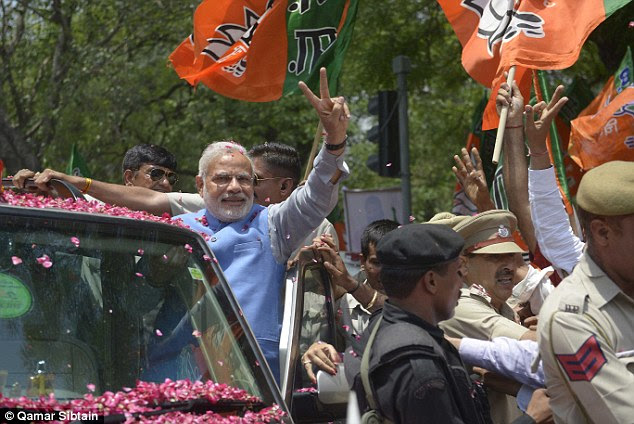
BRICS must mitigate the systemic risks posed by imbalances in the global economic system, perpetuated by Western central banks. (Source: Reuters photo)


The Fortaleza summit should address the undermining of the multilateral trading system.

Prime Minister Narendra Modi’s first major foreign visit, to the BRICS summit in Fortaleza, Brazil, is in the news for a variety of reasons. But there is little discussion on what is at stake and the possible takeaways for BRICS, and particularly India.

This is a crucial moment for the world, faced with a central European face-off, the long tail of the financial crisis, trouble in the western Pacific, a stalemate on trade and environment, new contests in cyberspace and outer space and a new irrationality in the Middle East. BRICS, particularly India, are vulnerable to downward spirals in any of these areas. India must seek to first protect and then promote its interests at this platform. The new prime minister is the right man for this task and there are five key areas he must navigate.

The first is the big-ticket BRICS-led development bank, proposed at the New Delhi summit in 2012. While China has clear ambitions, a worse outcome would be to allow the creation of a Chinese version of the Asian Development Bank. The new bank must follow a one-country-one-vote formula, and allow other states and institutions to invest capital in return for a minority controlling stake and returns commensurate to their investments. BRICS members must walk the talk on the “equity and fairness” they seek from the West. By allowing each BRICS country equal weight in ownership of the bank, they would demonstrably craft a model for other IFIs to emulate.

The second area is global trade and investment. Through the proposed Transatlantic Trade and Investment Partnership (TTIP) and the Trans-Pacific Partnership (TPP), developed economies are seeking to redirect trade and investment flows. They will do so by instituting new rules, standards and tariffs, and by gradually dismantling the multilateral system (WTO) that India and others believe to be essential. BRICS must seek to counter the negative externalities from such mega free trade arrangements (FTAs). While it is expected that BRICS will announce export guarantees and agreements on innovation and banking, the members must also commission academic assessments of the impact of imminent mega FTAs and coping strategies.

Third, BRICS must mitigate the systemic risks posed by the imbalances in the global economic system, perpetuated by the central banks of advanced economies. BRICS leaders are expected to launch a foreign exchange reserve fund of $100 billion as a hedging mechanism. This will resemble the Chiang Mai Initiative, put in place by Asean+3 after the Asian financial crisis of the late 1990s. It is essentially a pooling arrangement, with China contributing $41 billion, Brazil, Russia and India $18 billion, and South Africa $5 billion. Indeed, Modi would do well to suggest that BRICS take a principled position on recent policy decisions by Western central banks, already suspected to be fuelling new asset class bubbles.

Fourth, over the years, political content in the outcome statement has increased dramatically. BRICS states will need to discover common approaches on political developments in different regions. In particular, the stability of southwest Asia is critical to India, and as the US withdraws from Afghanistan, there is bound to be a jostle for political capital. Can BRICS catalyse the RIC (Russia, India and China) into discovering a basis for meaningful cooperation in the region? Here, the bilateral meetings on the sidelines will be vital. Similarly, Russian expectations on collective support for its position on Ukraine will need to be delicately managed.

The fifth area pertains to cyber governance and cybersecurity. There are clear differences in the positions of BRICS members. Russia has passed a bill requiring all technology companies to store personal user data on domestic servers. This closely mirrors developments in China that ensure local data storage and government control. Meanwhile, the Brazilians, who hosted the “Net Mundial”, have positioned themselves alongside the US and EU, favouring a multi-stakeholder framework. India sees a greater “state” role as it seeks to connect its “next billion” to the internet. There is an opportunity to recognise these cleavages, and develop a calibrated approach for discovering common digital ground. That each BRICS member has either the US or EU as its most important economic partner in the digital world may help.

The Fortaleza summit will represent the reboot of BRICS. This is a different world altogether, with the Brazilians seemingly reasserting a “Lulaesque” style of external engagement, the Russians defiant and petulant at the same time, the Chinese testing the geographical limits of their economic and political ambitions, and the South Africans seemingly wedded to their regional aspirations. Prime Minister Modi has the biggest political mandate among his BRICS counterparts, and also the weight of the largest expectations.

The writer is vice president, Observer Research Foundation. Views are personal

Standard
Columns/Op-Eds, In the News, Politics / Globalisation

The #NaMo wave has yet to translate into effective governance

Original link is here

Published: 22:50 GMT, 30 June 2014, MailOnline India, Mail Today

Author and eminent scholar Dan Hahn described successful political communication as something where “some will be attracted to what is said, to the position taken by the orator. Others will be impressed by the orator’s crafting of the speech – the organisation, the word choice, or the how the language is combined.”

He might as well have been describing the #NaMo campaign, where the combination of a message of hope, soft ideology and communication craftsmanship has attracted a substantial number of voters within and outside BJP’s traditional vote bank.

Assessment

The new Indian PM ran an efficient and professional campaign that was arguably even more innovative than the first Obama campaign.

Pic 1
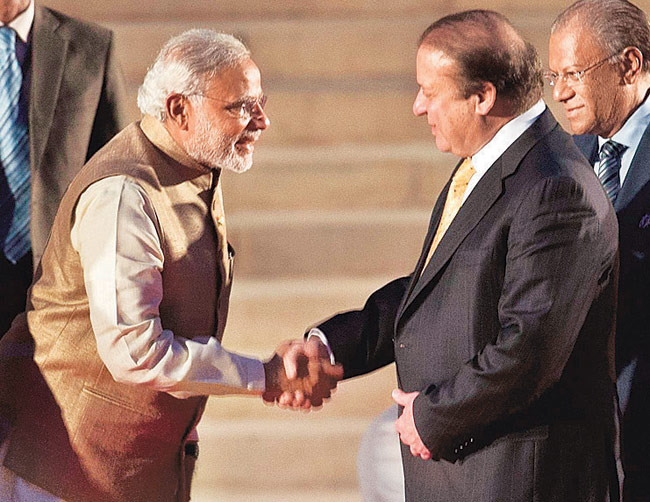
Moving forward: Prime Minister Narendra Modi (left) invited his Pakistani counterpart Nawaz Sharif (right) to his swearing-in ceremony, a move which characterised the forward thinking nature of his election campaign. The momentum has yet to translate into major institutional changes
_____________________________________________________________________________________________________________

However, the million-dollar question is whether PM Modi will be able to institutionalise this communication expertise into a durable feature of his time in office, or if he will struggle, as President Obama has in recent years, to communicate his initiatives and vision to large parts of the citizenry.

The first 30 days offer us a moment to reflect on the communication performance of the PM. It is a mixed bag.
……………………………………………………………………………………………..

More…
R Prasad on… No Modi honeymoon
RAISINA TATTLE: Good news for the Gandhis
The Gopal fiasco was a failure by the Supreme Court, the PM and the President
…………………………………………………………………………………………………

On the upside, we have witnessed deft public positioning, like the invitation extended to South Asian neighbours during his swearing-in ceremony or his visit to Bhutan – each appreciated as significant gestures and adding to his image as a progressive leader.

We have seen the institutionalisation of social media by the Modi Cabinet to reach out to citizens. And we now have #NaMo on twitter in person and in his official persona.

Yet, something is amiss. The PM’s persuasive presence during his campaign is now reduced to clinical digital chatter.

The message, therefore, is incomplete and sometimes unclear. Other voices, some of dissent (rail price hike) and other incongruent, from within and outside his party are muddying the waters very early into his term in office.

The communication code that he had cracked seems to have been misplaced and it is apparent that the campaign team that ably communicated PM aspirant Modi’s vision to many, is either avoiding the Delhi summers or is distracted.

During the election, candidate Modi was ahead of the curve. He was proactive and anticipated issues; he sidestepped curve balls and revelled in responding to provocations.

After the elections, PM Modi has been playing catch up, been largely reactive, and has failed to anticipate imminent challenges.

Vision

Modi has prided himself in being able to empower and use the bureaucracy in Gujarat, and now he hopes to do the same in Delhi.

However, is his communication also going to be defined by the not-so-creative Delhi Durbar? Will slow-moving bureaucratic systems do justice to a man known for his glib oratory skills and deft communication?

Let’s take the swearing-in ceremony as a case in point.

The soon-to-be Indian PM invited Nawaz Sharif and other SAARC leaders (and Mauritius) for his swearing-in ceremony. It was a grand spectacle that did create excitement and was largely appreciated, and yet one was left with a hollow feeling the day after.

Pic 2

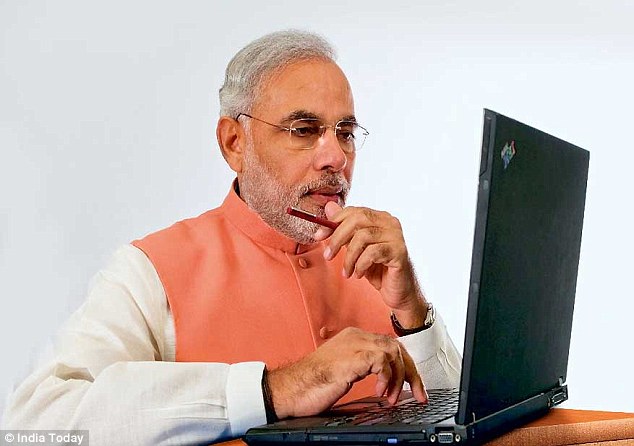
Groundbreaking: The new Indian PM ran an efficient and professional campaign that was arguably even more innovative than the first Obama campaign
________________________________________________________________________________________________________________

We got to know what the MEA felt about it – its official statement offered standard, cut and dry and politically correct fare.

We know what every Pakistan watcher and self-styled foreign policy expert on television and on the op-ed pages thinks about it. But we still do not know what PM Modi thinks about it.

What is this big-picture neighbourhood philosophy that he seems to be crafting? Or is there one? It was his show all the way, and his views and vision are still missing.

More recently, when the rapes and murders took place in Badaun and when the Muslim youth was killed in Pune, a calibrated communication response was required.

While there may have been no need for the PM to react himself, a statement from the Home Minister, showing concern, would have helped assuage the shrill response by civil society and the media.

The government was absent on this count.

PM Modi must realise that his victory is his to own alone, and so is all that goes wrong.

Revitalise

Silence is golden, but there is such a thing as too much silence. These are early days and PM Modi is not really affected. Yet, a crisis could unfold at any point. That is the nature of government, and systems must be in place.

Modi has always faced a hostile media. This has not changed since his election. The honeymoon period may be shorter than anticipated and questions will be asked, and the din will get louder each week.

During the election campaign, his masterstroke was bypassing media and engaging directly with people. He needs to do this while being in office as well.

It will help to explain the big but potentially controversial policies he wants to pursue.

Of course, he can’t do it every week or every day as he did during the campaign.As such he will need to think of a routine, and of a creative mechanism to manage public expectations and the media.

The PRO cannot remain out of bounds for the media, not for the media’s sake but for the sake of the PM and for the policy line he wishes to perpetuate and guard.

Pic 3
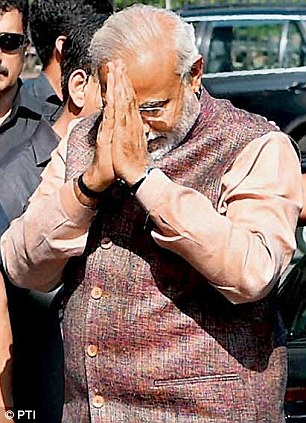
In power: The PM’s persuasive presence during his campaign is now reduced to clinical digital chatter
_________________________________________________________________________________________________________

This is how governments work everywhere. Twitter and other social media platforms are excellent communication tools and the PM has mastered their political potency faster than most Indian politicians.

In government, he needs to build a platform that combines social media with more traditional communications mechanisms.

He needs to disrupt the lethargy of the Lutyens communication machinery by introducing some of his young campaign team into the mix, and he needs to reinvent and revitalise #NaMo in his new role as PM.

It was #NaMo that got him here.

The writer is Vice-President and Senior Fellow at the Observer Research Foundation

Standard
Uncategorized

PM’s Politics of Communication by Samir Saran

PM’s Politics of Communication by Samir Saran

The new Indian PM ran an efficient and professional campaign that was arguably even more innovative than the first Obama campaign.

PM's Politics of Communication by Samir Saran

PM’s Politics of Communication by Samir Saran

Author and eminent scholar Dan Hahn described successful political communication as one where “some will be attracted to what is said, to the position taken by the orator. Others will be impressed by the orator’s crafting of the speech-the organisation, the word choice, or the how the language is combined.” He might as well have been describing the NaMo campaign, where the combination of a message of hope, soft ideology and communication craftsmanship was able to attract a substantial number of voters within and outside BJP’s traditional vote bank.

Assessment

The new Indian PM ran an efficient and professional campaign that was arguably even more innovative than the first Obama campaign. However, the million- dollar question is whether PM Modi will be able to institutionalise this communication expertise into a durable feature of his time in office or would he struggle, like President Obama has in recent years, to be able to communicate his initiatives and vision to large parts of the citizenry.

The first 30 days offer us a moment to reflect on the communication performance of the PM. It is a mixed bag. On the upside, we have witnessed deft public positioning, like the invitation extended to South Asian neighbours during his swearing-in ceremony or his visit to Bhutan, each appreciated as significant gestures and adding to his image as a progressive leader. We have seen the institutionalisation of social media by the Modi Cabinet to reach out to citizens.

And we now have #NaMo on twitter in person and in his official persona.

ADVERTISEMENT

Yet, something is amiss. The PM’s persuasive presence during his campaign is now reduced to clinical digital chatter. The message therefore is incomplete and sometime unclear.

Other voices, some of dissent (rail price hike) and other incongruent, from within and outside his party are muddying the waters very early into his term in office. The communication code that he had cracked seems to have been misplaced and it is apparent that the campaign team that ably communicated PM aspirant Modi’s vision to many, is either avoiding the Delhi summers or is distracted.

During the election, candidate Modi was ahead of the curve. He was proactive and anticipated issues; he sidestepped curve balls and revelled in responding to provocations. After the elections, PM Modi has been playing catch up, been largely reactive and has failed to anticipate imminent challenges.

Vision

Modi has prided himself in being able to empower and use the bureaucracy in Gujarat, and now he hopes to do the same in Delhi. However, is his communication also going to be defined by the not so creative Delhi Durbar? Will slow moving bureaucratic systems do justice to a man known for his glib oratory and deft communication? Let’s take the swearing in ceremony as a case in point. The to be Indian PM invited Nawaz Sharif and other SAARC leaders (and Mauritius) for his swearingin ceremony. It was a grand spectacle that did create excitement and was largely appreciated and yet one was left with a hollow feeling the day after. We got to know what the MEA felt about it-its official statement offered standard, cut and dry and politically correct fare.

We know what every Pakistan watcher and self-styled foreign policy expert on television and on the op-ed pages thinks about it. But we still do not know what PM Modi thinks about it. What is this big-picture neighbourhood philosophy that he seems to be crafting? Or is there one? It was his show all the way, and his views and vision are still missing.

More recently, when the rapes and murders took place in Badaun and when the Muslim youth was killed in Pune, a calibrated communication response was required. While there may have been no need for the PM to react himself, a statement from the Home Minister, showing concern would have helped assuage the shrill response by civil society and the media. The government was absent on this count. PM Modi must realise that his victory is his to own alone, and so is all that goes wrong.

Revitalise

Silence is golden but there is such a thing as too much silence! These are early days and PM Modi is not really affected. Yet, a crisis could unfold at any point. That is the nature of government and systems must be in place. He has always faced a hostile media. This has not changed since his election. The honeymoon period may be shorter than anticipated and questions will be asked and the din will get louder each week.

ADVERTISEMENT

During the election campaign, his masterstroke was bypassing media and engaging directly with people. He needs to do this while being in office as well. It will help to explain the big but potentially controversial policies he wants to pursue. Of course, he can’t do it every week or every day as he did during the campaign. As such he will need to think of a routine, and of a creative mechanism to manage public expectations and the media. The PRO cannot remain out of bounds for the media, not for the media’s sake but for the sake of the PM and for the policy line he wishes to perpetuate and guard. This is how governments work everywhere.

Twitter and other social media platforms are excellent communication tools and the PM has mastered their political potency faster than most Indian politicians.

In government, he needs to build a platform that combines social media with more traditional communications mechanisms. He needs to disrupt the lethargy of the Lutyens communication machinery by introducing some of his young campaign team into the mix and he needs to reinvent and revitalise # NaMo in his new role as PM. It was # NaMo that got him here.

The writer is Vice President & Senior Fellow at the Observer Research Foundation

IndiaToday.in has plenty of useful resources that can help you better understand the coronavirus pandemic and protect yourself. Read our comprehensive guide (with information on how the virus spreads, precautions and symptoms), watch an expert debunk myths, and access our dedicated coronavirus page.
Standard
Columns/Op-Eds, In the News, Politics / Globalisation

Modi must re-establish the power of the Executive at the Centre

PUBLISHED: 21:46 GMT, 4 June 2014, Mail Online India, Mail Today

Original Link is here

article-2648697-1E7918D000000578-35_306x423
Task ahead: Prime Minister will have to clear an economic landscape that has been cluttered with debris from the previous ten years


NaMo 282.0 is in an unenviable position. The astonishing majority he singularly scripted for the BJP and its allies surprised most, including his party and perhaps even himself.

This mandate also disappointed a number of others. The Congress for one must now surely realise that “poverty pornography” and “pseudo-secular” positioning have now reached their sell-by date.

The BJP’s allies will also have seen the writing on the wall – that they will be able to secure a ministerial berth at the centre, but will neither have a veto over the BJP leader nor will their tantrums affect the political trajectory of this government.

And finally, some within the BJP would recognise this mandate as a vote against the factions within the party that were gleefully awaiting a fractured verdict, which would in turn have allowed them some weight over the PM and the PMO.

Reassertion

Nonetheless, this is an unenviable position to be in for the Prime Minister. This huge mandate comes with commensurate expectations.

With little by way of a fail-safe or escape route #NaMo ran the campaign on the promise of better days or “achche din” and that is exactly what most of us will be seeking from him.

The most obvious task before Modi will be to revive India’s growth narrative. This narrative is as central to the millions living in poverty in this country as it is to the entrepreneurial class that is competing with the world.


More…
Technology will help PM Modi achieve many of his objectives and help the BJP govern
RAISINA TATTLE: Rahul visits BJP HQ for Munde


The message to domestic and global audiences has to be both clear and simple; India is back and it is open for business.

To achieve this, the Prime Minister will be required to navigate a complex policy terrain. He will have to clear an economic landscape that has been cluttered with debris from the previous ten years.

And most importantly, he will now have to clear the most important real estate that had been lost to others over the past decade – the policy space of the ‘Executive’.

This real estate, the policy domain of the executive, will need to be reclaimed from a number of encroachers including crony capitalists, regulators, legal institutions, activist groups and the media itself.

A nebulous National Advisory Council that seemed only created to develop unsustainable schemes and undermine the PMO; a revertal to failed “fabian socialist ideology” where profit was pariah and corporates were criminals; a weak central leadership unable to combat and act against corruption; and a central cabinet where every Minister thought of himself or herself as a Prime Minister, resulted in rampant rent-seeking, policy-gaming, and a fragile executive.

#NaMo’s first set of actions will have to be to reassert the primacy of the executive. There are three balancing acts required:

Control

Due to the perverse environment of the past years, citizens and media had goaded, invited and encouraged the intervention of the Judiciary into the policy space.

The institution of last resort became the first port of call for remedying everything that seemed to be going wrong.

Some termed it judicial activism, others commended this decisiveness to protect national interest.

Whatever the description, nature abhors a vacuum and when the executive leadership was weak and feeble, another had to step in.

The new dispensation at the Centre will have to delicately rebalance this role. Instead of deciding the fairness and legality of some of the constitutional challenges of a growing nation, the judiciary has been forced to cross the rubicon and into the policy space reserved for the elected.

#NaMo will have to reverse this trend and make decisions his predecessor could not have, and the judiciary need not have.

His second step would be to limit the power of the new gatekeepers – the regulators. Between 1947 and 1990 India’s economic policy was governed by “License Raj”, which has now transitioned to “Regulator Raj”.

In the financial sector alone, India has at least four different regulators. Policy is now dependent on clearance by bodies originally intended for creating a friendly and/or stable economic condition.

For example, the mandate of the Comptroller and Auditor General of India (CAG) is to audit the expenditure and receipts of the government and not to dictate how it should be spending or allocating resources.

While interventions may have been necessary when an emboldened cabinet was free to make decisions, without a strong executive chaperone, the role of the regulator now must return to the original mandate.

We have reached the ridiculous stage when a regulator will soon decide which fighter jet India should procure and at what price.

The accountant must be consigned to the accounts book.

Recalibration

Finally, #NaMo will also have to wrestle policy decisions out of the hands of the media panels at primetime.

Less than 10% per cent of homes with TV sets, watch news and less than ten per cent of those homes watch English news.

Yet, anchors and media personalities claim to speak for the nation. With the previous dispensation these media maharajas could sway government decisions – forcing the discarding of an ordinance for instance and they could challenge executive decisions, including mundane transfers and postings.


article-2648697-1E71044500000578-425_634x446

The PM’s mandate comes with a long list of development expectations


Babus of all ranks leaked files to the media, disgruntled elements used the media to create controversy and soon the primetime panel was the ‘durbar’ of choice to undermine, scuttle and challenge executive decisions.


This role of recalibration of the media may be the toughest of tasks for the new executive. But the Prime Minister has the mandate.


He also has the experience of managing many of these institutions while he was Chief Minister of Gujarat. And if he can reignite the economy he will also have the authority to wrestle back the executive space.


The writer is senior fellow and vice president at the Observer Research Foundation


Standard
Columns/Op-Eds, In the News, Politics / Globalisation

Why Kejriwal is now India’s Mr 5%

Published: 21:51 GMT, 16 April 2014 , Mail Online India, Mail Today

Original link is here

article-2606258-1D26451200000578-217_306x423
AAP convener Arvind Kejriwal cannot succeed in politics if India thrives

Borrowing the term for former Pakistani President Asif Ali Zardari, India now has its own 5% man – Arvind Kejriwal.

While both are products of abysmal government failure, this is where the similarity ends. Zardari was nicknamed Mr 10% for the percentage of (alleged) kickbacks he received on government deals. In that sense he was a mirror who reflected the reality of the failure of governance in Pakistan.

Kejriwal is Mr 5% for completely different reasons. He is the intersection of hysteria and despair, born of a less than 5% Indian GDP growth rate in recent times.

If the irresponsible economics he so loves is the cause of India’s failures, his popularity and agitprop politics is the effect of that failure. He is the cause and effect – the ultimate symbol of the patriarchy that permeates existing models of development, and the concomitant despair that epitomises the failure of the social contract between India’s citizens and their government.

Discontent

India’s economic growth rate over the last year and more has dipped sharply. With a fast-growing and largely poor population, growth below 5% is punishing. It means that job creation cannot match demand. It means government revenues dry up and even basic public services become difficult to deliver.

Indeed the effects of each percentage point decline in India’s growth are felt the most by those who are at the bottom of the socio-economic pyramid, an effect of two decades of highly skewed growth.

Over the last decade, revenue spending based initiatives of the UPA such as the MNREGA kept the aspirations of those at the bottom of the pyramid on hold. However, such schemes have not delivered real jobs, real skills, real productivity or even a robust form of social security that enhances livelihood prospects.

A burgeoning fiscal deficit has necessitated spending cuts across various arms of the Government, and has resulted in even slower capital creation within the Indian economy. The net effect is now hopelessness of a new kind, one that stems from being denied all that was within reach.

More…
Kejriwal asks people not to call him ‘Bhagauda’… but admits quitting as Delhi CM was ‘a mistake’
Kejriwal and Rajnath court Muslim clerics in UP
WHIPLASH: Kejriwal’s poll campaign is pure theatrics

Fuelled by this sense of loss and vulnerability, high levels of social discontent have given rise to Arvind Kejriwal and his motley crew of social engineers, lawyers, journalists, bankers and others, each a product of the times of 8% plus GDP growth rate, who have capitalised on the anger and restlessness of the masses to create a political platform.

Mr 5% and his party are products of the misrule rather than any organic political impulse. While the failures of the Congress-led UPA, has allowed Kejriwal to find numbers for his rallies, the lack of political leadership and understanding of the cross-cutting social ferment, has become his party’s Achilles heel.

The UPA Government’s falling back upon small, non-executive bodies and individuals that controlled the actions of the Prime Minister’s Office and other functionaries should have provided Kejriwal with a good lesson on the effects of a dissipated leadership.

The National Advisory Council (NAC), set up in 2004 to implement the National Common Minimum Program became the rather nebulous command and control centre of the Government of India.

Failure

The NAC failed miserably on two counts – first it was fiscally irresponsible and did not create sustainable programmes, instead depending on perpetual handouts by the government.

On the other hand, its rights-based agenda, completely ignored the acute enforcement and delivery deficit that plagues India.

Is it any surprise then that fringes of the same cast, who pushed 10 years of failed policies, completely divorced from fiscal responsibility or pragmatism, have now migrated to a political movement that brooks no criticism, stifles any opposition, provides no solutions except blaming everybody else and refuses to take responsibility for its own actions?

While some of Kejriwal’s former mentors are left sulking – Anna Hazare, Aruna Roy and Harsh Mander – others like Yogendra Yadav have found a new lease of life.

Riding on a wave of failure and despair, the Aam Aadmi Party (AAP) has found support without ever feeling the need to articulate an agenda beyond fighting corruption and running a movement where conspiracy theories, slander and an acute persecution complex substitute for any meaningful governance agenda.

Volatility

Riding failure however comes at a price. If the BJP riding the religion wave has to target minorities, the BSP riding the Dalit wave has to target other castes. Riding the failure wave means you have to target success in its entirety, any manifestation of prosperity and wellbeing have to be brought in the crosshairs and shot down – after all misery loves company.

Here Mr 5% plays identity politics of a particularly insidious kind, pitting the ‘haves’ and ‘have nots.’ One need not be a great proponent of psephology or sociology to know that in such stark circumstances, anger and restiveness can very easily be targeted against those who are part of the mainstream economic growth.

If the economic right talks of expanding the “pie”, socialists talk of distributing the “pie” equitably. The response of Kejriwal and his aides is to do neither – they attack ‘pie’ expansion and refuse to give any practical solutions for ‘pie’ distribution. They state the obvious but offer no practical solutions.

How can they? After all AAP and failure have a deeply symbiotic relationship. That Kerjiwal’s 5% revolution is structurally weak, is evident from the weekly swings in its (perceived) popular support. These swings also reflect the current volatility of the Indian economy. All he has done is link his political fortunes inversely to India’s fortunes.

For Kejriwal to succeed, India must fail, for India to succeed, Kejriwal must fail. Should India achieve a 7% growth rate Kejriwal becomes a paragraph, at 8% a footnote and at 9% not even a comma in a history book.

The writer is Senior Fellow at the Observer Research Foundation.

Standard
In the News, Non-Traditional Security

Reframing the Cyber Governance Debate for India

Seminar Magazine, Monthly Symposium, March 2014

Original link is here

THE Snowden affair and the vocal debate on surveillance and cyber espionage have redefined the mostly benign and attractive imagination of the Internet. This medium, which has connected the world like never before, is now witnessing a growing contest among nations. If not addressed and managed, a divisive debate on the control and management of the digital global commons, could not only undermine the huge gains that have accrued from interconnectedness, but might well become a basis for conflict and instability in the real world.

The stakes are high. The idea of the ‘global village’, the efforts to create a global economy and emerging global digital marketplace, are all likely to be impacted if nations and communities do not find it within themselves to agree to norms and laws that would apply to this realm. The process of discovering the ‘rules for the road’ is highly contentious. Not only is an ‘international digital treaty’ unlikely in the near future, the world cannot even agree to who should be negotiating such an arrangement. Yet, this debate must take place with earnestness if common ground is to be discovered at the earliest.

It is crucial to strengthen such a debate, to bring together perspectives from a range of countries and sectors on key facets of the digital discourse – ranging from national priorities and strategies to international treaty frameworks, the role of the private sector to issues such as individual privacy and freedom of expression.

At the outset, we must ponder over some larger issues that are shaping the current global and domestic conversations and inquiries in the digital domain. These can be broadly captured within a few meta-narratives, also key to discerning how a digital India develops, how a vibrant digital society governs itself, and how India must seek to interact with the world in this digital century.

The first narrative is one of development and security. It is a debate on how we create policies and conditions that would allow for the rapid development and spread of cyber infrastructure in the country. On how we could develop tariff and cost regimes that would allow and encourage people to connect to and with it. On the variety of social and economic activities we seek to conduct over the medium and, therefore, the nature and form of regulation and security that must align these networks.

Our decisions on some of these would affect pricing and business models, the rate of penetration and growth of connectivity, our approach to intellectual property rights, and the nature of access available on the Internet to those residing in different economic and social classes. In a number of recent statements and policy pronouncements, the Government of India has indicated its preference to use the digital medium as a means of delivering governance and social services to its citizens. Cash transfers, correspondence and approvals, banking and insurance, health and education services, are all likely to ride on the digital last mile. Therefore, ‘digital access to all’ must be a national imperative.

India’s experience with the telecommunication sector tells us that ‘access’ closely follows ‘price of service’ and proliferation of the Internet and IT infrastructure would be dependent on ‘price points’ that are unprecedented. Connecting ‘another billion’ citizens to the Internet in the coming decade or two would, therefore, be influenced by business models, tariff regimes, content generation and entrepreneurship at the proverbial ‘bottom of the pyramid’.

India’s contemporary experience with Internet services also demonstrates that penetration growth is a function of services and content that is offered to the user. It is an open secret that pirated movies, music and entertainment content are significant drivers of Internet penetration. Alongside, applications that assist farmers and SMEs and offer health services and a variety of education and skills also encourage users to connect to the Internet. Content generation, for the potentially huge Indian user base, offers great opportunity with its unique price specificity.

This discussion invariably throws up some interesting posers. While it would be impossible to capture all of them, a few merit attention. The first must be the fundamental tension between the affordability of service and best in class technology and security. We need to achieve both, as business, governance and social security would ride on this medium. The other would be the approach to content generation and intellectual property rights. While India must seek to encourage low cost content creation that caters to its myriad needs, can this be done while it allows (though weak IPR regimes) pirated material that is so essential to rapid proliferation of the Internet? We must ask how much regulation and legislation is ideal before it encroaches on the fluid nature of the Internet, a feature that makes the medium attractive in the first instance. Finally, given the degree of global interconnectedness, would India be able to make these decisions independent of external pressures and global conventions?

This brings us to the second narrative – India’s engagement with the world on Internet governance and cyber security. This engagement will have a compelling impact on its domestic socio-economic development and on its ability to secure prosperity for its people from the digital marketplace.

India is one of the biggest beneficiaries of the IT and communications revolution with roughly 25% of India’s GDP growth over the past two decades having been created in the IT and ITES sector. There is little doubt that a larger share of India’s future growth will originate from or be dependent on this digital medium. Therefore, India must be at the Internet governance high table when agreement is reached on managing this most vital global commons. Would India shed the reticence, characteristic of its 20th century approach to multilateralism and reimagine itself as part of the ‘global management’ with attendant responsibility and rights? Or will the perceived virtuosity of nonalignment continue to see India lead the global outliers and minority stakeholders in this global governance debate?

How this unfolds will be crucial. Will India be oppositional, critiquing the major powers for their unilateralism and interest based approaches, or will India be propositional and articulate its own interests and negotiate the space and role that it must have, representing as it would (in the days ahead) the largest bloc of Internet users from a largely liberal and vibrantly democratic nation?

It must also be understood that while the world sees a significant role for India at this juncture on Internet governance and security, it will not wait beyond a point. The major powers – US, Russia, China and EU – are all engaging and negotiating the rules for the road with each other and with a larger group of nations. India is a party at some of these conversations and not at others. Trade talks, climate negotiations and other multilateral experiences tell us that ‘democracy’ within global governance is inefficient and overrated. The relative success of TRIPS and FTAs over a global trading arrangement and the predominance of the arms control architecture of the 20th century, devised between the US and Soviet Union, are all indicative of how a future Internet governance arrangement may emerge. Will it be an arrangement shaped by the conversations among the ’Big 3’ (Russia, China and the US), or will it be relatively more inclusive and take into account perspectives from a larger set of countries? Will there be a ‘gridlock’ or will these countries manage to agree to sets of norms that will allow the Internet to remain a global commons? Any which way India would need to find the means and resources to be an effective contributor to any new arrangement and find its place on the high table.

This discussion on global governance leads us to the third meta-narrative that engages most thinkers and practitioners today – who should engage on the subject and with whom? Unlike arms control treaties such as SALT and the NPT, trade treaties such as GATT and the WTO, or international treaties in force or being negotiated such as the space code and laws of the seas, the Internet involves and affects each one of us individually more than it does states. Each one of us is a contributor and beneficiary, and each one of our actions has the ability to influence the entire cyber sphere.

Therefore, the central question that arises is whether the ‘nation state’ is the most inclusive and efficient interlocutor on Internet governance and cyber security? This leads to discussions on the tension between multi-stakeholderism (the participation of individuals, academics, citizen groups and non-governmental organizations in the debate) against multilateralism (a largely state to state debate that characterized the architecture of the 20th century). Can they coexist? Can they be aligned constructively? And if so, how?

For instance, should a nation state conduct an internal debate within itself, create a domestic consensus, and (only) then represent this multi-stakeholder proposition at the global forums? Alternatively, should various stakeholders communicate with each other across national boundaries and at international arenas? The former is somewhat more ordered while the latter is far more cumbersome but also more democratic. This issue currently sees different treatment in different countries. More developed democracies see merit in letting their NGOs and corporations into the debate and are in fact clever in using these voices in order to secure national interest. Other countries including India are far more reluctant to include corporations and citizens in governance conversations. While we can debate how best to include views and voices from the private sector and the private citizen, there is no doubt that security and stability of the Internet would be largely dependent on the participation of all stakeholders, particularly the private sector that owns and operates cyber infrastructure.

This brings us to the fourth issue that must be debated in detail – the role of the private sector. On one hand they are the primary service providers and owners of much of the critical infrastructure; on the other they have a sizable vested interest. How may one give the private sector weight in Internet governance decisions without shifting the balance of the narrative away from the users and governments will be a central enquiry of our times.

Banks, for example, want a secure and heavily regulated Internet, which would allow them both reach of this medium and keep transactions safe and secure. Security companies would want to perpetuate a certain appreciation of the Internet architecture that maximizes their ability to leverage the Internet as a business opportunity. On the other hand a plethora of companies, start-ups and SMEs, that see immense opportunity in the fluidity and reach of the Internet, would like to see cyberspace remain loosely regulated, open and free.

What then is the private sector voice to heed? Indeed, should they be on the table or should we be guarded in our approach as we include them in the debate? Balancing private sector participation in governance decisions, while protecting the interests of small companies and individuals, will be a key consideration for most governments.

Engaging with these four ‘big issues’ is vital. It is even more important for countries like India where the infrastructure and business models are still being developed. There are no clear and globally acceptable positions and propositions that have emerged. And most questions still remain unanswered. Let us look at two sets of questions that would be most critical to any global and domestic policy arrangement.

First, how do we reconcile sovereign constitutional positions on issues such as freedom of expression, free speech, political jurisdiction and state capacity and intervention to arrive at a formulation that works across a medium that is not restricted by territoriality and borders? Is this achievable? And in the absence of such ‘universalism’, do we face the prospect of the world, as discussed earlier, being railroaded down a path decided by a few?

The second, more fundamental question emanates from the rapid evolution of the digital sphere. This is bringing into question traditional laws, norms, means of communication andmodes of trade and commerce. The fundamental assumptions of the previous era are being challenged and changed by the digital (dis)order. Would we now be required to develop legal frameworks sui generis to accommodate new realities? Will nations have to become far more tolerant of expression than their individual constitutions allow? Will notions of extraterritoriality, jurisdiction and sovereignty have to be radically re-imagined? Or will an obstinate defence of the old paradigm lead to a polarization of the web, in effect turning the world wide web into the world divide web, where traditions and ossified power structures lead to a balkanization of the cyber-whole? Then, will the future of the web be one of multiple gateways and access points?

This possibility already looms. The great firewall of China seems more or less effective. Despite some breaches it has succeeded in ‘islanding’ China and given authorities the ability to clamp down quickly and efficiently. Digital China, therefore, engages with the outside world on a ‘need to’ and ‘convenient to’ basis. Is that the future of the Internet then? Or can we recast some of the global assumptions that have defined the realist world of the 20th century to accommodate the digital world of the 21st century? Is a new United Nations of digital media possible? Who would be in its General Assembly and who in its Security Council? Or would the very use of the word ‘nation’ doom it to be stillborn?

This issue of Seminar does not offer all the answers, but it does raise a series of questions and provides analysis that will allow us all to engage more deeply with this most important element of our contemporary lives.

SAMIR SARAN

* Several papers in this issue were presented and discussed at ‘CyFy 2013’ – The India Conference on Cyber Security and Internet Governance’ – hosted by the Observer Research Foundation and Federation of Indian Chambers of Commerce and Industry.

Standard
Columns/Op-Eds, In the News, Uncategorized

Slander, abuse and hypocrisy: India has all democracy’s gifts now

PUBLISHED: 23:09 GMT, 5 March 2014 | UPDATED: 23:09 GMT, 5 March 2014, DailyMail

Original link is here

I have never been happier being an Indian, and never have I wanted to celebrate my Indian-ness more.

As democracy deepens, it liberates deeply. I can slander, I can abuse, I can defile and I can defame; no court system will catch me, no editor will moderate me, no news media will deny me space.

I am carefree in my abuse; I am careless in my accusations. I live in the gutter and I look down on the world. I love being an Indian.

India
“Being poor is my calling card, and poverty is my vote bank” (File picture, Kolkata)

Abuse

I can abuse the republic, I can abuse my currency, and I can abuse the founding fathers that built this nation. I can murder, plunder, kill and slaughter in broad daylight. The courts will forgive me, the executive will release me, and the country will probably celebrate me. I love being an Indian.

I don’t have to watch debates. In fact I don’t even need to allow debates. Debates are overrated. And if by chance there is some instance of a debate that overtakes me, I can either switch off the television or even better, stop the broadcast of the TV channel. I have a powerful remote control. I love being an Indian.

I embrace all religions. I use the Muslims for the votes they give me. I use the Christians for the schools they offer me. I use the Sikhs for fields of wheat they till. Minorities are manageable. Even my symbolism is selective as my incentives are effective. I love being a Hindu, a secularist, part of the overwhelming majority. I love being an Indian.

It is that thrilling season for bashing up billionaires, wealth creators and innovators. Entrepreneurs are indeed evil, corporates are the devil’s workshop and profits are the preserve of Sodom and Gomorrah. Let’s get rid of 20 years of development; let’s go back to the ’70s. I love being an Indian.

I am sympathetic to gender issues. On television, I argue for greater sensitivity, but in dark alleys, lounges and bazaars, I grope and feel my way around. In elevators I may even assault, and blame it on a right-wing conspiracy. I am thoughtful to the extent that I proscribe how the women dress and decide what they wear. I am the modern caring Indian man. I love being an Indian.

I am a global citizen. I understand the black man and the white man like no one else, and being brown allows me to be fair to both. Hence, I can describe the black man as a drug peddler and the white woman as lacking in virtue. The rule of law does not apply, as long as my bigotry is in the majority – at least within the lynch mob that always seems to follow me. I love being an Indian.

I am honest in my appraisal of diversity. I appreciate people by describing them as “chinky” or “kaaley” or “madraasi,” knowing all about their congenital group vices. I even allow them freedom and space, but outside my locality. I can thump my chest knowing that I am part of a tolerant diverse society. The world loves me and I love being an Indian.

India 2
Congress party activists celebrate the launch of the Mars Orbiter Mission (file picture)

Poverty

Being poor is my calling card and poverty is my vote bank. I love policies that make everyone poor – bringing down economic growth and raising cost of commodities has added large numbers to this tribe. Spreading misery gets me votes, and I’ve been so successful at it over these last ten years that I believe I am in contention for another ten years. I love being an Indian.

I am the new age Casanova. I can love like no one else and even romance without any need for a response from her. I can use the state apparatus to woo her. Deploy public cameras to keep her safe, request the police to track her phone and then even to drive her home. I am the new age Lothario and I love being an Indian.

I have the world’s longest written constitution. I can legislate sexuality, allow pulping of books I dislike, and the burning of paintings I find offensive. These after all, are pursuits of a bunch of small deviants. Even the courts concur with me that these handful of outliers cannot seek to be part of the grand Indian civilisation. I love being an Indian.

I show great consistency on International law. I expect other nations to respect my interpretation of global conventions in their territory, when my diplomats and citizens are under investigation. Likewise I also demand the jurisdiction of my law, when I investigate officials of other countries in my territory …and also the high seas. I am fair and predictable. I love being an Indian.

I am the world’s largest inclusive democracy and I embrace everyone – murderers, thugs and bandits – and give them a second chance at life at the temple of democracy, where the work is mostly notional. I am in attendance for 60 days out of 265 at best, and when I do sit down to work, I have a whale of a time screaming, shouting and pepper spraying.

I love my celebrity status without the indignity of a screen test. The press loves to engage with me and when I don’t know what to say – TV anchors fill in the blanks for me. I love being an Indian.

Failure

I can be a mediocre bureaucrat, a banal banker, a tired general who just couldn’t get a service extension, or the unsuccessful captain of an extinct airline, an unknown anchor or a pedantic advocate. My failings are celebrated and I can even generate a political movement fuelled by the power of failure.

I can then propagate the madness of the ‘mohallas’, prejudices of the ‘khaps’ and biases within each of us. I strike a chord, as I am generous with all that isn’t mine, and for that I am loved.

I love being an Indian.

The writer is Senior Fellow at Observer Research Foundation

Standard
Books / Papers, Non-Traditional Security, Politics / Globalisation, Uncategorized

A ROADMAP FOR RIC

ORF POLICY PERSPECTIVE, Issue # 1, FEBRUARY, 2014, OBSERVER RESEARCH FOUNDATION

ORF Faculty members Nandan Unnikrishnan, Samir Saran and Uma Purushothaman have provided inputs for this Policy Perspective.

The Russia-India-China (RIC) grouping is the only body that brings together the three largest Asian countries at a time when there is a churning in the existing security architecture in the region. But, RIC seems to have lost steam amidst the alphabet soup of
multilaterals in which the three countries are engaged, despite some efforts lately to rejuvenate the forum.

Together, Russia, India and China occupy around 50 percent of Asia’s landmass. The three countries constitute some of the largest economies in Asia. They certainly also have the largest political stakes in the region. There are a lot of potential synergies among the three countries, making a compelling case for their collaboration. Therefore, it is natural that they should have a significant say in the emerging governance architecture in their neighbourhood and be an influential voice on issues of global governance.

Given the commonality of strategic goals, the RIC forum appears to be an appropriate platform that should now identify a unique roster of issues, which would differentiate it from other multilateral organisations, like BRICS and SCO, as well as allow the three powers to specify common objectives in the region and at global forums.

The first task would be to flag important issues in which the forum should engage. This exercise needs to be ambitious as well as steeped in a degree of realism. Congruent interests must also be accommodated in this effort. The three countries need to spell out some of the nuanced yet converging positions on key issues. Keeping these twin objectives in mind, some of the potential areas of engagement at the RIC forum may include:

1. AFGHANISTAN

Afghanistan is an area of interest for the three countries. Moscow, Delhi and Beijing want Afghanistan to be stable and each of them has a significant stake in ensuring that Afghanistan is not a refuge for terrorism or a haven for terrorist organisations. This can build on previous discussions held among the three National Security Advisors trilaterally and among other officials bilaterally. The three could work on projects for the economic development of Afghanistan and integrating the country into the regional economic mainstream, making it a subset of the SAARC effort to create a common South Asian market. Afghanistan can potentially become the geographic trade bridge between South Asia and Central Asia. Towards this end, it would help if Russia is brought into SAARC as an observer. This may have the added benefit of providing a
certain equilibrium to the RIC platform.

2.COUNTER-TERRORISM AND CYBER SECURITY

There are some global issues on which prima facie the three countries should have similar positions. India, Russia, and China could pursue a dialogue on counter-terrorism issues—starting with the exchange of information. Moreover, the forum could discuss cyber-security and develop a common understanding on cyber-governance. This is important given the growing online populations as well as the rise of digital commerce in all three countries; much of the discourse on management of cyber-space currently emanates from the West. It is important that RIC maintains
the distinction between cyber-governance and cyber-security.

3. STRATEGIC DIALOGUE

RIC can take up strategic issues, including the emerging security architecture, the situation in West Asia and Central Asia. At the multilateral level, they could discuss coordinating positions within the BRICS and SCO. India should lobby within RIC to promote reforms in the United Nations, including the Security Council, and specifically get RIC to endorse India’s candidature for the Security Council. The three countries should also work towards a consensus on pushing reforms
in institutions of global governance.

4.CONVERGENCE ON CENTRAL ASIA

There are sufficient synergies between Russia, India and China in Central Asia to justify deep cooperation. The three countries have ongoing bilateral dialogues on Central Asia. They could expand this engagement by also having a trilateral dialogue on the region. RIC must work towards thwarting the rise of Islamic extremism, providing political stability in the region and extending such stability to Afghanistan. The Indian subcontinent could be connected with Russia and Central Asia by developing transportation and telecommunications links via China.

5. THE RUSSIAN FAR-EAST

RIC could develop a roadmap for joint collaboration projects in the Russian Far East, which
Moscow is keen on developing. India and China could pitch in with their respective skill and labour competencies as well as investments.

6. EXPANDED SECURITY COOPERATION

RIC countries can cooperate in non-traditional areas such as disaster management, human trafficking, and drug trafficking by developing joint guidelines on these issues. They could also
enhance their cooperation in counter-piracy and humanitarian relief in the Indian Ocean.

7. NUCLEAR COOPERATION

The nuclear non-proliferation regime is witnessing dramatic changes with the temporary deal and talks between the West and Iran. RIC needs to engage with this emerging global nuclear order. Additionally, RIC countries could look at means to enhance civil nuclear cooperation among themselves. India and Russia are already partners and China has long to mid-term plans to enter this space commercially. This would offer India and China the chance to further their claim to play a strategic role in shaping the new nuclear order. It could buttress India’s entry into the four nuclear export control regimes, i.e. the Australia Group, Wassenaar Arrangement, Missile
Technology Control Regime (MTCR) and the Nuclear Suppliers Group.

8. ENERGY COOPERATION

The three countries should discuss energy security in Asia as they form the core of much of the energy supply and demand of the world. India and China are two of the largest importers of energy and Russia is one of the largest exporters of energy. According to IEA estimates, by 2030, China is projected to consume 200 bcm of gas while India is projected to consume 116 bcm. At the same time, Russia’s gas production is expected to reach 727 bcm while Central Asia is expected to produce around 323 bcm. The three countries could discuss the creation of an Asian energy grid. This would go a long way in ensuring energy security for the region as well as allow these
countries to determine prices suitable to them.

9. TAPPING THE SOCIAL SECTOR

Russia, India and China can broaden joint research, cooperation and exchanges in education, agriculture, healthcare and science. They could also work towards a common understanding on global governance issues like maritime spaces and outer space.

10. COMMERCE AND TRADE

RIC could also discuss a multilateral currency swap arrangement on the lines of the Chiang Mai initiative. They could discuss the possibility of the establishment of a framework for enhanced cooperation among Chambers of Commerce of the three countries and improvement of the exchange of information on commercial opportunities and specific trading conditions in order to boost trade and investment. The RIC should discuss ways and means of promoting bilateral trade—using the trilateral to strengthen bilateral trade ties. Joint projects, for example, in aerospace should also be on the agenda.

The Indo-Russia relationship is one with hardly any differences at the political level. India and Russia should leverage this special relationship in order to deepen China’s integration into the RIC format.

To conclude, RIC stands at a historic moment when it can further Asian integration at a time when the region is seeking to redefine itself. RIC can also significantly influence the development of the new rules of global engagement. This moment must not be lost. To this end, the following specific suggestions may help give the RIC forum greater relevance in the near future:

• Establish an annual RIC summit level meeting;

• Start a RIC dialogue on Central Asia;

• Intensify the RIC Dialogue on Afghanistan;

• Institutionalise a Dialogue of National Security Advisors on Cyber Security and Counter Terrorism;

• Create a joint working group on energy cooperation;

• Create a joint working group on drafting joint guidelines for cooperation in disaster management in the
region.

Nandan Unnikrishnan, Vice-President & Senior Fellow Samir Saran, Vice-President & Senior Fellow Uma Purushothaman, Associate Fellow February, 2014, Observer Research Foundation

ORF Policy perspective

Standard