Politics / Globalisation

US and India — Balancing the rebalance

Sunjoy Joshi and Samir Saran, June 19, 2017, Raisina Debates, ORF Website

Original link is here

Following the ascension of Trump, a swirling ocean of newsfeed has persistently threatened to overwhelm the US rebalance to Asia.

Modi and Trump

New Delhi and Washington, DC, have officially confirmed that Prime Minister Narendra Modi will be meeting President Donald Trump for the first time on 26 June, as the two countries aim towards “a new direction for deeper bilateral engagement” and “consolidation of (their) multi-dimensional strategic partnership.” A pithy, succinct line that could do with some unpacking.

Significantly, the meeting precedes the G-20 gathering in Hamburg, with the prospect of President Trump and German Chancellor Angela Merkel once again locking horns. Modi had recently visited Germany, Spain, France and Russia, creating ground for some interesting dynamics as he heads to meet Trump.

Reasons for anxiety on the strategic front are aplenty. Following the ascension of Trump, a swirling ocean of newsfeed has persistently threatened to overwhelm the US rebalance to Asia that had just about put the US-India relationship on an even keel. Now, the aggressive Trump take on outsourcing and associated visa regimes, as well as the differing public declarations regarding the Paris Agreement by Trump and Modi, are threatening to rock the boat.

These are not necessarily uncharted waters. Practically every new US presidency has begun with some uncertainty over the India-US relationship. The reasons are obvious. India’s fractious democracy has invariably confounded investors, financiers, market movers and strategists alike. However, given time, every US administration has learnt that India as a democracy demands strategic patience.

Invariably, after a year or so spent courting other global actors, the merits of investing in and developing the India partnership become obvious to every US president. Most recently, President Barack Obama’s early and brief dalliance with the G-2 made way for the Pivot to Asia and the signing of the Asia Pacific vision document with India in 2015.

Hence, any skepticism regarding the future of this relationship is easily overstated. The experience of the past few administrations in both countries also reveals that it was the lead taken by the political leadership that has been responsible for the flowering of the relationship — at times even to the chagrin of their own bureaucracies and the commentariat. Whether it was the 123 Agreement of 2008, or the January 2015 “Joint Strategic Vision for the Asia Pacific and the Indian Ocean Region,” the strategic political push from the very top was unmistakable.

Just like the 123 agreement, the Joint Vision of 2015 was also, in many ways, a first for India. It had put itself out, almost on a limb, to boldly join the US in articulating a joint vision not just for the bilateral partnership, but also for Asia and beyond. And it did so unabashedly by proclaiming this as a righteous union of the “world’s two largest democracies” — a rare instance when India used normative virtue as the foundation for a bilateral agreement.

This was also that unique occasion when India, known for its wariness and hedging its alliances, stepped out and signed on to a vision for the entire sweep of the Asia Pacific. In doing this, it recognised the Indo Pacific not just as a sub-region of the Asia Pacific but also as a geostrategic maritime domain in its own right. PM Modi’s Act East Policy found resonance in the American Pivot to Asia proposition.

However, the normative appeal of the US now looks a trifle jaded. This is especially so when viewed in the light of the ambivalence cast on the centrality of the Asia-Pacific by an ‘America First’ policy. The paradox is that this is happening at a time when the contests of the region are simultaneously moving westwards, thanks to a host of geopolitical developments. Given these trends, what the United States may today perceive to be “faraway” concerns are moving ever closer to its spheres of influence.

The first and obvious challenge is the rise of China, which through the Belt and Road Initiative (BRI) is seeking to integrate the Eurasian landmass and build a bridge between the Indian and Pacific Oceans.

Any scenario in which China becomes the primary strategic influencer of outcomes in the Indian Ocean challenges the US status as the predominant Asian power.

Alongside this, we are witnessing the return of Vladimir Putin to Afghanistan, as his newfound penchant for a partnership with Pakistan begins to upend Cold War assumptions that have shaped US presence in the region. In addition, the sudden sharp schism within the Gulf Cooperation Council in an already complicated West Asia is significantly testing the US resolve in the region.

Therefore, at a time when there is evidence of a fair amount of rebalance in this part of the world, there is certainly the need for a “consolidation of (the India-US) multi-dimensional strategic partnership.” It becomes imperative then to move beyond the vagaries of the 24X7 news cycle and reiterate the strategic repositioning of the India US partnership based on three key points of cohesion.

First, taking a cue from the 2015 document, the India-US relationship is increasingly based on a cohesion of norms. Logically this translates into an imminent convergence on international law, dispute resolution, and a host of matters related to global governance including the provision of Global Public Goods (GPG). The two sides need to reaffirm the importance of safeguarding maritime security and ensuring freedom of navigation and overflight throughout the region, including the South China Sea.

Even while admitting that there may be differences between us on the issue of freedom of navigation, there can be little doubt that the region has the same importance in our geo-economic calculus. India’s three largest trading relationships lie in East Asia and 55% of its trade flows through the South China Sea.

Can this vision progress to a normative framework co-created with other countries in the region? For instance, can the US and India propose a guidance document on the Blue Economy with other like minded countries? This would stipulate normative approaches to key issues such as infrastructure investments, coastal security, dispute resolution, and community led consultative processes.

That leads to the second cohesion, a shared understanding around Asian connectivity over land, sea, and the digital domain. There is need for an alternative blueprint to the BRI that the US and India, with other partners, must propose — one that connects East, South, Central Asia and Africa.

This framework must integrate a host of bottom up initiatives to explore sustainable and innovate ways to fulfill Asia’s aspirations for infrastructure, employment, and economic opportunities, rather than tie countries down to binding commitments around finance and repayment of debt. The possibilities are endless and encompass hard infrastructure, digital connectivity, knowledge clusters and value chains that straddle the two oceans, from Palo Alto to Bengaluru, Tokyo to Tel Aviv and every place in between.

The cohesion in norms and connectivity then necessitates the third — a cohesion of power. Over time, the individual assessments, approaches and responses to the politics of the region will increasingly harmonise.

Some key building blocks are in place. As part of their 10 year Defence Framework Agreement inked in Jan 2015, the two sides agreed to pursue joint development and production projects. Importantly, the US has reaffirmed India’s status as a “major defence partner.” It is working to relax India-specific regulations on export controls, and amending Export Administration Regulations (EAR) for transfers of particular items to India. The new rule also amends the law so that companies will not need a licence after becoming a Validated End User (VEU).

The logistics pact, signed in August 2016, after almost a decade of negotiations, has added a new dimension to the partnership. The new India specific logistics support agreement — Logistics Exchange Memorandum of Agreement (LEMOA) — is on the verge of being operationalised.

However, the underlying transformation is far deeper. Common weapon systems, joint use of facilities and common defence infrastructure and logistics will, over time, work to align strategic postures as well as security assessments and responses.

Given the unfolding dynamics of the region, both the US and India are compelled to have strong relations with countries such as South Korea, Japan, Vietnam, and the ASEAN countries. They are also compelled to manage a complex relationship with China. For, China is a vital economic partner for both countries, even as it remains a strategic challenge that needs to be accommodated.

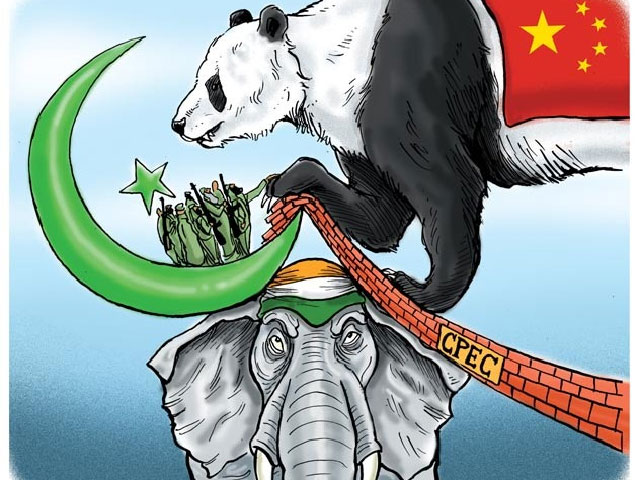
India’s position is further complicated by the reality of a 4,000 km long border, and a restive niggling Western front that the Dragon is ever ready to stoke. India may see the CPEC as an infringement on its sovereignty, but the BRI as a project is slowly but surely capturing the imagination of Asia as well as Europe. China is positioning it as the big promise of the 21st century to further trade, development and prosperity through an economically integrated Asia and Europe. It is clear that strategically, China is on a determined “march West”, wherein the contest for control of the Indian Ocean and Eurasia are part of a greater push which has but one destination — the heart of Europe.

It is important that the US and India move beyond the scope of the 2015 Agreement that limits their mutual engagement to India’s Eastern seaboard, and craft a new partnership that includes the western expanse of the Indo Pacific across the Arabian Sea to the Cape of Good Hope.


They need to do this, not by themselves, but in conjunction with allies, through treaties and agreements, with cajoling, handholding and networked security arrangements. The network of treaties, norms and rule based agreements across the full sweep of the Indo Pacific must continue to evolve. Not to do so would be to allow Beijing to set the terms of engagement in this region by default.

This piece had begun by highlighting the virtue of strategic patience that has been the hallmark of the US in its dealings with India. Now, as the US discovers through its own experience that all true democracies can and do become fractious, when contentious domestic debates distract from strategic choices, it may be India’s turn to return the favour and demonstrate strategic patience.

There is merit in waiting: a stronger India is by itself a net positive for the United States as it finds itself stretched to capacity in Asia; and a US that emerges from its current political churn is bound to be a reliable partner as India stands up to defend a rules based order in this part of the world.

The views expressed above belong to the author(s).
Standard
Columns/Op-Eds

AI replicating same conceptions of gender roles that are being removed in real world

June 17, 2017, Economics Times, ToI

Original link is here

By Vidisha Mishra & Samir Saran

A recent article in The Guardian (goo.gl/UajcTp) estimated that the sex tech industry, which is less than adecade old, is already worth $30 billion. This estimate is expected to grow exponentially as industry gears up to unveil hyper-realistic female sex robots customised for men. This has two main implications: first, considerable money, time and effort are dedicated towards modelling machine behaviour to cater to male preferences by objectifying the female form. Second, the technology needed to drive these innovations are designed in most cases by male coders.

The gender equation is reinforced in another manner. While lines of code are written by men, artificial intelligence (AI) is often female. The fact that Siri, Alexa, Amelia, Amy and Cortana are all designed as hyperintelligent yet servile female chatbots is not coincidental.

On the other hand, women’s participation (and, therefore, data sets from women) in certain media fora is highly under-represented. A 2015 paper by the Observer Research Foundation’s Sydney Anderson (‘India’s Gender Digital Divide: Women and Politics on Twitter’, goo.gl/bovMGp) found women’s voices to be “significantly under-represented” in online political conversations.

So, it is not surprising then that when Microsoft released the ‘millennial’ chatbot Tay in March 2016, she quickly adapted to her male-dominated ecosystem and started using racist slurs and sexually offensive language on Twitter. As coders and consumers of technology are largely male, they are crafting algorithms that absorb existing gender and racial prejudices.

AI is replicating the same conceptions of gender roles that are being removed in the real world. For instance, Apple’s Siri, Microsoft’s Cortana and Amazon’s Alexa are essentially modelled after efficient and subservient secretaries. This seemingly innocuous assignment of female characteristics to AI personalities has dangerous implications. These chatbots reportedly receive sexually-charged messages on a regular basis. More damaging still is the fact that they are programmed to respond deferentially or even play along with such suggestions. Essentially, sexual harassment that has now been made illegal in physical workplaces is normalised by AI.

Voices of disembodied, supportive AI tend to be female as both men and women find them less threatening. This comfort in issuing orders to a female voice is inherently problematic that tech companies have now acknowledged. Not only are companies investing in developing male bots and genderless bots, reportedly when someone asks Cortana, “Are you a girl?” she replies, “No. But I’m awesome like a girl.” Similarly, Alexa has been described as a ‘self-identified feminist’.

While feminist female chatbots are encouraging, they can hardly solve the inbuilt sexism by design of AI. In 2015, Carnegie Mellon University researchers found that the Google search engine was less likely to show ads of highly paid jobs to women as compared to men. A 2016 study discovered that data-mining algorithms associated words like philosopher, captain, warrior and boss with maleness, while top results for ‘she’ were homemaker, nurse and receptionist.

As AI grows in influence and gender biases continue seeping through algorithms, existing inequalities will be exacerbated. In India, for instance, the legal sector is gradually embracing AI, which is expected to improve speed and efficiency by automating tasks such as document drafting, undertaking legal research and due diligence. Similarly, news-writing bots are now functioning in the world of journalism.

In both cases, AI will autonomously generate output by identifying story angles based on algorithms with ‘built-in’ criteria. When cases involving sexual violence and their portrayal in traditional news media are already under scrutiny, it’s important to question how male-hegemonic data sets will impact future news stories and court coverage of sexual assault and other topics requiring greater gender sensitivity. Since only 29% of internet users and 28% of mobile phone owners in India are women, improving access to basic information and communication technology services and infrastructure remains critical.

There is nothing inherently empowering or sexist about technology. It just reflects the values of its creators.

(The writers are with Observer Research Foundation, New Delhi)

DISCLAIMER : Views expressed above are the author’s own.
Standard
Uncategorized

Time to restate the organising principles of BRICS

Samir Saran

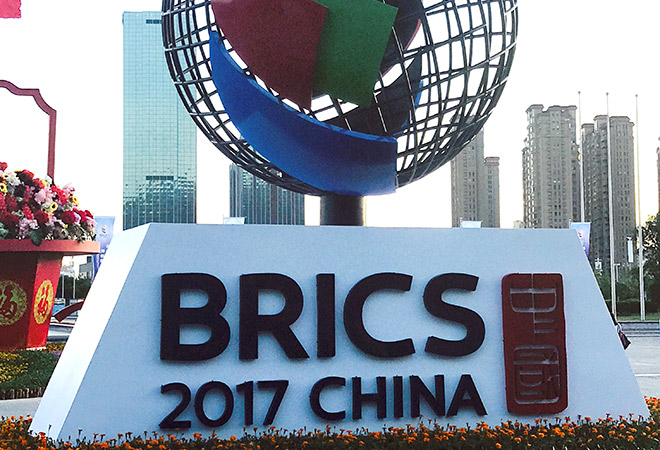
The text of the speech delivered by ORF Vice President Samir Saran at the inauguration of the 9th BRICS Academic Forum in Fuzhou, China.

चीन, फूजौ, ब्रिक्स अकादमिक फोरम, ORF, समीर सरन, एजेंडे, भूमिका, बदलाव, विकल्‍प, संप्रभुता, सार्वभौम समानता, सम्मान, जीडीपी, सैन्य शक्ति, नई दुनिया, अगुवाई, आवश्यकता, संस्थागत, सफलता, आवश्यकता, 2016, BRICS, विकास, महत्वपूर्ण

Excellencies, colleagues and friends, members of the academic community and think tankers from the BRICS countries..

Warm greetings from the Indian academic delegation. We are delighted to be here and look forward to two days of debates, discussions and the opportunity to renew old friendships and begin new ones. On behalf of our team, I thank our hosts, the China Council for BRICS Think Tank Cooperation for the wonderful setting and immaculate arrangements, and for all the work that has gone into putting this together.

We, the BRICS Think Council met this morning to take stock of all that transpired under the Indian leadership of BRICS in 2016 and to deliberate on what we would like our governments to pursue under the Chinese Presidency. We will, at the end of the two days, put forward an outcome document that will capture our wish list flowing from the conversations that will happen here. Each of you — through your presentations and interventions will co-author this document — so I encourage all to participate vigorously in the debates that lie ahead.

This is a special year. We are meeting at the 9th Academic Forum, and at the end of this year, we will be completing 10 years of our cooperation.

The BRICS next year will be turning 10 as an institution.

As we complete the first decade of this partnership, it is perfect moment to look back and look ahead. It is perhaps time to restate the BRICS agenda, relocate the role of BRICS in the world of today — that is changing fast — and reaffirm the organising principles that brought us together.

The BRICS agenda and its role must continue to be shaped by two words: “change” and “alternative”.

We came together to change the lives of millions in our countries, and in countries around us, that have been left out of the economic mainstream and have been left behind. Their lives must change, their aspirations need to be catered to. We must consider their future to be ours. This ambition is now encapsulated in the SDG Goals and other development challenges that humanity has accepted as being vital. BRICS must lead this process with their energy and leadership, with their experience and resources and with compassion — a changed development paradigm must be at the core of the BRICS agenda for the next 10 years.

The second word we must always focus on is “alternative”. We must achieve this change through alternate pathways, one that are inclusive, democratic, participatory and sustainable. A BRICS counter-narrative, an alternative must be crafted amongst the academic community. We are unlikely to change the world if we follow the same pathway that the developed world discovered. Be it healthcare or wellness , be it migration policies, be it the way we organise our cities and fuel them, educate our people and unleash their creative energies, we will need to discover and document BRICS solutions that will offer a counter point to the knowledge regimes that define the world of yesterday. And this must be a central quest of the BRICS academic community.

As we move towards being this force of positive change, we will need to create more institutions and frameworks to make it happen. The New Development Bank, the Contingency Reserve Arrangement are just the beginning. The BRICS institutionalisation would be a pre-requisite for its success. In 2016, the Indian Presidency recognised this to be the single most important aspect of BRICS development — it proposed research institutions, rating agencies, bodies that would strengthen trade and commerce and frameworks that would deepen intra-BRICS cooperation. This project must indeed be continued under the Chinese leadership as we move to South Africa in 2018.

I mentioned that we need to relocate BRICS in the new world. Indeed it is a new world, since we last met in New Delhi, change has swept through US and Europe and more change is coming. Some of the assumptions of the past decade around trade and globalisation may no longer be valid and nationalism and petty politics seems to be a secular phenomenon.

The BRICS leadership is needed at these times.

It seems BRICS will need to be the architects and new champions of a new format of multilateralism and indeed of globalisation 2.0.

As we infuse energy and leadership into these two processes, revitalise global trade, global financial flows, movement of people and ideas and indeed challenge the disruption to the process of global integration, it will require all of us to make a new case and a new blue print — where our individual roles and collective responsibilities will need to be reaffirmed. We will need to navigate this process through our own political systems, something that clearly is not easy for some of us.

A quick note of caution, even as we witness power vacuum and leadership gap, we must resist the temptation to fill those spaces with more of the same, The hegemonic structures and actors must not be replaced by a new hegemon. The paternalistic political structures must not be now owned by a different country or group of countries, otherwise we will not be agents of change and creators of counter-narratives. We will remain the servers of status quo and prisoners to power.

It is time to restate the organising principles of BRICS as I see them. Two factors more than any other have allowed us to come together and work together over the past 10 years.

  • Respect for sovereignty of each other, and those around us, and,
  • The common demand for pluralism and democracy in the conduct of international affairs.

BRICS has always respected sovereignty and sovereign equality. It is only here at BRICS that irrespective of our GDPs and military might, each of us have equal voice, equal voting rights and plural discursive space. We have respected each others’ sovereign concerns admirably and we have served the cause of democracy in the conduct of international relations well. We have to preserve and re-serve these organising principles.

Even as we all evolve in our own ways, these must remain the core principles for BRICS. There have been some headwinds recently that have drawn my attention to these aspects. Since we are among friends, I should unhesitatingly draw your attention to these — if we lose this ethos and ethic — we lose the BRICS.

I thank our hosts once again and look forward to two days with you. Namaste.

Standard
Columns/Op-Eds, Digital India

Staying away from China’s Belt and Road Initiative must be backed by India strengthening its own (digital) backbone

June 9, 2017,

By Samir Saran & Arun Sukumar

Original link is here

External engagement is a factor of internal priorities. This has been an abiding tenet of India’s foreign policy. Which is why it’s puzzling that New Delhi’s policy towards China’s ‘Belt and Road Initiative’ (BRI) is out of touch with the reality of Chinese involvement in India’s own economy.

When the Pakistani daily, Dawn, revealed China’s plans to build Pakistan’s internet backbone via the China-Pakistan Economic Corridor (CPEC) last month (goo.gl/ttMtha), influential voices in India scoffed at Islamabad’s open invitation to Beijing to surveil its society. China is not only creating Pakistan’s fibre optic backbone but it is also developing its digital infrastructure for law and order ‘monitoring and control’.

The Chops and the Sticks
Just as the CPEC is BRI’s flagship project, the creation of information and communication technology (ICT) ecosystems is the most important element of BRI. In no other area will Beijing’s influence on BRI member states be more pronounced than in cyberspace. Because China can supply digital goods at extremely competitive prices.

India has stayed away from BRI to counter China’s influence on the region’s economies. This concern was eloquently articulated in 2015 by foreign secretary S Jaishankar, who suggested China was looking to “hard wire” norms of governance in Asia.

cpec

Digital spaces, in the absence of settled international regimes, are ripe for such hardwiring. Unfortunately, this concern is acute in India’s own digital economy.

Sample these statistics from the Kleiner Perkins Internet Trends 2017 report released on May 31. Four of the top-selling five smartphones in India today are Chinese: Lenovo, Oppo, Vivo and Xiaomi. Their collective market share grew from a modest 15 per cent in 2014 to an astonishing 52 per cent by the first quarter of 2017. More importantly, this growth came at the cost of Indian manufacturers, whose market share declined exactly in reverse, from 45 per cent to 15 per cent in three years.

The report also suggests UC Browser, developed by China’s internet giant Alibaba, has carved out a 50 per cent share of India’s mobile browser market. A 2015 ExIm bank report concluded that India is China’s largest “recipient of capital investment in electronics”. In 2013-14, China accounted for a staggering 58 per cent of all electronic imports to India.

So, one could argue that all roads from China’s digital economy lead to India. Given Beijing’s pervasive reach over India’s IT ecosystem, is it anyone’s case that BRI policies will not affect New Delhi?

The Indian response to China’s domination of its digital economy should not be to ban Chinese products and services. That would only halt the surge in internet penetration in India, and go against the grain of this government’s ‘Digital India’ and ‘Make in India’ initiatives. If anything, China’s technology giants must be invited to build capacity in India, whether in high-end manufacturing, data analytics abilities or through financing R&D in Indian universities. They must be encouraged to be honest interlocutors and to refrain from exploitative trade activities.

Fasten the Belt on the Road
From a strategic perspective, it must be ensured that China’s creeping influence over cyberspace rules does not pose a challenge for India. Indian players should not find themselves shut out by Chinese competition from the region’s digital economies, or at the very least, from their own.

Boycotting the Belt and Road Summit in Beijing last month was New Delhi’s political signal to Asian countries that it is willing to challenge China’s economic influence in the region.

This resistance cannot be premised on providing loans, products or services for the digital economy at par with China, not when India’s own market relies heavily on Chinese players.

It should, instead, be driven by a multilateral effort — led by India and other major economies like Japan, Singapore and South Korea — to set norms of governance for cyberspace in Asia. Such an effort would involve both a high-level understanding on the strategic and military uses of cyberspace, and dialogue between major industrial players on the technical standards and protocols to be adopted by them.

A rule-based ecosystem is the only way to prevent Chinese companies from dumping cheap devices in foreign markets, and gaming regulations to suit their products. But to incubate such an effort, India needs to articulate its own laws on data integrity, encryption, the access for law enforcement to electronic data, the Internet of Things and digital payments.

India’s most effective antidote to Chinese influence in Asia is the creation of an open domestic market, serving the ‘Digital India’ goals of inclusive and affordable connectivity, but secure and reliable enough that other jurisdictions can emulate as their own.

Without a baseline reference for the global standards it seeks to promote, India will also not be able to stem the influence of China in Asian markets.

Foreign policy is decisive in the pursuit of India’s strategic interests. But it is merely an extension of its domestic values and principles. A Digital India serves India’s interest when it is attractive to others and offers solutions others seek to embrace. India’s forceful show of intent by staying away from BRI must be backed by its own strategy to moderate China’s rise.

And that work begins at home.

(The writers are with the Observer Research Foundation, New Delhi)

Standard
Uncategorized

पाक और पीओके में चीन खोज रहा माकूल जगह

Samir Saran

सीपीईसी न केवल ‘परस्पर सम्मान’ के पंचशील के महान सिद्धांत की धज्जियां उड़ाएगा, बल्कि कश्मीर विवाद के किसी भी शांतिपूर्ण समाधान की सारी संभावनाओं को भी खत्म कर देगा।

CPEC, China, sovereign claim, Gwadar

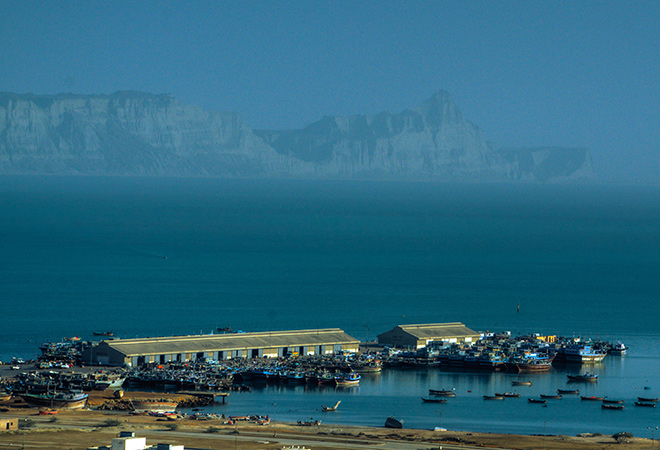
ग्वादर, पाकिस्तान

स्रोत: फ्लिकर यूज़र उमैरअदीब

चीन इस सप्ताह कई देशों के राष्ट्राध्यक्षों के सम्मेलन के जरिये वन बेल्ट, वन रोड (ओबीओआर) पहल को राजनीतिक रूप से बड़े पैमाने पर दुनिया के सामने प्रदर्शित करने की जुगत में लगा है। इसे देखते हुए भारत को भी अपनी एक ठोस और मजबूत नीति बनाने की जरुरत है। पिछले दो वर्षों से भारत गौर से देख रहा है कि चीन किस प्रकार ओबीओआर के लिए राजनीतिक समर्थन पाने के लिए एशियाई शक्तियों पर डोरे डालने की कोशिश करता रहा है। भारत ने बहुत बारीकी से चीन को बता दिया है कि इतने बड़े पैमाने पर एक अंतःक्षेत्रीय परियोजना के लिए पहले एक व्यापक परामर्श किए जाने की जरुरत है।

जब चीन ने भारत की इस गुजारिश को तवज्जो नहीं दी तो भारत ने जम्मू एवं कश्मीर के उन क्षेत्रों पर — जिनसे होकर चीन-पाकिस्तान आर्थिक गलियारा (सीपीईसी) गुजरेगा-अपने खुद के संप्रभुतापूर्ण दावे को लेकर बिल्कुल सर्वोच्च स्तर पर अपनी चिंताएं जाहिर करनी शुरु कर दी।

भारत की संवेदनशीलता के प्रति चीन की घोर उपेक्षा को देखते हुए ऐसा लगता है कि ओबीओआर की आर्थिक क्षमता को लेकर कोई भी बहस अब अव्यावहारिक हो गई है। भारत ओबीओआर में शामिल हो या न हो, इस विषय पर तब तक कोई गंभीर बहस नहीं हो सकती जब तक भारत यह महसूस नहीं करता कि इस परियोजना द्वारा उसकी राजनीतिक संप्रभुता-जोकि शासन का मूल आधार है-का सम्मान किया जा रहा है। इसके बिल्कुल उलट, सीपीईसी (ओबीओआर का जीवन और उसकी आत्मा) ऐसे लहजे में भारत की क्षेत्रीय अखंडता को धमकी दे रहा है जो 1962 के बाद स अब तक नहीं देखा गया था।

भारत की संवेदनशीलता के प्रति चीन की घोर उपेक्षा को देखते हुए ऐसा लगता है कि ओबीओआर की आर्थिक क्षमता को लेकर कोई भी बहस अब अव्यावहारिक हो गई है।

चीन ने पाकिस्तान के साथ अपने आर्थिक गलियारे के जरिये जनसांख्यिकीय एवं भौगोलिक सीमाओं की रूपरेखा को नाटकीय तरीके से फिर से बनाने का प्रस्ताव रखा है। वह एक बेपरवाह और निर्लज्ज, संघर्षपूर्ण और नव-औपनिवेशिक टकराव के तरीके से दक्षिण एशिया पर कब्जा करने की कोशिश कर रहा है।

चीन इस व्यापक क्षेत्र में लगातार महत्वपूर्ण अचल परिसंपत्तियों पर कब्जा कर रहा है। वह दक्षिण चीन सागर में द्वीपों का निर्माण कर रहा है, पूर्वी चीन सागर में पड़ोसी देशों के क्षेत्रीय दावों को नकार रहा है और यहां तक कि मलक्का जलडमरूमध्य में भी और अधिक नियंत्रण स्थापित करने की जुगत में लगा है।

चीन ने वित्तीय संसाधनों के जरिये मध्य एशिया में अपना राजनीतिक वर्चस्व स्थापित कर लिया है। अब उसकी कोशिश सीपीईसी मार्ग के जरिये न केवल ग्वादर में बल्कि गिलगिट-बाल्टिस्तान में भी ऊपरी तौर पर तो केवल आर्थिक लेकिन गुप्त तरीके से सैन्य केंद्र और सैन्य आधार स्थापित करने की भी है।

पाकिस्तान चीन के संरक्षण एवं उसके धन के बदले उसे इस प्रकार के क्षेत्र सौंप देने को तैयार है। इसका सबसे स्पष्ट उदाहरण ‘जमीनी स्तर पर तथ्यों’ को बदलने के द्वारा कश्मीर विवाद का राजनीतिक समाधान ढूंढने का प्रयास है।

अगर चीन विवादित समुद्रों में पूरे द्वीप का निर्माण करने के जरिये दक्षिण चीन सागर में कामयाब हो गया तो सीपीईसी ऐसी स्थायी या अर्ध-स्थायी परियोजनाओं का निर्माण करेगा जो गिलगिट-बाल्तिस्तान में अर्थव्यवस्था एवं समाज की प्रकृति को बदल देगी। इस क्षेत्र में चीनी तथा पंजाबियों की बाढ़ सी आ जाएगी जो न केवल इस स्थान का दोहन करेंगे बल्कि साझा लाभ के लिए इसकी सभ्यता को भी नष्ट कर डालेंगे।

सीपीईसी न केवल ‘परस्पर सम्मान’ के पंचशील के महान सिद्धांत की धज्जियां उड़ाएगा, बल्कि कश्मीर विवाद के किसी शांतिपूर्ण समाधान की सारी संभावनाओं को भी खत्म कर देगा। वास्तव में, पाकिस्तान एवं चीन यह सुझाव दे रहे हैं कि इस बात पर विचार किया जा सकता है कि जम्मू कश्मीर (और गिलगिट-बाल्तिस्तान तथा संभवतः लद्वाख) को उनकी विशिष्ट आर्थिक, राजनीतिक एवं सैन्य विशेषताओं के आधार पर अलग अलग इकाइयों में जुदा कर दिया जाए।

सीपीईसी से इस आशंका को भी बल मिल रहा है कि पाकिस्तान द्वारा दी गई आर्थिक रियायत के जरिये वे क्षेत्र भी सौंप दिए जाएंगे जिसके लिए 1963 का चीन-पाकिस्तान समझौता एक पूर्व उदाहरण है। विडंबना यह है कि विवादित क्षेत्रों में आर्थिक गतिविधियों में चीन की भागीदारी ताईवान एवं तीसरे पक्षों के बीच एफटीए पर उसकी खुद की नीतिगत प्रकृति के खिलाफ है।

सीपीईसी में निवेश के मामले में ब्रिटेन एवं ईयू की मिलीभगत है। वास्तव में, चीन एशिया में पश्चिमी राजनीतिक लाभ को सीमित करने और भारत विरोधी उग्रवाद का प्रायोजन जारी करने के लिए यूरोप के धन का इस्तेमाल कर रहा है।

शिनजियांग प्रांत में चीन का कट्टरपंथी दृष्टिकोण इस बात का संकेत देता है कि सीपीईसी गिलगिट-बाल्तिस्तान का क्या हश्र कर सकता है। 2000 की जनगणना में कहा गया कि जहां शिनजियांग में स्थानीय उईघुर मुस्लिम आबादी 48 प्रतिशत के साथ सबसे बड़ी स्थानिक समूह बनी रही, हान चीनियों की आबादी 40 प्रतिशत तक जा पहुंची। 1950 के दशक में उईघुर की आबादी 90 प्रतिशत तक थी जिसे देखते हुए यह बदलाव आश्चर्यजनक था।

कहा जाता है कि आज हान चीनियों का इस प्रांत पर दबदबा है क्योंकि वे आर्थिक रूप से समृद्ध हैं और उनके पास सर्वश्रेष्ठ नौकरियां एवं सरकारी ओहदे हैं। उईघुर की संस्कृति एवं रिवाजों को कुचल कर रख दिया गया है। रमजान के दौरान उनके रोजा रखने पर पाबंदी है, मुस्लिम बच्चों को ‘उग्रवादी’ कहा जाता है और यहां तक कि उनकी दाढ़ी की लंबाई पर भी नजर रखी जाती है।

तो क्या गिलगिट-बाल्तिस्तान एैसे बदलावों का अगला पड़ाव है। पाकिस्तान ने उस नियम को समाप्त कर दिया है जिसके तहत गिलगिट-बाल्तिस्तान में बाहरी लोगों के जमीन खरीदने पर मनाही थी। इस शिया बहुल क्षेत्र में सुन्नियों का जबर्दस्त विस्तार हुआ है और पूरे पाकिस्तान से लोग आकर यहां बस रहे हैं। साउथ एशिया इंटेलीजेंस रिव्यू के अनुसार ‘जनवरी 2001 तक 1ः4 (बाहरियों और स्थानीय लोगों) की पुरानी आबादी का अनुपात बदल कर 3ः4 हो चुका था।’

सीपीईसी गिलगिट-बाल्तिस्तान दो सर्वोच्चवादी परियोजनाओं: वहाबीवाद एवं हान-वाद के संघर्षपूर्ण निकट प्रभावों का मिलन स्थल बना देगा। इन दोनो ही संप्रदायों का उद्वेश्य समुदायों का पूर्ण सामाजिक वर्चस्व कायम करना है।

यह न केवल क्षेत्र की जनसांख्यकीय संरचना को बदल कर रख देगा बल्कि गिलगिट-बाल्तिस्तान को एक स्थानिक, धार्मिक एवं सांप्रदायिक संघर्ष के एक विस्फोटक स्थिति वाली जगह में भी तबदील कर देगा।

और अंत में, संप्रभुता की चिंताओं के प्र्रति चीन की निर्लज्जतापूर्ण उपेक्षा ने भारत के साथ उसके द्विपक्षीय संबंधों की मूल आत्मा को समाप्त कर दिया है, जो लंबे समय से गैर-हस्तक्षेप, क्षेत्रीय अखंडता एवं विवादों के शांतिपूर्ण समाधान के सिद्धातों के प्रति सम्मान का आधार था। अब अगर वह आधार ही नहीं रहा तो भारतीय नीति निर्माताओं को निश्चित रूप से गंभीरतापूर्वक चीन के नेतृत्व वाली बहुपक्षीय पहलों में शामिल होने के लाभों पर फिर से विचार करना चाहिए। यही नहीं, कुछ लोग ब्रिक्स सहयोग को आगे बढ़ाने की राजनीतिक व्यावहार्यता पर भी सवाल उठा सकते हैं।

सीपीईसी भारत पर गिलगिट, तिब्बत, शिनजियांग एवं भीतरी मंगोलिया के उत्पीडि़त लोगों के लिए अप्रत्यक्ष समर्थन देने का घरेलू दबाव पैदा करेगा। यह सीपीईसी के रास्ते के एक अन्य छोटे स्टेशन बलूचिस्तान में ऐसे मुद्वों को रेखांकित करने के लिए अधिक प्रत्यक्ष हस्तक्षेप कर सकता है। जहां भारत की 2.5 ट्रिलियन की अर्थव्यवस्था किसी भी प्रत्युत्तर के अवसर को सीमित कर देती है, ये कदम भविष्य के लिए एक मानदंड के रूप में कार्य करेंगे।

वर्तमान में, यह हो सकता है कि भारत उस सीमा तक जाकर प्रतिक्रिया न जताए अर्थात अपनी संप्रभुता के उल्लंघन का जवाब इसी अनुपात में चीन की संप्रभुता का उल्लंघन करने के रूप में न दे। लेकिन चीन के नीति निर्माताओं को निश्चित रूप से भारत को उसकी क्षमता और उसके धैर्य की परीक्षा लेने के लिए विवश नहीं करना चाहिए जिससे कि वह वन बेल्ट, वन रोड ( ओबीओआर) की राह में भीषण बाधाएं न खड़ी कर दे।

यह लेख मूल रूप से टाइम्स ऑफ इंडिया में छपा था।

Standard
Columns/Op-Eds, Development Goals, Politics / Globalisation

What lies ahead for India and the world in the 2020s?

Hindustan Times, May 14, 2017, Analysis, co-authored by Ashok Malik

Original link is here

With tectonic and technological challenges causing disruptions, the neat correlation of a big economy with big power that bears big responsibilities is under scrutiny

2020s

The Black Tesla Model S electric car at a Tesla supercharger charging station. Superchargers are free connectors that charge Model S in minutes. Tesla and Uber (and Ola in India) are current and future providers of public transport networks without which cities will be unable to do business. (Getty Images)


At the cusp of the 2020s, what are the markers of change in the international system? The challenges are tectonic and technological and causing four major disruptions. First, the neat correlation of a big economy with big power that bears big responsibilities is under scrutiny. After World War II, the globe’s largest economies were also its ultimate security guarantors, institution incubators and norm shapers. Today, the economic and domestic political capital of a great power with a per capita income of US$40,000 is just not replicable by an emerging power with a per capita income of US$10,000.

The latter faces inequities and developmental gaps at home, and its generosity will perforce be constricted. Populist politics will anyway make it harder for any power – old or emerging – to be an unremitting provider of global public goods. To add to that, the largest economies of this century will also be among the weakest societies – a new paradigm.

Second, there is a creeping capture of provision of public goods and services by business corporations and large transnational philanthropic entities. For example, the developing world’s public health agenda is being influenced by a Bill and Melinda Gates Foundation, in some cases to a greater degree than by the World Health Organisation.

The Trump administration’s resolve to cut US funding for development programmes that support abortion services is being supplanted by large American charities and philanthropic institutions that see the right to choose as central to women’s health and empowerment. Such processes will curb the autonomy – or excesses – of national governments seeking to achieve politically desirable goals.

In the economic sphere too the concept of public goods and private provision – and of where the state, as the traditional provider of public goods, comes into this dynamic – has to be considered afresh. In most societies Internet and data services comprise a public utility being delivered by private corporations. Tesla and Uber (and Ola in India) are current and future providers of public transport networks without which cities will be unable to do business. Yet they are also networks over which the government – or even traditional pressure groups such as trade unions – have only nominal control.

The devolution of a “public goods provider” role has in turn generated thinking on quasi-government obligations among futuristic corporations. That is why suggestions of an income tax to be paid by robots have come from the founder of Microsoft; or why the chief executive of Tesla – its driverless cars will disrupt driver communities – has urged governments to institute a universal basic income.

Third, there is an uneasy but imminent transition in industrial production from human-intensive to machine-driven ecosystems. The early 21st century will see the maturing and possible commodification of a menu of new technologies – artificial intelligence and robotics, 3D manufacturing and custom-made biological and pharmaceutical products, lethal autonomous weapons and driverless cars.

This will pose conundrums. The moral question of how a driverless car will decide between hitting a jaywalker and swerving and damaging the car has often been debated. The answer is both simple – save the human life – and complex. At which angle should the car swerve? Just enough to save the jaywalker or more than enough? If the driverless car is in Dublin, is the decision taken by the Irish government, the car’s original code writers in California or a software programmer in Hyderabad to whom maintenance is outsourced?

If different national jurisdictions have different fine print on something that should be so apparent – prioritising a human life – how will it affect insurance and investment decisions, including transnational ones, in relation to infrastructure that lies within damage-causing distance of a driverless car while it is attempting to evade a jaywalker? The sociology and economy of the machine will determine a specialised discipline in 21st century diplomacy and trade negotiations. Already the large cyber-attack has displaced the nuclear-tipped missile as the proximate threat.

Finally, technology is blurring national boundaries just as politics is tightening them. Innovation and capital have impinged upon the domain of the state at a juncture when statism, nativism, identity and nationalism are making a comeback. As such, while the nation-state will remain the fundamental unit of reckoning in the international system, it will have to engage with, almost Brownian-motion like, other units and stakeholders in a fluid medium where disorder may have both permanence and legitimacy. On its part, geopolitics will have to reconcile to 50 shades of grey, a departure from the black-white binary that framed the Anglo-Saxon ethic.

Ashok Malik and Samir Saran are with the Observer Research Foundation

Standard
Columns/Op-Eds, Non-Traditional Security, Politics / Globalisation

Wahhabism, meet Han-ism: CPEC betokens China’s search for lebensraum in Pakistan and Pakistan occupied Kashmir

Times of India, May 12, 2017

Original link is here

Wahhabism, meet Han-ism: CPEC betokens China’s search for lebensraum in Pakistan and Pakistan occupied Kashmir

With Beijing elevating the One Belt, One Road (OBOR) initiative’s political visibility through a heads of government summit this week, India needs to craft a sharper policy position. Over the past two years, New Delhi waited and watched as China sought political buy-in from Asian powers for OBOR. India subtly communicated to China that a trans-regional project of this magnitude required wider consultation.

When Beijing chose to sidestep this request, India articulated concerns – at the highest level, no less – regarding its own sovereign claim on those regions of Jammu & Kashmir that the China-Pakistan Economic Corridor (CPEC) would traverse.

China’s wanton disregard for Indian sensitivities suggests the debate on OBOR’s economic potential is now academic. There cannot be any serious discussion on India joining or not joining OBOR unless New Delhi feels its political sovereignty – the very basis of governance – is respected by the project. Far from this, CPEC (the life and soul of OBOR) threatens India’s territorial integrity in a manner unseen since 1962.

China, through its economic corridor with Pakistan, has proposed a dramatic redrawing of demographic and geographic boundaries. It is undertaking an unabashed, confrontational and neo-colonial smash and grab in south Asia.

It is capturing key real estate in the wider region. Beijing is building islands in South China Sea, contesting territorial claims of neighbours in the East China Sea, and even aspires for greater control of the Malacca Straits. It has bankrolled its way to political supremacy in central Asia. It now seeks to build overtly economic but covertly military facilities and bases through the CPEC route – in Gwadar but also Gilgit-Baltistan.

Islamabad is willing to offer such stations in return for Beijing’s protection and money. The most obvious attempt is to engineer a political solution to the Kashmir dispute by changing “facts on the ground”.

If China managed to do this in the South China Sea by constructing entire islands in disputed waters, CPEC will create permanent or semi-permanent projects that will change the nature of the economy and society in Gilgit-Baltistan. The region will be swamped by Chinese and Punjabis who will exploit its location and pillage its civilisation for common benefit.

Not only would CPEC run roughshod over the sacred Panchsheel principle of “mutual respect”, it would also destroy any chance of a peaceful settlement of the Kashmir dispute. In effect, Pakistan and China are suggesting that it is conceivable Jammu & Kashmir (and Gilgit-Baltistan and presumably Ladakh) can be segregated into separate units that merit unique economic, political and military engagement.

CPEC also triggers concern that economic concessions by Pakistan will lead to ceding of territory, for which the 1963 Sino-Pakistani agreement is a precedent. Ironically, China’s involvement in economic activities in contested territories goes against the grain of its own policy on FTAs between Taiwan and third parties.

By investing in CPEC, the UK and EU are complicit in this design. In effect, European money is being used by China to limit Western political leverage in Asia, and assist Pakistan to continue to sponsor anti-India radicalism.

China’s hardline approach in Xinjiang province offers a clue to what CPEC could do to Gilgit-Baltistan. The 2000 census said while the native Uyghur Muslim population in Xinjiang remained the largest ethnic group at 48%, Han Chinese made up 40%. This was an astonishing turnaround from the overwhelming 90% majority Uyghurs enjoyed in the 1950s.

Han Chinese are said to dominate the province today, as they are economically better off and awarded the best jobs and highest positions. Uyghur culture and customs have been suppressed. There are restrictions on fasting during Ramzan, Muslim baby names are labelled “extremist” and even the length of beards is regulated.

Is Gilgit-Baltistan the next frontier for such demographic re-engineering? In 1974, Pakistan abolished a rule that prevented non-locals from buying land in Gilgit-Baltistan. This Shia-dominated region saw rampant Sunni expansionism and settlement of people from all over Pakistan. “As of January 2001, the old population ratio of 1:4 (non-locals to locals) had been transformed to 3:4,” suggests the South Asia Intelligence Review.

CPEC will make Gilgit-Baltistan the meeting ground for a volatile osmosis of two supremacist projects: Wahhabism and Han-ism. Both aim for complete social domination of communities. This would not only alter the region’s demographic composition but also reduce Gilgit-Baltistan to a tinderbox of ethnic, religious and sectarian conflict, with grave security consequences for south and central Asia.

And finally China’s brazen disregard for concerns of sovereignty cuts to the heart of its bilateral relationship with India, which had long been premised on respect for principles of non-intervention, territorial integrity and peaceful resolution of disputes. If that basis no longer holds, Indian policy makers must seriously revisit the benefits of joining China-led multilateral initiatives. Some would even question the political viability of Brics going forward.

CPEC will create domestic pressures on India to incubate sub-conventional support for oppressed peoples in Gilgit, Tibet, Xinjiang and Inner Mongolia. It could intervene more directly in highlighting such issues in Balochistan, another CPEC waystation. While India’s $2.5 trillion economy brings limitations to any response, these steps will act as a benchmark for the future.

For now, India may resist the race to the bottom, ie confront violations of sovereignty with proportionate counter-violations. But policy planners in Beijing should not test India’s ability to impose Himalayan hurdles on the belt and road.

DISCLAIMER : Views expressed above are the author’s own.
Standard
Cyber Security, Digital India, Politics / Globalisation

A global agenda for digital economies

The G20 must foster linkages between traditional financial institutions, first-generation Internet users and the informal sources of their livelihood

Livemint, May 3, 2017

Original link is here

g20-k9zD--621x414@LiveMint
The G20 is responsible for ensuring that digital supply chains are not fragmented in this era of ‘de-globalization’. Photo: Reuters

Last month, Germany convened the first-ever G20 “digital ministers” meeting, indicating how the future of connected societies and economies is now firmly at the top of the global agenda. In the run- up to the ministerial meeting, a T20 task force comprising think tanks and academia, of which this author was co-chair, was constituted to offer recommendations that would strengthen digital economies and manage the “digitalization” of traditional sectors. A prominent concern outlined by this group related to the threat to global financial systems because of greater interconnectivity and the creation of novel, untested architectures to manage payment processes. No country is more affected by the weaknesses in digital payments systems, global and domestic, than India, which is tackling the twin challenge of Internet adoption and expansive digitalization.

The future of global financial systems is tied to the security of the digital networks that sustain them. A recent report by UK-based insurance company Hiscox suggests cyberattacks cost the global economy nearly $450 billion. Whether in platforms like the UN group of governmental experts on information security, or through traditional trade agreements, the international community has struggled to offer a collective response to threats faced by the digital economy. The G20 digital ministers meeting is, therefore, a step in the right direction to give this issue the political visibility it needs.

The meeting resulted in the creation of a working group on the digital economy to articulate rules of operation for businesses, governments and users transacting on the Internet. The larger mandate of this working group is the creation of a strategy for securing the global digital economy. India should contribute to the working group’s findings, as its digital economy is qualitatively and quantitatively different from those of the advanced industrialized nations.

The working group will have to address concerns around security, digital access and international trade. Cybersecurity, traditionally understood, has come to mean the integrity of platforms, digital networks and devices. But the G20 should assess whether cybersecurity is a business objective or a means towards the larger goal of promoting digital access and financial inclusion. Should it be the latter, any ecosystem design should ensure affordability and affordable security for users at the bottom of the pyramid. The working group should also articulate policies for the digital economy that can be emulated in developing countries outside the G20. And finally, the G20 is responsible for ensuring that digital supply chains are not fragmented in this era of “de-globalization”. This is a real threat, and as the recent communique from the G20 finance ministers’ meeting suggests, the group was unable to defend the virtues of an open trading system.

The availability of digital infrastructure is not the holy grail for emerging markets. Even if the last user in the developing world were to be provided affordable and uninterrupted Internet access—a challenge in itself—her digital consumption would ride on the skills available, cybersecurity awareness, and the level of inclusion offered by technological platforms developed in advanced economies. Scholars Urvashi Aneja and Vidisha Mishra at the Observer Research Foundation make the case for a G20-wide “digital skills upliftment strategy” that can improve labour participation and competitive capacities for women and marginalized communities.

Yet another concern that the working group should address is the impact of “digitalization” on traditional industrial sectors. Here too, India like others in the developing world, is in the cross hairs of pervasive automation and the use of “intelligent” technologies. Automation will affect manufacturing jobs, and economists like Ester Faia suggest that it poses a risk to the service sector as well. Faia’s analysis, submitted as a working paper to the T20 group, also shows that the financial services sector, considered a safe haven in times of economic transition, has a 90% probability of automation in certain countries. A services-driven economy like India, therefore, must manage this disruptive transition and potential loss of jobs effectively.

How the shift to automated supply chains will affect the country’s urban demographic is also a question worthy of the Indian policymakers’ attention. For instance, as industrial supply chains become digitized, highly skilled jobs have clustered around certain urban centres with a technological focus—San Francisco, Phoenix and Munich, to name a few. Similarly, traditional manufacturing centres like Detroit and Liverpool have seen jobs plummet because of automation. Unpredictable employment trends alongside the current problems of unplanned urbanization will challenge economies within and outside the G20. This in turn will give rise to new domestic political dynamics that may sometimes clash with the G20’s stated objective of promoting globalization.

How can the G20 manage the tailwinds of such disruptive automation and “digitalization”? Carl Frey of the Oxford Martin School suggests that this disruption should be countered by policies that enable urban mobility and create a wide social safety net, such as one for national relocation support. There are discussions in India and in Silicon Valley about providing a universal basic income to manage this new dynamic. But can conservative financial institutions that thrive on old notions of risk as it relates to lending and banking adapt to such policies? The G20, through national and transnational policies, has always engaged with the formal economy. Its best shot at managing disruptive digital forces may ironically lie in embracing the informal sector via technology. Digital platforms will allow governments to provide social benefits to constituencies that formal financial instruments have been traditionally blind to, provided the G20 fosters linkages between the trifecta of traditional financial institutions, first-generation Internet users and the informal sources of their livelihood.

Samir Saran is vice-president at the Observer Research Foundation and was co-chair of the T-20 task force on the digital economy.


Standard
Columns/Op-Eds, Cyber Security, Digital India

Telcos should train their sights on the application for data

18 April, 2017, Economic Times

Original link is here

Long at the margins of the telecom and internet revolutions, India is today moving towards pole position on data consumption. The recently released Boston Consulting Group-The Indus Entrepreneurs (BCG-TiE) report on India’s internet economy suggests the country is the ‘second highest’ in terms of mobile internet adoption, clocking at 391 million users.

India’s digital economy is expected to double its value to $250 billion, and contribute to 7.5% of the GDP in three years. The projected data consumption per average user: 7-10 GB a month by 2020. Contrast this to the findings of the 2016 Ericsson Mobility Report that suggested data usage in India is slated to increase five-fold by 2021, rising to 1.4 GB per active smartphone. The five to seven times difference in projected data consumption between the 2016 Ericsson and the 2017 BCG-TiE one can be attributed to a disruptive intervention and a data-hungry consumer.

Jio, Reliance Industries Ltd’s technology startup, provided that disruptive intervention. It is perhaps the most influential driver behind the new numbers, which are, however, only the tip of the iceberg. There are deeper transformations that await the digital sector.

Three such transformations will prompt traditional telecom companies to compete and create new revenue streams that can’t rely on connectivity alone:

* The Death of Voice: Telecom companies should acknowledge the reality that traditional voice-based communication is now a market utility, not a luxury. ‘Voice-based’ communication companies will be pressed to invest in new infrastructure and ecosystems that meet the demand for videos and data-driven apps.

In practice, this means investing in infrastructure, and a new cadre of experts who can not only build platforms but respond agilely to disruptive innovation. Unless they can create this new technology ecosystem, they will perish.

* An Internet of People: Unprecedented data connectivity in the hands of half-a-billion (and growing) Indians will create an ‘Internet of People’, with each user signifying multiple opportunities to generate value for the platform economy. GoI’s flagship Digital India programme is, perhaps, the biggest public sector effort in the world to create such an ecosystem.

The ‘Internet of People’, in turn, gives rise to a major challenge: will the innovations for Indians be created and hosted in India? Or will the biggest platforms all be based abroad, leaving little room for the Indian platform economy to grow? As custodians of data, Indian businesses should build capacities for Big Data analytics, create tailored services and products for local consumers in local languages and, in the process, generate employment, unleash entrepreneurial spirits, and catalyse technology-driven social transformation. So, the individual is the biggest driver of India’s platform economy.

Policies for the Platform Economy: As India moves to a $10 trillion GDP by the early 2030s, the fuel of choice will be ‘bits and bytes’. If data is indeed the new oil, how is India prepared to secure this valued commodity? Regulatory questions around cyber security and data protection, as these relate to civilian networks in India, remain woefully unaddressed.

Policy debates in this space have been ‘principle-heavy’, seeking a golden median for regulation — say, for encryption or net neutrality — that can be emulated nationally. Instead, digital economy regulation should be ‘function-heavy’, prescribing rules of conduct for businesses and governments based on the end uses that data is deployed for.

The three-way contract between the user, service provider and app provider will determine questions like: who shares access to data? Can service providers innovate as nimbly as small startups providing applications on their platforms? How should applications be priced? And should this be reflected in data tariffs?

Jio is only one example of the disruption that is set to reverberate across the digital sector in India. That a company like Reliance can bring its considerable resources to bear on a digital enterprise definitely sets Jio apart from others. But the reality is that its digital infrastructure will generate little to no value for Jio, its nearest competitor or the next entrant into this sector. Innovation at the top, at the level of the platform, will expand the digital economy pie in India.

Already, Jio has emerged as a big contributor to Facebook’s latest quarterly revenues from Asia. How can Indian platforms avail the same benefits? It is crucial that India’s businesses, entrepreneurs and regulators train their sights on the application of data, rather than the tubes that deliver them to consumers.

The writer is vice-president, Observer Research Foundation. He has worked with Reliance Industries Ltd since 1994


Standard
Uncategorized

The new rules of data application

Samir Saran

The three-way contract between the user, service provider and app provider will determine several questions in the future.

Big Data,Digital Economy,Innovation,Internet Economy,Internet of People,Internet Revolution,Jio,Technology Ecosystem
Photo: Marcin Ignac/Flickr

Long at the margins of the telecom and Internet revolutions, India is today moving towards pole position on data consumption. The recently released Boston Consulting Group — The Indus Entrepreneurs (BCG-TiE) report on India’s Internet economy suggests the country is the “second highest” in terms of mobile Internet adoption, clocking at 391 million users. India’s digital economy, according to the same report, is expected to double its value to USD 250 billion, and contribute to 7.5% of the country’s GDP in three years. Perhaps the most astonishing estimate is the projected data consumption per user: The average Indian will likely consume 7 to 10 GB per month by 2020.

Contrast this to the findings of the 2016 Ericsson Mobility Report that suggested data usage in India is slated to increase five-fold by 2021, rising to 1.4 GB per active smartphone. The five to seven times difference in projected data consumption between the Ericsson report of 2016 and the BCG-TiE one of 2017 can be attributed to a disruptive intervention and a data hungry consumer.

Jio, Reliance Industries Limited’s technology startup, provided that disruptive intervention, and is perhaps the most influential driver behind the new numbers in the BCG-TiE report. The numbers, however, are only the tip of the iceberg because there are deeper transformations that await the digital sector. Four such transformations will prompt traditional telecom companies to compete and create new revenue streams that cannot rely on connectivity alone. Concurrently, they will compel Indian regulators to rethink new “rules of the game” for catalysing what is today referred to as the “platform” economy riding on dumb pipes.

The death of voice

Telecom companies should acknowledge the reality that traditional voice-based communication is now a market utility, not a luxury. “Voice” based communication companies will be pressed to invest in new infrastructure and ecosystems that meet the demand for videos and data-driven apps. In practice, this would mean investing in infrastructure, and a new cadre of experts and engineers who can not only build platforms but respond agilely to disruptive innovation taking place over such telecom infrastructure. Unless they can create this new technology ecosystem, they will perish.

An Internet of People

Unprecedented data connectivity in the hands of half a billion (and growing) Indians will create an “Internet of People”, with each user signifying multiple opportunities to generate value for the platform economy. The Indian government’s flagship Digital India programme is perhaps the biggest public sector effort anywhere in the world to create such an ecosystem. The “Internet of People” in turn gives rise to a major challenge: will the innovations for Indians be created and hosted in India, or will the biggest platforms all be based abroad, leaving little room for the Indian platform economy to grow?

As custodians of data, Indian businesses should build capacities for Big Data analytics, create tailored services and products for local consumers in local languages, and in the process, generate employment, unleash entrepreneurial spirits, and indeed, catalyse technology-driven social transformation.

The individual is therefore the biggest driver of India’s platform economy.

In his remarks at a recent conference, the Chairman of RIL Mukesh Ambani offered a way to promote Indian entrepreneurship at the local level. If data is the new currency, he argued, businesses must aim to keep it within India. “Keep in India”, as he phrased the objective, would be aimed at ensuring innovation by Indian companies at the app layer, expanding the breadth and depth of the platform economy.

Unlike iterations for data localisation made by security officials or regulators, Mr. Ambani pitched “Keep in India” as a business proposition, arguing that data is the bedrock for value generation and innovation.

Policies for the platform economy

As India moves to a 10 trillion dollar GDP by the early 2030s, the fuel of choice will be “bits and bytes”. If data is indeed the new oil, how is India prepared to secure this valued commodity? Regulatory questions around cybersecurity and data protection as it relates to civilian networks in India remain woefully unaddressed. Policy debates in this space have been “principle-heavy”, seeking a golden median for regulation (say, for encryption or net neutrality) that can be emulated nationally. Instead, digital economy regulation should be “function-heavy”, prescribing rules of conduct for businesses and governments based on the end uses that data is deployed for.

The three-way contract between the user, service provider and app provider will determine questions like: Who shares access to data? Can service providers innovate as nimbly as small start-ups providing applications on their platforms? How should applications be priced, and should this be reflected in data tariffs? Some of these questions are already part of the ongoing debate over affordable digital access in India.

Jio is only one example of the disruption that is set to reverberate across the digital sector in India. That a company like Reliance can bring its considerable resources to bear on a digital enterprise definitely sets Jio apart from others. But the reality is that its digital infrastructure will generate little to no value for Jio, its nearest competitor or the next entrant into this sector. Innovation at the top, at the level of the platform, will expand the digital economy pie in India. Already, Jio has emerged as a big contributor to Facebook’s latest quarterly revenues from Asia. How can Indian platforms avail the same benefits? It is crucial that India’s businesses, entrepreneurs and regulators train their sights on the application of data, rather than the tubes that deliver them to consumers.

A short version of this article appeared in the Economic Times.

Standard