Uncategorized

The next chapter in Internet governance

Samir Saran

Once cradled by global ideals, the multistakeholder community that manages the global commons of cyberspace must now be nurtured by local realities.
 civil society, advocates, not-for-profit organisations, Internet governance, multistakeholder community
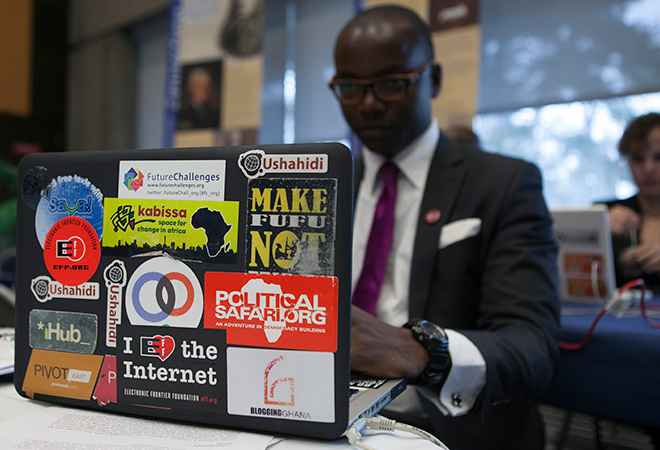
Photo: Eric Bridiers/CC BY-ND 2.0

The inclusion of “civil society” — an umbrella group of activists, advocates, not-for-profit organisations, and even the academia — in Internet governance ranks among the most significant achievements of this decade in international relations. For a while, it appeared the “global, multistakeholder community” that drove normative processes like the 2014 NetMundial conference in Brazil, would stitch together rules for managing the global commons of cyberspace.

That assumption today stands on shaky ground. If multistakeholder models of Internet governance were itself a product of globalisation, its future appears uncertain in this current climate of “de-globalisation” and localism.

So, if states and strongmen have reclaimed political authority over national governance, why would they allow digital economies to function outside their remit? What’s more, these popular political leaders have discredited the private sector, which was expected to underwrite the global expansion of digital networks.

Today, companies have neither the appetite nor the legitimacy to incubate such governing platforms. Instruments of globalisation like the Trans-Pacific Partnership were supported by big technology corporations, but as the TPP’s demise shows, the mood across much of the world appears to favour protectionism over expanded trade. If the private sector recedes, multistakeholderism loses its most powerful advocate.

The inclusion of “non-state” actors in global governance itself emerged from a political context, which no longer exists. A world bruised by the global financial crisis mistrusted governments, and created a network of institutions that would not be managed by states alone.

The formation of the G20 (and its sister groupings for businesses and civil society like B20 and C20), short-lived government-bank partnerships, and the renewed focus on cross-border trade all, but ensured that the private sector and non-governmental organisations were seated at the high table of international politics.

Digital spaces benefited immensely from this geoeconomic moment. Whether to widen their consumer base, sustain their fledgling online presence, or ensure connectivity, businesses and governments realised they needed the Internet. Digital networks, therefore, became the conduit for globalisation.

Ironically, digital spaces also sowed the seeds of the current anti-globalisation mood. By shrinking geographies, social media platforms brought divergent, often conflicting voices in proximity to each other. Such online polarisation spilled over into the real world, pitting communities in a zero-sum game.

Majoritarian movements unleashed across the world threw up political strongmen, who in turn renewed the mandate of a strong nation-state. Governments today are more powerful than ever, enforcing protectionist policies, limiting migrants, micromanaging currency supplies, and engaging in widespread surveillance.

This moment in international politics should offer pause to the multistakeholder community, which finds itself in danger of being sidelined by governments — perhaps for good reason.

“Multistakeholderism 1.0” reflects a sharp bias towards transnational corporations, and powerful, omnipresent civil society actors, while constituents from the global South have had their voices hijacked.

As the plethora of cyber policy conversations at the 2017 Munich Security Conference demonstrated, matters of the Internet are essentially a dialogue between white males shouting across the Atlantic. Meanwhile, the biggest technology giants have woefully under-invested in local talent, resources and needs.

This model is synonymous with the absence of government from governance, and relied mostly on the benevolence of markets. This is unsustainable, and will prompt state agencies to step into the governance vacuum created by continuing market failures.

What is the solution to this crisis of conscience and confidence for the multistakeholder community? First, the role of the state should be reviewed in multistakeholder processes. State-led institutions still hold political appeal, especially in democracies, and Internet governance must work with this real and popular mandate of governments.

The state in developing countries continues to guarantee the security of digital infrastructure and networks as a public good, a role that must be acknowledged in multistakeholder platforms. Second, domestic multistakeholder conversations on Internet governance need to be strengthened to ensure marginalised communities that do not have the wherewithal to participate in global dialogue are uniquely represented.

Finally, the thrust of multistakeholder Internet governance itself requires reformation. So far, such processes have sought to promote the openness and freedom of digital spaces and conversations, a laudable goal in which civil society plays an important role. But little energy has been spent on ensuring affordable digital access, and in conceptualising how the next billion will engage with digital platforms.

Will first-generation Internet users in the Asia-Pacific and Africa rely entirely on mobile devices, triggering new conversations on platform security? Are digital policies equipped to handle the proliferation of local language content across devices? Are emerging Internet of Things ecosystems interoperable? Will new Internet users be discouraged from digital spaces by subversive activity online? Will insurance hurdles and cyber-risk ratings retard the growth of digital economies in some regions? These are complex questions that should be confronted by “Multistakeholderism 2.0”.

Multistakeholderism 2.0 requires a democratisation of the process of Internet governance and pluralism in uncovering the universality of the so-called “core values” that influence policy conversations. Recent political developments in the US and Europe suggest the sanguine belief of the existence of a “global civil society” — rallying around common values or ethics — will be tested in the days to come. Therefore, the success of Multistakeholderism 2.0 will be contingent on bringing local communities, businesses and leadership to the forefront of Net politics. As commentators like Latha Reddy argue, countries like India will not only have the obligation to speak for the second largest constituency of Internet users, but also the largest population of unconnected citizens. To serve them, multistakeholderism, cradled by global ideals, must now be nurtured by local realities.

This commentary originally appeared in Live Mint.
Standard
Columns/Op-Eds, Politics / Globalisation

Being Vladimir Putin: Russia’s president gets 20th century geopolitics, what he doesn’t get is 21st century geoeconomics

Times of India, March 2, 2017

Link is here

Being Vladimir Putin: Russia’s president gets 20th century geopolitics, what he doesn’t get is 21st century geoeconomics. 

In 2009 we witnessed a watershed moment for geoeconomics when the credit crisis, born in the United States, spread across the world. The integrated global economy temporarily tilted over the edge of the financial abyss before being pulled back by concerted collective action involving large economies around the world.

In 2016, we witnessed a backlash against this economic interconnectedness and the ideal of collective governance with a plethora of populist anti-globalisation movements leading to outcomes such as Brexit and the election of Trump. It is increasingly apparent that we are at the beginning of a new epoch, where global arrangements will be defined by various shades of nationalism, reassertion of state sovereignty, and multidimensional contests over territory, both real and virtual.

These developments also shaped the conversations at the recently concluded Munich Security Conference. Beyond the interest and noise around the Trump presidency, and the US approach to some of the global challenges, it was clear to most that President Putin was by far the most influential global leader on all matters security, something that three contemporary developments demonstrate emphatically.

Let’s start with West Asia. In less than 18 months, Russia has cleverly co-opted Turkey, firmly embraced Iran as a strategic partner and doubled down on its old ally Syria, bringing into its tent three diverging interests masterfully. In fact this alignment and the Russian relevance in this region stems from its understanding of how regional constellations of states and state-supported militias align. Guided by its partners, the US has faltered precisely on this aspect, erroneously programming itself into the Shia-Sunni schism, without realising that the nation-state still holds normative appeal in the region.

Second, Putin has managed to breach Fortress Nato by making Turkey pivot significantly towards Russia. Using President Erdoğan’s disillusionment with the Obama White House deftly, Putin has managed to drive a wedge between Nato and one of its oldest member states.

And finally, Putin has turned the tables on the most powerful nation in the world, by using its own modus operandi against it – that of intervening in the domestic politics of other states. Through strategic leaks, Putin deftly placed his finger on the scale of the American elections, tipping them in favour of Trump.

In this age of renewed political gamesmanship, Putin is the only player who has retained a chess set from the 20th century. While others have long forgotten the craft of geopolitics, Putin continues to move pieces like a Grandmaster. But does he have an endgame?

And herein lies the rub. This most influential global political figure, a man who has formidable military and security capacities at his disposal, is an inconsequential economic actor with insignificant economic agency. Russia, a country with a military might rivalling that of the US, has a GDP smaller than that of Australia and is ranked only ahead of South Africa among the Brics grouping that it helped create.

For all the accumulation of power and orchestration of geopolitics, Putin’s tactics are not going to fill Russia’s treasury. While 20th century realpolitik may be useful in 2017, Putin is also handicapped because he continues to view economics through a 20th century prism. Russia’s fixation with large transcontinental connectivity projects has led it to support China’s New Silk Road.

Without any significant expansion in Russia’s industrial and manufacturing economy, the country is fast being reduced to a political guarantor for Chinese economic expansion or a policeman for China’s property. And what of the future? In a world where 3D printing may become de rigueur, the transportation of millions of tonnes of manufacturing goods could be a dying reality.

Connectivity in this century is not simply about roads and railways, but also about bits and bytes and hearts and minds. It is the networks – knowledge, digital, social – that transfer and transmit value in the new world order. Economic growth in the 21st century requires digital hubs, clusters of start-ups and liberal regulatory confines where young minds working with technology can push society forward.

The reality is that 20th century economic projects that Russia is undertaking benefit China, and 21st century economic projects in Russia suffer from the absence of a requisite ecosystem. This has led to a certain fragility in the global governance architecture.

I have argued before that the asymmetry between Russia’s military potency and its economic state is dangerous. China, with its $11 trillion GDP, has significant destructive and disruptive capability as well. The stakes that it holds in the global economy, however, ensure that it will never destabilise global systems because it stands to gain from them. Russia does not have sizeable economic stakes in these systems and therefore only its political capability motivates its actions. This is being Vladimir Putin.

US efforts to “isolate” Moscow through sanctions have not only failed but also proved to be counterproductive. They have reduced Russia’s skin in the global economic game, allowing Putin to engage in exactly the same conduct that sanctions seek to deter. Washington DC must focus on cultivating a sense of ownership (and consequently, the fear of loss) in Russia towards economic and trading regimes.

But this is easier said than done and ironically it is Donald Trump, derided for his lack of diplomatic acumen, who is proving himself to be astute in this matter by reaching out to arguably the most influential man in the world – Vladimir Putin.

The writer is Vice-President Observer Research Foundation


Standard
Uncategorized

Globalism, radicalism, populism on Raisina Hill

Samir Saran

The keynote speeches by three world leaders at the Raisina Dialogue stood out for their pronouncements on globalisation.

Raisina Dialogue, Raisina Hill, globalisation, radicalism, Narendra Modi, Stephen Harper, Boris Johnson
Photolabs@ORF

In many ways, the Raisina Dialogue hosted by Observer Research Foundation and the Ministry of External Affairs, Government of India, set the tone for the year’s momentous developments in geopolitics. 2017 is yet to complete fifty days, but the events of the last few weeks will have a lasting impact on our times. The Raisina Dialogue, in particular, highlighted the clash between liberal “internationalism” and the radical movements that threaten to upend it. Keynote speeches by three leaders at Raisina stood out for their pronouncements on globalisation. The first, by India’s Prime Minister Narendra Modi, sounded a note of caution about the “gains of globalisation” being at risk. “Economic gains are no longer easy to come by,” said PM Modi, who went on to cite the “barriers to effective multilateralism.” The Prime Minister’s message was direct and simple: that globalisation needs new inheritors who can help promote the projects, regimes and norms of the 20th century. This responsibility would invariably fall on the shoulders of a class of nations that we have come to know as “emerging powers.”

“Globalisation needs new inheritors who can help promote the projects, regimes and norms of the 20th century.” — Narendra Modi

A second perspective on globalisation came from former Canadian PM Stephen Harper, who highlighted the role that religion plays in these turbulent times. Mr. Harper noted the role that Pope John Paul II, a Pole, played in providing “anti-communists in Poland effective leadership outside the country” in their struggle against the Soviet Union. PM Harper was hinting at the capacity of a religious leader whose tacit support of the Western ethos ensured resistance to entrenched nation-states. In this respect, religion returned to world politics (to destroy the Soviet Empire) in the eighties, long before the rise of the Islamic State. Can tendencies driven by religious sentiment today — whether through the rise of terrorist groups like ISIS, or through the counter-movements against migration in Europe — defeat the globalisation project driven by states?

Can tendencies driven by religious sentiment today defeat the globalisation project driven by states?

And finally, British Foreign Secretary Boris Johnson offered yet another take on globalisation, in balancing his full-throated defence of Brexit with his call for greater economic cooperation with Britain. The “selective” or “a la carte” globalisation that Secretary Johnson pushed for at the Raisina Dialogue reflects the desire of many Western states to preserve its economic benefits while assuaging “nativist” tendencies at home.

What do these three speeches at the recently concluded global conclave tell us about the world today? For one, they concede that globalisation of a certain kind has run its course. This was a globalisation spurred by Western leadership in the 20th century, promoting ideas and institutions to salvage economies that had been devastated after two great wars. The urgency and desire to create those linkages no longer exist in the trans-Atlantic universe, so this period is witnessing selective de-globalisation.

Second, the leaders’ speeches acknowledge that globalisation is a victim of its own success. In true Hegelian fashion, the “idea” has been destroyed by its “actualisation.” Globalised economies today promote the free and rapid flow of information, bringing communities, societies and peoples together. These connected networks are by no means homogenous. They are miscellaneous groupings that often have little in common, by way of political heritage or intellectual traditions. As a result, they begin to sense their respective differences quickly and conspicuously. To be sure, the world was just as polarised or opinionated before the Information Age. But digital spaces have made distances shorter, and differences sharper.

Digital spaces have made distances shorter, and differences sharper.

Third, their utterances indicated globalisation is in need of new torchbearers, who may not be able to project strength or underwrite stability in the same vein as the United States or Europe, but will preserve its normative roots regionally. These torchbearers will emerge from Asia, Africa and Latin America: they may not be connected by a lingua franca but their political systems will share a common commitment to free expression and trade. Their rise will be neither smooth nor inevitable. If disruptors today find the cost to destabilise the global system rather low, its custodians realise it is expensive to fix the mess they leave behind.

Prime Minister Modi astutely observed at the RaisinaDialogue that the dust has not yet settled on what has replaced the Cold War. Russian Parliamentarian Vyacheslav Nikonov, one of the speakers at the Dialogue, went one step further: “We may not be the number one military in the world,” he said, “but we [Russia] are not No. 2 either.” With the traditional leadership of Western powers giving way to the rise of regional powers, it is anyone’s guess if they will emerge as preservers or destroyers.

Above all, the speeches by Mr. Modi, Mr. Johnson and Mr. Harper at the Dialogue reflect their desire to couch globalisation in normative terms. The Washington Consensus was not solely about free markets, but also untrammelled expression and political dissent. The room for promoting such norms, for all the reasons mentioned above, is considerably limited today. The rise of China presents perhaps the biggest challenge to an ideas-based global order. Beijing has pursued with transactional vigour and single-minded ambition the setting up of regional financial architecture to bankroll its infrastructure projects. These initiatives place little regard for notions held sacred in the international order.

At the Dialogue, PM Modi highlighted the importance of these norms for the continued execution of the globalisation project. “Only by respecting the sovereignty of countries involved, can regional connectivity corridors fulfil their promise and avoid differences and discord,” said PM Modi.

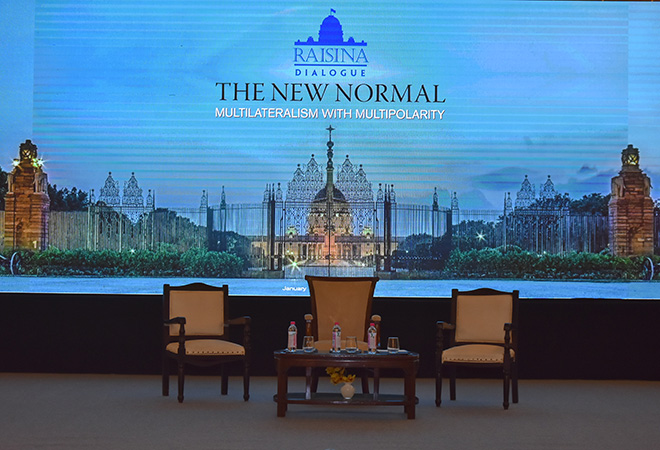
It should be clear then that there is only one legitimate inheritor to the global liberal order of any consequence: India. New Delhi alone can pursue the expansion of regional and global economic linkages while staying true to the ideals that drive them. The Raisina Dialogue itself was an example of how a global platform can be forged in India, bringing together contradicting opinions and voices from across the world. As the steward of the process, the Prime Minister cited the Rig Veda, inviting “noble thoughts […] from all directions.” The future of the globalisation project is intimately tied to India’s modernisation and rise. There is no growth without ideas, and conversely, no innovation without prosperity. India is the world’s best shot and perhaps the last shot at achieving both in these turbulent times.

Standard
Columns/Op-Eds, Politics / Globalisation

The end of Davos man: West-led globalisation has reached its limits, new champions for it are needed

February 7, 2017, Times of India , Samir Saran and Ashok Malik

Original link is here

President Donald Trump’s initial policy pronouncements on migration and his increasingly evident determination for creating jobs in America itself are new markers in this post-globalisation era. They end an epoch that began 25 years ago today, when the Maastricht Treaty was signed, creating the European Union. Three years later WTO was inaugurated. By the turn of the century, Project Globalisation had gained unstoppable momentum courtesy the internet.

The vocabulary and ethic of globalisation was written in the liberal democracies of the West. There were some foundational assumptions: that as economies opened to trade, incomes would rise, consumer tastes would converge, and so would values and beliefs. The Davos Man (or Woman), as it were, would become the universal exemplar or at least aspiration. This made a whole generation of politicians, scholars, trade economists and stand-up commentators from the West robust evangelists for globalisation.

As is now obvious after Brexit, the revolt among European nationalities and the Trump mandate – several of those suppositions were flimsy. Additionally, the economic success of globalisation made it easy and convenient to ignore fundamental paradoxes in the international system. For instance, since the end of the Cold War it had been apparent that the multilateral order desperately needed updating. It had been crafted in the aftermath of World War I and metamorphosed into the United Nations 20 years later. Much of its institutional design was no more relevant.

Heady narratives enhanced the allure of globalisation and allowed for papering over many such discrepancies. They also obscured domestic tensions within societies and communities: between coastal and heartland America or rich northern Europe and depressed southern Europe. Since the financial crisis of 2008, the bottom has been knocked out of the West-driven globalisation model. Absent its economic deliverables, it is no longer able to stave off the challenge from societal tensions, political ghosts, institutional gaps and stakeholder inequities. This is happening both internationally and within nations. A “domestic South” is mirroring the grievances of a “global South”.

US elites, hitherto evangelists of globalisation, are numbed by the thought that the sun is setting on the “American century”. Its little people, on the other hand, are rudely rejecting the notion that globalisation benefits all. While rising inequality in emerging economies is widely commented upon, it is often ignored that the current generation in OECD countries will be the first in the modern age to have a standard of living worse than their parents. This has caused a new and sometimes irrational aggregation of grievances. It has resulted in, for instance, the paradox of down-at-heel Americans empathising with a gold-plated Trump.

Gradually, every pillar of the Atlantic System – American hegemony as a security guarantor of last resort; industrial capitalism; liberal trade and free markets; the irrevocable retreat of the state from the citizen’s economic life and well-being – is crumbling. Yet, the West is not alone. The industrial order of the past 150 years, with its stress on big manufacturing and relentless export, is being overtaken by the digital age. This has placed a question mark on the Chinese model, as currently practised. Services and innovation are the rising currency, not shop floors and industrial production. It is these factors that will drive growth in India and Africa.

Having said that, India’s economic transformation, China’s merger with the global political mainstream and Africa’s promise as the final frontier all require the liberal trading order to retain its essential vibrancy and osmosis. This is not necessarily due to any ideological belief in the inevitable universalisation of liberal values, but simply because of utilitarian benefits: market access, capital and technology needs. As such, the Indian state and Indian enterprise can live with, indeed embrace, the pressing reality of transactional capitalism. They are not dogmatically opposed to it, unlike free-trade ayatollahs who never face voters or meet real people.

In its own way, the past 20-25 years have written internationalism into India’s political DNA. In theory, it offers a halfway house and a proposition to moderate both the isolationist impulses of Middle America as well as the overreach of Brussels and the Eurocrats. In attempting this, India is only doing itself a favour. For its economic growth and well-being it needs partner countries, from the European nations to Japan to of course the US, to retain a certain buy-in to the open trading system.

The quest to reimagine the ethic and vocabulary of globalisation is not India’s alone. In January, President Xi Jinping donned the mantle of benefactor of the World Economic Forum in Davos and made a case for free trade (and China’s unfettered access to Western markets). On the same day, Prime Minister Narendra Modi opened the Raisina Dialogue in New Delhi by stating baldly: “Globally connected societies, digital opportunities, technology shifts, knowledge boom and innovation are leading the march of humanity … But walls within nations, a sentiment against trade and migration, and rising parochial and protectionist attitudes across the globe are also in stark evidence. The result: globalisation gains are at risk and economic gains are no longer easy to come by.”

The globalisation narrative is being reimagined by the leaders of both China and India. This has economic implications, but comes with political baggage too – for only one of these narratives is rooted in liberal democratic values. It is for India to promote its narrative, as much as for the West – even the transactional West – to make its choices.

Samir Saran is vice-president and Ashok Malik is distinguished fellow at the Observer Research Foundation

Standard
Uncategorized

India needs to articulate the principles of managing world affairs

Samir Saran

The Indian example and its democratic choices are persuasive and much needed in the world.

BRICS,New Development Bank,Soft Power

Historian and sociologist Krzysztof Zalewski sits down for a Q&A with ORF Vice President Samir Saran.

Krzysztof Zalewski: India is a large country, both in terms of its population and its land area, with a fast-growing economy. It is perceived as a major new player on the global stage. What would the world order look like if co-organised by India?

Samir Saran: India’s impact on the world order is already significant, but it is a ‘work in progress’ at the same time. It is significant, because it is a telling story of a poor, developing country adopting robust democracy as the principle political instrument to improve the lives of its people. While India’s peers have fiddled with democratic and liberal ambitions, the Indian example and its democratic choices are persuasive and much needed in the world generally and in its own neighbourhood particularly. This story is a source of India’s soft power.

It is still a work in progress because a few concrete ideas need to crystallise. Over the next couple of years India needs to articulate its view of the world and on the principles of managing world affairs. What could be our proposition? Will it be based on key Indian realities like its democratic experiences, high-tech industry, expanding service sector, and agrarian transformation? India will need to arrive at an internal consensus on what is the Indian proposition.

KZ: So what would be the nature of India’s influence in the world?

SS: We need to answer a few questions internally first. Will India be seeking to replace old powers with a new face? Or is it going to change the ethos of how we manage our affairs collectively? As a country that will rise from the third world to soon become the third largest economy of the world, I am sure there would be expectations that the inclusive governance frameworks, which have been sought by India from the time of its first Prime Minister Nehru to its current Prime Minister Modi, must be what the Indian proposition should be based on. It will still take India another two decades to get to this point and this time should be spent on building up domestic debate and participating in conversations on the subject.

KZ: Every new power tries to formulate its ideological appeal when it is rising. We know what the American Dream is; in the last few years we have heard much about Chinese attempts to formulate the Chinese Dream. So what would be the Indian Dream in your personal view?

SS: Any Indian dream would not be too different to the ones of our founding fathers or even those of our current leaders. It has to be one that envisions a result in the eradication of poverty, disease and despair. In other words, the challenge is to integrate into global economic processes the approximately 500 million Indians who were born in the last 25 years and about four times that number born globally in the same period. They all want to have jobs, they all have dreams, they all have aspirations. Many were denied their dreams because of the colour of their skin, because of the place they call home, or because incumbents have refused to allow them a fair share of this world. India must attempt to find space for them in the global order.

KZ: Here in India I find many people are fascinated by the Chinese example and are sometimes a bit frustrated both by the slow decision-making process, normal for a democratic society, and the very complicated Indian federal system. So is it possible that Indian society will find the Chinese model increasingly attractive?

SS: Yes and no. To answer the first part of your question, many of us, and perhaps the vast majority, imagine ourselves as open, liberal and democratic people. We are far more comfortable with the values enshrined in the liberal order. India, in the second half of the century, will be one of the largest contributors to and defenders of the liberal order. In a sense, we will inherit the responsibility of serving these values, just as the Americans have been doing since the second half of the 20th century. In my opinion, it will be impossible for international liberalism to survive unless India takes the baton by then. The rest of the big international players will not necessarily have the affinity to Western European and American models of global governance.

While we do criticise our complex decision-making processes, which delay and sometimes deny development, in my mind, this criticism is not directed at the foundations of the political system that we have chosen and that we are governed under. While we admire the Chinese, we also admire the Germans and the Japanese. There is a greater allusion to China because it has been a fellow developing country and it offers us a real target to chase.

KZ: One of the instruments India has developed to become more visible as a global player is the BRICS group. In the Oxford Handbook of Indian Foreign Policy you have recently written a wonderful article on what BRICS is for India. From this I conclude that the BRICS grouping is a bit like a train with passengers leaving it at different stations.

SS: I am not speaking for the government of India, and I am certainly not speaking about the ambitions of China, South Africa, Brazil or Russia. I would argue that BRICS is a transitory vehicle for India. For a long time we were heading the global trade union, we were the driving force behind G-77 and Non-Aligned Movement, we were the energy which created third world institutions. Now we are a power that needs to contribute towards growth, peace and sustainability, and we will need to bear the costs of these as well. India will need to become a net provider in the global development architecture.

BRICS will help move India from the position of a global trade union leader to that of a global manager. We must do this carefully. We have to leave our erstwhile partners in this process, and it is more palatable if we part company in favour of BRICS than the OECD, given current realities.

KZ: So what does BRICS bring India in concrete terms?

SS: We are learning how to build new institutions of global governance, such as the New Development Bank (NDB) and the Contingency Reserve Arrangement (CRA) to manage liquidity and currency crises in the BRICS countries. We are also thinking of creating a credit rating agency, and about strengthening the WTO. We have also established security and energy working groups under the national security advisors within the forum of BRICS.

BRICS is important for the messaging it provides to India’s domestic audience. It motivates Indian citizens to be part of something bigger, to contribute to global challenges and realise greater responsibility, such as through the BRICS fund put to disposal during the eurozone crisis few years ago.

KZ: You mentioned the New Development Bank. In Asia a number of institutions of global economic governance are emerging, such as the Asian Infrastructure Investment Bank. How do you see the division of labour between these two institutions?

SS: The AIIB is exactly what the name suggests: it is a bank that focuses on Asian needs in developing infrastructure, in which India is the second biggest equity holder. The NDB has different goals and a different structure, which is novel, as every participant has equal rights. It will help finance not only infrastructure, but also place emphasis on social goods, such as advancing healthcare and stimulating small and medium enterprises. Joseph E. Stiglitz, the previous head of the World Bank, has argued that the world needs many more such institutions. Indeed, AIIB and NDB are only two of the many more institutions which need to emerge in order to transfer global savings into investments in developing countries.

KZ: The NDB has five member states with equal voting rights despite the vast difference of economic power within the BRICS. But it is open to other participants.

SS: 49% of the ownership can go to entities outside of BRICS member countries. It already envisages that other international institutions and maybe even countries can contribute. And I think over the next 2-3 years we will see that happening. The largest percentage of shares will be held by the BRICS countries, the rest can be owned by different states and institutions. It is important for the bank to have Americans, Scandinavians, and other Europeans on board. It will improve the bank’s rating, which means the cost of capital will go down.

KZ: If one wanted to encourage the Polish government to participate, what kind of arguments should be used?

SS: I would use two kind of arguments. Firstly, there is a huge disparity between development needs and the available capital. If Poland believes development infrastructure is an important area, the NDB is a useful vehicle for global economic development. Secondly, the NDB is a new bank, so if you come in early, you can still co-create this institution and have a say in the decision-making processes of the bank.

KZ: The NDB is just a part of the BRICS agenda for a change in global economic governance. But in my country it is sometimes perceived as a rival to the geopolitical order we generally support, a rival of the US. How would you convince people that you would like to contribute to the world order and not to fundamentally challenge it?

SS: The way you perceive BRICS’ contribution depends on where you are sitting. If you control global institutions, you will always look at newer constructs providing similar services to the global community with a certain degree of scepticism. BRICS is often accused of undermining the established international financial institutions, such as the World Bank or IMF, which is not true. I think BRICS does not have the capacity to be adversarial even if it wanted to play such a role. BRICS offers complimentary institutions in financial security and in other fields. It will deliver these services to those who need them most, that is, the underdeveloped countries. And it will do it in a manner different from what the OECD countries have done so far. So if it can lend money without the same conditions the World Bank does, and it can lend money directly to the sectors which will create jobs in Asia and Africa, it is contributing to creating solutions in these countries, and this will give it credibility in Asian and African countries. If the only difference between the NDB and the World Bank are the ethnicities of its managers, we would only be replacing one set with another and business will continue as usual. The credibility of BRICS will be assessed by the quality of the institutions it offers. Can the member countries create a credible BRICS rating agency, can they create secure digital economies, can they create an effective energy agency? So the challenge is really to create institutions.

KZ: Commenting on the BRICS summit in Goa last autumn, the media tended to focus on Indian attempts to isolate Pakistan. What should be done in order to prevent current political issues from dominating the BRICS agenda?

SS: We must not allow bilateral politics to define the narrative of these institutions; they must be bigger than the individual members.

We need to create a comfortable arms-length distance between bilateral relations of BRICS member states with third parties and the agenda of the grouping as such. If you look at the outcome document, Pakistan is not mentioned. Principles are mentioned. As long as you can discuss (within BRICS) principles of countering terrorism, it is helpful. If you try to shame and blame, you make cooperation weaker. BRICS should, however, continue to focus on strengthening economic cooperation.

This interview originally appeared in CSPA.

Standard
Uncategorized

Moving towards a secure digital economy

Samir Saran| Vivan Sharan

Even as incessant political bickering is polarizing opinion on demonetisation, India is making a significant transition to a digital payments ecosystem. This project endeavours to breach the urban-rural divide, geographical exclusions of the real world, and income criteria that privileged only a few with access to certain private and public services. This new digital payments ecosystem is brutal in its attempt to alter the way India transacts, trades and is taxed.

A wider adoption of digital payments will invariably change the dimensions of risks, crime and security as well. If pickpockets were a common menace some decades ago, cybercriminals may dominate conversations in the days ahead as they eye digital and online transactions. While the “pickpocket” had to select a relatively “fat target” to make the effort and risk worthwhile, the cyber thief will have a low-risk environment (lack of forensic capabilities, human capacities and attribution challenges) and an expansive reach of technology that will make even “petty pickings” attractive. And although cybercrime will affect us all, it will harm the poor disproportionately. It could ravage the small savings of many, deprive them of their meagre means and, most importantly, result in erosion of trust in the financial ecosystem currently being built. It is, therefore, important that the government pay heed to small fraud.

Read Also | Demonetisation

An early warning of this was provided by the frisson of panic that followed the cautionary message from the newly launched Bharat Interface for Money application (BHIM app) on 4 January 2017: “Users please beware: Decline all unknown payment requests you may get! We will work on an update, which will allow you to report spam.” This response is inefficient and leaves the ecosystem vulnerable to malicious intent.

Governments around the world and here in India must respond to this new dimension, where “petty cash is big money” and digital pickpockets pose a range of threats to individuals, institutions and economic stability itself. Most governments have left themselves with little time to create the requisite mitigation capabilities. The velocity of digitization and technology adoption must necessitate a response from policymakers different from what was the norm in the “public sector era”, where Centrally controlled banks and enterprises offered a modicum of stability, privacy, and security (with less efficiency). To achieve this, a comprehensive approach for securing the digital ecosystem must be devised and some actions must be taken immediately.

First, there are a multiplicity of stakeholders operating networks and tools that pose varying degrees of risk. This, in turn, demands differentiated security responses. These include the Reserve Bank of India (RBI)-run National Electronic Funds Transfer (Neft) and Real Time Gross Settlement (RTGS), the National Payment Corporation of India’s (NPCI’s) Immediate Payment Service (IMPS) on which the Unified Payments Interface (UPI) currently operates, traditional card networks, mobile payments solutions, various banking apps. In a report released in December 2016, the Union ministry of finance’s committee on digital payments suggested a hierarchical approach based on the level of “systemic risk” posed by different tools and networks. This must form the design basis going forward.

Second, while industry is consulted by expert committees such as the one referenced above, an inclusive multi-stakeholder consultative process must become the norm for policymaking itself, to avoid arbitrariness. This can be done by instituting multi-stakeholder consultations that are transparent and inclusive. This is the model India has agreed is best suited to govern the Internet internationally, and it’s time to adopt consonant processes at home.

Third, while the “mobile” is being hailed as a replacement for physical wallets as well as a proof of identity through its widespread use in second-factor authentication of digital payments, government and users should be circumspect about the risks involved. For instance, there is evidence to suggest that distributed denial-of-service (DDoS) attacks—in which a multitude of compromised systems attack a single target, causing denial of service for users of the targeted system—are increasingly targeting the applications layer rather than the network layer of the Internet. In layman terms this means a sophisticated mode of cybercrime is being unleashed on unsuspecting users of mobile applications and popular software.

Mature hardware-based solutions, such as tamper-proof Universal Integrated Circuit Cards and Embedded Secure Elements, are being tested against the latest forms of cyberattack. Software-based solutions such as Host Card Emulation are also relatively secure but require upgrades through the cloud, placing large data demands on the user and testing the service capabilities of the issuer.

Globally payment solutions that have been able to integrate hardware- and software-based security exist, but domestic mobile payments providers are relying largely on software-based security solutions. And while the Indian government’s Computer Emergency Response Team, RBI and NPCI are undertaking security audits of payment solutions, it is important that users be given standardized information to make informed choices, particularly when the digital adoption drive is at its height.

Lastly, it may be useful for the government to think of the digital payments ecosystem, now anchored by the NPCI, as analogous to the Internet. And much like the Internet, the National Financial Switch (the infrastructure backbone of all Indian ATMs, operated by the NPCI) must acquire robust redundancies offered by private-sector partnerships in order not to be a vulnerable single point of failure—which can potentially be compromised by self-styled “legions” of hackers. The NPCI should be managed through multi-stakeholder groups that can help with standard-setting, and can ensure that the payments ecosystem serves the common citizen, making even a small transaction online.

This commentary was first published in Live Mint.

Standard
Columns/Op-Eds, Politics / Globalisation

Rethinking the Future of Asia: Moving Beyond U.S. Dominance

Asia needs to discover a bridge between multipolarity and multilateralism. India could play an important role as a “bridge power.”

By and , December 11, 2016
Original link is here

Asia will shape the 21st century as much as the Atlantic consensus shaped the 20th century, or Europe the 19th. But to get there, Asia has to pursue a new project, one that begins to create a political Asia.

Like the Atlantic order flourished on the basis of the Bretton Woods and UN systems, Asia needs a reordering of the global landscape. We need a new management, a new board of directors and a new security architecture.

Any usable platforms?

At the very least, this emerging Asian system needs to bring three resident actors (China, Japan and India) and two regional stakeholders (the United States and Russia) to the same table. Other sub-regional influencers should be drawn in as well.

Could the East Asia Summit, of which all these countries are members, serve as a possible platform for such an architecture? Not quite. The East Asia Summit cannot really address the concerns of Central and West Asia.

Alternatively, Ii an expanded mandate for the G20 (seven Asian countries, two more if one were to include Turkey and Russia) the answer? Or do we need to think about a greenfield institution?

Three possibilities

Three possibilities — distinct, but not mutually exclusive — emerge. At the commencement of the 21st century, Asia’s politics resembles the fraught, rudderless multipolarity of the beginning of the 20th.

It took 50 years and two world wars for that reckless order to settle into a multilateral equilibrium.

Asia has to do it better, faster and without the external “stimulus” of a “Great War.” As the dowager power, the United States can incubate new institutional arrangements in Asia, playing Greece to emergent Asia’s Rome, to borrow from Harold Macmillan’s description of the post-war relationship between Britain and the U.S.

Option 1: India as the bridge power

Should the United States choose to bequeath the liberal international order to Asian powers, India will be the heir-apparent.

However, India would not play the role of a great power, but simply that of a “bridge power.” Asia is too fractious and politically vibrant to be managed by one entity.

India is in a unique and catalytic position, with its ability to singularly span the geographic and ideological length of the continent.

But for that to become a distinct possibility, two variables will need to be determined:

1. Can the US find it within itself to incubate an order in Asia that may in the future not afford it the pride of place like the trans-Atlantic system?

2. Can India get its act together and utilize the opportunity that it has right before it to become the inheritor of a liberal Asia?

Option 2: An Asian “Concert of Nations

The second possibility for a future Asian order is that it resembles the 19th century Concert of Europe. That would mean opting for an unstable but necessary political coalition of major powers on the continent.

The practical result would be that the “Big Eight” in Asia (China, India Japan, Saudi Arabia, Iran, Australia, Russia and the United States of America) would all be locked in a marriage of convenience (one hopes).

To be sure, aligning their disparate interests for the greater cause of shared governance, in one way or another, is a desirable outcome.

Difficult as it would be to predict the contours of this system, it would likely be focused on preventing shocks to “core” governance functions in Asia.

These include the preservation of the financial system, territorial and political sovereignties and inter-dependent security arrangements.

Given that each major player in this system would likely see this merely as an ad hoc mechanism, there is a potential major downside: Its chances of devolving into a debilitating bilateral or multi-front conflict for superiority would be high — very much like the (European) Concert of Nations eventually that gave way to the First World War.

Option 3: Sidelining the U.S.?

A third possibility could see the emergence of an Asian political architecture that does not involve the United States. This system — or more precisely, a universe of subsystems — would see the regional economic and security alliances take a prominent role in managing their areas of interest.

As a consequence, institutions like ASEAN, the Shanghai Cooperation Organization, the AIIB, the Gulf Cooperation Council and the South Asian Association of Regional Cooperation would become the “hubs” of governance.

The United States, for its part, would remain only distantly engaged with these sub-systems. It would be neither invested in their continuity nor be part of its membership.

Which outcome?

Rather than crystal gazing these three possibilities, our objective is to gauge the political underpinnings behind an emerging Asian architecture. Very simply, the question is: Will it be defined by contestation or cooperation?

Quite a bit will depend on the stance of the United States. Can the U.S. incubate a political order that is largely similar to existing multilateral systems? Or will the cost of creating disruptive institutions keep Asian countries from buying into them?

Beyond the U.S. dimension, can any credible pan-Asian governance institution successfully absorb — or at the very least acknowledge — the cultural, economic and social differences that characterize the continent?

Conclusion

The quest for the Asian century is not about finding the Holy Grail of shared governance, but diagnosing the right means to reach a sustainable and inclusive platform.

Rethinking the Future of Asia: Moving Beyond U.S. Dominance – The Globalist

About Ashok Malik

Ashok Malik is a Distinguished Fellow, and Head of ORF’s Neighbourhood Regional Studies Initiative.

About Samir Saran

Samir Saran is Vice President of the Observer Research Foundation.

Standard
Development Goals, Politics / Globalisation

Democracy, Diversity, Development: 2016 was dominated by their dark sides, can we channel the Force this year?

Times of India, Blog page, 10 January, 2017

Original link is here

2016 was witness to dramatic political changes. Everything that seemed improbable, even unthinkable somehow found new ways of manifesting itself, and that too repeatedly.

The impregnable walls of the European Union (EU) were breached when its largest security provider, Britain, decided to break free from the European project. A celebrity of a reality TV show was able to capture the imagination of a frustrated American public and walked away with a near impossible victory in presidential elections.

Liberal actors and voices were constantly defeated in many arenas by populist movements. The new energy of right-wing forces in several geographies competed with the new fanaticism among Islamic radicals. The defeat of liberalism defined the mood and events of 2016.

More than any year in the recent past, 2016 signified a metamorphosis of the global order itself. 2017 therefore becomes a very significant year as it brings together two unknowns for all of us to grapple with.

First is the future of global economics and financial systems, which are yet to be adequately restructured following the crises of 2008. Second are the political questions raised by the happenings of the year gone by. Both of these will have to be addressed discretely and jointly, if gains of the post-war order are to be maintained and strengthened.

Three, words must receive significant attention this year as we respond to the economic and political challenges that lie ahead: democracy, diversity and development. All three are today under threat, and all three by themselves are a threat to global stability.

In sheer numbers, more countries have adopted democracy as their principal political system than ever before. But there is also little doubt that there has been petty and political capture of democratic systems within these countries.

Democracy as a social ethic is under threat. It is assuming shades of majoritarianism in some instances – becoming a tool for convenient choices by the majority section of society. Democracy has also become a means for political leaders to absolve themselves from taking hard decisions. The moral fibre of democracy is being undermined by its numerical logic.

It can be argued that democracy is becoming a weapon to weaken pluralism. The ability of multitudes to take part in democratic debates through mass media, social media and other emerging platforms has certainly included new stakeholders. Yet the principles of the ensuing debates are no longer decided by what is right or wrong, but on the basis of right and left; ideologies multiplied by numbers are determining outcomes.

Democracy has also been hijacked as a legitimising tool by undemocratic forces. Be it Islamist parties in Turkey and the Middle East, or fundamentalist groups in Asia, the US and Europe, all of them have used democratic means to fulfil undemocratic objectives. In many societies, the word “democracy” needs to be re-thought, re-imagined, re-served, and made compatible with pluralistic principles.

Diversity is at one level being threatened by majoritarianism – by brute force that seeks to reduce those who are different, and marginalise those who belong to minority communities. On the other hand, diversity itself is now being used as the basis to recruit and create small communities, sub-national identities and radical movements that are fuelled by the difference that defines diversity – with violent consequences.

An extreme fringe of the Muslim community in Europe, the Buddhists in Myanmar, and Shia-Sunni postures in the Middle East: all of these are using this difference to either inflict violence on the ‘other’ or to motivate violence against those seen as irreconcilable enemies.

Technology and diversity together have created a new dynamic. Assimilation of outsiders in new communities has today become improbable as, instead of communicating with their physical neighbours, people remain locked in with those miles away.

This creates a basis of new exclusions, divisions and differences between those who may otherwise be in physical proximity. It makes the evolution of assimilative cultures and societies more difficult. In fact, it threatens to undermine syncretic civilisations that have existed over millennia. Diversity is both under threat, and is a threat in itself.

Development today is being threatened by a reluctance of large and important players to remain invested in liberal trading systems; to commit to the ideals of globalisation; to promote cross-border flows of finance, technology and people; and to achieve a convergence of lifestyles across continents.

Democratic forces, and fissures of diverse interests, vantage points and identities, make convergence on development goals near impossible. Institutionalised greed and the lack of enlightened action, masking itself as capitalist principle, will challenge both the global objective of responding to climate change as well as achieving the Sustainable Development Goals (SDGs).

But development is also a threat. Large actors, with large pools of funds, have begun to steer the processes of development to their own advantage. They seek to make life choices for all: to define healthcare for each citizen on Earth, write trade narratives for each society, define what constitutes the well-being and happiness of this planet, and adjudicate the boundaries to right to life itself. Development finance, aid, loans and know-how, under the garb of development partnerships, are seeking to create a landscape of economic growth, trade and transaction that will benefit a few.

The dark sides of democracy, diversity and development have defined global and local politics lately. Can 2017 be the year when the tide begins to turn and when a new light illuminates the essential and positive ethic associated with each of these three words?

DISCLAIMER : Views expressed above are the author’s own.


Standard
Uncategorized

Time to face up to cyber threats

Samir Saran

Cyber insecurity is now a global risk no different from the warming climate or forced displacement. Is such insecurity a business risk or a “public bad”?

 Cryptocurrency,Cyber Insecurity,Digital Economy,Digital India,Digital Infrastructure,Digital Payments,Global Commons,ICT,Innovation,Internet of Things
Courtesy: Gresham College

Crimes in cyberspace, by one estimate, now cost the global economy $445 billion a year. Cyber insecurity is now a global risk no different from the warming climate or forced displacement. Is such insecurity a business risk or a “public bad”? If the security of digital infrastructure is viewed as a business risk, who should mitigate it? Should states be responsible for the integrity of networks and data within their territories, failing which they will be classified as “risky” to do business in in the digital economy? Were cyber insecurity treated as a “public bad”, governments could justifiably conclude that vulnerabilities in one device or platform affect an entire ecosystem, and create a liability regime that shifts the burden on the private sector.

These issues are important to ponder as the Digital India programme and demonetisation encourage the rapid adoption of digital payments technologies. It is not only difficult to assess the “risk” of transacting in the digital economy, but also determine who such risks should be absorbed by. For instance, a high-end device may be able to offer security on the back of its tightly controlled supply chain, but what if an end user, by opening the door to a hidden exploit, compromised its operating system?

Three crucial trends will decisively influence the future of cyber security — the centralisation of data, the arrival of connected devices, and the rapid adoption of digital payments technologies. Centralised control over data can make access to databases easier and more vulnerable to attacks. The Internet of Things (IoT) ecosystem is set to explode, with more than 24 billion devices expected to be connected to the Internet by 2019. The sheer scale, size and diversity of the IoT environment makes risk difficult to measure.

Read | The great 21st century data rush

Perhaps the most important factor is the scale and speed at which digital payments have been adopted across the spectrum of transactions. Payment gateways work the same for all users irrespective of the volume or commodities/services transacted, but they are accessed on devices that vary greatly in their ability to protect data. How would insurers gauge the risk inherent in such a diversified market? Consider then, these key questions and conundrums.

First, if cyberspace is a global commons, will the socialisation of “bad” follow the “privatisation of profits”?

Unlike the environment, the oceans or outer space, digital spaces are not discovered — they are created. Cyber insecurity has been made out to be a global threat but the fact remains that the economic gains from securing digital spaces still accrue to a few countries and corporations. Do developed markets have a common but differentiated responsibility to secure digital spaces? If it is the responsibility of all, can developing countries also get a share of the economic gains from electronic commerce?

Cyber insecurity has been made out to be a global threat but the fact remains that the economic gains from securing digital spaces still accrue to a few countries and corporations.

Second, cybersecurity is a private service — how can we make it a public good?

Digital spaces are common to all, but the provision of their security is increasingly guaranteed by the private sector. This is in stark contrast to governance models in emerging markets, where the state underwrites law and order. How can the public and private sectors work together to provide this common good?

Third, India is moving towards security by identity, but many advanced economies believe security comes through anonymity. Are we on the wrong side of history?

Encryption is becoming the norm in advanced economies, as a result of which data is increasingly out of the reach of law enforcement agencies. On the other hand, India has moved towards biometric identification programmes that place a premium on identity. The “Aadhaar impulse” is driven by a requirement to target beneficiaries effectively, but without strong data protection regulations, the digital economy would be less than secure.

Read | Framing multistakeholder conversations on encryption

Fourth, if cash-based systems, ATMs and payment gateways are increasingly vulnerable to cyber-attacks, are “distributed ledger technologies” going to make governments adopt cryptocurrencies?

Blockchain and other technologies that “crowdsource” the authentication of online transactions using bitcoins are more difficult to target, because they are by their very nature, distributed ledgers. Will the increasing insecurity of the fintech ecosystem push us towards cryptocurrencies?

Fifth, cyber security is an expensive proposition in advanced economies, where the most sophisticated instruments are also assumed to be the safest. How can India apply its famed “frugal innovation” in this space, and protect the user while providing affordable access to the Internet?

The ICT supply chain in India is only as strong as its weakest link: the end user. If the user is from rural India, with a limited understanding of the devices and transactions she accesses, her device is a point of vulnerability. If the device itself is “low-end”, which places a premium on cost over security, this forms a lethal mix that endangers the security of all users in the ecosystem. India cannot afford a false separation between access and security in digital spaces, as the qualitative nature of access will determine ICT security for a billion people.

Sixth, who determines the risk of transacting on the Internet, and how?

If transactions in cyberspace will invariably carry an element of risk, who will guarantee them? The buyer, seller or intermediary? As in the case of shipping, will we see a form of cyber-insurance applied to cover the risk of malicious attacks online?

Developments in cyber security leads one to surmise that economies will soon be subject to a risk-assessment based on the integrity of their networks. Risk-based assessments offer predictive value and guarantees of stability to businesses, but they should not perpetuate inequities that exist offline.

Limited means to enhance cybersecurity in developing economies should not set back investments in the digital economy, which in turn create a vicious cycle rendering the overall ecosystem insecure. The international community must articulate ways in which such risks can be mitigated, and facilitate access in emerging markets to technology and finance that generate investments in cybersecurity.

This commentary originally appeared in Hindustan Times.

Standard
Energy, Water / Climate

The finance sector must sign the Paris pact

live mint, Dec 28, 2016

Original link is here

Without increased climate funding to the global South, the poor will end up underwriting a green future for a privileged few

paris-kkn-621x414livemint

The infrastructure gap, global financial sustainability, and a green future are recognized to be common global problems. Photo: Bloomberg


The Paris Agreement on climate action has an Achilles heel: the lack of a buy-in from the financial community. This absent and crucial signatory will need to play a significant role if any ambitious response to climate change has to be achieved.

This is easier said than done. “Sustainability” in financial market jargon has a very different meaning to when it is used in development-speak. In the market, this term largely disregards issues pertaining to employment generation, poverty eradication, inclusive growth and environmental considerations. Instead, it is monomaniacal in enhancing the “basis points” of the returns it generates for the community it serves—with only perfunctory interest in the “ppm (parts per million)” of carbon (mitigated or released) associated with the deployment of finance, or the human development index (HDI) effects of investments.

The regulatory responsibilities and the fiduciary duties that drive the functioning of this community are focused mostly on protecting the interests of investors and consumers (of financial instruments and banking services) by de-risking the financial ecosystem. Together, these present two specific hurdles, both of which make it difficult for the world of money to serve the ambitions of the Paris Agreement. The first hurdle pertains to geography, more specifically political geography. And the second pertains to democracy, more specifically the politics of decision making within institutions that shape and drive global financial flows.

Together, they have deleterious consequences. For instance, the major chunk of climate finance labelled as such finds it tedious to flow across borders. Thus, it is mostly deployed in the locality of its origin. This tendency is even starker for financial flows from the developed world to the developing and emerging world. An Organisation for Economic Co-operation and Development—Climate Policy Initiative (OECD—CPI) study found that “public and private climate finance mobilized by developed countries for developing countries reached $62 billion in 2014”. A separate study by CPI estimated that global flow of climate finance crossed $391 billion in the same year—implying that only about 16% of all flows moved from developed to developing countries.

This represents the most significant “collective action problem” that confronts the global community on the issue of climate change. While there is a near universal recognition that a) climate change is a global commons problem, b) the least developed countries are likely to be most affected, and c) significant infrastructure will need to be developed in emerging and developing countries to improve their low standard of living, the flow of money is (not surprisingly) blind to each of these. It recognizes political boundaries, responds to ascribed (and frequently arbitrary) ecosystem risks within these boundaries and flows to destinations and projects that enhance returns—as it was meant to.

The travails of this constrained flow of capital do not end here. In a discussion paper published by the climate change finance unit within the department of economic affairs at the Union ministry of finance, it has been highlighted that even this modest cross-border flow, which also accounts for pledges and promises made, does not adhere to the “new and additional” criteria. Flows of conventional development finance and infrastructure finance are on occasion reclassified as climate finance. And on other occasions these conventional flows are cannibalized to generate climate finance. The size of the pie remains the same.

Unless we are able to increase the total amount of resources available to cater to both the development priorities and climate-friendly growth needs of emerging and developing economies, we may only be able to build a future that is both green and grim. Everywhere, low-income populations will underwrite a green future for a privileged few.

Additional finance for meaningful climate action may be generated by simultaneously working on three fronts as we move to 2020. Successful climate action will first and foremost be predicated on the domestic regulatory framework within each country. Currently, a slew of regulations, from the flow of international finance into the domestic economy to those related to debt and equity markets, disincentivize capital from investing in climate action. It is imperative for policymakers to get their own house in order and create financial market depth and instruments that allow savings to become investible capital even as they continue to demand a more climate-friendly international financial regime.

Second, there currently exists a vast pool of long-term savings—which can be labelled “lazy money”. According to a recent International Monetary Fund report, much of this lies with pension, insurance and other funds, which have accumulated savings of approximately $100 trillion. Due to lack of political will and appropriate mechanisms, this money is neither invested in the climate agreement objectives nor in the sustainable development goals agreed to at the UN last year. This helps nobody. As a result of its inability to flow across borders, developed-world savers earn sub-par returns. And due to this source of finance remaining outside the climate purview, the investment gap in infrastructure, particularly in developing countries, has continued to increase. It now stands between $1 trillion and $1.5 trillion each year. Making this “lazy money” count will be extremely important.

And finally, it is time to bring the big boys controlling banking standards into the tent. The Basel III Accords, designed to create a more resilient international banking system through a suite of capital adequacy, leverage, and liquidity requirements, contribute little to global climate resilience. Given the dependency of emerging economies like India on commercial finance for capital-intensive projects, the Basel Accords need urgent review.

The infrastructure gap, global financial sustainability, and a green future are recognized to be common global problems. But the world cannot continue to solve them on three different tracks. If so, each of them will fail. Only once they are seen as inter-connected can they be addressed effectively.

Samir Saran is vice-president at the Observer Research Foundation.

Standard