Books / Papers, Water / Climate

Identity and Energy Access in India – Setting contexts for Rio+20

by Samir Saran and Vivan Sharan

Please find here the original article as pdf file (starting from page 14): TERI Energy Security Insights.

In the two decades following the Rio Earth Summit of 1992, India has changed dramatically. It has transformed from a closed economy with empty coffers to one that is now far more integrated with the world and is widely viewed as one of the most important ’emerging economies’ that are shaping the 21st century. This year in June, stakeholders from across the globe will convene in Rio once again to discuss what is destined to be amongst the most important contemporary theme-sustainable development. The Rio+20 Summit, otherwise known as the United Nations Conference on Sustainable Development (UNCSD), will serve as an introspective pause, a chance to review development trajectories, and to realign priorities with reality and ambitions. India will find itself in the uncomfortable position of demanding greater development space and equity as a nation from the developed world, while having to reconcile stark domestic inequities amongst different social groups and income classes.
India’s views on the priorities outlined by the UNCSD were communicated in an official submission sent to the UNCSD Secretariat on 28th October, 2011. According to the document, India views universal access to modern energy1 as “essential for improving the quality of life of the poor”. Yet the nation’s achievements in building capacities to generate or distribute energy in its various forms have been far from remarkable, and indeed far from what is needed to ensure universal access.

India produced around 811 billion units of electricity in 2010-2011,2 with about 300 million people with no access to electricity3 and many more with only notional access. The per capita energy consumption in the country remained around 500 kilograms of oil equivalent, compared with a global average of 1800 (MoEF 2007).

India’s National Electricity Policy, which was notified in 2005, outlined the objective of ensuring “power for all” by 2012, an ambition which still remains far from fulfilled. The fact that only about half of the planned 78,577 megawatts of capacity additions took place over the course of the 11th Five Year Plan,4 exemplified an abject failure in implementation of transformational energy sector projects.

Such failures in implementing capacity-addition programmes, alongside attracting sufficient domestic and foreign private sector investments in the energy sector, are indicative of a larger political failure. The policy deadlocks that result in the lack of progressive reforms on land use and acquisition, foreign capital flows, and environmental norms have created an uncertainty that adversely affects investment decisions. This uncertainty, coupled with bureaucratic hurdles and the threat of disruptive regulatory and tariff policies, has managed to keep both local and international investors away from large scale, capitalintensive energy projects. This economic environment is also keeping away investments into smaller, off-grid solutions, which already suffer from an inherent lack of scalability and from the weak absorptive capacities within local communities.

This capability gap (in execution), due to a variety of reasons, is also why India is unable to commit to timelines and sought development space (read ‘time’) at the most recent international forum. The virtual deadlock at the Durban Climate Change Conference5 is, in part, a result of the inability of India to commit (or even envision) timelines to peak energy emissions, even for achieving global energy poverty thresholds.6 This is the real and hidden story of ‘Emerging India’. Perhaps it is time that this is placed on the table at Rio+20 and beyond, and that Indian positions on mitigation and capping of emissions are understood in this light.

The emphasis on universal access to ‘modern energy’ is an important aspect of the Rio+20 agenda, and it may be useful to understand the Indian landscape. According to 2009-10 Indian National Sample Survey (NSS) data from households, 75 per cent of rural India still relies on traditional energy, such as firewood, for cooking fuel; while over 33 per cent in the same category rely on kerosene for lighting (as a substitute for electricity).7

Over the period 2004-05 to 2009-10, as a result of focused rural electrification programmes such as the Rajiv Gandhi Vidyutikaran Yojna, access to electricity in rural areas did increase by over 10 per cent; and over the same period, access to LPG (for cooking) in urban areas has also shown significant improvement.8

While such numbers indicate that efforts to transform the energy demography have not completely stalled, the dependence on traditional and inefficient forms of fuels has not shown substantial decline. A case in point is the minimal 1.85 per cent decrease in dependence on firewood for cooking across India over the five-year period as shown in Table 1.

Yet these numbers only convey a macro position on energy access. Even cursory examinations of some of the surveys and reports suggest that there are deep and complex socio-economic issues at play that must be addressed and resolved by the policymaking apparatus in order to achieve real progress.

Identity and Access

India is a diverse country, with multiple identities gleaned through the prisms of religion, social groups, regions, language, ethnicity, economic capability, and many more. For the purpose of this paper, it is our intention to examine the state of energy access across social groups and economic classes: the two most prominent identities of modern India.

Even as India aspires to work within a more balanced and stable multilateral framework, and seeks the enhancement of local institutional capacities and capabilities, these alone are unlikely to address the fundamental causes of lack of energy access, and will require substantial levels of organic social transformation through local and national programs. These would need to focus on means of delinking energy access from income class so as to offer a modest quantum of modern energy as a universal right alongside food and education. This may allow certain transformations in the causal relationship that exists today between social groups and income classes (Table 2) and could potentially assist in bridging the socio-economic wedge between marginalized groups and the rest.

On studying the patterns of energy access in Table 3, it is quite apparent that Scheduled Castes (SCs), Scheduled Tribes (STs), and Other Ba ckward Classes (OBCs)10 in rural areas are more reliant on firewood-a traditional cooking fuel, than ‘other’ social groups who increasingly use modern fuels such as LPG. Firewood has low cooking efficiency, and its use has detrimental effects on health (due to the proximate smoke that is generated) and environment (owing to deforestation and greenhouse gas emissions). The average dependency on firewood is between 76 and 88 per cent across the aforementioned disadvantaged groups, compared to close to 66 per cent for all ‘other’ groups11 in rural areas. The data shows (Table 3) that the dependency on firewood has only increased over time12 (between 2004-05 and 2009-10) in rural areas amongst the disadvantaged groups, while it has simultaneously shown a marginal decrease for ‘other’ groups.

Alongside the divergences amongst social groups, the difference in energy access across income groups also becomes instructive. The lowest income class is as reliant on firewood in urban areas as it is in rural areas. The startling fact is that the inequity in the urban areas has become more pronounced over the five-year period for the lowest income group shown in Table 4, with reliance on firewood increasing from around 69 per cent to around 76 per cent, and access to LPG decreasing from 5.8 to 1.83 per cent. Although absolute numbers in the lowest income groups have decreased significantly,13 affordability is still a key challenge.

Asymmetric patterns of access to electricity are also prevalent in the country. The percentage of households still using kerosene for lighting in rural areas averages between 30 to 40 per cent for disadvantaged groups-a striking figure considering that typical kerosene lamps deliver between 1 and 6 lumens per square meter (lux) of useful light, as opposed to typical western standards of 300 lux for basic tasks such as reading (Mills 2003).

A pronounced inequity of access among social groups is also observable across rural-urban areas in Table

5. While approximately 60 per cent of STs have access to electricity in rural areas (lower than the rural average as given in Table 1), around 87 per cent within the same social group have access to electricity in urban areas. The electricity access divide between the SCs, which are a significant social group in terms of urban population (Table 2), and the ‘others’ is around 9 per cent.

It is interesting to note that the level of access to electricity for SCs in urban areas is roughly equivalent to level of access for urban citizens in the MPCE bracket of INR 675 – INR 790 per month (Table 6), which is representative of a level much below even the conservative World Bank extreme poverty threshold (defined at US$ 1.25 a day).

In terms of energy access, the statistics suggest that SCs are pegged at a level of access for income classes below the average income of this social group. The share of kerosene for lighting has reduced significantly amongst the lowest income classes in rural areas over 2004-05 to 2009-10 (Table 6).

Meanwhile this trend is not witnessed in urban areas, where the inequity is starker over the same period with an increase in dependency on this fuel by 16.32 percentage points. Access to electricity for the lowest income class in urban areas has decreased from 62.1 to 44.56 per cent. This mirrors the trends in cooking fuels and is indicative of inherent inequities in the provision of access to modern energy in urban areas, alongside the implications of price rise and inflation.

While rural areas tend to suffer from an overall lack of access to modern energy, poor inhabitants in urban areas experience discriminatory barriers usually based on economic capacity. Such trends would challenge policies in the context of a sustainable development agenda, as India is likely to witness sustained and rapid urbanization in this current decade and beyond.

According to the provisional numbers released by the Census of India last year, 90,986,070 people were added to the urban population of the country,14 more than the number added to the rural population. The pace of movement to cities in India is unprecedented, and is on a scale that, outside of China, is unparalleled; with over 30 per cent of the total population already living in urban agglomerations. Our estimates suggest that around 44.5 per cent of the total decadal increase in urban population was a result of migration.15

Urban centres in India are veritable microcosms of the entire country-with a diverse mix of communities, cultures, and income classes ranging from the marginalized, disadvantaged classes to the expanding middle class-which is the primary driver of consumption and economic growth. Table 7 suggests that the share of OBCs in the overall urban population mix has increased substantially over the previous decade, while the proportions of the rest of the disadvantaged groups has almost remained the same, and ‘others’ have shown a marked decrease.16 The way that the various sections of society interact with each other, and perceive each other’s spaces and priorities would be an essential ingredient in India’s growth story going forward.

Conclusion

The trends highlighted in this paper demonstrate that existing inequities in access to modern energy amongst the lowest income classes and the disadvantaged groups tend to reinforce each other. The causal relationship between income classes and social groups acts as a self-fulfilling spiral, breeding inter-generational infirmities. Our analysis suggests that this is particularly true in urban areas. Given the fact that India will add over 200 million urban citizens over the next twenty years,17 increased policy emphasis must be given to urban areas by creating new ways to allow access to energy, especially for those who cannot afford it. The Rio Earth Summit of 1992 coincided with the beginning of India’s increased engagements with the international community. This current decade is likely to determine whether or not the country will succeed in narrowing income gaps, overcoming socio-economic inequities, and reducing poverty through decisive domestic actions. An economy and country which uses a majority of its scarce resources and limited infrastructure to serve only a minority of its people will find it increasingly hard to deflect arguments which suggest that its elite hide behind its poverty. India’s macro position on equity at international fora such as Rio +20 must be reflected in its domestic resolve to offer energy equitably to its diverse population. The imperatives of creating a ‘green economy’ must only follow and complement such efforts.

References

MoEF (2007) India: addressing energy security and climate change. Available at
http://www.moef.nic.in/divisions/ccd/

Addressing_CC_09-10-07.pdf.

IEA (2010) World Energy Outlook, Paris: International Energy Agency. Mills E (2003) Technical and Economic Performance Analysis of Kerosene Lamps and Alternative Approaches to Illumination in Developing Countries, California: Lawrence Berkley National Laboratory.

(Samir Saran is a Vice President and Vivan Sharan an Associate Fellow at Observer Research Foundation)

Courtesy: Energy Security Insights, TERI (January-March 2012)


1 The International Energy Agency describes modern energy access as “a household having reliable and affordable access to clean cooking facilities, a first connection to electricity and then an increasing level of electricity consumption over time to reach the regional average”. The initial threshold level of electricity for rural households is assumed to be 250 kWh, while urban households are assumed to use 500 kWh per year on average. For more information, see
http://www.iea.org/papers/2011/weo2011_energy_for_all.pdf

2 According to the Central Electricity Authority:
http://www.cea.nic.in/reports/yearly/energy_generation_10_11.pdf

3 The latest figure for the number of people without access to electricity is 272 million. This is calculated from the 66th round of the National Sample Survey.

4 34,462 megawatts were added by the end of FY 2011.

5 The 17th Conference of Parties held in November, 2011, in Durban, South Africa.

6 The 2010 edition of the “World Energy Outlook” published by the International Energy Agency assesses two primary indicators of energy poverty at the household level-the lack of access to electricity and the reliance on the traditional use of biomass for cooking. As is highlighted in this report, India fares badly across both the indicators.

7 Data obtained from ‘India Data Labs’ at the Observer Research Foundation.

8 Throughout the paper we make the assumption that electrification is the closest available proxy for access to electricity and we acknowledge that access to the grid may not necessarily imply access to energy. In this context, we make conservative estimates of the overall lack of access to electricity.

9 The Government of India uses MPCE as proxy for income for households to identify the poor (who tend to have minimal savings).The proxy works well given that expenditure= income – savings. Similarly, we use MPCE throughout this paper to define income classes.

10 To be referred to as “disadvantaged groups” henceforth.

11 2010 Data obtained from ‘India Data Labs’ at the Observer Research Foundation

12 Given that LPG use has increased in rural and urban areas, the simultaneous increase in the use of firewood can also be attributed to the substitution of other low efficiency cooking fuels such as dung cake. It is instructive to note that according to NSS data, the use of dung cake for cooking (all India) has decreased significantly over the discussed five year period amongst SCs and OBCs showing a 3.1 per cent and 5.51 per cent decline in each of the respective social groups.

13 According to NSS data

14 Provisional Population Tools, Census of India
http://censusindia.gov.in/2011census/censusinfodashboard/index.html

15 According to Census 2011, total decadal growth rate of population is 17.64 per cent. Using this conservative benchmark (urban decadal growth rate is 31.8 per cent); the total population increase in urban areas should have equalled 50,471,513, whereas the figure stands at 90,986,071.

16 It is important to note the caveat that the NSS relies on self-reporting of people about their Other Backward Classes (OBC).

17 According to the United Nation’s World Urbanization Prospects, 2009.

Standard
Water / Climate

India Market and Environment Report (IMER)

Please find here the original link to the g-trade-website. 

Volume 1 of the IMER captures the financial performance and energy use efficiency of the top 100 Indian and Global companies for FY 2011. The report also details in brief, the market and environment performance metrics of 9 sectors of the Indian economy – Financial, Automotive, Machinery and Capital Goods, Pharmaceutical and Biotechnology, Textiles, Apparels and Accessories, Steel, Utilities, Cement and Oil and Gas. Volume 1 is the first in a series and a context setting precursor to sector specific corporate carbon performance reports by gTrade, which will aim to build greater ethical and sustainable investment sensibility in India, to steer businesses and investors towards an efficient market based framework which prices carbon risk appropriately.

gTrade is delighted to announce the launch of Volume 1 of the IMER. To purchase a hard copy now, click here

(Discounted rates are available for bulk orders/institutional buyers)

For the detailed Table of Contents, click here

For a snippet from Volume 1 of the IMER, click here

For institutional/bulk buying, email: reports@g-trade.in

Why you should purchase a copy:

  • Cutting edge business specific energy analytics developed at India’s premier research labs
  • Provides information on the carbon offset potential among the largest corporations in India for CDM and other substitution projects.
  • Provides data points and analyses outlining scope for renewable energy generation.
  • Ideal for businesses interested in profiting from increasing efficiency of operations, production or governance
  • A great tool for investors to immediately identify potentially undervalued stocks relative to sustainability performance
  • An instrument of verification of investment decisions for large institutional investors – both foreign and local,
  • A benchmarking and knowledge building tool – for entities involved in the business of carbon – through global carbon schemes such as CDM
  • An unparalleled learning tool for those looking to understand sectoral efficiency performance landscapes in India, for investment, research, capacity building, energy management and policymaking
Standard
In the News, Water / Climate

De-securitise global climate change talks

Please find here the link to the original article.

Connecting climate change with security will defeat democracy in developing nations, said climate experts at a roundtable conference in New Delhi.

New Delhi: Linking climate change and conflict is not new. Even in the 70s, Western scholars like Richard Falk and Lester Brown started talking about the relation between environment and security. Environmental refugees and, wars over depleting resources became a common topic to talk about in the post Cold War period. It was an initiation to securitise climate change and other environmental issues.

Scholar Ole Waever had said, “Something becomes successfully securitised when it is cast as an existential threat that justifies an extraordinary (usually military) response.” On and off, climate change is being observed as a bigger threat to security than nondemocratic regimes, relative power and a conflict-ridden history, that can act as an ‘excuse’ for military response, fear experts.

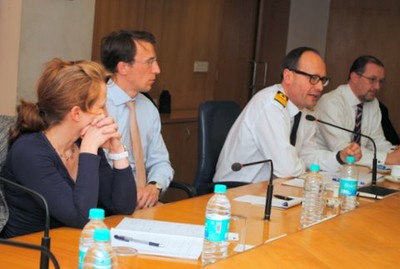
Climate change is a serious issue that requires consideration to ensure water, energy and food security, particularly in the South Asian region, but it should not be seen as a basis that will lead to security dilemmas, asserted panellists at a roundtable discussion, ‘India’s vulnerability to climate change: The security implication’, organised by the Observer Research Foundation (ORF) on February 15, 2012 in New Delhi.

“We live in globalised world. We are interconnected. What happens in one part affects us,” said Admiral Neil Morisetti, UK envoy on Climate and Energy Security. He cited the growing perception of ‘climate change as a stress multiplier’ amongst the Western world and endorsed the idea of incorporating international perspectives on climate issues in the national security strategies.

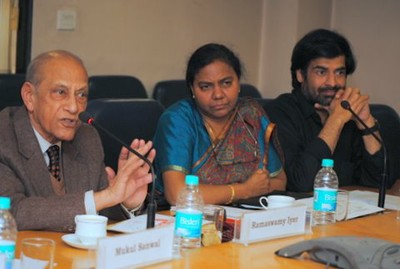
Highlighting the reasons behind the success of the Indus Water Treaty between India and Pakistan, Ramaswamy Iyer, Former Secretary, Ministry of Water Resources said, “Despite wars, nothing has happened to the Indus Water Treaty because it’s a simple treaty and has been insulated from political and military interferences.” Citing examples from the treaty, Iyer denounced the idea of securitisation of climate change and the implications of giving a ‘security angle’ to key issues related to environment and natural resources management.

“Melting ice is not as big a problem for India, as sinking rivers is,” said Mukul Sanwal, former coordinator UNFCCC. Sanwal presented a different perspective over traditional ways of evaluating climate change impacts. According to him, elements of societal change, growing Asian markets and changing trade routes should be taken into account while carrying out climate change assessments. He also emphasised that climate change might encourage countries for greater cooperation rather than act as a threat multiplier.

Samir Saran, Vice President, ORF, recommended that in order to disconnect security and climate change, research and development on climate change should not be carried out with defence institutions. He added that additional grants to security divisions are unnecessary when it comes to tackling climate change. Developing nations already have a strong military presence and securitising environmental issues would defeat democracy in such regions. Therefore, de-securitisation of climate change is imperative for peaceful relations between the countries.

Standard
In the News, Water / Climate

BSE-GREENEX to Promote Green Investments in India: Think to Sustain Website

Please find here the link to the original article.

The BSE-GREENEX is designed to promote ‘green’ investing mindset among investors and assesses corporate on quantitative metrics for carbon performance.

Mumbai – Indian markets witnessed the launch of the first-ever live carbon index, BSE-GREENEX, at the hands of Dr. (Shri) M. Veerappa Moily, Hon’ble Minister of Corporate Affairs, Government of India at BSE on February 22.

BSE Ltd. (Formerly Bombay Stock Exchange Ltd.) in association with gTrade (supported by GIZ) and promoted byFederal Republic of GermanyObserver Research Foundation and IIM Ahmedabad)  has constructed BSE-GREENEX – designed specifically to promote green investing, with emphasis on financial performance and long term viability of companies. It is based upon purely quantitative and objective performance signals to assess carbon performance. BSE-GREENEX includes top 20 companies based on greenhouse gas numbers, free float market capitalization and turnover.

In keeping with BSE’s efforts to create fund friendly Indices, it is the third Index which is calculated based on the capping methodology. This Index will be helpful to asset managers for creation of various products, to help investors to invest in the green theme of India. BSE-GREENEX is expected to have a feedback effect on companies’ reputation. It will help the Government to gauge policy implementation and acceptance with regard to energy usage and efficiency measures, as the market follows an efficient signaling mechanism which adjusts positively or negatively to any news/policy shifts.

At the launch ceremony at BSE, Dr. (Shri) M. Veerappa Moily, Hon’ble Minister of Corporate Affairs, said, “It is my belief that companies and investors in developing countries like India, need to recognize the value created by corporations through the efficient and sensible use of energy. The Ministry of Corporate Affairs has been very active in this regard. I am delighted to be here at the launch of BSE-GREENEX that lists companies that are able to marry financial performance and carbon efficiency. I feel that this Index’s objectivity will be its strength and the differentiator.”

Shri Madhu Kannan, MD & CEO, BSE, stated, “India is in a unique position to create a low-carbon green economy. So far India has focused on the fiscal aspect of economic growth. Now, it’s time we think about the environmental aspects of growth also. I am delighted that BSE in keeping with its tradition of innovation is today launching a carbon index – the ‘BSE-GREENEX. BSE will continue to contribute in full measure towards the Ministry of Corporate Affairs efforts of green and sustainable development in India Inc.”

Shri Rajiv Agarwal, whole time member, SEBI (Securities and Exchange Board of India)Shri Sunjoy Joshi, Director, ORF (Observer Research Foundation), Prof. (Shri) Amit Garg, IIM Ahmedabad and Shri Samir Saran, Chairman, gTrade, were also present at the launch and spoke on the subject.


For more information about the Index, do check the following link:

Source: BSE.

Standard
Books / Papers, Water / Climate

ORF Report “Re-imagining the Indus”

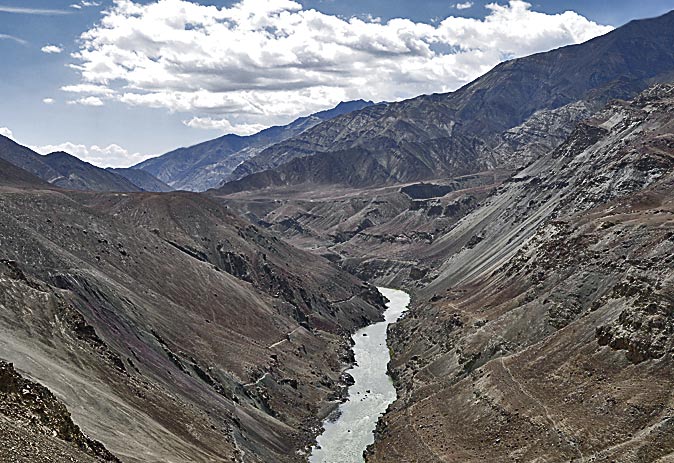
Please find here the link http://orfonline.org/cms/export/orfonline/documents/other/indus.PDF to our comprehensive report on the “Indus”, the associated treaty, the emergent rhetoric and the reality of people whose lives are inseparable from the river and their traditional and contemporary water management practices.

It is perhaps the most comprehensive effort that captures essential narratives and historical evidence from both sides of the border, that is unable to divide the organic and indivisible river basin.

Co-produced with the LUMS, Lahore with the support of the DFID, this research led by ORF scholar Lydia Powell is certain to offer a pragmatic insight on the debate and the way ahead for the two countries and more importantly for the one people of the river Indus.

I had the pleasure of writing one section of this report.


Standard
Books / Papers, Water / Climate

Carbon markets and low-carbon investment in emerging economies: A synthesis of parallel workshops in Brazil and India

Abstract

While policy experiments targeted at energy and innovation transitions have not been deployed consistently across all countries, market mechanisms such as carbon pricing have been tested over the past decade in disparate development contexts, and therefore provide some opportunities for analysis. This brief communication reports on two parallel workshops recently held in Sao Paulo, Brazil and New Delhi, India to address questions of how well these carbon pricing policies have worked in affecting corporate decisions to invest in low-carbon technology. Convening practitioners and scholars from multiple countries, the workshops elicited participants’ perspectives on business investment decisions under international carbon markets in emerging economies across multiple energy-intensive sectors. We review the resulting perspectives on low-carbon policies and present guidance on a research agenda that could clarify how international and national policies could help encourage both energy transitions and energy innovations in emerging economies.

Read the entire article here: Full article (PDF-version).

Standard
Books / Papers, Water / Climate

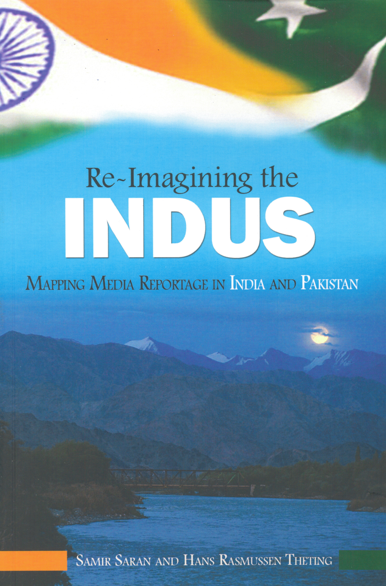
Re-imagining the Indus: Mapping Media Reportage in India and Pakistan

Published 2012, Observer Research Foundation, New Delhi

Overview
Water shortage has become a subject of intense public debate in the present political narrative on resource management and riparian rights. In an attempt to discern the divergence on core issues and mainstream media reporting, Re-imagining the Indus is a methodological study based on Media Content Analysis of the reporting on water issues related to the Indus, in the leading dailies of both India and Pakistan. This monograph seeks to capture the existing discourse and stimulate policy dialogue on the subject.

In Detail
What is the general discourse on water scarcity and related crises in the Indian and Pakistani media? The study conducted by Samir Saran (ORF) and Hans Rasmussen Theting, scrutinised the media coverage on water on three specific themes – the political discourse, water governance and people, practice and environment.

Titled ‘Reimagining the INDUS: Mapping media reportage in India and Pakistan’, the study found that the Indus Water Treaty (IWT) does not dominate the reportage in Pakistan, indicating a low level of discontentment or critique.

It also found that it is only in the months of winter, when the water flow is low, that inter-country dispute between India and Pakistan, and significant negative sentiment against India, gets attention in Pakistan. But in the Indian media, Pakistan only appears during spring months.

The study, now published in the form of a book, found that agricultural concerns and inter-provincial disputes dominate media reportage in Pakistan while in India media lays greater emphasis on urban water concerns and interventions, including ground water and domestic consumption.

The study also showed that media reports in both the countries, Pakistan more than India, recognise the need for the two countries to cooperate on water issues. From the study, it was also clear that in both India and Pakistan, there is equal emphasis on the aspects of water governance and infrastructure.

Standard
In the News, Water / Climate

Human Security Report Project features ORF report on ‘Water Security in South Asia’

May 20, 2011
Linkto original websiteThis brief is largely based on several discussions organised at Observer Research Foundation over a period of time. These discussions were enriched by the presence of some of the well-known experts on water issues in the country, like former Union Minister for Water Resources, Dr. Suresh Prabhu, current High Commissioner of Bangladesh, Tariq Ahmad Karim, Mr. Sunjoy Joshi, Director, Observer Research Foundation, Ms. Clare Shakya, Senior Regional Climate Change and Water Adviser, DFID*, India, Mr. Samir Saran, Vice President, ORF and Dr. Dinesh Kumar, Executive Director, Institute for Resource Analysis and Policy, Hyderabad.

It is estimated that by 2030, only 60 per cent of the world’s population will have access to fresh water 1 supplies . This would mean that about 40 per cent of the world population or about 3 billion-people would be without a reliable source of water and most of them would live in impoverished, conflictprone and water-stressed areas like South Asia.

Water is already an extremely contentious, and volatile, issue in South Asia. There are more people in the region than ever before and their dependence on water for various needs continues to multiply by leaps and bounds. The quantum of water available, for the present as well as future, has reduced dramatically, particularly in the last half-acentury. This is due to water-fertiliser intensive farming, overexploitation of groundwater for drinking, industrial and agricultural purposes, large scale contamination of water sources, total inertia in controlling and channelising waste water, indifferent approach to water conservation programmes and populist policies on water consumption. SOURCE: Observer Research Foundation

Standard
In the News, Water / Climate

Cambridge Networks on: Cambridge climate change event attracts world-leading experts

June 2011
Link to original website

Anglia Ruskin University’s Global Sustainability Institute (GSI) is co-hosting the prestigious Renewable Energy and International Law (REIL) roundtable in Cambridge from 20-21 June.

REIL is an informal network of international climate change and clean-energy experts.  Its members include policymakers, private investors, technology developers and academics, all working to increase the use of cleaner and more efficient energy solutions.

Delegates taking part in the roundtable include Bob Simon, Chief of Staff of the United States Senate Energy Committee; Brad Gentry, Director of the Yale Centre for Business and the Environment; Melinda Kimble, Senior Vice President of the United Nations Foundation; Samir Saran, Vice President of the Observer Research Foundation in India; Richard Kauffman, Chairman of Levi Strauss & Co; and Eomon Ryan, Leader of the Green Party in Ireland.

Dr Aled Jones, Director of Anglia Ruskin’s GSI (pictured), said: “With long-term international political processes finding it difficult to come to agreements, it is ever more important to be thinking creatively about solutions to climate change and access to energy.

“REIL brings together key influencers from across the climate change policy and finance world.  In particular it offers a unique opportunity for public and private sector delegates from the UK and US to share innovative thinking and approaches to tackling issues within the energy sphere.

“The group of people meeting in Cambridge for this workshop will examine some of the key challenges that we face and demonstrate that a solution is possible and can be found.”

The event, which is being held at the University of Cambridge’s Moller Centre, will focus on strategies to address climate change and the development of the low carbon economy. Topics for discussion include financing clean technology; the convergence of food, water, and energy issues; and sustainable energy access.

REIL members convene regularly, with an annual roundtable held at the Yale School of Forestry & Environmental Studies. This year, REIL are holding their first ever roundtable at Cambridge University in partnership with the Cambridge Centre on Science and Policy (CSaP) and Anglia Ruskin University’s GSI.

The synergy between REIL, CSaP and GSI is strong, with CSaP acting as a networking organisation dedicated to building relationships between policy makers and experts in the fields of science and engineering.

The GSI is a research institute based at Anglia Ruskin that encompasses a broad portfolio of areas and interests including environment, built environment, technology, tourism, business practice, education and health.


*******

For more press information please contact:

Jon Green on t: 0845 196 4717, e: jon.green@anglia.ac.uk

Andrea Hilliard on t: 0845 196 4727, e: andrea.hilliard@anglia.ac.uk


Standard