Books / Papers, Non-Traditional Security, Politics / Globalisation, Uncategorized

A ROADMAP FOR RIC

ORF POLICY PERSPECTIVE, Issue # 1, FEBRUARY, 2014, OBSERVER RESEARCH FOUNDATION

ORF Faculty members Nandan Unnikrishnan, Samir Saran and Uma Purushothaman have provided inputs for this Policy Perspective.

The Russia-India-China (RIC) grouping is the only body that brings together the three largest Asian countries at a time when there is a churning in the existing security architecture in the region. But, RIC seems to have lost steam amidst the alphabet soup of
multilaterals in which the three countries are engaged, despite some efforts lately to rejuvenate the forum.

Together, Russia, India and China occupy around 50 percent of Asia’s landmass. The three countries constitute some of the largest economies in Asia. They certainly also have the largest political stakes in the region. There are a lot of potential synergies among the three countries, making a compelling case for their collaboration. Therefore, it is natural that they should have a significant say in the emerging governance architecture in their neighbourhood and be an influential voice on issues of global governance.

Given the commonality of strategic goals, the RIC forum appears to be an appropriate platform that should now identify a unique roster of issues, which would differentiate it from other multilateral organisations, like BRICS and SCO, as well as allow the three powers to specify common objectives in the region and at global forums.

The first task would be to flag important issues in which the forum should engage. This exercise needs to be ambitious as well as steeped in a degree of realism. Congruent interests must also be accommodated in this effort. The three countries need to spell out some of the nuanced yet converging positions on key issues. Keeping these twin objectives in mind, some of the potential areas of engagement at the RIC forum may include:

1. AFGHANISTAN

Afghanistan is an area of interest for the three countries. Moscow, Delhi and Beijing want Afghanistan to be stable and each of them has a significant stake in ensuring that Afghanistan is not a refuge for terrorism or a haven for terrorist organisations. This can build on previous discussions held among the three National Security Advisors trilaterally and among other officials bilaterally. The three could work on projects for the economic development of Afghanistan and integrating the country into the regional economic mainstream, making it a subset of the SAARC effort to create a common South Asian market. Afghanistan can potentially become the geographic trade bridge between South Asia and Central Asia. Towards this end, it would help if Russia is brought into SAARC as an observer. This may have the added benefit of providing a
certain equilibrium to the RIC platform.

2.COUNTER-TERRORISM AND CYBER SECURITY

There are some global issues on which prima facie the three countries should have similar positions. India, Russia, and China could pursue a dialogue on counter-terrorism issues—starting with the exchange of information. Moreover, the forum could discuss cyber-security and develop a common understanding on cyber-governance. This is important given the growing online populations as well as the rise of digital commerce in all three countries; much of the discourse on management of cyber-space currently emanates from the West. It is important that RIC maintains
the distinction between cyber-governance and cyber-security.

3. STRATEGIC DIALOGUE

RIC can take up strategic issues, including the emerging security architecture, the situation in West Asia and Central Asia. At the multilateral level, they could discuss coordinating positions within the BRICS and SCO. India should lobby within RIC to promote reforms in the United Nations, including the Security Council, and specifically get RIC to endorse India’s candidature for the Security Council. The three countries should also work towards a consensus on pushing reforms
in institutions of global governance.

4.CONVERGENCE ON CENTRAL ASIA

There are sufficient synergies between Russia, India and China in Central Asia to justify deep cooperation. The three countries have ongoing bilateral dialogues on Central Asia. They could expand this engagement by also having a trilateral dialogue on the region. RIC must work towards thwarting the rise of Islamic extremism, providing political stability in the region and extending such stability to Afghanistan. The Indian subcontinent could be connected with Russia and Central Asia by developing transportation and telecommunications links via China.

5. THE RUSSIAN FAR-EAST

RIC could develop a roadmap for joint collaboration projects in the Russian Far East, which
Moscow is keen on developing. India and China could pitch in with their respective skill and labour competencies as well as investments.

6. EXPANDED SECURITY COOPERATION

RIC countries can cooperate in non-traditional areas such as disaster management, human trafficking, and drug trafficking by developing joint guidelines on these issues. They could also
enhance their cooperation in counter-piracy and humanitarian relief in the Indian Ocean.

7. NUCLEAR COOPERATION

The nuclear non-proliferation regime is witnessing dramatic changes with the temporary deal and talks between the West and Iran. RIC needs to engage with this emerging global nuclear order. Additionally, RIC countries could look at means to enhance civil nuclear cooperation among themselves. India and Russia are already partners and China has long to mid-term plans to enter this space commercially. This would offer India and China the chance to further their claim to play a strategic role in shaping the new nuclear order. It could buttress India’s entry into the four nuclear export control regimes, i.e. the Australia Group, Wassenaar Arrangement, Missile
Technology Control Regime (MTCR) and the Nuclear Suppliers Group.

8. ENERGY COOPERATION

The three countries should discuss energy security in Asia as they form the core of much of the energy supply and demand of the world. India and China are two of the largest importers of energy and Russia is one of the largest exporters of energy. According to IEA estimates, by 2030, China is projected to consume 200 bcm of gas while India is projected to consume 116 bcm. At the same time, Russia’s gas production is expected to reach 727 bcm while Central Asia is expected to produce around 323 bcm. The three countries could discuss the creation of an Asian energy grid. This would go a long way in ensuring energy security for the region as well as allow these
countries to determine prices suitable to them.

9. TAPPING THE SOCIAL SECTOR

Russia, India and China can broaden joint research, cooperation and exchanges in education, agriculture, healthcare and science. They could also work towards a common understanding on global governance issues like maritime spaces and outer space.

10. COMMERCE AND TRADE

RIC could also discuss a multilateral currency swap arrangement on the lines of the Chiang Mai initiative. They could discuss the possibility of the establishment of a framework for enhanced cooperation among Chambers of Commerce of the three countries and improvement of the exchange of information on commercial opportunities and specific trading conditions in order to boost trade and investment. The RIC should discuss ways and means of promoting bilateral trade—using the trilateral to strengthen bilateral trade ties. Joint projects, for example, in aerospace should also be on the agenda.

The Indo-Russia relationship is one with hardly any differences at the political level. India and Russia should leverage this special relationship in order to deepen China’s integration into the RIC format.

To conclude, RIC stands at a historic moment when it can further Asian integration at a time when the region is seeking to redefine itself. RIC can also significantly influence the development of the new rules of global engagement. This moment must not be lost. To this end, the following specific suggestions may help give the RIC forum greater relevance in the near future:

• Establish an annual RIC summit level meeting;

• Start a RIC dialogue on Central Asia;

• Intensify the RIC Dialogue on Afghanistan;

• Institutionalise a Dialogue of National Security Advisors on Cyber Security and Counter Terrorism;

• Create a joint working group on energy cooperation;

• Create a joint working group on drafting joint guidelines for cooperation in disaster management in the
region.

Nandan Unnikrishnan, Vice-President & Senior Fellow Samir Saran, Vice-President & Senior Fellow Uma Purushothaman, Associate Fellow February, 2014, Observer Research Foundation

ORF Policy perspective

Standard

Seema Chishti | January 29, 2014 2:25 am

In political campaigns in India, the people,the second and third words respectively in the preamble of the Constitution, have been the centre of an energetic tussle

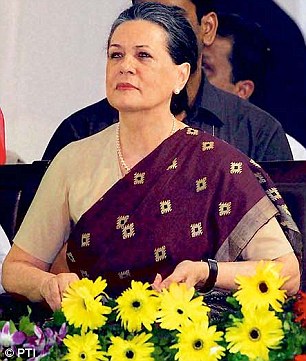
In political campaigns in India, the people,the second and third words respectively in the preamble of the Constitution, have been the centre of an energetic tussle. (PTI)

The Congress loses its aam aadmi, the BJP can’t see beyond one khaas aadmi.

It’s 2014 and with about a hundred days to go for polling, campaign season is upon us. However, we are still some distance from clarity on what either of the two largest parties has to offer. Perhaps it is because both sides are trying to cater to a homogenised, media-savvy “voter-consumer” that the contest so far sounds too much like an ad war. There are “war rooms”, banal, flashcard references to the “young vote” and a bitter battle of words that is supposed to stand in for a clear articulation of policy.

The face of the Congress, which has been in power for a decade, and the BJP’s prime ministerial candidate, who has ruled his state for 13 years, are both trying to project themselves as outsiders. Both claims sound hollow, to be polite about it.

The Congress is struggling to recover from the loss of its aam aadmi slogan, which had helped it so far in putting forward its Manmohanomics-meets-welfare-economics positions. The “aam aadmi”, a term loose enough and yet specific enough for a wide range of persons to identify with it, had come to signify a utilitarian test for whatever works. With the AAP now part of the discourse, the Congress clearly has an aam aadmi problem.

The BJP, ever since 1980, has resisted calls to turn itself over to the regular Western idea of a rightwing party — free-market, nationalist, Thatcherite. Now, it finds itself very much under RSS control and freighted with the latter’s ideological baggage. So it is difficult for the BJP to model itself on Western rightwing parties like the Tories or the Christian Democrats. It has chosen, instead, to invest in the “khaas aadmi”. One might say it has a khaas aadmi problem.

In political campaigns in India, “the people”, the second and third words respectively in the preamble of the Constitution, have been the centre of an energetic tussle. The past several decades have seen the need for a moniker that justifies actions and around which ideas can be built, whether its “the people”, “makkal” (Tamil), “jana”, “gana” or “lok”. With the invasion of politics by the management-walas, especially in the Eighties and Nineties, it became even more important for parties to brand such terms more forcefully. So the “garibi hatao” slogan had to find and directly address its subject.

The Congress, which had initially had the garib aadmi at the heart of discussions, moved on to the well-branded aam aadmi. With “aam aadmi”, a thought-out departure from “garib aadmi”, the Congress set its sights on a broader demographic. And with citizens anxious to come out of the garib classification, this new term found a wider response and helped the Congress regain ground. Meanwhile, the BJP, especially in its NDA avatar, reworked the antyodaya idea, which meant reaching out to those at the end of the line. This also served it well, especially in the states.

Damaged deeply by the AAP in its showpiece state, the Congress is looking for a new phrase to articulate whom it wants to draw in and focus on for its campaign. Rahul Gandhi, in his speech at the AICC, hinted at a version of the not-quite or the neo-aam aadmi — the “70 crore” who are not part of the middle class and not poor — as the new target. But that phrase is yet to find a proper home in the Congress’s campaign lexicon.

Unlike the Congress, the BJP is not beset by the problem of someone walking off with its best campaign pitch. But how does it provide more wind in the sails of the khaas aadmi it has appointed as leader? It will now be watched closely for how skillfully it uses Narendra Modi so that he does not lose his core base and yet succeeds in winning over a sizeable section of the Hindu vote that doesn’t yet respond to his image or attempts at a makeover. In short, how does someone like Modi appear true to his Hindutva allegiance while also appearing committed to just building bridges, drains or toilets. The party’s central challenge is to forge a cohesion in the Hindu vote, while ensuring that the “rest of India” does not get spooked into parking all its votes with the Congress.

The BJP had said recently that it would articulate its “solutions”. But it turned out to be a laundry list, throwing no light on what the party’s position is on some very obvious contemporary policy questions. Modi’s silence on the AAP, economic policy and even the Supreme Court order to immediately disqualify sitting MPs and MLAs who have been convicted cannot go on for ever. Though Modi is still loath to making himself available to the press or for questions, never mind the Muslim question, the BJP will eventually have to spell out what its idea of India is.

Perhaps it is the “benaam aadmi”, a term coined by Delhi-based commentator Samir Saran recently, that should get more attention now from the aam aadmi-free Congress as well as the khaas aadmi-ridden BJP. Saran’s contention is that, in the race to sort out the nightmares of the middle class, whether it is gas, water or electricity bills, several basic questions that assail India today, concerning the truly dispossessed, or the benaam aadmi, have been completely ignored.

In the weeks ahead, it will be important to observe if the two very similar ad campaigns eventually give way to honest and cogent ideas. So we are still waiting to see what the BJP commits itself to and what it has to offer beyond its khaas aadmi. It would have to establish that its vision of Hindutva Plus is what the doctor has prescribed for India in 2014. And the Congress will have to effectively communicate that it stands for cohesion in an astoundingly diverse country, in a way that is different from imposing a oneness on it. It would have to convey that personal wellbeing is eventually dependent on the welfare of all — the benaam and the aam. A pitch for “hum sab”, anybody ?

seema.chishti@expressindia.com

Seema-Chisti

Columns/Op-Eds, In the News, Politics / Globalisation

2014, the branding battle

Image
Columns/Op-Eds, Politics / Globalisation

Ignore the Benaam Aadmi, there are middle class nightmares to fix

PUBLISHED:22:35 GMT, 14 January 2014| UPDATED:00:38 GMT, 15 January 2014

Original link is here

Through much of the Nineties and the Naughties (2000s), the Indian Middle class was the toast of the world.

They were imagined as educated, liberal, modern millions and celebrated as the ambassadors of a ‘new’ India.

This imagery has faded at the end of the first decade of the 21st century. Corruption, brutal gender abuse, policy lethargy and ill-liberalisms of various kinds are redefining the India story.

Pic 1

The Indian “middle class” has been subsumed within a negative portrayal of the nation, and therefore seeks to reinvent and recreate its brand to offer a new appeal.

Two avatars have begun to dominate contemporary discourse in the public space; the Aam Aadmi (ordinary man) and the Khaas Aadmi (special man).

Khaas

A would-be Income Tax Commissioner, a Supreme Court lawyer, a TV anchor and India’s foremost psephologist, among others, have defined themselves as the Aam Aadmi.

In doing so, they have raised the income bracket of the Indian middle class to the standards of developed countries.

It seems this same middle class is set to jump into an even higher income bracket as the former India CEO of the Royal Bank of Scotland, a board member of Infosys, and the founder of India’s first budget airline also join the ranks of the ordinary man.

For a few years now the Khaas Aadmis have been self-categorising into three typologies; the foreign-educated Indian, the Indian who has lived abroad and returned home, and lastly the Indians settled abroad who are still engaged in writing the country’s script.

The first category, the foreign-educated Indians, bear the burden of being smarter. They, after all, got through the excruciating process of getting a student visa and of convincing the outside world that their intelligence was outstanding enough for the finest institutions to nurture them.

These Indians get rewarded with posts in the Prime Minister’s Office, Planning Commission, and various ministries, usually in advisory or consultative roles commensurate with their intelligence and institutional affiliation.

The second kind, Indians who lived abroad and came back to build and improve their country, have the burden of being better. They have all the virtues of a foreign education – an education they acquired without resorting to affirmative action.

They, after all, proved themselves (and India) in a highly competitive, cut-throat work environment. They triumphed in truly meritocratic set-ups and in addition to taught knowledge, they are the repositories of the kind of work ethic and ‘professionalism’ we in India must aspire to.

Lastly, there are the Indians who have emigrated abroad and project the loudest voice. These Indians have to be even shriller than those they give their advice to.

They lead a life of contemporary ethicality, and have moved beyond their colonial past. Invariably these are the Indians that the West sees as their own since they have no attachment to the antagonism of the past, and take Western normative discourse at face value. The truly perfect Indians.

Now going by the English press, we can arrive at this very simple mathematical formula; INDIA’S SALVATION = AAM AADMI + KHAAS AADMI. In effect these are India’s new age messiahs. In the optimal world the “Aam Aadmi” should be running the country based on surveys conducted exclusively of the “Khaas Aadmi”.

Arvind Kejriwal should have Khaas Aadmi categories 1, 2 and 3 pre-programmed into his mobile phone and should conduct SMS polls of them before every major decision.

Why indeed should our parliament function given that these three categories of Indians have the answers to everything? How dare Parliament abrogate to itself the right to pass a nuclear liability law, when these categories of grandees have opposed this awkward legislation?

Why in the world cannot the Ministry of External Affairs (MEA) understand the subtle nuances of the American legal processes which these three Indians have been trying to hammer into our backward consciousness?

Why does the government not see how paying an Indian maid a wage in the US that most PhD holders cannot get in India constitutes grave abuse?

Why can’t India just go along with the narratives of the “moral majority” constituted by the three categories of Indians? Since they are our voice abroad, why do we even need the MEA – it’s superfluous – let’s shut it down!

Nowhere in this new narrative should we consider those left out. There are after all, a billion of them from whom sociological space has been appropriated by the middle class. These real ‘Aam Aadmi’ are now the ‘Benaam Aadmi’ (the nameless Indian).

Problems

The Benaam Aadmi is worried about unsophisticated problems, like access to food, water, electricity and shelter. These 800 million footnotes of demographic excess, living below 2 dollars a day, crowd our public spaces, dirty our landscape, and make our beautiful cities ugly.

They must never occupy Lutyens Delhi, nor indeed ride the Delhi metro built by the Aam Aadmi and designed by the Khaas Aadmi. It is because of these Benaam Aadmi(s) that ridiculous legislations like the Food Security Bill have been enacted.

Our negotiating positions in the WTO and on international climate change discussions are dictated by these same villains and have made us the butt of derision in all major newspapers.

Justly they are not and should not be welcome in the public discourse, now dominated by the Aam Aadmi and the Khaas Aadmi. It is they after all, who chose to emigrate to the Gulf, to blue collar jobs, under allegedly racist, allegedly exploitative and abusive conditions.

Indeed these allegations must be doubted since they chose to send US$20-25 billion back home every year – especially in the aftermath of the global financial crisis.

They certainly do not have the education, the refined world view, or indeed the legitimacy of the Aam and Khaas Aadmi(s) to understand or appreciate the nuances of the Khobragade imbroglio.

Indeed how would the country run if instead of discussing the ‘Maid in Manhattan’ travesty of human rights at the dinner table, we were to start discussing the revolting existence of the Benaam Aadmi?

Such conversations would truly be a characteristic of a country in decline.

Standard
Columns/Op-Eds, In the News, Politics / Globalisation

“The Karzai Caper: What India Must Do With Afghanistan”

MAIL TODAY ePaper
Sunday, December 15, 2013

Original link is here

HAMID Karzai is playing his final hand, or so it seems. Against the backdrop of his dithering over the Bilateral Security Agreement, President Karzai has embarked on another visit to India. This is not only an opportunity for Karzai to shore up support for his country post- 2014, but also for India to step up its engagement with Afghanistan, take steps to safeguard its interests and seek clarity on a number of dilemmas confronting it.

There are two posers in particular that India should be seeking to address. The first is the future of the US militarys role in the region. New Delhi is conscious of the fact that the larger Afghan polity should be comfortable with the contours of any future US role. Although currently there seems to be huge support for a US role post- 2014, Karzais obstinacy has led to an impasse.

Can India with its strong ties with the Karzai government and goodwill in Afghanistan play a constructive role to break this stalemate in a way that does not provide disproportionate space and influence to Pakistan or cause further Iranian disenchantment with the situation? Irrespective of an Afghan- US security pact, India should prepare itself for a scenario where it may have to look after its interests by itself. Kabul and New Delhi should also be looking at developing an understanding through which India can directly and independently engage with Pashtun tribal elders, provincial governors and even regional warlords to protect its investments.

India must also seek more security cover by the Afghan Public Protection Force ( APPF) for its projects. Obviously, given the security situation, India cannot demand without giving. It is imperative that India bear the costs for further development and training of this force which is currently largely borne by NATO. Therefore the second dilemma for India is to reach an understanding with the current Afghanistan government and yet ensure that this arrangement is sustainable beyond Karzais reign.

Maintaining the high level of engagement with Afghanistan with its obvious benefits for Afghanistan is likely to create a vested interest for whoever is in power in Kabul to continue the thriving bilateral ties with India.

Stepping up its support for the Afghan National Security Forces ( ANSF) is another way of ensuring that continued engagement with India becomes indispensable for any Afghan government. This assistance must not just be material, but rather one that builds local managerial and organisational capacity to enable Afghanistan to sustain such a force.

As the situation in Afghanistan continues to change and is likely to change even more dramatically in the future, India is faced with the choice of being a proactive game- changer itself or continuing to watch from the sidelines as it has for the last 12 years. Now is the time to shed its strategic ambiguity and to commit to an ever larger constructive role in the post- 2014 Afghanistan.

Standard
Books / Papers, In the News, Politics / Globalisation

Corporate Governance and Business Responsibility

An Empirical Assessment of Large Indian Companies

GIZ Study booklet

It is widely accepted today that the onus for business responsibility must lie with senior management and Board members of corporations. The contours of what constitutes ‘responsibility’ though are still under discussion and description. However, there is a broad consensus that this must imply integration of environmental, social and economic priorities within the business model and governance processes of companies.

The Board of Directors of any firm have a significant role to play in terms of providing strategic vision as well as performing critical oversight of business operations. Therefore any efforts at embedding sustainability within business operations, whether through mandatory or prescriptive frameworks, must originate at the level of the Board.

Additionally, the entire market ecosystem within which firms operate is also relevant to the business responsibility discourse. For instance, the performance metrics of production supply chains are often overlooked by companies. Even within large companies, oversight of supply chains, are limited to negotiations on price points and timelines. This must see radical transformation. Similarly, long term risk assessment frameworks around environment, social responsibility and good governance practices must become a part of decision making processes at the highest levels.

Lack of awareness at the level of the Board is not the only impediment to holistic integration of sustainability priorities in the case of large Indian companies. For enhanced community engagement to become a pillar of business operations, systemic policy hurdles need to be addressed (for example: inefficient licensing regimes in critical sectors).

In India, like in most other places, corporate governance and business responsibility tend to be viewed as being mutually distinct. However, this study shows that there is visible correlation between adherence to corporate governance regulations and business responsibility norms – which is precisely the paradigm of ‘responsible corporate governance’ that is referred to in this research report.

This study establishes that large companies that already have the basic mandatory processes and governance structures in place are more likely to also be the ones that tend to adhere to voluntary norms. Therefore, further analysis and research is required to study behavioural drivers at the level of the Board as well as the impacts of regulatory processes across and within sectors. On the external front, sustained effort is required by stakeholders to bridge institutional capacity gaps, in order to streamline and harmonise regulatory processes and policies with ‘intra-company’ mechanisms.

So clearly, two sets of core issues need to be addressed. The first, dealing with internal corporate processes; and the second related to the interaction of these with the regulatory environment and societal expectations. This study is the first step in analysing some of the above and beginning an engagement with multiple stakeholders to discover next steps and pragmatic pathways that would allow accelerated adoption of best in class responsible corporate governance practices by all and certainly by the large corporations that have a compelling impact on society, environment and development.

I would like to thank the Indian Institute for Corporate Affairs (IICA) and the Deutsche Gesellschaft für Internationale Zusammenarbeit (GIZ) GmbH, for their continued support and guidance in the conceptualisation, and writing of this report. And, I would like to congratulate Vivan Sharan and Andrea Deisenrieder for their stellar work and very interesting research on one of the most debated themes of these times.

Samir Saran

Chairman and CEO, gTrade

Standard
In the News, Non-Traditional Security, Politics / Globalisation, Uncategorized

CyFy 2013: THE INDIA CONFERENCE ON CYBER SECURITY & CYBER GOVERNANCE

OUTCOME STATEMENT

Original link

Cyberspace transcends boundaries to provide unprecedented levels of connectivity and empowerment to states, institutions and individuals across the globe. This fluidity of the cyber- spheres pawns ‘cyber-gangsters’, necessitating cyber-security on the one hand while raising the spectre of a ‘big brother’ state on the other, according to the Minister for Communications and Information Technology, Mr. Kapil Sibal. Inaugurating the 2-day workshop he emphasised cyber governance as something of an oxymoron and a re-imagined notion of sovereignty was essential to develop an effective cyber security paradigm. The Indian National Security Adviser, Mr. Shivshankar Menon, who delivered the keynote address, said that the Internet is also the government’s chosen platform for socio-economic empowerment schemes. This makes India uniquely dependent on the cyber-sphere for its development – while at the same time exposing it to heightened vulnerability.

If the past is any indication, India’s growth and economic prosperity will be inextricably and intricately tied to the digital sphere. Hence, India’s proactive engagement in the global norm making process is important. India can and must be a rule maker and ensure that global norms pertaining to the cyber-sphere align with the opportunities this space has to offer its people. Additionally, the boundlessness of the cyber-sphere must be protected, but not at the cost of pluralism or access. Policy objectives must aim to build infrastructure and provide security and must seamlessly align with the inexorable logic of providing greater access through enhanced penetration.

Consequently, the Internet, for India and many countries indeed, is a means and medium of greater freedom and democratisation. Therefore discovering the median between access and security becomes a global imperative. Given India’s democratic ethos and the sheer volume of cyber-sphere it does (and will) account for, India’s policy responses which will inevitably shape the future of cyberspace, its management and governance.

It was in this background that the inaugural and most comprehensive ‘India Conference on Cyber Security and Cyber Governance – CyFy 2013’ was held at New Delhi on 14th& 15th October, 2013. Supported and guided by the National Security Council Secretariat, Government of India, Raytheon and the Bombay Stock Exchange, the event saw two days of engrossing debate, capturing the perspectives of over 250 international experts, parliamentarians, academics, industry leaders, media practitioners and representatives of the civil society.

The following key conclusions emerged from the discussions:

• The tension between “multistakeholderism” and multilateralism should be resolved to further a cooperative framework in formulating cyber-security strategies. It is only with the participation of diverse stakeholders that refined, legitimate and nuanced policy shall emerge. A unilateral approach without systematic and periodic consultations with, and inputs of, these multiple sets of stakeholders will be deeply counterproductive and can undermine the democratic nature of the cyber-sphere. Multistakeholderism is the mantra for devising articulate policy pathways.

• International cooperation is a must in responding to cyber-security threats and governance challenges. Conventions and treaties ensure agreed definitions on security issues, acceptable set of norms, confidence building measures and will eventually shape an international framework to manage cyberspace.

• Cooperation is beneficial in managing inter-dependencies that are inherent while seeking cyber-security, for which regional and bilateral cooperative measures can also be devised successfully. For instance, Internet fraud and related crimes can be a potential area of cooperation given the minimal political underpinnings.

• It was emphasised that cooperation could be compromised by the national strategic interest of major powers and by viewing this space as a new ‘zero sum game’. The tensions between great powers can undermine a multilateral approach to cyber-security and will have an asymmetrically negative impact on lesser powers.

• Public and private sector partnership (PPP) in policymaking is essential as the bulk of communications and certain critical information infrastructure networks are managed by the private sector. An information sharing mechanism should be created to ensure timely responses.

• The bulk of cyber-security costs are currently being borne by the private sector. Like all issues related to national security, the government must take the lead, incentivise and guide developments in this sector, and allocate specific funding. This funding should be spent on awareness campaigns, education, stakeholder consultations and capacity building initiatives in the near to medium term. Similarly governments should invest in initiatives that improve cyber hygiene and data protection. A critical skills shortage exists and there should be an emphasis on training ‘cyber builders’ rather than ‘cyber warriors’. PPP models and certifications regimes should be rapidly introduced to ensure both quality and numbers.

Governments must standardise security measures, protocols and surveillance processes in order to ensure that they are neither sector-specific nor applicable only to individuals or companies. Greater transparency around security processes will also increase user confidence and allow greater vibrancy in spread and adoption of cyber platforms. This is important as the Government of India, like many other national governments, sees digital last mile connectivity as the most efficient mode for government-citizen interface in social and related sectors.

• There is today a collision of narratives on National Security and Individual Privacy. While this debate is important to have, the ideal for any security policy must be safeguarding the private space of individuals and their freedom of expression. Governments have been unable to define and agree to a universal definition of “privacy” and due to the borderless nature of the Internet there will be contests and hence there are concerns voiced by many stakeholders that need to be addressed.

• Additionally, collective security often gets an unfair advantage over individual privacy. Some questioned the efficacy of these security measures and if the gains from surveillance are worth the costs to privacy and whether there are alternatives to safeguarding national security while keeping privacy sacrosanct.

• It did appear from the discussions that privacy and national security concerns do not necessarily have to compete with one another. Concerns over security measures can be addressed by embedding privacy presets into surveillance mechanisms ab-initio. Targeted surveillance has proven effective, but too much surveillance is demonstrably counter- productive. More investment is needed to ensure privacy enhancing technologies along with sensitising the personnel who deal with the data while conducting surveillance.

• Certain core ideals must be preserved and propagated in respect of privacy. And creating a universal common and robust approach to privacy should be a key global objective to work towards. Such a definition would necessarily be the basis for any future rules based cyber- sphere governed by internationally accepted norms.

The issue of verifiable cyber-identity is also a contested one – on one hand being necessary to prevent crime but on the other being prone to abuse. The issue of identity is intricately linked to the notion of anonymity. A third party management of identity verification is a possible solution but one that requires extensive trust building between the various stakeholders.

• Transparency and accountability in formulating cyber policies, empowering NGOs as pressure groups, widespread consultation, research initiatives, public participation, and a robust media are all needed in order to help formulate effective cyber governance and security architecture. An international cyber management framework can establish best practices and norms. This framework can also analyse risks and create deterrence mechanisms and alliances.

To quote the Deputy National Security Adviser of India, Mr. Nehchal Sandhu, “India has a national cyber-security policy, not a national cyber-security strategy.”Policy is the route to building strategy but strategy is the articulation of an assessment of objectives, needs and aspirations of what citizens seek in a secure and democratic cyberspace. CyFy 2013 is a first step in this process. It has initiated a plural and honest attempt to discuss, contest and discover contours of a national cyber strategy by bringing together domestic and international stakeholders and specialists, initiating the right conversations and encouraging debates that are critical to the formation of an enlightened cyber strategy for India.

SAMIR SARAN
Vice President, Observer Research Foundation

VIRAT BHATIA
Chair, Communications and Digital Economy
Committee, FICCI

CYFY Conference Secretariat
20, Rouse Avenue, Institutional Area, New Delhi – 110032
Ph: +91-11-43520020 | E-mail: cyfy@orfonline.org

Standard
In the News, Politics / Globalisation

Biting the ballot

Business Standard

Indulekha Aravind November 16, 2013 Last Updated at 20:50 IST

It’s costly, requires minute planning and engages thousands of workers. But for political parties a mega rally is the only way to attract voters

Original link is here

1384614256-1252

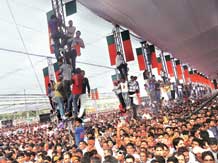
With an anticipated crowd of seven lakh, prime ministerial hopeful Narendra Modi’s rally in Bangalore today is being touted by the Bharatiya Janata Party as one of the biggest the state has seen and, if the numbers back it, Modi’s third biggest so far. Modi had already visited Karnataka earlier this year, before the assembly poll but this rally would be the first in the state after he was “anointed” prime ministerial candidate, which is why the party is pulling out all stops, says MLA and party spokesperson Suresh Kumar. “It may become the mother of all rallies in Karnataka,” he adds.

Cutouts, banners and hoardings of Modi have been put up in different parts of the city, announcing the date, time and venue and exhorting people to turn up in large numbers. In the basement of the party’s four-storey saffron-and-white headquarters in Malleswaram, the traditional, conservative heart of Bangalore, T-shirts with Modi’s photo and accompanying enthusiastic slogans are on sale. These will also be available at Palace Grounds, the sprawling ground where the rally is to be held. Upstairs, various discussions are under way, including one about deploying unmanned aerial vehicles during the rally. This rally, says Kumar, would be the first in the state where people have been asked to buy coupons of Rs 10 each to attend, though it is not compulsory. “This is to counter the allegation that a lot of people who come for political rallies have been hired, or given incentives,” he says. By Wednesday evening, they had sold nearly 400,000 coupons, he claims. People can also register online through the state party unit’s website – log on and a smaller window pops up, with Modi’s face and the slogan “Bharatha Gellisi”, roughly translated as “Make India the victor”.

Though there are at least six months to go before the great battle of 2014, rally season has started in full swing, aided by the fact that Assembly polls are currently under way in four states. Each party tries to outdo the other in terms of scale, size and speeches and Modi’s Bangalore rally will be no different. Last Sunday, Haryana Chief Minister Bhupinder Hooda held a massive rally at Gohana which, according to a party spokesperson, attracted a crowd of over 14 million. “This was our biggest show of strength to date,” says Shiv Bhatia, media advisor to Hooda. The rally was described as “a sea of pink”, a reference to the pink turbans worn by supporters, and as an attempt to cast Modi’s own rallies into the shade.

* * *

Organising a rally is a complex task, and the most important factor for a successful one is the party cadres, whose job it is to spread awareness and ultimately, convince people to show up. The person close to Hooda quoted above underlines that while charisma of the speaker is also critical, cadres play the most crucial role, along with other arrangements such as transport and logistics. Apart from booking the venue, other preparations usually begin 15 to 20 days ahead of the actual date of the rally.

Preparations for the Modi rally, Kumar says, began three weeks ago when the date of the rally was finalised, with workers visiting homes in their constituencies as part of a mass public contact programme. “We expect at least a few representatives from each of the 44,000 polling areas in the state to be present at the rally,” he says. About 35 committees have been formed to look into various arrangements – from publicity, decoration, traffic and parking to food, lighting and sound.

Usually, the people who come for rallies are from in and around the venue, or at the most, within a 50-kilometre radius, and transport is arranged by local party leaders or supporters who are responsible for ferrying people to and from the rally, rather than the party itself. A rally thus becomes an opportunity for local party heads to showcase their prowess through the number of people they are able to bring to the venue, says a person close to the Hooda government, who does not want to be named. At the Hooda rally, for example, Bhatia says all the vehicles were private, and arranged by the workers themselves. “The party was not involved.”

For Modi’s rally on Sunday, too, about 60-70 per cent of the transport is being taken care of by local leaders, says Kumar. “Fifteen trains have been booked to bring people from areas like Gulbarga (in north Karnataka) and about 2,500 buses have been hired. In Bangalore, we have sought permission to use 3,000 buses, which has been granted,” he says. This is in addition to smaller vehicles like Sumos, and 1,000 sympathisers who are supposed to arrive from Mysore on foot. The cost for the remaining 30 per cent will be borne by the party. Eleven choultries near the railway station have been booked and a mutt near Ramnagar has offered its premises to those who are attending. Elaborate arrangements have also been made for refreshments. “We have constructed six mega kitchens, each of which can cater to 60,000 people. There are 100 counters in each block, with each headed by a separate team. The menu, however, will be common,” says Kumar.

Of course, none of this comes cheap. Kumar himself says a conservative estimate for the rally’s outlay would be Rs 7 crore though other reports quote the actual figure to be closer to Rs 20 crore considering the expenses involved, which will include a helicopter to ferry Modi from the Hindustan Aeronautics airport to Palace Grounds. The expenses are met by donors, party workers and well-wishers. Some of the donations were in kind, such as grain and vegetable. Donors also lease out a choultry without charging for it, says Kumar. Another aide of Hooda estimated that his mega rally in Haryana would have cost around Rs 4 crore, even though it was a “basic” rally, without a shamiana, or other trimmings. Once the electoral code of conduct kicks in, each Lok Sabha candidate has an expenditure ceiling of Rs 40 lakh though the Election Commission is contemplating raising this to Rs 50 lakh, according to a recent report in The Economic Times.

* * *

But setting aside the question of the numbers that turn up, whether 400,000 or 1,400,000, does it translate into votes? “Political rallies represent a number of realities, the first being the efficiency of the political machinery and motivation levels of the cadres. This is a fairly important aspect and an indicator. It does reflect the novelty of the speaker or charisma, and certainly this does in this sense reflect momentum. But while it is hard to create a causal relationship between vote share and strength of rallies, these do reflect the state of the current mood and also the capacity of the party,” says Samir Saran, senior fellow and vice-president of Observer Research Foundation. Speaking about Hooda’s rally last Sunday, Bhatia says the turnout was naturally a reflection of the party’s and the leader’s popularity, considering they had come to see the leader of a government that had been in power for nine years.

Commenting on the tactic of selling coupons of Rs 10 to those attending, Saran termed it a clever tactic. “They are making stakeholders out of the portion of the attendees who are not converts already and for the others, it creates a sense of ownership as well. But this is a novel proposition and the outcome is yet to be seen.” The BJP had introduced the coupon strategy first at its rally in Hyderabad, where they were sold at Rs 5. This was increased to Rs 10 at their rally in Trichy in Tamil Nadu, a state where the party strength is negligible. The Congress has so far refrained from going down the same path.

This is, of course, just the beginning of election season. There are eight more Narendra Modi rallies planned in Karnataka alone, before the 2014 polls, and the party is targeting 100 all over the country. And with good reason. “In a country where TV homes and Internet are still fairly sparse – political mobilisation and messaging is still delivered and achieved through such direct campaigning like house calls and rallies,” says Saran.

Standard
Columns/Op-Eds, In the News, Politics / Globalisation

A toast to the silly season: Why India’s election process is bringing out the absurd in us all

PUBLISHED:01:16 GMT, 6 November 2013| UPDATED:01:16 GMT, 6 November 2013

Original link is here

It seems that the greatest celebration of India – its democracy and the much-feted elections – also bring out the absurd in us all.

As the five states of Delhi, Madhya Pradesh, Chhattisgarh, Rajasthan and Mizoram go to the polls in the coming weeks, it seems the ‘silly season’ is upon us. We are being saturated with inanities masquerading as “political discourse”.

The problem, however, is that as these samples of ludicrousness tumble out in a disturbingly steady stream, we actually engage with them in earnestness.

article-2487973-1936880A00000578-816_634x394

BJP workers wear masks of the party’s PM candidate Narendra Modi, who is presently spoken of in the manner of a superhero.

Let us therefore first propose a toast to the Indian National Congress and its brilliant and original idea of banning opinion polls on the grounds that these are unfair and influence voters.

Now, in any normal society – leave alone democracy – this would be considered a misguided attempt at humour by a geriatric who has crossed the threshold from dotage to anecdotage. But evidently in India it is taken seriously enough to merit furious (and serious) discussion on talk shows and much scholarly debate on the subject in the online, visual and print media.

Heck! Why stop at opinion polls? The logic that these polls unfairly influence voters can equally be extended to op-eds, reporting, and indeed to the very application of one’s mind. So why not go ahead and ban people from thinking for the next 6 months?

After all, it can be stated with a great deal of medical and sociological certainty that the application of one’s mind creates a capacity within the individual to actually decide his or her fate, as opposed to being a force-fed farm animal that gets shepherded into an abattoir.

Would Sonia Gandhi’s Congress prefer voters to go to the polls blind-folded, lest their genuine opinions affect the vote?

article-2487973-190B89A400000578-399_306x361

In fact, in order to extend wholehearted support to the Congress’ proposals we should take the logical next step of blindfolding the Indian voter before they press the EVM button – so that the voting process can become a lucky draw – truly free of undue influence and bias.

Of course there is the danger that our hallowed Electoral Commission – the so-called protector of India’s freedom and democracy – might actually embrace this fruit-loop scheme.

So let us raise the second toast to the monumental silliness of the Election Commission of India, now rapidly on its way to becoming a much-loved and celebrated ‘law unto itself’.

In its notification dated the 25th of October – “Instructions with respect to the use of Social Media in Election Campaigning” – the EC has made the terminal mistake of assuming that social media is like every other media that has come before it, claiming “since social media websites are also electronic media by definition…”.

While this betrays a deeply flawed, almost astoundingly naive view of the dynamic and deeply democratic cyber-sphere, at a more serious level this has dangerous overtones of the Sippenhaft laws from Nazi Germany.

What this notification means is that the election code of conduct will now apply to mediums of individual output like Twitter, YouTube and Facebook.

Basically any candidate can lodge a complaint against any individual Tweet or Facebook comment based on the fact that they can be “reasonably connected with the election campaigning of political parties and candidates”.

This is guilt by association of the worst possible kind, because now any sympathiser, relative or associate of any candidate effectively has his or her freedom of expression curtailed on the basis of specious reasoning that this can be traced back or connected with a political party.

So much for the Election Commission being the guarantor of India’s democracy! It is sad that this body, overwhelmed by this deluge of election-season silliness, has become the epitome of silliness itself.

Indeed, if the EC is so serious about this regulatory order, it should assume charge of the Ministry of Communications and Information Technology as well as the Ministry of Information and Broadcasting, to avoid any hint of bias on the part of the two wings of the government.

The third toast in this autumn of silliness is reserved for the BJP, its Prime Ministerial aspirant and their rather “unique” take on Indian history.

I am yet to find where Alexander ever set his eyes on the Ganges, I am yet to find anyone named Chandragupta Maurya belonging to the Gupta Dynasty, and Taxila – as far as my maps show me – is part of Pakistan not Bihar – though presumably in some warped version of ‘Akhand Bharat’, northern Punjab may in fact be annexed to the penurious ruin that is Bihar.

Of course logic would have demanded that the head of a speechwriter roll, or the entire research team be put out to pasture. What we see instead is a bunch of experts finding ways to somehow discover coincidence between history and the recent remarks of the BJP’s PM-in-waiting. But perhaps the victor does script history – and let us toast to that possibility.

Despite what they all say; despite the INC’s moral indignation, the EC’s delusions of infallibility and the BJP’s historical certitude, they all think of us – the Indian people – as livestock, incapable of discerning chaff from wheat and deciding for ourselves.

If India chooses to take these people seriously, we really do need to ban any outlets of independent expression and go back to the happy days of black-and-white Doordarshan with programming restricted to Krishidarshan and Zara Sochiye (as relevant today as they were then), because as it turns out the greatest fools are the people who tolerate – nay celebrate, revel in and vote for – such silliness. It is to them the fourth and last toast should be raised.

I say, this season let us all get sillier still, and put our finger on ‘NOTA’.

Standard
Columns/Op-Eds, In the News, Politics / Globalisation, Uncategorized

Less corporate, more social

Published: August 10, 2013 01:08 IST | Updated: August 10, 2013 16:55 IST

New Pic.jpeg

CSR principles enshrined in the Companies Bill 2012 offer businesses a chance to transform their poor record in community participation and development

Original link is here

Finally we are seeing some signs of life in the business of legislation. Not surprisingly, one of the early beneficiaries is the Companies Bill (2012) which shall replace a six decade-old antiquated law after Presidential assent. The Bill, which was passed in the Upper House this week, was earlier approved by the Lok Sabha in December 2012 and reflects a number of amendments to the Companies Bill, 2011, based on the recommendations of the Parliamentary Standing Committee on Finance. It encompasses important areas for the effective governance of companies including clauses on mergers, audit and auditors, appointment of company directors, aside from providing for constitution of a National Company Law Tribunal and a National Company Law Appellate Tribunal to fast-track company law cases and corporate structuring.
Crucial
Perhaps, the most important new element introduced in Clause 135 of the Bill is the notion of mandatory Corporate Social Responsibility (CSR). Colloquially referred to as the “2 per cent clause,” it has the potential to transform the landscape of CSR in India. Indian businesses have been loath to go beyond the “glorified worker towns” syndrome or providing employee services and benefits passed off as social interventions. Indeed, “Corporate India” has fared rather poorly when it comes to affirmative action in employment, environmental responsibility and in resource efficiency and revitalisation over the years. Therefore, a scheme that potentially transfers profits towards social causes, environmental management and inclusive development could be the much needed medicine for a nation with such deep socio-economic cleavages. This provision in the new bill must be welcomed and its efficient implementation must be ensured.
It is important that Clause 135 is complemented and supplemented with regulatory and institutional mechanisms to ensure that it actually results in a new paradigm of “stakeholder responsibility” and does not become another scheme where a paternalistic government is able to create another framework of patronage that the politician-businessperson nexus finds favourable for its dealings. This hypothesis needs to be carefully examined, particularly in the context of the upcoming general election, when political masters are at once beholden to corporates for election funding, and where constituency-level CSR commitments could be politically useful.
However, beyond the “profit for patronage” issue, there are some other aspects that must be discussed. The new law will make it incumbent for companies having a net worth of Rs.500 crore or more, or a turnover of Rs.1,000 crore or more or a net profit of Rs.5 crore or more, during any financial year, to spend at least two per cent of net profits towards CSR activities. While this seems uncomplicated, the efficacy in implementation may be in doubt for more than one reason.
The whole concept of CSR must, by its very definition, be a product of the fundamental need to price services, infrastructure and resources that societies provide businesses located in their proximity. By mandating a plain vanilla formula for allocation of two per cent of net profits towards CSR, the law will create a locational distortion, delinking CSR from community responsibility. Businesses must be responsible for proximate communities first, rather than being able to choose the destination of this commitment to society.
There is also a temporal distortion in the construct of CSR as spelt out by the Bill. Paragraph 5 of Clause 135 states that two per cent of the average net profit over three immediately preceding years must be allocated for CSR activities. In the case of most large companies of the sort that would be mandated to allocate net profits, business operations would have had a run-off effect on societies and would have fed off communities for more than three years. Therefore, must not the commitment to these communities and geographies reflect the impact of these businesses over their operation periods? And is there not a case for ensuring sustained “plough back” by the company in these geographies before diverting their commitments elsewhere?
Implementation
Even as we begin to debate how best to address these “time-place” distortions, it is certain that the CSR mandate must be made more robust, ensuring that at the very least it stands up to some simple tests of reasonableness and fairness. There are a number of ways to achieve this baseline objective.
First, voluntary policies that ensure a stakeholder approach to CSR is followed by corporates already exist and must be strengthened. The National Voluntary Guidelines on Social, Environmental and Economic Responsibilities of Business (NVGs) suggest nine core principles which businesses should follow. Principle 8 for instance, directly alludes to coherent, social impact measures and assuring “appropriate resettlement and rehabilitation of communities who have been displaced owing to their business operations.” Integration of NVGs, initiated by the Ministry of Corporate Affairs, in the form of more constructive guidelines for deploying corporate CSR policies, is a viable option.
Second, CSR policies must be determined organically, through demand-driven consensus. Instead of being the mandate of high-level committees, company specific CSR policies should flow from a transparent interface between community stakeholders and corporates. The process must be devolved below the level of the corporation, to the level of the business unit. Corporate leaders and civil servants in the national capital must not determine community engagement strategies. Community stakeholders and the business units concerned must. Allocations must also be made on the basis of how much different stakeholders can absorb.
Employee benefits
Concomitantly, employee benefits must not be passed off as CSR. Such tricks are already used by the banking sector, wherein mandated priority sector lending targets are often met through incredibly convoluted means, including issuance of no-frills/general credit cards for their own contracted workers. A “tick-the-box” approach is simply not legitimate.
The third suggestion also follows from this. A demand-driven process for articulating company specific CSR policies must be instituted at the district level. Consultations can be steered by public officials such as district magistrates, involving village and town leaders and representatives. Decisions could be made through majority outcomes, and the process must be recorded and filed. This sort of a process has the potential to create a public accountability framework for delivery of CSR far superior to legal provisions that we fail to enforce.
Audit
Fourth, as this culture evolves over time, CSR allocations must not remain consigned to bottom line (profits) commitments. Obligations to community stakeholders must be placed alongside the top line (receivables and debt) and must be considered seriously as the next step as CSR must not be an afterthought to profit accumulation. It must be embedded within the very fabric of large businesses.
Finally, there are multiple concerns around the audit of CSR and a discomfort with the lack of audit and oversight required for CSR activities. “Comply or explain” simply has not worked in the case of other existing regulatory frameworks that deal with corporate governance issues. It is time to realise that in India, only a few are in a position to ask, while nobody is in any hurry to explain.

(Samir Saran is vice-president and Vivan Sharan, an associate fellow at the Observer Research Foundation, a New Delhi-based public policy think tank.)

Standard
Columns/Op-Eds, In the News, Politics / Globalisation

The IBSA Moment

Globaltimes.cn | 2013-7-22 19:00:36
By Samir Saran and Vivan Sharan

Original link is here

June 6, 2013 was the 10th year anniversary of the seminal Brasilia Declaration by the foreign ministers of India, Brazil and South Africa, formalizing the cooperative mechanism better known as India-Brazil-South Africa Dialogue Forum (IBSA).

India, currently the chair of IBSA, is responsible for steering the agenda for trilateral collaboration.

In its capacity as chair, it is incumbent upon India to revitalize the geopolitical group, which has been so central to the construct of “South-South Cooperation” that engages most political thinkers today.

Developing countries with converging interests have a lot to gain from coordinating positions on a wide spectrum of issues. And indeed India is also uniquely placed to establish its own global identity and brand through the group.

At the end of the Durban summit earlier this year, BRICS resembled a schizophrenic milieu; a strange mix of countries from the Group of 77 and Russia. Under South Africa’s chairmanship, there was a visible failure to shed the identity of reactionary “trade unionists.”

Moreover, consumed by regional aspirations of one member, instead of being representative of a fast moving lithe club of five, BRICS appeared to be burdened with carrying the divergent and diverse aspirations of an additional continent on its shoulders.

The IBSA countries must not let ownership of the South-South agenda slip away. This, we feel, would require at least three conceptual underpinnings.

First, the format for engagement must remain unburdened and the core values undiluted. That is, the dialogue must continue to follow the format already instituted. Proxy memberships of other countries through regional institutions, must not constrain the nimble grouping. Regional issues must be represented, without members themselves becoming stubborn regional representatives.

Second, a common thread which ties all three IBSA members is their robust democratic institutions and frameworks. Democratic values must be kept at the forefront. The legitimacy that such a governance ethos can bring is perhaps unmatched. The cries for reform of the existing global governance architecture converge with the imperative of ensuring legitimacy through democratic transparency.

IBSA offers member countries an audible voice on the global governance high table, and democracy is an undervalued and underutilized trump card that they each possess.

Finally, for each of the IBSA members, the next few decades need to be centred on inclusive growth. Each is an emerging “middle power,” and each needs to harness growth to craft sustainable trajectories, unleashing drivers of socio-economic progress including productivity, innovation and social welfare.

IBSA offers its members a moment for cooperating on this incumbent need. IBSA must focus on itself even as it reaches out.

A lot has already been discussed under the IBSA umbrella. Conversations on reform of Bretton Woods institutions, regional issues (particularly the Arab-Israeli imbroglio), sectoral cooperation ranging from tax administration to higher education, people-to-people linkages, free trade agreements, to name a few prominent areas, have taken place.

Additionally, we suggest that IBSA members must explore collaborating on three specific agenda items.

The first is that IBSA must reach out to other democracies, perhaps initially by according observer status to similarly placed countries. Replicating the format followed by the Shanghai Cooperation Organisation could be a viable alternative, and serve as a suitable whetting process for new members.

Second, IBSA must shed its reluctance to share its own deep reservoir of democratic experiences. Clearly, Atlantic countries cannot and do not offer the only appropriate models of development for democracies. In this post-Washington Consensus era, IBSA members possess a number of experiences which provide a template for the developing world. These must be mapped, shared and discussed.

The third concrete action item must be to move towards a new format for ocean governance. India-Brazil-South Africa Maritime, a naval exercise conducted between the three navies (an element of IBSA’s regional cooperation), is an ideal point of departure.

IBSA members can also begin to address issues dealt under the United Nations Convention on Law of the Sea, to develop a robust international framework for governing the oceans and seas. A new framework articulated by the South would have a compelling weight.

The conceptual underpinnings and agenda discussed here can prove to be levers of IBSA’s transformation. The decade old cooperative mechanism has endured, and now it is time for it to mature and deliver.

Samir Saran is Vice President and Vivan Sharan an Associate Fellow at Observer Research Foundation, Delhi.

Standard