Books / Papers, Non-Traditional Security

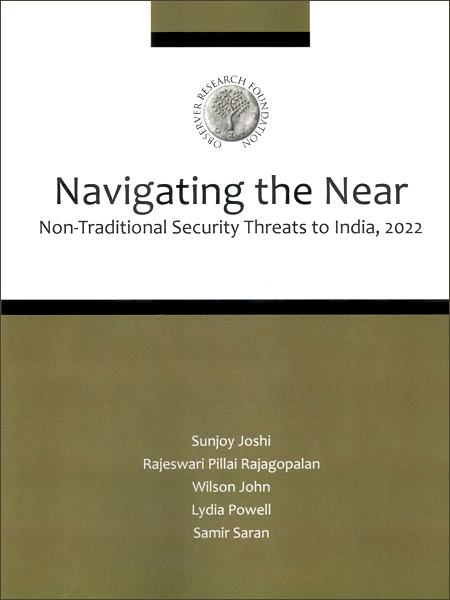
Navigating the Near: Non-traditional Security Threats to India, 2022

Sunjoy Joshi, Rajeswari Pillai Rajagopalan, Wilson John, Lydia Powell and Samir Saran
19 April 2011

National Security is most often thought of in terms of political and military threats to the State-either from other States or geo-strategic alliances. Given such a framework, both the challenges as well as the responses have for long been viewed in terms of military force or coercive ability of the adversary.
Events unfolding in today’s highly networked and globalised economies show the futility, and danger, of relying on such a simplistic template. Threats to national security are today multi-dimensional and call for a deeper study and understanding of a wide variety of factors to create a credible and deterrent response mechanism.Navigating the Near seeks to bridge this paradigm shift by studying non-traditional threats facing contemporary India. The study, with its sight on the next decade, evaluates how traditional threats confronting India are likely to be influenced in large measure by a range of factors and trends, both external and internal, that have, till now, remained on the fringes of security studies.

Link to Observer Research Foundation website.

Standard
In the News, Non-Traditional Security, Politics / Globalisation, Water / Climate

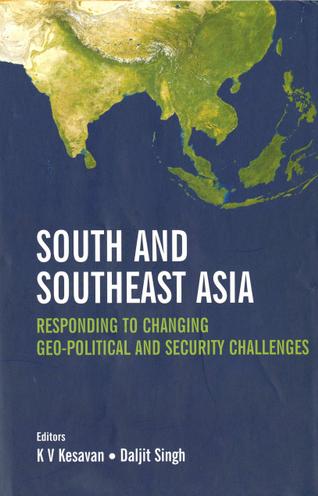
Book review on “South and Southeast Asia”, The Hindu, November 2010

Emerging geo-political and security challenges
by V. Suryanarayan
November 2, 2010

This compendium of 10 essays, presented at an interaction in 2009 among scholars of the Institute of Southeast Asian Studies, Singapore, and the Observer Research Foundation, New Delhi, covers a wide range of subjects related to the political and security trends in South Asia and Southeast Asia.. They include: the role of extra-regional powers and their growing naval presence in the Indian Ocean; the evolving Asian regionalism; India’s ‘Look East’ policy; the political situation in Myanmar; and the non-traditional security challenges to Asian security.

Since the end of World War II, the pattern of international relations in the two regions has undergone a radical transformation. This is particularly true of the role of external powers in Southeast Asia. Though the relative clout of the United States and Japan has declined, the ruling elite of the region would like Washington to maintain a high profile. The growing economic linkages between China and the United States and between India and China have a momentum of their own. However, China’s recent assertive postures in the Indian subcontinent and the South China Sea have created a sense of unease and have even given rise to suspicion about its intentions and objectives.

In South Asia, profound changes are taking place. The nuclearisation of India and Pakistan has added a new dimension to the troubled region. The struggle for democratic rights, the fight for justice by the ethnic minorities, and the secessionist movements, with covert support from external powers, pose grave challenges to the stability of South Asia.

Given the space constraints that preclude coverage of all the essays, only a limited review touching upon a few of the striking contributions is attempted here. In his analytical piece, “Major Powers in South Asia: What is their game?” Dilip Lahiri projects the scenario that is likely to emerge, one that will have profound consequences. Despite their divergent national interests, the U.S., India, Japan, South Korea, and Australia are likely to come together to ensure that the rise of China is non-threatening and does not disturb the peace and stability of the region. Admiral P.S. Das and Vijay Sakuja examine the roles of China and India as growing maritime powers. China’s deepening ties with the member-states of ASEAN and their consequences are highlighted. Equally interesting, the authors pinpoint the strengthening of the links China has established with India’s immediate neighbours — Pakistan, Bangladesh, Myanmar, and Sri Lanka. In this context, India’s ‘Look East’ policy assumes great significance. As Admiral Das points out, “looking East” is no longer an economic jargon; it is descriptive of the totality of India’s relations with Southeast Asia.

STRATEGIC UNEASE

Discussing the major powers vis-à-vis the security concerns of Southeast Asia, Daljit Singh makes the point that, while China’s image and standing in the region has “improved a great deal”, there is also a “strategic unease” about China on account of its “[huge] size, proximity, growing power, and uncertainty about its long-term intentions.” China’s bilateral relations are driven solely by considerations of realpolitik and strategic interests. Witness Beijing’s continuing support to the military regime in Myanmar, its military aid to Sri Lanka during the fourth Eelam War, and its covert support to Pakistan’s nuclear programme.

From India’s point of view, there is concern over a perceived shift in China’s position vis-à-vis Jammu and Kashmir. Hitherto, it had recognised India’s de facto control of J&K, while, at the same time, advocating a peaceful resolution of the contentious issues with Pakistan through bilateral negotiations. The recent denial of visa by China to Lieutenant General B.S. Jaswal is held out as a pointer to this subtle shift. Many scholars are so blind in their admiration for China and its remarkable achievements that they do not want to see any signal or be reminded of any historical evidence that shows it in a negative light. Such an approach will be detrimental to the interests of India. The essays — contributed among others by diplomats, naval officers and academics — are scholarly, absorbing and stimulating.

Link to original publication.

Standard
Non-Traditional Security

Radical Islam: Perspectives from India and Russia.

Observer Research Foundation and the Experimental Creativity Centre (ECC), Moscow, have completed their collaborative research project on Radical Islam. The first conference under this project took place in Moscow in October, 2009 while the final leg was held in New Delhi in March 2010. The papers and proceedings of these workshops have now been published in the form of a book titled “Radical Islam: Perspectives from India and Russia”.

The Russian language edition of the book was launched at the ECC premises in Moscow on September 27 2010. It was attended by senior faculty members of both ORF and ECC, including Mr. Sunjoy Joshi, Amb. M. Rasgotra, Mr. Samir Saran, Mr. Nandan Unnikrishnan, Dr Sergey Kurginyan and Dr. Yury Byaly. The launch was preceded by a press conference organised by the leading Russian news agency RIA Novosti.

This 480-page book is the result of cohesive and complementary research by 15 scholars from both India and Russia. The research for this project was based on both geography and themes. While geographies or nations provided the specifics on the interaction of the phenomena of Radical Islam with specific political units and local societies, the thematic research allowed the researchers to test the interaction of Radical Islam with other contemporary and older tendencies. This effort covers the experiences with Radical Islam in Maldives, Bangladesh, India, Pakistan, Central Asia, Europe, Russia and spans the entire land mass between the Indian Ocean and the Arctic.

On the other hand, this project also tests the interactions between Islam and other contemporary challenges, including Global and Regional power struggles, Oil and Energy politics, Inequity and Poverty, evolving Identities, ancient Culture and tradition, Globalisation and indeed with Capitalism itself. This research proves the adage “the more we learn the lesser we know”. In spite of various assertions in the individual essays by the respective authors, Radical Islam is still indescribable and the very term “Radical Islam” is an attempt to describe the indescribable by reflecting a simplistic categorisation of a complex and dangerous impulse.

Speaking at the book launch, Amb. M Rasgotra said that it was essential for India and Russia to share their experiences in dealing with radical Islam since the nature of the problem is the same, even as its manifestations may be different. Mr. Sunjoy Joshi observed that elucidating the Indian and Russian perspectives on radical Islam is important because the West often “tends to look at Islam in black-and-white, while Indian and Russian researchers look at it in multiplicity of identities, discourses and ideas”.

Mr. Samir Saran asserted that Radical Islam in certain geographies is an expression for economic and political voice, while in other contexts, it is a hegemonic tool deployed by the West and the rest. In some other cases, it is an instrument of state policy deployed against the neighbour or rival…but universally, it is the story of two victims …the perpetrators who commit the crime and the civil population on whom suffering is inflicted…both collateral damage in the bigger game, he said.

“From an Indian experience, the attempt to describe, analyse and respond to Radicalism or Radical Islam becomes even more problematic…. after all we are turning the spotlight to ourselves…. to respond to radical Islam, we need to discover our own shortcomings…. it is as much about internal political and economic faultlines as it is about the exploitation of these faultlines by external actors,” Samir Saran said.

India’s interaction with Radical Islam is different to that of Europe or the West. It is mostly about internal reconfiguration and resolution. While some may look at this as an external tendency that needs excision or removal from their nation or society, in India we need a nuanced approach; one that balances security and equity, and if the scale should tilt …it should be in favour of equity.

The challenge of radicalism in India is real and imminent. With its fast paced growth, embrace of capitalism and western values and the rapid move away from the traditional and family oriented societies due to both poverty and aspirations are creating social conditions that prove to be incubators of violence and terror. This equation is exacerbated by insensitive policy making and poor governance leading to a rise in the constituency of those willing to live outside the civil society framework that seemingly serves the rich and the political elite. While violence and terror will deploy religion as an instrument of mobilisation, responses from policymakers and governments must remain secular.

October 2010, Moscow, Russia.
Standard
Columns/Op-Eds, Non-Traditional Security

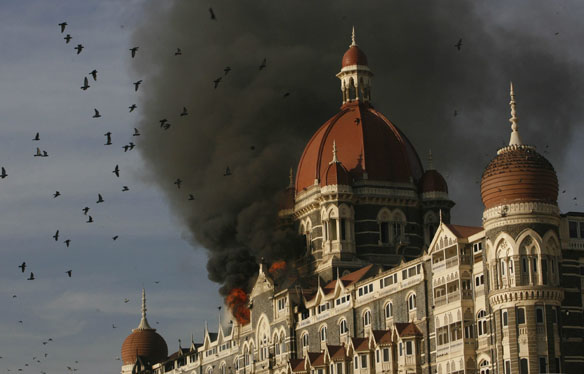
Mumbai Attacks 2008: A Call to Look Within.

Over the past two decades India has demonstrated remarkable consistency in the irrational and incoherent response of its policy makers, people and sections of its mass media to dramatic and outrageous terrorist violence inflicted on the country. The most recent episode, witnessed in Mumbai on November 26 has also been followed by a typical though distinctly more pronounced response from all quarters. Much of the public debate following these terrorist attack has focussed on internal security systems (or the lack thereof) and the effort to punish the perpetrators. The public sphere including the media and academic dialogue seem to be preoccupied with ways to bring in line the truant Pakistan.

This approach has failed consistently and the outcome is unlikely to be any different this time around too. The major flaw with placing the blame entirely on Pakistan is the premise that Pakistan or its proxy warriors could have executed any of these outrageous acts in the absence of serious internal vulnerabilities. Though some of these vulnerabilities are acknowledged by many after the Mumbai attacks, they remain limited to the domain dealing with foreign policy, internal security and intelligence gathering.

Even now there is complete silence on a most crucial aspect that we must recognise; Indian Nationals collaborated with the Pakistani perpetrators in planning and executing this barbaric incident. The law enforcement agencies and the politicians are yet to provide us any clue on the identity of the perpetrators who were killed and on the countless others who helped in the various stages of this act. India, its media and its polity have not even attempted to articulate this dimension in their prescription for preventing these events from occurring again. The increasing presence of radicals in India, in this case those who justify violence in the name of Islam, is a clear and present danger and must be halted if any degree of success is to be achieved in India’s endeavour to tackle the menace of terrorism. It is imperative that Islamic radicalism be recognised as such and then efforts be made to prevent its spread. It is equally important to enact policies that resolve conditions that aid the spread of this violent radicalism.

This reluctance to look within, it may be argued, is due to the inherent predisposition of nations and societies to externalise such incidents. The US and much of the western world has frequently treated terrorist violence as a distant third world phenomenon attributing its cause and origin to the ‘impoverished and backward regions’ of Afghanistan, Pakistan and the Middle-East. This propensity of the western world is a legacy of the colonial/orientalist discourse. It also prevents societies from looking within and engaging with shortcomings in their own socio-political landscape. This is evident from the alacrity with which the West categorises its Muslim citizenry as ‘Moderate and Progressive’ while denouncing the Muslim perpetrators (even when they are from their own populace) as ‘Islamic Terrorists’ motivated and created in alien societies devoid of freedom and liberty. To admit to the existence of discontent and outrage amongst its own Muslim population would be to admit to shortcomings within their own brand of liberal pluralism.

India, its government and people, have responded to the Mumbai attacks and other terrorist action in the past in much the same manner. The origin of these violent incidents have been distanced from within and located entirely in the ‘fundamentalist and undemocratic’ Pakistan. This is simplistic and dangerous. The sophistication, planning and increasing frequency of terror violence in India demonstrates strong local support for this radical Islamist ideology that propagates violence. Irrespective of the existence, contours and construct of a global Jihadi network, it is irrefutable that social conditions do exist within India that create disaffection and hopelessness and allow this population within the Indian Muslim community to be lured to the ideology that many today term ‘Radical Islam’. The existence of SIMI and their violent brand of political agitation confirm to this growth of radicalism in the local Muslim community. The participation of home grown terrorists from educated and middle class backgrounds points to the presence of this radicalism in all strata of society and within the urban mainstream of India.

Radical Islam is not a primeval phenomenon, nor is it unsophisticated. It is now a post-modern ideology able to attract a diverse demography. It also makes use of modern media and communication platforms and positions itself effectively as an alternative and preferred form of habitation for persons seeking an outlet and release from their existing social reality. This presence of Radical Islam demands two specific investigations that India must undertake if it is to effectively respond to its dangerous proliferation. The first must involve an honest study of political, economic and sociological factors that shape anxieties of the Indian Muslim today. This would help in identifying vulnerable sections and vulnerabilities in our systems that may be exploited. The second investigation must construct how Radical Islam offers its ideology to the Indian Muslims as a relief from their current anxieties. It should understand the substantive messages that are communicated by the supporters of this ideology that address the current day issues of the Indian Muslims across the social spectrum.

An understanding of these vulnerabilities and the messages may offer a point of departure for the policy makers and civil society and help to develop a response comprising of both, security and socio-economic dimensions. This would aid policies and processes that would not only make India safer but also enhance its democratic depth.

January 2009.
Link to ORF website.

Standard
Non-Traditional Security

India and Singapore discuss non-traditional security issues.

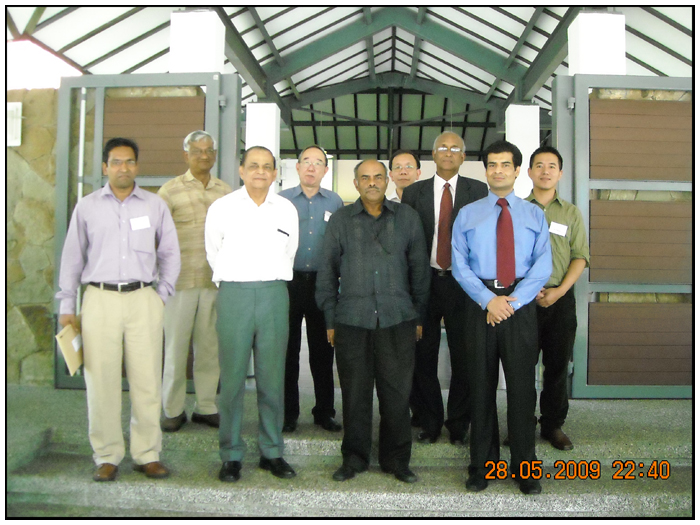
The Observer Research Foundation (ORF), New Delhi and the Institute of Southeast Asian Studies (ISEAS), Singapore held their Second Dialogue on 28-29 May, 2009 in ISEAS campus, Singapore. The theme of this year seminar “South and Southeast Asia: Responding to Changing Geo-Political and Security Challenges”, aptly reflected the rapidly changing economic and security situation with immense implications for South and Southeast Asia. The two-day seminar covered a wide range of issues affecting the region.

The first session dealt with the major power dynamics in South and Southeast Asia. Amb. Dilip Lahiri’s paper analysed the changing role of major powers in South Asia. He concluded his paper by suggesting that the US and India together with Japan, ASEAN, Australia and ROK may find their interests converge which may also ensure the peaceful and non-threatening rise of China in the region. In his paper, Mr. Daljit Singh examined engagement of major powers with Southeast Asia. The paper argues that ASEAN has promoted a “benign regional order” with the major powers. In the context of the rise of Asian powers and the dominant power of the US weakening, the possibility of increasing contestation among major powers looked likely if not managed effectively.

The second session of the seminar discussed the rise of Asian maritime power and its implications on Southeast Asia. Adm. Premvir Das’s paper on India’s maritime security underlined the emerging traditional and non-traditional threats. He argued that India’s maritime security interests have assumed increased importance and serve to secure India’s role and economic interests even beyond the Indian Ocean. Dr. Vijay Sakhuja’s paper examined the rise of China as a maritime and naval power from a historical perspective. He argued that the growth of China’s maritime economy will add to the country’s power potential.

The third session dealt with the security issues in Southeast Asia. Dr. Ian Storey’s paper on the South China Sea dispute reviewed the developments and their implications since the 2002 declaration on the conduct of parties and suggested that the dispute may well take centre-stage if the recent trends were any indications. The paper by Dr. K. Yhome analyzed the changing dynamics of external power interactions in Myanmar and their implications. He argued that while the international divide seemed to be narrowing down at the political level, economic and strategic cooperation among external powers in Myanmar looked unlikely in the current geopolitical context.

The fourth session examined the evolving Asian regionalism. Amb. Rodolfo C. Severino’s paper discussed regional institutions such as ASEAN, ASEAN+3 and AFR in East Asia and stressed the point that these institutions need to be strengthened to deal with regional security and non-traditional security issues. In his paper, Prof. K. Kesavan analyzed the role of regional institutions in India’s “Look East” policy and argued that New Delhi’s look east policy was a response to cope with the new challenges in the aftermath of the Cold War.

The fifth session explored the non-traditional security challenges focusing on climate change and its implications. Mr. Samir Saran provided an interesting perspective on climate change and security in South Asia. By redefining climate as “the operating system” for other elements/threats, he argued that there was a need to acknowledge climate as a variable in any emerging security paradigm. Dr. Lee Poh Onn’s paper examined the implications of climate change for Southeast Asia. Basing his argument on some reports he suggested that Southeast Asia has observed impacts of climate change in water resources, increases in temperature as well as health issues.

The papers generated interesting and fruitful discussion and debate thereby opening new perspectives in understanding the issues confronting South and Southeast Asia. The papers presented at the seminar will be compiled into a book for publication.

June, 2009
Link to ORF-website

Standard