Great Power Dynamics, India, Indian Froeign Policy, Strategic Studies, USA and Canada

India in vanguard of new order: Raisina 2019

This year’s Raisina Dialogue looked ahead of the disruptions that have agitated global politics for the past few years and interrogated what they mean for an emerging world order. As the international system rapidly drifts away from the moorings of its Atlantic origin, its future will be decided by the complex interactions among new actors, voices and demands. After a period of relative unipolarity at the turn of the century, we are entering a world that is not only multipolar but also ‘multiconceptual’.

Why multiconceptual? For one thing, the concentration of economic wealth is “relentlessly shifting eastwards,” as noted by Mark Sedwill, the UK’s National Security Adviser. This transformation will certainly create new ‘poles’ of power—India and China chief among them. It will simultaneously diminish the influence of extant powers. Spain’s Minister for Foreign Affairs Joseph Borell alluded to this reality when he called on Europe to “influence or be influenced”.

Beyond the diffusion of economic power, the world is also grappling with an explosion of new actors, values and interests—from powerhouse cities to powerful multinationals and networked civil society groups.

This global complexity is straining the ability of the international community to adapt and respond to the momentous social and economic transformations that are currently underway. Every year, dire warnings about the impact of climate change pass by unheeded. The global economy is being increasingly driven by digitisation and associated technologies, with returns accruing mainly to owners of capital. Economic opportunities and jobs for millions, on the other hand, are being lost to automation. Meanwhile, our institutions of governance are struggling to address tensions of inequality and identity.

Around the world societies are responding by taking solace in national solutions and populist prescriptions that promise to put local concerns ahead of global ones. Perhaps it is only natural that a period of geopolitical flux should coincide with a renewed emphasis on the power and authority of the state. The consequences of this trend for international norms and institutions, however, are dire. “The insecurity felt by millions will weaken respect for international law and institutions, human rights and the principles of collective security,” warned Norwegian Prime Minister Erna Solberg as she inaugurated the 2019 Raisina Dialogue.

Quad plus one, Quad, Indo-Pacific, Raisina, Raisina Dialogue

More worryingly, the perception of exclusion reduces our collective capacity to arrive at a consensus. And in a world that is more interdependent—and more fragile—than ever before, finding solutions requires more, not less, international cooperation. How can multilateralism, then, be made relevant in a multiconceptual world?

To start with, we certainly require a new international framework to capture the diversity of reality, views and voices that exist today. Minister for External Affairs Sushma Swaraj said as much when she suggested that key public policy questions be asked in “villages and small towns, to school classrooms, and to vernacular media outlets.” She was alluding to the fact that the international system requires a new consensus which is more inclusive and diverse. It also requires a new ethos defined by the common interests and urges of the many, rather than the shared objectives and strategies of a few.

Second, the international community requires a new ‘new deal’. This is true both domestically and for global governance. The Washington Consensus is no longer relevant in the fourth industrial revolution. The twin forces of globalisation and technological change will create new winners even as they leave many behind. Designing inclusive economic models will require new policies capable of balancing sovereign compulsions and global interdependence. They will also require unlikely partnerships at the global level. There is no reason, for example, that the NATO and the SCO cannot have influential conversations on the Indo-Pacific or Afghanistan or, for that matter, the BRICS and the G7 cannot harmonise their diverse economic models and expectations from a global trading regime.

Raisina Dialogue, Raisina 2019, Showstopeer, Samir Saran
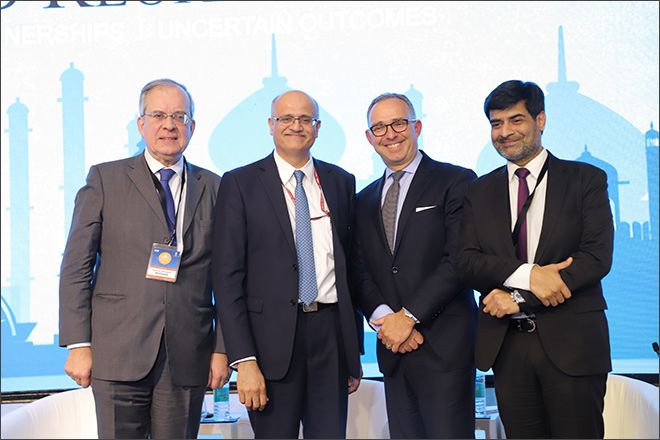
Source: PhotoLabs@ORF

Third, new coalitions and partnerships must emerge. French Secretary-General for European and Foreign Affairs Maurice Gourdault-Montagne said “issues based alliances will proliferate if the international order continues to fragment.” However, such coalitions, especially between those with shared values and interests, have a role to play in supporting the international order in its period of transition. Australian Minister for Foreign Affairs Marise Payne saw such potential in India, a country with which Australia could support a “rules-based order”. Such coalitions must be able to cut across geographies, issues and interests.

Fourth, global governance must account for new actors. Over 60 per cent of the world’s GDP is now generated in cities. The market capitalisation of the largest technology companies far exceeds the GDP of even significant countries. By this reckoning, Apple is bigger than Saudi Arabia. Solutions to big-ticket challenges like climate change and the future of work may well emerge from these networks of power and other key voices like think tanks and civil society organisations. Instituting new mechanisms for dialogue between such actors can create more effective global feedback loops.

Fifth, international institutions must reclaim some legitimacy. In the middle of the 20th century, the organising principle of ‘one country-one vote’ in international affairs resonated with many post-colonial societies. While global institutions have rarely proved truly democratic, it is evident that the key to legitimacy is a real distribution of decision making authority amongst stakeholders. India’s Foreign Secretary Vijay Gokhale warned that the “tussle between unilateralism and multilateralism” would continue unless international steering mechanisms are able to better capture today’s global realities.

Sixth, the international community must embrace informality. Formal global institutions can often be ineffective in responding to challenges that are sudden and complex. Informal coalitions and governance models, on the other hand, can summon the human and technological capital that is required to collaborate at scale. The global climate change agenda, for instance, is being quietly led by coalitions of cities from the global north and the global south. They are rapidly scaling and transferring innovation, ideas, resources and capital.

Seventh, the innocent appreciation of technology being benevolent and beneficial has changed the world over. Technology is now both a tool and an actor that can dramatically enhance quality of life and radically destabilise societies and nations. Foreign Secretary Gokhale captured the essence of this juxtaposition by suggesting that the rapid development of social sciences alongside science and technology is a prerequisite for ensuring that innovation benefits humankind. A new ethic of human engagement awaits discovery.

Last, though not the least, it is worth noting that securing geopolitical stability and protecting multilateralism will certainly require new stewardship. It is increasingly likely that in the coming years India will be a prime candidate for this role, even if only because India is a microcosm of the world at large. Rapid technological advances, a booming labour force and the imperative to develop in a resource-constrained world will define the ‘India story’ and, in turn, impact the future of billions in the developing world. Thus India presents a unique opportunity as an arena to resolve many of the world’s contradictions.

Raisina, Raisina Dialogue, Raisina 2019, Anwar Ibrahim, Malaysia
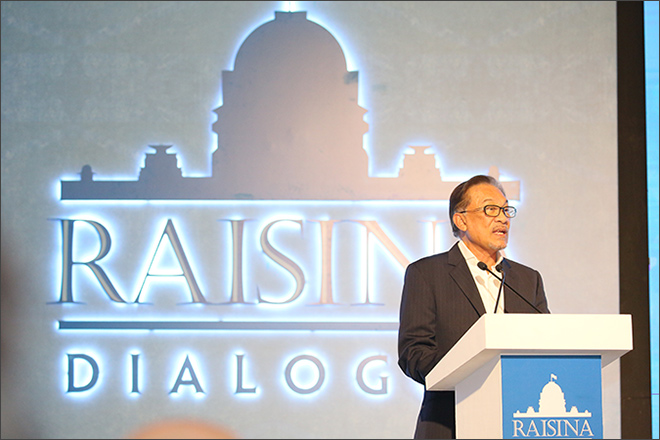
Source: PhotoLabs@ORF

India is a post-colonial state that has emerged as a vocal proponent of a liberal, rules-based international order. It is located at the intersection of Eurasia and the Indo-Pacific, two regions that will define the 21st century. And it has always been willing to navigate complexity by seeking shared objectives. Very few countries, for example, can claim to engage with powers like Russia and China while embracing a strategic partnership with the US. As Minister Swaraj noted in her address, “India’s engagement with the world is rooted in its civilisational ethos: co-existence, pluralism, openness, dialogue and democratic values.”

It is for this very reason that Dato Seri Anwar Ibrahim described India as “an enigma.” In many ways, the annual Raisina Dialogue is an attempt to deconstruct what makes it so and why this is relevant to the world. The feedback we have received from world leaders in the fields of politics, industry, media and civil society makes it clear that India’s choices matter more than ever before. Increasingly, the conversations that take place at the Raisina Dialogue are not only teasing out an Indian consensus on world affairs but a larger consensus capable of shaping a less unstable, more predictable world reorder.

Standard
E-Commerce, FDI, India, MSME, tech and media

In rising e-Commerce storm, India protects its ship

MNC, investor, institutions, Swadeshi, disconnect, ownership, regulators, geostrategic, data, economy, platform, data, technology, companies, Silicon Valley, algorithms, Economic rights, civil liberties, autonomous, privacy, safeguards, MSME, FDI

The debate on the global governance, ownership and management of data is today confronted by three new realities. The first is that the custodians of data – technology companies in Silicon Valley that famously promised to bring the world together and solve most of its problems through innovative algorithms — have been found wanting in the protection of economic rights and civil liberties that accrue to their users in developing countries. Not only have digital platforms serially misused the data that their consumers hand over in trust, they have also done little to generate local value that can create jobs, contextual content and/or spur secondary and tertiary innovation.

Second, it is increasingly clear that local jurisdictions, however flawed or premature their regulatory ambience may appear today, are the most effective forums to guarantee even a semblance of protection to users of digital platforms. No longer can emerging markets seek refuge under foreign laws that promise enhanced privacy safeguards on paper, but in practice ignore the mischievous harvesting of such data by intelligence or law enforcement agencies of states in which technology giants are incorporated. Put simply, the hypocrisy of “autonomous” and responsible self-regulation stands exposed.

And third, digital markets don’t accurately drive valuations of technology. While IPOs may determine the growth expectations of a tech company, their worth must also be driven by the ability (or not) of their peers to provide the service at competitive rates. The debates on data localisation, done to death, appear to have altogether ignored this reality. The fact is that that India’s entry into the “data storage” market will exponentially bring down price points. The Y2K, BPO and Euro conversion episodes have proven that India is capable of providing digital services at a fraction of the cost sought by others. If India is a financially sustainable destination for data, should hackneyed arguments on localisation be revisited in the light of new economic realities?

All three realities are implicated in the debate on India’s e-commerce policy, which will define how the country trades, transacts and consumes in the coming years. E-commerce is where big-ticket investments are likely to happen; generating jobs, supporting MSMEs and incubating e-product creators along the way.

E-commerce is where big-ticket investments are likely to happen; generating jobs, supporting MSMEs and incubating e-product creators along the way.

Look at the facts as they appear. India has the world’s largest population in the 18 to 35 age group at over 440 million. An estimated half of this population is already in the workforce. As income levels rise, so will purchasing power, which in turn will implicate their choices ranging from clothes to shoes to books to gadgets to news to entertainment to food and beverages.

Affordable access to internet and smartphones (no more in the realm of possibility but already a reality) will facilitate both access to information (for instance, comparing prices and features) as well as greater agency (buying what meets your need at the best price). This is the ‘millennial opportunity’ that India is betting on and e-retail does not want to miss. It is unsurprising then that this sector has proven so controversial—and has become a flashpoint for debate about digital rules, policies and globalization around the world. India is not immune to these either and is witnessing a heated debate on some of its recent policy maneuvers.

Just over two years ago, it seemed like India was willing to fully integrate its emerging e-commerce market with the rapidly expanding global digital commerce, allowing 100% FDI via the automatic route. Big ticket investments by e-commerce giants like Walmart and Amazon were then seen as an endorsement of India’s continuing push towards globalisation and rejection of protectionist nationalism propounded by organisations like the Swadeshi Jagran Manch and practiced by previous governments through their decisions.

Global investors and institutions saw this as a natural consequence of India’s rise. After all, the assumption was that a $3 trillion economy aspiring to become a $5 trillion economy by its next elections cycle of 2024 must acquiesce to the financial and commercial logic of globalization. India, as all other capitalist democracies, would welcome the innovations and efficiencies of global MNCs, even though it ran the risk of their displacing or buying-out local peers.

Yet, last year-end’s revised rules — which the government claims have only elaborated and reasserted the terms set in 2017 — have proved that rising industrial powers with sense of sovereignty and alive to their size, rarely make such simple trade-offs.

First came a new FDI Press Note, which limited online retailers from selling the products of vendors that they had invested in and offering heavy discounting on selected products. Next came a new draft e-commerce policy, which tightened rules in relation to online retail practices (including intermediary liability) along with imposing a raft of new data sharing mandates.

With the e-commerce market set to grow from $35 billion to $100 billion by 2022, it is unsurprising that the stakes are high and that the Indian government has received flak from some quarters for what they perceive as an attempt to ‘protect’ local industries. All of a sudden, India is seen as abandoning its commitments to free trade and investment.

With the e-commerce market set to grow from $35 billion to $100 billion by 2022, it is unsurprising that the stakes are high and that the Indian government has received flak from some quarters for what they perceive as an attempt to ‘protect’ local industries. All of a sudden, India is seen as abandoning its commitments to free trade and investment.

What explains this disconnect between the expectations that some in the global financial community have of India and the realities of its political economy and India’s choices?

The answer lies in the underlying shifts in the structure of the global economy and India’s own rising aspirations. Simply put, the global economy is undergoing a new industrial transformation, with digital technologies spearheading this change. A small group of technology platforms, largely based in the US and China, is increasingly mediating billions of dollars of global trade and trillions of bytes in information and communication flows.

Access to personal information and ownership over data infrastructures have allowed these firms to entrench their dominance in markets around the world. In the process they have restructured existing economic and even social relations in a manner that better suits their commercial interests. Unsurprisingly then, there is great uncertainty about how data flows, technology platforms and digital ecosystems will implicate market and state power in the international system.

India is emerging as a global power amidst these realities. It certainly does not aspire to re-orient the moorings of the liberal international order; having benefited from an extended period of peace for its own development. Nevertheless, there is a growing consensus in India that even as the United States and China pry open markets abroad, they are neither interested in creating value for those markets nor nurturing sustainable economic development in these destinations. Around the world, nation states are reassessing frameworks of law, regulation and industry practices that have governed the digital economy.

India’s objective with regards to its digital economy is three-fold:

First, to create regulatory stability (a precondition for investment that scores over other determinants) and a level playing field for all market actors. Agnostic or ambivalent regulations that merely preserve of the value generated by foreign technology companies will not help Indian consumers in any way. If India’s regulatory policy for digital technologies appears in flux, it is because the exact determinants of value creation are uncertain. Regulators around the world are currently attempting to quantify the digital economy and map out the disaggregated set of economic activities that comprise it. However, any sensible policy is likely to have a bias that offsets the current uneven playing field developed and controlled by a handful of transnational corporations.

Second, to create opportunities for local enterprise and value chains. For an economy that is aspiring towards a $5 trillion GDP, this is a natural compulsion—both for electoral reasons and for geostrategic ones. This does not necessarily imply relying on China’s techno-nationalist playbook. India does not seek to expel foreign firms from its markets in order to create domestic champions. Rather, it is attempting to create local value through digital supply chains that have high scale and increasing presence. India must respond to the demands of jobs, social mobility and domestic enterprise. It has a once in a century opportunity to use the “data economy” to transform from a mere collective of billion consumers to a large economy.

Finally, it has to create a globally competitive digital market. This is probably a central challenge of our times. Proprietary data sets have allowed a handful of technology companies to dominate existing and new markets through sheer information asymmetry. Even domestic competitors in the US and EU are questioning the relevance of competition jurisprudence and theory. It is only to be expected that India should develop its own policy propositions for the same.

The great industrial powers of the previous centuries have protected cutting edge industries in one form or another. In the late-19th and early-20th century, the United States ranked amongst the most enthusiastic levelers of tariffs on British goods. Japan’s then infamous Ministry of International Trade and Industry protected domestic industries through the 1950s and 60s until it became a cause of concern in the US. The rise of China’s internet giants was enabled entirely by keeping American technology firms out of the domestic economy. India will not follow that same playbook — it does not have the luxury of creating exceptions for its rise while trying to impose a different set of rules for its peers in the international system.

Instead, India will focus on creation of value for the Indian consumer, who is the primary producer and consumer of data. Foreign technology companies wanting to do business in India should sidestep shrill debates on data localisation .Their primary objective ought to be the elevation of the Indian digital economy from a high-volume, low-intensity engagement to high-volume, high-intensity engagement. The interaction of Indians with data in all its forms — audio, visual, text-based — will catalyse the creation of a new cadre of data scientists capable of tailoring platform engagement in multiple languages and cultural contexts. The value so generated, by jobs, experience and improved digital services, will not only benefit Indians but also the bottom lines of these companies and their ability to do business in any other part of the world. Fair and sophisticated rules on the management and ownership of data will follow subsequently.

Today’s reality is that globalization is increasingly being driven by voluminous flows of data. These flows are generating enormous value for those individuals, industries and geographies that can analyse and monetise them. It is also these very actors who well set the terms of this new globalization—the new rules of trade, commerce, investment and security.

Today’s reality is that globalization is increasingly being driven by voluminous flows of data. These flows are generating enormous value for those individuals, industries and geographies that can analyse and monetise them. It is also these very actors who well set the terms of this new globalization—the new rules of trade, commerce, investment and security.

India’s policy shifts must not be an attempt to choose between globalization and protectionism—the choice is obviously the former, even though electoral compulsions certainly do push political parties towards the latter. Instead, home to the world’s largest surplus of data and the largest cohort of consumers, India must attempt to ensure that it emerges as a beneficiary and rule-maker of the digital economy once this period of churn settles. The road to this would be paved with regulatory stability, policies that bias growth to cater to its size and specific needs and having the political courage to remain outside of popular herds and hashtags as it undertakes the above.

Standard