Cyber and Technology, Health care, India, media and internet, tech and media

Digital Epiphany? COVID19 and our Tech Futures

Processes that were once subject to national jurisdictions – be it political conversations, trade and commerce, or national security considerations – are increasingly migrating to ungoverned digital spaces, creating what I have earlier called a “platform planet”. It is clear that the coronavirus will accelerate this process and more permanently fuse our technological and
social systems while encoding inequities and cleavages therein.

Most pertinent to this is the issue of access to digital technologies. Think of the pressure on governments today to deliver governance and services in the age of social distancing, the clamour from parents whose children cannot access educational opportunities, or demands from historically marginalized groups who may not be able to work remotely. Life, protection, and livelihood will all need to be guaranteed virtually and most capitals around the world will struggle to provide these.

Some positive transformations will be driven by technology companies looking to break new ground and compete for consumers among the millions of social and commercial interactions that will now be permanently online. Videoconferencing platforms, for instance, have emerged as the go-to technology keeping governments and businesses running even as social distancing is being practised. And still more change will be driven by governments adopting digital tools to carry out health surveillance measures or to enforce quarantines. Evolving debates and assumptions on user agency, privacy and data protection may be significantly altered in the year ahead.

Undoubtedly, the most important structural change will be in the form and format of the relationship between technology and society. Over the past two decades, there have been two fundamental notions that have shaped this ever-evolving relationship. The first, roughly corresponding to the first decade of the 21st century, was a near universal belief in the emancipatory potential of emerging technologies and a social willingness to accept new technologically induced disruptions. The second perspective, corresponding to the second decade, was the antithesis of the first – a “tech-lash” or scepticism about the role of emerging technologies in our social lives and a growing degree of suspicion about the intent and actions of “big tech” and “strong states”.

The coronavirus outbreak will demand a synthesis of these, and other, perspectives under extraordinarily compressed timelines. The many decisions that will be made over the coming year will either become entrenched or will reinforce certain pathways in the decade ahead. Technologies that society would have once expected greater regulatory scrutiny around –such as the use of artificial intelligence (AI) in healthcare – will likely be fasttracked and deployed. Meanwhile, consumer technologies that are scaling rapidly, such as videoconferencing and fintech platforms, will face additional scrutiny from consumers and states as they become more utility-like in their deployment.

Technologies that society would have once expected greater regulatory scrutiny around –such as the use of artificial intelligence (AI) in healthcare – will likely be fast-tracked and deployed.

As this process of synthesis unfolds over the coming year, the international community will be confronted with a new set of opportunities as well as risks. Perhaps the first and most visible risk emanates from a largely ungoverned digital public sphere. Indeed, this pandemic has also been accompanied by an “infodemic”, with misinformation and disinformation flooding most social media platforms, which for all practical purposes play the role of both traditional media and discussions rooms of yore that shaped public opinion.

Fake news alone, however, is not the only dimension of this risk. The response to it may be equally dangerous. The COVID-19 outbreak may end up creating stronger censorship regimes in an attempt to curb the spread of disinformation. Equally worrying is the power of technology platforms to mediate these spaces during times of crisis and the dangerous collaboration or confrontation brewing between technology companies and governments. For instance, certain technology platforms took down content by President Jair Bolsonaro of Brazil because they deemed it spread disinformation. But should platforms have the ability to censor the content of a head of state? On the other hand, should they partner with governments and dilute freedom of expression through new measures that may outlast this pandemic?

second related risk is the data-sharing  practices that technology companies, health institutions and governments are adopting – with little oversight or accountability – to combat COVID-19. This trend will not only be about the data generated today. Instead, the COVID-19 pandemic will likely create a new battlefield, one that will be defined by the datasets generated by the fusion of our biological and digital worlds. Indeed, one set of technologies that were already being deployed rapidly before the virus outbreak were those related to genomics. The practices around genetic privacy – and the institutions that manage them – in the year ahead may well create new and unexpected risks to our fundamental rights as unique living beings.

third risk likely to challenge our technological futures are efforts to undermine the integrity of the cyber realm. While most nations remain worried about threats to critical infrastructure (the United Nations has already called for a digital ceasefire) the COVID-19 outbreak will also exacerbate “petty” cyber-crimes. These are minor cyber incidences; those that may not pose systemic national security threats but will affect the financial and social lives of individuals dramatically. The sudden uptick in COVID-related phishing scams, telemedicine scams and attacks on medical institutions all point in this direction. Trust in technology will be undermined at a time when the digital is the ether for globalization to survive.

The fourth risk is of individuals being permanently left behind as the process of digitalization continues to accelerate. Inequality has been the defining political zeitgeist of our generation – one that digital technologies have often accentuated. In countries without full or robust access to the internet, citizens are suffering from multidimensional socio-economic challenges as the pandemic snatches away their access to essential public goods.

But the challenge goes beyond this. Just as individuals are beginning to learn that not all work requires formal office spaces, businesses may well realize that not all operations require humans. The rapid adoption of AI and robotics energized amid the pandemic could accelerate a process that governments and policy-makers have been concerned about for years – technology-induced unemployment.

The final risk could end up being a product of how states actually respond to these various challenges amid a rapidly digitizing global society. No two societies are the same – they are defined by different political values, social practices and economic priorities. With COVID-19 forcing more of our social lives, business operations and governance online, the race to infuse the global digital world with a particular set of values and technological standards will only accelerate. Digital “code wars” may well be this century’s ideological confrontation that may partition the world in the end.

Think of the UN, the centrepiece of the liberal international order, partnering with Tencent, the digital champion of a vast surveillance state, to conduct its remote work operations. This has become a cause for concern for many countries. Reports indicate that the UN is already backtracking from its decision under pressure from human rights groups and democratic nations. Indeed, the varied digital societies that are emerging may fuel loud “geotechnological” competition.

That said, policy-makers may also see in the COVID-19 crisis an opportunity to reform political and administrative practices that were earlier hobbled by legacy institutional constraints. The most obvious, perhaps, is the accelerated adoption of what the UN calls “digital public goods”. These are the common digital “railroads”, which act as force multipliers for a range of business and governance operations.

For instance, India’s Digital ID system has helped the country navigate the pandemic by ensuring cash transfers and digital payments for a range of essential goods. The demand for similar architectures has been growing around the world. Singapore had already signed an MoU with the Indian government, even before the virus outbreak, to develop such a system. Similarly, Google has cited India’s digital payments infrastructure to call on the Federal Reserve to enable similar innovations in the US. These trends could see universal strengthening at this time.

This moment offers an opportunity for states to respond to the needs of a growing global informal workforce. The informal labour force and the “gig economy” workforce need new systems of social protection. The absence of this has placed them at great risk and at the frontline of this pandemic. These political reforms may not be ignored much longer. The idea of a universal basic income – a measure that is supported both by the Pope and The Financial Times – could also find favour and catalyse a new dimension for the future of work.

Perhaps the most significant opportunity will be for states and individuals to realize the potential of a truly global digital society. Responding to COVID-19 has compelled governments and communities to share sporadic information, some best practices and critical technologies rapidly. Consider for, instance, a rapidly growing community of entrepreneurs sharing opensource 3D printing designs for ventilators. Perhaps civil society organizations and policymakers can use the COVID-19 moment to push for new pipelines that will enable the transfer of technologies and innovations and encourage them to rethink rigid intellectual property regimes, which hindered this earlier.

Perhaps the most significant opportunity will be for states and individuals to realize the potential of a truly global digital society. Responding to COVID-19 has compelled governments and communities to share sporadic information, some best practices and critical technologies rapidly

Over a century ago, when individuals were isolating themselves amidst a far deadlier Spanish Flu, many (primarily Americans) turned to the telephone to stay in touch with friends, family and colleagues. Of course, it was a nascent technology at the time and services promptly broke down because of the rapid rise in demand. But rather than crippling the industry and the technology forever, the Spanish Flu only served to underscore how essential it was to modern society. Over a century later, it is clear that the telephone was instrumental in shaping our global village.

We are at a similar junction today. And decades later, historians may well scrutinize the decisions made in the year ahead when studying how the digital shaped individuals, communities, nations and the world they inherited.


This essay originally appeared in World Economic Forum.

Standard
climate change, Commentaries, Health care, India, Sustainable Development

In the lockdown, a breath of fresh air

One of the few positive spin-offs of the ongoing nationwide lockdown to combat Covid-19 has been a dramatic reduction in air pollution. Recent Nasa data reveals that air pollution in north India has dropped to a 20-year low. In Delhi, the levels of harmful microscopic particulate matter, PM 2.5, plunged after the lockdown began — falling from 91 mg per cubic metre (mg/m3) on March 20, to 26 mg/m3on March 27.

Nitrogen dioxide (NO2) released by vehicles and power plants also saw a significant fall of 71% during the period. The air in Delhi is now clear, the skies are blue, and we can hear birdsong again on the boulevards.

Unfortunately, these are but temporary gains, and should not distract us from the dangers of air pollution.

An urgent warning comes from a Harvard University study (bit.ly/3dthqiv), which establishes a correlation between long-term exposure to air pollution and Covid-19 mortality. The study finds that people living in polluted cities are more likely to have compromised respiratory, cardiac and other systems — and, therefore, are more vulnerable to Covid-19.

We should be very worried because India has 21of the 30 most polluted cities in the world. Air quality in some of our cities is 10 times over the safe limits recommended by the World Health Organisation (WHO) and, as per some estimates, air pollution claims more than one million lives each year.

Therefore, even as India flattens the infection curve, addressing the air pollution problem should continue to be a high priority for all policymakers. Today’s cerulean skies remind us that clean air and the right to breathe must be available to all citizens. And if India were to achieve this, there will be huge collateral benefits. We would not only become much more globally competitive, but we could also be well on our way to exceeding our climate ambitions outlined in the 2015 Paris Agreement.

There are many ways in which an economic revival package can get India to this Green Frontier. For instance, new investments could be directed towards renewable energy, with larger allocations and subsidies to initiatives like the National Solar Mission. We could adhere to deadlines for the Bharat Stage 4 standards and accelerate timelines and infrastructure investments for electric vehicle (EV) adoption.

Large electric battery factories could be established to enable localised energy storage solutions. Bailouts and incentives to the auto, aviation and construction sectors could encourage green transitions and clean air ambitions. The Energy Conservation Building Code (ECBC) in the residential sector could be enforced and a 2011policy relating to energy efficiency in MSME clusters could be integrated with the fiscal support to this sector.

Global experience suggests that crises create political opportunities for embracing change. After the 2008 global financial crisis, China spent nearly a third of its $568 billion stimulus towards projects that addressed environmental goals. China has since become a global leader in solar, wind and hydropower markets.

Britain and Germany also undertook green transformations post 2008 crisis. Similarly, India could use this Covid-19 crisis to undertake a far-reaching green revival.

We will find support. After the Covid-19 pandemic, there is a renewed focus on mega black and white swan shocks that can lead to immense loss of lives and destroy trillions of dollars of economic output. It is now much easier to convince policymakers, bankers and investors that awarming climate may well be the single-biggest macro shock the world will have to face. Green revival packages are bound to emerge around the world and global finance will inevitably align to this endeavour.

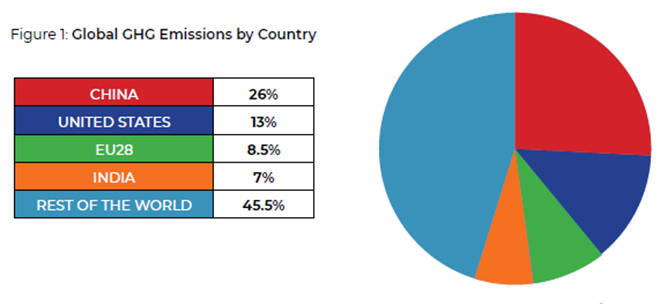
India is already the third-largest emitter of greenhouse gases (GHGs). Even optimistic predictions suggest that our emissions will nearly double in the next decade or so. A green revival package could be designed to ensure that India’s post-Covid economic resurgence becomes a key contributor in mitigating global emissions. It must be branded as the single-most important initiative for the world to meet and exceed Paris Agreement goals.

This will also give India more leverage in influencing the global financial community, and compel them to more pragmatically price risk, transparently rate creditworthiness, and bring down regulatory barriers that restrict the flow of capital to green projects in the developing world.

The battle for clean air requires structural reforms across multiple sectors, institutions and processes.

Public and private funds need to be redirected to green investments.

While temporary reductions in noxious emissions are certainly a huge relief, they are not the panacea for a country that has the onerous task of becoming the first $5 trillion economy in a carbon-constrained world. And, we must do this without gasping for breath.

Standard
Elections, India, Modi 2.0, Political Economy, Verdict 2019

Narendra Modi and his soaring popularity

Prime Minister Modi contested the recent parliamentary election with at least half-a-dozen prime ministerial aspirants representing the opposition vying for his chair. That he swept the polls with the entire opposition ranged against him clearly demonstrates his credibility among the masses across regions. In sharp contrast, his opponents lacked credibility and came across as unreliable, if not unfit, for the Prime Minister’s office.

Modi, BJP, Mandate 2019, Elections 2019, Verdict 2019

Q: Did Narendra Modi become more credible? How did his party manage to stay in power?

A: Prime Minister Modi contested the recent parliamentary election with at least half-a-dozen prime ministerial aspirants representing the opposition vying for his chair. That he swept the polls with the entire opposition ranged against him clearly demonstrates his credibility among the masses across regions. In sharp contrast, his opponents lacked credibility and came across as unreliable, if not unfit, for the Prime Minister’s office.

The BJP alone has won 303 of the 542 seats. Its allies in the NDA won another 50, pushing the total tally to 353 seats. The Congress, the principal challenger to PM Modi and BJP, failed to win even 10 per cent of the total seats required to be designated as the main opposition party. The size and scale of ‘Mandate Modi’ can be imagined from the fact that over 67% of India’s 900 million eligible voters participated in this election.

Although BJP is the winner in this election, Modi is the victor: it is his soaring popularity, reminiscent of the popularity of Jawaharlal Nehru and Indira Gandhi, that unleashed a massive wave of support. The BJP rode that wave to retain power. It was a single issue election. That issue was Modi. Nothing else mattered. Performance and promises of his government, including on key issues like the economy, were brushed aside along with identity politics which the Opposition had heavily relied upon to stage a comeback to the political centre-stage.

Q: Why did the recent conflict with Pakistan not affect the popularity of the Prime Minister?

A: The terrorist attack at Pulwama in Jammu & Kashmir in which a large number of security forces personnel were killed, and the subsequent retaliatory airstrikes on targets inside Pakistani territory by India, actually worked to Modi’s advantage. It arguably stoked nationalist and patriotic fervour on a significant scale. Modi was seen as a leader who would not hesitate to strike back at Pakistan, unlike his predecessors who sought accommodation over anger. Usual election issues like jobs and the state of the economy were buried in the fervour of nationalism across classes and among the masses.

What was significant in PM Modi’s decision to strike Pakistan was to call the extremist state’s bluff that allowed it to believe it enjoyed immunity from conventional strikes due to its nuclear weapons. The Modi decision has opened up the conventional space to respond to terror emanating from across the border.

Q: How will Modi’s victory affect the position of the Muslim minority?

A: India’s Muslims will remain secure and an integral part of what constitutes India, as will all other minority communities. In his first term Modi’s government has ensured a quantum leap in the allocation of funds for minority welfare schemes that directly impact their lives, more so the millennials. By proactively seeking to protect Muslim women from discriminatory practices like “triple talaq’ Modi may have also struck a chord among them. Most of India’s Muslims are integral to India’s aspirational middle classes. For them, bettering their lives is most important.

PM Modi’s recent speech top his party colleagues would also have sent the message that his government is seeking to work for all Indians.

Q: How will the Russia-India relations develop?

A: The state of the relationship is robust and my assessment is that it will only get better. There will be no disruptive change in Modi’s foreign policy agenda which evolved between 2014 and 2019. One of the hallmarks of this period were the deepening of ties between the two nations and the growing personal chemistry between President Putin and Prime Minister Modi.

Standard
Elections 2019, Fake News, India, Media Studies, Misinformation, tech and media, Whatsupp

Subverting election 2019: International actors and the inside job

Samir Saran|Bedavyasa Mohanty

As India heads into a month-and-a-half long divisive and polarised general election, has the country woken up to the threat that fake news, misinformation and influence operations, conducted from within and outside, pose to this most sacred of democratic processes? Recent steps taken by the Election Commission, including the convening of top social media companies, are welcome but insufficient. While a voluntary code of ethics amongst these companies is important, the dimensions of the challenge cannot be adequately responded to by just taking down inappropriate political advertisements and establishing more efficient lines of communication with the Election Commission. It is unlikely that these 25th hour measures will address the multiple threats of election interference that have either been commissioned months in advance or are a product of the increasingly perverse election eco-system of India.

Datasets, Fake News, Lynchmobs and Politics

In 2018, over 30 individuals were lynched by mobs in India over suspicions that they were child-lifters. The trigger for these acts of violence was a campaign of doctored videos and images warning people of child-lifters and organ-harvesters prowling in their neighbourhood. These, like most other instances of mob violence in India, have often targeted nomadic tribes or religious and cultural groups, exploiting old cleavages and uncovering new fissures. A second iteration of the campaign now appears to be underway, and much like the first it could take on communal undertones with direct implications for the upcoming general election.

What distinguishes these campaigns from the rumour-mongering pervasive over the internet is their coordinated nature and the tailoring of the messages (by context and geographies) to create paranoia among certain groups of people. Other, more election-specific content that is currently being generated, also seems to follow the same pattern – driving a deeper wedge into pre-existing social divides. This has manifested in the form of fake news ranging from Priyanka Gandhi wearing a cross around her neck while campaigning, to false images of the Pakistani flag being waved at Rahul Gandhi’s election rally. Similarly, WhatsApp messages spreading fake information painting Indian Prime Minister Narendra Modi in poor and sinister light are also circulating in the social media space. Ironically, as both Congress and BJP increasingly depend on targeted messaging through WhatsApp groups and text messaging, malevolent actors have also found these same mediums useful for their purpose.

The digital medium is critical for this form of messaging. Hyper-targeted campaigns such as these can hardly be conducted over traditional media like television and radio.

The digital medium is critical for this form of messaging. Hyper-targeted campaigns such as these
can hardly be conducted over traditional media like television and radio. Social media allows political parties to build a multiplicity of identities depending on the recipient of their messages: a message of growth for the urban educated, a party of benevolence for the rural poor or a defender of identity for those with an elevated nationalist fervor. Once these data sets and dissemination pathways are created it is only a matter of time before other actors are able to leverage it for subversion. Russia, for instance, famously used Facebook’s hyper-targeted ads during the US presidential election in 2016 to spread inflammatory messages spun around race and immigration to further divide an already polarized voter base.

The speed and distance that social media campaigns are able to cover over the internet have made them a ‘must have’ in the toolkits of both state and non-state actors. Notoriously, influence operations in the run-up to the German election were able to orchestrate political rallies that were coordinated remotely over social media. The effect of influence operations in cyberspace, therefore, is no longer confined to the virtual; rather, they have very real and tangible consequences in the physical world.

The Indian, European and American experience is part of a common and continuing saga that incriminates three actors. The model of capitalism that seeks to create value from identity and personal information will also offer abundant opportunity for the same information sets and personal data to be used against individuals, communities and countries. Second, the ease (and low cost) and process of building and accessing these databases is the same for startups, corporations and countries wanting to leverage them. Data administration (or the lack of) is the single biggest national security threat in a hyper-connected and hyper-volatile world. Third, political parties in all these geographies are implicated in helping create a personal information base, which they have found vital for electioneering. From the legendary ‘Obama Campaign‘ based on sophisticated use of social media and citizen engagement (and information) to the highly sophisticated ‘Modi Campaign‘ which bypassed old communication channels to create a personal line to the voter, both of these and others have built huge databases of citizens and their preferences. Who regulates these databases? How safe are these? And is it time for a regulator to intervene to ensure these are not used against the state by external actors or by the proverbial ‘inside man’.

Facebook, Twitter, Algorithms and God: Who is in charge?

Today, the targets of influence operations are democratic structures – seeding doubts over the credibility of institutions such as the mainstream media and regulatory agencies. Far too often, signs of such external interference elicit a knee-jerk reaction among states. For example, in response to the cases of lynching caused by rumors that were spread over WhatsApp, the Indian government in late-2018 proposed amendments to intermediary liability laws. Among other things, the amendments impose an obligation on intermediaries (or communication service providers) to introduce traceability to their systems – the ability to identify the original sender of the message. For platforms that are designed with complete end-to-end encryption, this is a near technical impossibility. Compliance with the law, therefore, would require companies to roll back encryption over their services, fundamentally compromising the integrity of the platforms that users rely on.

The self-regulatory code that the technology companies have now adopted gives them a wide latitude in determining what qualifies as objectionable political advertising.

The self-regulatory code that the technology companies have now adopted gives them a wide
latitude in determining what qualifies as objectionable political advertising. This is especially concerning when social media platforms like Twitter and Facebook are already under review by regulators for allegedly harboring a liberal bias and unduly stifling conservative voices. More subjective power to the platforms, therefore, assigns an adjudicatory role to an organisation that is not democratically created and has limited accountability to citizens and policymakers in countries such as India. While most  would argue against ‘hate speech’ in all its manifestations, letting Facebook and Twitter play the role of the censor should worry us all.

Institutionalizing these reactionary responses to the dangers of influence operations threatens to whittle away at the core of the freedoms guaranteed by the Constitution of India. Instead, efforts should be focused on creating resilient and long-term solutions like creating counter-narrative mechanisms that can dispel disinformation. Close coordination between fact-checkers, official channels and the mainstream media can render many sources of disinformation unviable. Companies are already exploring ways in which identification and flagging of coordinated fake news campaigns can be done by artificial intelligence. While this is unlikely to be a silver bullet, automating the process can significantly arrest the spread of malicious content. Regulatory attention should be paid to determining the rules that should govern the algorithms to ensure fairness, accountability and transparency in their operation. In the coming days, algorithmic accountability will be the single most Important debate across the digital sector.

iCovet your Democracy

India and its democracy is an outlier in the region that it resides in. Our two special neighbours to the west and the north would like nothing more than to see the demise of this Indian experience and institution. Democratic India is their enduring failure as states, peoples and communities. Economic travails, perverse politics and terrorism infused across the borders has been unable to deter Indians from the path of plural and democratic politics. Openness and pluralism, however, are not things that we should take for granted as recents developments have proven.

Two trends/realities should be evaluated with utmost seriousness. First, this technological age allows interference with an unprecedented velocity and reach which old institutions protecting elections and the state are not designed to operate on. The instruments (technologies and corporates) that will be active are no longer regulated or sanctioned by the state. The cost and relative ease allows smaller and weaker states to be attracted to this option. And, the data sets used to win voter favour can be deployed to attack democracy itself. The most dangerous feature of digital operations is not to actually interfere or shape outcomes; it is to only create a perception that the outcome was perverted by interventions – a tactic used by the former Soviet Union during the Cold War to demoralise the psyche of the target nation. Response to this will need to be both real and social, actual and perceived.

Second and related to the above is the growing debate on ‘surveillance capitalism’ and its impact on countries and peoples. Even as this perverse ‘data mercantilism’ evokes a variety of responses, in countries such as India we are witnessing a ceding of space to corporations and media platforms to arbitrate the contours of public engagement. The algorithms designed to amplify user engagement and ad revenues are now deployed to restrict political speech that these companies find objectionable – creating a ‘surveillance democracy’ in the process.

The algorithms designed to amplify user engagement and ad revenues are now deployed to restrict political speech that these companies find objectionable – creating a ‘surveillance democracy’ in the process.

The Indian state, its political parties, its corporates and those operating in its territories and most of all its people need to wake up, work together and respond to this huge challenge, a reality that is now playing out on a daily basis. Each of these actors has contributed knowingly and ignorantly to the perverse political economy of elections and unless each resets their engagement with this most important asset in India’s treasury, the death and diminishing of democracy will be an ‘Inside Job’ even as the hand, handler and beneficiary may well be just another IP address.

The views expressed above belong to the author(s).

Standard
Bangladesh, India, Indian Froeign Policy, Neighborhood Studies, Strategic Studies

India and Bangladesh need to create a 20 year joint vision of growth and development

Bangladesh, Sheikh Hasina, Teesta Water Treaty, Rohingya crisis, India, India-Bangladesh, Narendra Modi, PM Modi

New Age: How do you assess the need for the presence of strong and meaningful political, social and other institutions in ensuring benefits of the fourth industrial revolution?

Samir Saran: We require strong institutions and forward-looking policies in which the government’s role is light and one of enablement. Innovation succeeds when we allow individuals to create solutions, devise business models and unleash value. The government’s job is to move away from being omnipresent and to nurture an ecosystem that catalyses opportunities in this new industrial age. These are largely going to be centred around how people are able to create solutions to today’s problems with a clever deployment of new technology, evolving financing arrangements and efficient delivery mechanisms.
The government would essentially play an enabling role rather than a supervisory role — of a catalyst, instead of regulators. We are in a transition when better governance would have to be the mantra for the fourth industrial revolution.

NA: Do you think that effective human rights, freedom of speech and freedom of the press are essential in creating an environment where people can adapt themselves to ever-changing technological and economic advances?

SS: Human rights, the freedom of speech and the freedom of the press should be protected irrespective of industrial or technological transformations. These essential human needs must be respected universally. I am, however, not convinced that these are base conditions for success in the fourth industrial revolution. The Chinese model tells us that you can be a controlled state; you can have disregard for certain kinds of rights, you may not support certain kinds of freedom and yet you produce robust economic models that are based on technology. That being said, the value of rights and freedom must be enshrined and cherished by all.

NA: You have mentioned the necessity of bringing in transformation in governance in preparation for the fourth industrial revolution. Is it possible to bring in effective transformation in governance without ensuring representative democracy in a country? Why?

SS: Democracy is a political choice. It is a political arrangement that people have chosen as a collective. It is not the only model. China is not a representative democracy. It is managed through a one-party system which is non-transparent and certainly non-representative and yet it has done remarkably well on the governance front. It has effectively provided its people with security, health benefits, pension, insurance and amenities such as water, electricity, roads etc. I don’t think governments are going to succeed just by being democratic. On the other hand, it does not mean that if you are not a democracy, you cannot deliver good governance. You have to view governance and democracy as two discrete yet interrelated facets of political arrangements. Although they implicate each other, they are not mutually dependent.

NA: When most of the experts give emphasis on changes in the thought process of bachelor’s students and re-skilling of professionals for multitasking, to what extent are primary and secondary education levels of education important in relation to technological changes to cater to the needs?

SS: The debate is not about the importance of foundational schooling, which is important for human minds. The question is what should be taught during this time? How should we create an educational ecosystem that is harnessing and developing abilities to allow the youth to succeed in a new technological age? These are important questions. Should we follow the old format, which privileges human capacity to assimilate and remember vast knowledge? Or should we privilege the creativity of the individual to deploy that knowledge for practical purposes. We live in a world where the internet offers each individual the ability to tap into vast pools of information. It is our capacity to use that knowledge in a manner that is unique and different that matters. I believe that in 10 years, we need to seriously rework and rethink all formats of education. Primary and secondary education will also have to respond to the demands of this age.

NA: How are cultural changes linked to the fourth industrial revolution?

SS: There are many changes. I will mention three of them. The first is the dislocation of human identity from workplaces. Earlier, people who worked on farms had specific identities. If you worked on a factory floor, you were a blue-collar worker. In a corporate office, you were a white-collar worker. Now everyone is working on a mobile. All of us are delivering goods and services using our personal devices. Now that the mobile is the office, how do we identify ourselves in a professional class system that is defined by the first industrial revolution? We need to rethink our social order. The factory and the farm are no longer very relevant in our social order. Individuals have to relocate their social identity.

The second is that technology and globalisation have enabled the aggregation and mobilisation of communities who may never have interacted otherwise. For example, there were protests in Europe against nuclear power. These are communities with large per capita income that were holding protests from ideological and ethical positions. Thousands of miles away, in a small village in Tamil Nadu, fisher folk also held protests against nuclear power. These communities belong to a very different economic stratum. Their realities were very different. In Europe, people get electricity for almost 24 hours a day, but in villages, access to electricity is erratic and uncertain. And yet the idea of protests against nuclear power appealed to both the communities. Was it the power of communications that allowed ideas to travel quickly to a different location and find appeal amongst different stakeholders? Or was it a coincidence?

The third is the emergence of a new collective identity. Consider, for example, the women’s march that happened after the election of Donald Trump. During the march, criticism of Donald Trump became the rallying point for women, religious minorities, LGBT activists and others that are marginalised from the mainstream. We begin to see a new collective emerging, courtesy the power of social media and the power of communications. In the gathering against Donald Trump, their identity was not defined by religion or gender. All of them were anti-Donald Trump. That was a single identity.
The relationship between identity formation and technologies is an evolving science. I do not think that we have sufficiently studied the implications of technology on society, on our communities and on how we engage. It is fast moving and it is very dynamic. We need to pay attention to this.

NA: Bangladesh and Indian authorities claim that the two countries have been enjoying all-weather friendship since 2009. What imbalances do you see in Bangladesh-India relations?

SS: I cannot speak for the [Indian] government. I speak as an academic. I clearly see three challenges. But these are also opportunities. The first is to completely re-conceptualise our border arrangement. There is no reason that India needs to have an eastern border that adheres to the same rigid and securitised conception of a boundary that we have on our western border. India’s eastern border is an opportunity for both of us to create arrangements that allow free movement of people, goods, ideas and culture. We have a very strong government-to-government relationship. We must now create more layers and more levels of engagement. A more porous border will help this.

The second is that both the governments are increasingly focused on internal challenges of growth and development. They serve their societies. However, If we are so self-obsessed, so inward-looking, do we have enough time, resources and capital to create a bilateral and regional architecture that is urgently needed? We must plan for the long term and create a 10- or 20-year joint vision. This must include areas of mutual importance: human development, trade and economic partnership, the maritime commons and the blue economy and the digital economy. This common long-term vision for the region and for our own individual growth and aspirations has not yet been conceptualised. We still see a rather one-sided conversation on the future of growth and development. We have to make it far more balanced. I think that India has a lot to learn from some of Bangladesh’s’ experiments in improving opportunities for women and using grass-roots communities to catalyse changes. Development processes have to be bidirectional. We have to share common experiences and create new knowledge pipelines that flow in both directions.

The third is that we must engage our youths. A half of our populations are under the age of 25. To ensure that our historic relationship is strengthened, our youths must be engaged with each other. Otherwise, they will forget our historic ties. The next two generations will not see or remember the relationship as we see it today. We will have to reinvent and rebrand our old relationship in ways that younger generations respond to. They must believe that it is worth sustaining, growing and serving. Our people-to-people ties are limited to an old-elite that are either angry with each other or romanticise. We have to unleash the power of youth to create a new constituency that believes, serves and strengthens the bilateral relationship.

NA: A good number of Bangladeshis believe that Bangladesh is the only friendly country to India in South Asia, addressing a plenty of strategic and security problems as well as extending transit and transshipment facilities connecting the north-eastern India to the mainland. Do you think India should reciprocate it? How?

SS: India should ensure that its single-most important foreign policy priority in the coming years is Bangladesh. I agree with the view that Bangladesh has truly been our friends and that India has sometimes not been as engaged as it should be. I do not think that it is the government’s fault alone. India is a country which is composed of multiple actors. We have to ensure that the corporate sector, civil society, academia and the media are more engaged with Bangladesh than they are today. From my interactions in Dhaka, it is clear that there are not enough opportunities to have conversations among the academic and strategic communities across the border. If there was a monthly conversation happening in Bangladesh with Indian visitors, we would understand each other better. Indian views cannot be represented only by its high commission and diplomats. Civil society, academia, cultural artistes and businesses need to do more and should be in this city more often. I think that we have been too obsessed with China, the United States, the European Union and Russia. We have sometimes neglected our most important friends and partners and Bangladesh is certainly on top of that list.

NA: Border killing has not stopped despite repeated assurance from the highest political level of India, and, none other than, the prime ministers, including the incumbent Narendra Modi. How do you see this?

SS: I am not in a position to comment on the security situation along the border. Having said that, we have to rethink our borders completely. I think that it is self-defeating to militarise and securitise borders with a friendly country. Borders should be a place to create economic values, not to create political tension. Friendly countries do not have rigid borders. Our security concerns along the western border are unfortunately projecting on our borders with Bangladesh. We must remove the barbed-wire fences and walls and create economic opportunities along the border. This requires political will from both the governments. But as the larger country, India must make more efforts to make it happen.

NA: Do you find anything wrong in India’s Bangladesh policy?

SS: First, India has to devote far more attention, resources and political capital into ensuring that Bangladesh is completely aware of India’s thinking on matters that implicate it. Bangladesh should never be surprised by our actions. Second, as India grows, our economic engagements must be favourable to Bangladesh. The United States has allowed India a favourable balance of trade. Our balance of trade should be in Bangladesh’s favour. As a bigger economy, we must ensure that our neighbours benefit from our growth and that we do not trap them in perverse economic dependencies. Third, India must see Bangladesh not just as a neighbour but as a partner in the Indo-Pacific. Bangladesh is a country of about 170 million people. How many countries have such a large population? Very few. Bangladesh is already nearly a $300-billion economy and will likely rank among the top 20 economies in the coming decade. Bangladesh has to be re-imagined as an important geopolitical actor that is going to be crucial for stability in the Indo-Pacific. The Quad, which includes the United States, Japan, Australia and India, is good for macro-stability. But the lasting and resilient arrangements will come out of partnership between India and Bangladesh and from engagements with Sri Lanka and through organisations such as SAARC and BIMSTEC.

NA: What actions should India take to settle disputes on shares of trans-boundary rivers, including the Teesta, at the earliest to uphold commitments made with Bangladesh at the highest political level?

SS: The next government in India must keep this on top of their agenda. They must create a favourable climate for conversations between the centre and state governments to ensure that this barrier is overcome. It must be the top priority of the new government.

NA: People in most of the neighbouring countries are unhappy about the hegemony of India, which is expected to emerge as a global power from at least strategic perspectives. Do you think that it is possible for India to achieve this fully, keeping its neighbours dissatisfied?

SS: I do not think that India is now articulating its vision in this manner. For the next 15 to 20 years, India’s priority will be to lift millions of its people out of poverty and then provide them with affordable health care and skills for new opportunities and invest in their future. If we do this correctly for the next 10 to 15 years, our goals will be achieved. The asymmetry of size always creates certain degrees of insecurity. Our problem is that many of the actions are in response to China’s rise. But our actions sometimes adversely affect smaller countries around us. We are in a unique situation where two large countries, each with billion-plus population and with 4,000 kilometres of disputed borders, are rising simultaneously. This is creating a complex political situation. Yes, sometimes our neighbours confront this complexity. We must be sensitive to it. India must go the extra mile to ensure the salience of our neighbours in our foreign policy.

NA:Do you think that the Indian government should mount pressure on Myanmar to take the Rohingyas back to their home in Rakhine State in a sustainable manner?

SS: India is very much aware of this crisis. Over a half a million people were made refugees in an already vulnerable and volatile region. It is in India’s interest that India should ensure that Myanmar and Bangladesh arrive at a fair and reasonable conclusion. I believe that India cannot play a big brother. We have to allow organic resolutions. Our governments must work together to ensure an equitable resolution to the crisis. The host country must push Myanmar to create that condition. And India must facilitate the return of the Rohingyas to Myanmar.

NA: Do you think that the perpetrators engaged in crimes against humanity against the Rohingya people in Rakhine should be brought to justice at the earliest?

SS: We should have zero tolerance towards this as people who believe in peace and pluralism. I think the global multilateral system and institutions that were responsible for preventing this from happening have failed to ensure the security of the Rohingya people. We must provide them with justice and relief.

NA: Anything you want to add?

SS: Bangladesh and India must respond to our legacy issues without losing sight of future opportunities. An India-Bangladesh relationship has a dual imperative. We must build on our past to ensure that we work towards the future together.


Standard
India, Media, Neighborhood Studies, tech and media

We cannot have a vibrant democracy without strong media

Samir Saran, Bangladesh, Asian Age, India-Bangladesh, ASEAN, India Ocean Rim, Kashmir, EU, BNP

The Asian Age (AA): Thanks for coming to The Asian Age. How would you evaluate the current status of India-Bangladesh relationship?

Samir Saran (SS): At the level of the two governments the relationship between India and Bangladesh is stronger than ever before. Bangladesh has very sound political engagement with India. However, the people-to-people relationship needs to be catalyzed and strengthened. We need to do more in terms of trade, connectivity, climate change and regional industrial clusters that create value for our people.

The region can learn from Bangladesh as far as inclusive growth, health, education and grassroots interventions are concerned. Can the two countries work together in showcasing solutions and experiences in these vital sectors for the benefit of others? India and Bangladesh also have an opportunity to play a leadership role in connecting the wider region — for example, South Asia with ASEAN — and harnessing the potential of the Indian Ocean Rim Association. Can we together shape the politics and economics of the Indo-Pacific in the coming decade?

AA: What is the condition of democracy in South Asia in your assessment?

SS: Democracy is under threat globally. Sections of the young populations and those that are marginalized or have lost out are disenchanted. We as individuals and communities need to do more to ensure its sustenance. We have to demand more of our leadership in these times.

Democracy also must not be viewed only from the perspective of electing leaders. It is also as much about building and sustaining institutions that serve all citizens and protect their rights.

Therefore, the quality of governance and equitable outcomes will also implicate the health of democracy. In my view democracy is the most pragmatic political arrangement for the people of South Asia. The diversity within the region can only sustainably aggregate under plural political systems.

AA: What is your opinion about the Kashmir conflict?

SS: The Jammu & Kashmir dispute is certainly a legacy of the partition of the sub-continent and also stems from a viewpoint that religion must be the sole determinant of political unions. India rejects this perspective and as a secular country it has successfully demonstrated over the last seven decades that syncretic and plural nations are viable and desirable. Pakistan, on the other hand, does not hold this view and has fanned organic unrest and incubated terrorist organizations that destabilize the Indian state of Jammu & Kashmir and indeed the wider region.

Jammu & Kashmir as a conflict zone also suits the military leadership in Pakistan as it helps them control the society, politics and economics of their country. The Pakistani Army sequesters a huge amount of the country’s annual budget and diverts funds that could be used productively for the development of the country. All disputes must be resolved through dialogue and no country must ever bow down to terror which has become the favored instrument of the Pakistani state.

It is for Pakistan to halt cross-border terrorism and create the right conditions for any meaningful bilateral dialogue. Till that happens, India will exercise all options to protect its territorial integrity and national security interest.

AA: Please share with us your views on freedom of press.

SS: We cannot have a vibrant democracy and a fair society without a strong media. News and information cannot be censored in this Information Age when social media is a reality, nor can the circulation of fake news be entirely prevented. Engaging with and responding to emerging narratives and headlines is the only option. Media can play a role in promoting accountable governance and preserving democracy.

AA: We often see that communal violence breaks out in South Asian countries. What should South Asian countries do to preserve communal harmony?

SS: Preserving communal harmony is a vital challenge for our region. Globalization and technology have made it easy for the transmission of radical ideologies across the world. Radical religious groups adeptly use social networks to propagate their propositions.

Just law and order is not enough to fight communal forces. We need a new awareness, a new coalition of people and governments, and an international resolve to purge this menace. Political parties should desist from fanning hatred. Also, families have an important role to play in guiding the youth and the vulnerable.

AA: Bangladesh has recently held its eleventh parliamentary election. What is your appraisal of these polls?

SS: The process of electing the political leadership is crucial. All democracies must constantly strive to enhance this process and ensure that wider participation and vibrant politics are part of it. All societies and countries organically discover their own pathways and as a young nation Bangladesh is striving to do the same. The political leadership in India has already welcomed the democratic process that was followed in Bangladesh in the recent elections.

AA: Euro is the common currency for all the countries belonging to the European Union (EU). The member countries of EU also have visa free entry facilities for each other. For what reasons do you think the South Asian countries could not do so?

SS: Unfortunately the partition of 1947 has created rigid walls and boundaries between the South Asian countries. We are disappointingly one of the least integrated regions of the world. Ideally we must dispense with such rigidity and should work towards soft borders through sub-regional arrangements.

It is difficult, but not impossible. In the coming days we need to create robust physical infrastructure that connects us, create soft infrastructure that allows information and data to be shared across jurisdictions, and create a regional growth and development plan that responds to the aspirations of all. We share a common future and therefore we must coordinate our individual efforts with greater intensity.

AA: How can Bangladesh become more democratic? Bangladesh Nationalist Party (BNP) has rejected the results of the latest parliamentary polls. BNP Chairperson Begum Khaleda Zia has been inside jail for more than one year. How can Bangladeshi political parties overcome the existing   divides with each other?

SS: Legacy battles between parties are not unique to Bangladesh. Like elsewhere, differences are not easy to reconcile. However, what national political parties can do is to create a consensus on a grand vision for the country even as they choose different paths to achieve that. They can also agree on creating, sustaining and strengthening institutions and processes that are important for the evolution of democracy.

AA: The opposition parties of India like Trinamool Congress, Congress and Communist Party of India have complained that dalits and religious minorities have been subjected to a great deal of torment under the present Indian government. What are your views on this?

SS: As per political theory, one of the founding principles of democracy is that while the majority will invariably elect governments, the prime responsibility of these governments is to protect the rights of the minorities. India has always adhered to this as an article of faith and any deviation has seen substantial intervention by the institutions and people that make up the Indian state.

AA: Rabindranath Tagore is equally loved and honored in India and Bangladesh. How can Bangladesh further strengthen its cultural bonds with India?

SS: Rabindranath Tagore is an icon in both countries. To honour his legacy it would be fitting if Bangladesh and India can work to create a cultural bridge that helps nurture more talent that transcends geographical borders. The present Indian High Commissioner to Bangladesh Riva

Ganguly Das is someone who can do this. I believe she will play a significant role in the growth of cultural ties between Bangladesh and India. India and Bangladesh should provide more opportunities, scholarships and arenas to artists and youth in both countries to harness our common creative heritage and potentialities.


This interview originally appeared in Dailyasianage.

Standard
Cyber and Technology, India, Media Studies, tech and media

Babel as narrative: The media, a mediated war and I

Even as the dust settles on the Balakot airstrikes, public sentiment in Pakistan and India is anything but settled. The aggravation of public opinion is in no small part attributable to the role of the media—both old and new. While Vietnam was the first televised war, though limited to American TV, what we are seeing today in India is more easily comparable to the unprecedented global television coverage of the Gulf War of 1990-91. Then, as now, a breathless public was glued to live prime-time reporting of missile strikes and battalion movements.

Today, of course, the times, the actors and the technologies are different. In 1990-91, and then again in 2003, the American media took war to living rooms around the world. In 2019, a global network of netizens took it to every smartphone. Prime time is no longer just the nine o’clock news. Instead, prime time is whenever a ‘social media influencer’ disseminates viral information. Still, the relationship between media, politics, power and war is just as interdependent as ever before. And the current cacophony in our public sphere gives us the perfect opportunity to interrogate what has changed and what hasn’t.

Media has always been complicit in allowing itself to be co-opted by the state. Time and again it has provided outlets for the government’s narrative on foreign policy and war.

In their seminal book ‘Manufacturing Consent,’ Noam Chomsky and Edward Herman argue that “official sources” and beat reporters have always enjoyed a symbiotic relationship. The latter obtains access to strategic leaks and breaking news, while the former can set the agenda with no extra effort.

It is not surprising that we see this dynamic playing out on social media as well.

When individuals possess viewership and influence that are as large, or even larger, than many traditional news platforms, they become natural outlets for government leaks. The medium may have evolved, but the motivations stay the same.

Second, the nature of strategic communications has altered dramatically. In the 20th century, America had an absolute monopoly over media and telecommunications infrastructure. Its society could influence sentiment at a global scale with no competition. They decided how the world perceived the first Iraq war (1990-91). Today, no country, agency or actor enjoys this monopoly. The diffusion of information communication technologies has democratised story-telling. Every individual is the media. A single video, blog or photo can and will alter the course of events.

In times of war, it is essential for the state to respond nimbly and proactively to real time events. It must set the narrative and even stay ahead of the news cycle. There must be consistency in message and meaning across mediums. After the Balakot strikes, it was clear that the Indian government had struggled to achieve this, even as the Pakistani state leveraged the void to relocate its malevolent designs within the mediated halo of ‘statesmanship’.

Third, South Asia now regularly identifies ‘peaceniks’ as the new enemy of the state and the purported masses. Just as communism was a red line for American media over much of the 20th century, advocating peace in the subcontinent appears to be the South Asian red line. In both India and Pakistan, we witness a certain ‘othering’ of those who would propose peaceful options and solutions. Chomsky and Herman write that the concept of “anti-communism” could easily mobilise electorates because “the concept is fuzzy [and] it can be used against anybody” even as the anti-communists can “do and say anything” without oversight.

This basic premise holds true in both India and Pakistan today. And it has only been aggravated by those who would rather collect followers than constrain themselves by considerations of ethics and responsibility.

While peace is certainly not on the horizon, our media establishments and social media warriors have made it a veritable crime to even consider the prospect of peace.

Fourth, in the age of social media, tailored messaging is ineffective. The success of Hollywood, for example, was also tied to its ability to employ sophisticated communications to engage large constituencies. In other words, its stories enjoyed a large appeal. Effective messaging must share this virtue—it must be polysemic.

Too often, politicians tend to appeal to their narrow electorates in pursuit of political power. Of course, anyone who believes that this is not a natural consequence of democratic politics is naïve. Nevertheless, Indian governments and political actors (including those in the opposition) must learn how to communicate both universally and to their base. If these are at odds with each other, especially during conflict, it is the national brand and interest that is compromised most. Strategic communications is an evolving arena and many in India would do well to go back to school to appreciate its new intricacies.

Finally, in wartime, silence is not an option – but neither is bluster. It was disappointing, for example, to see multiple actors embedding their own messages and meanings in India’s predictably mundane official press briefing(s). Ambiguous messages will naturally lend themselves to speculation and manipulation. Clarity and uniformity must be the defining feature of conflict communications. Blank spaces must be taboo as eyes in the sky and cell-phone cameras will reveal all.

Amidst all the commissions and reports that will dissect the strategic implications of Balakot, it is crucial that sufficient attention also be paid to the question of narratives and information flows. In ‘Power: A Radical View’, Steven Lukes argues that the most “insidious use of power” is to “prevent people … from having grievances by shaping their perceptions, cognitions, and preferences in such a way that they accept their role in the existing order of things.” One wonders if the cumulative effect of ineffective political and government communications, thunderous media anchors and shrill social media influencers is not just this. Are we, as a society, capable of being clear-headed about the risks and opportunities that lie with our western neighbour? Or are we constrained by the narratives of our own making without even knowing it?

There are, therefore, some important questions that require resolution. How should the government preserve its reliability and authenticity in the information age? How should social media platforms react to rapidly evolving geopolitical events? What ethics and responsibilities must the media abide by in times of conflict? And, perhaps most importantly, what is the role of the new media: the individual who now wields such influence and power? The answers will be crucial to our maturing as a democracy.

Standard
Bangladesh, India, Indian Froeign Policy, Neighborhood Studies, Strategic Studies

Nations make choices based on self-interest, this is true for India and Bangladesh as well

Dhaka Tribune: How do you describe the current relationship between Bangladesh and India? Do you find any irritants in the relationship? If so, what are those and how could those be overcome?

Samir Saran: Both India and Bangladesh have in recent years strived to overcome many of the legacy issues in their relationship. Today, we have an opportunity to strengthen our engagement even further. This requires the polity and people of the two countries to achieve closure on some irritants that continue to fester, especially the Teesta water sharing arrangement. New Delhi will need to make an extra effort to resolve India’s internal contradictions and move ahead with the agreement that is a real and an emotive issue for the people of Bangladesh. A fresh approach to bilateral trade relations is also needed. Bangladesh businesses and society need to see tangible gains from India’s rise and trade terms need to be more favorable to ensure equity on this front.

DT: You said on Wednesday (March 13) that the relationship between Dhaka and Delhi is at its best. Do you think that there are areas where both countries can work to further the relationship?

SS: I had remarked that the government to government relationship between the two countries were strong and robust and had achieved a new high in the recent past. I had also mentioned that for a truly sustainable and strong relationship, it is necessary to invest in creating new constituencies that can take the relationship forward. We have to ensure that our businesses, media and research institutions collaborate with greater intensity and conviction and provide a new impetus to this very important bilateral. The two countries must also support purposeful conversations on trade and infrastructure connectivity in the region, within and outside regional institutions such as the Indian Ocean Rim Association and the BIMSTEC. The common determination of the two countries to achieve the Sustainable Development Goals (SDGs) offers a possibility for them to collaborate in this journey. Our homegrown solutions can be shared with each other and also with the larger developing world. Technology sector, smart cities, rural transformations and the blue economy potential of the region, all offer new opportunities for partnership.

DT: Many people in Bangladesh tend to believe that India tries to dominate over Bangladesh and makes effort to intervene into the internal affairs of the country. Are they right? Do you think the relationship is based on mutual respect and interest?

SS: India has and always will respect equality in international relations and respect for sovereignty. It does not interfere in the internal affairs of others and has always adhered to international law and norms of state behaviour in its relationship with other countries. This is true of Bangladesh as well. When India lost a maritime dispute to Bangladesh in 2014, under a dispute resolution proceeding, it respected that verdict in contrast to some other countries in the region which have rejected such processes when they have gone against them. The relationship is certainly built on trust and mutual respect as can be seen in the process followed to resolve the border issue as well. All nations make choices based on their self-interest and this is true for India and Bangladesh as well.

DT: Do you agree with those people who suggest that if the Teesta water sharing agreement is signed, border killing is brought to zero and the trade imbalance that is heavily in favour of India are addressed, Bangladesh-India ties will be further strengthened?

SS: Without responding to the subjective allegations, let me first put on record that the India-Bangladesh ties are indeed strong. This is not to say that issues do not remain. The solutions are more often hindered because of domestic politics in India and Bangladesh, and less so for the lack of political will at the level of the leadership of the two countries. I am sure that we will see a new momentum in Delhi to address all outstanding issues after the general elections in May. I have always favoured soft borders, they should be a location that enhances commerce and value creation. Hard boundaries are a tragic consequence of old mindsets. Trade issues and Teesta water sharing arrangement must be addressed at the earliest to the satisfaction of all.

DT: What are the areas both the neighbours should work on in the coming days for the benefits of their peoples?

SS: Both India and Bangladesh seek development and economic growth for their large and young populations. We must do this at a time when new technologies are changing the way we work and live, and we must do this in a carbon constrained world. These are new challenges for both of us. With similar demographics and development outlooks, these should be the key area of cooperation going forward. On the regional front, India and Bangladesh should also now start imagining a political and economic order for the Indo-Pacific. Both countries have an interest in sustaining a rules based order in the region, both have increasing stakes in a favourable and stable external environment.

DT: There is a perception in Bangladesh that the Indian government favours Awami League. Should it be the case? Should Delhi not work with the government of the day?

SS: India and Indians respect the democratic choices of the people of Bangladesh. While Delhi will maintain good relations with all political parties, it will naturally work with the government in charge of the country. Having said this, it is time that we engage with Bangladesh and its citizens and institutions more robustly. Diplomacy today is also about engaging with individual and communities effectively.

Standard
China, Eurasian Sudies, India, Indian Froeign Policy, Russia Civil War, Strategic Studies

India’s balancing partnerships in Eurasia

Samir Saran, India, China, Indian foreign policy, Eurasia, Chinese technology, Belt and Road, US withdrawal, EU, nation building, technological growth, frontier technologies, sustainable growth

How do you judge China’s approach to Eurasia through the Belt and Road policies?

Samir Saran: China is the first country in recent times that has created a blue print which recognises that Europe and Asia are part of one single landmass. Beijing has created intermediate linkages for this “supercontinent’s” markets and communities. As China moves up the industrial value chain, it seeks wealthy European markets as a key consumer of high-end exports. On the other hand, it views smaller states in East Europe, West and Central Asia and South Asia as suppliers of raw materials, geographies for new transportation networks, and dependant markets for its exports of goods, services and labour.

China and Russia have one binding cause — disdain for the international order established by the West.

It has also found, not surprisingly, a willing partner in Russia — whose residual influence in Central Asia and Eastern Europe makes it a key player in an integrated Eurasia. Both countries have one binding cause — disdain for the international order established by the West. With Russia currently on its side (although this is not a certainty over the long term), the Middle Kingdom is able to set the rules of trade, economic development and security in these regions. Its sizable influence in regional organisations like the SCO, the 16+ 1initiative and the AIIB also provide China the institutional leverage to achieve this.

China’s attempts to integrate these continents, however, will not be free of political friction. Some of the sub-regions that inhabit Eurasia — think South Asia — already possess existing balance of power arrangements. In effect, China seeks to disregard these, and co-opt nation states into its Belt and Road network. Already, larger states, such as those in West Europe and India have voiced reservation and disapproval. In India’s case, such protestations led to a prolonged military stand-off in the Himalayas in 2017. These powers will gradually develop alternative propositions and arrangements for their sub-regions and indeed for the supercontinent. The implications of this contest, the changing coalitions and evolving politics and trade relations will define the coming decades for Eurasia.

Can India escape China’s orbit for economy and technology in the future?

SS: The resilience of the international system has begun to strain just as India is “emerging” as a global power. The erstwhile providers of security and global public goods, such as the US and Europe, appear to be looking inwards even as India requires technology and finance. China meanwhile, is in the midst of a multibillion dollar geo-economics thrust that is capable of both underwriting India’s economic growth and undermining its influence in regional and global affairs.

In the coming decades, India faces the proverbial catch-22 situation with China. New Delhi must learn how to stand firm against China in the political and security realm, while courting it for new investments and growth opportunities. So far the results are mixed on the latter. Bilateral trade remains a persistent irritant — with Chinese exports dominating the economic relationship. On the other hand, Chinese technology companies and venture capitalists are some of the leading investors in India’s budding technology industries.

Part of the answer will also lie in India’s domestic choices The returns from the economic reforms India undertook in the 1990’s are fast waning. India will have to undertake complex systemic reforms across its political and economic institutions if it is to reap the benefits of the fourth industrial revolution. And it will have to do so while providing employment and social mobility to the one of the world’s largest and youngest workforces.

India will have emerged as one of the worlds three largest economies by 2040, alongside the US and China.

The question therefore is not whether India can “escape China’s orbit.” By most estimates, India will have emerged as one of the worlds three largest economies by 2040, alongside the US and China. As it rises, Delhi will provide development solutions to the rest of the emerging world. The question therefore, is whether India can provide effective democratic alternatives for growth and development in the 21st century.

Can the EU contribute to India’s frontier technologies and sustainable growth?

SS: The EU can do much more than contribute to India’s economic and technological growth. Both these actors are geographical pillars of the Eurasian landmass, and invested actors in the Indo-Pacific. Both share a commitment to liberal democracy and market based economics (to varying degrees). And both actors believe in supporting a rules based international order through robust institutions.

The EU and India share a commitment to liberal democracy and market based economics.

These realties make India and the EU key partners in shaping a 21st century order. This realisation is already dawning on the EU. Just last year the bloc released its “elements for a strategy with India”— the first since 2004. And both sustainable development and innovation are key pillars of this strategy. While currently, India may not possess its own coordinated strategy for the EU, this is not likely to be a permanent state of affairs.

The overall state of the international order certainly adds a fresh impetus to the EU-India partnership. With both China and the US increasingly embracing their own unique forms of nationalism, the world is in need of ‘issue’ and ‘interests’ based alliances and coalitions capable of sustaining multilateralism. In fact, between the EU and India lies an opportunity to find common grounds and positions vis-a-vis both China and the US. Even as the EU and India can, for example, carry forward the Paris Climate Change agenda despite the US’ withdrawal, they can together address and moderate China’s state sponsored mercantilist economic policy.

We are currently in a moment in time, where the EU is roiled by populist politics and India itself is still a relatively small economy preoccupied with nation building. Nevertheless, long term trends favour a strong relationship between the two. It is time for both actors to act rapidly on this opportunity.

Standard
Great Power Dynamics, India, Indian Froeign Policy, Strategic Studies, USA and Canada

India in vanguard of new order: Raisina 2019

This year’s Raisina Dialogue looked ahead of the disruptions that have agitated global politics for the past few years and interrogated what they mean for an emerging world order. As the international system rapidly drifts away from the moorings of its Atlantic origin, its future will be decided by the complex interactions among new actors, voices and demands. After a period of relative unipolarity at the turn of the century, we are entering a world that is not only multipolar but also ‘multiconceptual’.

Why multiconceptual? For one thing, the concentration of economic wealth is “relentlessly shifting eastwards,” as noted by Mark Sedwill, the UK’s National Security Adviser. This transformation will certainly create new ‘poles’ of power—India and China chief among them. It will simultaneously diminish the influence of extant powers. Spain’s Minister for Foreign Affairs Joseph Borell alluded to this reality when he called on Europe to “influence or be influenced”.

Beyond the diffusion of economic power, the world is also grappling with an explosion of new actors, values and interests—from powerhouse cities to powerful multinationals and networked civil society groups.

This global complexity is straining the ability of the international community to adapt and respond to the momentous social and economic transformations that are currently underway. Every year, dire warnings about the impact of climate change pass by unheeded. The global economy is being increasingly driven by digitisation and associated technologies, with returns accruing mainly to owners of capital. Economic opportunities and jobs for millions, on the other hand, are being lost to automation. Meanwhile, our institutions of governance are struggling to address tensions of inequality and identity.

Around the world societies are responding by taking solace in national solutions and populist prescriptions that promise to put local concerns ahead of global ones. Perhaps it is only natural that a period of geopolitical flux should coincide with a renewed emphasis on the power and authority of the state. The consequences of this trend for international norms and institutions, however, are dire. “The insecurity felt by millions will weaken respect for international law and institutions, human rights and the principles of collective security,” warned Norwegian Prime Minister Erna Solberg as she inaugurated the 2019 Raisina Dialogue.

Quad plus one, Quad, Indo-Pacific, Raisina, Raisina Dialogue

More worryingly, the perception of exclusion reduces our collective capacity to arrive at a consensus. And in a world that is more interdependent—and more fragile—than ever before, finding solutions requires more, not less, international cooperation. How can multilateralism, then, be made relevant in a multiconceptual world?

To start with, we certainly require a new international framework to capture the diversity of reality, views and voices that exist today. Minister for External Affairs Sushma Swaraj said as much when she suggested that key public policy questions be asked in “villages and small towns, to school classrooms, and to vernacular media outlets.” She was alluding to the fact that the international system requires a new consensus which is more inclusive and diverse. It also requires a new ethos defined by the common interests and urges of the many, rather than the shared objectives and strategies of a few.

Second, the international community requires a new ‘new deal’. This is true both domestically and for global governance. The Washington Consensus is no longer relevant in the fourth industrial revolution. The twin forces of globalisation and technological change will create new winners even as they leave many behind. Designing inclusive economic models will require new policies capable of balancing sovereign compulsions and global interdependence. They will also require unlikely partnerships at the global level. There is no reason, for example, that the NATO and the SCO cannot have influential conversations on the Indo-Pacific or Afghanistan or, for that matter, the BRICS and the G7 cannot harmonise their diverse economic models and expectations from a global trading regime.

Raisina Dialogue, Raisina 2019, Showstopeer, Samir Saran
Source: PhotoLabs@ORF

Third, new coalitions and partnerships must emerge. French Secretary-General for European and Foreign Affairs Maurice Gourdault-Montagne said “issues based alliances will proliferate if the international order continues to fragment.” However, such coalitions, especially between those with shared values and interests, have a role to play in supporting the international order in its period of transition. Australian Minister for Foreign Affairs Marise Payne saw such potential in India, a country with which Australia could support a “rules-based order”. Such coalitions must be able to cut across geographies, issues and interests.

Fourth, global governance must account for new actors. Over 60 per cent of the world’s GDP is now generated in cities. The market capitalisation of the largest technology companies far exceeds the GDP of even significant countries. By this reckoning, Apple is bigger than Saudi Arabia. Solutions to big-ticket challenges like climate change and the future of work may well emerge from these networks of power and other key voices like think tanks and civil society organisations. Instituting new mechanisms for dialogue between such actors can create more effective global feedback loops.

Fifth, international institutions must reclaim some legitimacy. In the middle of the 20th century, the organising principle of ‘one country-one vote’ in international affairs resonated with many post-colonial societies. While global institutions have rarely proved truly democratic, it is evident that the key to legitimacy is a real distribution of decision making authority amongst stakeholders. India’s Foreign Secretary Vijay Gokhale warned that the “tussle between unilateralism and multilateralism” would continue unless international steering mechanisms are able to better capture today’s global realities.

Sixth, the international community must embrace informality. Formal global institutions can often be ineffective in responding to challenges that are sudden and complex. Informal coalitions and governance models, on the other hand, can summon the human and technological capital that is required to collaborate at scale. The global climate change agenda, for instance, is being quietly led by coalitions of cities from the global north and the global south. They are rapidly scaling and transferring innovation, ideas, resources and capital.

Seventh, the innocent appreciation of technology being benevolent and beneficial has changed the world over. Technology is now both a tool and an actor that can dramatically enhance quality of life and radically destabilise societies and nations. Foreign Secretary Gokhale captured the essence of this juxtaposition by suggesting that the rapid development of social sciences alongside science and technology is a prerequisite for ensuring that innovation benefits humankind. A new ethic of human engagement awaits discovery.

Last, though not the least, it is worth noting that securing geopolitical stability and protecting multilateralism will certainly require new stewardship. It is increasingly likely that in the coming years India will be a prime candidate for this role, even if only because India is a microcosm of the world at large. Rapid technological advances, a booming labour force and the imperative to develop in a resource-constrained world will define the ‘India story’ and, in turn, impact the future of billions in the developing world. Thus India presents a unique opportunity as an arena to resolve many of the world’s contradictions.

Raisina, Raisina Dialogue, Raisina 2019, Anwar Ibrahim, Malaysia
Source: PhotoLabs@ORF

India is a post-colonial state that has emerged as a vocal proponent of a liberal, rules-based international order. It is located at the intersection of Eurasia and the Indo-Pacific, two regions that will define the 21st century. And it has always been willing to navigate complexity by seeking shared objectives. Very few countries, for example, can claim to engage with powers like Russia and China while embracing a strategic partnership with the US. As Minister Swaraj noted in her address, “India’s engagement with the world is rooted in its civilisational ethos: co-existence, pluralism, openness, dialogue and democratic values.”

It is for this very reason that Dato Seri Anwar Ibrahim described India as “an enigma.” In many ways, the annual Raisina Dialogue is an attempt to deconstruct what makes it so and why this is relevant to the world. The feedback we have received from world leaders in the fields of politics, industry, media and civil society makes it clear that India’s choices matter more than ever before. Increasingly, the conversations that take place at the Raisina Dialogue are not only teasing out an Indian consensus on world affairs but a larger consensus capable of shaping a less unstable, more predictable world reorder.

Standard