In the News

“Trade Unions do not represent the poor”, says Samir Saran

The National
February 28, 2012
Please find here the link to the original article.

NEW DELHI // Millions of government workers are set to strike today in one of the biggest industrial actions in Indian history. All 11 of India’s central trade unions – each with at least 400,000 members – will take part.

They will be joined by about 5,000 local unions, after last-minute appeals for talks with the government were rejected over the weekend. The strikes will hit every sector of the government, including state-run banks, energy and telecom companies and the civil service, but will not include the railways.

The unions say they are protesting against rising prices, privatisation of state-run companies and the widespread violation of workers’ rights. “The policies of liberalisation over the past 20 years have made workers poorer in real terms and led to extreme disparities of wealth,” said Tapan Sen, general secretary of the Centre of Indian Trade Unions. “The workers are creating all the profit but are treated like beasts. There is a resentment and anger churning at the ground level that has created the atmosphere for these strikes.”

The display of unity among the unions – whose affiliations stretch across the political spectrum – reflects their desire to regain the power they held during the years of militant labour activity in the 1970s and 1980s. “The traditional trade unions in this country came out of the manufacturing sector,” said Bibek Debroy, an economist with the Centre for Policy Research, a New Delhi think tank.

“Their membership is quite old and losing relevance compared with local unions in the services and rural sector. They are looking for a peg to re-establish their identity and influence.” Many question how relevant the unions can be in a country where nine out of 10 workers are in the informal sector, with no job security or possibility of union representation.

“It’s laughable for these unions to say they represent the poor,” said Samir Saran, the vice president of the Observer Research Foundation, another Delhi think tank. “Members of trade unions have formal jobs. They are far better looked after than the majority of workers in this country.

“The reality is they represent a very organised political force from the past that wants to reassert itself.” The strike offers a chance for some of the country’s most oppressed workers to protest very real issues. In a developing state such as Chhattisgarh, for instance, which has seen a huge influx of energy companies, mines and manufacturing plants in recent years, small unions are struggling for the most basic rights.

“Workers here are attacked by thugs or thrown in jail on false charges if they try to set up a union,” said Bansi Sahu, of the Chhattisgarh Engineering Workers Union. “Land is taken from farmers to build a power plant and then the jobs are given to people from other states because the owners don’t want local communities protesting against the low wages and terrible safety conditions.”

In India, desperate levels of poverty often force workers into a grudging acceptance of exploitative labour practices. The one-day stoppage comes at a difficult time for the government, which has been rocked by corruption scandals and has struggled to contain inflation, which was more than 9 per cent for the first 11 months of 2011 and only recently moderated to about 6.5 per cent.

“The danger for the government is not the strike itself, but whether it becomes fashionable,” said Mr Saran. “Like we saw with the anti-corruption movement last year, these agitations can have a spiralling effect. “The unions smell blood. If even one of their demands resonates in one or two of the provinces and gets taken up by opposition parties, then suddenly the government could have a serious problem on its hands.”

Standard
In the News

BSE-Greenex, the 25th dynamic index on the Bombay Stock Exchange (BSE), is being unveiled.

On Wednesday, BSE-Greenex,  the 25th dynamic index on the Bombay Stock Exchange (BSE), is being unveiled. Besides the BSE, Greenex will be run by gTrade Carbon Ex Ratings Services Private Limited (gTrade; http://www.g-trade.in), the structure involving Indian Institute of Management-Ahmedabad researchers, think-tank Observor Research Foundation, and private investors.

by Rohit Bansal, Daily Pioneer
Please find here the link to the original article.
Please find here the entire media package of the launch of g-trade: g-trade media package

Does India Inc need to be told its ‘carbon performance’ based on quantitative, performance-based criteria? “Yes,” is the simple answer. An economy of our size and aspiration needs to green flag by way of an inclusive market-based mechanism. If I may go a step further, large business entities in India need to offer themselves for deeper probing, way beyond mandatory disclosures. A new index is merely a way to harmonise and discipline.

Green ethos is a tool of soft diplomacy. It interests global industries, investors and Governments. That said, moving beyond tokenism, printing an annual report of recycled paper being the cliche, makes real green flagging a pain that those who sit on the BSE100 must bear. I did some checks on whether Greenex is treading on territory already covered by global indices. It is not (links** to the Dow Jones Sustainability Index, the S&P Environment, Social and Governance Index and the FTSE4Good Index are flagged below). Its basis, as per gTrade chairman Samir Saran, a London School of Economics alum, is publicly-disclosed energy and financial data, not subjective parameters. With this, Saran aims to promote sustainable investing in India. His is a multi-pronged approach of increasing investor awareness, advocating progressive regulatory reform, and targeting energy intensive industrial sectors. “gTrade seeks ethical investments in green technologies and follows a first of its kind business model, and aims to launch ethical financial products in the carbon markets,” he says.

With an interest in nine sectors, pharma and biotech, steel, cement and cement products, fertilisers and agri chemicals, textiles, financial services, utilities, machinery, and oil and gas, is gTrade is aiming to compare energy guzzlers within, say, cement or steel, as also inter se with, say, financial services. Here trust evoked by IIM-A may be crucial. Sector-specific proprietary algorithms must sensibly compare energy efficiency performance of various companies/sectors.

gTrade will employ index constituent weight capping.  Index constituent weights will be capped at 6 per cent during dynamic rebalancing, in an effort to increase the diversification within the index and ensure greater compliance with international regulatory and statutory investment guidelines.

Greenex’s nirvana lies in providing a tool for use by “green” retail and institutional investors to track the performance of India’s largest and most liquid, energy efficient stocks. Also, license beyond familiar territory and help in the development of green financial products including mutual funds, ETFs and structured products.

How the “winners” are incentivised might determine the success of green flagging. I include here, how the “losers” are punished. Social media activists must watch this space. You, not just gTrade, drive social expectation. Your questions will keep India Inc mindful of their social contract, in the instant case with green flagging.

Standard
In the News

Samir Saran featured in “The National”

India PM under pressure to resign as court withdraws telecoms licences

Eric Randolph, Feb 3, 2012

Please find here the link to the original article.

NEW DELHI // The Supreme Court’s decision to scrap 122 mobile phone licences, which it says were illegally awarded by the telecoms ministry, is another blow to the beleaguered Indian government. In its judgement yesterday, the court ruled that telecoms officials had “virtually gifted away” the licences to preferred companies, costing the public billions of rupees in lost revenue. The verdict places the blame squarely on former telecoms minister Andimuthu Raja, saying he arbitrarily fiddled the application process to favour certain companies, including real estate firms that had no prior experience in the telecoms business, and quickly sold on their allotted spectrum for huge profits. The court criticised the decision in 2001 to “arbitrarily” fix prices at that year’s levels – a decision that cost the exchequer US$36 billion (Dh132.2bn), according to an audit by the Central Bureau of Investigation in 2010.

Mr Raja was arrested and charged with corruption last year along with several officials and corporate executives, and a separate trial will determine whether any bribes were paid to fix the process. A separate petition, seeking to investigate the role of the home minister, P Chidambaram, who was the finance minister at the time, was sent back to a lower court. It has two weeks to take a decision.

The Congress-led government has tried to shift the blame on to the previous National Democratic Alliance (NDA) administration, saying it set the rules for spectrum allocation in 2003. “The policy was initiated by the NDA government,” said Kapil Sibal, the current telecoms minister, at a press conference yesterday. “The prime minister was in no way responsible, nor was the finance minister.” But the opposition says this ignores the charge that the policy was illegally subverted by Mr Raja. It says the government of prime minister Manmohan Singh must have been aware of the fraud going on at the telecoms ministry.

“The entire policy of the government and its implementation has been held to be illegal and completely fraudulent,” Arun Jaitley, the parliamentary leader of the opposition Bharatiya Janata Party, told reporters yesterday. “For the government to say it has not been indicted shows a sense of shamelessness.” There is likely to be political fallout for the government, which has spent the last two years mired in scandals and unable to pass a single major economic reform.

“The opposition will use this verdict to demand the resignation of Chidambaram and the prime minister and it will be almost impossible to pass a single bill in the next session of parliament – perhaps even the budget,” said Samir Saran, the vice-president of the Observer Research Foundation, a New Delhi-based think tank. Much may depend on the results of state elections being held across five states, including Uttar Pradesh, India’s most populous state, which begins polling next week. The results, to be announced on March 6, would give an indication of how much the recent scandals have influenced voters outside the capital. “The government will try to buy time and pin its hopes on a favourable performance in the provinces,” said Mr Saran. “If they get that, they won’t need to be so apologetic. “They will see it as a chance to turn a fresh page, perhaps induct new faces into cabinet and draw a line under all this mess.”

A major reshuffle of the cabinet could even touch the prime minister. Though he is renowned for his personal probity, he has faced mounting criticism for his ineffectual leadership and failure to tackle corruption in his government. “He has lost his credibility with everyone,” said Ashok Malik, a well-known political columnist based in Delhi. “A wiser person would have resigned by now.” Some feel that yesterday’s verdict may at least reassure the international community that there are limits to India’s graft-ridden politics. Over the years, the Supreme Court has consistently shown itself to be a bulwark against the worst excesses of officials.

Subramaniam Swamy, one of the petitioners in the case and leader of the Janata Party, said the verdict went beyond his expectations. “It will have a very good impact for the future – it says that if you commit a crime, you cannot make a fait accompli of it,” he told reporters outside the court. But others fear it only confirms the view that India is plagued by corruption. “India’s reputation as a place of crony capitalists and opaque bureaucracy has been strengthened today,” said Mr Malik. For Anil Bairwal, the director of the Association for Democratic Reform in New Delhi, the test will be how the government responds. “The Supreme Court has consistently passed these types of judgements,” he said. “What has been wis that the politicians – and indeed the entire political class – don’t pay attention.”

foreign.desk@thenational.ae

Standard
Books / Papers, In the News

REIL roundtable demands worldwide low-carbon policy framework.

This article was first published in the Global Energy Review online news, 12th July 2011
http://www.globalenergyreview.co.uk

Download the PDF-File here: Global Energy Reil-12-6-11.

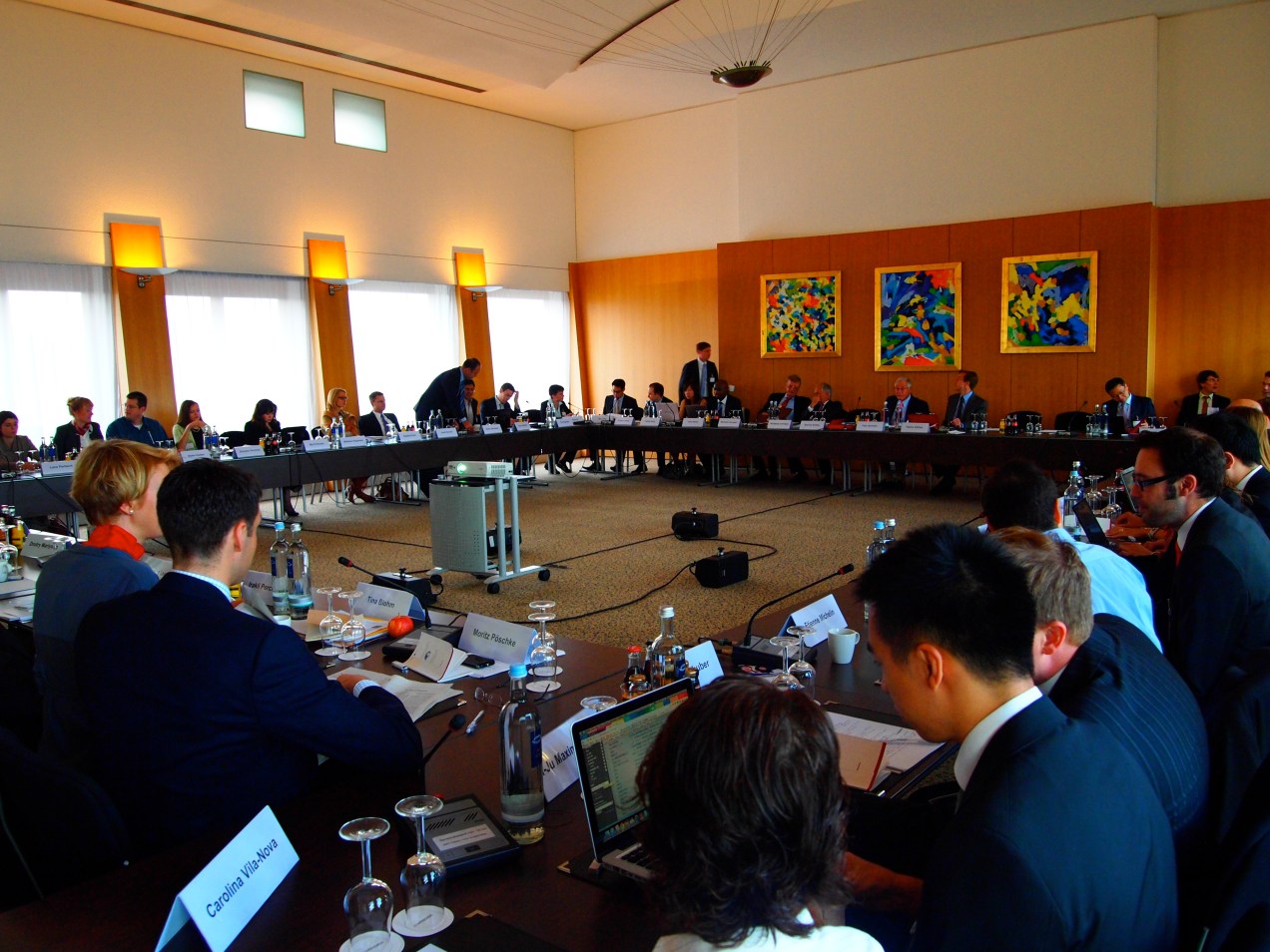
Participants at the first Renewable Energy and International Law (REIL) roundtable in Cambridge argued that the UN must provide a worldwide common policy framework for low-carbon energy to get the renewables sector off the ground. Aled Jones, director of the Global Sustainability Institute at Anglia Ruskin University, and Samir Saran, vice president of India’s Observer Research Foundation, present the rountable’s key findings Renewable energy remains a policy challenge for many political leaders around the world. It is a topic many probably wish was not there.

Climate change and energy security create a complex political challenge that must not only be considered in the context of well-entrenched existing energy markets and their incumbents, but also with a host of other issues such as international security, international trade, financial stability, inequity, debt, health care, pensions and poverty (in all its guises). It is not helped by increasing divisions within countries, which means passing any sort of national legislation is incredibly difficult, if not impossible – never mind signing up to bold international treaties.

However, it is interesting to note that the world can look for insights from another industry that represents a significant percentage of global GDP, which did not really exist 20 years ago – namely telecoms and IT. The telecoms industry grew up with no real oversight and no drive from policymakers. The need to selfregulate by creating common standards became very clear early on, otherwise global growth would have always been limited by competing technology platforms failing to integrate and support each other. The standards and protocols that were developed allowed the industry to grow exponentially. It is quite likely that if the early entrepreneurs had had to deal with those issues when they set out on their quest for innovation, or were faced by demands from policymakers early on, we would not have the industry that we do today.

In addition, this entrepreneurial approach allowed the industry to meet market demand at a price the market could bear. For example, in India the telecoms industry was able to tap into the billion customers at the ‘bottom of the pyramid’ by offering a price they could afford. There are of course several current issues within the telecoms and IT sector – not least privacy laws and differences in freedom of expression and freedom of information around the world. However, the industry can now tackle these issues from a strong base.

While regulation and policy in the renewable energy area exists, it is often uncoordinated, is marked by uncertainty, delivers unintended consequences and is subject to change. So is the absence of coordinated, long-term, well thought out regulation and coordinated action a good thing for the renewable energy sector? While it may be a good thing in the short term, allowing some early entrepreneurs to build substantial enterprises, it is unlikely to achieve anywhere near the same transformation that was seen in the telecoms and IT sector – especially when the cost of renewable energy must compete with more traditional sources of power that do not incorporate a cost for carbon.

Two key reasons why renewable energy is unlikely to have the same impact as the telecoms and IT sector: land and the fact that we can see it coming. Energy, in particular renewable energy, needs a lot of land (or a lot of ocean). This land is always owned by someone and is usually being used for something else, or is difficult to aggregate up to large-scale generation capacity in the case of rooftop installations on individual homes.

Within telecoms, the footprint of a mast is tiny and you only need one person in a large district to agree to have something installed on their land to open up a large customer base. For energy, you need to unlock a large portion of land ownership to get to a scale that attracts investment and allows significant generation capacity to be installed.

Aggregation of land needs rules usually framed by governments, overseen by authorities or regulators and adjudicated by courts in case of disputes. All of which creates regulatory and policy uncertainty, which could be a challenge for first-time innovators and could lead the sector to be dominated more by those able to manage the policy rubric rather than those with solutions and technologies.

When the telecoms industry started to grow no one knew what we would use this new technology for and there were many predictions about the global market for computers being small, the global market for mobile handsets being niche – and who would ever want to send a short message to someone when you can phone them? If the post office, pager companies or print photography industry had seen the impact that email, messaging and electronic photographs on mobiles could have on them, they may have put up a little bit of a fight, but there wasn’t really an industry that was being displaced by the new enterprises being set up.

However, in energy there are many vested interests and a range of assets that are potentially redundant if the renewable energy industry meets its full potential. How to transition across from a carbon-driven economy to a ‘green’ economy in a smooth and orderly way is the biggest challenge. And this challenge is only made greater because we can see it coming.

Those vested interests and owners of assets need a much greater level of confidence in this transition before it can happen. This applies not just to the large energy companies but also the employees of those companies, the governments that rely on the taxes from their employment and resource use, the pension funds that rely on their steady return and the consumers that rely on the cheap energy that they produce. Convincing all of these stakeholders to support the move to a ‘green’ economy is no small task.

While there is some scope for the deployment of exciting technologies over the short term, sometimes supported by government policies such as feed-in-tariffs in countries such as China and Germany, to achieve the scale of deployment envisaged under international political negotiations such as the United Nations Framework Convention on Climate Change (UNFCCC), requires much more political backing and legislative support.

In addition, domestic subsidies and other types of support programmes for renewable energy are increasingly being referred to the World Trade Organization (WTO). For example, the US’s complaint against China’s subsidies for wind turbines, which appeared to favour domestic manufacturing, has resulted in China revoking those subsidies. WTO GATT Article XX(g) refers to environmentally related trade measures and could be used to allow subsidies of this nature if domestic and international solutions are subject to the same restrictions. A price on carbon, delivered through a cap-and-trade scheme or a new tax, is often seen as the basis from which other policies can be built. For a business, being able to have a globally consistent price on a commodity makes strategy development much easier.

Achieving a price on carbon has, however, proved challenging in many national jurisdictions and the international process under the UNFCCC is unlikely to be able to agree on an international framework that gets to the level of detail that sets a price on carbon in the next few years. A price on carbon delivered through schemes such as cap-and-trade needs to support other policies that may be introduced such as renewable energy obligations, rather than be undermined by them. Even when implemented a price on carbon is not always a panacea. If an international agreement is achieved then it should set the basis for future partnerships around the world to tackle some of the biggest problems associated with climate change.

The UNFCCC process will not be able to set a mandate for national governments to push through energy bills and policies that they have not been able to agree within their own legislature. In addition, the legality of international environmental law, or at least its enforcement, also causes uncertainty. If a country fails to meet an international pledge to achieve an emissions reduction target, then what is the outcome?

Even if there is some legal framework to measure and report, policing this will be very difficult. A truly robust UNFCCC agreement should be able to provide a framework that allows countries to develop national policies that are at least consistent, allowing global solutions to get to scale quickly. In addition, a UNFCCC agreement can create international markets where they are needed to do particular jobs – for example, reducing deforestation – as well as providing a mechanism or common standards around the use of public sector finance to underpin the development of green economies in emerging and developing economies.

For example, the Indian approach to the UNFCCC is led by the national government, but many of the energy policies, and in particular land policies, are developed at state level. So while the Indian national government could sign up to an international framework and commit India to a ‘green’ pathway, to actually implement this requires internal buy-in and implementation, which is not guaranteed and is rarely driven from the federal level.

So the real challenge now is how to move renewable energy and the interrelated challenges into the ‘action’ pile within national, state and local governments. This is a bold challenge and it needs bold leadership to tackle it. It is about risk management and economic growth, however it does need a wholesale change in the economic supply chain, which unfortunately is very difficult to achieve piece-meal. This is why the UNFCCC process needs to agree a framework for common approaches to policy development as soon as possible. This process will be supported by domestic action – but domestic action is not a substitute for it, even with the recent change in attitudes towards nuclear power in key markets such as Japan and Germany possibly resulting in significant investments into renewable energy and major growth for the sector if their low carbon targets are to be met.

Kick-starting a new industrial revolution is no small task, but neither is spreading democracy across the Middle East – and access to information and visionary leaders created the ‘Arab Spring’. Maybe we need a ‘Green Winter’ to galvanise action to tackle climate change. With the Arctic ice melting at unprecedented rates we may achieve a ‘Green Winter’ sooner than we think.

***

The REIL network is an initiative of the non-profit Renewable Energy & Energy Efficiency Partnership, which aims to develop markets for renewable energy. Members of the network usually meet once a year at Yale University. The Global Sustainability Institute at Anglia Ruskin University hosted the first Cambridge Roundtable of the REIL network on 20 and 21 June.

In addition to Jones and Saran, participants included Bob Simon, chief of staff of the US Senate Energy news Committee; Brad Gentry, director of the Yale Centre for Business and the Environment; Melinda Kimble, senior vice president of the United Nations Foundation; Eomon Ryan, leader of the Green Party in Ireland; Mark Fulton, managing director and global head of climate change investment research & strategy at Deutsche Bank and Martijn Wilder, head of Baker & McKenzie’s global climate change and environmental markets practice.

Standard
In the News, Politics / Globalisation

Impulses: Trends That Will Shape India’s World

Please click here for the online audio file and here for the presentation.

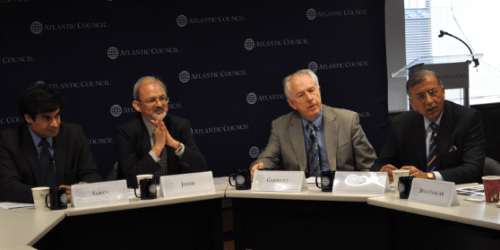
On December 2, the Atlantic Council’s Strategic Foresight Initiative and South Asia Center hosted a discussion on the global trends shaping India’s future towards 2030.

India has undoubtedly taken a central seat in the international arena with a growing population of over one billion citizens and a globally competitive economy. The country is now a hotspot for technological innovation, urbanization, and an expanding private sector. Such rapid growth, however, brings new challenges for this emerging nation. Scarce water resources, lack of urban infrastructure, the need for rural development, and weak coordination between government, public, and private institutions, can put India at a critical juncture in its development as a regional and global power. This discussion will explore both the potential challenges and opportunities for India in the coming decades.

Introduction by

Sunjoy Joshi
Director
Observer Research Foundation

A discussion with

Samir Saran 
Vice President
Observer Research Foundation

Moderated by

Banning Garrett
Director, Asia Program and Strategic Foresight Initiative
Atlantic Council 

Standard
In the News, Politics / Globalisation

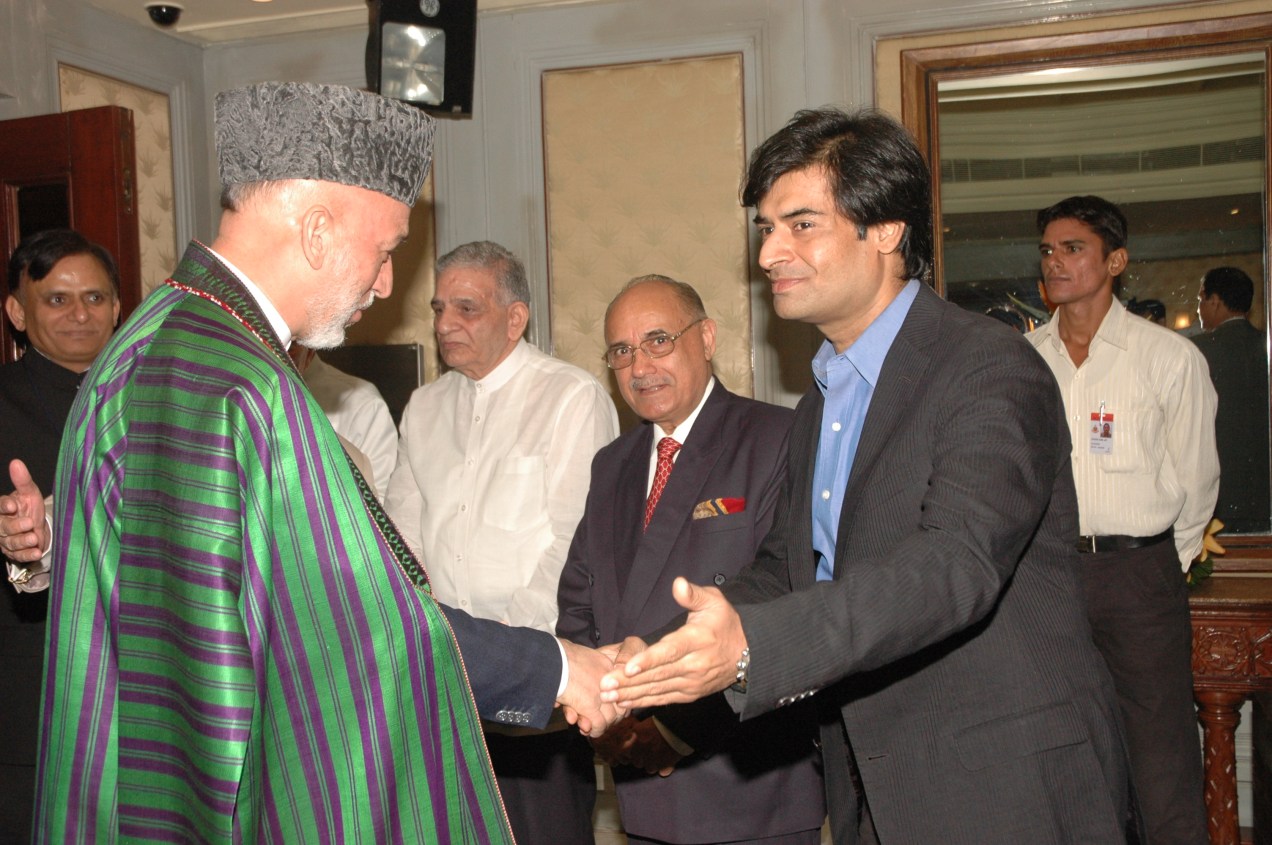
Afghanistan’s president Hamid Karzai at ORF, October 2011.

The National, October 6, 2011, New Delhi.
Link to original website.
Watch here all speeches of the event online.

NEW DELHI // Afghanistan’s president Hamid Karzai sought to reassure Pakistan yesterday after signing a series of agreements to boost trade and security cooperation with India. “Pakistan is a twin brother, India is a great friend. The agreement that we signed with our friend will not affect our brother,” said Mr Karzai in a speech in New Delhi yesterday.

Mr Karzai is on his second visit to India, and is widely seen to be building ties with the Indians out of frustration with Pakistan. Afghan officials claimed that the killing of Burhanuddin Rabbani, the former Afghan president and head of the peace council that conducted talks with the Taliban, was planned by Pakistan-supported Taliban militants in the Pakistani city of Quetta. Pakistan denies being involved in Rabbani’s death.

During his speech, Mr Karzai laid out his vision for Afghanistan’s future after a decade of war and emphasised that the strategic partnership deals were “not directed against any country” but done to “support Afghanistan”. On Tuesday, Mr Karzai and Manmohan Singh, the Indian prime minister, signed a number of agreements including one under which India will offer more military and police training to the Afghan forces ahead of the US troop withdrawal, scheduled to take place in 2014.

India is already one of the biggest aid providers to Afghanistan, having pledged up to US$2 billion (Dh7.35bn) since 2001 and promised spending on infrastructure, such as the construction of highways. Yesterday, the Afghan national security adviser, Rangin Dadfar Spanta, reiterated Afghan accusations that Pakistan’s Inter-Services Intelligence agency was supporting pro-Taliban militants.

“The Haqqani network and the ISI are one and the same. It is a group managed, trained and led by the ISI,” he said. After the September 20 assassination of Rabbani, Mr Karzai announced that negotiating with the Taliban was “futile,” a statement he repeated in his speech yesterday. “We have decided not to talk to the Taliban because we do not know their address. We do not know where to find them … therefore we have decided to talk to our brothers, our neighbours in Pakistan,” he said. If the growing rapprochement with New Delhi has ruffled feathers in Islamabad, Pakistani officials have not let it show.

“Both are sovereign countries, they have the right to do whatever they want to,” the Pakistani prime minister Yusuf Raza Gilani said yesterday. Nitin Pai, a fellow at the Takshashila Institution, a think tank in Chennai, believes Mr Karzai’s visit to India provides Afghanistan with leverage in future negotiations with Pakistan.

How deep the relationship between India and Afghanistan can develop remains a matter of debate. “The question is not what Karzai said, but what the Indian prime minister left unsaid: is India capable and willing to play the role of a guarantor of stability in Afghanistan?” said Mr Pai. He said that India was politically unwilling to take on responsibility for security in Afghanistan, which might rile Pakistan, its nuclear-armed rival.

Samir Saran, the vice president of the Observer Research Foundation, which hosted Mr Karzai’s address yesterday, said the Afghan leader had a serious message in his speech, directed at Pakistan and America, about how he planned to approach security issues in the future.

“By 2015, Afghanistan will be entirely responsible for its security. Afghanistan will be looking to its affairs on its own in cooperation with India, the United States, Iran, Saudi Arabia and our neighbours,” Mr Karzai said in his speech. Mr Saran said Mr Karzai was diversifying his options for peace and stability. “The invocation of Iran is a serious message that anything is better than the current situation. He knows he will have to create new partnerships, even if they are with countries like India and Iran.”

Standard
In the News, Politics / Globalisation

ORF and ZEIT-Stiftung launch the Asian Forum on Global Governance, October 2011, New Delhi

The Asian Forum on Global Governance is an annual workshop jointly organized by the ZEIT-Stiftung Ebelin und Gerd Bucerius, and the Observer Research Foundation.

The inaugural forum is scheduled to take place from October 16 – 25, 2011 in New Delhi, India. Dr. Shashi Tharoor is the Dean of this policy school for young leaders.

The Asian Forum on Global Governance will take a close look at the Asian region and at the challenges facing the global community. The primary objective of this forum is to provide an instructional and networking platform for young professional leaders to discuss, debate and challenge conventional interpretations of the existing complex realities confronting communities and leaders. The program provides a unique opportunity for them to confer with high-ranking figures from the political, business and academic communities from around the globe, and especially from Asia.

Though the emphasis is on Asia, there will be a fair mix of young leaders from Europe, Americas, Africa, Asia and Australia. The participants will be drawn from diverse sectors and streams of study. Each of these participants will, at the outset, be nominated by senior figures – Heads of Governments, Ministries and Government Departments, the CEO’s of major National and Multinational Companies, Heads of Universities and of Non-Profit Organizations – and thereafter carefully selected by an eminent jury of experts.

The participants will be between 28 and 35 years of age. They would have acquired significant professional experience and would already exhibit promise at work.

For more information please visit the official website

Standard
In the News, Water / Climate

Human Security Report Project features ORF report on ‘Water Security in South Asia’

May 20, 2011
Linkto original websiteThis brief is largely based on several discussions organised at Observer Research Foundation over a period of time. These discussions were enriched by the presence of some of the well-known experts on water issues in the country, like former Union Minister for Water Resources, Dr. Suresh Prabhu, current High Commissioner of Bangladesh, Tariq Ahmad Karim, Mr. Sunjoy Joshi, Director, Observer Research Foundation, Ms. Clare Shakya, Senior Regional Climate Change and Water Adviser, DFID*, India, Mr. Samir Saran, Vice President, ORF and Dr. Dinesh Kumar, Executive Director, Institute for Resource Analysis and Policy, Hyderabad.

It is estimated that by 2030, only 60 per cent of the world’s population will have access to fresh water 1 supplies . This would mean that about 40 per cent of the world population or about 3 billion-people would be without a reliable source of water and most of them would live in impoverished, conflictprone and water-stressed areas like South Asia.

Water is already an extremely contentious, and volatile, issue in South Asia. There are more people in the region than ever before and their dependence on water for various needs continues to multiply by leaps and bounds. The quantum of water available, for the present as well as future, has reduced dramatically, particularly in the last half-acentury. This is due to water-fertiliser intensive farming, overexploitation of groundwater for drinking, industrial and agricultural purposes, large scale contamination of water sources, total inertia in controlling and channelising waste water, indifferent approach to water conservation programmes and populist policies on water consumption. SOURCE: Observer Research Foundation

Standard