BRICS, Columns/Op-Eds, In the News, Politics / Globalisation

First Xi-Modi meeting finds common ground

Global Times | July 20, 2014 19:33

Original Link

When India and China meet, the world watches” were the words Chinese President Xi Jinping used to capture the interest generated by his first meeting with India’s new Prime Minister Narendra Modi.

Whether the world was watching or not, the public in both countries keenly followed the first interaction between the two Asian leaders on the sidelines of the BRICS summit in the Brazilian town of Fortaleza.

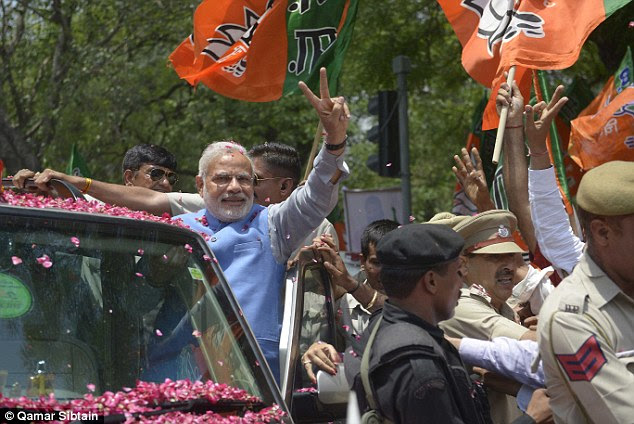
The meeting passed the initial hurdle of establishing camaraderie between the two leaders. The images and videos that have found their way across the news and social media portrayed a favorable body language and easy chemistry. That the meeting, slated for 40 minutes, lasted nearly twice as long also signals the importance both leaders attached to this engagement.

The meeting can be captured in two words: pragmatic optimism.

That Modi chose to address the contentious border issue in his very first meeting demonstrated a sense of political realism. The Indian leader understood that such a vital element of the partnership cannot be swept under the carpet, even as the BRICS summit itself was gearing up to announce some very positive outcomes.

That Xi also chose to underscore the need for finding an early solution demonstrates their acknowledgement of the negative implications of this lingering border dispute on the larger relationship.

Both countries surely realize that any further economic integration will inevitably hit the political wall if an early solution to this legacy dispute is not discovered.

While it may seem an onerous task, a degree of progress has already been made.

During the previous decade, a great deal of effort has been invested by the empowered special representatives to discover a mutually acceptable and creative solution. In fact, those in the know suggest that it is not impossible to finalize a settlement. What was lacking was the political leadership capable of implementing the same.

With two strong leaders, there exists a golden opportunity to move beyond the border defense cooperation agreement signed last year to one that is conclusive and sustainable.

However, the serious nature of the conversations around the border issue did not deter the two strong leaders from making a strong and optimistic case for deeper economic cooperation and coordination.

The leaders discussed an enhanced role for China in the Indian economic story. The new Indian leadership seems ready to invite large Chinese investments in industrial parks, infrastructure and other key sectors of the economy. At the same time, India seeks reciprocity from China by allowing more efficient and larger market access to Indian goods and services.

Both of these measures would help balance the current large trade deficit in favor of China.

The convergence in the positions of the two countries on most global economic and political governance issues helped the BRICS arrive at an acceptable framework for the new development bank and contingent reserve arrangement. This growing proximity was specifically established when Xi invited India to the APEC summit later this year.

These are early days for Xi and Modi. There are plenty of hurdles that will need to be managed. There is a whole universe of professional naysayers on both sides and in other parts of the world that will exploit negative developments.

Both leaders will have to carry along their security and strategic establishments with them; not the easiest groups to handle. They also have to manage and guide the public mood in favor of more robust ties with each other.

The recent interaction emphasized people-to-people relations and tourism, and perhaps that is one of the ways to do this.

But the crucial factor that can help transform this bilateral is Modi himself. For the first time, the Chinese will interact with an Indian leader who can be politically strong in safeguarding India’s sovereign interests, while at the same time being very welcoming in embracing China economically.

The author is vice president and senior fellow with Observer Research Foundation in Delhi. opinion@globaltimes.com.cn


Standard
BRICS, In the News

नरेंद्र मोदी ब्राज़ील से क्या लाएँगे?

मंगलवार, 15 जुलाई, 2014

ब्राज़ील में हो रहा ब्रिक्स शिखर सम्मलेन प्रधानमंत्री के रूप में नरेंद्र मोदी का पहला महत्वपूर्ण अंतरराष्ट्रीय दौरा है.

यह ब्राज़ील, रूस, भारत, चीन और दक्षिण अफ़्रीक़ा का संयुक्त मंच है.


इस यात्रा में मोदी पहली बार इन देशों के प्रमुखों से मुलाक़ात करेंगे. अपने दो दिवसीय दौरे के पहले दिन ही उनकी दो महत्वपूर्ण बैठकें हैं.

इस सम्मेलन के दौरान पाँच ऐसे मुद्दे हैं जो भारत की दृष्टि से महत्वपूर्ण रहेंगे.

इस यात्रा से नरेंद्र मोदी को क्या हासिल हो सकता है? जानने के लिए पढ़िए ऑब्ज़र्वर रिसर्च फ़ाउंडेशन के उपाध्यक्ष समीर सरन का विश्लेषण.


रिश्ते बेहतर करने का मौक़ा

SS 2


यूक्रेन के मुद्दे पर रूस और यूरोपीय संघ के बीच एक तनावपूर्ण स्थिति बनी हुई है. वहीं पूर्वी एशिया के दूसरे देशों के साथ चीन के रिश्ते तनावपूर्ण चल रहे है.

ऐसे में रूस, चीन और भारत के संबंध काफ़ी महत्वपूर्ण हो जाते हैं.

सम्मलेन के बहाने द्विपक्षीय संबंधों को सुधारने का भी मौक़ा मिलेगा, चाहे वो भारत चीन के रिश्ते हों या भारत और रूस के बीच.

ब्रिक्स वित्तीय संस्थान?


SS 3


ब्रिक्स देशों के पास अब यह अच्छा मौक़ा है जब वो अपना एक अलग वित्तीय संस्थान और विकास का एक अलग मॉडल बना पाएं.

इस बार उम्मीद की जा रही है कि सम्मलेन के दौरान कंटिंजेंसी फ़ंड, ब्रिक्स विकास बैंक के गठन की औपचारिक घोषणा हो जाए.

जो देश इस तरह के कंटिंजेंसी फ़ंड का समर्थन कर रहे हैं वो वर्ल्ड बैंक और अंतरराष्ट्रीय मुद्रा कोष यानी आईएमएफ़ की मुख्य धारा में नहीं हैं.

आपसी व्यापार

SS 4


व्यापार तीसरा बड़ा महत्वपूर्ण मुद्दा है क्योंकि अमरीका और यूरोपीय संघ के बीच खुले व्यापार का समझौता होने वाला है.

अगर यह समझौता हो जाता है तो वैश्विक सकल घरेलू उत्पाद यानी जीडीपी का 66 प्रतिशत आपस में सम्मिलित हो जाएगा.

इस समझौते का भारत, चीन, रूस और दक्षिण अफ़्रीक़ा पर असर पड़ेगा.

अमरीका और यूरोपीय संघ के बीच समझौता ब्रिक्स देशों के लिए एक बड़ी चुनौती है क्योंकि यह विश्व व्यापार संगठन की अहमियत को कम करने वाला है.

क्षेत्रीय सुरक्षा और स्थिरता

SS 5


क्षेत्रीय सुरक्षा और स्थिरता एक महत्वपूर्ण मुद्दा है.

पश्चिमी एशिया में हालात काफ़ी चिंताजनक हैं. अफ़ग़ानिस्तान में राष्ट्रपति चुनाव को लेकर भी काफ़ी कड़वाहट है. अमरीकी फ़ौजें इस साल अफ़ग़ानिस्तान से वापस जा रही हैं.

भारत को अपने आर्थिक विकास के लिए इलाक़े में क्षेत्रीय स्थिरता और राजनीतिक शांति चाहिए.

भारत के लिए यह ज़रूरी होगा कि चीन और रूस इसमें उसका सहयोग करें.


पिछले पाँच सालों की समीक्षा

SS 6

यह ब्रिक्स देशों की छठी बैठक है.

यह मौक़ा है जब भारत को पिछले पांच सालों में अपनी उपलब्धियों की समीक्षा करनी चाहिए, उसके बाद भविष्य की रणनीति तय होनी चाहिए.

लैटिन अमरीका के देशों से संबंध बढ़ाने का भी यह अच्छा मौक़ा है क्योंकि भविष्य में ऊर्जा और खाद्य सुरक्षा के लिए हमें इन्हीं देशों की तरफ़ देखना पड़ेगा.

(बीबीसी संवाददाता सलमान रावी से बातचीत पर आधारित)
Original link is here


Standard
BRICS, In the News, Politics / Globalisation

India leading BRICS Bank bodes well for future says Samir Saran

BRICS Summit’s decision to establish a development bank gives a sense of achievement for India as well as fellow nations. India has invested the most in the Bank after much deliberation during the last years. Author and commentator Samir Saran says that with India having the bank’s stewardship, it is a welcome start to a financial institution such as the BRICS Bank. The Bank should not be seen as if it is in competition with other international financial institutions. Rather, it should be viewed as an additionality. BRICS Bank will cater to the scarcity gap, changing the ethos of financial institutions. The Bank’s headquarters being in Shangai should not deter India’s hopes as we will have the bank’s stewardship during these formative years and this will be fruitful to the economy.

Original link is here

Pic 2  Brics

Standard
BRICS, In the News

Five emerging nations plan a development bank of their own

Original Link is here

by  , Fortune

July 15, 2014, 9:53 PM EDT

200492820-003

Leaders of big developing nations hope to create an alternative to the World Bank and International Monetary Fund, as a sign of independence.

Leaders of five big emerging nations plan to create a bank to fund development projects plus an emergency reserve to counter the powerful World Bank and the International Monetary Fund.

The plan was announced Tuesday at the annual BRICS summit, an acronym taken from the name of the participating countries – Brazil, Russia, India, China and South Africa. The idea is to create an alternative to the major international lending sources so as not to be so dependent on them for money and as a symbol of political strength.

The development bank – funded with $100 from the five member states – will be headquartered in Shanghai and, in its first phase, headed by an Indian president. Although China will be bank’s largest donor, each nation will own an equal share of the bank and have an equal say in governance and policy making. Another $100 billion will be allotted to an emergency reserve fund.

BRICS countries account for 42% of the world’s population and represents $6.14 trillion in annual trade. They contribute roughly 20% of the world’s economy based on GDP.

The BRICS summit took place against the backdrop of Russia’s annexation of Crimea, a Russia-China natural gas deal and the change of government in India. The proceedings were therefore of utmost importance to the U.S from a foreign policy standpoint.

“I think the big message to me coming out of the summit is BRICS are trying to create a safety net that means if the U.S. and Europe tried to isolate and sanction one of them they have something to fall back on,” said Thomas Wright, a fellow at the Brookings Institution who focuses on international relations. “The most worrying parts are that they didn’t say anything critical of Russia on Ukraine. Basically they sent out a message that they had no problem with anything with what Putin was doing.”

BRICS was established just prior to 2008 financial crisis with Brazil, Russia, India and China. Two years later, they welcomed South Africa to the club. The member nations vary in their economic health and, in some cases, are undergoing economic problems. But they’ve found a diplomatic and political rationale to exist that Wright described as being based on the idea that “not to have all roads go through the West.”

While Russian President Vladimir Putin boldly expresses his views on BRICS—that he’ll press other emerging markets to find ways to prevent “sanction attacks” by the U.S.—other leaders are cautious about their response.

“Together we should think about a system of measures that would help prevent the harassment of countries that do not agree with some foreign policy decisions made by the U.S. and their allies, but would promote a civilized dialogue on all points based on mutual respect,” Putin said in The Moscow Times.

In the past, the BRICS have struggled to reach a consensus. First they could not agree on a candidate to head the International Monetary Fund or the World Bank in 2011 and 2012. Then recently India and South Africa signaled they may backtrack on a trade agreement initially endorsed by all five countries. Many experts perceived it as a group too “splintered” to make any change.

With today’s summit, BRICS managed to break that perception and move forward to realign the economic balance for future development. “It is an achievement for the countries who have not significantly sat on the high table on economic and political governance matters,” said Samir Saran, senior fellow and vice president at Observer Research Foundation, a New Delhi based think-tank. “It is going to create a new ethos of economic governance.”


Standard
BRICS, In the News, Politics / Globalisation

India lauds BRICS bank set up to counter Western hold on global finances Jul 16

Original link is here

New Delhi, July 16 (ANI): Experts and leaders, on Wednesday welcomed the setting up of $100 billion BRICS bank and a currency reserve pool aimed at reshaping the Western-dominated international financial system. Leaders of the five top emerging markets in BRICS nations consisting of Brazil, Russia, India, China and South Africa, sealed the deal to foster financial and development cooperation and keep the monetary tap running in the face of a financial meltdown like the 2008 crisis. A senior researcher at the New Delhi-based Observer Research Foundation think-tank, Samir Saran, said bank would help emerging and developing nations to mobilize resources for infrastructure and development projects. BJP leader Subramanian Swamy, welcomed the setting up of the bank, adding that the previous Congress -led government had committed to the Chinese demand to have the bank being headquarted in Shanghai

Samir Saran and ANI


Standard

July 14, 2014, Monday, Niti Central

Original link is here

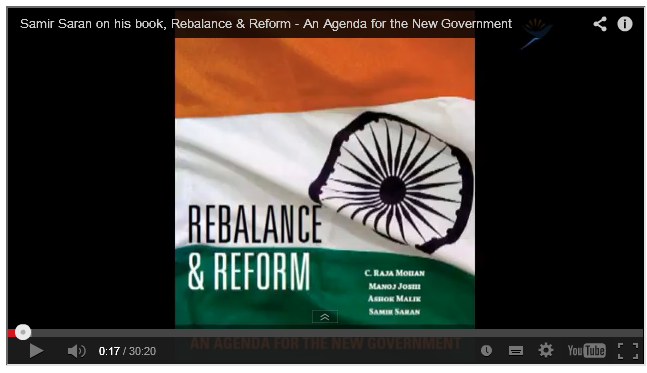
Samir Saran along with Mr. Raja Mohan, Mr. Manoj Joshi & Mr. Ashok Malik, authored a different kind of a book. Usually these kind of books get stocked up in reference sections of an economist’s library, but this is out in the market. While speaking on the situation that the Nation has been through in the last decade, he says, “UPA’s lack of political direction has resulted in economic crisis”. The book suggests ways to rebalance and reform the political situation for a brighter future.

Rebalance and Reform

BRICS, Columns/Op-Eds, In the News, Politics / Globalisation

BRICS needs doses of steroids to prosper

Original link is here

By Samir Saran & Vivan Sharan Source:Global Times
BRICS.jpeg

Illustration: Liu Rui/GT

The political leaders of BRICS member countries are facing pivotal national moments.

Brazilian President Dilma Rousseff is simultaneously navigating her socialist and internationalist moment, after a face-off with the Americans on the NSA spying saga. She has reasserted Brazil’s propositional role in the global order by hosting the ambitious NETmundial – Global Multistakeholder Meeting on the Future of Internet Governance.

Russian President Vladimir Putin’s European misadventures have gotten him embroiled in a controversial international debate on sovereignty, while his country’s economy struggles to overcome structural flaws.

On the back of a decisive popular mandate, the new Indian Prime Minister Narendra Modi faces tough regional challenges, even as he tries to revive industrial output and create jobs.

Chinese President Xi Jinping is in charge of an administration which has courted altercations on various fronts while in search of a new and sustainable model for economic growth.

And recently re-elected South African President Jacob Zuma has to contend with both a weak political mandate and rising socioeconomic inequity, while attempting to reconcile differences with African neighbors.

Each of the BRICS leaders is faced with significant challenges. How useful will coordination and cooperation at the BRICS platform be for each of them? The BRICS platform itself will first need doses of steroids if it is to remain viable.

This past year has been quite unsettling for those interested and invested in BRICS. Economic growth of the member countries has been below par. The external economic environment has not been favorable either.

The promise of BRICS is based on new economic and political opportunities. The group is lean and lithe by design and therefore has the right ingredients to make for a 21st century cooperation and coordination platform. Both these characteristics were on display when the group met in India in 2012, where a number of forward-looking economic and political decisions were made. However, neither critical decision-making nor effective implementation has been on display over the last year. Relating to this, there are five concerns that must be addressed at this year’s BRICS summit.

First of all, the focus of the previous summit was clearly on African issues. The eThekwini Declaration in 2013 focuses on unlocking Africa’s potential, regional integration for Africa’s growth and the New Partnership for Africa’s Development. With the continued moderation of growth rates, the grouping must prioritize domestic economic imperatives and close commercial ties rather than narrowly focus on a single region or use the platform for regional grandstanding.

The second concern follows directly from the first. BRICS members have large stakes in the international system and share the common aspiration of becoming global agenda-setters. Indeed, they must not continue to be passive recipients of rules and standards in vital areas such as global trade and investment.

Third, the new areas of cooperation listed in last year’s declaration outlining areas for immediate collaboration are strikingly vague. As a result of myopic drafting, a rather counter-productive role reversal has taken place. The interactions between non-government stakeholders have started to lag behind inter-governmental interactions.

Governments have limited vocabulary and dynamism compared with the private sector and civil society and intra-BRICS cooperation must be unfettered and creative. An example is the BRICS Exchange Alliance, a market-led initiative to integrate financial trading platforms. Such concrete efforts must be replicated rather than endlessly expand the list of issues to cooperate on for the sake of seeming ambitious.

The fourth concern relates to the veritable silence on BRICS engagements in the world media following the high-profile summit last year. Perception-building must take greater precedence at this summit. This must be aided by the timely dissemination of information on actions such as the setting up of the Contingency Reserve Fund and a BRICS-led development bank.

And finally, perhaps the most critical issue for the five BRICS leaders, who will meet at the sunny shores of Fortaleza, will be practical goal-setting. This will be an exercise in planning and coordination to maintain continuity as well as honing in on objectives for the long term. If there is an opportunity to be seized in cross-leveraging political and economic ties, it will be in the coming years.

Samir Saran is a vice president and Vivan Sharan is an associate fellow at Observer Research Foundation, Delhi. opinion@globaltimes.com.cn

Standard
BRICS, Columns/Op-Eds, In the News, Politics / Globalisation

BRICS of a new world

Opinion, July 12, 2014

Original link is here

Pic 1

BRICS must mitigate the systemic risks posed by imbalances in the global economic system, perpetuated by Western central banks. (Source: Reuters photo)


The Fortaleza summit should address the undermining of the multilateral trading system.

Prime Minister Narendra Modi’s first major foreign visit, to the BRICS summit in Fortaleza, Brazil, is in the news for a variety of reasons. But there is little discussion on what is at stake and the possible takeaways for BRICS, and particularly India.

This is a crucial moment for the world, faced with a central European face-off, the long tail of the financial crisis, trouble in the western Pacific, a stalemate on trade and environment, new contests in cyberspace and outer space and a new irrationality in the Middle East. BRICS, particularly India, are vulnerable to downward spirals in any of these areas. India must seek to first protect and then promote its interests at this platform. The new prime minister is the right man for this task and there are five key areas he must navigate.

The first is the big-ticket BRICS-led development bank, proposed at the New Delhi summit in 2012. While China has clear ambitions, a worse outcome would be to allow the creation of a Chinese version of the Asian Development Bank. The new bank must follow a one-country-one-vote formula, and allow other states and institutions to invest capital in return for a minority controlling stake and returns commensurate to their investments. BRICS members must walk the talk on the “equity and fairness” they seek from the West. By allowing each BRICS country equal weight in ownership of the bank, they would demonstrably craft a model for other IFIs to emulate.

The second area is global trade and investment. Through the proposed Transatlantic Trade and Investment Partnership (TTIP) and the Trans-Pacific Partnership (TPP), developed economies are seeking to redirect trade and investment flows. They will do so by instituting new rules, standards and tariffs, and by gradually dismantling the multilateral system (WTO) that India and others believe to be essential. BRICS must seek to counter the negative externalities from such mega free trade arrangements (FTAs). While it is expected that BRICS will announce export guarantees and agreements on innovation and banking, the members must also commission academic assessments of the impact of imminent mega FTAs and coping strategies.

Third, BRICS must mitigate the systemic risks posed by the imbalances in the global economic system, perpetuated by the central banks of advanced economies. BRICS leaders are expected to launch a foreign exchange reserve fund of $100 billion as a hedging mechanism. This will resemble the Chiang Mai Initiative, put in place by Asean+3 after the Asian financial crisis of the late 1990s. It is essentially a pooling arrangement, with China contributing $41 billion, Brazil, Russia and India $18 billion, and South Africa $5 billion. Indeed, Modi would do well to suggest that BRICS take a principled position on recent policy decisions by Western central banks, already suspected to be fuelling new asset class bubbles.

Fourth, over the years, political content in the outcome statement has increased dramatically. BRICS states will need to discover common approaches on political developments in different regions. In particular, the stability of southwest Asia is critical to India, and as the US withdraws from Afghanistan, there is bound to be a jostle for political capital. Can BRICS catalyse the RIC (Russia, India and China) into discovering a basis for meaningful cooperation in the region? Here, the bilateral meetings on the sidelines will be vital. Similarly, Russian expectations on collective support for its position on Ukraine will need to be delicately managed.

The fifth area pertains to cyber governance and cybersecurity. There are clear differences in the positions of BRICS members. Russia has passed a bill requiring all technology companies to store personal user data on domestic servers. This closely mirrors developments in China that ensure local data storage and government control. Meanwhile, the Brazilians, who hosted the “Net Mundial”, have positioned themselves alongside the US and EU, favouring a multi-stakeholder framework. India sees a greater “state” role as it seeks to connect its “next billion” to the internet. There is an opportunity to recognise these cleavages, and develop a calibrated approach for discovering common digital ground. That each BRICS member has either the US or EU as its most important economic partner in the digital world may help.

The Fortaleza summit will represent the reboot of BRICS. This is a different world altogether, with the Brazilians seemingly reasserting a “Lulaesque” style of external engagement, the Russians defiant and petulant at the same time, the Chinese testing the geographical limits of their economic and political ambitions, and the South Africans seemingly wedded to their regional aspirations. Prime Minister Modi has the biggest political mandate among his BRICS counterparts, and also the weight of the largest expectations.

The writer is vice president, Observer Research Foundation. Views are personal

Standard
Columns/Op-Eds, In the News, Politics / Globalisation

The #NaMo wave has yet to translate into effective governance

Original link is here

Published: 22:50 GMT, 30 June 2014, MailOnline India, Mail Today

Author and eminent scholar Dan Hahn described successful political communication as something where “some will be attracted to what is said, to the position taken by the orator. Others will be impressed by the orator’s crafting of the speech – the organisation, the word choice, or the how the language is combined.”

He might as well have been describing the #NaMo campaign, where the combination of a message of hope, soft ideology and communication craftsmanship has attracted a substantial number of voters within and outside BJP’s traditional vote bank.

Assessment

The new Indian PM ran an efficient and professional campaign that was arguably even more innovative than the first Obama campaign.

Pic 1
Moving forward: Prime Minister Narendra Modi (left) invited his Pakistani counterpart Nawaz Sharif (right) to his swearing-in ceremony, a move which characterised the forward thinking nature of his election campaign. The momentum has yet to translate into major institutional changes
_____________________________________________________________________________________________________________

However, the million-dollar question is whether PM Modi will be able to institutionalise this communication expertise into a durable feature of his time in office, or if he will struggle, as President Obama has in recent years, to communicate his initiatives and vision to large parts of the citizenry.

The first 30 days offer us a moment to reflect on the communication performance of the PM. It is a mixed bag.
……………………………………………………………………………………………..

More…
R Prasad on… No Modi honeymoon
RAISINA TATTLE: Good news for the Gandhis
The Gopal fiasco was a failure by the Supreme Court, the PM and the President
…………………………………………………………………………………………………

On the upside, we have witnessed deft public positioning, like the invitation extended to South Asian neighbours during his swearing-in ceremony or his visit to Bhutan – each appreciated as significant gestures and adding to his image as a progressive leader.

We have seen the institutionalisation of social media by the Modi Cabinet to reach out to citizens. And we now have #NaMo on twitter in person and in his official persona.

Yet, something is amiss. The PM’s persuasive presence during his campaign is now reduced to clinical digital chatter.

The message, therefore, is incomplete and sometimes unclear. Other voices, some of dissent (rail price hike) and other incongruent, from within and outside his party are muddying the waters very early into his term in office.

The communication code that he had cracked seems to have been misplaced and it is apparent that the campaign team that ably communicated PM aspirant Modi’s vision to many, is either avoiding the Delhi summers or is distracted.

During the election, candidate Modi was ahead of the curve. He was proactive and anticipated issues; he sidestepped curve balls and revelled in responding to provocations.

After the elections, PM Modi has been playing catch up, been largely reactive, and has failed to anticipate imminent challenges.

Vision

Modi has prided himself in being able to empower and use the bureaucracy in Gujarat, and now he hopes to do the same in Delhi.

However, is his communication also going to be defined by the not-so-creative Delhi Durbar? Will slow-moving bureaucratic systems do justice to a man known for his glib oratory skills and deft communication?

Let’s take the swearing-in ceremony as a case in point.

The soon-to-be Indian PM invited Nawaz Sharif and other SAARC leaders (and Mauritius) for his swearing-in ceremony. It was a grand spectacle that did create excitement and was largely appreciated, and yet one was left with a hollow feeling the day after.

Pic 2

Groundbreaking: The new Indian PM ran an efficient and professional campaign that was arguably even more innovative than the first Obama campaign
________________________________________________________________________________________________________________

We got to know what the MEA felt about it – its official statement offered standard, cut and dry and politically correct fare.

We know what every Pakistan watcher and self-styled foreign policy expert on television and on the op-ed pages thinks about it. But we still do not know what PM Modi thinks about it.

What is this big-picture neighbourhood philosophy that he seems to be crafting? Or is there one? It was his show all the way, and his views and vision are still missing.

More recently, when the rapes and murders took place in Badaun and when the Muslim youth was killed in Pune, a calibrated communication response was required.

While there may have been no need for the PM to react himself, a statement from the Home Minister, showing concern, would have helped assuage the shrill response by civil society and the media.

The government was absent on this count.

PM Modi must realise that his victory is his to own alone, and so is all that goes wrong.

Revitalise

Silence is golden, but there is such a thing as too much silence. These are early days and PM Modi is not really affected. Yet, a crisis could unfold at any point. That is the nature of government, and systems must be in place.

Modi has always faced a hostile media. This has not changed since his election. The honeymoon period may be shorter than anticipated and questions will be asked, and the din will get louder each week.

During the election campaign, his masterstroke was bypassing media and engaging directly with people. He needs to do this while being in office as well.

It will help to explain the big but potentially controversial policies he wants to pursue.

Of course, he can’t do it every week or every day as he did during the campaign.As such he will need to think of a routine, and of a creative mechanism to manage public expectations and the media.

The PRO cannot remain out of bounds for the media, not for the media’s sake but for the sake of the PM and for the policy line he wishes to perpetuate and guard.

Pic 3
In power: The PM’s persuasive presence during his campaign is now reduced to clinical digital chatter
_________________________________________________________________________________________________________

This is how governments work everywhere. Twitter and other social media platforms are excellent communication tools and the PM has mastered their political potency faster than most Indian politicians.

In government, he needs to build a platform that combines social media with more traditional communications mechanisms.

He needs to disrupt the lethargy of the Lutyens communication machinery by introducing some of his young campaign team into the mix, and he needs to reinvent and revitalise #NaMo in his new role as PM.

It was #NaMo that got him here.

The writer is Vice-President and Senior Fellow at the Observer Research Foundation

Standard
Columns/Op-Eds, In the News, Politics / Globalisation

Modi must re-establish the power of the Executive at the Centre

PUBLISHED: 21:46 GMT, 4 June 2014, Mail Online India, Mail Today

Original Link is here

article-2648697-1E7918D000000578-35_306x423
Task ahead: Prime Minister will have to clear an economic landscape that has been cluttered with debris from the previous ten years


NaMo 282.0 is in an unenviable position. The astonishing majority he singularly scripted for the BJP and its allies surprised most, including his party and perhaps even himself.

This mandate also disappointed a number of others. The Congress for one must now surely realise that “poverty pornography” and “pseudo-secular” positioning have now reached their sell-by date.

The BJP’s allies will also have seen the writing on the wall – that they will be able to secure a ministerial berth at the centre, but will neither have a veto over the BJP leader nor will their tantrums affect the political trajectory of this government.

And finally, some within the BJP would recognise this mandate as a vote against the factions within the party that were gleefully awaiting a fractured verdict, which would in turn have allowed them some weight over the PM and the PMO.

Reassertion

Nonetheless, this is an unenviable position to be in for the Prime Minister. This huge mandate comes with commensurate expectations.

With little by way of a fail-safe or escape route #NaMo ran the campaign on the promise of better days or “achche din” and that is exactly what most of us will be seeking from him.

The most obvious task before Modi will be to revive India’s growth narrative. This narrative is as central to the millions living in poverty in this country as it is to the entrepreneurial class that is competing with the world.


More…
Technology will help PM Modi achieve many of his objectives and help the BJP govern
RAISINA TATTLE: Rahul visits BJP HQ for Munde


The message to domestic and global audiences has to be both clear and simple; India is back and it is open for business.

To achieve this, the Prime Minister will be required to navigate a complex policy terrain. He will have to clear an economic landscape that has been cluttered with debris from the previous ten years.

And most importantly, he will now have to clear the most important real estate that had been lost to others over the past decade – the policy space of the ‘Executive’.

This real estate, the policy domain of the executive, will need to be reclaimed from a number of encroachers including crony capitalists, regulators, legal institutions, activist groups and the media itself.

A nebulous National Advisory Council that seemed only created to develop unsustainable schemes and undermine the PMO; a revertal to failed “fabian socialist ideology” where profit was pariah and corporates were criminals; a weak central leadership unable to combat and act against corruption; and a central cabinet where every Minister thought of himself or herself as a Prime Minister, resulted in rampant rent-seeking, policy-gaming, and a fragile executive.

#NaMo’s first set of actions will have to be to reassert the primacy of the executive. There are three balancing acts required:

Control

Due to the perverse environment of the past years, citizens and media had goaded, invited and encouraged the intervention of the Judiciary into the policy space.

The institution of last resort became the first port of call for remedying everything that seemed to be going wrong.

Some termed it judicial activism, others commended this decisiveness to protect national interest.

Whatever the description, nature abhors a vacuum and when the executive leadership was weak and feeble, another had to step in.

The new dispensation at the Centre will have to delicately rebalance this role. Instead of deciding the fairness and legality of some of the constitutional challenges of a growing nation, the judiciary has been forced to cross the rubicon and into the policy space reserved for the elected.

#NaMo will have to reverse this trend and make decisions his predecessor could not have, and the judiciary need not have.

His second step would be to limit the power of the new gatekeepers – the regulators. Between 1947 and 1990 India’s economic policy was governed by “License Raj”, which has now transitioned to “Regulator Raj”.

In the financial sector alone, India has at least four different regulators. Policy is now dependent on clearance by bodies originally intended for creating a friendly and/or stable economic condition.

For example, the mandate of the Comptroller and Auditor General of India (CAG) is to audit the expenditure and receipts of the government and not to dictate how it should be spending or allocating resources.

While interventions may have been necessary when an emboldened cabinet was free to make decisions, without a strong executive chaperone, the role of the regulator now must return to the original mandate.

We have reached the ridiculous stage when a regulator will soon decide which fighter jet India should procure and at what price.

The accountant must be consigned to the accounts book.

Recalibration

Finally, #NaMo will also have to wrestle policy decisions out of the hands of the media panels at primetime.

Less than 10% per cent of homes with TV sets, watch news and less than ten per cent of those homes watch English news.

Yet, anchors and media personalities claim to speak for the nation. With the previous dispensation these media maharajas could sway government decisions – forcing the discarding of an ordinance for instance and they could challenge executive decisions, including mundane transfers and postings.


article-2648697-1E71044500000578-425_634x446

The PM’s mandate comes with a long list of development expectations


Babus of all ranks leaked files to the media, disgruntled elements used the media to create controversy and soon the primetime panel was the ‘durbar’ of choice to undermine, scuttle and challenge executive decisions.


This role of recalibration of the media may be the toughest of tasks for the new executive. But the Prime Minister has the mandate.


He also has the experience of managing many of these institutions while he was Chief Minister of Gujarat. And if he can reignite the economy he will also have the authority to wrestle back the executive space.


The writer is senior fellow and vice president at the Observer Research Foundation


Standard