Books / Papers, In the News

REIL roundtable demands worldwide low-carbon policy framework.

This article was first published in the Global Energy Review online news, 12th July 2011
http://www.globalenergyreview.co.uk

Download the PDF-File here: Global Energy Reil-12-6-11.

Participants at the first Renewable Energy and International Law (REIL) roundtable in Cambridge argued that the UN must provide a worldwide common policy framework for low-carbon energy to get the renewables sector off the ground. Aled Jones, director of the Global Sustainability Institute at Anglia Ruskin University, and Samir Saran, vice president of India’s Observer Research Foundation, present the rountable’s key findings Renewable energy remains a policy challenge for many political leaders around the world. It is a topic many probably wish was not there.

Climate change and energy security create a complex political challenge that must not only be considered in the context of well-entrenched existing energy markets and their incumbents, but also with a host of other issues such as international security, international trade, financial stability, inequity, debt, health care, pensions and poverty (in all its guises). It is not helped by increasing divisions within countries, which means passing any sort of national legislation is incredibly difficult, if not impossible – never mind signing up to bold international treaties.

However, it is interesting to note that the world can look for insights from another industry that represents a significant percentage of global GDP, which did not really exist 20 years ago – namely telecoms and IT. The telecoms industry grew up with no real oversight and no drive from policymakers. The need to selfregulate by creating common standards became very clear early on, otherwise global growth would have always been limited by competing technology platforms failing to integrate and support each other. The standards and protocols that were developed allowed the industry to grow exponentially. It is quite likely that if the early entrepreneurs had had to deal with those issues when they set out on their quest for innovation, or were faced by demands from policymakers early on, we would not have the industry that we do today.

In addition, this entrepreneurial approach allowed the industry to meet market demand at a price the market could bear. For example, in India the telecoms industry was able to tap into the billion customers at the ‘bottom of the pyramid’ by offering a price they could afford. There are of course several current issues within the telecoms and IT sector – not least privacy laws and differences in freedom of expression and freedom of information around the world. However, the industry can now tackle these issues from a strong base.

While regulation and policy in the renewable energy area exists, it is often uncoordinated, is marked by uncertainty, delivers unintended consequences and is subject to change. So is the absence of coordinated, long-term, well thought out regulation and coordinated action a good thing for the renewable energy sector? While it may be a good thing in the short term, allowing some early entrepreneurs to build substantial enterprises, it is unlikely to achieve anywhere near the same transformation that was seen in the telecoms and IT sector – especially when the cost of renewable energy must compete with more traditional sources of power that do not incorporate a cost for carbon.

Two key reasons why renewable energy is unlikely to have the same impact as the telecoms and IT sector: land and the fact that we can see it coming. Energy, in particular renewable energy, needs a lot of land (or a lot of ocean). This land is always owned by someone and is usually being used for something else, or is difficult to aggregate up to large-scale generation capacity in the case of rooftop installations on individual homes.

Within telecoms, the footprint of a mast is tiny and you only need one person in a large district to agree to have something installed on their land to open up a large customer base. For energy, you need to unlock a large portion of land ownership to get to a scale that attracts investment and allows significant generation capacity to be installed.

Aggregation of land needs rules usually framed by governments, overseen by authorities or regulators and adjudicated by courts in case of disputes. All of which creates regulatory and policy uncertainty, which could be a challenge for first-time innovators and could lead the sector to be dominated more by those able to manage the policy rubric rather than those with solutions and technologies.

When the telecoms industry started to grow no one knew what we would use this new technology for and there were many predictions about the global market for computers being small, the global market for mobile handsets being niche – and who would ever want to send a short message to someone when you can phone them? If the post office, pager companies or print photography industry had seen the impact that email, messaging and electronic photographs on mobiles could have on them, they may have put up a little bit of a fight, but there wasn’t really an industry that was being displaced by the new enterprises being set up.

However, in energy there are many vested interests and a range of assets that are potentially redundant if the renewable energy industry meets its full potential. How to transition across from a carbon-driven economy to a ‘green’ economy in a smooth and orderly way is the biggest challenge. And this challenge is only made greater because we can see it coming.

Those vested interests and owners of assets need a much greater level of confidence in this transition before it can happen. This applies not just to the large energy companies but also the employees of those companies, the governments that rely on the taxes from their employment and resource use, the pension funds that rely on their steady return and the consumers that rely on the cheap energy that they produce. Convincing all of these stakeholders to support the move to a ‘green’ economy is no small task.

While there is some scope for the deployment of exciting technologies over the short term, sometimes supported by government policies such as feed-in-tariffs in countries such as China and Germany, to achieve the scale of deployment envisaged under international political negotiations such as the United Nations Framework Convention on Climate Change (UNFCCC), requires much more political backing and legislative support.

In addition, domestic subsidies and other types of support programmes for renewable energy are increasingly being referred to the World Trade Organization (WTO). For example, the US’s complaint against China’s subsidies for wind turbines, which appeared to favour domestic manufacturing, has resulted in China revoking those subsidies. WTO GATT Article XX(g) refers to environmentally related trade measures and could be used to allow subsidies of this nature if domestic and international solutions are subject to the same restrictions. A price on carbon, delivered through a cap-and-trade scheme or a new tax, is often seen as the basis from which other policies can be built. For a business, being able to have a globally consistent price on a commodity makes strategy development much easier.

Achieving a price on carbon has, however, proved challenging in many national jurisdictions and the international process under the UNFCCC is unlikely to be able to agree on an international framework that gets to the level of detail that sets a price on carbon in the next few years. A price on carbon delivered through schemes such as cap-and-trade needs to support other policies that may be introduced such as renewable energy obligations, rather than be undermined by them. Even when implemented a price on carbon is not always a panacea. If an international agreement is achieved then it should set the basis for future partnerships around the world to tackle some of the biggest problems associated with climate change.

The UNFCCC process will not be able to set a mandate for national governments to push through energy bills and policies that they have not been able to agree within their own legislature. In addition, the legality of international environmental law, or at least its enforcement, also causes uncertainty. If a country fails to meet an international pledge to achieve an emissions reduction target, then what is the outcome?

Even if there is some legal framework to measure and report, policing this will be very difficult. A truly robust UNFCCC agreement should be able to provide a framework that allows countries to develop national policies that are at least consistent, allowing global solutions to get to scale quickly. In addition, a UNFCCC agreement can create international markets where they are needed to do particular jobs – for example, reducing deforestation – as well as providing a mechanism or common standards around the use of public sector finance to underpin the development of green economies in emerging and developing economies.

For example, the Indian approach to the UNFCCC is led by the national government, but many of the energy policies, and in particular land policies, are developed at state level. So while the Indian national government could sign up to an international framework and commit India to a ‘green’ pathway, to actually implement this requires internal buy-in and implementation, which is not guaranteed and is rarely driven from the federal level.

So the real challenge now is how to move renewable energy and the interrelated challenges into the ‘action’ pile within national, state and local governments. This is a bold challenge and it needs bold leadership to tackle it. It is about risk management and economic growth, however it does need a wholesale change in the economic supply chain, which unfortunately is very difficult to achieve piece-meal. This is why the UNFCCC process needs to agree a framework for common approaches to policy development as soon as possible. This process will be supported by domestic action – but domestic action is not a substitute for it, even with the recent change in attitudes towards nuclear power in key markets such as Japan and Germany possibly resulting in significant investments into renewable energy and major growth for the sector if their low carbon targets are to be met.

Kick-starting a new industrial revolution is no small task, but neither is spreading democracy across the Middle East – and access to information and visionary leaders created the ‘Arab Spring’. Maybe we need a ‘Green Winter’ to galvanise action to tackle climate change. With the Arctic ice melting at unprecedented rates we may achieve a ‘Green Winter’ sooner than we think.

***

The REIL network is an initiative of the non-profit Renewable Energy & Energy Efficiency Partnership, which aims to develop markets for renewable energy. Members of the network usually meet once a year at Yale University. The Global Sustainability Institute at Anglia Ruskin University hosted the first Cambridge Roundtable of the REIL network on 20 and 21 June.

In addition to Jones and Saran, participants included Bob Simon, chief of staff of the US Senate Energy news Committee; Brad Gentry, director of the Yale Centre for Business and the Environment; Melinda Kimble, senior vice president of the United Nations Foundation; Eomon Ryan, leader of the Green Party in Ireland; Mark Fulton, managing director and global head of climate change investment research & strategy at Deutsche Bank and Martijn Wilder, head of Baker & McKenzie’s global climate change and environmental markets practice.
Standard
Books / Papers, Water / Climate

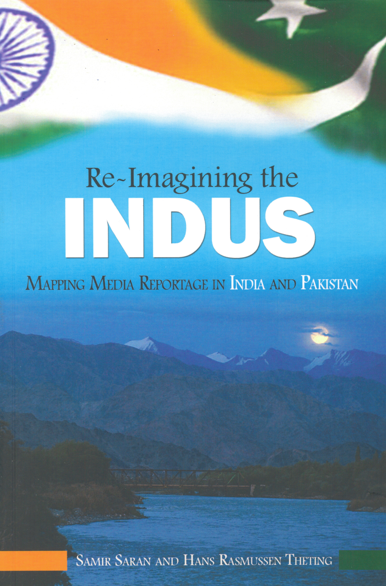
Re-imagining the Indus: Mapping Media Reportage in India and Pakistan

Published 2012, Observer Research Foundation, New Delhi

Overview
Water shortage has become a subject of intense public debate in the present political narrative on resource management and riparian rights. In an attempt to discern the divergence on core issues and mainstream media reporting, Re-imagining the Indus is a methodological study based on Media Content Analysis of the reporting on water issues related to the Indus, in the leading dailies of both India and Pakistan. This monograph seeks to capture the existing discourse and stimulate policy dialogue on the subject.

In Detail
What is the general discourse on water scarcity and related crises in the Indian and Pakistani media? The study conducted by Samir Saran (ORF) and Hans Rasmussen Theting, scrutinised the media coverage on water on three specific themes – the political discourse, water governance and people, practice and environment.

Titled ‘Reimagining the INDUS: Mapping media reportage in India and Pakistan’, the study found that the Indus Water Treaty (IWT) does not dominate the reportage in Pakistan, indicating a low level of discontentment or critique.

It also found that it is only in the months of winter, when the water flow is low, that inter-country dispute between India and Pakistan, and significant negative sentiment against India, gets attention in Pakistan. But in the Indian media, Pakistan only appears during spring months.

The study, now published in the form of a book, found that agricultural concerns and inter-provincial disputes dominate media reportage in Pakistan while in India media lays greater emphasis on urban water concerns and interventions, including ground water and domestic consumption.

The study also showed that media reports in both the countries, Pakistan more than India, recognise the need for the two countries to cooperate on water issues. From the study, it was also clear that in both India and Pakistan, there is equal emphasis on the aspects of water governance and infrastructure.

Standard

Water shortage has become a subject of intense public debate in the present political narrative on resource management and riparian rights. In an attempt to discern the divergence on core issues and mainstream media reporting, Re-imagining the Indus is a methodological study based on Media Content Analysis of the reporting on water issues related to the Indus, in the leading dailies of both India and Pakistan. This monograph seeks to capture the existing discourse and stimulate policy dialogue on the subject.

Read here – https://www.orfonline.org/research/re-imagining-the-indus-mapping-media-reportage-in-india-and-pakistan/

Books, Media, Research, Writing

Re-imagining the Indus: Mapping Media Reportage in India and Pakistan

Image
BRICS, Columns/Op-Eds

Article in “Russia and India Report”: It’s time for a ‘BRICS Fund

by Samir Saran and Vivan Sharan
November 14th, 2011
Please find here the original article

With a post-crisis global recession deepening in the eurozone and other parts of the world, the BRICS countries can take the lead to set up a ‘BRICS Fund’ to reenergize faltering growth in both developed and developing economies, argues Samir Saran and Vivan Sharan.

The current global economic scenario is uncertain, volatile and misleading. The uncertainty stems from a breakdown in macroeconomic correlations and a continuation of a post-crisis recessionary environment in large parts of the world.  The volatility emanates from the unpredictable price action across asset classes and increased sensitivity of almost all asset classes to financial and political fragilities, like those that are prevalent in the euro zone. Meanwhile, the misdirection and misallocation of capital across asset classes is a direct consequence of the lack of clear signals by political institutions and markets alike, leading to broad scale risk aversion especially in the case of sovereign investors such as central banks.

Increasingly, as such strains constrains economic development and investment flows, it is necessary for the BRICS nations to realise their new roles in the emerging global economic order. The imperative to shape the dynamics of future growth must come from these new drivers of economic momentum. One of the ways to do it could be the creation of a BRICS fund – a consolidated wealth fund with appropriate and proportionate monetary contributions from the central bank reserves of all the BRICS countries. Such a multilateral fund, with pre-determined investment mandates, could prove to be a useful tool for rebalancing capital flows, and reenergizing faltering growth in both developed and developing economies.

About one eighth of all assets managed in the US are allocated to “impact investments” or “social investments” – an impressive statistic that must be replicated by emerging economies. With a view to the future, it is clear that social, economic and environmental sustainability are going to be essential for economic development and growth – at individual company, industry and international level. A BRICS fund which invests back into sustainable initiatives both within the BRICS and outside in the least developed economies could prove to be an unparalleled tool to promote and accelerate sustainable growth trajectories. Rather than being a problem of capital generation, the key challenge in financing transitions to sustainable, low carbon trajectories is the redirection of existing and planned capital flows to financially viable allocations in non-traditional asset classes. Alternative investments into sovereign debt of struggling economies based on mutually agreed upon special purpose vehicles could be another avenue for funding which would also leverage the BRICS’ bargaining position in multilateral negotiations.

In the recent international climate negotiations at Durban, it was decided by member countries that that the second commitment period of the Kyoto Protocol will run from January 2013. Furthermore, it was decided that the Durban Platform for Enhanced Action – an agenda strongly backed by the EU and the Association of Small Island States (AOSIS) would be instituted to develop another new Protocol by 2015 – an international legal instrument that will be applicable to all parties to the UN climate convention and will come into effect after 2020. Simultaneously, the parties to the COP agreed to institute a $100 billion Green Climate Fund (GCF) – a measure largely intended to appease developing nations such as those in the AOSIS to come on board the EU agenda. The strategy worked well, although smaller economies should be aware that in the past a bulk of the funds that have been made available to developing countries through the Clean Development Mechanism of the UN have gone to private project developers in China, India and Brazil (in that order). China got the lion’s share of close to half of the total investments made till now. If the investment flows were analysed at from a primarily deterministic prism, it would be hard to conclude that the funds from the GCF would benefit small developing economies, or impact real organic change. The Durban negotiations provided a textbook case where bargaining positions of developing countries, and especially those in the BASIC group of countries including Brazil, South Africa, India and China, could have been leveraged, had these countries already committed to fund sustainable development through a parallel fund. Instead, the outcome was sub optimal – given that there still is no mechanism for the eviction of carbon squatters who have conveniently pushed the onus onto countries that are still in the low to mid income development profiles for what is effectively a $100 billion payoff.

The BRICS fund could also provide suitable SPVs to smoothen any future financial shocks to the highly integrated global economy. Just as in climate change scenarios, financial shocks and imbalances are likely to alter the growth trajectories of developing economies in a much more significant way than of advanced, developed economies which already have monetary cushions owing to high per capita incomes and strong existing infrastructure. The BRICS fund could help the central banks of the member countries counter the effects of erratic demand cycles, global resource pricing distortions, and systemic contagious failures in global financial markets, through strategic investment stimuli. Such a mechanism would not only be complementary to the policy mandates of the central banks of the BRICS nations, but would send a strong signal about their overall financial policy independence of Bretton Woods institutions such as the IMF.

Whatever the investment mandate – the overall emphasis for such a fund would have to be the generation of absolute returns to be considered worthwhile by all of the relevant stakeholders. Furthermore, it is beyond doubt that multilateral institutions have limited degrees of freedom. If a BRICS fund becomes a reality, a necessary condition would have to be complete operational and functional independence to deliver what is needed. This would only be possible with the effective and efficient delegation of policy sovereignty. The modern-day central banking trend of institutional independence would be a good model to follow. Ensuring political and financial goals are separate, and asset allocation occurs purely on the basis of the accepted common mandate and profitability would create a strong shared institution.

From purely the perspective of profitability and diversification of sovereign assets, such a fund would provide a good alternative mechanism for central banks within the BRICS to allocate appropriate portions of their reserves to riskier assets than they traditionally are mandated to invest in. Thus, the fund could substitute for Sovereign Wealth Funds, an increasingly popular concept for diversifying sovereign reserves through alternate mechanisms, while simultaneously creating significant signaling benefits which would be advantageous in matters of setting trends and norms in international financial investment agendas in the future. Today, financial institutions are zealously protective of their cash assets. This is far from being a panacea for the prevailing economic scenario with a failing European idea and a politically problematical environment in the US. A BRICS fund could provide the much-needed liquidity and confidence, especially to capitalise on resilient business models looking for seed money.

For decades, economies in the BRICS consortium have been subjected to the rhetoric of structural reform by actors that have consistently overspent on consumption. The retooling and rebalancing of the global financial system is an imperative that cannot be ignored any longer. With the increasing cooperation between BRICS countries along political and economic lines, the conceptualisation of alternative mechanisms to promote the development agenda at a time when financial institutions are cautious with their money is certainly justified. Disruptive changes to status quo policies and investment patterns are traditionally most effective in uncertain, volatile environments. Looking forward, this decade presents a mixed bag of opportunities and challenges for nations and economies. With the emphasis and impetus of growth shifting to the emerging and recently emerged economies, it is only natural that the BRICS countries take the initiative and the lead to innovate their way out of international crises.

Samir Saran is Senior Fellow and Vice President at the Observer Research Foundation. Over the past year, he has been actively involved in setting up a green business “gTrade” to promote sustainable investing in India. 

Vivan Sharan is Associate Fellow at the Observer Research Foundation. He has interned at the UNDP, and PWC undertaking disparate research tasks. His primary research interests are in monetary policy, equity/debt markets in America and the BRICs.

Standard
In the News, Politics / Globalisation

Impulses: Trends That Will Shape India’s World

Please click here for the online audio file and here for the presentation.

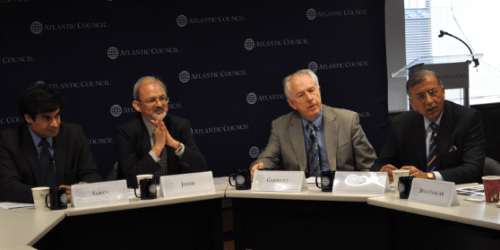
On December 2, the Atlantic Council’s Strategic Foresight Initiative and South Asia Center hosted a discussion on the global trends shaping India’s future towards 2030.

India has undoubtedly taken a central seat in the international arena with a growing population of over one billion citizens and a globally competitive economy. The country is now a hotspot for technological innovation, urbanization, and an expanding private sector. Such rapid growth, however, brings new challenges for this emerging nation. Scarce water resources, lack of urban infrastructure, the need for rural development, and weak coordination between government, public, and private institutions, can put India at a critical juncture in its development as a regional and global power. This discussion will explore both the potential challenges and opportunities for India in the coming decades.

Introduction by

Sunjoy Joshi
Director
Observer Research Foundation

A discussion with

Samir Saran 
Vice President
Observer Research Foundation

Moderated by

Banning Garrett
Director, Asia Program and Strategic Foresight Initiative
Atlantic Council 

Standard
BRICS, Columns/Op-Eds

Article in “Russia & India Report”: BRICS and eurozone crisis


by Samir Saran and Vivan Sharan
November 2nd, 2011
Please find here the original article

The rise of the BRICS nations as new epicentres of economic activity in the rapidly evolving world order has been simultaneously accompanied by a steady decline in the relative economic strength of many of the member countries of the eurozone.

The single currency union has become essentially a two-faced beast. A North–South divide in economic fortunes is clearly visible within Europe (and the irony of this is probably lost on most Europeans). It is time for the leaders of this grouping to recognise the fact that the major rebalancing and recalibrating actions that are urgently needed within the economic and monetary union must also address the concerns of external creditor nations such as those within the BRICS grouping.

After much introspection and procrastination, the European leaders managed to pass a controversial but necessary deal on Greek debt. The deal, which calls for a “voluntary” cut on a nominal 50 percent of private sector investments of over 450 financial firms to reduce total debt burden in the economy by 100 billion euros, is a desperate attempt by policymakers to stymie the relentless bouts of selling pressures on Greek debt.  Although given the circumstances, it was extremely important for the eurozone to signal some form of cohesive multi-stakeholder action to the financial markets, the deal is built upon ambiguous foundations.

The private sector has voluntarily decided to take these ‘haircuts’ and at the same time banks have agreed to increase capital reserves to 9% to shield against an imminent market collapse in Greece. This translates into tremendous pressures on banking institutions, without much positive effect on the bond markets, with Greek bonds still yielding unprecedented rates of interest. It is clear that the projected reduction of Greek debt to GDP ratio from 160% now to 120% in 2020 is not impressing bond traders.

The European leaders have announced that they seek to increase the size of the European Financial Stability Fund (EFSF) from its current capacity of 440 billion euros to over a trillion euros.  It is not clear how they intend to do this, and whether a trillion euros (approx.) is the amount they consider to be sufficient to counter the effects of possible contagious sovereign debt defaults and banking crises in member countries. While these leaders attempt to keep kicking the can down the road with respect to how they manage the myriad financial crises that are evolving in southern Europe, it has become increasingly clear that the problem is too big to be handled without outside help.

The Chief Financial Officer of the EFSF recently told a Brazilian newspaper that his colleagues are “pleased” to see BRICS countries starting to invest in the EFSF. The composition of the investments into the EFSF is not public, and therefore there is no real way of knowing how much each of the BRICS nations have contributed to the fund so far. The EFSF was originally set up to raise money for the Portuguese and Irish bailout packages through the disbursal of loans. Although the Fund has nearly risk-free credit ratings by all the major rating agencies (AAA by Standards and Poor’s and Fitch, and Aaa by Moody’s), it can be argued that investing in Greece’s sovereign debt is a far riskier proposition for creditors to the Fund.

Many of the BRICS nations are already heavily invested in the euro. The central banks of China and India hold approximately 25% and 20% in eurozone bonds respectively and are therefore not likely to spend much more of their international reserves buying into a now suspect currency. However, much like Brazil, which is allegedly considering investing into euro debt via its Sovereign Wealth Fund (which allows greater risk taking) rather than purchasing debt through its international reserves, the economies of China, India and Russia could soon follow suit.

Given the volumes of trade between the euro zone members and each of the aforementioned nations (China surpassed the U.S as E.U’s largest trade partner in July) along with hefty direct investment flowing both ways, it is certainly not in the interest of any of the stakeholders – to let the euro collapse. The involvement of countries like China, with immense amounts of liquidity, does not fail to inspire market confidence as was seen last year in July, when China announced that it would purchase a billion euros in Spanish debt. The bond auction was oversubscribed and lead to a turnaround in market confidence in Spanish debt even though China only committed 400 million euros.

Keeping in mind their leveraged bargaining position in current circumstances, the BRICS nations should coordinate their positions and assert themselves while negotiating investments in eurozone debt. Although the BRICS nations have a diverse set of agendas and priorities, it is not hard to see a future where there is greater coordination within the nations in the grouping, especially between geographical neighbours Russia, China and India, in order to deepen global financial integration and reverse the Western narratives that have dominated the larger economic realm for the past century.

At the Sanya BRICS summit in April, the leaders put on record that the “international financial crisis has exposed the inadequacies and deficiencies of the existing monetary and financial system” and that the BRICS nations support “the reform and improvement” of this system. In order to support the troubled European economies, the BRICS countries need to devise a formal set of pre-conditions for granting bilateral loans and investing in various bailout funds. Perhaps these could be centred on some basic premises such as further trade liberalization, increased access to intellectual property and perhaps they can even be self-righteous enough to demand more friendly immigration laws.

The Europeans will no doubt be faced with some hard choices. They have to be careful to juggle two contradictory imperatives – that of enlarging existing regulatory capacities in order to strengthen and deepen European fiscal, monetary and political integration, while at the same time accepting the inevitable growing interdependence with external nations.

If the evolving debt crisis in the eurozone is viewed through a deterministic prism, it becomes immediately apparent that panaceas such as debt write downs only offer short term relief to the markets as long as structural imbalances persist. In light of this, the Europeans will be hard pressed to look for a multipronged approach to dealing with the existing problems of their southern peripheral nations.

The glory days of Western credit and forced fiscal reforms in Asia and other ‘south’ countries are far behind us, with hegemonic Bretton Woods era relics such as the International Monetary Fund struggling to find its ‘traditional’ relevance within the new political and economic realities. Although it is in no way certain that the balance of power will completely shift towards the emerging or recently emerged nations such as those in the BRICS, as they are grappling with internal problems of their own, one can be relatively certain that the growing degrees of independence – both from Western policies and from Western demand —  will provide the perfect platform for increasing economic leverage through investments in equity and debt as well as direct investments. Europe has few options left but to align economic expectations with those of the BRICS. The question that still looms large is whether there is enough political unity and substance in the grouping (BRICS and other emerging nations) to make the right kind of bargains.

Standard
Politics / Globalisation

Impressions: ‘Asian Forum on Global Governance’, Delhi, 2011

The Observer Research Foundation in association with the ZEIT-Stiftung Ebelin und Gerd Bucerius of Hamburg, Germany, started an annual ten day policy school for young leaders in October, 2011. The inaugural ‘Asian Forum on Global Governance’ provided an instructional and networking platform for young professionals from around the world, aged between 28 and 35.


This slideshow requires JavaScript.

Standard
In the News, Politics / Globalisation

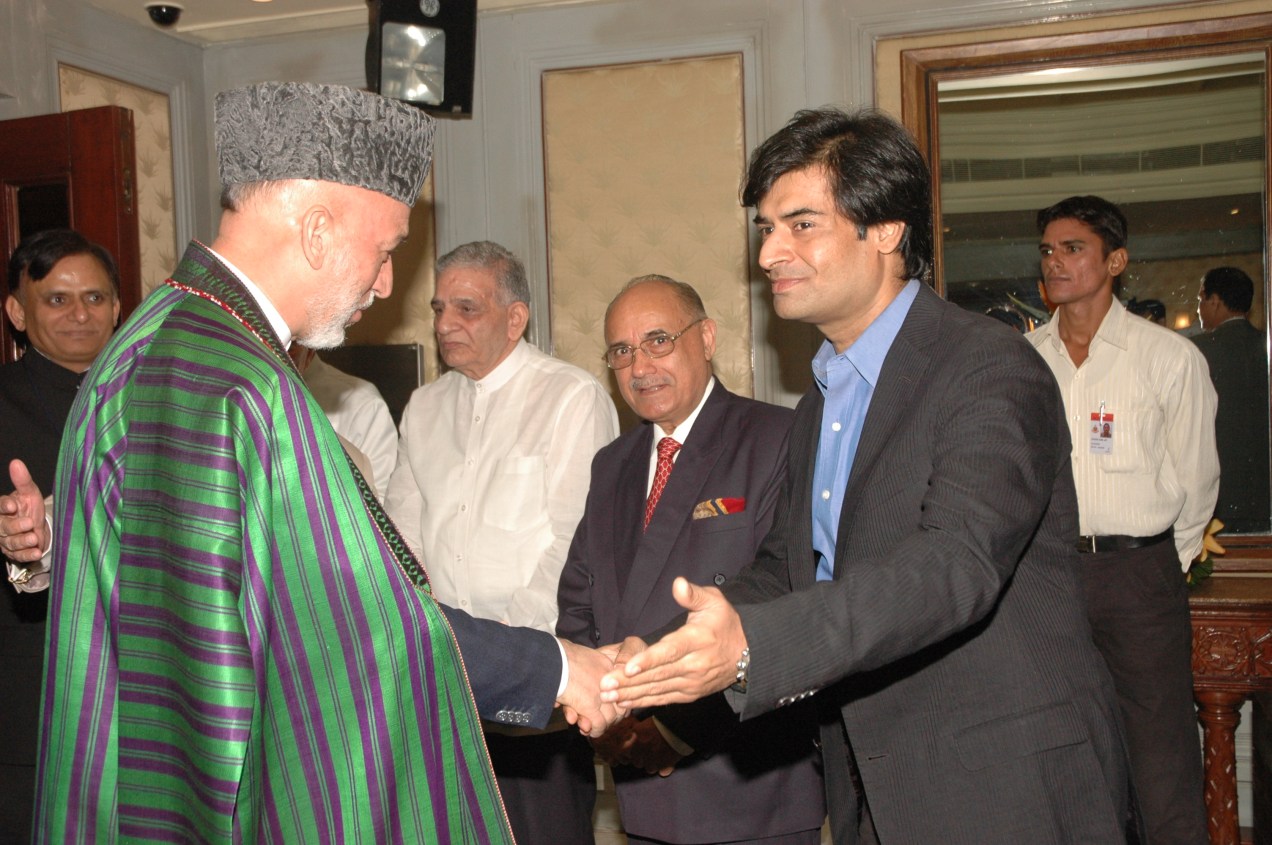
Afghanistan’s president Hamid Karzai at ORF, October 2011.

The National, October 6, 2011, New Delhi.
Link to original website.
Watch here all speeches of the event online.

NEW DELHI // Afghanistan’s president Hamid Karzai sought to reassure Pakistan yesterday after signing a series of agreements to boost trade and security cooperation with India. “Pakistan is a twin brother, India is a great friend. The agreement that we signed with our friend will not affect our brother,” said Mr Karzai in a speech in New Delhi yesterday.

Mr Karzai is on his second visit to India, and is widely seen to be building ties with the Indians out of frustration with Pakistan. Afghan officials claimed that the killing of Burhanuddin Rabbani, the former Afghan president and head of the peace council that conducted talks with the Taliban, was planned by Pakistan-supported Taliban militants in the Pakistani city of Quetta. Pakistan denies being involved in Rabbani’s death.

During his speech, Mr Karzai laid out his vision for Afghanistan’s future after a decade of war and emphasised that the strategic partnership deals were “not directed against any country” but done to “support Afghanistan”. On Tuesday, Mr Karzai and Manmohan Singh, the Indian prime minister, signed a number of agreements including one under which India will offer more military and police training to the Afghan forces ahead of the US troop withdrawal, scheduled to take place in 2014.

India is already one of the biggest aid providers to Afghanistan, having pledged up to US$2 billion (Dh7.35bn) since 2001 and promised spending on infrastructure, such as the construction of highways. Yesterday, the Afghan national security adviser, Rangin Dadfar Spanta, reiterated Afghan accusations that Pakistan’s Inter-Services Intelligence agency was supporting pro-Taliban militants.

“The Haqqani network and the ISI are one and the same. It is a group managed, trained and led by the ISI,” he said. After the September 20 assassination of Rabbani, Mr Karzai announced that negotiating with the Taliban was “futile,” a statement he repeated in his speech yesterday. “We have decided not to talk to the Taliban because we do not know their address. We do not know where to find them … therefore we have decided to talk to our brothers, our neighbours in Pakistan,” he said. If the growing rapprochement with New Delhi has ruffled feathers in Islamabad, Pakistani officials have not let it show.

“Both are sovereign countries, they have the right to do whatever they want to,” the Pakistani prime minister Yusuf Raza Gilani said yesterday. Nitin Pai, a fellow at the Takshashila Institution, a think tank in Chennai, believes Mr Karzai’s visit to India provides Afghanistan with leverage in future negotiations with Pakistan.

How deep the relationship between India and Afghanistan can develop remains a matter of debate. “The question is not what Karzai said, but what the Indian prime minister left unsaid: is India capable and willing to play the role of a guarantor of stability in Afghanistan?” said Mr Pai. He said that India was politically unwilling to take on responsibility for security in Afghanistan, which might rile Pakistan, its nuclear-armed rival.

Samir Saran, the vice president of the Observer Research Foundation, which hosted Mr Karzai’s address yesterday, said the Afghan leader had a serious message in his speech, directed at Pakistan and America, about how he planned to approach security issues in the future.

“By 2015, Afghanistan will be entirely responsible for its security. Afghanistan will be looking to its affairs on its own in cooperation with India, the United States, Iran, Saudi Arabia and our neighbours,” Mr Karzai said in his speech. Mr Saran said Mr Karzai was diversifying his options for peace and stability. “The invocation of Iran is a serious message that anything is better than the current situation. He knows he will have to create new partnerships, even if they are with countries like India and Iran.”

Standard