BRICS, In the News

China.org.cn reports on BRICS Think Tank meeting, 2011

April 15, 2011
Xinhua, China
Link to original website

Representatives from think tanks of the BRIC countries (Brazil, Russia, India and China) discussed ways to fight climate change at a seminar here Wednesday. The seminar, called BRIC Think-Tank Summit, gathered members of think tanks from the BRIC countries to examine the global economic situation and the role of BRIC countries in the post-crisis global transformation.

World countries need to take joint action to fight climate change, said Indian representative Samir Saran from the Observer Research Foundation. Chinese representative Wu Enyuan, with the Institute of Russian, Eastern European and Central Asian Studies, Chinese Academy of Social Sciences, said the developed countries had a bigger responsibility on carbon emission reduction as the current climate change is a result of some 150 years of industrialization process of the developed nations.

But he said the developing countries, including the BRIC nations, should take their fair share of responsibility as well, and adopt measures to fight global warming. “China has fulfilled its responsibility by taking practical actions in either energy conservation or environmental protection,” he said, adding that other BRIC countries have also committed themselves to carbon emission reduction.

Brazil’s representative Eduardo Viola said that implementing these measures is more important than holding discussions. Russian representative Nikolai Mikhailov said climate change unveiled the notion that human beings can treat nature as they want without caring about the consequences. Only a radical change in their attitude could make a difference, he said.

The two-day seminar was held on the eve of the second BRIC summit scheduled for Friday in the Brazilian capital.


Standard
BRICS, In the News

Chinese Crienglish.com reports on BRICS Think Tank meeting, 2011

March 26, 2o11
Link to original website

BRICS think-tanks call for closer economic ties

Think-tanks from five major developing economies are now calling for closer economic ties among the BRICS countries, just ahead of the group’s summit in Hainan, China next month. BRICS countries include China, Brazil, India, Russia and South Africa.
International relations expert Jin Canrong from China’s Renming University says, despite booming economies, the five countries still do not have enough say in global economic dialogues.

“The top agenda of the next summit is still the economy, and especially the top ten topics talked about at this year’s G20 summit in France. For instance, the fluctuating raw material prices, and the possibility of giving an index for economic imbalance – those are all important.” Samir Saran, senior researcher with India’s Observer Foundation, says the BRICS countries could find more shared interests economy-wise. “For the BRICS countries, there is still enough room to enhance their cooperation in energy, electricity, food security, agriculture and technology. Also, the five countries could learn from each other regarding eliminating poverty, improving healthcare and education.”

Standard
BRICS, In the News

Sri Lanka’s TOPS.lk covers BRIC discussion on climate change

April 16, 2010
Link to website  

BRAZIL: Representatives from think tanks of the BRIC countries(Brazil, Russia, India and China) discussed ways to fight climate change at a seminar here Wednesday. The seminar, called BRIC Think-Tank Summit, gathered members of think tanks from the BRIC countries to examine the global economic situation and the role of BRIC countries in the post-crisis global transformation.

World countries need to take joint action to fight climate change, said Indian representative Samir Saran from the Observer Research Foundation. Chinese representative Wu Enyuan, with the Institute of Russian, Eastern European and Central Asian Studies, Chinese Academy of Social Sciences, said the developed countries had a bigger responsibility on carbon emission reduction as the current climate change is a result of some 150 years of industrialization process of the developed nations.

But he said the developing countries, including the BRIC nations, should take their fair share of responsibility as well, and adopt measures to fight global warming. “China has fulfilled its responsibility by taking practical actions in either energy conservation or environmental protection,” he said, adding that other BRIC countries have also committed themselves to carbon emission reduction. Brazil’s representative Eduardo Viola said that implementing these measures is more important than holding discussions.

Russian representative Nikolai Mikhailov said climate change unveiled the notion that human beings can treat nature as they want without caring about the consequences.Only a radical change in their attitude could make a difference, he said.

The two-day seminar was held on the eve of the second BRIC summit scheduled for Friday in the Brazilian capital.

Standard
BRICS, In the News

Philippine News cover BRIC countries’ think-tanks discussion on climate change

April 15, 2010
Brasilia, Brazil
Link to original website

Representatives from think tanks of the BRIC countries (Brazil, Russia, India and China) discussed ways to fight climate change at a seminar here Wednesday. The seminar, called BRIC Think-Tank Summit, gathered members of think tanks from the BRIC countries to examine the global economic situation and the role of BRIC countries in the post-crisis global transformation

World countries need to take joint action to fight climate change, said Indian representative Samir Saran from the Observer Research Foundation. Chinese representative Wu Enyuan, with the Institute of Russian, Eastern European and Central Asian Studies, Chinese Academy of Social Sciences, said the developed countries had a bigger responsibility on carbon emission reduction as the current climate change is a result of some 150 years of industrialization process of the developed nations. But he said the developing countries, including the BRIC nations, should take their fair share of responsibility as well, and adopt measures to fight global warming.

“China has fulfilled its responsibility by taking practical actions in either energy conservation or environmental protection,” he said, adding that other BRIC countries have also committed themselves to carbon emission reduction. Brazil’s representative Eduardo Viola said that implementing these measures is more important than holding discussions. Russian representative Nikolai Mikhailov said climate change unveiled the notion that human beings can treat nature as they want without caring about the consequences. Only a radical change in their attitude could make a difference, he said.

The two-day seminar was held on the eve of the second BRIC summit scheduled for Friday in the Brazilian capital.

Standard
BRICS, In the News

Daily News covers BRIC meeting in Brasilia on climate change, 2010

April 16, 2010
Link to original website 

BRAZIL: Representatives from think tanks of the BRIC countries (Brazil, Russia, India and China) discussed ways to fight climate change at a seminar here Wednesday. The seminar, called BRIC Think-Tank Summit, gathered members of think tanks from the BRIC countries to examine the global economic situation and the role of BRIC countries in the post-crisis global transformation.

World countries need to take joint action to fight climate change, said Indian representative Samir Saran from the Observer Research Foundation. Chinese representative Wu Enyuan, with the Institute of Russian, Eastern European and Central Asian Studies, Chinese Academy of Social Sciences, said the developed countries had a bigger responsibility on carbon emission reduction as the current climate change is a result of some 150 years of industrialization process of the developed nations.

But he said the developing countries, including the BRIC nations, should take their fair share of responsibility as well, and adopt measures to fight global warming. “China has fulfilled its responsibility by taking practical actions in either energy conservation or environmental protection,” he said, adding that other BRIC countries have also committed themselves to carbon emission reduction. Brazil’s representative Eduardo Viola said that implementing these measures is more important than holding discussions.

Russian representative Nikolai Mikhailov said climate change unveiled the notion that human beings can treat nature as they want without caring about the consequences. Only a radical change in their attitude could make a difference, he said.

The two-day seminar was held on the eve of the second BRIC summit scheduled for Friday in the Brazilian capital.

Standard
BRICS, In the News

Book Launch / Conference: Joining The New World Order: Perspectives From The BRICs – Lessons For South Africa – Details

March 1, 2011
Link to SAIIA-website 

Samir speaks at the roundtable on JOINING THE NEW WORLD ORDER: PERSPECTIVES FROM THE BRICs – LESSONS FOR SOUTH AFRICA and a book launch of “BRIC in the New World Order: Perspectives from Brazil, China, India and Russia” by Nandan Unnikrishnan and Samir Saran, organized by  South African Institute of International Affairs (SAIIA) in Pretoria.

Program:
9:30-10:15 Welcome and opening
Ms Elizabeth Sidiropoulos, National Director, SAIIA
Keynote Address
BRIC and IBSA: Convergence and Divergence
His Excellency Mr V Gupta, High Commissioner of India to South Africa (tbc)

10:15-11:30 Session One: The South African Perspective – Preparing for the BRICS
Key questions for the discussion: What does SA hope to bring to BRIC? What does SA want to get out of BRIC? What do SA businesses want to get out of it? How are they preparing for BRIC membership? What are the implications for South Africa’s role in Africa?
Iaan Basson, Chief Director Asia, Department of International Relations and Cooperation
Simon Freemantle, Analyst, Standard Bank
Amb Dr Kaire Mbuende, SAIIA Distinguished African Fellow

Discussion

11:30-11:45 Break

11:45-13:00 Session Two: The Indian, Brazilian, Russian and Chinese perspectives
Key questions for the discussion: What value do India, Brazil, Russia and Brazil see in their BRIC involvement thus far? What are the current debates around BRICS in these member countries? How do various stakeholders in India (and Brazil) see the future of IBSA vs BRICS? How are their business communities taking advantage of BRIC membership?
Samir Saran, Vice President, Observer Research Foundation, India
Amb HHS Viswanathan, Distinguished Fellow, Observer Research Foundation
Srinath Sridharan, Senior Vice President & Head Strategic Alliances, Wadhahan Holdings

Discussion

13:00 Concluding remarks and lunch

SAIIA’s Emerging Powers and Africa Programme is funded by the Swedish International Development Cooperation Agency (SIDA) and the Danish International Development Agency (DANIDA)

Standard
Columns/Op-Eds, Water / Climate

Column in The Financial Express: Climate’s Holy Trinity, 2010

by Samir Saran
May 13, 2010
in: The Financial Express

Over the last decade, climate narratives have been shaping social, political and economic beliefs—resulting in climate ideologies spread not dissimilar to religion. Like most religions, these frameworks have their share of rigidities, with each having discovered the ‘chosen path’ that offers a righteous response and lacks reflexivity. Interestingly a ruling by a UK court in November 2009 drew parallels between an individual’s views on climate change to his religious and philosophical beliefs.

The challenge of arriving at a common understanding of climate change and a common response to it is, therefore, akin to discovering a common religion for humanity. If climate is a religion, its holy script is dominated by the description of the holy trinity of finance, technology and equity. Equity remains in the realm of the spiritual; and concrete proposals towards a world that shares prosperity are confined to classrooms and social scientists even as the economists and technologists work to carve the new world.

Nonetheless, responses from each nation or a grouping seek to address these three central features in their arguments. The EU, for instance, believes that the European Trading Scheme and a carbon price would curtail emissions and serve the purpose of equity by redistributing capital through flow of funds from the developed world to the emerging and developing economies. The flaw with this is that the redistribution of wealth is only among entities located in different geographies with complex ownerships that could put the IPL team structures to shame. Critics portray this as a transaction among elites and the cost of adaptation, poverty alleviation and other development challenges remain at the periphery. And this is where the conflict lies, in the belief system of the EU and the imagination of its populace that it is the liberal market framework that offers the most efficient mechanism for redistributing wealth, historical evidence notwithstanding. The framework for allotting emission allowances and the trading of these alongside external carbon credits would need serious overhaul even if they were to have a nominal impact. Perhaps the proposal to auction EUA post 2013 would also enable national governments in the EU to commit some of the proceeds towards the adaptation challenges, state of their economies permitting.

The emerging and developing economies, however, make the case for direct fund transfers into their own treasuries that have historically (in most cases) been shown as incompetent in delivering development and governance to the millions they seek to serve. Do they have capacities to make use of the large cash transfers they so seek? And would they be better served in incentivising regulated markets and evolving state-centric capitalist frameworks for the same purpose? The cause of equity would be served only if the emerging world is able to receive funds from the complex maze of overseas funding mechanism and then enhance internal efficiency of delivery arrangements.

Technology continues to vex the global debate on climate and perhaps is the real non-negotiable, if global agreements and accords that emerge from climate conventions and summits are the frame for analysis. Over the last two decades, the language in these international documents has remained ambiguous on technology and the only certainty is that equity as an argument is not compelling for ceding intellectual property for the developed world. Pronouncements from President Obama and policies and legislations in the UK and EU clearly position green technology and high-tech industries as the basis for re-industrialisation as well as economic revival. The lavish incentive packages for low carbon business and research and the sheer subordination of policy making to corporate interests in this sector demonstrate the desire of the OECD economies to lead the race to the top in this low carbon game. The odds would have truly been stacked in their favour but for the economic meltdown.

The institutes of higher education, research and development in the developed world continue to lend them a distinct edge. They also benefit from a steady stream of the brightest minds from Asia, Latin America and Africa, who after acquiring basic education assist in furthering the research in these institutes for want of similar professional opportunities at home. Thus, even in this post-colonial world, the West continues to benefit from the resource provisions of its former colonies. Thus large pool of human talent backed by unmatched funding assists these countries to incubate innovation and invention, the two pillars of the new economy.

Much of the developing world is still caught up in the semantics surrounding technology transfer. For its sake, it must resist the temptation of being lured into conditional (indirectly priced) technology handouts and post-its-prime technology transfers. It must also realise, as the Chinese have come to realise recently that intellectual property vis-à-vis climate is not a rigid defined product but is more about tacit human knowledge. The centrality of human resources needs to be over-emphasised here. In the last 5 years, Chinese efforts to attract overseas Chinese back to its industrial and research institutes have gained momentum. Through landmark programmes such as the ‘Thousand talents programme’ it is rightly pricing and attracting human intellect located overseas.

It is also determined to tap into the Chinese diasporas that are part of the research and technology industry. Their policy initiative ‘Chinese serving China’ seeks to reverse the traditional flow of knowledge to western shores. The results of these initiatives are bearing fruit and there are reports that tens of thousands of non-resident Chinese have returned home; the process no doubt aided by the financial crisis and shortage of research funding in the US and EU. But the key learning here is that the Chinese are pricing the human capital right and offering salaries far in excess of their business as usual salary structures. They, unlike India, have realised that human resource is at the core of the IPR chain and they are now unwilling to reduce talent and merit to a UGC prescribed salary handout that India seeks to attract and retain talent with. A recent management reports has cautioned that US hegemony in scientific innovation can no longer be taken for granted. China will be investing over half a trillion dollars on green technology research in the next decade and furthermore has committed to deploy 2.5% of their GDP annually by 2012 towards R&D in line with the OECD levels. As a part of the economic stimulus China deployed $221 bn towards the green economy as against $112 bn by the US. Though much of this was for rail transport and water infrastructure, significant efficiency innovations and applications were in the mix as well.

India is committing to increase its outlay for research and is looking to be at par with OECD standards in a decade. However, outlays alone would not help. The systems that feed into the research agenda would need to be overhauled as well. Both China and India would need to improve the quality and spread of education, health of the population, social indicators and infrastructure will all need to be best in class if the environment for innovation needs to be created. There is great equity in this endeavour. Else we can live the dictum that constraint incubates innovation and hope for the ‘Slumdog Millionaires’.

Please find here the link to the original page.

Standard
Books / Papers, Water / Climate

Responding to Change: Searching for a Path through the Climate Haze

by Samir Saran
2010
in: Chevening Fellowship – Economics of Climate Change: A global perspective, University of Cambridge

For an emerging economy like India, the response to climate change will be shaped by a number of dynamic factors, complementary and competing at different junctures. The contours of this response will be determined by geopolitical power-play; economic growth; consumer behaviour; poverty and social justice; the influence of incumbent and new businesses; governance and political leadership at the centre and the provinces – and most importantly the ability to attract and generate finances. This paper discusses the influence and interactions of these factors at three distinct levels. First it discusses the global (dis)agreements on climate and some of the boundaries of policymaking. Then the paper discusses the Indian domestic imperatives that are decisively influencing its carbon choices. Finally, it shows that – with the growth in the aspirations and affluence of the Indian middle class – the ‘consumption economy’ will increasingly influence India’s carbon profile.

Here the link to the entire chapter (pdf-file).
For more information on the publication “Chevening Fellowship – Economics of Climate Change: A global perspective”,University of Cambridge, please visit this link.

Standard
In the News, Non-Traditional Security, Politics / Globalisation, Water / Climate

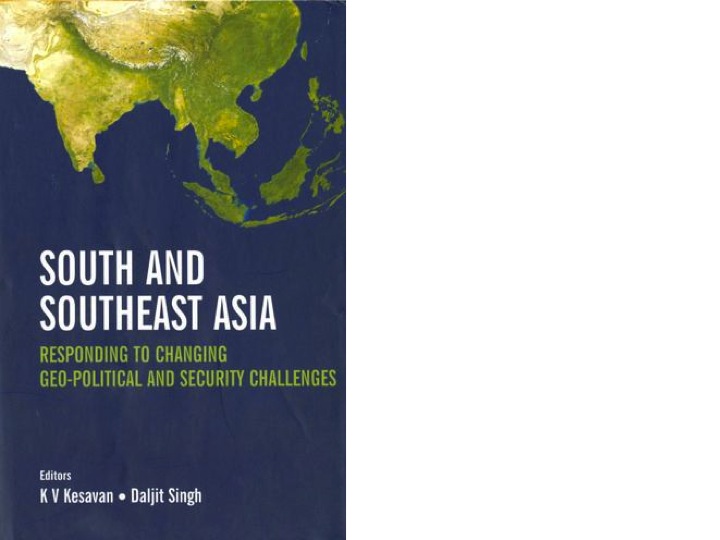
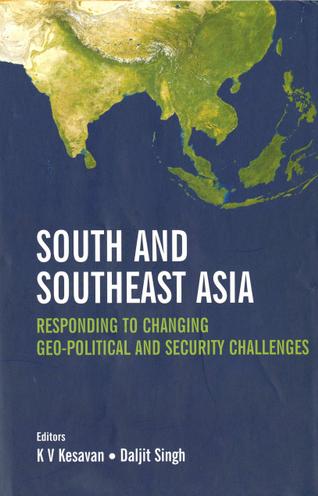
Book review on “South and Southeast Asia”, The Hindu, November 2010

Emerging geo-political and security challenges
by V. Suryanarayan
November 2, 2010

This compendium of 10 essays, presented at an interaction in 2009 among scholars of the Institute of Southeast Asian Studies, Singapore, and the Observer Research Foundation, New Delhi, covers a wide range of subjects related to the political and security trends in South Asia and Southeast Asia.. They include: the role of extra-regional powers and their growing naval presence in the Indian Ocean; the evolving Asian regionalism; India’s ‘Look East’ policy; the political situation in Myanmar; and the non-traditional security challenges to Asian security.

Since the end of World War II, the pattern of international relations in the two regions has undergone a radical transformation. This is particularly true of the role of external powers in Southeast Asia. Though the relative clout of the United States and Japan has declined, the ruling elite of the region would like Washington to maintain a high profile. The growing economic linkages between China and the United States and between India and China have a momentum of their own. However, China’s recent assertive postures in the Indian subcontinent and the South China Sea have created a sense of unease and have even given rise to suspicion about its intentions and objectives.

In South Asia, profound changes are taking place. The nuclearisation of India and Pakistan has added a new dimension to the troubled region. The struggle for democratic rights, the fight for justice by the ethnic minorities, and the secessionist movements, with covert support from external powers, pose grave challenges to the stability of South Asia.

Given the space constraints that preclude coverage of all the essays, only a limited review touching upon a few of the striking contributions is attempted here. In his analytical piece, “Major Powers in South Asia: What is their game?” Dilip Lahiri projects the scenario that is likely to emerge, one that will have profound consequences. Despite their divergent national interests, the U.S., India, Japan, South Korea, and Australia are likely to come together to ensure that the rise of China is non-threatening and does not disturb the peace and stability of the region. Admiral P.S. Das and Vijay Sakuja examine the roles of China and India as growing maritime powers. China’s deepening ties with the member-states of ASEAN and their consequences are highlighted. Equally interesting, the authors pinpoint the strengthening of the links China has established with India’s immediate neighbours — Pakistan, Bangladesh, Myanmar, and Sri Lanka. In this context, India’s ‘Look East’ policy assumes great significance. As Admiral Das points out, “looking East” is no longer an economic jargon; it is descriptive of the totality of India’s relations with Southeast Asia.

STRATEGIC UNEASE

Discussing the major powers vis-à-vis the security concerns of Southeast Asia, Daljit Singh makes the point that, while China’s image and standing in the region has “improved a great deal”, there is also a “strategic unease” about China on account of its “[huge] size, proximity, growing power, and uncertainty about its long-term intentions.” China’s bilateral relations are driven solely by considerations of realpolitik and strategic interests. Witness Beijing’s continuing support to the military regime in Myanmar, its military aid to Sri Lanka during the fourth Eelam War, and its covert support to Pakistan’s nuclear programme.

From India’s point of view, there is concern over a perceived shift in China’s position vis-à-vis Jammu and Kashmir. Hitherto, it had recognised India’s de facto control of J&K, while, at the same time, advocating a peaceful resolution of the contentious issues with Pakistan through bilateral negotiations. The recent denial of visa by China to Lieutenant General B.S. Jaswal is held out as a pointer to this subtle shift. Many scholars are so blind in their admiration for China and its remarkable achievements that they do not want to see any signal or be reminded of any historical evidence that shows it in a negative light. Such an approach will be detrimental to the interests of India. The essays — contributed among others by diplomats, naval officers and academics — are scholarly, absorbing and stimulating.

Link to original publication.

Standard
Books / Papers

BRIC – in the new world order: Perspectives from Brazil, China, India and Russia.

by Nandan Unnikrishnan and Samir Saran
Macmillan Publishers India, 2010

Summary
The BRIC countries are today an increasingly cohesive group of nations with a common vision and shared commitment to collaborate and shape a more equitable and prosperous world order. All four nations are leading economies, large markets and emerging knowledge creators; their interactions within the grouping, and with other nations, hold promise for their own people and for other developing countries. The BRIC country coordination at multilateral fora, such as the G-20, is helping to reorient the existing market economy framework, by stressing the need for greater transparency and accountability of the global financial systems. BRIC’s greater role in the IMF and World Bank is likely to ensure more support and assistance for developing nations, as well as keep surveillance of Western financial practices. While the four are yet to evolve a common position on Climate Change and WTO (Russia is still not a member), BRIC countries will certainly be crucial to any agreement on these vital issues. While there are expectations from this grouping on geo-political matters and international disputes, for the moment, these countries have decided to focus on finance, energy, trade, technology and multilateral pluralism.

This edited volume is the outcome of an event hosted by the Observer Research Foundation (ORF) with the support of the Ministry of External Affairs, as a pre-summit discussion to assist in developing the framework for dialogue among BRIC leaders at Yekaterineburg, in June 2009 and consists of interesting thoughts on these subjects by experts from the four countries. ORF, on its part, is the coordinating think-tank and academic efforts among the BRIC countries and has an extensive partner network in China, Russia and Brazil in both government and private channels.

We are richly endowed collectively in terms of natural resources and other factors of production, and are today in a position to sustain our higher growth rates. Combined with our growing middle classes, and the young populations that most of us enjoy, BRIC can hope to be a factor of growth and stability in the world economy for decades to come.

ISBN : 9780230330665,
Rs. 810.00
To purchase the book, please visit Vedamsbook.in

Further material:
Please find here the link to the “New Edition to Parliament Library”, April 2011 (book # 110).
Book review in ‘Security Index: A Russian Journal on International Security’, Volume 17, Issue 3, 2011. “BRICS – Dawn of a new era or business as usual?”

Standard