Columns/Op-Eds, Politics / Globalisation

Article in Financial Express: Identity and Access in Uttar Pradesh

by Samir Saran and Vivan Sharan
January 30th, 2012
Please find here the original article

Uttar Pradesh (UP) is home to a population similar in size to Brazil and is spread out over a vast area, ranging from the fertile Gangetic Plains to the arid Vindhya Hills. It has traditionally also been the state that shaped national politics and the caste, class and religion based political landscape is representative of the complexities of democracy in India. It is also today a state that defines the challenges that lie ahead in the coming decade and more. Be it physical or social infrastructure, employment or environment, industry or agriculture, multiple narratives within the state need to be reconciled. However, the causal relationship of caste with opportunity continues to be most vexed. There are significant divergences in access to the basic necessities – water, electricity and modern cooking fuel (two out of Mayawati’s election rally cry trio of ‘bijli, sadak and paani’) across this geography. Once rich in economic growth potential, driven by the gains achieved by the agriculture sector through the Green Revolution, the state is now the primary contributor (21.3%) to the overall poverty in the country as per the Multi Dimensional Poverty Index of the UNDP with close to 70 percent poor households.

Over the years, the state has seen increasing political emphasis and rhetoric directed at the marginalized social groups that exist within the state, as a strategic ploy to secure voting constituencies. This specifically includes people categorised as Scheduled Castes (SCs) and Other Backward Classes (OBCs) who represent majority proportions in relation to the total population of the state (Figure 1). It is ironic then, that the average income of SCs and OBCs in UP, is over 18 percent and 20 percent lower respectively, than the all India average, according to the latest NSS data compiled at the India Data Labs at the Observer Research Foundation.
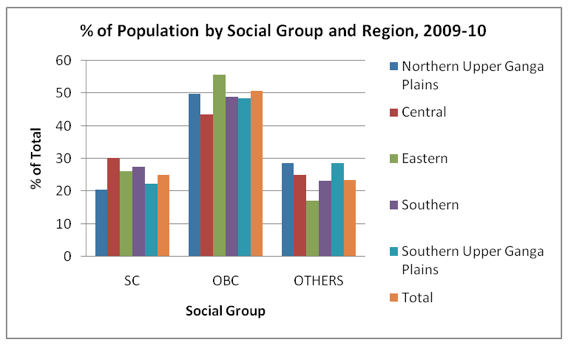
India DataLabs @ ORF: NSSO Consumption Expenditure 2009/10

In terms of access to drinking water (within dwelling) the SCs are the worst off amongst the 3 groups, followed by the OBCs. The Central, Eastern and Southern regions (the NSS divides the State into 5 regions found in Figure 1) fare poorly; a combined average of around 35% of SCs and OBCs have access within their dwellings in these regions, compared to close to 60% in the relatively prosperous Northern Upper Ganga Plains. This average diminishes to an appalling 14 percent in the Central, Eastern and Southern regions if only SCs are considered.

Inherent barriers to social and economic mobility have compounded the inequities created by lack of basic infrastructure provision, and political apathy towards development in the state.  These worrying realities are exacerbated by the fact, that there has been negative growth in access to electricity (an average of -15.23%), over the five year period 2004-05 till 2009-10,  in the Central region and negligible growth in Eastern region, amongst all of the aforementioned social groups (Figure 2).  This negative growth is primarily driven by the sharp decline of access in urban areas. A nearly 22% decline over the 5 year period, in access to electricity in the case of OBCs  living in urban areas located in the Central region, is instructive of the fact that despite representing the largest political constituency in the region, they have been unable to secure commensurate development entitlement.

India DataLabs @ ORF: NSSO Consumption Expenditure 2004/05 & 2009/10

A recent World Bank Report on “The Role of Liquefied Petroleum Gas in Reducing Energy Poverty” suggests that everything else being equal, a higher level of LPG access is positively correlated with higher education levels in households in developing countries such as India. Unfortunately, there are large inequities in access to the modern cooking fuel across social groups (Figure 3). While affordability is a key concern, and according to the report, high costs are the most important determinant preventing consumption shifts across households; from less efficient primary sources of cooking fuels such as firewood, there are few justifications that help resolve facts such as – OBC urban households in the Central region have shown a 30 percent decrease in access to LPG over 2004-05 to 2009-10 (while access has remained nearly stagnant in rural areas).
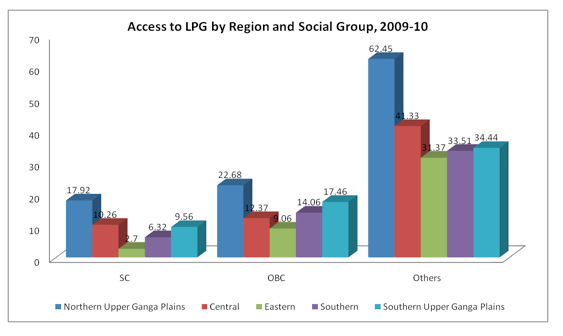
India DataLabs @ ORF: NSSO Consumption Expenditure 2009/10

Indeed income class has a bearing on the levels of access to drinking water, electricity and LPG, and this is particularly true in developing societies, where lack of access reinforces income groups and in turn sharpens particularities of social groups. Low income poverty traps are dominant since the poor have no means to improve existence, owing to mediocre infrastructure, poor education and skills attained, lack of health services and poor productivity levels perpetuated by inequitable access to these essentials. The overall lack of access to specific social groups across regions, as visible in the case of UP, only adds to the sustained and absolute poverty levels of the state.

The higher levels of development seen in the Northern and Southern Gangetic Plains, serves to highlight that, successive governments have been unable to leverage the agricultural productivity of the region and enhance basic infrastructure throughout the state. The logical conclusion is then, that the bulk of the development in the state has resulted from proximity to water and fertile soil and the development of industry, rather than policy or administrative interventions, affirmative action or otherwise. Over the past decade, in the aggressive battle for votes, political parties have emphasised an inclusive development agenda and rallied support through promises for social mobility across castes and classes. The statistics while telling a part of the tale do suggest such promises to be mere rhetoric. Even in regions where some groups have telling political weight, ‘Bijli’ and ‘Paani’  eludes them. This is certainly a dangerous’sadak’ for the most populous state of the country, to keep treading on.

*Samir Saran is Sr. Fellow & Vice President and Vivan Sharan is Associate Fellow at the Observer Research Foundation, New Delhi.
Standard
Books / Papers, In the News

REIL roundtable demands worldwide low-carbon policy framework.

This article was first published in the Global Energy Review online news, 12th July 2011
http://www.globalenergyreview.co.uk

Download the PDF-File here: Global Energy Reil-12-6-11.

Participants at the first Renewable Energy and International Law (REIL) roundtable in Cambridge argued that the UN must provide a worldwide common policy framework for low-carbon energy to get the renewables sector off the ground. Aled Jones, director of the Global Sustainability Institute at Anglia Ruskin University, and Samir Saran, vice president of India’s Observer Research Foundation, present the rountable’s key findings Renewable energy remains a policy challenge for many political leaders around the world. It is a topic many probably wish was not there.

Climate change and energy security create a complex political challenge that must not only be considered in the context of well-entrenched existing energy markets and their incumbents, but also with a host of other issues such as international security, international trade, financial stability, inequity, debt, health care, pensions and poverty (in all its guises). It is not helped by increasing divisions within countries, which means passing any sort of national legislation is incredibly difficult, if not impossible – never mind signing up to bold international treaties.

However, it is interesting to note that the world can look for insights from another industry that represents a significant percentage of global GDP, which did not really exist 20 years ago – namely telecoms and IT. The telecoms industry grew up with no real oversight and no drive from policymakers. The need to selfregulate by creating common standards became very clear early on, otherwise global growth would have always been limited by competing technology platforms failing to integrate and support each other. The standards and protocols that were developed allowed the industry to grow exponentially. It is quite likely that if the early entrepreneurs had had to deal with those issues when they set out on their quest for innovation, or were faced by demands from policymakers early on, we would not have the industry that we do today.

In addition, this entrepreneurial approach allowed the industry to meet market demand at a price the market could bear. For example, in India the telecoms industry was able to tap into the billion customers at the ‘bottom of the pyramid’ by offering a price they could afford. There are of course several current issues within the telecoms and IT sector – not least privacy laws and differences in freedom of expression and freedom of information around the world. However, the industry can now tackle these issues from a strong base.

While regulation and policy in the renewable energy area exists, it is often uncoordinated, is marked by uncertainty, delivers unintended consequences and is subject to change. So is the absence of coordinated, long-term, well thought out regulation and coordinated action a good thing for the renewable energy sector? While it may be a good thing in the short term, allowing some early entrepreneurs to build substantial enterprises, it is unlikely to achieve anywhere near the same transformation that was seen in the telecoms and IT sector – especially when the cost of renewable energy must compete with more traditional sources of power that do not incorporate a cost for carbon.

Two key reasons why renewable energy is unlikely to have the same impact as the telecoms and IT sector: land and the fact that we can see it coming. Energy, in particular renewable energy, needs a lot of land (or a lot of ocean). This land is always owned by someone and is usually being used for something else, or is difficult to aggregate up to large-scale generation capacity in the case of rooftop installations on individual homes.

Within telecoms, the footprint of a mast is tiny and you only need one person in a large district to agree to have something installed on their land to open up a large customer base. For energy, you need to unlock a large portion of land ownership to get to a scale that attracts investment and allows significant generation capacity to be installed.

Aggregation of land needs rules usually framed by governments, overseen by authorities or regulators and adjudicated by courts in case of disputes. All of which creates regulatory and policy uncertainty, which could be a challenge for first-time innovators and could lead the sector to be dominated more by those able to manage the policy rubric rather than those with solutions and technologies.

When the telecoms industry started to grow no one knew what we would use this new technology for and there were many predictions about the global market for computers being small, the global market for mobile handsets being niche – and who would ever want to send a short message to someone when you can phone them? If the post office, pager companies or print photography industry had seen the impact that email, messaging and electronic photographs on mobiles could have on them, they may have put up a little bit of a fight, but there wasn’t really an industry that was being displaced by the new enterprises being set up.

However, in energy there are many vested interests and a range of assets that are potentially redundant if the renewable energy industry meets its full potential. How to transition across from a carbon-driven economy to a ‘green’ economy in a smooth and orderly way is the biggest challenge. And this challenge is only made greater because we can see it coming.

Those vested interests and owners of assets need a much greater level of confidence in this transition before it can happen. This applies not just to the large energy companies but also the employees of those companies, the governments that rely on the taxes from their employment and resource use, the pension funds that rely on their steady return and the consumers that rely on the cheap energy that they produce. Convincing all of these stakeholders to support the move to a ‘green’ economy is no small task.

While there is some scope for the deployment of exciting technologies over the short term, sometimes supported by government policies such as feed-in-tariffs in countries such as China and Germany, to achieve the scale of deployment envisaged under international political negotiations such as the United Nations Framework Convention on Climate Change (UNFCCC), requires much more political backing and legislative support.

In addition, domestic subsidies and other types of support programmes for renewable energy are increasingly being referred to the World Trade Organization (WTO). For example, the US’s complaint against China’s subsidies for wind turbines, which appeared to favour domestic manufacturing, has resulted in China revoking those subsidies. WTO GATT Article XX(g) refers to environmentally related trade measures and could be used to allow subsidies of this nature if domestic and international solutions are subject to the same restrictions. A price on carbon, delivered through a cap-and-trade scheme or a new tax, is often seen as the basis from which other policies can be built. For a business, being able to have a globally consistent price on a commodity makes strategy development much easier.

Achieving a price on carbon has, however, proved challenging in many national jurisdictions and the international process under the UNFCCC is unlikely to be able to agree on an international framework that gets to the level of detail that sets a price on carbon in the next few years. A price on carbon delivered through schemes such as cap-and-trade needs to support other policies that may be introduced such as renewable energy obligations, rather than be undermined by them. Even when implemented a price on carbon is not always a panacea. If an international agreement is achieved then it should set the basis for future partnerships around the world to tackle some of the biggest problems associated with climate change.

The UNFCCC process will not be able to set a mandate for national governments to push through energy bills and policies that they have not been able to agree within their own legislature. In addition, the legality of international environmental law, or at least its enforcement, also causes uncertainty. If a country fails to meet an international pledge to achieve an emissions reduction target, then what is the outcome?

Even if there is some legal framework to measure and report, policing this will be very difficult. A truly robust UNFCCC agreement should be able to provide a framework that allows countries to develop national policies that are at least consistent, allowing global solutions to get to scale quickly. In addition, a UNFCCC agreement can create international markets where they are needed to do particular jobs – for example, reducing deforestation – as well as providing a mechanism or common standards around the use of public sector finance to underpin the development of green economies in emerging and developing economies.

For example, the Indian approach to the UNFCCC is led by the national government, but many of the energy policies, and in particular land policies, are developed at state level. So while the Indian national government could sign up to an international framework and commit India to a ‘green’ pathway, to actually implement this requires internal buy-in and implementation, which is not guaranteed and is rarely driven from the federal level.

So the real challenge now is how to move renewable energy and the interrelated challenges into the ‘action’ pile within national, state and local governments. This is a bold challenge and it needs bold leadership to tackle it. It is about risk management and economic growth, however it does need a wholesale change in the economic supply chain, which unfortunately is very difficult to achieve piece-meal. This is why the UNFCCC process needs to agree a framework for common approaches to policy development as soon as possible. This process will be supported by domestic action – but domestic action is not a substitute for it, even with the recent change in attitudes towards nuclear power in key markets such as Japan and Germany possibly resulting in significant investments into renewable energy and major growth for the sector if their low carbon targets are to be met.

Kick-starting a new industrial revolution is no small task, but neither is spreading democracy across the Middle East – and access to information and visionary leaders created the ‘Arab Spring’. Maybe we need a ‘Green Winter’ to galvanise action to tackle climate change. With the Arctic ice melting at unprecedented rates we may achieve a ‘Green Winter’ sooner than we think.

***

The REIL network is an initiative of the non-profit Renewable Energy & Energy Efficiency Partnership, which aims to develop markets for renewable energy. Members of the network usually meet once a year at Yale University. The Global Sustainability Institute at Anglia Ruskin University hosted the first Cambridge Roundtable of the REIL network on 20 and 21 June.

In addition to Jones and Saran, participants included Bob Simon, chief of staff of the US Senate Energy news Committee; Brad Gentry, director of the Yale Centre for Business and the Environment; Melinda Kimble, senior vice president of the United Nations Foundation; Eomon Ryan, leader of the Green Party in Ireland; Mark Fulton, managing director and global head of climate change investment research & strategy at Deutsche Bank and Martijn Wilder, head of Baker & McKenzie’s global climate change and environmental markets practice.

Standard
Books / Papers, Water / Climate

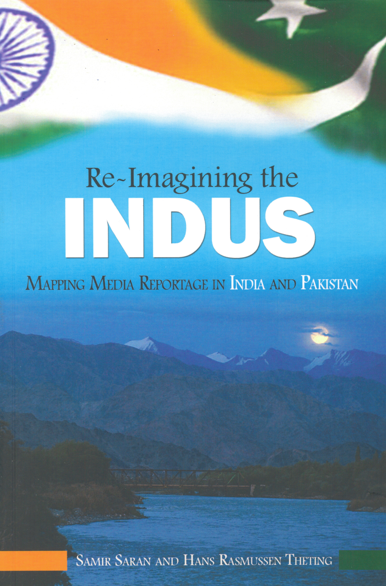
Re-imagining the Indus: Mapping Media Reportage in India and Pakistan

Published 2012, Observer Research Foundation, New Delhi

Overview
Water shortage has become a subject of intense public debate in the present political narrative on resource management and riparian rights. In an attempt to discern the divergence on core issues and mainstream media reporting, Re-imagining the Indus is a methodological study based on Media Content Analysis of the reporting on water issues related to the Indus, in the leading dailies of both India and Pakistan. This monograph seeks to capture the existing discourse and stimulate policy dialogue on the subject.

In Detail
What is the general discourse on water scarcity and related crises in the Indian and Pakistani media? The study conducted by Samir Saran (ORF) and Hans Rasmussen Theting, scrutinised the media coverage on water on three specific themes – the political discourse, water governance and people, practice and environment.

Titled ‘Reimagining the INDUS: Mapping media reportage in India and Pakistan’, the study found that the Indus Water Treaty (IWT) does not dominate the reportage in Pakistan, indicating a low level of discontentment or critique.

It also found that it is only in the months of winter, when the water flow is low, that inter-country dispute between India and Pakistan, and significant negative sentiment against India, gets attention in Pakistan. But in the Indian media, Pakistan only appears during spring months.

The study, now published in the form of a book, found that agricultural concerns and inter-provincial disputes dominate media reportage in Pakistan while in India media lays greater emphasis on urban water concerns and interventions, including ground water and domestic consumption.

The study also showed that media reports in both the countries, Pakistan more than India, recognise the need for the two countries to cooperate on water issues. From the study, it was also clear that in both India and Pakistan, there is equal emphasis on the aspects of water governance and infrastructure.

Standard
BRICS, Columns/Op-Eds

Article in “Russia & India Report”: BRICS and eurozone crisis


by Samir Saran and Vivan Sharan
November 2nd, 2011
Please find here the original article

The rise of the BRICS nations as new epicentres of economic activity in the rapidly evolving world order has been simultaneously accompanied by a steady decline in the relative economic strength of many of the member countries of the eurozone.

The single currency union has become essentially a two-faced beast. A North–South divide in economic fortunes is clearly visible within Europe (and the irony of this is probably lost on most Europeans). It is time for the leaders of this grouping to recognise the fact that the major rebalancing and recalibrating actions that are urgently needed within the economic and monetary union must also address the concerns of external creditor nations such as those within the BRICS grouping.

After much introspection and procrastination, the European leaders managed to pass a controversial but necessary deal on Greek debt. The deal, which calls for a “voluntary” cut on a nominal 50 percent of private sector investments of over 450 financial firms to reduce total debt burden in the economy by 100 billion euros, is a desperate attempt by policymakers to stymie the relentless bouts of selling pressures on Greek debt.  Although given the circumstances, it was extremely important for the eurozone to signal some form of cohesive multi-stakeholder action to the financial markets, the deal is built upon ambiguous foundations.

The private sector has voluntarily decided to take these ‘haircuts’ and at the same time banks have agreed to increase capital reserves to 9% to shield against an imminent market collapse in Greece. This translates into tremendous pressures on banking institutions, without much positive effect on the bond markets, with Greek bonds still yielding unprecedented rates of interest. It is clear that the projected reduction of Greek debt to GDP ratio from 160% now to 120% in 2020 is not impressing bond traders.

The European leaders have announced that they seek to increase the size of the European Financial Stability Fund (EFSF) from its current capacity of 440 billion euros to over a trillion euros.  It is not clear how they intend to do this, and whether a trillion euros (approx.) is the amount they consider to be sufficient to counter the effects of possible contagious sovereign debt defaults and banking crises in member countries. While these leaders attempt to keep kicking the can down the road with respect to how they manage the myriad financial crises that are evolving in southern Europe, it has become increasingly clear that the problem is too big to be handled without outside help.

The Chief Financial Officer of the EFSF recently told a Brazilian newspaper that his colleagues are “pleased” to see BRICS countries starting to invest in the EFSF. The composition of the investments into the EFSF is not public, and therefore there is no real way of knowing how much each of the BRICS nations have contributed to the fund so far. The EFSF was originally set up to raise money for the Portuguese and Irish bailout packages through the disbursal of loans. Although the Fund has nearly risk-free credit ratings by all the major rating agencies (AAA by Standards and Poor’s and Fitch, and Aaa by Moody’s), it can be argued that investing in Greece’s sovereign debt is a far riskier proposition for creditors to the Fund.

Many of the BRICS nations are already heavily invested in the euro. The central banks of China and India hold approximately 25% and 20% in eurozone bonds respectively and are therefore not likely to spend much more of their international reserves buying into a now suspect currency. However, much like Brazil, which is allegedly considering investing into euro debt via its Sovereign Wealth Fund (which allows greater risk taking) rather than purchasing debt through its international reserves, the economies of China, India and Russia could soon follow suit.

Given the volumes of trade between the euro zone members and each of the aforementioned nations (China surpassed the U.S as E.U’s largest trade partner in July) along with hefty direct investment flowing both ways, it is certainly not in the interest of any of the stakeholders – to let the euro collapse. The involvement of countries like China, with immense amounts of liquidity, does not fail to inspire market confidence as was seen last year in July, when China announced that it would purchase a billion euros in Spanish debt. The bond auction was oversubscribed and lead to a turnaround in market confidence in Spanish debt even though China only committed 400 million euros.

Keeping in mind their leveraged bargaining position in current circumstances, the BRICS nations should coordinate their positions and assert themselves while negotiating investments in eurozone debt. Although the BRICS nations have a diverse set of agendas and priorities, it is not hard to see a future where there is greater coordination within the nations in the grouping, especially between geographical neighbours Russia, China and India, in order to deepen global financial integration and reverse the Western narratives that have dominated the larger economic realm for the past century.

At the Sanya BRICS summit in April, the leaders put on record that the “international financial crisis has exposed the inadequacies and deficiencies of the existing monetary and financial system” and that the BRICS nations support “the reform and improvement” of this system. In order to support the troubled European economies, the BRICS countries need to devise a formal set of pre-conditions for granting bilateral loans and investing in various bailout funds. Perhaps these could be centred on some basic premises such as further trade liberalization, increased access to intellectual property and perhaps they can even be self-righteous enough to demand more friendly immigration laws.

The Europeans will no doubt be faced with some hard choices. They have to be careful to juggle two contradictory imperatives – that of enlarging existing regulatory capacities in order to strengthen and deepen European fiscal, monetary and political integration, while at the same time accepting the inevitable growing interdependence with external nations.

If the evolving debt crisis in the eurozone is viewed through a deterministic prism, it becomes immediately apparent that panaceas such as debt write downs only offer short term relief to the markets as long as structural imbalances persist. In light of this, the Europeans will be hard pressed to look for a multipronged approach to dealing with the existing problems of their southern peripheral nations.

The glory days of Western credit and forced fiscal reforms in Asia and other ‘south’ countries are far behind us, with hegemonic Bretton Woods era relics such as the International Monetary Fund struggling to find its ‘traditional’ relevance within the new political and economic realities. Although it is in no way certain that the balance of power will completely shift towards the emerging or recently emerged nations such as those in the BRICS, as they are grappling with internal problems of their own, one can be relatively certain that the growing degrees of independence – both from Western policies and from Western demand —  will provide the perfect platform for increasing economic leverage through investments in equity and debt as well as direct investments. Europe has few options left but to align economic expectations with those of the BRICS. The question that still looms large is whether there is enough political unity and substance in the grouping (BRICS and other emerging nations) to make the right kind of bargains.

Standard
In the News, Politics / Globalisation

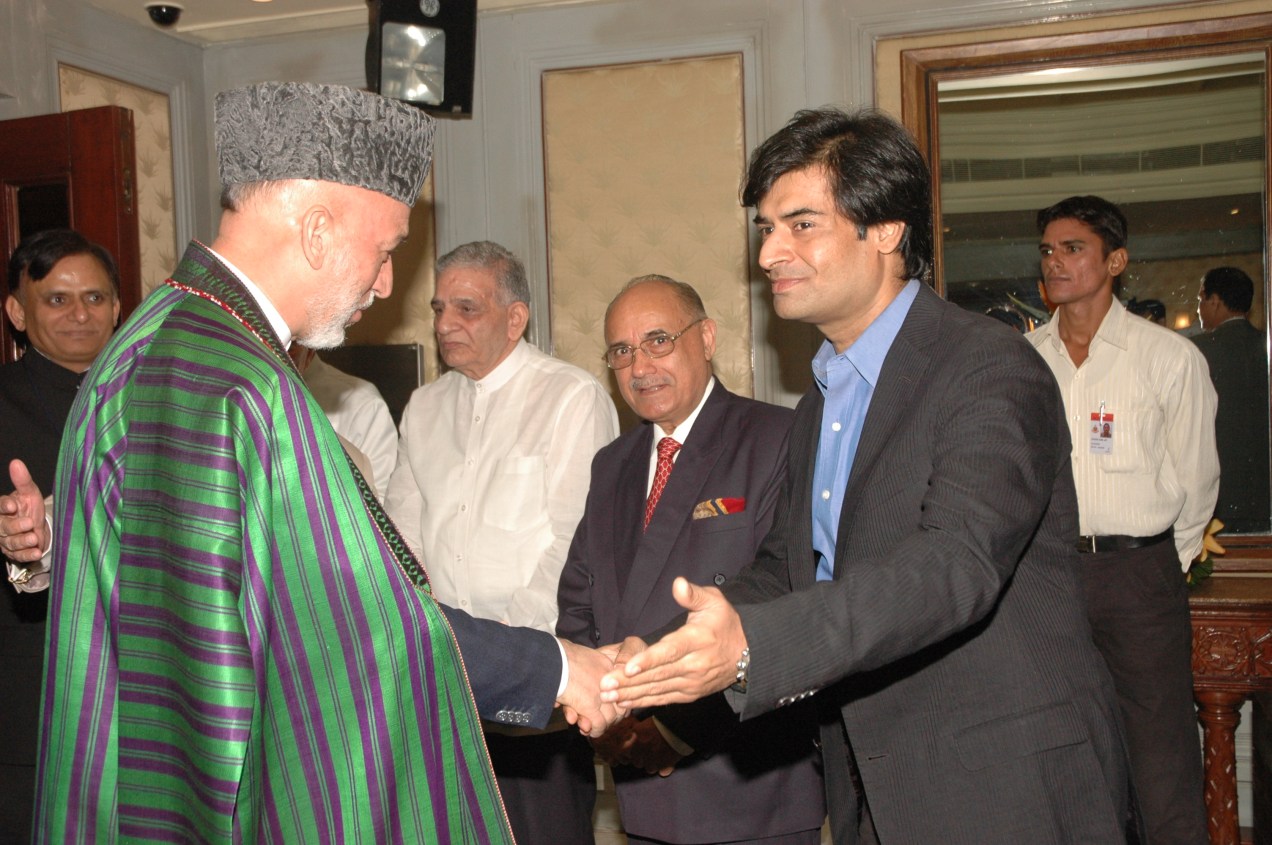
Afghanistan’s president Hamid Karzai at ORF, October 2011.

The National, October 6, 2011, New Delhi.
Link to original website.
Watch here all speeches of the event online.

NEW DELHI // Afghanistan’s president Hamid Karzai sought to reassure Pakistan yesterday after signing a series of agreements to boost trade and security cooperation with India. “Pakistan is a twin brother, India is a great friend. The agreement that we signed with our friend will not affect our brother,” said Mr Karzai in a speech in New Delhi yesterday.

Mr Karzai is on his second visit to India, and is widely seen to be building ties with the Indians out of frustration with Pakistan. Afghan officials claimed that the killing of Burhanuddin Rabbani, the former Afghan president and head of the peace council that conducted talks with the Taliban, was planned by Pakistan-supported Taliban militants in the Pakistani city of Quetta. Pakistan denies being involved in Rabbani’s death.

During his speech, Mr Karzai laid out his vision for Afghanistan’s future after a decade of war and emphasised that the strategic partnership deals were “not directed against any country” but done to “support Afghanistan”. On Tuesday, Mr Karzai and Manmohan Singh, the Indian prime minister, signed a number of agreements including one under which India will offer more military and police training to the Afghan forces ahead of the US troop withdrawal, scheduled to take place in 2014.

India is already one of the biggest aid providers to Afghanistan, having pledged up to US$2 billion (Dh7.35bn) since 2001 and promised spending on infrastructure, such as the construction of highways. Yesterday, the Afghan national security adviser, Rangin Dadfar Spanta, reiterated Afghan accusations that Pakistan’s Inter-Services Intelligence agency was supporting pro-Taliban militants.

“The Haqqani network and the ISI are one and the same. It is a group managed, trained and led by the ISI,” he said. After the September 20 assassination of Rabbani, Mr Karzai announced that negotiating with the Taliban was “futile,” a statement he repeated in his speech yesterday. “We have decided not to talk to the Taliban because we do not know their address. We do not know where to find them … therefore we have decided to talk to our brothers, our neighbours in Pakistan,” he said. If the growing rapprochement with New Delhi has ruffled feathers in Islamabad, Pakistani officials have not let it show.

“Both are sovereign countries, they have the right to do whatever they want to,” the Pakistani prime minister Yusuf Raza Gilani said yesterday. Nitin Pai, a fellow at the Takshashila Institution, a think tank in Chennai, believes Mr Karzai’s visit to India provides Afghanistan with leverage in future negotiations with Pakistan.

How deep the relationship between India and Afghanistan can develop remains a matter of debate. “The question is not what Karzai said, but what the Indian prime minister left unsaid: is India capable and willing to play the role of a guarantor of stability in Afghanistan?” said Mr Pai. He said that India was politically unwilling to take on responsibility for security in Afghanistan, which might rile Pakistan, its nuclear-armed rival.

Samir Saran, the vice president of the Observer Research Foundation, which hosted Mr Karzai’s address yesterday, said the Afghan leader had a serious message in his speech, directed at Pakistan and America, about how he planned to approach security issues in the future.

“By 2015, Afghanistan will be entirely responsible for its security. Afghanistan will be looking to its affairs on its own in cooperation with India, the United States, Iran, Saudi Arabia and our neighbours,” Mr Karzai said in his speech. Mr Saran said Mr Karzai was diversifying his options for peace and stability. “The invocation of Iran is a serious message that anything is better than the current situation. He knows he will have to create new partnerships, even if they are with countries like India and Iran.”

Standard
BRICS, Columns/Op-Eds

Samir writes in Russia & India Report on ‘Evolving an Asian Trading Region’

September 26, 2011.
by Samir Saran and Nandan Unnikrishnan. Both are Vice President(s) at the Observer Research Foundation, New Delhi.
Find here the original article.

It’s time economics replaced politics as the key driving force of the Russia-China-India (RIC) trilateral. The Big 3 of Asia has a major opportunity to create and drive an Asian Trading Region.

At a recent interaction in Moscow with scholars and editors, there was an interesting discussion on finding ways to significantly increase the economic interaction between Russia and India and, more specifically, change the nature of the G2G-driven bilateral trade. Our suggestion was spontaneous and to some outlandish. We suggested that for a paradigm shift in our trade volumes (less than $ 10 bn dollars currently) the two countries would need to work for an Asian Trading Region shaped and steered by Russia, India and China. Until then we (Russia and India) would remain prisoners of perceptions and perceived geographical distance.

It was apparent that this idea did not resonate well with many experts in the room. However, it did spark an interesting round of debate and many have subsequently written in with their own ideas on a trading zone or region in Asia. We still argue that the only sensible architecture would need to be fundamentally driven by and emerge out of the RIC arrangement. Even though the RIC was conceptualized as a club of the Big 3 in Asia and had more political overtones than economic reality, the vocabulary of cooperation emanating from previous RIC forum allows enough leeway to work towards the formation of an Asian Economic Zone beginning with an Asian Trading Region largely driven by Russia, India and China.

The then Russian Prime Minister Evgeny Primakov first voiced the idea of a Russia-India-China (RIC) Trilateral Forum publicly in December 1998 during a trip to India.The motivation was generally believed to be a desire to create a countervailing influence to the US, which at the time had unprecedented dominance in the international system. The fact that Russia, India and China saw the US as their primary interlocutor at the bilateral level did not appear to be an impediment at the time. However, despite regular Track II interactions between the three countries, it took four years for the first official interaction between the three – a meeting between Foreign Ministers on the sidelines of the United Nations General Assembly (UNGA) in 2002. The first RIC standalone meeting of the foreign ministers took place only in June 2005. Thereafter, on the sidelines of the G8 meeting in St Petersburg in July 2006, President Valadimir Putin, President Hu Jintao and Prime Minister Manmohan Singh had a tripartite meeting. From 2007 onwards, the foreign ministers are conducting regular annual meetings.

During this period, the motivations driving the three countries in the RIC underwent a change. If Primakov’s fear in 1998 was a hegemonic U.S., by 2005 Russia was more concerned about China and its possible duopoly with the U.S. – the G2 scenario. Therefore, Russia was keen to support multilateral initiatives, which involved China, but kept the US out. RIC fitted the bill perfectly. China also appeared to be keen on such a formation as it realized its increasing influence and envisioned RIC as a group dominated by China. India’s motivation perhaps was not to upset the Russians. It was also the age of clublateralism and therefore the RIC was an opportunity to get into an influential circle. Some hesitation, if any, was probably because these were the heady days of Indo-U.S. friendship.

Today the situation has changed again. The uni-polar moment of the U.S.A. is evidently over. A multi-polar or polycentric world is emerging. China has emerged as an alternate power centre and no longer requires props like the RIC. It is following an assertive foreign policy that relies more on promoting bilateral relations with the established and emerging powers. Similarly, Russia is now less nervous about the emergence of a G-2. It is enjoying the “reset” in its relations with the US and has become a little more wary about China’s spectacular rise in stature. Moscow, like New Delhi, also realises that its efforts to restructure and modernise its economy will succeed only if it able to convince the West to buy into this effort. While China-India trade is at historic highs (at over $ 60 billion), India is also focusing on developing its ties with the US and the 27-nation European Union. RIC appears stymied by the proliferation of groupings like the SCO, BRIC, and BASIC and does not as yet offer a unique ‘agenda’ to differentiate it. And most importantly, the three countries consider the US much more important than any other bilateral or multilateral relationship. Therefore, the “glue” that held the RIC together is drying up.

This inevitably affects prospects for RIC. The lack of interest and expectation from this format has led to little of any substance emerging from the interactions, despite identifying early on a vast arena for mutual cooperation such as terrorism, drug trafficking, climate change, agriculture, disaster management and relief, health and medicine, information technologies, pharmaceuticals, infrastructure and energy. Given this backdrop, is RIC now irrelevant? Is it time to bury this body? The answer has to be an unequivocal “NO”. So can regional trade and economics be that ‘glue’. Russia and India, through their own recent policy announcements, have recognized the arrival of the yuan as a global currency and it is likely that in the coming months India also decided to denominate some of its reserves in the currency of our Northern neighbour. Russia is already engaged in yuan based trade and maintains a stock of this currency. That over $ 130 billion of trade takes place between India and China, China and Russia and Russia in India also places weight of volume behind the grouping.  Irrespective of political ambitions and differences there is no denying the growth of economic interactions and the only limit to the economic story is politics. Can RIC be the political response to an economic arrangement?

RIC appears to be the only format which can help to create a truly Asian Trading Region, an idea that must be pursued based on the remarkable shift of global trade to within the region. The contiguous land mass, the size of the three economies and the growing levels of consumption, each provide a basis to make this trading region viable and worth investing in. The energy and transport corridors may be the place to start. While China’s rapid advances in the energy landscape in Asia can appear intimidating, it can also be seen as an opportunity to respond to the Chinese dynamism and be a part of the project. Would India consider providing access to the Indian Ocean to China? And through China for Russia? Would this create a dependency that could serve India’s interests? Would it be beneficial to open land and pipeline routes to Central Asia and Russia through China? Would these not create mutual dependencies between the two countries that would offset some of the key imbalances that exist today? India helps de-risk China its current hydrocarbon and trade flows through the Indian Ocean, while China offers alternatives to routes that would require India to traverse Afghanistan and Pakistan. At the opportune time can Russia and China be a part of the IPI and TAPI? Can China extend pipelines from Central Asia and Russia to India? With increased volumes of trade, the pipelines become viable in spite of the distance. The participation of all the three countries in these pan-continent pipelines also reduces the political risk that these large trans-national project invariably face.

The biggest gainer would, however, be Russia. They would have a market for their resources outside of the EU and China. As the demand in West Asia is released in the next 10 years due to growing commercialization of green technologies and production of shale and frontier gas in US and East Europe, Russia would increasingly depend on the growing demand from China and India. Without a cooperative arrangement or transport infrastructure, large volumes of Russian resources may have only one buyer – China.

Russia and China have already established significant cooperation in the area of energy. It is time that India becomes part of this equation and the three countries start the process of developing an Asian Gas Grid. The first steps could be modest. Russia could ship some of its piped gas landing in China through the Chinese eastern board to India, a step both symbolic and political and a harbinger of Asian tri-lateral trade. Over the years it could result in the grid that a former Indian petroleum minister strongly advocated and a gas market in the region that could evolve its own price and commercial dynamics. The next stage could involve jointly owned SEZs in Russia’s Far East with each of the countries within the SEZ enjoying privileges of home country. This could also be the experiment to test the free movement of men, material and ideas across Asia.

Standard
Non-Traditional Security, Politics / Globalisation

Samir chaired the ORF event ‘How should India meet the Maoist challenge?’, 2010

May 15, 2010
New Delhi   

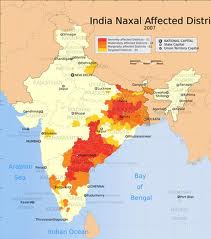
There is an urgent need to re-examine the current strategies of the government towards the Maoist challenge. This was noted during a roundtable discussion on “Meeting the Maoist Challenge: A Re-look at Current Strategy” on Friday, 14 May, 2010 organized by ORF. Focusing the discussion on how to tackle the Maoist challenge, it was noted that bad governance, misplaced development models, incorrect security measures, and perceptions of justice have all played a significant role in the growth of Maoism in India’s heartland.    

Two issues came out prominently during the discussion. First, the current discourse on the Maoist challenge has been dominated by one view – the “paranoid view.” A consequence of this has been the complete absence of alternative views in the current strategies of the government. Second, contrary to the popular understanding and strategies, the discussion noted that the issue was not development but the sense of being denied justice and/or access to justice. Again, in contrast to the popular notion that the Maoist-Naxal problem was a law and order problem, it was noted that the issue is rather a problem of the obliteration of the politico-social structures of the tribal people.

Assessing the current strategies adopted by the Centre and various affected State Governments to counter the spread of the left wing extremist in more than 200 districts of India, a participant pointed out that the Salva Judum strategy of the government has been one of the main causes of the growth of Naxalism. It was pointed out that no rehabilitation and compensation has been made by the government of Chattisgarh to the people who had lost everything.

A participant pointed out that there is a general contempt among people towards the tribals which also was one of the reasons for the current state of affairs in the tribal areas. Another participant noted that there is a difference between cause and phenomenon. Commenting on the role of media, a participant noted that both print and electronic media have become indifferent to the Maoist issue. Further, the media has been fed by only one side – the police view – and reports often lacked balance.

The discussion questioned the “elitist development model” in tribal areas. It was noted that the current development model measured only by GDP growth and encourages corporate interests has destroyed the livelihood of the tribal people as most of their land were taken away for mining and other industrial projects. Both government and corporate had gone and uproot the tribals in their own land without showing any respect for the tribal people, their culture, their traditional knowledge, their civilisational strengths and their land.

The discussion suggested a multi-pronged strategy for the government. An admixture social, judicial, economic, political and security approaches have been suggested. Though the discussion also got trapped in the debate on what come first – security or development, it brought in other elements that go beyond the mere debate on security vs development.

It was noted that there was a need to broaden the medium of discussion on the Maoist challenge. It was felt that to develop a proper approach to tackle the issue, alternative voices need to be included while formulating strategies and policies. It was also noted that IB or police view alone is not enough but also one sided and that there was a need to include rights-based perspectives in government’s policies. It was noted that the issue was not pure economics but one of delivering rights.

On the political front, it was suggested that there was a need to re-look at the current governmental structures at the district and block levels. A participant suggested that the first priority of the government has to be to restore civil administration in the affected states and districts. A participant noted that change in government structures at the block level could be an effective way to ensure better representation of local people who are better placed to understand local issues and problems. Also, such as gesture could also give a sense of justice to the people. It was also suggested some autonomous areas could be created for the tribal people through that a sense of local control over its own people and resources could be ensured.

It was noted that there an urgent need for the government agencies to address the basic needs of the people. Education has been stressed in the tribal areas. It was suggested that the “elitist development model” in tribal areas need to be re-assessed. This mode of development has not created wealth but transferred wealth an there was a need for an alternative model of development where the local benefit.

The discussion has urged the government to deliver rights to the people. A participant has suggested that a judicial commission needs to be set up to address the issue of injustice that has been meted out on the people.

A participant noted that there was a need to re-look at the Salva Judum policy. Another participant pointed out that the traditional police force cannot deal with the Maoist challenge and there was a need for special training. A participant felt that there was a need for appropriate security force to deal with the Maoist problem to minimize collateral damage. Most of the participants felt the army should not be used also against the Maoists.

The discussion, presided by former Special Secretary Ministry of Home Affairs Mahendra Kumawat, ended with the note that development and security approaches need to include right-based approach in dealing with the Maoist challenge.

Participants included Mr. D.M. Mitra, Mr. Mohan Guruswamy, Dr. Nandini Sundar, Mr. Dilip Kumar, Mr. Arvind Kaul, Mr. Ashol Rastogi, Mr. K Subramaniam, Mr. Rajiv Sharma, Mr Saibal Dutta, Dr. Satish Misra, Mr. Samir Saran, Dr. Niranjan Sahoo and others.

Standard