June 20-21, 2011, UK
Link to original website
Feature in Global Energy Review, July 12, 2011
Feature in Business Weekly, June 13, 2011
Anglia Ruskin University’s Global Sustainability Institute (GSI) is co-hosting the prestigious Renewable Energy and International Law (REIL) roundtable in Cambridge from 20-21 June.
REIL is an informal network of international climate change and clean-energy experts. Its members include policymakers, private investors, technology developers and academics, all working to increase the use of cleaner and more efficient energy solutions.
Delegates taking part in the roundtable include Bob Simon, Chief of Staff of the United States Senate Energy Committee; Brad Gentry, Director of the Yale Centre for Business and the Environment; Melinda Kimble, Senior Vice President of the United Nations Foundation; Samir Saran, Vice President of the Observer Research Foundation in India; Richard Kauffman, Chairman of Levi Strauss & Co; and Eomon Ryan, Leader of the Green Party in Ireland.
The event, which is being held at the University of Cambridge’s Moller Centre, will focus on strategies to address climate change and the development of the low carbon economy. Topics for discussion include financing clean technology; the convergence of food, water, and energy issues; and sustainable energy access.
The synergy between REIL, CSaP and GSI is strong, with CSaP acting as a networking organisation dedicated to building relationships between policy makers and experts in the fields of science and engineering.
The GSI is a research institute based at Anglia Ruskin that encompasses a broad portfolio of areas and interests including environment, built environment, technology, tourism, business practice, education and health.
The roundtable will comprise discussions on the following subjects:
- Financing Clean Technology (including proposals for Green Investment Banks)
- Convergence of Food, Water, and Energy Issues
- UNFCCC: From Cancun to Durban
- Technology
- Sustainable Energy Access
- Financing Energy Efficiency
Event chairs:
- James Cameron (Founder and Vice Chairman, Climate Change Capital)
- Bradford Gentry (Director, Yale Center for Business and the Environment, Yale School of Forestry & Environmental Studies)
- Leslie Parker (Managing Director, REIL)
- Martijn Wilder (Partner and Head of Global Environmental Markets Practice, Baker & McKenzie and Adjunct Professor, ANU)
Timings
Monday 20 June: The meeting will start at 10am and finish with dinner in Trinity Hall.
Tuesday 21 June: Day two of the meeing will start at 9.30am and finish at 5pm.
Please note that attendance is by invitation only. There is no fee associated with attending the workshop and dinner.
Location:
The Møller Centre
Management Training & Conference Centre
Churchill College, University of Cambridge
Storey’s Way
Cambridge
CB3 0DE
United Kingdom
Company: Reil (Renewable Energy & International Law)
Website: http://www.anglia.ac.uk/ruskin/en/home/news/climate-change-event.html




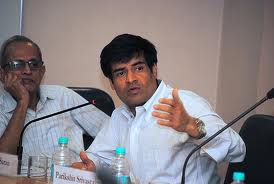
 A roundtable was held on April 20, 2010, Tuesday, on “Goal 2020: Identifying issues, options, opportunities and frameworks towards demand side mainstreaming of climate friendly technologies through Technology Diffusion Centers”, at the ORF New Delhi campus. The roundtable saw participation from trade commissions, multilateral investors and corporates.
 The roundtable was held to identify steps that can be taken in the coming years so as to be able to achieve the impact of technology/application available to be transferred for mitigation and adaptation in India by 2020. The roundtable had the four sessions. The first and the second session were based on the discussion on climate friendly prototypes and discussion on global experiences. The third session was divided into two parallel working group discussions- Technology Transfer framework, Designing Technology Diffusion and Innovation Hub Ecosystem and Prototype Rollouts and Mass Adoption.
 In his opening remarks Mr. Sunjoy Joshi, ORF Distinguished Fellow, said that pace of adoption & innovation was critical for mainstreaming climate friendly technologies and identified solar thermal technology as the most promising one for mass adoption.
 In the second session, Mr. V. Raghuraman, Principal Advisor, Jaguar Overseas Ltd., stressed upon the need to adopt Electric Power Research Institute model in diffusing renewable technology for India. He was of the view that LED lighting technology is one of the means to provide lighting to 400 million inhabitants having no electricity. He also said that for mass adoption the technology should be user friendly. Mr. Samir Saran, ORF Vice President, said that energy efficiency is “the low hanging fruit” in achieving carbon intensity targets. Mr. Poul Jensen, Head, European Business and Technology Centre (EBTC) in India, said that India had the potential to make clean technologies mature. He also shared the EBTC experience of being a facilitator for EU clean technology. Mr. Takeshi Yoshida, chief representatives, NEDO, shared Japanese experiences in the field of energy efficiency and mentioned the “Top Runner Programme” mandated by the Japanese government through which all equipment manufacturers in Japan have to attain benchmark efficiency of the most energy efficient manufacturer.
 Director, NITRA, said that there was no representative baseline data at the SMEs level which was required for implementing carbon intensity reduction programmes. Prof. Rakesh Basant, IIM Ahemdabad, was of the view that choice of prototype technology was not independent choice and that inventory of prototype technologies must be created to meet diverse needs. Mr. Vishal Thapa, Director, ICF India, said that as India was extremely segmented, we should not pick winners in technology and that we must create a portfolio of solutions.

 Samir Saran