Uncategorized

Communicating Kashmir: Where perception is reality

Samir Saran|Rohit Chopra

The Indian state’s repeated blunders in Jammu and Kashmir have often been chalked down to ineffective political governance and security policy choices. While this is true, it is also time to acknowledge the colossal Indian failure in articulating a coherent, viable narrative about Kashmir and disseminating it effectively. States seldom secure legitimacy if they are unable to shape opinions, perceptions and more importantly the diverse “assessments of existence” of those that they seek to serve and manage. This is not to endorse an “Orwellian order” in which power is maintained precariously through the threat of punitive action. Rather, it is to acknowledge that political legitimacy resides firmly within the rubric of a public sphere favorably disposed to the political regime. In other words, state legitimacy depends on an effective identification with the state, one that is reinforced by persuasive rhetoric through the channels of communication that traverse across political and public life.

The Indian government, however, has displayed remarkable and consistent ineptitude in communicating on Kashmir, with Kashmir and for Kashmir.

It has expended copious amount of resources talking to Kashmir, talking up some elements of Kashmir and talking down others, without any rational assessment of what must inform its priorities and emphases for the state. At its core, India’s communication on this vital subject feeds just one unintended imagery: the portrayal of a significant and growing distance between Srinagar and New Delhi.

Unsurprisingly, the Indian state is constantly at a disadvantage when it comes to narratives on Kashmir. Most international media outlets, for example, continue to juxtapose “Pakistan Administered Kashmir” with “Indian Administered Kashmir,” as if to suggest that there is some real historical equivalence between the two. Pakistan’s long history of employing state-sponsored militias first, and terrorists thereafter, has yet again been normalized as fact by much of the Western media. These same organizations have otherwise obsessed over the “war on terror” when Islamist groups, remarkably similar to those responsible for violence in Kashmir, have wrought their violence on Western targets from London to Paris. For instance, an article in the venerable New York Times, described the recent terrorist attack in Kashmir as a “bombing.” Similarly, internationally recognized terrorist groups have often been referred to as “militants”and their homegrown counterparts as “militias”.

Just to put this pattern of usage in context, the term “militia’ finds mention and a role in the constitution of the United States of America. While its usage in the South Asian context by certain media organizations and persons is a mischievous attempt to frame terrorists as the ‘resistance,’ it also clearly signals a failure of the Indian state in the realm of strategic communications.

Calling out the hypocrisy and bias of the Western media must not be the sum total of India’s response.

The knee-jerk outrage of the Indian state and citizens merely exposes and accentuates the core frailty of our ability to shape meaningful and abiding narratives in the marketplace of ideas. Therefore, it is time to ask how India can strategically reshape and influence the new ‘information sphere’ that is represented by a potent mix of legacy and new media.

There are a few crucial factors that will need be addressed as central to such an effort if it is seriously contemplated by mandarins on Raisina Hill.

Growing information flows in cyberspace negate size and resource asymmetry. Simplistic messages about India being a new “colonial power” go viral on social media—while the reality of a developing and pluralistic democratic state combating religiously motivated foreign terrorists and their local proxies is often lost at a time when even competent news organizations are increasingly Fox-like (and Fox-lite) in their headlines and reportage. Western audiences, who have appointed themselves as the arbiters of Asia’s post-colonial troubles, are more easily swayed by the former than the latter. And their near-theological affection towards an errant Pakistan only exacerbates India’s challenge. Bush Jr.’s approach to galvanize the media sphere by deploying a simple and emotive bumper sticker tag line like the “War on Terror” may not work in the Indian case. His was a distant war in a remote land that many, if not most, Americans were ignorant of; this is a conflict in which one’s own people, in many senses of the word, are implicated.

There is therefore an urgent need to create both sophisticated messaging and means of delivery. The inability of key Indian interlocutors to communicate the low threshold of provocation and unyielding aggression by Pakistan will have adverse implications on Kashmir and its location within larger debates about Indian politics, society, and culture.

The great epics and religious texts of the world, whether the Iliad, Mahabharata, or Bible, tell us that narratives shape external perceptions. And as the age of digital and virtual technologies reminds us so powerfully, they shape our imagined realities as well.

From the thinker Baudrillard we know that in our hyper-mediated age, the real and the virtual are not so much binary opposites as parts of the same continuum of perception. For instance, we must consider the fact that all strategic communication vis-a-vis Pakistan (as framed currently) affects the Kashmir debate. If we need to dislodge, dis-embed and decontextualize Kashmir from the India-Pakistan conflict (a stated Indian objective), our communications game needs to be radically overhauled. India must calibrate its doctrines, bureaucracies and human capital to operationalize an approach that survives the democratic cycles of the central and state government. The Indian state must be able to synchronize official messaging in a way that reaches both a general audience and selected ones. As it does so, it must be prepared to declutter three interrelated but overarching narrative strands.

For one thing, those advocating for Kashmiri independence often conflate the protection of Kashmiri identity with the notion of Kashmiri sovereignty. It is a failure of imagination that has allowed this thinking to flourish.

India has always been a syncretic society. Multiple ethnic, religious, linguistic and cultural identities have flourished over time. The nature of political regimes in the Indian sub-continent could never alter the extent and texture of pluralism and this is unlikely to change now. Three states in the Indian northeast consist of Christian majority populations. There is no reason that citizens in a Muslim-majority state cannot exercise full political and religious freedoms under India’s constitutional setup. This is consistent with precedent in terms of the longuedurée of Indian history and with the spirit of pluralism that marks the reality and ethos of the Indian constitution. As a corollary, can a new narrative help create and revitalize this strong ‘Kashmiri Identity’ to negate the insurgency?

Second, the Kashmiri movement is not a call for “Azadi” in the way the Indian freedom movement envisioned the term. The Indian government would do well to employ counter-narratives to dispel this notion. India’s demands for self-determination were driven by the desire to secure full constitutional rights for every individual. There is little evidence that this is the reality in Kashmir. Every passing year, the demands are clearly driven by extremist fundamentalist impulses that are at complete odds with the notion of democratic freedoms. This is antithetical both to the spirit of India’s freedom movement and its democratic values today. Theological fundamentalism must not be allowed to displace or compete with the secular freedoms guaranteed by the Indian constitution, even if these are less than perfect in delivery.

Instead, all strategic communications must focus on the sustained determination of the Indian state to enhance ‘delivery of democracy”, implicitly recognizing past failure as a necessary precondition for reintegration of the people.

Finally, the Indian state must not allow terrorists to turn into martyrs and freedom fighters. There is little legitimacy to the claim that it is Indian violence that compels young Kashmiris to take up the gun. There is a reason global terrorist groups invest so heavily in multimedia teams and in using the internet as a tool for recruitment. As the examples of mass shooters in the US, terrorist recruits for Al Qaeda, and Western-raised Muslims seduced by the fantasies peddled by ISIS show, engaging stories and compelling narratives are incredibly effective at radicalizing susceptible individuals. This is not to suggest that the Indian state should ignore the real grievances of the Kashmiri people. Rather it is to point out that there is enormous value in communicating the truth about India’s investments in the economic prosperity and governance of Kashmir with a laser focus. This is true of the military as well, which is often the first responder in times of humanitarian or environmental emergencies. It is time to personalize and humanize the Indian state and its apparatus for the people of this geography, however flawed it may be at this time. This is a precondition for engagement.

A mature public diplomacy doctrine must form part of a comprehensive new framework for the state that includes deeper and wider political dialogue and visible economic investments.

India must learn to tell a story that is on point in its message and polysemic in reach. It must resonate with different constituencies across the political spectrum and be easily accessible for domestic and international audiences. The easiest part of all of this is that India has had an incredible story to tell since independence. Despite many hiccups along the way, India continues to deliver greater political and economic freedoms and personal security to its citizens than, arguably, most post-colonial states. And this objective, after all, is the principal motivation for organizing complex societies through democratic values.

Applying this story to Kashmir is complicated by both domestic and external factors. Nevertheless, it holds strong potential for appeal if it is capable of being communicated effectively. During the Cold War, the US established a special Information Agency whose only goal was to better explain American policies and the values that underpinned them. If India is serious about finding solutions in Kashmir, it must invest in institutions and actors that can streamline messaging about what those solutions are exactly.

The views expressed above belong to the author(s).

Standard
Uncategorized

मीडिया पर परोसा जा रहा युद्ध — और मैं

Samir Saran

बालाकोट के सामरिक निहितार्थों की जांच करने वाले समस्त आयोगों और रिपोर्टों के बीच, यह महत्वपूर्ण है कि कथानकों और सूचना के प्रवाह के प्रश्न पर पर्याप्त ध्यान दिया जाए।

बालाकोट, वर्ल्ड, सोशल मीडिया, चोमस्की, हरमन, समाचार, सोशल मीडिया, युद्ध, सूचना युग, समीर सरन
स्रोत: Colin Anderson Productions/Getty

हालाँकि बालाकोट हवाई हमले का गुबार थम चुका है, लेकिन पाकिस्तान और भारत में जन भावनाओं का ज्वार थमने का नाम ही नहीं ले रहा है। जनमत को उकसाने के पीछे काफी हद तक पुराने और नए दोनों तरह के मीडिया की भूमिका जिम्मेदार है। यूं तो वियतनाम युद्ध टेलीविजन पर प्रसारित होने वाला पहला युद्ध था, लेकिन उसकी पहुंच सीमित अमेरिकी टीवी सेटों तक ही थी, भारत में आज हम जो देख रहे हैं, उसकी तुलना बड़ी आसानी से अभूतपूर्व ग्लोबल टेलिविजन कवरेज वाले 1990-91 के खाड़ी युद्ध की कवरेज से की जा सकती है। उस समय, और अब भी, हांफते हुए लोग मिसाइल हमलों और बटालियनों की गतिविधियों की प्राइम-टाइम रिपोर्टिंग से चिपके हुए हैं।

आज, भले ही समय, कर्ता-धर्ता और प्रौद्योगिकियों का स्वरूप बदल चुका है। 1990-91और उसके बाद दोबारा 2003 में, अमेरिकी मीडिया युद्ध को दुनिया भर के लोगों के घरों की बैठकों तक ले गया था। 2019 में, इंटरनेट पर सक्रिय उपयोगकर्ताओं के ग्लोबल नेटवर्क इसे हर एक स्मार्ट फोन तक ले आए हैं। प्राइम टाइम अब महज नौ बजे के समाचार नहीं हैं। अब जब कभी भी ‘सोशल मीडिया का प्रभावशाली शख्स’ वायरल सूचनाएं प्रसारित करता है, तो प्राइम टाइम होता है। इसके बावजूद मीडिया, राजनीति, सत्ता और युद्ध के बीच संबंध हमेशा की तरह परस्पर-निर्भर रहे हैं। और हमारे सार्वजनिक क्षेत्र में मौजूदा समय में मच रहा शोर-गुल हमें इस बात पर सवाल उठाने का बिल्कुल मुनासिब मौका देता है कि क्या बदल चुका है और क्या नहीं।

मीडिया हमेशा से मिलीभगत करके खुद को सरकार द्वारा शामिल किये जाने की इजाजत देता रहा है। उसने विदेश नीति और युद्ध के बारे में सरकार के कथानकों के लिए बार-बार ​अवसर उपलब्ध कराया है।

नोम चोमस्की और एडवर्ड हरमन ने अपनी अत्यंत प्रभावशाली पुस्तक ‘मैन्युफैक्चरिंग कन्सेंट’ में दलील दी है कि “आधिकारिक सूत्रों” और बीट रिपोटर्स के बीच हमेशा से सहजीवी संबंध रहे हैं। बीट रिपोर्टर्स की पहुंच जहां महत्वपूर्ण लीक्स और ब्रेकिंग न्यूज तक होती है, वहीं आधिकारिक सूत्र बिना कोई अतिरिक्त प्रयास किए एजेंडा सेट कर सकते हैं।

जब दर्शकों की संख्या पर व्यक्तियों का अधिकार हो और प्रभाव इतना व्यापक या अनेक परम्परागत न्यूज प्लेटफॉर्म्स से भी बड़ा होतो वे गवर्नमेंट लीक्स के सहज माध्यम बन जाते हैं। माध्यम भले ही बदल चुके हैंलेकिन प्रेरणा वही है।

दूसरा, सामरिक संचार या स्ट्रे​टेजिक कम्युनिकेशन्स की प्रकृति में महत्वपूर्ण बदलाव आ चुका है। 20वीं सदी में, मीडिया और दूरसंचार के बुनियादी ढांचों पर पूरी तरह अमेरिका का एकाधिकार था। उसका समाज बिना किसी तरह की प्रतिस्पर्धा के वैश्विक स्तर पर भावनाओं को प्रभावित कर सकता था। उन्होंने तय किया था कि दुनिया पहले इराक युद्ध (1990-91) को किस नजर से देखे। आज, किसी भी देश, एजेंसी या व्यक्ति के पास ऐसा एकाधिकार नहीं है। सूचना संचार प्रौद्योगिकियों के प्रसार ने क​थानक का लोकतांत्रिकरण कर दिया है। अब हर एक व्यक्ति मीडिया है। हर एक ​वीडियो, ब्लॉग या फोटो घटनाओं का रुख मोड़ सकता है और मोड़ेगा।

युद्ध के दौर में, वास्तविक घटनाक्रमों के बारे में सरकार के लिए आवश्यक है कि वह फुर्ती से और पहल करते हुए प्रतिक्रिया व्यक्त करे। वह कथानक निर्धारित करे और तो और चौबीसों घंटे के समाचारों में आगे रहे। सभी माध्यमों पर प्रसारित किए जा रहे संदेशों और अर्थों में तालमेल होना चाहिए। बालाकोट के हमलों के बाद, यह स्पष्ट है कि भारत सरकार ने ऐसा ही करने का प्रयास किया, जबकि पाकिस्तान सरकार ने मीडिया पर परोसे जा रहे ‘शासन कला’ के प्रभामंडल के भीतर अपनी दुर्भावनापूर्ण कहानियों फैलाने के लिए यहां उपजे खालीपन का फायदा उठाया।

तीसरा, दक्षिण एशिया ‘शांति चाहने वालों’ की पहचान अब नियमित रूप से सरकार और तथाकथित जनता के नए शत्रु के तौर पर कर रहा है। जिस तरह 20वीं सदी के अधिकांश भाग में साम्यवाद अमेरिकी मीडिया के लिए सीमा रेखा रहा, उसी तरह उपमहाद्वीप में शांति की वकालत करने वाले दक्षिण एशिया क्षेत्र में सीमा रेखा जैसे दिखाई दे रहे हैं। भारत और पाकिस्तान दोनों देशों में, हमने कुछ ‘अलग तरह के’ लोग देखे हैं, जो शांतिपूर्ण विकल्पों और समाधानों की पेशकश कर रहे हैं। चोमस्की और हरमन ने लिखा है कि “साम्यवाद-विरोध” की अवधारणा बड़ी आसानी से मतदाताओं को जुटा सकती है, क्येांकि यह अवधारणा अस्पष्ट है (और) इसका इस्तेमाल किसी के भी खिलाफ किया जा सकता है, जबकि साम्यवाद-विरोधी “कुछ भी कर सकता है और कुछ भी कह सकता है” वह भी बिना निगरानी के।

यही मूलभूत आधार वाक्य आज भारत और पाकिस्तान दोनों जगह फिट बैठ रहा है। और इसको केवल उन्हीं लोगों ने बिगाड़ा हैं, जो नैतिकता और जिम्मेदारी के बारे में सोचकर खुद को परेशान करने की जगह विवश समर्थकों को इकट्ठा करना ज्यादा पसंद करते हैं।

यूं तो शांति का निश्चित तौर पर दूर-दूर तक कोई नामो-निशां नहीं है — लेकिन हमारे मीडिया संस्थान और सोशल मीडिया के योद्धाओं ने शांति की संभावनाओं के बारे में विचार तक करना प्रामाणिक अपराध बना दिया है।

चौथा, सामाजिक मीडिया के दौर में, आवश्यकता के अनुरूप या टेलर्ड मैसेज बेअसर हो चुके हैं। उदाहरण के लिए, हॉलीवुड की सफलता का नाता दर्शकों के बड़े समूहों को साथ जोड़ने के लिए उसके द्वारा अत्याधुनिक कम्युनिकेशन्स का इस्तेमाल करने की योग्यता से भी जुड़ा है। दूसरे शब्दों में कहें, तो हॉलीवुड की कहानियों ने बड़ी तादाद में लोगों को आकर्षित किया है। प्रभावी संदेशों में भी ऐसा ही गुण होना चाहिए वे भी अनेकार्थी होने चाहिए।

अक्सर, राजनीतिज्ञ राजनीतिक ताकत हासिल करने की कोशिश में अपने सीमित निर्वाचक वर्गों को आकर्षित करना चाहते हैं। निश्चित तौर पर, जो भी इस बात पर यकीन करता है कि यह लोकतांत्रिक राजनीतिक का सहज परिणाम नहीं है, वह भोला-भाला है। हालांकि, भारतीय सरकारों और राजनीतिज्ञों (विपक्ष में बैठे राजनीतिज्ञों सहित) को यह सीख लेना चाहिए कि सार्वभौमिक स्तर और अपने मूलभूत क्षेत्र में किस तरह संवाद करें। यदि ये दोनों, खासतौर पर संघर्ष के दौरान, एक दूसरे के विपरीत हैं, तो यह राष्ट्रीय ब्रांड है और हित के सा​थ बहुत ज्यादा समझौता किया गया है। या स्ट्रे​टेजिक कम्युनिकेशन्स उभरता हुआ क्षेत्र है और भारत में अनेक लोगों के लिए अच्छा होगा कि इसकी नई जटिलताओं को समझने के लिए वह मूलभूत स्तर से शुरूआत करें।

अंत में, युद्धकाल के दौरान, खामोशी कोई विकल्प नहीं है — लेकिन डींगे हांकना भी कोई विकल्प नहीं है। उदाहरण के लिए, यह बेहद निराशाजनक है कि बहुत से लोग भारत की आधिकारिक प्रेस ब्रीफिंग्स के दौरान दिए गए साधारण संदेशों में अपने संदेश और अर्थ शामिल कर रहे हैं। अनेकार्थी संदेश सहज तौर पर अटकलों और छल-कपट में उलझ जाएंगे। संघर्ष के दौरान संचार या कम्युनिकेशन्स में स्पष्टता और एकरूपता होना बहुत आवश्यक है। किसी भी तरह की अस्पष्टता पर रोक होनी चाहिए, क्योंकि आसमान में मौजूद आंखें यानी निगरानी के लिए लगाए गए कैमरे और सेल-फोन के कैमरे सारा हाल बयां कर देंगे।

बालाकोट के सामरिक निहितार्थों की जांच करने वाले समस्त आयोगों और रिपोर्टों के बीच, यह महत्वपूर्ण है कि कथानकों और सूचना के प्रवाह के प्रश्न पर भी पर्याप्त ध्यान दिया जाए। स्टीफन ल्यूक्स ने पॉवर: अ रेडिकल व्यू में तर्क दिया है कि “शक्ति का सबसे कपट भरा इस्तेमाल” यह है कि “लोगों को.. अपनी धारणाओं, अनुभूतियों को आकार देकर तकलीफ उठाने से रोका जाए और उनकी प्राथमिकताएं ऐसी बनाई जाएं कि वे मौजूदा व्यवस्था में अपनी भूमिका को मंजूर कर लें।” इस बात पर हैरानी हो सकती है कि अगर बेअसर राजनीतिक और सरकारी संचार या कम्युनिकेशन्स, मीडिया के गरजने वाले एंकर और सोशल मीडिया के तीखे प्रभावकर्ताओं का मिलाजुला असर अगर ऐसा न हो। क्या हम, एक समाज के नाते, अपने इस पश्चिमी पड़ोसी के साथ मौजदू जोखिमों और अवसरों के बारे में तर्कसंगत रूप से विचार करने में समर्थ हैं? या हम उन्हें जाने बगैर ही अपने ही बनाए कथानकों से लाचार हैं?

इसलिए, यहां कुछ अहम सवाल हैं, जिनका हल जरूरी है। इस सूचना युग में सरकार को अपनी विश्वासनीयता और प्रामाणिकता कैसे बरकरार रखनी चाहिए? तेजी से ​घटित हो रहे भू-राजनीतिक घटनाक्रमों के बारे में सोशल मीडिया प्लेटफार्म्स को किस तरह प्रतिक्रिया व्यक्त करनी चाहिए? संघर्ष के दौर में मीडिया को किस तरह की नैतिकता और उत्तरदायित्वों का पालन करना चाहिए? और शायद सबसे महत्वपूर्ण बात यह है कि नए मीडिया की भूमिका क्या है: ऐसे व्यक्ति जो इस प्रभाव और ताकत का उपयोग करते हैं? लोकतंत्र के रूप में हमारी परिपक्वता के लिए इन सवालों के जवाब महत्वपूर्ण हैं।

ये लेखक के निजी विचार हैं।

Standard
India, Media, Neighborhood Studies, tech and media

We cannot have a vibrant democracy without strong media

Samir Saran, Bangladesh, Asian Age, India-Bangladesh, ASEAN, India Ocean Rim, Kashmir, EU, BNP

The Asian Age (AA): Thanks for coming to The Asian Age. How would you evaluate the current status of India-Bangladesh relationship?

Samir Saran (SS): At the level of the two governments the relationship between India and Bangladesh is stronger than ever before. Bangladesh has very sound political engagement with India. However, the people-to-people relationship needs to be catalyzed and strengthened. We need to do more in terms of trade, connectivity, climate change and regional industrial clusters that create value for our people.

The region can learn from Bangladesh as far as inclusive growth, health, education and grassroots interventions are concerned. Can the two countries work together in showcasing solutions and experiences in these vital sectors for the benefit of others? India and Bangladesh also have an opportunity to play a leadership role in connecting the wider region — for example, South Asia with ASEAN — and harnessing the potential of the Indian Ocean Rim Association. Can we together shape the politics and economics of the Indo-Pacific in the coming decade?

AA: What is the condition of democracy in South Asia in your assessment?

SS: Democracy is under threat globally. Sections of the young populations and those that are marginalized or have lost out are disenchanted. We as individuals and communities need to do more to ensure its sustenance. We have to demand more of our leadership in these times.

Democracy also must not be viewed only from the perspective of electing leaders. It is also as much about building and sustaining institutions that serve all citizens and protect their rights.

Therefore, the quality of governance and equitable outcomes will also implicate the health of democracy. In my view democracy is the most pragmatic political arrangement for the people of South Asia. The diversity within the region can only sustainably aggregate under plural political systems.

AA: What is your opinion about the Kashmir conflict?

SS: The Jammu & Kashmir dispute is certainly a legacy of the partition of the sub-continent and also stems from a viewpoint that religion must be the sole determinant of political unions. India rejects this perspective and as a secular country it has successfully demonstrated over the last seven decades that syncretic and plural nations are viable and desirable. Pakistan, on the other hand, does not hold this view and has fanned organic unrest and incubated terrorist organizations that destabilize the Indian state of Jammu & Kashmir and indeed the wider region.

Jammu & Kashmir as a conflict zone also suits the military leadership in Pakistan as it helps them control the society, politics and economics of their country. The Pakistani Army sequesters a huge amount of the country’s annual budget and diverts funds that could be used productively for the development of the country. All disputes must be resolved through dialogue and no country must ever bow down to terror which has become the favored instrument of the Pakistani state.

It is for Pakistan to halt cross-border terrorism and create the right conditions for any meaningful bilateral dialogue. Till that happens, India will exercise all options to protect its territorial integrity and national security interest.

AA: Please share with us your views on freedom of press.

SS: We cannot have a vibrant democracy and a fair society without a strong media. News and information cannot be censored in this Information Age when social media is a reality, nor can the circulation of fake news be entirely prevented. Engaging with and responding to emerging narratives and headlines is the only option. Media can play a role in promoting accountable governance and preserving democracy.

AA: We often see that communal violence breaks out in South Asian countries. What should South Asian countries do to preserve communal harmony?

SS: Preserving communal harmony is a vital challenge for our region. Globalization and technology have made it easy for the transmission of radical ideologies across the world. Radical religious groups adeptly use social networks to propagate their propositions.

Just law and order is not enough to fight communal forces. We need a new awareness, a new coalition of people and governments, and an international resolve to purge this menace. Political parties should desist from fanning hatred. Also, families have an important role to play in guiding the youth and the vulnerable.

AA: Bangladesh has recently held its eleventh parliamentary election. What is your appraisal of these polls?

SS: The process of electing the political leadership is crucial. All democracies must constantly strive to enhance this process and ensure that wider participation and vibrant politics are part of it. All societies and countries organically discover their own pathways and as a young nation Bangladesh is striving to do the same. The political leadership in India has already welcomed the democratic process that was followed in Bangladesh in the recent elections.

AA: Euro is the common currency for all the countries belonging to the European Union (EU). The member countries of EU also have visa free entry facilities for each other. For what reasons do you think the South Asian countries could not do so?

SS: Unfortunately the partition of 1947 has created rigid walls and boundaries between the South Asian countries. We are disappointingly one of the least integrated regions of the world. Ideally we must dispense with such rigidity and should work towards soft borders through sub-regional arrangements.

It is difficult, but not impossible. In the coming days we need to create robust physical infrastructure that connects us, create soft infrastructure that allows information and data to be shared across jurisdictions, and create a regional growth and development plan that responds to the aspirations of all. We share a common future and therefore we must coordinate our individual efforts with greater intensity.

AA: How can Bangladesh become more democratic? Bangladesh Nationalist Party (BNP) has rejected the results of the latest parliamentary polls. BNP Chairperson Begum Khaleda Zia has been inside jail for more than one year. How can Bangladeshi political parties overcome the existing   divides with each other?

SS: Legacy battles between parties are not unique to Bangladesh. Like elsewhere, differences are not easy to reconcile. However, what national political parties can do is to create a consensus on a grand vision for the country even as they choose different paths to achieve that. They can also agree on creating, sustaining and strengthening institutions and processes that are important for the evolution of democracy.

AA: The opposition parties of India like Trinamool Congress, Congress and Communist Party of India have complained that dalits and religious minorities have been subjected to a great deal of torment under the present Indian government. What are your views on this?

SS: As per political theory, one of the founding principles of democracy is that while the majority will invariably elect governments, the prime responsibility of these governments is to protect the rights of the minorities. India has always adhered to this as an article of faith and any deviation has seen substantial intervention by the institutions and people that make up the Indian state.

AA: Rabindranath Tagore is equally loved and honored in India and Bangladesh. How can Bangladesh further strengthen its cultural bonds with India?

SS: Rabindranath Tagore is an icon in both countries. To honour his legacy it would be fitting if Bangladesh and India can work to create a cultural bridge that helps nurture more talent that transcends geographical borders. The present Indian High Commissioner to Bangladesh Riva

Ganguly Das is someone who can do this. I believe she will play a significant role in the growth of cultural ties between Bangladesh and India. India and Bangladesh should provide more opportunities, scholarships and arenas to artists and youth in both countries to harness our common creative heritage and potentialities.


This interview originally appeared in Dailyasianage.

Standard
Cyber and Technology, India, Media Studies, tech and media

Babel as narrative: The media, a mediated war and I

Even as the dust settles on the Balakot airstrikes, public sentiment in Pakistan and India is anything but settled. The aggravation of public opinion is in no small part attributable to the role of the media—both old and new. While Vietnam was the first televised war, though limited to American TV, what we are seeing today in India is more easily comparable to the unprecedented global television coverage of the Gulf War of 1990-91. Then, as now, a breathless public was glued to live prime-time reporting of missile strikes and battalion movements.

Today, of course, the times, the actors and the technologies are different. In 1990-91, and then again in 2003, the American media took war to living rooms around the world. In 2019, a global network of netizens took it to every smartphone. Prime time is no longer just the nine o’clock news. Instead, prime time is whenever a ‘social media influencer’ disseminates viral information. Still, the relationship between media, politics, power and war is just as interdependent as ever before. And the current cacophony in our public sphere gives us the perfect opportunity to interrogate what has changed and what hasn’t.

Media has always been complicit in allowing itself to be co-opted by the state. Time and again it has provided outlets for the government’s narrative on foreign policy and war.

In their seminal book ‘Manufacturing Consent,’ Noam Chomsky and Edward Herman argue that “official sources” and beat reporters have always enjoyed a symbiotic relationship. The latter obtains access to strategic leaks and breaking news, while the former can set the agenda with no extra effort.

It is not surprising that we see this dynamic playing out on social media as well.

When individuals possess viewership and influence that are as large, or even larger, than many traditional news platforms, they become natural outlets for government leaks. The medium may have evolved, but the motivations stay the same.

Second, the nature of strategic communications has altered dramatically. In the 20th century, America had an absolute monopoly over media and telecommunications infrastructure. Its society could influence sentiment at a global scale with no competition. They decided how the world perceived the first Iraq war (1990-91). Today, no country, agency or actor enjoys this monopoly. The diffusion of information communication technologies has democratised story-telling. Every individual is the media. A single video, blog or photo can and will alter the course of events.

In times of war, it is essential for the state to respond nimbly and proactively to real time events. It must set the narrative and even stay ahead of the news cycle. There must be consistency in message and meaning across mediums. After the Balakot strikes, it was clear that the Indian government had struggled to achieve this, even as the Pakistani state leveraged the void to relocate its malevolent designs within the mediated halo of ‘statesmanship’.

Third, South Asia now regularly identifies ‘peaceniks’ as the new enemy of the state and the purported masses. Just as communism was a red line for American media over much of the 20th century, advocating peace in the subcontinent appears to be the South Asian red line. In both India and Pakistan, we witness a certain ‘othering’ of those who would propose peaceful options and solutions. Chomsky and Herman write that the concept of “anti-communism” could easily mobilise electorates because “the concept is fuzzy [and] it can be used against anybody” even as the anti-communists can “do and say anything” without oversight.

This basic premise holds true in both India and Pakistan today. And it has only been aggravated by those who would rather collect followers than constrain themselves by considerations of ethics and responsibility.

While peace is certainly not on the horizon, our media establishments and social media warriors have made it a veritable crime to even consider the prospect of peace.

Fourth, in the age of social media, tailored messaging is ineffective. The success of Hollywood, for example, was also tied to its ability to employ sophisticated communications to engage large constituencies. In other words, its stories enjoyed a large appeal. Effective messaging must share this virtue—it must be polysemic.

Too often, politicians tend to appeal to their narrow electorates in pursuit of political power. Of course, anyone who believes that this is not a natural consequence of democratic politics is naïve. Nevertheless, Indian governments and political actors (including those in the opposition) must learn how to communicate both universally and to their base. If these are at odds with each other, especially during conflict, it is the national brand and interest that is compromised most. Strategic communications is an evolving arena and many in India would do well to go back to school to appreciate its new intricacies.

Finally, in wartime, silence is not an option – but neither is bluster. It was disappointing, for example, to see multiple actors embedding their own messages and meanings in India’s predictably mundane official press briefing(s). Ambiguous messages will naturally lend themselves to speculation and manipulation. Clarity and uniformity must be the defining feature of conflict communications. Blank spaces must be taboo as eyes in the sky and cell-phone cameras will reveal all.

Amidst all the commissions and reports that will dissect the strategic implications of Balakot, it is crucial that sufficient attention also be paid to the question of narratives and information flows. In ‘Power: A Radical View’, Steven Lukes argues that the most “insidious use of power” is to “prevent people … from having grievances by shaping their perceptions, cognitions, and preferences in such a way that they accept their role in the existing order of things.” One wonders if the cumulative effect of ineffective political and government communications, thunderous media anchors and shrill social media influencers is not just this. Are we, as a society, capable of being clear-headed about the risks and opportunities that lie with our western neighbour? Or are we constrained by the narratives of our own making without even knowing it?

There are, therefore, some important questions that require resolution. How should the government preserve its reliability and authenticity in the information age? How should social media platforms react to rapidly evolving geopolitical events? What ethics and responsibilities must the media abide by in times of conflict? And, perhaps most importantly, what is the role of the new media: the individual who now wields such influence and power? The answers will be crucial to our maturing as a democracy.

Standard
Bangladesh, India, Indian Froeign Policy, Neighborhood Studies, Strategic Studies

Nations make choices based on self-interest, this is true for India and Bangladesh as well

Dhaka Tribune: How do you describe the current relationship between Bangladesh and India? Do you find any irritants in the relationship? If so, what are those and how could those be overcome?

Samir Saran: Both India and Bangladesh have in recent years strived to overcome many of the legacy issues in their relationship. Today, we have an opportunity to strengthen our engagement even further. This requires the polity and people of the two countries to achieve closure on some irritants that continue to fester, especially the Teesta water sharing arrangement. New Delhi will need to make an extra effort to resolve India’s internal contradictions and move ahead with the agreement that is a real and an emotive issue for the people of Bangladesh. A fresh approach to bilateral trade relations is also needed. Bangladesh businesses and society need to see tangible gains from India’s rise and trade terms need to be more favorable to ensure equity on this front.

DT: You said on Wednesday (March 13) that the relationship between Dhaka and Delhi is at its best. Do you think that there are areas where both countries can work to further the relationship?

SS: I had remarked that the government to government relationship between the two countries were strong and robust and had achieved a new high in the recent past. I had also mentioned that for a truly sustainable and strong relationship, it is necessary to invest in creating new constituencies that can take the relationship forward. We have to ensure that our businesses, media and research institutions collaborate with greater intensity and conviction and provide a new impetus to this very important bilateral. The two countries must also support purposeful conversations on trade and infrastructure connectivity in the region, within and outside regional institutions such as the Indian Ocean Rim Association and the BIMSTEC. The common determination of the two countries to achieve the Sustainable Development Goals (SDGs) offers a possibility for them to collaborate in this journey. Our homegrown solutions can be shared with each other and also with the larger developing world. Technology sector, smart cities, rural transformations and the blue economy potential of the region, all offer new opportunities for partnership.

DT: Many people in Bangladesh tend to believe that India tries to dominate over Bangladesh and makes effort to intervene into the internal affairs of the country. Are they right? Do you think the relationship is based on mutual respect and interest?

SS: India has and always will respect equality in international relations and respect for sovereignty. It does not interfere in the internal affairs of others and has always adhered to international law and norms of state behaviour in its relationship with other countries. This is true of Bangladesh as well. When India lost a maritime dispute to Bangladesh in 2014, under a dispute resolution proceeding, it respected that verdict in contrast to some other countries in the region which have rejected such processes when they have gone against them. The relationship is certainly built on trust and mutual respect as can be seen in the process followed to resolve the border issue as well. All nations make choices based on their self-interest and this is true for India and Bangladesh as well.

DT: Do you agree with those people who suggest that if the Teesta water sharing agreement is signed, border killing is brought to zero and the trade imbalance that is heavily in favour of India are addressed, Bangladesh-India ties will be further strengthened?

SS: Without responding to the subjective allegations, let me first put on record that the India-Bangladesh ties are indeed strong. This is not to say that issues do not remain. The solutions are more often hindered because of domestic politics in India and Bangladesh, and less so for the lack of political will at the level of the leadership of the two countries. I am sure that we will see a new momentum in Delhi to address all outstanding issues after the general elections in May. I have always favoured soft borders, they should be a location that enhances commerce and value creation. Hard boundaries are a tragic consequence of old mindsets. Trade issues and Teesta water sharing arrangement must be addressed at the earliest to the satisfaction of all.

DT: What are the areas both the neighbours should work on in the coming days for the benefits of their peoples?

SS: Both India and Bangladesh seek development and economic growth for their large and young populations. We must do this at a time when new technologies are changing the way we work and live, and we must do this in a carbon constrained world. These are new challenges for both of us. With similar demographics and development outlooks, these should be the key area of cooperation going forward. On the regional front, India and Bangladesh should also now start imagining a political and economic order for the Indo-Pacific. Both countries have an interest in sustaining a rules based order in the region, both have increasing stakes in a favourable and stable external environment.

DT: There is a perception in Bangladesh that the Indian government favours Awami League. Should it be the case? Should Delhi not work with the government of the day?

SS: India and Indians respect the democratic choices of the people of Bangladesh. While Delhi will maintain good relations with all political parties, it will naturally work with the government in charge of the country. Having said this, it is time that we engage with Bangladesh and its citizens and institutions more robustly. Diplomacy today is also about engaging with individual and communities effectively.

Standard
China, Eurasian Sudies, India, Indian Froeign Policy, Russia Civil War, Strategic Studies

India’s balancing partnerships in Eurasia

Samir Saran, India, China, Indian foreign policy, Eurasia, Chinese technology, Belt and Road, US withdrawal, EU, nation building, technological growth, frontier technologies, sustainable growth

How do you judge China’s approach to Eurasia through the Belt and Road policies?

Samir Saran: China is the first country in recent times that has created a blue print which recognises that Europe and Asia are part of one single landmass. Beijing has created intermediate linkages for this “supercontinent’s” markets and communities. As China moves up the industrial value chain, it seeks wealthy European markets as a key consumer of high-end exports. On the other hand, it views smaller states in East Europe, West and Central Asia and South Asia as suppliers of raw materials, geographies for new transportation networks, and dependant markets for its exports of goods, services and labour.

China and Russia have one binding cause — disdain for the international order established by the West.

It has also found, not surprisingly, a willing partner in Russia — whose residual influence in Central Asia and Eastern Europe makes it a key player in an integrated Eurasia. Both countries have one binding cause — disdain for the international order established by the West. With Russia currently on its side (although this is not a certainty over the long term), the Middle Kingdom is able to set the rules of trade, economic development and security in these regions. Its sizable influence in regional organisations like the SCO, the 16+ 1initiative and the AIIB also provide China the institutional leverage to achieve this.

China’s attempts to integrate these continents, however, will not be free of political friction. Some of the sub-regions that inhabit Eurasia — think South Asia — already possess existing balance of power arrangements. In effect, China seeks to disregard these, and co-opt nation states into its Belt and Road network. Already, larger states, such as those in West Europe and India have voiced reservation and disapproval. In India’s case, such protestations led to a prolonged military stand-off in the Himalayas in 2017. These powers will gradually develop alternative propositions and arrangements for their sub-regions and indeed for the supercontinent. The implications of this contest, the changing coalitions and evolving politics and trade relations will define the coming decades for Eurasia.

Can India escape China’s orbit for economy and technology in the future?

SS: The resilience of the international system has begun to strain just as India is “emerging” as a global power. The erstwhile providers of security and global public goods, such as the US and Europe, appear to be looking inwards even as India requires technology and finance. China meanwhile, is in the midst of a multibillion dollar geo-economics thrust that is capable of both underwriting India’s economic growth and undermining its influence in regional and global affairs.

In the coming decades, India faces the proverbial catch-22 situation with China. New Delhi must learn how to stand firm against China in the political and security realm, while courting it for new investments and growth opportunities. So far the results are mixed on the latter. Bilateral trade remains a persistent irritant — with Chinese exports dominating the economic relationship. On the other hand, Chinese technology companies and venture capitalists are some of the leading investors in India’s budding technology industries.

Part of the answer will also lie in India’s domestic choices The returns from the economic reforms India undertook in the 1990’s are fast waning. India will have to undertake complex systemic reforms across its political and economic institutions if it is to reap the benefits of the fourth industrial revolution. And it will have to do so while providing employment and social mobility to the one of the world’s largest and youngest workforces.

India will have emerged as one of the worlds three largest economies by 2040, alongside the US and China.

The question therefore is not whether India can “escape China’s orbit.” By most estimates, India will have emerged as one of the worlds three largest economies by 2040, alongside the US and China. As it rises, Delhi will provide development solutions to the rest of the emerging world. The question therefore, is whether India can provide effective democratic alternatives for growth and development in the 21st century.

Can the EU contribute to India’s frontier technologies and sustainable growth?

SS: The EU can do much more than contribute to India’s economic and technological growth. Both these actors are geographical pillars of the Eurasian landmass, and invested actors in the Indo-Pacific. Both share a commitment to liberal democracy and market based economics (to varying degrees). And both actors believe in supporting a rules based international order through robust institutions.

The EU and India share a commitment to liberal democracy and market based economics.

These realties make India and the EU key partners in shaping a 21st century order. This realisation is already dawning on the EU. Just last year the bloc released its “elements for a strategy with India”— the first since 2004. And both sustainable development and innovation are key pillars of this strategy. While currently, India may not possess its own coordinated strategy for the EU, this is not likely to be a permanent state of affairs.

The overall state of the international order certainly adds a fresh impetus to the EU-India partnership. With both China and the US increasingly embracing their own unique forms of nationalism, the world is in need of ‘issue’ and ‘interests’ based alliances and coalitions capable of sustaining multilateralism. In fact, between the EU and India lies an opportunity to find common grounds and positions vis-a-vis both China and the US. Even as the EU and India can, for example, carry forward the Paris Climate Change agenda despite the US’ withdrawal, they can together address and moderate China’s state sponsored mercantilist economic policy.

We are currently in a moment in time, where the EU is roiled by populist politics and India itself is still a relatively small economy preoccupied with nation building. Nevertheless, long term trends favour a strong relationship between the two. It is time for both actors to act rapidly on this opportunity.

Standard
Great Power Dynamics, India, Indian Froeign Policy, Strategic Studies, USA and Canada

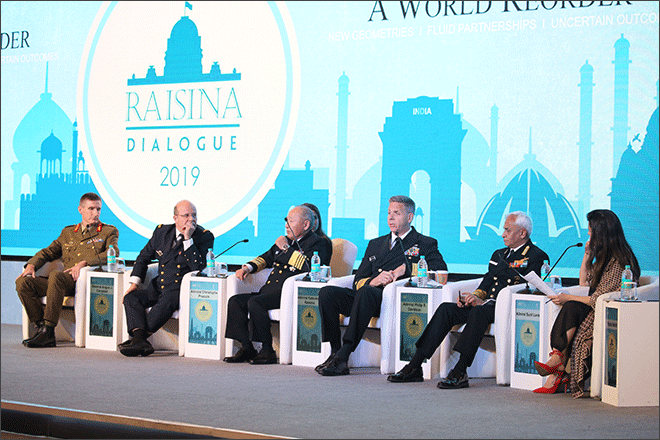
India in vanguard of new order: Raisina 2019

This year’s Raisina Dialogue looked ahead of the disruptions that have agitated global politics for the past few years and interrogated what they mean for an emerging world order. As the international system rapidly drifts away from the moorings of its Atlantic origin, its future will be decided by the complex interactions among new actors, voices and demands. After a period of relative unipolarity at the turn of the century, we are entering a world that is not only multipolar but also ‘multiconceptual’.

Why multiconceptual? For one thing, the concentration of economic wealth is “relentlessly shifting eastwards,” as noted by Mark Sedwill, the UK’s National Security Adviser. This transformation will certainly create new ‘poles’ of power—India and China chief among them. It will simultaneously diminish the influence of extant powers. Spain’s Minister for Foreign Affairs Joseph Borell alluded to this reality when he called on Europe to “influence or be influenced”.

Beyond the diffusion of economic power, the world is also grappling with an explosion of new actors, values and interests—from powerhouse cities to powerful multinationals and networked civil society groups.

This global complexity is straining the ability of the international community to adapt and respond to the momentous social and economic transformations that are currently underway. Every year, dire warnings about the impact of climate change pass by unheeded. The global economy is being increasingly driven by digitisation and associated technologies, with returns accruing mainly to owners of capital. Economic opportunities and jobs for millions, on the other hand, are being lost to automation. Meanwhile, our institutions of governance are struggling to address tensions of inequality and identity.

Around the world societies are responding by taking solace in national solutions and populist prescriptions that promise to put local concerns ahead of global ones. Perhaps it is only natural that a period of geopolitical flux should coincide with a renewed emphasis on the power and authority of the state. The consequences of this trend for international norms and institutions, however, are dire. “The insecurity felt by millions will weaken respect for international law and institutions, human rights and the principles of collective security,” warned Norwegian Prime Minister Erna Solberg as she inaugurated the 2019 Raisina Dialogue.

Quad plus one, Quad, Indo-Pacific, Raisina, Raisina Dialogue

More worryingly, the perception of exclusion reduces our collective capacity to arrive at a consensus. And in a world that is more interdependent—and more fragile—than ever before, finding solutions requires more, not less, international cooperation. How can multilateralism, then, be made relevant in a multiconceptual world?

To start with, we certainly require a new international framework to capture the diversity of reality, views and voices that exist today. Minister for External Affairs Sushma Swaraj said as much when she suggested that key public policy questions be asked in “villages and small towns, to school classrooms, and to vernacular media outlets.” She was alluding to the fact that the international system requires a new consensus which is more inclusive and diverse. It also requires a new ethos defined by the common interests and urges of the many, rather than the shared objectives and strategies of a few.

Second, the international community requires a new ‘new deal’. This is true both domestically and for global governance. The Washington Consensus is no longer relevant in the fourth industrial revolution. The twin forces of globalisation and technological change will create new winners even as they leave many behind. Designing inclusive economic models will require new policies capable of balancing sovereign compulsions and global interdependence. They will also require unlikely partnerships at the global level. There is no reason, for example, that the NATO and the SCO cannot have influential conversations on the Indo-Pacific or Afghanistan or, for that matter, the BRICS and the G7 cannot harmonise their diverse economic models and expectations from a global trading regime.

Raisina Dialogue, Raisina 2019, Showstopeer, Samir Saran
Source: PhotoLabs@ORF

Third, new coalitions and partnerships must emerge. French Secretary-General for European and Foreign Affairs Maurice Gourdault-Montagne said “issues based alliances will proliferate if the international order continues to fragment.” However, such coalitions, especially between those with shared values and interests, have a role to play in supporting the international order in its period of transition. Australian Minister for Foreign Affairs Marise Payne saw such potential in India, a country with which Australia could support a “rules-based order”. Such coalitions must be able to cut across geographies, issues and interests.

Fourth, global governance must account for new actors. Over 60 per cent of the world’s GDP is now generated in cities. The market capitalisation of the largest technology companies far exceeds the GDP of even significant countries. By this reckoning, Apple is bigger than Saudi Arabia. Solutions to big-ticket challenges like climate change and the future of work may well emerge from these networks of power and other key voices like think tanks and civil society organisations. Instituting new mechanisms for dialogue between such actors can create more effective global feedback loops.

Fifth, international institutions must reclaim some legitimacy. In the middle of the 20th century, the organising principle of ‘one country-one vote’ in international affairs resonated with many post-colonial societies. While global institutions have rarely proved truly democratic, it is evident that the key to legitimacy is a real distribution of decision making authority amongst stakeholders. India’s Foreign Secretary Vijay Gokhale warned that the “tussle between unilateralism and multilateralism” would continue unless international steering mechanisms are able to better capture today’s global realities.

Sixth, the international community must embrace informality. Formal global institutions can often be ineffective in responding to challenges that are sudden and complex. Informal coalitions and governance models, on the other hand, can summon the human and technological capital that is required to collaborate at scale. The global climate change agenda, for instance, is being quietly led by coalitions of cities from the global north and the global south. They are rapidly scaling and transferring innovation, ideas, resources and capital.

Seventh, the innocent appreciation of technology being benevolent and beneficial has changed the world over. Technology is now both a tool and an actor that can dramatically enhance quality of life and radically destabilise societies and nations. Foreign Secretary Gokhale captured the essence of this juxtaposition by suggesting that the rapid development of social sciences alongside science and technology is a prerequisite for ensuring that innovation benefits humankind. A new ethic of human engagement awaits discovery.

Last, though not the least, it is worth noting that securing geopolitical stability and protecting multilateralism will certainly require new stewardship. It is increasingly likely that in the coming years India will be a prime candidate for this role, even if only because India is a microcosm of the world at large. Rapid technological advances, a booming labour force and the imperative to develop in a resource-constrained world will define the ‘India story’ and, in turn, impact the future of billions in the developing world. Thus India presents a unique opportunity as an arena to resolve many of the world’s contradictions.

Raisina, Raisina Dialogue, Raisina 2019, Anwar Ibrahim, Malaysia
Source: PhotoLabs@ORF

India is a post-colonial state that has emerged as a vocal proponent of a liberal, rules-based international order. It is located at the intersection of Eurasia and the Indo-Pacific, two regions that will define the 21st century. And it has always been willing to navigate complexity by seeking shared objectives. Very few countries, for example, can claim to engage with powers like Russia and China while embracing a strategic partnership with the US. As Minister Swaraj noted in her address, “India’s engagement with the world is rooted in its civilisational ethos: co-existence, pluralism, openness, dialogue and democratic values.”

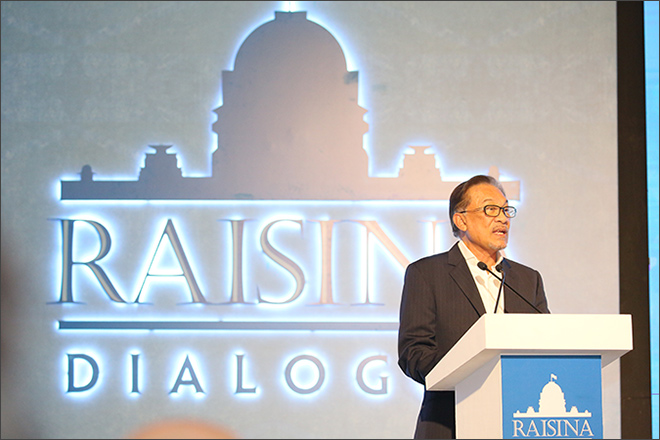
It is for this very reason that Dato Seri Anwar Ibrahim described India as “an enigma.” In many ways, the annual Raisina Dialogue is an attempt to deconstruct what makes it so and why this is relevant to the world. The feedback we have received from world leaders in the fields of politics, industry, media and civil society makes it clear that India’s choices matter more than ever before. Increasingly, the conversations that take place at the Raisina Dialogue are not only teasing out an Indian consensus on world affairs but a larger consensus capable of shaping a less unstable, more predictable world reorder.

Standard
economy, Gender, Gender Issues, Health care, Indian Defence, Public Health, Sustainable Development

ORF takes on the budget

Budget 2019, budget, interim budget, healthcare, education, cyber security, defence modernisation, economic diplomacy, gender issues, India, Oommen C. Kurian, Bedavyasa Mohanty, Ameya Kelkar, Samir Saran, Antara Sengupta, Vidisha Mishra, Mission for Protection and Empowerment for Women, Gender Responsive Budgeting, Pradhan Mantri Mudra Yojana, Ujjawala Yojana, Higher Education Financing Agency, higher education, Sustainable Development Goals, National Education Mission, Samagra Siksha Abhiyan, development finance, Indian Overseas Direct Investment, Indo-Pacific, BIMSTEC, IORA, Maldives, Chabahar, development partnerships, Indian military, Chinese military, defence modernisation, defence budget, Digital India, National Strategy for Artificial Intelligence, NITI Aayog, automation technologies, PMJAY, Ayushman Bharat

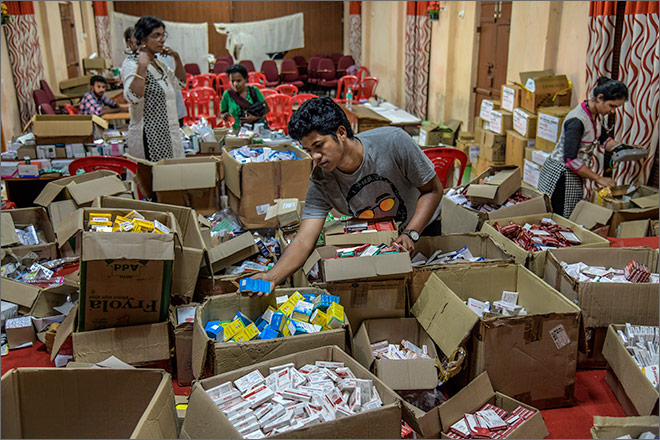
The allocation for health of around INR 63,540 crore is about a 13% increase from last year. Much of it has been to PMJAY, the flagship scheme of the government, which saw allocation rise from INR 2,400 crore last year to INR 6,400 crore in the interim budget. Ayushman Bharat’s second arm, the HWCs also got considerable hike in budget allocation — from INR 1,200 crore to INR 1,600 crore. FSSAI as well as the National AIDS Programme have also seen improvements in allocation.

Budget 2019, budget, interim budget, healthcare, Oommen C. Kurian, PMJAY, Ayushman Bharat, India
Photo: Atul Loke/Getty

However, an exclusive focus on PMJAY can result in a possible de-prioritisation of core health system functions, with slow-down or reduction of allocations under various heads, including NHM. Capital outlay on medical and public health, for example, has come down from 3047.67 crore in 2017-18 (actual) to 2391.33 crore in 2018-19 (RE) to 1675.90 crore in 2019-20. This can potentially impact health system’s capacity to expand in areas that need health services the most. Neglected areas can remain neglected unless there is specific focus. The budget document stated that of the 3,508 HWCs already operational, only 582 are in the aspirational districts, or the districts lagging in health development.


An exclusive focus on PMJAY can result in a possible de-prioritisation of core health system functions, with slow-down or reduction of allocations under various heads, including National Health Mission.


Lastly, it is easy to celebrate the INR 6,400 crore allocation, meant for around 50 crore PMJAY members. Still, the money allocated remains around INR 1,000 crore short of a conservative estimate of PMJAY spending this year. To put things in perspective, healthcare coverage to just around 35 lakh CGHS beneficiaries will cost the exchequer INR 3,000 crore, of which INR 2,850 crore was allocated in the interim budget. In addition, delays in payment of sanctioned amounts undermining efficiency of PMJAY remains a real risk, as with many health schemes. As of now, reports indicate that of the INR 2,400 crore allocated last year for PMJAY by the MoF, INR 1,000 crore has yet not been released, and that there are outstanding payments from the Centre to the States amounting to INR 1,700 crore under PMJAY. This can potentially impact the sustainability and effectiveness of the scheme.

It was decided by the government that India’s government health spending will be 2.5% of its GDP by 2025. At the current pace, it will be impossible. As a percentage share of total budget, the interim budget outlay on health was just 2.2%, below the figure in 2017-18, where the proportion of health outlay peaked under the Modi regime at 2.4%. Health in India needs significant additional resources, and not reallocation of existing resources. Ayushman Bharat becoming the flagship health initiative cannot and should not lead to a case of the government missing the forest for the trees. Without expansion of real health infrastructure, Ayushman Bharat will be just band-aid.


AI and automation technologies

Bedavyasa Mohanty

Budget 2019, budget, interim budget, cyber security, Bedavyasa Mohanty, Digital India, National Strategy for Artificial Intelligence, NITI Aayog, automation technologies

The Union Budget 2019 signals early forays into artificial intelligence by the Indian government with the announcement that a National Centre on AI will soon be set up. This centre will presumably work in close coordination with Centres of Research Excellence in Artificial Intelligence (COREs) that were first proposed by the NITI Aayog in its discussion paper: National Strategy for Artificial Intelligence. While the NITI Aayog identified five areas primed for AI intervention, namely healthcare, agriculture, education, smart cities and smart mobility, the Union Budget speech hints that four more priority areas have been identified.

In a manner now idiosyncratic of the Modi government, the Minister of Finance also announced plans for the creation of an ‘national AI portal.’ Details of what this portal will achieve or what it will be meant for remain unclear. Also missing from the budget are critical details around the quantum of investment in AI and automation technologies that are being planned.


Conspicuously missing from the budget are any references to digital payments or cyber security — both strong protagonists in Modi’s Digital India.


The Finance Minister’s speech also revealed ambitious plans to digitise one lakh villages over the next five years as a part of the Digital India programme by providing WiFi access to these villages. This initiative will be spearheaded by the Common Service Centres that now serve as nodal points of delivery for public utility services.

Conspicuously missing from the budget though are any references to digital payments or cyber security — both strong protagonists in Modi’s Digital India. This absence will likely be felt by Indian tech companies who for a few years now have been demanding economic relief for domestic players to level the playing field and compete with the seemingly limitless cash inflow that US and Chinese tech startups seem to be riding on.


Indian defence

Ameya Kelkar

Budget 2019, budget, interim budget, defence modernisation, Ameya Kelkar, Indian military, Chinese military, defence budget
Navy Day 2018. Source: Press Trust of India

While the defence budget has been pegged at INR 3.05 lakh crore, an increase in absolute terms, the percentage of the GDP used for India’s defence for the year 2019-2020 remains at the measly 1.5% mark, still very low for any effective modernisation to take place. The interim finance minister, in his budget speech, has stated that the current defence personnel will see a rise in the Military Service Pay (MSP), while at the same time allocating funds for special allowances of Air Force and naval personnel who are stationed in high-risk zones. Apart from this funding of the military, the government has also earmarked a separate INR 35,000 crore as part of its OROP pension payments, in line with the BJP election manifesto. However, this defence budget still does not take into account the modernisation needs of the country, pegging only INR 1.08 lakh crore for new weapon systems, while the day-to-day expenses have been given a budget of INR 2.10 lakh crore.

This budget, while being touted as the largest increase in the defence budget of India, still reveals the fact that the Indian military is not being given enough room to upgrade its current equipment to keep pace with the rapid modernisation of the Chinese military. The budget highlights the fact that the government is only willing to keep its military functioning at the level it already is, not taking into account the asymmetry between itself and its neighbours in terms of both technology and equipment possessed. While there is no doubt that this year’s budget is a step forward in the right direction with more money being pooled in the upkeep of the military, serious attention needs to be paid to the slow speeds of modernisation of the military’s resources, which will prove to be a major factor in the coming years, in a time where the Chinese have begun downsizing and modernising and indigenising their equipment to meet the new threats of both the present and the future.


This budget, while being touted as the largest increase in the defence budget of India, still reveals the fact that the Indian military is not being given enough room to upgrade its current equipment to keep pace with the rapid modernisation of the Chinese military.


Towards economic diplomacy

Samir Saran

Budget 2019, budget, interim budget, economic diplomacy, Samir Saran, development finance, Indian Overseas Direct Investment, Indo-Pacific, development partnerships, Modi, Narendra Modi
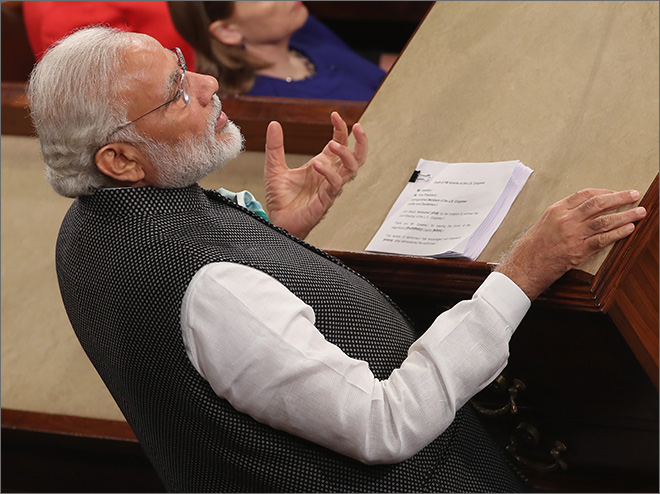
Prime Minister Narendra Modi addresses a joint session of the United States Congress at the US Capitol, 8 June 2016, Washington, DC. Photo: Mark Wilson/Getty

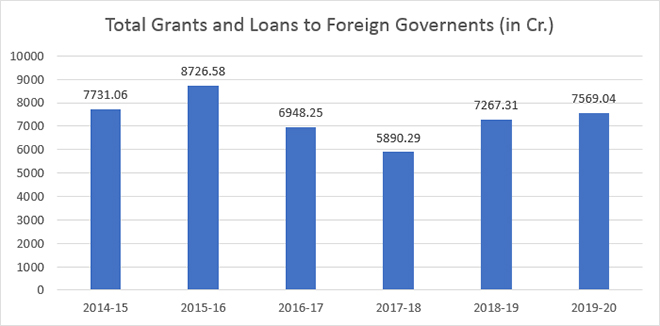
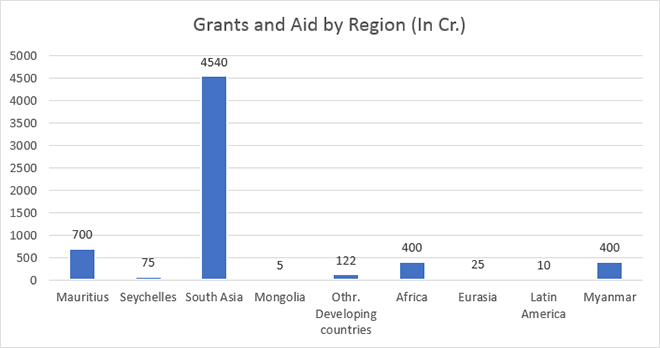
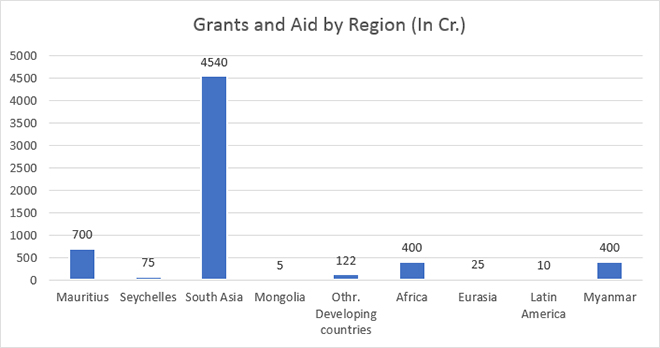
Compared to an allocation of INR 12,620 crore in 2014-15, the overall grant to the MEA in 2018-19 is INR 16,061 crore.

India’s allocation towards economic diplomacy has steadily crossed the USD 1 billion mark.With India already contributing nearly 15% to global growth, it must interrogate the consequences of its development partnerships more closely as allocations rise over the next decade.

Two notable heads this year are aid to the Maldives and the Chabahar port. Following the establishment of a friendlier government in Male, India has more than quintupled its aid to Maldives — from INR 109 crore in 2018-19 in the original estimate, to INR 440 crore in the revised 2018-19 estimate, and to INR 575 crore this year. And continuing a new practice from last year, India has allocated INR 150 crore for the development of the Chabahar port.

These investments reveal India’s crucial connections to both the Indo-Pacific and the Eurasian landmass. However, while South Asian states receive the bulk of India’s economic assistance, India’s aid to Eurasia stands at INR 25 crore this year.

India’s investments in regional institutions also remains unfortunately low: INR 8 crore each for the SAARC and BIMSTEC Secretariat. While the BIMSTEC budget has doubled over the past two years, it remains insufficient to create effective human or technical capacity in the institution.

Over all, the 2019-20 Budget makes clear that India must recalibrate its approach to economic diplomacy in the region, especially given its domestic constraints.

For one thing, India must begin to identify priority sectors and States — especially in the Indo-Pacific and Eurasia. Development projects that create social and economic value for local communities and where India has a comparative advantage will be key. Supporting institutions like BIMSTEC and the IORA will also be important.

Second, convincing India’s private sector to invest in the infrastructure needs of developing countries will also be crucial. Indian Overseas Direct Investment in developing countries is still limited. Budgetary support by way of concessional financing for Indian companies investing in strategic infrastructure projects abroad also remains low.

Third, India’s concessional LoC framework must be made more competitive and transparent. Many privately admit that loans are arbitrarily granted to a select few Indian actors. There is also little available data on the economic benefits that accrues to India.

Fourth, plugging India’s capital gap will require imaginative collaboration with international donors. India must explore multilateral cooperation mechanisms with the US, the EU, Japan and Australia have all announced new economic initiatives in the Indo-Pacific and Eurasia.

Given that India will emerge as one of the largest sources of development finance in the coming years, it is time for the Government to release a white paper on how development partnerships can advance India’s economic and strategic interests.


Education: Less money to State institutes and technical colleges

Antara Sengupta

Budget 2019, budget, interim budget, education, Antara Sengupta, Higher Education Financing Agency, higher education, Sustainable Development Goals, National Education Mission, Samagra Siksha Abhiyan, India
Source: Getty

The Interim Budget 2019 allocated INR 93,847.64 crore to education, which is although the largest till date with about a 10% increase from last year’s budget allocation — it is still only about 3.3% of the GDP. While the increase in allocation is a good sign, it has again failed to target the recommended 6% of the GDP required for India to inch closer to the Agenda 2030 of Sustainable Development Goals of the UN. Unlike last year, this year’s budget speech gave little importance to education as a priority sector for the economic development of the country.

Of the total budgetary allocation, school education yet again received the highest revenue of INR 56,386.63 crore, up from 50,000 crore in 2018-19. The National Education Mission (which comprises the Samagra Siksha Abhiyan for school education from pre-primary to class 12 and teacher training programmes) saw the maximum outlay of INR 36,472 crore, up from INR 31,212 crore in 2018-19. Although this is an increase, it is not enough to address the issues in school education, which has a massive near-perfect enrollment rate. Allocation to mid-day meal scheme that is known to increase attendance and improve health among children has seen paltry increase of INR 500 crore from last year. Most disheartening is to see a reduced outlay of about INR 87 crore for central schemes such as National Scheme for Incentive to Girl Child for Secondary Education, National Means cum Merit Scholarship Scheme, National Award to Teachers and Digital India e-learning.


While the increase in allocation is a good sign, it has again failed to target the recommended 6% of the GDP required for India to inch closer to the Agenda 2030 of Sustainable Development Goals of the UN. Unlike last year, this year’s budget speech gave little importance to education as a priority sector for the economic development of the country.


As for higher education, it has yet again failed to garner the attention of the policymakers. This year’s interim budget allocated INR 37,461 crore, which is a small increase of about INR 2,000 crore for 903 universities, 39,050 colleges and 10,011 standalone institutions in the country. Fund allocations to statutory bodies like UGC, AICTE, have decreased, which means lesser money to state institutes and technical colleges. Rashtriya Uchchatar Shiksha Abhiyan (RUSA), which funds all the State universities and colleges has seen an allocation of INR 2,100 crore, which is about INR 700 crore more from last year. This is highly insufficient for the upgrade of educational institutes in the States that are in a pitiable condition. To fund major infrastructural projects through loan grants, last year Higher Education Financing Agency (HEFA) was allocated INR 2,750 crore, however that too has been reduced to INR 2,100 crore this year. HEFA also funds capital expenditure of the elite institutes that have been asked to allow 10% EWS quota and increase their intake capacity by 25%. These will need major revenue boost, that seems impossible from the current budget outlay. Fund allocation to central universities too have been reduced. The only major improvement in higher education seems to be the increase in salary scale for professors and funds allocated to research and innovation activities.


Greater gender integration, but decline in women-specific schemes

Vidisha Mishra

Budget 2019, budget, interim budget, gender issues, Vidisha Mishra, Mission for Protection and Empowerment for Women, Gender Responsive Budgeting, Pradhan Mantri Mudra Yojana, Ujjawala Yojana, India

In the last budget before the national elections, Prime Minister Narendra Modi’s government pitched for transforming “women’s development to women-led development.” Adopted on the evidence-backed premise that gender-neutral policies lead to gender-unequal outcomes, India formally adopted Gender Responsive Budgeting (GRB) in 2005. Every budget since has included a statement that lists out two parts — Part A, which reflects ‘Women Specific Schemes’ which have 100% allocation for women, and Part B, which reflects ‘Pro Women Schemes’ where at least 30% of the allocation is for women.

On Friday, interim finance minister Piyush Goyal proposed to increase the budget allocation for the Mission for Protection and Empowerment for Women from INR 121,961 crore in 2018-19 to INR 131,700 crore for 2019-20, reflecting an overall increase of INR 174 crore. The mainstreaming of gender budgeting across sectors is demonstrable in the fact that more than 70% of beneficiaries of the Pradhan Mantri Mudra Yojana, which offers financial support to small and micro enterprises, were women. Similarly, the Ujjawala Yojana, which has already provided 6 crore free LPG connections, and aims to provide another 2 crore free connections by next year, has a very direct impact on homemakers, especially in rural areas. Further, an increase in budgetary allocation of schemes such as the National Rural Livelihood Mission (INR 4,512 crore), MGNREGA (INR 20,000 crore) and the PM’s employment generation programme (INR 2,327 crore) is also reflected in the gender budget.

The recognition of the cross-cutting nature of gender concerns and their firm integration in fiscal policies is good news. At the same time, it is noteworthy that the budgetary allocation on “women-specific schemes” has declined from INR 4,271.09 crore (budget estimates/BE) to INR 2,573.66 crore (revised estimates/RE) in 2018-19. Hence, an overall increase in the gender budget does necessarily translate into higher spending on women without careful implementation and gender audits.

Standard

More than three years after the Paris Agreement was finalised at COP21, it is evident that the developing world is unlikely to receive even the modest amount of US$100 billion annually in climate finance by 2020. This is primarily a result of the collective failure of the developed world to meet their moral and real climate obligations that pre-date the Paris Agreement. This lack of finance for climate action is exacerbated by the fact that the international financial community—banks, asset managers, investors and capital markets—have failed to align their operations with the goals of the Paris Agreement. The involvement of international financial investors, both private and multilateral, in financing green transitions in developing countries has so far been feeble, sporadic and arbitrary. Unless these resources can be leveraged to cater to the development needs of emerging economies, there is a real possibility that the green transitions that we all seek will be incomplete and mostly underwritten by the world’s poorest citizens.

For the past two years, ORF and the MacArthur Foundation have attempted to create a new framework to ensure that the global financial community better responds to the imperatives of the Paris Agreement. Our research acknowledges that official aid and grants are insufficient to meet the burgeoning energy and infrastructure needs of emerging economies. There is no doubt that we require new financial instruments and pipelines to support sustainable development in much of the world. This publication, comprising of 11 policy essays on the subject of climate finance, discusses this objective through multiple lenses. It is a culmination of our efforts to work with a global network of experts and stakeholders to identify bottlenecks and provide new solutions to ensure that emerging economies can access finance to meet their green development goals.

Our series on financing green transitions has largely focused on India, and for good reason: It will be the first large country that must transition to a middle-income economy in a fossil fuel-constrained world. India is also constricted by the same political, regulatory and financial challenges that confront much of the developing world. Given the weak efforts of the developed world to assist the developing countries so far, India has had to chart a path largely through its own economic and financial arrangements. Therefore, an assessment of India’s capacity to now leverage international financial flows and its ability to undertake a low-carbon transition may well provide a reliable template for developing countries to emulate.

Through 11 essays, we explore three broad themes: the role of international investors and institutions; India’s own development policy choices and lessons therein for other developing countries; and the role of human capital in climate-resilient investment.

Our first set of essays analyses the behaviour and financial practises of international financial institutions, investors and credit rating organisations. In “An Incomplete Transformation”, Mihir Sharma argues that Multilateral Development Banks have failed to create bridges between private capital and clean energy/climate resilient infrastructure demands in developing countries. He calls on MDBs to adapt to developing world priorities, crowd-in private capital, and streamline operational activities in emerging economies. In “Financing Climate Resilience”, Vikrom Mathur and Aparna Roy highlight the bias of international investors towards investing mostly in mitigation efforts. Conventional wisdom in the private sector holds that the costs of adaptation and resilience should be borne by governments. Taking a different approach to the problem, Mathur and Roy offer solutions focused on commercial and business opportunities. In two pieces, “Rating Resilience” and “Ratings for Renewable Energy”, Aled Jones studies the limitations of current literature and practices relating to credit rating of infrastructure projects and renewable energy projects and proposes a more holistic framework of risk metrics for both renewable energy and climate resilient infrastructure. Finally, in “The Political Economy of Basel”, Mihir Sharma outlines how the Basel norms have been designed to respond to the interests of a select group of developed nations. He argues that by prioritising macroeconomic stability and implementing new liquidity restrictions, these actors have failed to consider adverse implications on cross-border flows, especially with regards to long-term green investments.

The next set of essays focuses on India’s domestic challenges, particularly in its infrastructure and urban development policy and its efforts to transition to a low-carbon economy. In “PPP model, regulatory oversight and private financing: Evolutionary trinity of India’s infrastructure”, Gautam Chikermane offers a comprehensive historical account of the political economy of India’s infrastructure policy, documenting the many failures that have plagued it. Given that a stable infrastructure policy will have significant implications for green investment choices, Chikermane’s study of India’s policy failures provides valuable lessons. In “Financing Urban Infrastructure for an Evolving India”, Pritika Hingorani, Sharmadha Srinivasan, and Harshita Agarwal examine the reasons for the lack of private-sector involvement in India’s climate-resilient urban infrastructure. They analyse the current regulatory regime for urban infrastructure in India and provide a set of solutions, advancing both public and private sector participation in the future. In “Moving from Growth to Development: Financing Green Investment in India”, Neha Kumar, Prashant Vaze and Sean Kidney explore new financial instruments that India can employ to finance its green infrastructure needs. They outline how India can more effectively scale its green bonds market, leverage international debt capital markets, and harness blended finance to achieve this objective. Finally, in “India and the World,” Aparajit Pandey and I outline three key structural barriers that threaten to undermine India’s rapidly growing green energy sector: the state of its distribution companies, underdeveloped financial markets and inflexible international credit and risk assessment practices. Offering case studies from India’s state and municipal level policies, we argue that India’s ability to succeed in its low-carbon transition will open new pathways for emerging economies around the world.

In our final set of essays, we examine the role of human capital in enabling greater green investment, focusing on leadership and gender. In “Pay for Sustainable Growth”, Charanjit Singh, analyses the executive pay of 31 of India’s top companies showing that by linking management compensation to short-term performance objective, companies are failing to integrate sustainability objectives into their long-term vision. The chapter proposes a restructuring of the private sector’s approach to executive compensation, focused on long-term sustainable economic growth. Lastly, in “Gender and Climate Finance,” Vidisha Mishra posits that even though women and marginalised groups are likely to be more exposed to climate change related risks, they are severely underrepresented in the investment and regulatory classes. Her essay then unpacks the opportunities and benefits of meaningfully building gender concerns into climate finance mechanisms.

Our contributors have attempted to explore the reasons behind the significant shortfall in private finance in relation to low-carbon investments. They have also collectively offered solutions, both domestic and international, with regards to the flow of finance for climate projects. The success of these solutions, however, will be predicated on some boundary conditions that developing economies and the international financial community must meet.

First, developing countries must reclaim the power grid. The large-scale subsidisation of power in the developing world has created significant distortions in energy use, pricing and policy. State-level reform in India suggests that splitting the electrical grid for agricultural and non-agricultural sectors, implementing a credible metering system and providing subsidies as direct benefits can have significant positive effects on the power sector. Without a viable grid, green investments are likely to remain unviable.

The second is to build capacity amongst international investors to understand risk and opportunity in developing states. There is generally a bias stemming from lack of knowledge (information) and capacity (human resources) to assess risks in emerging economies. This ultimately translates into an inability to understand the economic landscape of recipient countries. Further, as one of our authors has highlighted, there are few institutional attempts at gendering climate investments and finance. A lack of female representation in the investor community, especially from the developing world, invariably means that the concerns and voices of the most vulnerable are ignored as financial plans are scripted.

Third, developing countries must build innovative policy tools to leverage new financial instruments and mechanisms. Currently, regulations related to debt and equity markets restrict the flow of international capital into climate action projects. Emerging economies must co-opt their financial sector in the fight against climate change. Financial markets that allow for debt financing and locally issued green bonds for example create a diverse set of instruments that different types on investors can rely on. More ambitious measures can include the creation of a “green investment bank,” which allow the crowding in of private investment in green assets.

Finally, there is a new imperative to overhaul regulatory systems around the world, both in recipient and investing states. Vast pools of money are held by multiple categories of investors, such as pension funds and insurance companies. However, existing regulations limit the ability of fund managers to invest in climate related projects. Further, international credit rating agencies reassess the methodology for assessments of green projects in developing countries. And perhaps most importantly, there is an urgent need to review the current set of Basel Accords as well as the next iteration of Basel IV accords. The macro-prudential regulations were designed to create a more risk-free international banking system but have unintentionally stymied the ability of the financial sector to contribute to climate resilience. The banking community must acknowledge that planetary risk is the largest systemic challenge to financial stability and that mitigating such risk is the most prudential practice.

While these solutions are far from comprehensive, they address some of the most persistent structural barriers to supplying and accessing climate finance. ORF and the MacAuthur Foundation will continue to explore new ways and means to ensure that developing countries can access financing to pursue their low-carbon transitions. We will also continue to study India’s own financial, technological and governance solutions in the hope that these experiences can benefit other countries and communities. We hope that the insights presented in this book will inform academics, business leaders and policymakers in their efforts to better understand the importance of the global financial community finally signing the Paris Agreement.

Read here – orfonline.org/research/financing-green-transitions-47553/

Books, Environment, Research, Writing

Financing Green Transitions

Image
Uncategorized

Financing Green Transitions


Climate Action,COP 21,Financing Green Transitions,Paris Agreement

Financing Green Transitions

More than three years after the Paris Agreement was finalised at COP21, it is evident that the developing world is unlikely to receive even the modest amount of US$100 billion annually in climate finance by 2020. This is primarily a result of the collective failure of the developed world to meet their moral and real climate obligations that pre-date the Paris Agreement. This lack of finance for climate action is exacerbated by the fact that the international financial community—banks, asset managers, investors and capital markets—have failed to align their operations with the goals of the Paris Agreement. The involvement of international financial investors, both private and multilateral, in financing green transitions in developing countries has so far been feeble, sporadic and arbitrary. Unless these resources can be leveraged to cater to the development needs of emerging economies, there is a real possibility that the green transitions that we all seek will be incomplete and mostly underwritten by the world’s poorest citizens.

For the past two years, ORF and the MacArthur Foundation have attempted to create a new framework to ensure that the global financial community better responds to the imperatives of the Paris Agreement. Our research acknowledges that official aid and grants are insufficient to meet the burgeoning energy and infrastructure needs of emerging economies. There is no doubt that we require new financial instruments and pipelines to support sustainable development in much of the world. This publication, comprising of 11 policy essays on the subject of climate finance, discusses this objective through multiple lenses. It is a culmination of our efforts to work with a global network of experts and stakeholders to identify bottlenecks and provide new solutions to ensure that emerging economies can access finance to meet their green development goals.

Our series on financing green transitions has largely focused on India, and for good reason: It will be the first large country that must transition to a middle-income economy in a fossil fuel-constrained world. India is also constricted by the same political, regulatory and financial challenges that confront much of the developing world. Given the weak efforts of the developed world to assist the developing countries so far, India has had to chart a path largely through its own economic and financial arrangements. Therefore, an assessment of India’s capacity to now leverage international financial flows and its ability to undertake a low-carbon transition may well provide a reliable template for developing countries to emulate.

Through 11 essays, we explore three broad themes: the role of international investors and institutions; India’s own development policy choices and lessons therein for other developing countries; and the role of human capital in climate-resilient investment.

Our first set of essays analyses the behaviour and financial practises of international financial institutions, investors and credit rating organisations. In “An Incomplete Transformation”, Mihir Sharma argues that Multilateral Development Banks have failed to create bridges between private capital and clean energy/climate resilient infrastructure demands in developing countries. He calls on MDBs to adapt to developing world priorities, crowd-in private capital, and streamline operational activities in emerging economies. In “Financing Climate Resilience”, Vikrom Mathur and Aparna Roy highlight the bias of international investors towards investing mostly in mitigation efforts. Conventional wisdom in the private sector holds that the costs of adaptation and resilience should be borne by governments. Taking a different approach to the problem, Mathur and Roy offer solutions focused on commercial and business opportunities. In two pieces, “Rating Resilience” and “Ratings for Renewable Energy”, Aled Jones studies the limitations of current literature and practices relating to credit rating of infrastructure projects and renewable energy projects and proposes a more holistic framework of risk metrics for both renewable energy and climate resilient infrastructure. Finally, in “The Political Economy of Basel”, Mihir Sharma outlines how the Basel norms have been designed to respond to the interests of a select group of developed nations. He argues that by prioritising macroeconomic stability and implementing new liquidity restrictions, these actors have failed to consider adverse implications on cross-border flows, especially with regards to long-term green investments.

The next set of essays focuses on India’s domestic challenges, particularly in its infrastructure and urban development policy and its efforts to transition to a low-carbon economy. In “PPP model, regulatory oversight and private financing: Evolutionary trinity of India’s infrastructure”, Gautam Chikermane offers a comprehensive historical account of the political economy of India’s infrastructure policy, documenting the many failures that have plagued it. Given that a stable infrastructure policy will have significant implications for green investment choices, Chikermane’s study of India’s policy failures provides valuable lessons. In “Financing Urban Infrastructure for an Evolving India”, Pritika Hingorani, Sharmadha Srinivasan, and Harshita Agarwal examine the reasons for the lack of private-sector involvement in India’s climate-resilient urban infrastructure. They analyse the current regulatory regime for urban infrastructure in India and provide a set of solutions, advancing both public and private sector participation in the future. In “Moving from Growth to Development: Financing Green Investment in India”, Neha Kumar, Prashant Vaze and Sean Kidney explore new financial instruments that India can employ to finance its green infrastructure needs. They outline how India can more effectively scale its green bonds market, leverage international debt capital markets, and harness blended finance to achieve this objective. Finally, in “India and the World,” Aparajit Pandey and I outline three key structural barriers that threaten to undermine India’s rapidly growing green energy sector: the state of its distribution companies, underdeveloped financial markets and inflexible international credit and risk assessment practices. Offering case studies from India’s state and municipal level policies, we argue that India’s ability to succeed in its low-carbon transition will open new pathways for emerging economies around the world.

In our final set of essays, we examine the role of human capital in enabling greater green investment, focusing on leadership and gender. In “Pay for Sustainable Growth”, Charanjit Singh, analyses the executive pay of 31 of India’s top companies showing that by linking management compensation to short-term performance objective, companies are failing to integrate sustainability objectives into their long-term vision. The chapter proposes a restructuring of the private sector’s approach to executive compensation, focused on long-term sustainable economic growth. Lastly, in “Gender and Climate Finance,” Vidisha Mishra posits that even though women and marginalised groups are likely to be more exposed to climate change related risks, they are severely underrepresented in the investment and regulatory classes. Her essay then unpacks the opportunities and benefits of meaningfully building gender concerns into climate finance mechanisms.

Our contributors have attempted to explore the reasons behind the significant shortfall in private finance in relation to low-carbon investments. They have also collectively offered solutions, both domestic and international, with regards to the flow of finance for climate projects. The success of these solutions, however, will be predicated on some boundary conditions that developing economies and the international financial community must meet.

First, developing countries must reclaim the power grid. The large-scale subsidisation of power in the developing world has created significant distortions in energy use, pricing and policy. State-level reform in India suggests that splitting the electrical grid for agricultural and non-agricultural sectors, implementing a credible metering system and providing subsidies as direct benefits can have significant positive effects on the power sector. Without a viable grid, green investments are likely to remain unviable.

The second is to build capacity amongst international investors to understand risk and opportunity in developing states. There is generally a bias stemming from lack of knowledge (information) and capacity (human resources) to assess risks in emerging economies. This ultimately translates into an inability to understand the economic landscape of recipient countries. Further, as one of our authors has highlighted, there are few institutional attempts at gendering climate investments and finance. A lack of female representation in the investor community, especially from the developing world, invariably means that the concerns and voices of the most vulnerable are ignored as financial plans are scripted.

Third, developing countries must build innovative policy tools to leverage new financial instruments and mechanisms. Currently, regulations related to debt and equity markets restrict the flow of international capital into climate action projects. Emerging economies must co-opt their financial sector in the fight against climate change. Financial markets that allow for debt financing and locally issued green bonds for example create a diverse set of instruments that different types on investors can rely on. More ambitious measures can include the creation of a “green investment bank,” which allow the crowding in of private investment in green assets.

Finally, there is a new imperative to overhaul regulatory systems around the world, both in recipient and investing states. Vast pools of money are held by multiple categories of investors, such as pension funds and insurance companies. However, existing regulations limit the ability of fund managers to invest in climate related projects. Further, international credit rating agencies reassess the methodology for assessments of green projects in developing countries. And perhaps most importantly, there is an urgent need to review the current set of Basel Accords as well as the next iteration of Basel IV accords. The macro-prudential regulations were designed to create a more risk-free international banking system but have unintentionally stymied the ability of the financial sector to contribute to climate resilience. The banking community must acknowledge that planetary risk is the largest systemic challenge to financial stability and that mitigating such risk is the most prudential practice.

While these solutions are far from comprehensive, they address some of the most persistent structural barriers to supplying and accessing climate finance. ORF and the MacAuthur Foundation will continue to explore new ways and means to ensure that developing countries can access financing to pursue their low-carbon transitions. We will also continue to study India’s own financial, technological and governance solutions in the hope that these experiences can benefit other countries and communities. We hope that the insights presented in this book will inform academics, business leaders and policymakers in their efforts to better understand the importance of the global financial community finally signing the Paris Agreement.

Standard