The world is in a state of disorder.

As we approach the end of the second decade of the twenty-first century, all about us is chaos. The rise of the East is viewed with scepticism and fear by the West. The international liberal order is facing a moment of crisis. With Darwinism (or the survival of the strongest and fittest) having guided the construction and management of international systems of governance for seven decades, it is no surprise that as sweeping change overtakes the world, there are no longer many takers for these arrangements. Globalization is confronted by economic nationalism. Strong leaders are exploiting the grievances of citizens (whether imagined or real) to discard global ideals and champion local interests. And the prospects of a ‘global village’, of the world coming ever closer together, seem to be in reversal. A zero-sum approach to development and the securitization of growth are creating new potential for conflict at a time when the institutions of global governance are weaker than ever before.

The New World Disorder and the Indian Imperative is a major study of this new world order. In tracing the roots of our current predicaments to the inequity of the post-war international structure, it explains the situation that obtains at present. The book identifies the new actors and ideas that will emerge from the remnants of the old dispensation to script the architecture of the twenty-first century. India, the authors argue, has a major role to play in shaping the regimes of the future given its size, growing clout, and stake in practically every major multilateral organization. India’s sustained commitment to constitutional democracy and its unique identity as a non-hegemonic global power will be central to its leadership role.

In today’s multipolar, contested, and uncertain world, India may well be the only country with the credentials and capability to script an equitable ethic for a new international order.

Books, Writing

The New World Disorder and The Indian Imperative

Image
Uncategorized

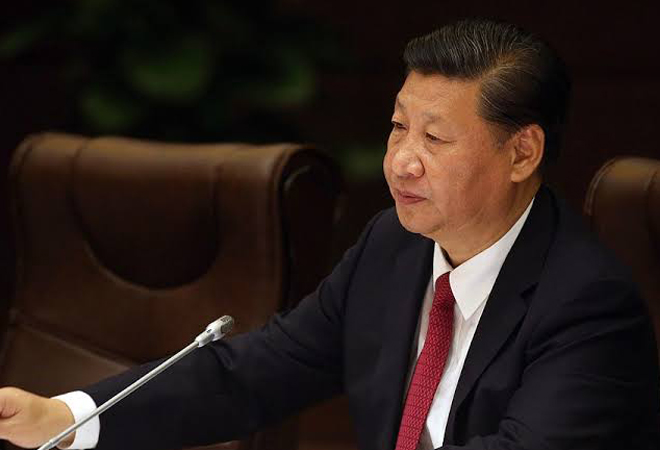
How Xi Jinping, whose father was expelled from Communist Party, became China’s ‘Dada’ Xi

When Xi took over as general secretary of Communist Party in 2012, western media portrayed him as a ‘compromise candidate’ with little qualification to run China.

 CCP,China Hegemony,CPC,PRC,Xi Jinping

Ahead of the eighteenth Party Congress in 2012, it was increasingly clear that Xi Jinping—who had been vice president since 2008—would take charge as general secretary of the Party. This was perhaps surprising if one considers Xi’s own past. When Xi was nine years old, his father, Xi Zhongxun, former head of the Communist Party’s propaganda division, was expelled by Chairman Mao because of his disloyalty. Until then, Xi had grown up a ‘princeling’ in ‘Zhongnanhai’, the enclave of influential Chinese Communist Party (CCP) leaders. This was part of a sweeping ‘Cultural Revolution’ launched by Mao with the ostensible goal of purging Chinese tradition and Western capitalism to promote and preserve communist China. During the Cultural Revolution, when Xi was fifteen, his father was sent to prison and Xi was one of the nearly thirty million ‘sent-down youth’ who were forced to work in the Chinese countryside for ‘re-education’ as part of Mao’s ‘Down to the Countryside’ movement. He ended up in a remote village of the Shaanxi province where, Chinese state media often claims, he lived in a cave dwelling for nearly seven years. According to Xi himself, these seven years were transformative. ‘When I arrived at the Yellow Earth at fifteen, I was anxious and confused,’ wrote Xi in 1998, by which time he was a rising star in the Communist Party. ‘When I left the Yellow Earth at twenty-two, my life goals were firm and I was filled with confidence.’ Over twenty-five years, Xi rose through the ranks of the party leadership by performing well and keeping his disagreements to himself. His early career began in the northern province of Hebei, a relatively poor region, but he transferred quickly to the wealthier provinces of Fujian and Zhejiang. These regions were vital to Deng’s ‘opening up’ policy, which saw China integrate with the global economy, and they would be important to Xi’s career. It was here that Xi would learn about globalization and market reforms. Because of his known anti-corruption credentials, Xi was soon whisked off to Shanghai in 2007, which was then in the midst of a corruption scandal. He dealt with the matter so effectively that he was catapulted to the People’s Republic of China’s (PRC) central leadership that very year, and quickly became vice president of the country in 2008. Xi rose up the ranks as a clean, pragmatic, and pro-growth leader. According to a cable leaked by the Central Intelligence Agency (CIA), a well-connected Embassy contact referred to Xi, who was then a member of the Politburo Standing Committee and Vice President, as ‘exceptionally ambitious’, ‘confident’ and ‘focused’, and stated that Xi has had his ‘eye on the prize’ from early adulthood. ‘Unlike many youth who made up for lost time by having fun [after the Cultural Revolution],’ the cable added, ‘Xi chose to survive by becoming redder than the red.’ It was these qualities that would come to define general secretary Xi.

The China dream

When Xi did take over as general secretary in November 2012, the expectations from his government were limited, and Xi himself remained somewhat of an enigma. Local newspapers painted him as a leader connected with the masses, who was ‘amiable and easygoing.’ The Western media portrayed him as a ‘compromise candidate’; as someone who had little real qualification to run China other than the fact that he belonged to the ‘princeling’ class and had few detractors. Kevin Rudd, the former Australian Prime Minister, wrote in 2012 that Xi was likely to have the same goals as all other Chinese governments since the Mao era: ‘to sustain the political pre-eminence of the CCP within the country.’ There were signs that Xi himself was averse to being seen as overly ambitious. In an interview in the year 2000, Xi said, ‘You always want to do something new in the first year, but it must be on the foundations of your predecessor. It is a relay race. You have to receive the baton properly, then run well with it yourself.’ However, the twelve years following that interview had apparently changed Xi’s worldview quite significantly. One of Xi’s first public appearances as head of the Communist Party of China (CPC) was his visit to the National Museum of China in Beijing along with the new Politburo Standing Committee on 29 November 2012. Once there, he stood in front of a prominent art display titled ‘The Road to Rejuvenation’. This display sits beside another famous showcase: ‘The Century of Humiliation.’ The story this display tells is one that every Chinese student learns early on in their education: In the mid-nineteenth century, China was humiliated by a series of outsiders, beginning with Britain, and then Japan. ‘The Road to Rejuvenation,’ on the other hand, narrates the victory of the Communist Party and its ideology—marking a return to the prosperity of the Chinese nation. It was here, at the end of the visit, that Xi Jinping spoke of the ‘China Dream’— otherwise known as the great rejuvenation of the Chinese nation. Xi described the China Dream as achieving the ‘Two Centenaries’. First, the economic goal of China becoming a ‘moderately well-off society’ by 2020, the hundredth anniversary of the CCP; and second, the goal of becoming a fully developed nation by 2049, the hundredth anniversary of the PRC.

Rise of ‘Dada’ Xi

To ensure that China could again find its rightful place in the world, Xi would have to undertake several structural reforms. Given that Xi’s economic or political views were never widely published, opinions on his possible policy choices would vary widely. One op-ed for the The New York Times went so far as to argue that Xi would ‘spearhead a resurgence of economic reform…and probably some political easing as well.’ While this may seem naïve in retrospect, Xi himself sent some positive signals. One of his first visits as head of the Communist Party was to Shenzhen in South China, which was once a remote fishing village and is now a thriving industrial region. The city is widely considered a shining symbol of China’s embrace of market reforms. Here, he called on the country to ‘tackle tough issues’ and ‘break free from the barriers of vested interest.’ The symbolism was not lost on anyone: Shenzhen was part of Deng Xiaoping’s famous 1992 ‘Southern Tour’, which sought to rally support for market-based reforms following the tumult of Tiananmen Square. Many believed that Xi was signalling a willingness to undertake the economic reforms that his predecessors did not have the political courage to manage. On political reform, Xi once again gave reason for optimism. In December 2012, Xi declared that ‘no organization or individual shall enjoy privileges beyond the constitution.’ He was giving voice to the popular angst against corruption that had plagued the Communist Party, a fact that even Chinese leaders were publicly acknowledging. In 2012, the Chinese Academy of Social Sciences published an anti-corruption bluebook, noting that corruption in China touches ‘virtually all corners of society, from the economic, political and judicial fields to the social, cultural and educational ones.’ Transparency International’s Corruption Perception Index 2012 ranked China as the eightieth most corrupt country out of 176. In January 2013, Xi Jinping publicly pledged to tackle this challenge by prosecuting both ‘tigers’ and ‘flies’—in other words, high-ranking party officials and lowly bureaucrats alike. Xi understood perfectly well that corruption was undermining the legitimacy of the Party, and he was driven to change this reality. More importantly, some argue that the anti-corruption narrative was also a useful tool to purge political rivals. Xi’s ascent to the top job took place against the backdrop of corruption and espionage charges against Bo Xilai, the former governor and Communist Party chief of Chongqing province, who had been in line for an appointment to the National Standing Committee. Soon after, Xinhua reported that Jiang Jiemin, the powerful head of the State-owned Assets Supervision and Administration Commission (SASAC), had been removed from office on suspicion of serious disciplinary violations—Chinese doublespeak for corruption. The official whose purge received most attention was Zhou Yongkang, the ninth most important member of the Chinese government and the country’s chief of security and intelligence until his retirement. Not surprisingly, what all these men had in common was their challenge to Xi’s power. By the end of 2012, Xi had purged thousands of party officials and acquired some extremely powerful positions for himself, including head of the Party and the military. In March 2013, he would also emerge as President of the Chinese state—merely a title, considering that he had already installed himself as head of several bodies overseeing the economy, military, internal security, foreign policy, internet governance, and so on. The Chinese press had taken to calling him ‘Dada’ Xi—or uncle Xi. This was a sign of exceptional reverence for any Chinese leader and an indication of Xi’s consolidation of power.


This commentary originally appeared in The Print

Standard
Uncategorized

Two elections, diverse results, five lessons

toxic smog, choke, elections, technology, EVMs, elections, electorate, Rahul Factor, Sonia Gandhi, Voters, takeaways, politics, voters, votes

As the toxic smog envelopes much of North India and New Delhi and its sister cities in the region choke, it may be a useful moment to look through the haze generated by the recently concluded state elections. There are five significant takeaways from the Maharashtra and Haryana election results — takeaways that implicate how we should think about the politics of India going forward.

First, it may be time to stop blaming technology for poor politics. If nothing else, these elections should be seen as redemption for the electronic voting machines that electoral losers have constantly blamed for their losses. Yes, India should continue to strengthen the security around EVMs (air-gap approach is simply not enough) and scale up the use of voter-verified paper audit trails or VVPATs. But a discourse that delegitimises EVMs, and thus the entire democratic process, can no longer have any validity or be given any oxygen. As we move to more fluid forms of referendums in the future, technology platforms and personal devices will be indispensable.

Second, state elections are precisely that — elections in and about states. Voters in India have consistently demonstrated great maturity in responding to local leaders and local issues at the hustings. This was clear even during the general elections earlier this year, where many voters in Odisha clearly voted for Chief Minister Naveen Patnaik at the state level and for Prime Minister Narendra Modi at the national level. Governance in India has clearly shifted to the states, and the real politics of development and delivery is being played out there. It is these leaders who are being held accountable for the basic services that governments are supposed to provide. National leadership may set the broad narrative, but it is state leaders who deliver — whether on schemes or on votes. National parties that will do well in the states will rely on local leaders and performance.

Third, the Congress should be wary of drawing the wrong lessons from its better-than-expected showing in Haryana and the fact that it has not been decimated in Maharashtra. The sturdiness of the party’s grassroots in these states shows that the ‘Rahul Factor’ was not the major determinant of the party’s apparent revival in the 2018 state elections prior to the 2019 Lok Sabha polls. Rahul Gandhi may not have hindered, but he did not help either – the local leaders were the single most important factor.

But that does not mean in turn that the party should decide that the ‘old guard’ is its only possible alternative. The clique around Sonia Gandhi is no more likely to turn the party around than the clique around Rahul Gandhi. It is too much to expect unelectable leaders to manage a party that is supposed to relate to the voter on the ground. And in both instances that is what the malaise in the Congress apparatus seems to be. Their only hope in the days ahead is to be able to groom and incubate local leadership that can credibly offer an attractive proposition to the voters. In a sense, that would mean reverting to the previous system of regional satraps that served the Congress well before Rajiv Gandhi did away with that political legacy.

Fourth, even if the big-O ‘Opposition’ is missing in India, it is clear there is a market for small-o ‘opposition’. Indian democracy has never been at its most stable when there was no alternative. The Congress, structurally weak, has still managed to garner protest votes in large enough numbers to put up a fight. Frankly, it would have been even closer but for ‘Brand Modi’ that today is beyond that of any other political figure in independent India. If BJP wants to become that ‘big-tent’ party that is relevant across the length and breadth of the country, it will do well to invest in a new and diverse group of local and regional leaders and help them emerge. Maharashtra has proven the usefulness of this approach.

A last point. The BJP needs to be cautious on expending excessive political capital by way of Modi’s charisma and popularity in state elections of which a series are coming up in the next couple of years. Often a simple majority is enough in the states and there is no merit in aiming for humongous majorities, thereby raising popular as well as cadre expectations of spectacular electoral performance, from panchayats to assemblies each time. Linked to this is the increasing tendency of the BJP to field dubious candidates and denying tickets to deserving ones. Maharashtra shows the first is fraught with danger; Haryana shows the second is not a good idea in the cut-throat world of electoral politics.

Mature economies expect politicians to respond to the demands of voters — and it is clear that voters want accountability. The electorate has thrown down the gauntlet, will a leader arise to pick it up?

Standard

Soon after his elevation to the post of General Secretary of the Communist Party of China, Xi Jinping rapidly consolidated power at home and expanded China’s influence in the international system. His desire to achieve the ‘China Dream’ by the middle of the century has seen him steadily erode the norm of ‘collective leadership’ at home and has made China’s presence across Eurasia and the Indo-Pacific more expansive. He has determinedly set about reshaping the world order for the benefit of his Communist Party.

Samir Saran and Akhil Deo offer a retrospective reading of how this came to be—tracing the key policy shifts that have come to define China in the Xi Jinping Era. From the creation of the Asian Infrastructure Investment Bank to the Doklam standoff, they identify pivotal decisions and events that have shaped China’s engagement with the world—and how global powers, especially India, have responded to the Middle Kingdom’s rise.

Read here – https://rupapublications.co.in/books/pax-sinica-implications-for-the-indian-dawn/

Books, China, Research, Writing

PAX SINICA: Implications for the Indian Dawn

Image
Uncategorized

Digital Debates — CyFy Journal 2019

Digital Debates — CyFy Journal 2019

Digital Debates is an attempt to highlight perspectives, diagnoses and solutions for the future of our digital world that are not necessarily rooted in technology. By design or sheer circumstance, contributors to Digital Debates this year have not only dwelled on the many tensions agitating cyberspace, they have also argued that the political, social or economic realignments triggered by this medium may ultimately settle into a new normal.

Standard
Uncategorized

Welcome to the age of the platform nation

Industrial Revolution, Efficiency, production, GDP, 4IR, inequality, digital societies, ownership, mass services, sharing economy, McKinsey, replacement, progress, productivity, labour, consumption, innovation, feasibility, IPR, onboarding
Source: Concordia

Since the First Industrial Revolution, growth and welfare have depended upon increasing the efficiency of production. Specialization, manufacturing, electricity and the computer all increased productivity, GDP – and thereby wages and national welfare. Higher wages did not just spur consumption of more goods and services, but also meant bigger national budgets through tax collection. A virtuous circle of prosperity was created. Some gained more than others, creating persistent inter-generational inequality; but, in absolute terms, economic means were enhanced across all major population segments. (Except, of course, for those places that were colonized and subject to deliberate exclusion from such gains.)

This relationship – between productive efficiency and economic growth and wages – is now breaking down in the Fourth Industrial Revolution (4IR). Digital technology is creating digital societies; mass services are replacing mass manufacturing as the source of welfare enhancement; and shared assets are supplanting exclusive asset ownership.

Providing the same final utility to a consumer requires the production of fewer manufactured goods. The sharing economy, meanwhile, means previously under-utilized assets are being more productive. When India’s economy hits $5 trillion (perhaps five-to-seven years from now), it will at most have about 50 cars per 1,000 private individuals (it is 22 cars today). Japan, which is a $5 trillion economy today, has close to 600 cars for 1,000 people. McKinsey has forecast that India will overtake Japan in total car demand in 2021. But this figure does not reveal demand for new vehicles in per capita terms. In spite of the large gap in private car ownership, private ride sharing and other mobility service options will narrow the transport experience between the residents of Japan and India.

Divergence in the automotive sector is particularly telling. In the 20th century, mass assembly-line production created efficient producers with consequently higher incomes – a feature of what came to be called “Fordism”. In the 21st century, individuals and economies are reaping welfare gains from being more efficient consumers. Consumption efficiency is replacing production efficiency – a trend we can call “Uberism”.

In the 21st century, individuals and economies are reaping welfare gains from being more efficient consumers. Consumption efficiency is replacing production efficiency – a trend we can call “Uberism”.

The changes accompanying this shift from “Fordism” to “Uberism” are difficult to see in economic metrics. The more efficient use of assets, the shift from traditional manufacturing to innovative mass services, or the provision of greater utility through fewer goods and less physical activity, may appear on the national accounts as value destruction or stagnation rather than as GDP growth. Yet welfare gains in the future are likely to do just that: appear, when observed through the economic frameworks of the past, like slower and lower growth.

This implies that three major trends need to be theorized and engaged with by economists and political scientists:

First, a replacement is needed for GDP (as we define it now) as a measure for economic progress. Governments and policy-makers chasing GDP growth in an age where welfare enhancement may not be reflected in GDP will not be serving their citizens well. Their policy emphasis will be on objectives that are irrelevant to the 4IR. Barring a few sectors (food production is remarkably resilient to the shared economy, but certainly subject to efficiency gains) and finished goods (personal communications devices being one of the exceptions), a consumption basket biased towards the drivers of production-led growth is now an incorrect marker for proper economic assessments.

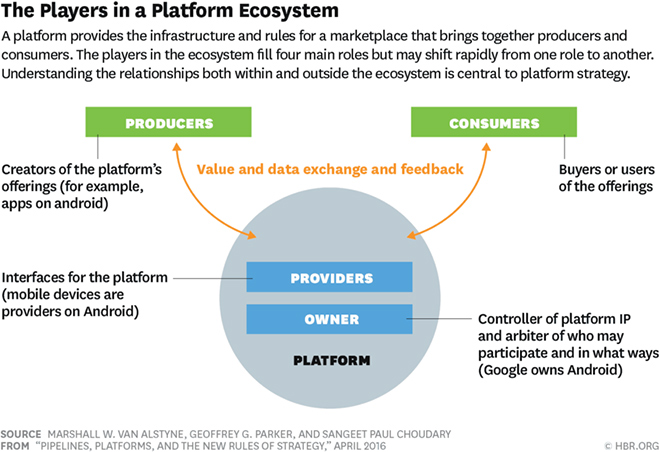
Second, a new theory of productivity, labor and consumption is needed. Earlier economic strength came from creating per-unit value; but increasingly what matters is overall valuation. The strength of corporations or enterprises is already being negotiated in these newer terms, but national balance sheets continue to plod along old paths. Compare, for example, ExxonMobil and Apple. In 2007, boosted by then-unprecedented increases in the price of oil, ExxonMobil first breached a market valuation of $500 billion. That year, its revenue was $400 billion. In other words, the revenue generated by Exxon at those levels was much higher than the revenue of Apple at a $1 trillion market capitalization. But investors believe in the future of platforms, and have come to a consensus about the importance of placing value on factors external to a network itself. Platform economies are validated by the number of persons on the platform and not through plain vanilla per-unit production and sales processes of the past. The intrinsic value attached to the on-boarding of an individual or a billion of them onto a platform, or more broadly a “service ecosystem” (say a Facebook, Google or even Aadhaar) is captured by stock markets, but not by GDP assessments.

An inevitable consequence of this process will be a re-evaluation of the economic and political feasibility of current intellectual property rights (IPR) regimes. Today “onboarding” (getting users to sign on to platforms, services, operating software etc.) prevails over “gatekeeping” (charging IPR fees for use/user access). So are today’s IPRs useful when it comes to creating value for countries and citizens in Industry 4.0? This means the nature, definition and pricing of “innovation” itself might have to change: the happenings around Android and iOS are already offering some pointers to the future.

Finally, this discussion would be incomplete without delving briefly into the need for a new theory of social organization. Political and social arrangements that revolve around citizens’ identities as workers are unfit for today’s digital societies of today. The reconfiguration of the workplace (from factory floor to handheld device, for example) and of the nature of work itself, as discussed earlier implies deep changes to political structures and social support networks. Can trade unions stay relevant in this new era? What is the relevance today of party politics that developed out of First Industrial Revolution class conflict, deriving their raison d’etre from the working classes on the one hand and business owners on the other?


This article originally appeared in The World Economic Forum

Standard
Uncategorized

Our ‘in’secure futures

emerging Technology, Sean kanuck, CyFy, Digital, Debates, Samir Saram, Insecurity, disinforamtion, globalisation, enlightenment, GDP, Aditi Kumar, Social Contract

The following is the introductory note from the upcoming publication Digital Debates 2019 — The CyFy Journal.


2019 will sputter to an end with unresolved anxieties about the future of emerging technologies, and their relationship with our societies. Sean Kanuck, our distinguished colleague and fellow chair of CyFy, identifies four trends that appear to be reinforcing these anxieties: “insecurity, disinformation, anti-globalisation, and un-enlightenment.” As is wont for these times, Sean contributes a new phrase to define the zeitgeist: “indisantiun”. They represent drivers of change that, by themselves, have little to do with the digital domain. Like their Biblical counterparts, these horsemen of the digital apocalypse represent malaises residual in 20th century global governance: economic and social exclusion, lack of transparency in the business of government, pervasive xenophobia, and a profoundly anti-elite, anti-intellectual tendency that is on the rise. These problems may have been seeded in the previous century, but attempts to resolve them using 20th century institutions, regimes and coalitions have come a cropper.

Kanuck’s contribution to the Digital Debates is one amongst fifteen essays for this edition of Digital Debates that are divided equally between five animating themes: Individual, Livelihood, Society, Governance and Conflict. We chose these themes to allow authors to explore comprehensively, the implications of digital technologies from their own unique vantage points as scholars and practitioners. Many of our contributors shared Sean’s assessment of a more insecure and anxious world. In fact, “Indisantiun” may well capture the inability of current global governance arrangements to respond to broader, technology-fuelled disruptions and their disquieting consequences.

We attempt here to tie these themes together, and to present (what we hope is) a coherent picture of the virtual world in 2019. As the most granular, and perhaps most consequential, unit of this world, it is fitting that the first set of essays address the anxieties haunting the individual. The platformisation of the public sphere may have democratised expression — or atleast deepened it through encrypted communications — its by-product has been the creation of new infrastructure designed to extract data and expand surveillance. This has created a paradoxical situation for individuals: the more they interact with digital spaces, ostensibly to exercise their freedoms, the more vulnerable they are to rights abuses — by private actors, their own sovereign, or even a foreign one. This has created a new type of insecurity, one where individuals are “simultaneously under attack and being weaponised” –as Nikhil Pahwa argues–by the influence of digital technologies on their social lives. Tanuj Bhojwani offers a provocative rebuttal to Pahwa, suggesting the notion of unfettered individual agency over digital networks is nothing but a “techno-utopia”. However, he agrees that the framing of platforms as “mere marketplaces” is problematic.

Concurrently, digital technologies have also altered the relationship between labour, capital and productivity. For much of the past century, a nation’s Gross Domestic Product — the sum total of goods and services produced — was considered an accurate picture of its economic, indeed political, health. This will not be a reliable metric for the digital economy, which will likely be characterised by incremental or marginal innovation, diffused supply chains and the “gig” economy that runs on shared resources — all, in turn, fuelled by the aggregation of data. There is great uncertainty about how to quantify the relationship between these independent variables, how they will affect development outcomes and what this implies for livelihoods in advanced and emerging markets. The essays under the theme of ‘Livelihood’ capture perfectly the nuances of this debate. While Winston Ma’s piece speaks to the potential of digital technologies in bridging 20th century development divides, Aditi Kumar responds by clinically dissecting the inequities inherent in digital workforces of the 21st century. Astha Kapoor and Sarayu Natarajan argue India in particular is becoming a “hot bed for micro-tasks” in the digital economy — especially in areas like data labelling — which could ‘invisibilise’ labour and further exclude those at the margin. They too emphasise a shift away from “static notions” of productivity and a more rounded view of “well-being”.

Whatever be the causal pathways, personal, political and economic insecurity has created a backlash against established forms of governance in domestic regimes. The dynamic between the individual, private platforms and the state is constantly in flux, prompting institutions of government to play catch-up. The social contract between the citizen and state is being usurped by private, digital platforms, who through their privacy policies confer on the individual rights that governments are reluctant to endorse. Conversely, they have begun to exercise “eminent domain” over the property of the individual in the digital age: data. In short, there is wide overlap between the functions of a platform and the state — of regulating speech, providing social protections, creating employment opportunities and ensuring national security. Rules and norms to govern these interactions are yet to fully mature, leading to uncertainty in the social contract and, as James Lewis points out, a crisis in the legitimacy of domestic norms and institutions.

The flux in domestic regimes is reflective of the churn in the international order. Connectivity between nations and mutual gains from trade, according to conventional wisdom, was expected to heighten the stakes for war or even limited conflict. Digital connectivity, however has created a new set of tensions.

The flux in domestic regimes is reflective of the churn in the international order. Connectivity between nations and mutual gains from trade, according to conventional wisdom, was expected to heighten the stakes for war or even limited conflict. Digital connectivity, however has created a new set of tensions. Digital spaces are effectively a “system of systems”, from cell towers and routers, to platforms and applications. Taken together, they reflect the digital interactions of entire nations, sans the neat segregation of boundaries which has been the edifice of 20th century politics. This infrastructure is not neutral; instead, as Arindrajit Basu argues, it is political. Cyberspace is not merely a reflection of geopolitics in the “offline” world, but has rendered it even more chaotic by adding vectors of political contest: 5G, influence operations, the Dark Net…the list is long. Isolation is no longer a feasible strategy. Dennis Broeders refers to our times as an era of “unpeace” — a time of both messy interdependence, and of friction and conflict. To be sure, history offers precedents — think of continental Europe before the first World War — but the arena is different this time, and poses a new set of challenges. Anushka Kaushik’s lucid exposition of the attribution dilemma in cyberspace exemplifies the problem: without actors to blame, who is responsible for the malaises of the digital age?

Our authors seem secularly skeptical of prospects to navigate these problems. Nevertheless, we remain optimists. The faultlines emerging today across communities and states are not a factor of digital technologies, but of problems that predate their global popularity. As Philip Reiner notes, “insecurity always has, and always will persist, in varying degrees of flux.” Disruptions exacerbated by digital technologies are an opportunity to re-conceive and adopt templates for domestic and international governance that are responsive and agile — but also rooted in ideas that were paid lip service in the last century: equity and sustainable development.

‘Digital Debates’ is an attempt to do just this — to highlight perspectives, diagnoses and solutions for the future of our digital world that are not necessarily rooted in technology. We are grateful to our authors for having fulfilled their mandates splendidly. By design or sheer circumstance, contributors to Digital Debates this year have not only dwelled on the many tensions agitating cyberspace, they have also argued that the political, social or economic realignments triggered by this medium may ultimately settle into a new normal.

Perhaps the most important of these realignments is the coming to terms of democracies with the introduction of digital technologies in our public sphere. We have, in a manner of speaking, entered a post-internet world. Previous evolutions in media and production technologies(such as the radio or the steam engine) dramatically altered the demands and methods of governance. It is not unexpected that a similar moment is upon us today. Despite present concerns around polarisation and inequality, it was comforting for us to see that each of our pieces on the theme ‘society’ were unanimous in their belief that our democracies possessed the ability to self-correct. Mihir S. Sharma argues that the problems plaguing digital governance has to be treated on its own merit. Whether the management of digital spaces is democratic is, he writes, a separate question from whether they promote democracy. Terri Chapman responds to that poser, calling for greater “explainability” in algorithmic decision-making.

Perhaps the most important of these realignments is the coming to terms of democracies with the introduction of digital technologies in our public sphere. We have, in a manner of speaking, entered a post-internet world.

A course correction is indeed being embraced by, or forced upon technology platforms. Whether it is protests against military contracts with governments, allegations of bias and partisanship, or disquiet at their sheer monopolistic power, the governance and ethics of technology platforms are being questioned more severely than ever before. Paula Kift recognises that this new backlash stems from an “internal rift” (irreconcilable, perhaps?) between ideals and business practices. Consequently, we see boardrooms responding to popular concerns. New ethics and oversight practices, institutional cooperation with the state, and new user controls are all evolving to create — or atleast, attempt to — accountable and transparent regimes for the technology industry.

Processes and conduits of globalisation are also under pressure to respond more effectively to local communities or interests. In the 20th century, economic connectivity was a process moulded by a small set of state and private actors. Digital spaces have undermined this monopoly, allowing individuals and communities to agitate for representative global economic decision making. Civil society coalitions that challenged the provisions of the Trans-Pacific Partnership, and its negotiation in secrecy, were lent a fillip by the internet, lending them instant access to allies and like-minded partners in distant lands. Most crucially, we see such digital disruption playing out in the development sector — where innovations from Asia and Africa are creating platform-based solutions for the next six billion. Their technological pathways to development and policy frameworks will be digital-first by design, and perhaps capable of providing the templates the world so desperately needs.

And finally, our contributors also recognised the character of our international community has changed in the digital world. Lydia Kostopoulous reminds us of the complexity of this new moment: where digital spaces are pervasive, but also interact with and operate within sovereign boundaries, each with their own political contexts. Resolving this contradiction will require efforts that are capable of bridging the disconnect between 19th century Westphalian understandings and the realities of a 21st century digital world. It is our hope that CyFy will be a platform to discover such solutions. We express our sincere thanks to contributors to this volume for setting the stage for the two days of debates and discussions that follow.


Standard
Uncategorized

CyFy 2019: Chair’s note

The real world is now complemented and implicated by the virtual world. This is a new domain altogether, and its governance is not bound by traditional rules and constraints.

CyFy, CyFy 2019, Samir Saran, Arab Spring, dataveillance, emancipatory
Photolabs@ORF

We meet for the 9th edition of CyFy in interesting times. The assumptions that have underpinned digital technologies since the inception of CyFy in 2013 have changed dramatically. There were two competing narratives then about the future of cyberspace and its relationship with society: the emancipatory potential of digital technology, as witnessed by episodes such as the Arab Spring, and the worrying implications of government abuse of internet platforms for surveillance, evidenced in the Snowden revelations. Eight editions later, six in New Delhi and two in Morocco, it is clear which way the pendulum has swung.

The democratic ideal of cyberspace has given way to concerns around privacy, concentration of wealth, and national security. The very platforms that enabled new forms of expression and supported new social coalitions have inadvertently created a sprawling apparatus for surveillance and exploitative control. The ubiquitous availability of data has allowed a plethora of actors to generate granular information about behavioural preferences—making the fickle human mind ever more vulnerable to influence and polarised thinking.

This is now the new normal. Two decades ago, the refrain — eloquently phrased by Prof Larry Lessig — was “code is law.” Today, it is more appropriate to say that code is life. Opaque algorithms, fuelled by what the Indian Supreme Court calls ‘dataveillance’, define the interactions of individuals and communities and their relationship with industry and the state. The boardrooms that develop these algorithms, meanwhile, remain answerable only to their shareholders (if at all), often at the expense of their customers and users. Frameworks for accountability in the digital age — whether from sovereigns or technology companies — have yet to emerge.

States have also taken note of these new tensions. Given the vast social and strategic implications of digital technologies, their evolution in the coming decade will undeniably be shaped by the strong arm and long reach of the state. Governments have instinctively spiralled themselves into a zero-sum race to lead in the development and deployment of these technologies. As a consequence, the internet is less global, less secure and less free than it has ever been at any time since its widespread adoption.

Taken together, these new realities have produced disorder in technological and social systems globally. Malicious actors have aggregated on social media to produce a fractured information environment, malicious actors have weaponised data and algorithms, while states are intent on erasing private spaces and exerting sovereign control over global flows of information. Two decades into the 21st century, the structural forces being driven by digital technologies appear to be leading us into a more polarized and fractured world.

All consequential evolutions in technologies have required societies to create new arrangements. In this, the past cannot help us. The velocity of change and disruption underway today is unprecedented. The real world is now complemented and implicated by the virtual world. This is a new domain altogether, and its governance is not bound by traditional rules and constraints. The 25 conversations we have curated at CyFy 2019 are designed to acknowledge this new reality and to outline pragmatic solutions for this networked world.

Over 130 speakers and delegates from nearly 40 countries, including 10 cyber-ambassadors and government representatives, will spend the next three days in New Delhi to join us for this crucial effort.  As always, we strive to create new coalitions and norms that can address comprehensively the problems of our digital world. We are grateful to our partners, speakers and delegates for joining us to debate these important issues. I am confident that the ideas we hear at CyFy 2019 will inevitably lead to a new consensus for our tech futures.


Standard
Uncategorized

Oil, gold or more : The big data debate

Data,GATS,OPEC,Silicon Valley

The 1970s saw heated debates in the international community with regard to the ownership of natural resources, centered on the methods and institutions that would manage their price and supply, and the strategic routes and chokepoints that determined access to these resources. Oil was the most important such resource—simultaneously a fuel for 20th century industrialization and a source of geopolitical instability and risk.

In time, the international order did create a new set of arrangements – although not always efficiently. The UN adopted a resolution guaranteeing states’ sovereignty over their national resources — remember the New International Economic Order (NIEO)? — and while cartels like the Organization of Petroleum Exporting Countries (OPEC) became critical to negotiating prices, the sea lanes were protected by mandates under international maritime law. In fact, it would be the US, which opposed the NIEO, that stayed out of the UN Convention on the Law of the Sea for fear it would impede commercial exploitation of the deep seabed.

It is not hard to see why the management of oil was a contentious affair. Like data today, oil was a crucial input for economic, military and strategic advancement. And as such was a perennial cause for tensions in international politics, which is why the comparison continues to enjoy relevance. Similar concerns animate data governance: ownership, economic growth and national security.

Nevertheless, this characterization of data does not always present an accurate template for policymaking. As negotiations on cross-border data flows continue to exacerbate multilateral and bilateral tensions, it is essential for India to appreciate why the ‘data is oil’ analogy is important, and where it falls short. Delhi must prioritise three considerations in this debate.

The first relates to national security. Unlike oil, the flow of data creates a wealth of information that provides granular insights into the preferences, habits and behaviours of individuals and large communities. For centuries, such information was considered essential to intelligence gathering and statecraft. Even today, it is a force multiplier for national power.

The proliferation of data and digital systems has created a very wide catchment area for the application of state interests. Protecting natural resources was a function of a states’ military power; securing cyberspace, however, will require strong cooperation between governments, platforms and academia. In the US, technology platforms are increasingly frontline actors in national security decision-making. How should net-data exporters like India that are dependent on foreign technology systems manage these risks? So far, no reliable templates have emerged.

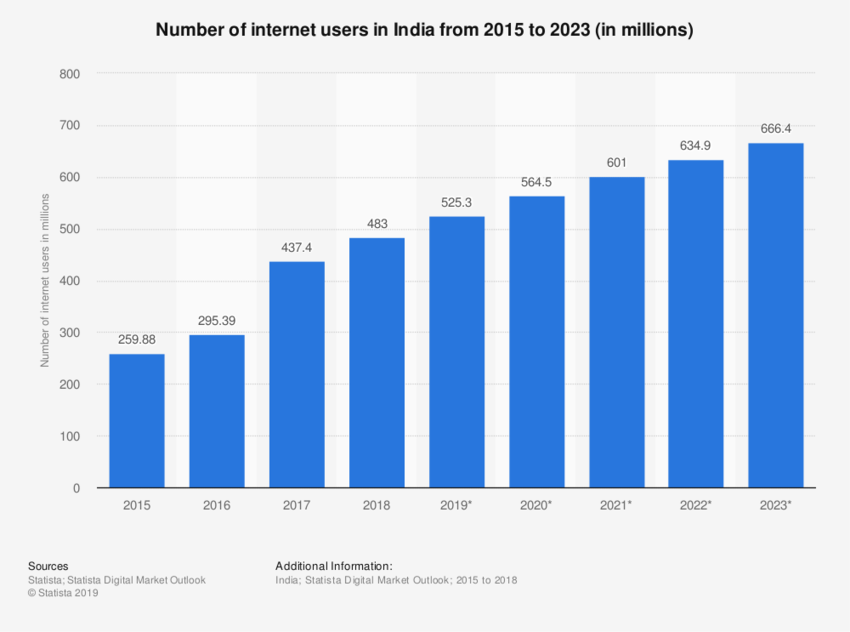
The second is economic. Unlike physical commodities, the value of data does not necessarily accrue to those who exercise jurisdiction over it. The largest oil companies, whether owned privately or by the state, belong to those nations with easy access to the resource. In many cases, businesses are offered very long-term leases over a resource whose ownership by the state is not disputed. However, while India is home to 600 million active internet users, North America hosts 13 of the world’s 15-largest technology companies by market capitalization, with China hosting the remaining two.

Therefore, the value of data is captured not at the point of extraction but in transit — when it flows, and supports new products, business methods and industries. Indeed, data flows already generate more value in the global economy than goods and services. This may be an obvious point, but its implications are not. The regimes managing the globalization of goods, services and capital were written to privilege Western economic interests. And while developing states enjoyed economic gains from the outsourcing of manufacturing industries, the value addition from investments, royalties and taxes were almost entirely captured by the West.

There is a real risk that digital globalization will lead to the same outcomes. Restricting the flow of data alone will not remedy the challenges for India. However, Delhi should use this moment to renegotiate the commercial, financial and intellectual property regimes that will govern the flow not only of data, but that of wealth and people. The flow of Indian data and personal information cannot be freely bartered. It must be conditional on an architecture that prioritizes equitable development and economic outcomes.

The final consideration is political. Many argue that data should not be thought of as a resource or commodity at all; rather, it should be regarded as the sole and exclusive property of the individual. Data cannot, after all, be mined in isolation – it is the digital interactions of humans and technologies that produce an infinite supply of raw data. In this, data is entirely dissimilar to natural resources. (That said, some analogies can be drawn: what is the point of conferring property rights to underprivileged Indians if their social and cultural status prevents them from exercising this right?) The human rights implications of data generation and flows certainly necessitate the creation of a new set of legislative and institutional protections for individuals.

Nevertheless, it is hard to imagine that this responsibility belongs to actors other than the state. Silicon Valley cannot wear the mantle of a guarantor of rights, because technology companies are exactly what they are: companies. When these platforms are unresponsive to the concerns of their own sovereigns, the probability that they will devote resources to developing states is low.

Moreover, even if data is thought of as inherent to individuals, the Westphalian order continues to privilege the authority of the state in determining the mobility of individuals and their property.

During the Doha round of WTO negotiations at the turn of the century, there was intense debate about the modalities for labour mobility. Under the proposed GATS regime, fast-track pathways would facilitate the mobility of highly skilled labour, while low and medium-skill workers were left out of the bargain – despite the fact that most developing countries enjoyed a comparative advantage in these categories. As it was then, it is hypocritical for the developed world to pick and choose which individuals, and which ‘parts’ of the individual (read: data) can flow freely.

Despite what the thrust of this piece might suggest, data should flow freely. This is the most optimal outcome for the international community. However, this process cannot occur in isolation. This piece is a provocation to address some of the regulatory impulses that have driven the push for localization. Cross-border data flows are compelling structural changes in the global economy. Unless complimentary and ancillary rules and institutions mature, the benefits of these flows will be distributed unequally, creating new digital divides and national security risks. It would be against India’s national interest to uncritically accede to regimes that mandate free flows of data without accommodating its political, development and security concerns.


This article originally appeared in World Economic Forum

Standard
Uncategorized

Macron, Brussels and Washington

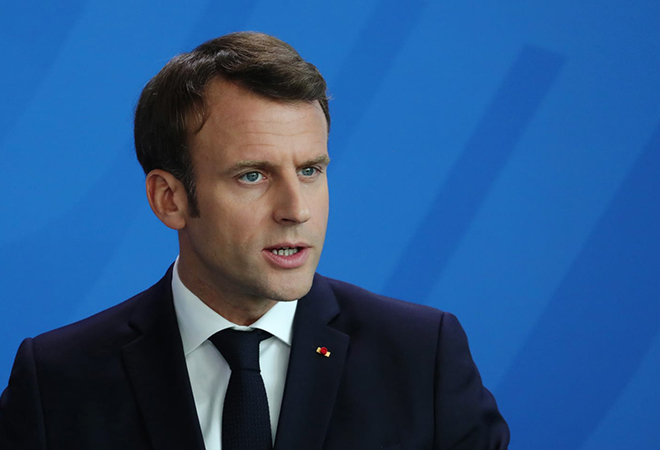
Because of geopolitical changes, we are living the end of Western hegemony, and the West needs to cooperate with Russia in order to create a new system of confidence and security in Europe, French President Emmanuel Macron said at the meeting with the ambassadors. Macron is not necessarily dissenting with the official positions of Brussels or Washington — he is merely acknowledging a reality that both capitals are aware of. The global balance of power has irreversibly shifted and the transatlantic alliance must adapt to the realities of a multipolar world.

Macron, Brussels, Washington, multipolar, EU, Trump Era, Ukraine, Iran, Russia

Valdai Club: Why does Macron make such statements that seriously dissent with the official positions of Brussels and Washington?

Samir Saran: Macron is not necessarily dissenting with the official positions of Brussels or Washington—he is merely acknowledging a reality that both capitals are aware of. The global balance of power has irreversibly shifted and the transatlantic alliance must adapt to the realities of a multipolar world. On Russia, Macron was signalling that 20th century frameworks and thinking can no longer form the basis of engagement. He is echoing similar voices from other parts of Europe. Finland, which holds the rotating EU presidency, has made similar statements.

As for why he made this comments now—it is clear that the EU is frustrated with the unpredictability of the Trump administration. Macron, who is styling himself as the EU’s leading political figure, was likely firing a shot across the bow so to speak. The Trump administrations response to a world in flux has manifested through unilateral postures and perhaps Macron and the EU are appealing to their primary partner for a more consultative and inclusive political engagement.

VC: Should we expect the policy of the European countries to be more independent from the US?

SS: Despite the friction in the transatlantic alliance, it would not be accurate to say that the EU will adopt policy postures that are detrimental to the US. Rather, it is likely that the EU’s foreign policy will not ape the US’ as it has in the past. Brussels, and the EU’s member states independently, are more likely to assert their own national and supra-national interests in this alliance. In other words, there will be a reconfiguration of decision making processes for the alliance. The US may no longer be able to dictate the foreign policy priorities of the EU.

There will likely be differences on some issues—such as climate change, Iran and on questions of managing the digital economy.

On Russia and China though, it is more likely that Brussels and Washington will strive for common ground. Ultimately, the alliance is bound by a shared history and common political and economic values. The idea of the ‘West’ is still a potent geopolitical construct that neither Europe nor the US will abandon. The depth of their institutional relationship will overcome the temporary Trump factor.

VC : Is it possible to make the relations between the EU and Russia soften?

SS: It may be difficult to predict the future of the EU-Russia relationship, but it is most certainly an imperative for both to develop and enhance their engagement. The acute differences on certain political issues such as Ukraine, Syria and NATO will be difficult to overcome. The challenge for both will be to manage these differences even as they engage on issues that are not affected by divisive propositions.

The future of this relationship will also depend on Moscow’s evaluation of Brussels. In the past, Russia has often played the role of disruptor. There are plenty of opportunities now for co-operation with the EU. Connectivity between Europe and Asia is one such domain. The EU has already unveiled an ambitious strategy for this region. Not only will such a partnership allow Moscow and Europe to find new areas of cooperation, but it will also allow Moscow to ease its dependence on China. Whether Moscow has the political capital to do this remains to be seen.


This interview originally appeared in The Valdai Club

Standard