The idea of a “just transition” away from fossil fuels is now a common refrain in the climate debate. However, what constitutes such a transition remains narrow, ambiguous and difficult to apply in most contexts. The current framework, originating from the Global North, emphasises the “just” need to provide alternative “green jobs” to coal workers at risk from the desired energy transition; in other words, it seeks to replace coal power plants with green energy sources and minimise its societal collateral. In contrast, the developing world may want to focus on a more comprehensive economy-wide transformation, linking just transitions to broader issues of energy security, poverty reduction, and climate finance.
Despite this gap in ambitions and aspirations, the G7 has recently been pushing a new international mechanism for implementing just transitions in emerging economies — Just Energy Transition Partnerships (JET-P). These arrangements demand ambitious coal phase-out targets from recipient countries in exchange for G7 financial support. The “just” component includes social considerations during the transition. Already South Africa ($8.5 billion), Indonesia ($20 billion), and Vietnam ($15.5 billion) have signed onto JET-Ps.
India has repeatedly declined to engage on this issue due to a substantial disconnect between the G7 and its idea of what constitutes a “just transition”. India has strongly opposed the demand to include specific targets for phasing out coal, reiterating that any deal which requires a potential tradeoff between development and decarbonisation cannot be considered “just”, as growth and development gains in the G7 countries have been and still continue to rely on fossil fuels.
The coal sector in India employs an estimated 3.6 million people (direct and indirect), compared to around 100,000 workers in South Africa.
The nature of India’s coal economy does not lend itself to the existing structure of JET-P deals. The coal sector in India employs an estimated 3.6 million people (direct and indirect), compared to around 100,000 workers in South Africa. The impact of an unplanned transition would be substantially larger in India. Moreover, JET-P benefits are unlikely to reach the more vulnerable informal, low-income, and non-unionised workers in the sector.
Finally, the current JET-P relies heavily on loans, which are not well suited to address the social aspects of the transition. Providing alternative livelihoods for coal workers will necessitate an economic transformation of coal-dependent districts and re-skilling of coal workers, which will require grant-based and concessional financing.
The G7 countries will continue to struggle to reach a deal with India unless they can reimagine what constitutes “just” and what may be an optimal “transition”. To resolve this, there is a need to preserve the ethic of animating JET-Ps while being open to operationalising these in discreet ways for specific geographies. The focus, therefore, must be on deploying funds to enable transformative change that complements existing decarbonisation efforts, creates the maximum bang for the buck, and crowds in a flow of capital larger than the footprint of the scheme. And most importantly, rather than obsessing with coal, CO2 reduction must become the principal outcome.
For example, deploying even about $20 billion for a deal to phase out a few coal plants in India would only result in a small mitigation impact, and this, too, may fade in relative terms as funding dries up. The budgeted outlays could instead be deployed in other ways for more compelling outcomes.
India is showcasing great ambition in decarbonising several sectors of the economy. A similar amount deployed in these sectors can have a transformative impact by crowding in additional capital that aligns with India’s development agenda. This would also help position India as a solution provider for these sectors for other developing and emerging economies. Two areas, in particular, hold much promise for such a reconceptualised JET-P.
A JET-P for this sector could have a catalytic effect by directing funding towards augmenting R&D and developing a manufacturing base for climate-friendly technologies.
The cooling sector is one of these. Cooling demand in India is expected to increase eight-fold by 2038 as affordable thermal comfort will be closely linked to the achievement of the Sustainable Development Goals. The World Bank estimates that a green cooling pathway could unlock a $1.6 trillion investment opportunity by 2040 with the potential to create a massive 3.7 million jobs. A JET-P for this sector could have a catalytic effect by directing funding towards augmenting R&D and developing a manufacturing base for climate-friendly technologies. India’s Cooling Action Plan would be boosted further by such financial flows.
Electric mobility is the second big opportunity. In 2022, India hit a million electric vehicle sales for the first time and is expected to become a $100-billion industry by 2030. India already has multiple policies in place to create a complete EV ecosystem, covering vehicle manufacturing, batteries, and charging infrastructure. A JET-P could look to aid these efforts and channel investments to nascent EV segments, such as long-distance freight and passenger transport. JET-Ps could also explore options to utilise grant-based funding for the reskilling of millions of workers currently employed in the ICE ecosystem.
In sum, the G7 should adopt a smart and country-specific approach. Instead of using JET-Ps to further its own agenda, it must look to prioritise the delivery of transformative agreements that align with the recipient countries’ objectives for significant and lasting impact.
Four watershed events since 2020 — a short period, but with apologies to Lenin, decades have happened in this time — have established India’s credentials as one of the last major bulwarks of a rules-based order, open and fair trade and economic arrangements, and the rule of law. These are critical elements if we are to build a new world order that is balanced, inclusive and fair.
The first event was the capitulation of western powers in Afghanistan. The triumph of the Taliban was not a victory by just war but the defeat of a people by deceit. Liberals around the world were kept in the dark as a Faustian bargain was struck by major powers that sought expediency over ethical diplomacy. Today, American supporters of the infamous Doha Agreement — ironically called the Agreement for Bringing Peace to Afghanistan — express concern about Afghan women. Their hypocrisy is naked and jarring. The Doha deal could never have turned out any differently. India kept a principled distance from that pernicious deal. Appreciating fully the true nature of a prospective Taliban regime, it continued to seek an elected and pluralist government in Kabul. India was a lone voice. Yet it did not compromise. Today, India continues to support the people of Afghanistan without recognising the regime that tyrannises it.
American supporters of the infamous Doha Agreement — ironically called the Agreement for Bringing Peace to Afghanistan — express concern about Afghan women.
The second is the war in Ukraine. The measures and countermeasures by Russia and Ukraine have resulted in bloodshed and mayhem, ultimately perpetuating the conflict. India’s position of principled independence, while advocating cessation of violence and pursuit of diplomacy, is recognised as the only meaningful way forward. The Indian stance has resonated across the G20 and beyond. The G20 Bali Leaders’ Declaration echoes Prime Minister (PM) Narendra Modi’s approach when it speaks of the “need to uphold ….. the multilateral system that safeguards peace and stability”, the importance of “peaceful resolutions of conflicts”, and the vital role of “diplomacy and dialogue”. Furthermore, India has consistently argued for respect for sovereignty and investigation of crimes against humanity, including those possibly committed by the Russian army.
Third, in the technology domain, India has long championed an open, free and fair digital order. However, with the United States (US) pressing for narrow benefits for Silicon Valley in the past decade, India was reluctant to endorse instruments that sought free data flow without sufficient accountability from actors responsible for storing and transporting such data. Much to the US’s chagrin, India appeared to restrict cross-border data flows, sought regulation of non-personal data and contested monopolies, and restricted cartelisation attempts of the US’s payments and e-commerce companies. It made no secret of its distrust. Having dispelled coercive pressure to enter into digital handshakes on unfavourable terms or sovereign commitments on a future digital services tax, India has now eased its stand on data localisation. The reason: There is no longer any pressure from the US because even domestic actors in America want greater regulation and accountability from Big Tech. India is exploring sharing data with “trusted geographies” while seeking surgical data protection for specific sectors. An inclusive, equitable internet remains a core priority.
With the United States (US) pressing for narrow benefits for Silicon Valley in the past decade, India was reluctant to endorse instruments that sought free data flow without sufficient accountability from actors responsible for storing and transporting such data.
The year 2021 signalled India’s fourth landmark moment. At the 26th round of the Conference of the Parties (COP26), India demonstrated extraordinary commitment to the planet by announcing its goal of reaching net-zero by 2070. It voluntarily imposed on itself a timeline for climate action, although its emissions per capita were well under two tonnes – about one-eighth those of the US. PM Modi’s Panchamrita road map for 2070 includes interim targets for boosting non-fossil energy capacity, using renewables, and reducing carbon emissions and the economy’s carbon intensity. PM Modi also later launched India’s LiFE (Lifestyle for Environment) Mission. He emerged as one the earliest world leaders to state candidly that climate action would require changes to individual lifestyles, taking steps to initiate those changes. By contrast, an international survey of 10 countries, including the US, the United Kingdom, France and Germany — published to coincide with COP26 — found few citizens willing to make significant lifestyle sacrifices. In fact, 46% of respondents believed there was no real need for them to do so. Take the facile but heated domestic debate around a potential ban on gas stoves in the US. Even as US diplomats have long championed “clean cookstoves” for the developing world, it appears there is little interest in following good climate practices at home.
India’s natural influence as a democracy and sincere interlocutor that can engage the political spectrum of nations gives it unique moral authority. Indeed, 21st century multilateralism needs more Indias. The G20 — with its mix of developing and developed countries — offers the perfect platform for India to infuse partner nations with foundational ideas. The world has much to learn on putting humanity first, adopting a pro-planet orientation, promoting peace, and placing equity and inclusion at the heart of internationalism. With its ethos of One Earth, One Family, One Future, India could show the way.
Public infrastructure has been a cornerstone of human progress. From the transcontinental railways of the nineteenth century to telecommunication in the twentieth century, infrastructure has been vital to facilitating the flow of people, money and information. Built on top of public infrastructure, democratic countries with largely free markets have fostered public and private innovation and, therefore, generated considerable value creation in societies.
In the twenty-first-century, technological innovation has created a tempest of ideological, geographical and economic implications that pose new challenges. The monopolisation of public infrastructure, which plagued previous generations, has manifested itself in the centralised nature of today’s digital infrastructure. It is increasingly evident that the world needs a third type of public infrastructure, following modes of transport such as ports and roads, and lines of communication such as telegraph or telecom – but with open, democratic principles built in.
Digital Public Infrastructure (DPI) can fulfil this need, though it faces several challenges. There is a disturbing trend of the weaponisation of data and technology – or “Digital Colonisation” (Hicks, 2019) – resulting in a loss of agency, sovereignty and privacy. Therefore, proactively deliberating on how to build good DPI is key to avoiding such challenges.
The monopolisation of public infrastructure, which plagued previous generations, has manifested itself in the centralised nature of today’s digital infrastructure.
To begin with, it is important to crystallise what DPI is and what it does. Put simply, foundational DPIs mediate the flow of people, money and information. First, the flow of people through a digital ID System. Second, the flow of money through a real-time fast payment system. And third, the flow of personal information through a consent-based data sharing system to actualise the benefits of DPIs and to empower the citizen with a real ability to control data. These three sets become the foundation for developing an effective DPI ecosystem.
India, through India Stack[1], became the first country to develop all three foundational DPIs: digital identity (Aadhar[2]), real-time fast payment (UPI[3]) and a platform to safely share personal data without compromising privacy (Account Aggregator built on the Data Empowerment Protection Architecture or DEPA) (Roy, 2020). Each DPI layer fills a clear need and generates considerable value across sectors.
However, like in the case of physical infrastructure, it is important that DPIs not succumb to monopolisation, authoritarianism and digital colonisation. This can only happen through a jugalbandi (partnership) of public policy and public technology, i.e., through a techno-legal framework. Techno-legal regulatory frameworks are used to achieve policy objectives through public-technology design. For example, India’s DEPA offers technological tools for people to invoke the rights made available to them under applicable privacy laws. Framed differently, this techno-legal governance regime embeds data protection principles into a public-technology stack.
When aggregated, foundational DPIs constitute the backbone of a country’s digital infrastructure. These layers interface with each other to create an ecosystem that facilitates seamless public service delivery and allows businesses to design novel solutions on top of the DPI layers. In turn, this enables the creation of Open Networks as not seen before. India is now developing such open networks for credit (Open Credit Enablement Network[4]), commerce (Open Network for Digital Commerce[5]), Open Health Services Network (UHI[6]) and many more. When DPIs are integrated, they can generate network effects to create these open networks for various sectors.
Following India’s successful experiment, there is a desire across the world to replicate it (Kulkarni, 2022)[7]. Countries can choose from three potential models to mediate the flow of people, money and information: the DPI model, Web3 and the Big Tech model. Of these three, DPI has emerged as the most feasible model due to its low cost, interoperability and scalable design, and because of its safeguards against monopolies and digital colonisation.
For India’s DPI success to become a worldwide revolution, three types of institutions must be built. First, we need independent DPI steward institutions. It is important to have a governance structure that is agile and responsive. A multiparty governance process through independent DPI institutions will be accountable to a broad range of stakeholders rather than be controlled by a single entity or group. This can build trust and confidence in DPI. India has created the Modular Open Source Identity Platform (MOSIP[8]), adopted by nine nations and with already more than 76 million active users. MOSIP is housed at the International Institute of Information Technology, Bangalore (IITB), an independent public university. IIITB’s stewardship has been critical to MOSIP’s success.
A multiparty governance process through independent DPI institutions will be accountable to a broad range of stakeholders rather than be controlled by a single entity or group.
Secondly, we need to develop global standards through a multilateral dialogue led by India. If standards originating from developed nations were transplanted to an emerging economies’ context without deferring to their developmental concerns, smaller countries would simply be captive to dominant technology players. Additionally, without these standards, Big Tech would likely engage in regulatory arbitrage to concentrate power.
Finally, we need to develop sustainable financing models for developing DPI for the world. Currently backed by philanthropic funding, such models are at risk of becoming a tool of philanthropic competition and positioning. The world needs a new playbook for digital infrastructure that mediates the flow of people, money and information. This will facilitate countries looking to digitally empower their citizens. They can then rapidly build platforms that address the specific needs of people, while ensuring people are able to trust and use the platform – without fear of exclusion or exploitation.
At the G20 Leaders’ Summit in Bali last month, Prime Minister (PM) Narendra Modi pledged that the principle of “data for development” will be integral to India’s G20 presidency. New Delhi’s commitment to this principle and its vision of strengthening it through international cooperation are already apparent. The first side event of the G20 Development Working Group under the Indian presidency, held in Mumbai on Tuesday, addressed the theme “Data for development: The role of the G20 in advancing the 2030 Agenda”. Amitabh Kant, India’s G20 Sherpa, emphasised that the country’s strategic use of data for governance and public service delivery in its aspirational districts, for instance, has, in three years, wrought a transformation that would otherwise have taken six decades. Data has also powered India’s pandemic response, innovations in education, health care, and food security, and enabled digital financial inclusion at a near-population scale.
As a group composed of developed and developing nations, the G20 presents a microcosm of what a concerted global effort to achieve Sustainable Development Goals (SDGs) might resemble. If the G20is to help accelerate progress towards SDGs, it must vigorously pursue two kinds of data-driven interventions: Rejuvenating legacy datasets using Artificial Intelligence (AI) and Big Data analytics, thus converting data to intelligence; and using cutting-edge emerging tech — including drones, geospatial mapping, and AI — to generate futuristic new datasets.
The country is about to launch a major data initiative as a part of which it will share anonymised data sets collected under the National Data Governance Framework with the AI ecosystem, and the research and startup communities.
In both areas, India has much to offer the world. The country is about to launch a major data initiative as a part of which it will share anonymised data sets collected under the National Data Governance Framework with the AI ecosystem, and the research and startup communities. This vast database will be used to train AI models, catalyse innovation, and craft more effective policy and on-ground solutions. In May, NITI Aayog launched the groundbreaking National Data and Analytics Platform to democratise access to public government data by making datasets accessible and interoperable, and providing accompanying tools for analytics and visualisation. Each of these initiatives builds upon the PM’s vision of a Digital India characterised by a digitally empowered society and tech-enabled knowledge economy.
The creation of entirely new datasets is also exploding in India. Drones are scanning the country’s terrain in minute detail, and this aerial footage is being combined with other kinds of data to create extraordinarily detailed maps. Data generated by drones is also revolutionising agriculture and helping transform existing cities into smart cities. The World Economic Forum estimates that the new data economy resulting from drones could boost India’s Gross Domestic Product by $100 billion and create nearly half a million jobs in the coming years.
Indeed, India is rapidly emerging as a world leader in the geospatial sector. Addressing the United Nations World Geospatial Information Congress in Hyderabad in October, PM Modi emphasised that geospatial technology is a “tool for inclusion” that has been “driving progress” and established itself as an enabler across development sectors. In fact, this is a space in which India has already begun to support its South Asian neighbours with communications and connectivity.
Across nations, data must be emancipated from its current silos, and progressively larger volumes of data must be made public and easily discoverable.
As India and its G20 partners forge collaborations centred on data for development, they should adhere to certain core principles. Across nations, data must be emancipated from its current silos, and progressively larger volumes of data must be made public and easily discoverable. To be used effectively, data must be simple, high-quality, and offered in real-time. A culture of experimentation and innovation must be fostered around data operations, and countries must invest in tools for analysing datasets in creative ways. To enhance outcomes, constructive competition could be promoted among stakeholders in the data ecosystem.
Two crucial tasks lie before the G20. Its members will have to try and arrive at a common understanding of sensitive and non-sensitive data, and to reflect on frameworks that could help share data across borders. There is an in-principle consensus that open repositories should be built where nations can store public-value data. But a prudent balance will need to be struck between the imperatives of data sovereignty and protection, and the notion of a data commons that could benefit the global community. Ultimately, the G20’s data regulations should embed the norm of reciprocity — nations should be able to share and benefit from development data.
A culture of experimentation and innovation must be fostered around data operations, and countries must invest in tools for analysing datasets in creative ways.
As 2030 nears, the Indian presidency could be an inflection point for the G20’s deliberations around data for development. Since 2019, the theme’s importance has been consistently reaffirmed by G20 leaders, and the recent Japanese, Saudi Arabian, Italian and Indonesian presidencies have all recognised that the wealth of data produced by digitalisation must be harnessed. But government-to-government dialogue must increasingly be supplemented by systematic engagements with the private sector, civil society, women and young people, if data-led empowerment is to be mainstreamed. This is a key element India could underscore in the G20 playbook, thus shaping past achievements and present priorities into what could become a part of the grouping’s legacy to the world.
With India’s presidency of the G20 commencing, it would be an understatement to suggest India would be at the helm of the most powerful plurilateral group at a very crucial moment in world history. Certitudes and certainties are words from the past. Ideology, geography, and demography are implicating and being acted upon by technological innovation, climate action, and economic volatility. Weaponisation of everything is the norm, as discord has replaced dialogue. This is the landscape confronting India’s Presidency, and this is where India may be the lighthouse in the tempest.
India is a civilisation that celebrates heterogeneity, shaped by multiple histories and incubated over millennia by a rich kaleidoscope of cultures. Over the past 75 years, it has demonstrated a remarkable ability to accommodate and even thrive amidst differences. The adage, “unity in diversity”, is a truism for India, irrespective of the noise on social media platforms. This is an exemplar of what the world needs most today. If multilateralism is to work, G20 countries must work harder to make that happen, and strengthen dialogue within and with others. The ‘India Way’ will assist in this. As Prime Minister Narendra Modi reminded us in his monthly radio broadcast for November, “India must utilise the opportunity of G20 leadership by focusing on global good and welfare.”
India is a civilisation that celebrates heterogeneity, shaped by multiple histories and incubated over millennia by a rich kaleidoscope of cultures.
The Think20 and its Task Forces for G20 Engagement
The Think20 is a group of think tanks and scholars that form the “Ideas Hub” of the G20. This is an official engagement group, which supports the Sherpa Track and provides inputs to the G20 Leaders for their consideration. At a moment of global economic churn, it is an imperative to define a common G20 assessment and response framework to assist communities and countries in distress. Appropriately, a specially constituted Think20 task force will examine the relationship between trade and investment policy and global supply chains, and how national macroeconomic policies impact them. The task force will focus on the need for better monetary policy synchronisation with fiscal policies within and among nations. It will offer ideas on how to protect supply chains and trade from the negative impact of unilateral decisions that some countries have undertaken. As such, it will offer ideas and proposals to safeguard and catalyse jobs and livelihoods.
These discussions are happening against the backdrop of hyper digitalisation and the fourth industrial revolution. A Think20 task force will focus exclusively on Digital Public Infrastructure and its importance. It will examine accountable, affordable, and equitable digital evolution across sectors and find ways to make digital supply chains more resilient and decentralised. The purpose of this group of experts from various G20 countries is to discuss means to promote inclusive entrepreneurship, jobs, and livelihoods; social protection; and financial inclusion in the digital domain.
The task force will focus on the need for better monetary policy synchronisation with fiscal policies within and among nations.
Any such endeavour must consider planetary considerations and be part of the larger green transition. This will entail making transition financing more urgent and inclusive, and catalysing proliferation of key technologies and new energy solutions. A related task force will assess and discuss the role and reform of Multilateral Development Banks, the shape of innovative financial instruments and tools, and means to unlock the full potential of global private capital in emerging and developing countries. It will highlight an actionable outcome for the G20 to assist in these endeavours.
Macro-economic policies, trade and investment, and, indeed, green transitions and digitalisation must all have one core objective – the service of all humans and lifeforms, and of Planet Earth. Agenda 2030, and the quest to achieve the Sustainable Development Goals (SDGs), must now form part of the G20 as the presidency passes from Indonesia to India, and then to Brazil and South Africa. The G-20 has done reasonably well to protect banks and financial institutions; its challenge now is to serve “people and planet”.
A Think20 task force will focus on just this aspect. SDGs took a beating courtesy the pandemic and conflicts in various geographies. Changing climate and erratic weather patterns have added an additional burden. We are all acutely aware of the importance of societal resilience; and science, innovation, and technology facilitation for SDGs remain necessary means of implementation. These will form the crux of the G20 and T20 work during the year, in addition to emphasis on water security, promoting holistic outcomes in health and nutrition, gender-led development models and growth outcomes, and protecting biodiversity.
The task forces themselves will have more than 100 experts across themes and sectors, and will also see a vibrant pan-Indian participation from nearly 40 institutions across the country.
All of these will be attended to by a talent pool that ensures larger participation from G20 countries that were under-represented in past discussions. Voices from emerging geographies will take centre-stage. The task forces themselves will have more than 100 experts across themes and sectors, and will also see a vibrant pan-Indian participation from nearly 40 institutions across the country. A Global Advisory Committee will be established. It will include Think20 Chairs of past presidencies and distinguished think tank experts from upcoming presidencies. This group of elders will share its experiences and ambitions with the India-led process. In the end, the intellectual aggregation during India’s presidency will be qualitatively and quantitatively different from any previous year. With luck and effort, India would have changed the G20 lexicon and made it ready for the 2020s.
*Dr Samir Saran, President, Observer Research Foundation and Chair of Think-20 Secretariat
Let me extend a warm welcome to all of you on behalf of the organisers, the Ministry of Foreign Affairs and International Cooperation of Rwanda, the Rwanda Convention Bureau, ORF America—a new institution in Washington DC that we built during the pandemic—and, of course, ORF India. We are delighted to be here with all of you.
Personally, I am thrilled to be back in Rwanda. I can actually share with you that the number one item on my to-do list, once the pandemic allowed us to travel, was coming back to Kigali. It is immensely satisfying to reconnect with everybody again. I hope over the next few days, we will exchange notes, renew friendships, and shape new partnerships.
By way of introduction to what we plan to do over the next two and a half days, I thought I could take a few notes out of my pandemic diary. On how I was observing the world and assessing it even as we were isolated, quarantined, separated, and sometimes hopeless and helpless, I found that there were three questions that I grappled with.
First and foremost, we must question global governance as it exists today—its institutions and its leadership. When the pandemic hit, if we are really honest, all of us in this room were left to our own devices. There was no cavalry coming to save us, we had to do it ourselves. At the peak of the pandemic, it was every human for themselves. Countries were isolated, societies were quarantined, and global governance was missing in action. We must promise ourselves that next time we will do better and efforts towards that must start today.
What is the point of investing in global institutions, if not for their reassuring presence during these times? I am not suggesting that we need to do away with these institutions. In fact, I urge all of us to rethink, re-invest, and reshape how they work, who they serve, and for what purpose they are designed. And that must be something high on our agenda, as thinkers, as practitioners of policy, and as global citizens. So the quality of global governance has to be the first question we respond to.
We all know that the pandemic was a great leveler. There were no big powers, there were no superpowers, there were no great powers. There were selfish powers who dominated the world. New York, London, Paris, Cape Town, Delhi, name the city, everyone was devastated by the pandemic. Higher spending on health care, greater medical systems, better facilities, all amounted to nothing. We must, therefore, re-think our health architecture—programmes that are meant to preserve lives and protect ourselves must be re-examined. Countries that had spent billions of dollars on building medical capabilities were struggling to respond, as were much poorer nations. Perhaps, instead of spending money on prestige medical projects, a more equitable distribution could have prevented the spread of the virus in geographies that were underprepared and had low infrastructure capabilities.
The second clear reality, or rather virtual reality, was the digitalisation of our societies. No policy by any political leader, no matter how charismatic, could have created the rate of digitalisation that the pandemic was able to do. It was outstanding and astounding at the same time. Outstanding, because we were able to connect; we were able to earn a livelihood; we were able to remain engaged. We were able to, in some sense, continue as a community, as a society. Astounding, simply because the institutions to protect these digital spaces, which are now so precious, do not exist.
We saw the digitalisation of everything. Individuals exist online, yet they live offline. They connect to their near and dear ones offline, but communities are built online. Countries are now digital nations yet, we see wars crop up to defend lines on a map time and again.
We must ask: Have our politics and policies realigned themselves to the emergence of this digital society? Are we recognising the digital arena as an independent domain, akin to a new geography, that requires its own set of rules, principles, ethics, and governance? Or are we still seeing this as an instrument attached to our real world? Depending on how we assess our digital reality, we will come up with responses that may be sub-optimal or ambitious…or perhaps the ones that are most appropriate. This is a debate we must have about the digital societies that the pandemic has, in many ways, incubated.
Next, we are witnessing a reversal to parochialism, tribalism, and selfish behaviour. We have seen nations cannibalise and weaponise production capabilities for their own selfish requirements, hijack medical shipments and more. There were again no big powers or super powers—just selfish ones. There were no saints, only shades of sinners, and all of us were implicated by these actions. This self-serving behaviour was, in turn, endorsed by national media and demanded by electorates on the streets; which begs the question: How do we rectify this?
We have also witnessed a recession of globalism. We are more interconnected, but we trust less, we care less. We are less empathetic. We can’t wish away the rise of these emotions, sub-nationalist and nationalist. But we also can’t ignore the benefits and the protection that an interconnected world provides us. Who are the next generation of leaders who will rebuild globalisation in a different format?
We don’t need to invest in perverse dependencies. What we need is smart, interconnected resilience. The globalisation of tomorrow must be very different to the texture of yesterday. I must reiterate the point I began with: Community is cavalry.
When it comes to our development needs—education, health, skills, and other social sectors, the pandemic has pushed us into a do-it-yourself mode. While we must seek partnerships, we must build networks, and we must create relationships, we must first build ourselves and our capacities. Sharing individual journeys, group experiences, and learnings of countries is one way to strengthen this process of investing in ourselves and our community.
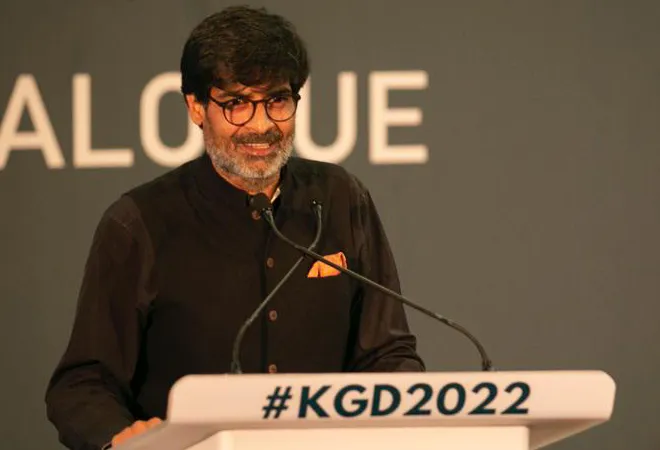
The Kigali Global Dialogue is an attempt to build that community. We are not going to give you the silver bullet to solve all problems. Nor will the dialogue offer a prescription for a better tomorrow. But we are here to be your fellow humans on a journey that we will undertake together.
May you all enjoy the ride over the next two and a half days, and may we discover important lessons on the way. Thank you for joining us at this Dialogue.
India’s presidency must leave the grouping with the agility and energy to respond to new realities, and it must create a future-ready multilateralism through a novel and robust institutional architecture
India takes over the presidency of the group in December. To live up to the potential of this opportunity, it must choose a policy direction to focus on continuity, incorporate green and digital transitions, and recognise the realities of a post-pandemic world
India’s presidency of the G20 grouping next year — arguably the sole remaining effective forum for global governance — presents an enormous opportunity to accelerate sustainable growth within India, in the emerging world, and beyond.
For India’s presidency to live up to this potential, it must recognise the constraints of the grouping and the crises — from the pandemic to the Ukraine war — that it must confront. But there should also be a clear understanding of the levers that a G20 president has to affect global policy action.
Next year, the troika of the preceding, current, and succeeding presidents will be three developing countries: Indonesia, India, and Brazil. This fortuitous alignment must inform India’s strategy as it designs its G20 agenda.
Three broad principles should underline India’s planning. First, it must recognise the value of the emerging-world troika and choose policy directions that emphasise continuity. Second, it must incorporate the concerns of its dual development transitions — green and digital — into the G20’s agenda. And third, it must recognise the realities of the post-pandemic world and prioritise action on those sectors that have, since 2020, been revealed to be under-capitalised.
India’s agenda must resonate beyond the one year it holds the presidency. This requires it to set its priorities alongside those of the two other members of the troika. The G20 under Indonesia has articulated three priority issues — global health architecture, digital transformation, and sustainable energy transition. Reinterpreting these will be key to building continuity, and, thus, sustained action. It is also important to keep in mind that having too many priorities is the same as having none at all. Indeed, India must prevent the G20 from suffering — as other multilateral forums such as the World Trade Organization do — from an over-expansion of its mandate.
Two major transformations will define our economies and societies going forward: Digital transition and green transition. Both are key to addressing the development challenge as well. These transitions are the meeting point of geopolitical and youth aspirations that will dictate our political, economic and social well-being.
On the digital front, India, to a large extent, has been a first mover. India’s youth aspirations are digital-first; the government has responded, and the digital economy is at the centre of its aim for a $5-trillion economy by the second half of the 2020s. The Observer Research Foundation’s youth survey on tech policy found that 83% of respondents want India to adopt a policy that prioritises its domestic technology industry. At the same time, 80% welcome greater cooperation with international partners on technology.
Clearly, a fine balance is needed where technological multilateralism does not come at the cost of developing countries’ needs. The Think Tank 20 (T20) engagement process has identified the internet as a basic right and technology access as vital to reducing inequalities. Cooperation at the G20 would be a good testing ground for pioneering tech regulation that balances the interests of the private sector with sovereignty and the security needs of States, and the growth demands of the economy.
India’s G20 must also recognise the unprecedented, carbon-constrained nature of future growth. Arguments for a green transition can no longer be limited to the moral high ground of saving the planet. A commitment on sustainable consumption must be placed front and centre. International financial regulation and the mandates of multilateral development banks must also ensure that adequate finance incentivises a business case for rapid change with adequate global flows subpoenaed for the developing world. Can the Indian presidency help to architect this new global arrangement?
A third focus must necessarily be the post-pandemic world order. Covid-19 has proved that health, nutrition, and livelihoods all remain fragile despite commitments made under Agenda 2030. The United Nations has warned that the Covid crisis could result in a lost decade for development. It has sharpened inequalities and widened development gaps. The United Nations International Children’s Emergency Fund has also cautioned that the pandemic could lead to a “lost generation” of children in terms of education, nutrition, and overall well-being. These conversations have become more complex due to the crisis in Ukraine. The weaponisation of trade and the international banking system during this war has exacerbated uncertainties. The surge in prices of energy and essential staple foods has added a disturbing dimension to an already stressed economic recovery. By putting nutrition, food security, and health at the heart of its G20 agenda, India can ensure the success of the Decade of Action on Sustainable Development. The clincher will be to facilitate greater funding towards these efforts.
India’s presidency is an opportunity to reinvigorate, reinvent and re-centre the multilateral order. The G20 cannot be distracted or undermined by the bilateral relations of specific members, even as we acknowledge the gravity of the humanitarian crisis that is unfolding in Europe. India must leave the G20 with the agility and energy to respond to new realities, and it must create a future-ready multilateralism through a novel and robust institutional architecture.
Our text of ancient fables, the Panchatantra, speaks of “natural allies”. If there are ever natural allies in politics, the European Union (EU) and India should exemplify this relationship. Our cultural exchanges date back to ancient times; our languages have common roots; our borders are closer than ever via a human bridge that connects us: There are millions of Indians in the Middle East, and millions from the Middle East in Europe. Europe and India are a geographical continuum. And both the EU and India— “the world’s largest democracies”—face shared threats and challenges. All roads must now connect Delhi and Brussels.
Here, we lay out a map to address three key challenges: The green transition, the digital transformation, and the preservation of our shared geopolitical landscape. On all three issues, direct and close cooperation between the EU and India will not only be vital for these two major powers and their people—but also for the world at large.
Green Transition
To address climate change, the EU and its members have been upping their domestic game. The European Green Deal is only one amongst several key initiatives that illustrate the seriousness with which the EU is addressing the existential threat of climate change. At the same time, there is much angst in Europe that these efforts will not suffice unless they are matched by China and India. While the concerns are understandable, a narrative framed in terms of “what will become of the world if every Indian has a car” is patronising and misplaced, especially when one compares the per capita fossil consumption in India to the EU members. In any case, specifically with respect to India, the EU is pushing through an open door on the issue of addressing climate change. India has led the way in international initiatives on the issue of clean energy, for instance, by creating the International Solar Alliance with France. India’s commitment to protecting the environment, moreover, does not stem from recent pressure exercised by Greta Thunberg or Fridays for Future. Contra western anthropocentrism in which activists advocate climate change mitigation for “our children’s future”, Indian philosophy teaches us that the planet belongs to humans, plants, animals, and all living beings. There are, therefore, deep-rooted and inclusive reasons for Indians to be committed to protecting the planet. This commitment should not be doubted. Instead, the EU needs to find ways to invest in this Indian cause and co-create solutions for our common future.
The European Green Deal is only one amongst several key initiatives that illustrate the seriousness with which the EU is addressing the existential threat of climate change.
To achieve this, we need actions and not words. It has taken a full-blown war in the heart of Europe for Germany to recognise the risks of over-dependence on Russia for energy purposes; diversification is proving to be far slower and more complicated than many would like. In light of this experience, it is perhaps even more unreasonable than before to demand that India “phase out” coal at the click of a finger. The EU will have to put its money where its mouth is if it is serious about addressing the global problem of climate change. The Carbon Border Adjustment Mechanism, for example, should be more than a “poverty tax”, as it is seen in India; it should be a tool to finance and incentivise the green transition in globally integrated sectors in the emerging world. Technologies vital to low-carbon growth will need to be co-created and co-owned by Europe and partners like India. European capital must be given a nudge to flow into climate-conscious investment in the emerging world. It is up to the EU to make sure that India’s efforts pay off—through significant European financing in key sectors, via public-private partnerships.
Digital Transformation
The EU is leading the way in setting people-centred standards on digital governance via GDPR. India’s Aadhaar Card scheme has shown the pioneering role that digitalisation can play in empowering the poor and facilitating development. There are also already several worrying examples of the pernicious effects of digital technology: Surveillance of local populations by authoritarian states, as well as the manipulation and control of infrastructure and security systems by external actors. To preserve the individual liberties of their people, and strengthen digital sovereignty, European and Indian cooperation will be key.
Research collaborations on dual-use technology, public-private partnerships for implementation and marketing of these innovations, and working jointly and through like-minded coalitions to establish rules for data governance and cyber-security are essential.
These two democratic powers will also be well-served to collaborate on diversifying away from their dependence on China, for e.g., on 5G technology and infrastructure development. Any trade agreement between the EU and India should prioritise this key consideration. Research collaborations on dual-use technology, public-private partnerships for implementation and marketing of these innovations, and working jointly and through like-minded coalitions to establish rules for data governance and cyber-security are essential. Neither the EU nor India can get left behind in a game that is dominated by the boardrooms in the US and party headquarters in China. India and the EU need to enter into a technology partnership that allows for all of this, and for ensuring reliable and integrated supply chains.
Shared geopolitical landscape
Our shared geopolitical landscape—extending beyond geographical proximities and including the Indo-Pacific—has been under extreme stress in recent years. The EU has a war triggered by Russia on its borders; India and its neighbours have had to put up with Chinese adventurism on the Himalayas and in their maritime neighbourhood.
Research collaborations on dual-use technology, public-private partnerships for implementation and marketing of these innovations, and working jointly and through like-minded coalitions to establish rules for data governance and cyber-security are essential.
This is a time for both the EU and India to be working together to help restore balance in the region. The EU will need to jump off the fence with respect to China; the European mantra of “partner, competitor, rival” is highly inadequate in dealing with a China that has signed a “no-limits” partnership with Russia. India will also need to rethink its own dependencies. The two democracies have now very real incentives to develop closer economic and military ties.
Sanctimonious lectures about morality will need to be replaced by a shared empathy of the like-minded. And all this will require the use of not only Europe’s favourite tool of “soft power”, but also the use of hard power through infrastructure projects, green investment, and military cooperation. Re-aligning their economic and security cooperation with each other will enable both the EU and India to stand up for the values that they both hold dear: Democracy and pluralism.
As the price of natural gas reached record highs in the UK and Europe—trading at the equivalent of $200 per barrel of oil,[1] and as economic activity in China has been curtailed by the country’s power supply crunch, central bankers and policymakers from across the globe are forced to confront significant challenges to price stability, with a focus on shielding households and businesses from an increase to the cost of transport and basic goods, while monitoring the potential for price pressure and supply chain bottlenecks to upend the global economic recovery. This is important at this time, for the ripple effects of disruptions to energy markets could amplify social and political fissures that are visible across the global landscape, and which might portend complex domestic politics as many countries head into elections in 2022.
Surging demand for natural gas—and shortages and bottlenecks to supply—have resulted in a corollary demand for oil products (referred to as gas-to-oil switching), thus driving up the price of WTI crude to seven-year highs.[2] The skyrocketing commodity price environment has led one observer to point to the “revenge of the old economy”, according to which the collective noble efforts to move toward a cleaner, greener future fuelled by renewable energy have been stymied by a recent past of inadequate investment into the capacity and infrastructure of the hydrocarbons that power our economies.[3]
Thus, even as COP26 has drawn to a close, and as policymakers, business leaders, and investors have left Glasgow with firm commitments to ostensibly advance the decarbonisation agenda, we are reminded of the extent to which our entire energy infrastructure still hinges upon the use of fossil fuels. This includes oil used for transport or power generation, or natural gas (or coal) for power generation, as well as natural gas deployed as “bridge fuel” to support the growth of renewable energy, including wind, solar, and hydrogen. This is effectively captured by what transpired in Germany earlier this year. In the first six months of 2021, the country increased its coal-based generation, which contributed 27 percent of the country’s electricity demand.[4] The need to resort to coal-fired power generation is not unique to the case of Germany: the US has also posted the first annual increase in coal use for power generation since 2014.[1] The combination of an asynchronous economic recovery, attendant shocks to demand, curtailments of supply, and surging prices in natural gas are contributing factors to rich income countries’ pivoting toward the use of coal. This illustrates one stark reality: hydrocarbons continue to underpin our global energy infrastructure.[5] For all the talk of “stranded assets” and potential “dinosaurs of investment”,[6] hydrocarbons still compose the lion’s share of energy consumption on a global basis.[7]
What are the lessons to be learned from the recent power crunches? And what are the potential macro, socio-economic, and geopolitical implications as we navigate the energy transition? Amidst so much uncertainty and volatility, where are the opportunities for accord, as well as bright spots for investment?
Humility is also requisite as governments confront their energy interdependence with one another: again, despite record growth in renewable energy capacity,[8] and surging climate financing, countries within the European Union are poignantly aware of their dependence upon natural gas imports—whether from Russia, Norway, or the US. And even despite its own domestic shale and conventional oil and gas production, the US continues to import hydrocarbons from countries such as Canada, Colombia, and Saudi Arabia. Similarly, even despite trade tensions, resource ties still bind China with Australia, with the latter having exported a record volume of natural gas to China in 2020.[9] Thus, geopolitics remains at the very heart of the changing energy landscape. The inverse is also entirely true.
In the past, resource ties have been a source of tension; but, as we shall see, such bonds also have the potential to become a geopolitical salve, provided that the relationship is designed to be mutually beneficial to both parties. As we navigate the path toward net zero, and by seeking balance and diversification, our continued energy interdependence can actually spur opportunities for cooperation amongst policymakers, and for long-term investment and profit generation for enterprises and economies around the world.
The quest for resources to fuel industrial growth, military campaigns, and transport and urbanisation lies at the very heart of geopolitics. In considering the relationship between energy and geopolitics, the existence of resources is often associated with tension, be it in the form of border disputes, armed conflict, trade disputes resulting in embargoes, or interstate conflict or war. Access to strategic reserves of coal in Romania was a pivotal part of the campaign on the Western front during the Second World War. During the 1970s, energy-importing countries experienced the oil shocks related to the OPEC crises in the wake of the Arab-Israeli War, the Yom Kippur War, and the Iranian Revolution.[10] Indeed, research shows that if a resource-rich country has an endowment of oil along its border with an “oil-less” country, then the probability of conflict between these two countries is higher than if there were no oil at all.[11] Recent data also indicates that the presence of onshore oil might even portend a higher rate of conflict than the presence of offshore oil, as the potential for production and output to be seized by rebel groups is far higher on land than it is in deep-sea projects.[12]
And yet, while asymmetric access to resources might spur tensions between countries, it can also be a geopolitical salve, by underpinning ties of trade, development, and civic diplomacy and even employment. Japan’s quest for resources to fuel its extraordinary manufacturing era from the 1960s onwards resulted in a mutual export of ODA (overseas development assistance) to southeast Asian countries such as Vietnam. One might also argue that Israel’s relatively recent discoveries of natural gas—and successive exports to Egypt—have also underpinned a normalisation of relations with Cairo, — a diplomatic rebalancing which has also been a key facet of improving relations between Israel and the UAE.
A crude awakening: our enduring energy interdependence, and continued reliance upon fossil fuels
Such positive examples of resource ties are swiftly forgotten in times of crises. The underlying conditions that led to positive benefits to the political relationship in these two instances are also ignored. And so it is with the present power crunches ricocheting across the globe. With the asynchronous reopenings of economies in the wake of the COVID-19 pandemic—and amidst ongoing disruptions to supply (be it from underinvestment in hydrocarbons, weather-related events such as flooding, pandemic-induced stoppages to production, or port congestion)— we are reminded not only the extent to which our economies depend upon fossil fuels for power generation and for transport, but also, of the extent to which many countries remain deeply interlinked in patterns of energy interdependence.
The European dilemma regarding natural gas supply from the Russian Federation is instructive, but it must also be recognised that energy interdependence cuts both ways. As long as Russian gas is a competitive source for energy, then energy-hungry European manufacturing powers will need to engage with the leadership in Moscow; equally, as long as Europe has access to alternative sources of fossil fuels – even if not as cheap – Russia will need to retain an understanding of European red lines. This is what interdependence means. This insight is equally applicable to the energy interconnections of the future: China can be a useful partner in the energy transition, even if it is not the only one.
Indeed, for some policymakers, part of the allure of developing domestic renewable energy capacity was that it ostensibly would lead toward more enhanced energy independence. Ostensibly, extraordinary efforts in diplomacy might not be needed in such a green future, as countries would, in theory, no longer be reliant upon conflict-ridden territories to secure energy supply. Even in a net-zero future, this is perhaps to view the world through rose-coloured glasses: for the development of wind, solar, and hydrogen energy—or indeed techniques of greater energy efficiency—at an affordable cost is intrinsically related with garnering supplies, inputs, R&D, and human capital from different jurisdictions. Overly halcyon scenario-planning for domestic renewable energy capacity development often fails to incorporate these facts.
The shift from fossil fuel-based to renewable energy capacity does not end interdependence; it merely pushes interdependence to a different part of the energy mix. The dependence now shifts from hydrocarbons to metals and from ores to rare earths. Countries in Africa, Asia, Americas and Australia are likely to emerge as global mineral hubs, and the routes to ship these new commodities might pave new geostrategic highways.
In recent years, control over the production of rare earths has become a familiar site for geopolitical tension. In 2021, the Biden administration in the United States ordered a review of the country’s critical mineral supply chain; the recommendations included prioritising development financing for “international investments in projects that will increase production capacity for critical products, including critical minerals”.[13] The administration’s concern is readily understandable, as shown in Table 1.
Table 1: China’s share in the rare earths supply chain
*Disaggregated data for neodymium was not available; the data for Rare Earth Concentrates (REO) has been used since neodymium is a rare earth metal.
Yet it is not just production of rare earths that will be relevant, but also the locations of their processing and other forms of value addition. These might emerge as the equivalent of present-day refineries and petroleum complexes, and their distribution potential linked to key consumption centres might lead to the birth of new geostrategic lynchpins such as the Straits of Malacca and of Hormuz. The notion that domestic renewable energy production would free countries from the intricacies of dependence is misguided – and a seminal mistake if it was to be the basis of new energy order.
Sunset on Malthus?
Part of the reason why the aspiration of energy independence retains its sheen is that our energy economics and policymaking continues to be suffused with a Malthusian legacy.[14] Said another way, the spectre of scarcity continues to inform the way we think about energy and resources. The fear that “there will never be enough” renders misgivings about dependence—or else outright denial. A sense of energy insecurity –no matter how much it is brushed under the rug might also prompt a premature and imprudent vaunt into a disorderly energy transition, with a disproportionate focus on bolstering capacity at home. Such a policy would have little regard for the fact that climate change has been branded as humanity’s largest negative externality: in order to mitigate the situation, global actions ought to be in concert. Humility is thus needed not only in recognising the endurance of hydrocarbons within the energy mix, but also, but it is also implicit in our interconnectedness as we navigate the green transition. For the rich income countries, part of this humility also requires understanding the various ways in which the energy transition has the potential to deepen the chasm between the ‘haves’ and the ‘have nots’.
The haves and the have-nots: is the energy transition deepening the chasm?
The energy transition has the potential to create a deeper chasm between the standings of the ‘haves’ and the ‘have nots’ in the global macroeconomic environment. First, if we consider the traditional trajectory of industrial growth—that is, from agrarian activity to textile production, and then from heavy industry to light manufacturing, eventually segueing to services-oriented economies—the case can be made that for developing countries earlier on the maturity curve (such as Vietnam and India), stringent measures toward decarbonisation might actually thwart what would otherwise unfold as a full evolution of robust domestic industry. For the ‘price takers’ and for commodity-hungry countries, this might take the shape of premature restrictions on access to or use of resources to fuel domestic manufacturing activity.
And for the ‘price makers’—that is, commodity-rich exporting countries—the case can also be made that swift or unrealistic moves toward decarbonisation might rob oil and gas exporters from a significant base of output as well as a source of gross national income. In a country in which resource wealth underpins GDP, export activity, employment (both directly related to exploration, extraction and production of natural resources, as well as indirectly, via civil service salaries), national income, and sovereign and pension funds, the potential for social fissures to either manifest or to be exacerbated is clear.
It should be noted that history indicates that access or proximity to natural resources is not perfectly correlated with a trajectory of sustainable economic growth—hence the “Dutch resource curse”. Research from Brazil also indicates that oil endowments within a province or a municipality do not necessarily result in improved livelihoods for members of that community.[15] Indeed, even in a lofty commodity price environment, such as at present, windfalls potentially reaped from higher export prices of oil and gas do not always translate into higher incomes for households within the exporting country.[16]
This tension between environmental and the development agendas within emerging markets and developed economies (EMDEs) is also evident in the debate surrounding the potential carbon border adjustment tax (CBAT), as well as recent agreements on deforestation in COP26.
Home game: mitigating the domestic bias of climate finance
An effective, secure energy transition is currently undermined by the “domestic preference” evident within the realm of climate finance. In recent years of tracking climate finance flows, data from one leading industry body evidences that 76 percent of capital is invested in the same country in which it is sourced.[17] Thus, despite various commitments and guarantees from bodies such as the G7 or the G20, a significant challenge remains regarding the ability for much-needed climate finance to cross borders.[18] Certainly, a long-running trend of a domestic bias for investment is not limited to climate and infrastructure investments. Rather, it extends across sectors and asset classes, including real estate, energy, private equity, and venture capital. Whilst managing ‘sticky capital’ and the prospect of generating long-term returns, and building up enterprise and asset values, investors might harbor an inclination to place their money close to home—in other words, “where home-country risks are well-understood.”[19]
As these authors have highlighted previously, playing close to home in infrastructure investing may not always be the least risky option.[20] And yet, we have already motioned that the dawning age of renewables is not one of energy independence, but of a new kind of interdependence. Policymakers operating under the illusion of energy sovereignty are otherwise missing out on the opportunity to cultivate positive structures of interdependence which could potentially support their own geo-strategic aims – such links, might, in turn, spur opportunities for private investment.
Thus, we might witness a shift in incentivisation for private finance and the climate problem: such that sticky capital not only supplies the domestic market, but that it is directed outwards as well, perhaps even towards the geographies where host countries of finance might find mutually beneficial resource ties – such as the model of Japan and ODA in Southeast Asia, discussed earlier. As argued above, interdependence can be a salve for geopolitics as long as both sides gain in the energy or in the development equation. Such a value exchange – or what Michael Oakeshott refers to as an “enterprise association” – rests upon an understanding of interdependence – again, something that has been jettisoned in the lack of humility in the energy transition (something which is mirrored in the “domestic bias” of climate capital).
Such misconceptions have the potential to divert policymakers from a future of true sustainability, which involves the creation of resilience through diversification. Redirecting long-term flows of investment—including private capital—towards emerging market/developing economies will not necessarily be easy. Large sources of private capital in the global north – whether institutional capital or banks – will need a fresh set of incentives to invest in the energy supply chains of the future.[21]
Moreover, recognising that these investments will likely be in new minerals, new processes, and new geographies, it is clear that old regulatory risk models may no longer be suitable. New market mechanisms to help enable a level playing field of investment in new energy materials are needed—which might take inspiration from the industry bodies which have developed over time in support of oil markets around the globe.
Conclusion: The Green Marshall Plan
The scale of the rebalancing required – of investment, attention, and financial flows – is vast. If anything, it should be compared to the Marshall Plan. That enormous effort, after all, had both pragmatic and idealistic motivations. On the one hand, it was necessary to assist a Europe devastated by war; on the other, it was essential that a liberal community be built that was strong and resilient in the face of the Soviet challenge. There are similar overlaps today between the realist search for security and the idealist requirements of climate action. A Green Marshall Plan has the potential to both stabilise international relations and create the diversification and resilience necessary to allow for durable interdependence during the energy transition.
For the energy transition to act as a geopolitical salve rather than as a source of discord, a Green Marshall Plan must have four characteristics.
First, it should be genuinely global in character. A global net-zero approach would understand that some regions might take longer on the fossil fuel transition because of the specifics of their development or their energy landscape. Nor should geographical factors be ignored: An archipelago like Indonesia will take longer to transition to solar energy and away from natural gas than a continental country.
Second, legacy energy infrastructure will need attention to help enable the success of the Green Marshall Plan, to make it implementable, and to scale it. As is evident in energy consumption patterns across the globe, fossil fuels remain a part of the energy mix, and a way of working toward a balanced and global green transition. Nor can sectors like mining be ignored: the Green Marshall Plan will likely have to go into a “dirty” sector, invest in new ways of mining and new materials to mine.
Third, the Green Marshall Plan is not just about blue-sky research into the possibilities of the future. It is about increasing investment in nuts-and-bolts manufacturing in underserved geographies as well – whether energy efficiency in the Asian steel producers of the future or new cobalt mining technologies in sub-Saharan Africa today. It is about enabling development of critical frontier technologies, as well as swiftly and sustainably spreading a green ‘know-how’ which is globally benchmarked.
And fourth, the Green Marshall Plan should embed energy resilience at its heart. Areas which have sped up their energy transition are those where it is seen as assisting in energy security. As these authors argued, dependence on a single source or vendor is antithetical to achieving long-term and sustainable energy security. As such, the strategic mapping of a secure energy future cannot exclude a China, with its strong presence in the rare earths supply chain, or a Russia with reserves of natural gas, or the countries of the Gulf, abundant in oil and gas reserves. Again, humility as well as diversification might render each actor a more responsible and empathetic participant in the global energy transition.
What we are recommending is an all-inclusive future. That will require the leaders of key nations to invest political capital in a new institutional framework that supports the energy landscape of the future. The International Energy Agency, OPEC, commodity exchanges and others defined and shaped the hydrocarbon world. The global energy transition requires new frameworks, organisations and political arrangements to underwrite our common journey ahead, which reflect the needs of multiple stakeholders, in both the private and public spheres. The G7’s B3W, the European Union’s Global Gateway, and the Indo-French International Solar Alliance all point to one imperative: of green arrangements underwriting green transitions. The world needs a new institutional structure: one that keeps the lights on in the 21st century.
[5] See also, Vivan Sharan and Samir Saran, “India’s Coal Transition: A Market Case for Decarbonisation,” ORF Issue Brief No. 505, November 2021, Observer Research Foundation.
[14] For an excellent discussion of how Malthus continues to cast a long shadow on economics in advanced economies, see J.K. Galbraith, The Affluent Society (US: Houghton Mifflin, 1958).