Water / Climate

Samir writes for the Asian Energy Institute (AEI) newsletter on ‘Climate change and human security: building a framework for action’

January 2011
Download the entire newsletter here (pdf)

Climate change and human security: building a framework for action

‘Climate and security’ is a narrative with multiple layers and irresolvable complexities. At the very core, it continues to remain a western narrative on a looming and enduring eastern reality.This very comprehension of climate and security lends to discussions an externality that both hemispheres find hard to reconcile. But before we discuss this inherent paradox within ‘climate security’—a term used to broadly describe situations, discussions, and elements that constitute security within and resulting from climate discourse and global climate action (modest at best), it may be useful to shape the boundaries of what be the core tendencies, trends, and impulses that define it.

The use of the terms ‘climate’ and ‘security’ in popular literature conjures up images of apocalyptic storms, landslides, extreme weather conditions, deluge, rising sea levels, melting glaciers, droughts, floods, cyclones, and similar weather phenomena that will ravage countrysides, inflict loss of life and property on an unimaginable scale, and result in mass exodus of populations. Be it the Hadley Centre Report that feeds this imagery through a more scientific and nuanced approach (Department of Energy and Climate Change) or the Stern Review that deploys this description to urge action by the developed and developing worlds (Stern 2007), the correlation between climate and such threats is unmistakable. This continues to be the defining imagination of security within the climate debate—hotly contested in terms of scale, size, and timelines. Images of death and destruction remain the central argument in the arsenal of a section of the political class, both in the West and East, who are vociferously urging action, incentives, and commitments around green technology, carbon trade, and innovation.

The success of the approach of linking climate action to impending apocalypse is debatable. Also at doubt is its ability to elicit appropriate response from policy- makers and institutions. Deploying images of death and destruction within the climate debate, some argue, is ‘climate pornography.’ It is forcefully stating the obvious, and as some would argue, also the inevitable (Ereaut, Gill, and Segnit 2006).The semantics of this argument are clearly built on the ‘fear for life’ and ‘fear of the future’, and seek to compel political action on this basis by gaining support in the larger public sphere. This approach seemed to have helped create a surge in the constituency of those seeking climate action, particularly in the Western countries. This has also resonated among a specific constituency in the emerging nations, prior to the Conference of Parties at Copenhagen last year. However, it has been unable to stem the disenchantment of the larger public from matters of climate, and ‘climate fatigue’ is setting in. As per a 26-country survey conducted by GlobeScan, concern for climate change is dwindling both in Europe and North America (GlobeScan 2010). According to the survey, support to climate efforts in the UK fell from 59% to 43%, and in Germany from 61% to 47%.This narrative was also unsuccessful in appealing to large constituencies in emerging countries and the developing world. This was a result of poor communication, hypocrisy, and inherent dichotomy in the construction of the debate.This predominantly western narrative on climate security describes the outcomes (floods, cyclones, and so on) through a matrix of predictive dates and probabilistic scenarios.This was an instance of science attempting to steer policy that, as some argue, failed. Science is comfortable with probability and percentages, but people are not. Communications on the matter often sounded weak and convoluted and the messages lacked clarity.They also lacked a central appeal, but more importantly, they failed to offer a response to the challenge. This was perhaps the biggest failure in the communication of the imminent dangers of global inaction.The articulation lacked considered and feasible global responses without which communications were read as scare mongering or where there were indications of certain action (read technology as the saviour) it was read as lobbying by vested interests. Global inattentiveness to ‘climate and security’, in some sense, is as much about a failure to communicate, as it is about political differences and high economic stakes.

However, the hypocrisy within the narrative surfaces when this debate seeks placing the occurrence of extreme climate events and disasters into the future and when action is urged for the benefit of future generations (such as the US President Barack Obama’s exhortation to act on climate change or risk ‘… consigning future generations to an irreversible catastrophe’). If, as climate science suggests, man-made emissions are able to subvert some of earth’s natural systems, then why are the current extreme events also not a result of the last two centuries of industrialization and rampant mercantile capitalist production? To many, the answer is simple yet hypocritical.The rich would have to foot the bill today for having squatted and ravaged the limited carbon space available as a common resource for global citizenry. The impact and solemnity of the climate and security argument would have far greater weight if developed nations were obligated to make good the costs of life and property that are lost in the poorer regions today due

to floods, cyclones, hurricanes.Yet while we hear a call for action on pricing carbon (which allows the rich to usurp more carbon space), incentives for technology and securing intellectual property rights, a determined and unequivocal call for damages of past action is missing. Ensuring that the countries with the means to respond to the suffering caused by such climate-related disruptions in poor and emerging countries, are allowed to absolve themselves of any responsibility, adds to skepticism, and weakens the most important argument—that of security—for global action.

Calls for global action sound hollow for another reason—the quantum of commitment made by the affluent nations.While the rhetoric of preserving the planet and human life is pitched high, what we see in terms of response is tokenism.To save the planet, the mightiest nations in the world got together at Copenhagen last year and then at Cancun recently, and committed to a paltry $100 billion each year by the year 2020.2 Let us now place this pledged amount against another recent response by the world community. It is estimated that over $3 trillion was committed by the US, China, EU, and other countries to help the world economy or as some suggest, to ‘save a few banks and large corporations’ (Barbier 2010). Three trillion to save the financial system and a 100 billion to save the planet—a fact that will undermine any security discourse within the climate narrative.

The other extremity of the climate-security narrative is less popular, but fast shaping as a significant line of thought. It focuses on elements of human security outside of the ‘life and property’ paradigm.This debate places the human right to develop, grow, and aspire for a better life as a primary objective of climate action (Saran 2010). Here, too, the western narrative seeks to focus the discourse on poverty reduction within the objectives of climate action, thereby reducing the aspirations of billions in the emerging world to that of survival and poverty-line existence.The fact that the industrial economies of the OECD and their high income populations were assisted and subsidized by carbon-intensive fossil fuels is cast aside as an act of ignorance, and the importance of the use of coal and gas in determining the pace at which India and other emerging countries develop is undermined by real but superficial arguments on ethics and shared responsibility. Poverty and growing aspirations are the two imperatives for any political system in emerging economies, and there would be political unrest if the leadership in these nations were to compromise on these.

However, the climate narrative is beginning to exert itself in the development processes of poor countries. Last year, we saw the US EXIM Bank deny a loan to a coal project in South Africa, and dither on a similar proposal for India citing potential emissions as the reason. If climate positions were to become barriers to trade and finance flows, we could perhaps be discussing the most significant and impending security paradigm for the emerging world.The impact of climate negotiations, and green capitalism that is rearing its head, are some elements that will define climate and security for India and other developing countries.

Let me conclude by posing some queries that policymakers in India and other developing countries will need to respond to. Can we ignore the real threat to life and property from extreme climate events? Can the actions of India reduce this threat? How can we compel the West to vacate carbon space, and cap and reduce lifestyle emissions? How will we be able to allow billions in India and the developing world to aspire and, seek homes, cars, holidays and infrastructure? Should we? Why should the first-time users of electricity in India (nearly 500 million) have to make do with token solar lamps that work for only a few hours? Why should the poorer 80% of the world’s population be made to bear responsibility for expensive climate action going forward? How do we ensure continued access to critical finance and technology required to develop infrastructure, and afford prosperity to millions? How do we carve out a global regime that removes carbon squatters and makes them pay for their historical retention of carbon space? Why should the emerging world support or incubate new technologies, when all major economies seek to place green technologies at the centre of their plans of re-industrialization and manufacturing competitiveness? Lastly, can we ignore the ‘green economy,’ and does it really provide India an opportunity to take a position of leadership in this new world? These are some of the competing dynamics of the ‘climate security’ narrative that we will need to navigate if we are to develop a robust framework that realizes the gravity of the climate and security narrative, and articulates the differentiated needs of the diversely developed regions of the world.

References

  • Barbier E B. 2010. A Global Green New Deal: Rethinking the Economic Recovery. Cambridge University Press. 171 pp.
  • Ereaut, Gill, and Segnit. 2006. War m Words: How are we telling the climate story and can we tell it better? London: Institute for Public Policy Research.
  • Department of Energy and Climate. Avoiding Dangerous Climate Change. Met Office, Hadley Centre. Available at http://www.metoffice. gov.uk/publications/brochures/cop14.pdf.
  • GlobeScan. 2010. ‘Climate Concerns Decline since Copenhagen Summit: Global Summit.’ [Press Release 2 December 2010]. Available at: http://www.globescan.com/news_archives/cancun_radar/ Cancun_climate_release.pdf.
  • Saran S. 2010. The Globalisation and Climate Change Paradox: Implications for South Asian Security. In South and Southeast Asia: Responding to Changing Geo-Political and Security Challenges, edited by K V Kesavan and D Singh. New Delhi: ORF-Knowledge World. 141–161 pp.
  • Stern N. 2007. The Economics of Climate Change:The Stern Review. Cambridge, UK: Cambridge University Press.
Standard
In the News, Water / Climate

Human Security Gateway features ORF’s report on water security in South Asia, 2011

May 2011
Link to original website
Feature on Feedblitz

Type : Report
Title : Water Security in South Asia: Issues and Policy Recommendations
Source : Observer Research Foundation
Date Added: 20-May-2011
Publication Date : 28-Feb-2011
URL : http://www.humansecuritygateway.com/documents/ORF-Water-Security-in-South-Asia.pdf
Abstract : This brief is largely based on several discussions organised at Observer Research Foundation over a period of time. These discussions were enriched by the presence of some of the well-known experts on water issues in the country, like former Union Minister for Water Resources, Dr. Suresh Prabhu, current High Commissioner of Bangladesh, Tariq Ahmad Karim, Mr. Sunjoy Joshi, Director, Observer Research Foundation, Ms. Clare Shakya, Senior Regional Climate Change and Water Adviser, DFID*, India, Mr. Samir Saran, Vice President, ORF and Dr. Dinesh Kumar, Executive Director, Institute for Resource Analysis and Policy, Hyderabad.It is estimated that by 2030, only 60 per cent of the world’s population will have access to fresh water 1 supplies . This would mean that about 40 per cent of the world population or about 3 billion-people would be without a reliable source of water and most of them would live in impoverished, conflictprone and water-stressed areas like South Asia.

Water is already an extremely contentious, and volatile, issue in South Asia. There are more people in the region than ever before and their dependence on water for various needs continues to multiply by leaps and bounds. The quantum of water available, for the present as well as future, has reduced dramatically, particularly in the last half-acentury. This is due to water-fertiliser intensive farming, overexploitation of groundwater for drinking, industrial and agricultural purposes, large scale contamination of water sources, total inertia in controlling and channelising waste water, indifferent approach to water conservation programmes and populist policies on water consumption.

Standard
In the News, Water / Climate

Samir attends the SANSAC Climate and Security Roundtable, 2010

August 6, 2010, New Delhi
Link to original website

Summary of discussion
Chair: Fergus Auld, UK Cross-Government Climate Change and Energy Unit, India

International Alert convened a roundtable meeting, kindly hosted by the British High Commission in New Delhi, with the generous support of the EU, to generate a critical discussion on the inter-linkages between climate change and conflict in South Asia and to identify the institutional and governance level knowledge and capacity gaps to promote effective responses to these risks.

The meeting was an opportunity to take forward discussion in India on the relationship between climate change, resilience and security. Bringing together institutional representatives and civil society experts, the discussion addressed the complexities of responding to climate change in conflict-affected contexts in South Asia and the institutional responses to dealing with such risks. In particular, the group explored:

  1. Where human (and indeed state) security should fit into the climate change policy discussion?
  2. What the link between climate change and violent conflict means for development policy?
  3. The specific issues to be addressed in fragile communities.
  4. The best ways to move the debate with not only the necessary sense of urgency but also awareness of the depth and breadth of the issues and the appropriate policy responses. 

Background:
As more people become aware of and motivated by the links between climate change, conflict, peace and security, both the possibility of and the necessity for clarity about these links increases. Regardless of the scarcity of data, the climate change and security dialogue is moving ahead and shaping thinking and policy as it goes. Alongside this is concern from some quarters about the so-called ‘securitisation’ of climate change. A pragmatic response to this means ensuring the climate change and security dialogue is as informed as it can be by appropriate actors keying into the dialogue to embed sustainable development and peacebuilding priorities into the core of the debate.

Key issues discussed:

  • What is the value of the climate change and security discourse? Is it a distraction from adaptation and mitigation priorities?There are three particular risks in the climate change and security nexus:

i)         Just as security fears can mobilise people and change, sensationalist scenarios demobilise, especially when they turn out not to justified by the evidence.

ii)       Treating conflict and security issues as if they will produce direct threats from one country against another, or even one group against another, which is the language of military security will distort the debate and the policy response; at worst, the response will be inappropriate and wasteful.

iii)      Basing the argument on an over-simplified linkage could generate policies that miss their targets in other ways and simply lead to confusion and uncertainty about what the problem is and why anyone should care.

Yet the discourse exists and will continue to move in some cases with more policy leverage than the adaptation or ‘common but differential responsibility’ for mitigation discourse. As such, the three risks above notwithstanding, engaging in the security discourse is a vehicle for getting critical development and governance concerns to the policy table.

  • What is the nature of the causal link between climate change and security?

Policy cannot and should not be based on a straightforward cause-and-effect relationship between climate change and violent conflict or political instability. There is a lack of research findings on the topic and what there is does not offer robust conclusions. And there are good reasons for this: namely that causality is always complex. Armed conflicts not only have several different causes but several different types of causes. These are often conflated, blurring the differences between background or root causes, the immediate trigger, the role of the external actors etc. The fact is that simple cause-and-effect is rarely if ever enough to explain the origins of a conflict.

Given this lack of clear causal link, the sparse research literature on climate change and security contains some that declares that no link can be proven. But the fact that no link can be proven is not the same as saying none exists. A real limitation of studies so far is that they work by reflection on the past – whereas the key point to understand about climate change is that the future will be different from the past.

Perhaps the largest security risk of climate change is the most preventable one. That is the risk that climate change policy itself will be the most destabilising factor in fragile communities. The reasons are three-fold:

i)         New financing mechanism on climate change strive towards ‘national ownership’, but where the state government is an actor in the conflict and is party to structural exclusion and marginalisation, this essentially provides an additional ‘point resource’ for elite capture and for the perpetuation of existing systems of exclusion and inequity.

ii)       Lack of adequate consideration of the knock-on consequences on interventions to address climate change can have inadvertent negative consequences which could stoke instability. The rapid switch from food to fuel crops in the ill-informed bio-fuels experiment which lead to global riots in 2008 is a case in point. There are many more trip wires of unintended consequences in the path low carbon development which need to be understood from a conflict sensitivity perspective, particularly around REDD and hydro.

iii)      Any action involves a trade-off and creates new winners and losers. A shift in priority to narrow and technical adaptation or mitigation responses will entail others issues – perhaps basic services such as health or education – being pushed down the agenda. In already fragile communities where governance is weak and basic service delivery is poor, such a shift could rupture an already weak social contract between citizens and the state.

  • How to address the lack of empirical evidence?

The evidence base for climate and security interlinkages is necessarily weak; there has been too little time since the effects of climate change began to receive adequate attention for research data to have accumulated of the kind needed for large-scale quantitative studies that can reliably depict trends. Further, the state of knowledge in the natural sciences does not let us attribute specific events such as flood or drought to climate change, nor does it offer any policy relevant predictions of impacts at the regional level. As such, there is a case for turning instead to case studies. While limited in their generalisability, developing a broad geographic spread of case study evidence which drill deep down to understand community level perhaps offers the best solution to the knowledge gap in the interim.

Conclusions:
There was strong consensus that the solution to the risk of climate change policy itself becoming a security threat is linking dialogues. This entails much more local level research into climate change and security links and risk transmission pathways (such as rural-urban migration, food insecurity, service delivery failure), addressing governance capacity constraints to ‘joined-up’ programming, and advocacy to move the debate beyond concerns that the security dialogue will hijack the climate change dialogue, and instead to bring the dialogues together.

Next steps:
Interested parties are to remain part of an ongoing dialogue process in India, and also to link into the regional climate change and security dialogue. Specific aims of this dialogue process would be to bring development and human security concerns, lessons and good practice to the heart of the climate change and security debate. Alert is happy to facilitate the dialogue. ORF have offered to host the next meeting. In the meantime, all participants are welcome to share resources through the South Asia Network on Security and Climate Change web-space (www.sansac.org).


List of participants:
1.       Ranu Sinha, Operations Analyst, Water Resource Management, World Bank

2.       Samir Saran, Senior Fellow and Vice President, Observer Research Foundation

3.       Rob Donkers, Environment Minister Counsellor, EU delegation India

4.       Mansie Kumar, EU Delegation India

5.       Uttam Sinha, IDSA

6.       Gitanjali Nandan, First Secretary, Australian High Commission

7.       L Vijayanathan, Senior Adviser, Environment, Climate and Energy, Norwegian Embassy

8.       Karolina Hedström, Regional Crisis Response Planner – South Asia, EU India

9.       Deepti Mahajan, Research Associate, Resources and Global Security,Teri

10.   Fergus Auld, First Secretary Climate Change and Energy, DfID India/British High Commission

11.   Clare Shakya, Senior Regional Climate Change and Water Adviser – Asia, DfID India

12.   Janani Vivekananda, Climate Change and Security Adviser, International Alert

Standard
In the News, Water / Climate

Samir attends the Renewable Energy and International Law (REIL) roundtable in Cambridge, 2011

June 20-21, 2011, UK
Link to original website
Feature in Global Energy Review, July 12, 2011
Feature in Business Weekly, June 13, 2011

Anglia Ruskin University’s Global Sustainability Institute (GSI) is co-hosting the prestigious Renewable Energy and International Law (REIL) roundtable in Cambridge from 20-21 June.

REIL is an informal network of international climate change and clean-energy experts. Its members include policymakers, private investors, technology developers and academics, all working to increase the use of cleaner and more efficient energy solutions.

Delegates taking part in the roundtable include Bob Simon, Chief of Staff of the United States Senate Energy Committee; Brad Gentry, Director of the Yale Centre for Business and the Environment; Melinda Kimble, Senior Vice President of the United Nations Foundation; Samir Saran, Vice President of the Observer Research Foundation in India; Richard Kauffman, Chairman of Levi Strauss & Co; and Eomon Ryan, Leader of the Green Party in Ireland.

The event, which is being held at the University of Cambridge’s Moller Centre, will focus on strategies to address climate change and the development of the low carbon economy. Topics for discussion include financing clean technology; the convergence of food, water, and energy issues; and sustainable energy access.

“With long-term international political processes finding it difficult to come to agreements, it is ever more important to be thinking creatively about solutions to climate change and access to energy. REIL brings together key influencers from across the climate change policy and finance world. In particular it offers a unique opportunity for public and private sector delegates from the UK and US to share innovative thinking and approaches to tackling issues within the energy sphere. The group of people meeting in Cambridge for this workshop will examine some of the key challenges that we face and demonstrate that a solution is possible and can be found,” said Dr Aled Jones, Director of Anglia Ruskin’s GSI.
REIL members convene regularly, with an annual roundtable held at the Yale School of Forestry & Environmental Studies. This year, REIL are holding their first ever roundtable at Cambridge University in partnership with the Cambridge Centre on Science and Policy (CSaP) and Anglia Ruskin University’s GSI.

The synergy between REIL, CSaP and GSI is strong, with CSaP acting as a networking organisation dedicated to building relationships between policy makers and experts in the fields of science and engineering.

The GSI is a research institute based at Anglia Ruskin that encompasses a broad portfolio of areas and interests including environment, built environment, technology, tourism, business practice, education and health.

The roundtable will comprise discussions on the following subjects:  

  • Financing Clean Technology (including proposals for Green Investment Banks)
  • Convergence of Food, Water, and Energy Issues
  • UNFCCC: From Cancun to Durban
  • Technology
  • Sustainable Energy Access
  • Financing Energy Efficiency

Event chairs:

  • James Cameron (Founder and Vice Chairman, Climate Change Capital)
  • Bradford Gentry (Director, Yale Center for Business and the Environment, Yale School of Forestry & Environmental Studies)
  • Leslie Parker (Managing Director, REIL)
  • Martijn Wilder (Partner and Head of Global Environmental Markets Practice, Baker & McKenzie and Adjunct Professor, ANU)

Timings
Monday 20 June: The meeting will start at 10am and finish with dinner in Trinity Hall.
Tuesday 21 June:  Day two of the meeing will start at 9.30am and finish at 5pm.
Please note that attendance is by invitation only.  There is no fee associated with attending the workshop and dinner.

Location:
The Møller Centre
Management Training & Conference Centre
Churchill College, University of Cambridge
Storey’s Way
Cambridge
CB3 0DE
United Kingdom

Company: Reil (Renewable Energy & International Law)
Websitehttp://www.anglia.ac.uk/ruskin/en/home/news/climate-change-event.html

Standard
In the News, Water / Climate

Bangladesh Online Research Network report on ORF’s water security report, 2011

Bangladesh, 2011
Link to original website

Water Security in South Asia: Issues and Policy Recommendations
This brief is largely based on several discussions organised at Observer Research Foundation over a period of time. These discussions were enriched by the presence of some of the well-known experts on water issues in the country, like former Union Minister for Water Resources, Dr. Suresh Prabhu, current High Commissioner of Bangladesh, Tariq Ahmad Karim, Mr. Sunjoy Joshi, Director, Observer Research Foundation, Ms. Clare Shakya, Senior Regional Climate Change and Water Adviser, DFID*, India, Mr. Samir Saran, Vice President, ORF and Dr. Dinesh Kumar, Executive Director, Institute for Resource Analysis and Policy, Hyderabad.

It is estimated that by 2030, only 60 per cent of the world’s population will have access to fresh water 1 supplies . This would mean that about 40 per cent of the world population or about 3 billion-people would be without a reliable source of water and most of them would live in impoverished, conflictprone and water-stressed areas like South Asia.

Water is already an extremely contentious, and volatile, issue in South Asia. There are more people in the region than ever before and their dependence on water for various needs continues to multiply by leaps and bounds. The quantum of water available, for the present as well as future, has reduced dramatically, particularly in the last half-acentury. This is due to water-fertiliser intensive farming, overexploitation of groundwater for drinking, industrial and agricultural purposes, large scale contamination of water sources, total inertia in controlling and channelising waste water, indifferent approach to water conservation programmes and populist policies on water consumption. SOURCE: Observer Research Foundation

Standard
In the News, Water / Climate

Samir at: “Technology transfer, policy and climate change: Goal 2020 for India”

21 April 2010, Delhi
Download here the entire agenda

A roundtable was held on April 20, 2010, Tuesday, on “Goal 2020: Identifying issues, options, opportunities and frameworks towards demand side mainstreaming of climate friendly technologies through Technology Diffusion Centers”, at the ORF New Delhi campus. The roundtable saw participation from trade commissions, multilateral investors and corporates.

This roundtable was convened by the ORF in association with the India Carbon Outlook,  an independent information marketplace tracking actions related to the carbon economy as well as their impact, and the cKinetics, a venture accelerator catalyzing rapid adoption of low carbon sustainable growth practices in emerging economies through technology transfer, capital access and adaptation interventions.

The roundtable was held to identify steps that can be taken in the coming years so as to be able to achieve the impact of technology/application available to be transferred for mitigation and adaptation in India by 2020. The roundtable had the four sessions. The first and the second session were based on the discussion on climate friendly prototypes and discussion on global experiences. The third session was divided into two parallel working group discussions- Technology Transfer framework, Designing Technology Diffusion and Innovation Hub Ecosystem and Prototype Rollouts and Mass Adoption.

In his opening remarks Mr. Sunjoy Joshi, ORF Distinguished Fellow, said that pace of adoption & innovation was critical for mainstreaming climate friendly technologies and identified solar thermal technology as the most promising one for mass adoption.

The first session started with Mr. Upendra Bhatt, Managing Director, cKinetics, laying out the goals for the roundtable: facilitate technology diffusion and technology transfer; document best practices; identify prototype technology for next two years; come up with concrete suggestions. He also presented highlights from the pre-meeting questionnaire which essentially represented contrarian views on clean technology transfer.

In the second session, Mr. V. Raghuraman, Principal Advisor, Jaguar Overseas Ltd., stressed upon the need to adopt Electric Power Research Institute model in diffusing renewable technology for India. He was of the view that LED lighting technology is one of the means to provide lighting to 400 million inhabitants having no electricity. He also said that for mass adoption the technology should be user friendly. Mr. Samir Saran, ORF Vice President, said that energy efficiency is “the low hanging fruit” in achieving carbon intensity targets. Mr. Poul Jensen, Head, European Business and Technology Centre (EBTC) in India, said that India had the potential to make clean technologies mature. He also shared the EBTC experience of being a facilitator for EU clean technology. Mr. Takeshi Yoshida, chief representatives, NEDO, shared Japanese experiences in the field of energy efficiency and mentioned the “Top Runner Programme” mandated by the Japanese government through which all equipment manufacturers in Japan have to attain benchmark efficiency of the most energy efficient manufacturer.

Ms. Lydia Powell, Senior Fellow, ORF, identified property rights and persistence of unorganized sector as some of the problems for mass adoption of technologies. Dr. Ramesh Jalan, Head, Solution Exchange stressed upon the necessity to improve the service support system for mass adoption renewable technologies. Mr. Kunal Upadhyay from IIM Ahemdabad conveyed the view that levelised cost of electricity was critical in determining economic viability of distributed generation. Dr. J. V. Rao, Director, NITRA, said that there was no representative baseline data at the SMEs level which was required for implementing carbon intensity reduction programmes. Prof. Rakesh Basant, IIM Ahemdabad, was of the view that choice of prototype technology was not independent choice and that inventory of prototype technologies must be created to meet diverse needs. Mr. Vishal Thapa, Director, ICF India, said that as India was extremely segmented, we should not pick winners in technology and that we must create a portfolio of solutions.

The key point that emerged from the deliberations of the parallel working groups in the afternoon session was that cost, user friendliness and durability were critical for both technology transfer from developed countries and for mass adoption of those technologies in India.

Programme details available here

Standard
Water / Climate

Samir speaks at Fudan University, China, on Sustainable Future Technology, 2009

December 18, 2010
Original link (chinese)
Link Google translation (english)

Samir Saran speaks on Sustainable Future Technology at the Institute for Advanced Social Science, Fudan University, China.


At 7:00 p.m., December 18, 2009, Professor Govindan Parayil’s lecture began. Currently Vice-Rector of the United Nations University (UNU) and Director of the United Nations University Institute of Advanced Studies (UNU-IAS), he has held academic positions at the Faculty of Social Sciences of the University of Oslo, the National University of Singapore, the Hong Kong University of Science and Technology, the Illinois Institute of Technology and Virginia Polytechnic Institute and State University. With a number of publications, he is editing for several international journals and serving on advisory councils of international research institutes.


Guo Sujian, Distinguished Professor of Fudan University and Associate Dean of IAS-Fudan, was the guest commentator; President Sunjoy Joshi and Vice President Samir Saran of the Observer Research Foundation of India were also invited as guests of honor to attend the forum.


Professor Govindan Parayil’s lecture centered on the following main points. First, he pointed out that in today’s polarized world, science and technology is the main driving force behind opulence and advancement. On this basis, Professor Govindan Parayil introduced the aim and strategy of “driving sustainable development through science and technology” which the United Nations University and its Institute of Advanced Studies had been unswervingly promoting. He said that free sharing and circulating of science and technology, especially its communication and circulation between poor and rich countries, was of great importance in dealing with the three major challenges (including issues of poverty, climate change and decrease of biological diversity) confronted in the present society’s sustainable development.


In view of that, he expounded on the far-reaching influence and necessity of sharing and circulation of science and technology from a historic perspective, noting that one important implication of globalization was fair sharing and circulation of science and technology and that the United Nations University and its affiliated Institute of Advanced Studies were committed to promoting coordinated efforts between governments or social areas to achieve free and fair circulation of science and technology and accelerate the realization of a society of sustainable development.


Commentator Professor Guo Sujian pointed out that the negative effects caused by science and technology must not be ignored. To him, science and technology was not an elixir and many other factors, such as social values, life style, institutional arrangement, cultural traditions, historic factors and market mechanism and so on, were playing an important role in a society’s sustainable development.


Finally, Professor Deng Zhenglai, Chair of the lecture, made a brief yet thought-provoking summary of this lecture. He said that though people were promoting sustainable development because of the current unsustainable development largely caused by advancement of science and technology, man still had to resort to science and technology to solve tricky issues of unsustainability and realize sustainable development. He put forward two questions: What’s the difference between the former and latter kinds of scientific and technological knowledge? Are they both manipulated by “views of progress” and trying to control the knowledge of the human world?


Standard
Columns/Op-Eds, Water / Climate

Column in The Financial Express: Climate’s Holy Trinity, 2010

by Samir Saran
May 13, 2010
in: The Financial Express

Over the last decade, climate narratives have been shaping social, political and economic beliefs—resulting in climate ideologies spread not dissimilar to religion. Like most religions, these frameworks have their share of rigidities, with each having discovered the ‘chosen path’ that offers a righteous response and lacks reflexivity. Interestingly a ruling by a UK court in November 2009 drew parallels between an individual’s views on climate change to his religious and philosophical beliefs.

The challenge of arriving at a common understanding of climate change and a common response to it is, therefore, akin to discovering a common religion for humanity. If climate is a religion, its holy script is dominated by the description of the holy trinity of finance, technology and equity. Equity remains in the realm of the spiritual; and concrete proposals towards a world that shares prosperity are confined to classrooms and social scientists even as the economists and technologists work to carve the new world.

Nonetheless, responses from each nation or a grouping seek to address these three central features in their arguments. The EU, for instance, believes that the European Trading Scheme and a carbon price would curtail emissions and serve the purpose of equity by redistributing capital through flow of funds from the developed world to the emerging and developing economies. The flaw with this is that the redistribution of wealth is only among entities located in different geographies with complex ownerships that could put the IPL team structures to shame. Critics portray this as a transaction among elites and the cost of adaptation, poverty alleviation and other development challenges remain at the periphery. And this is where the conflict lies, in the belief system of the EU and the imagination of its populace that it is the liberal market framework that offers the most efficient mechanism for redistributing wealth, historical evidence notwithstanding. The framework for allotting emission allowances and the trading of these alongside external carbon credits would need serious overhaul even if they were to have a nominal impact. Perhaps the proposal to auction EUA post 2013 would also enable national governments in the EU to commit some of the proceeds towards the adaptation challenges, state of their economies permitting.

The emerging and developing economies, however, make the case for direct fund transfers into their own treasuries that have historically (in most cases) been shown as incompetent in delivering development and governance to the millions they seek to serve. Do they have capacities to make use of the large cash transfers they so seek? And would they be better served in incentivising regulated markets and evolving state-centric capitalist frameworks for the same purpose? The cause of equity would be served only if the emerging world is able to receive funds from the complex maze of overseas funding mechanism and then enhance internal efficiency of delivery arrangements.

Technology continues to vex the global debate on climate and perhaps is the real non-negotiable, if global agreements and accords that emerge from climate conventions and summits are the frame for analysis. Over the last two decades, the language in these international documents has remained ambiguous on technology and the only certainty is that equity as an argument is not compelling for ceding intellectual property for the developed world. Pronouncements from President Obama and policies and legislations in the UK and EU clearly position green technology and high-tech industries as the basis for re-industrialisation as well as economic revival. The lavish incentive packages for low carbon business and research and the sheer subordination of policy making to corporate interests in this sector demonstrate the desire of the OECD economies to lead the race to the top in this low carbon game. The odds would have truly been stacked in their favour but for the economic meltdown.

The institutes of higher education, research and development in the developed world continue to lend them a distinct edge. They also benefit from a steady stream of the brightest minds from Asia, Latin America and Africa, who after acquiring basic education assist in furthering the research in these institutes for want of similar professional opportunities at home. Thus, even in this post-colonial world, the West continues to benefit from the resource provisions of its former colonies. Thus large pool of human talent backed by unmatched funding assists these countries to incubate innovation and invention, the two pillars of the new economy.

Much of the developing world is still caught up in the semantics surrounding technology transfer. For its sake, it must resist the temptation of being lured into conditional (indirectly priced) technology handouts and post-its-prime technology transfers. It must also realise, as the Chinese have come to realise recently that intellectual property vis-à-vis climate is not a rigid defined product but is more about tacit human knowledge. The centrality of human resources needs to be over-emphasised here. In the last 5 years, Chinese efforts to attract overseas Chinese back to its industrial and research institutes have gained momentum. Through landmark programmes such as the ‘Thousand talents programme’ it is rightly pricing and attracting human intellect located overseas.

It is also determined to tap into the Chinese diasporas that are part of the research and technology industry. Their policy initiative ‘Chinese serving China’ seeks to reverse the traditional flow of knowledge to western shores. The results of these initiatives are bearing fruit and there are reports that tens of thousands of non-resident Chinese have returned home; the process no doubt aided by the financial crisis and shortage of research funding in the US and EU. But the key learning here is that the Chinese are pricing the human capital right and offering salaries far in excess of their business as usual salary structures. They, unlike India, have realised that human resource is at the core of the IPR chain and they are now unwilling to reduce talent and merit to a UGC prescribed salary handout that India seeks to attract and retain talent with. A recent management reports has cautioned that US hegemony in scientific innovation can no longer be taken for granted. China will be investing over half a trillion dollars on green technology research in the next decade and furthermore has committed to deploy 2.5% of their GDP annually by 2012 towards R&D in line with the OECD levels. As a part of the economic stimulus China deployed $221 bn towards the green economy as against $112 bn by the US. Though much of this was for rail transport and water infrastructure, significant efficiency innovations and applications were in the mix as well.

India is committing to increase its outlay for research and is looking to be at par with OECD standards in a decade. However, outlays alone would not help. The systems that feed into the research agenda would need to be overhauled as well. Both China and India would need to improve the quality and spread of education, health of the population, social indicators and infrastructure will all need to be best in class if the environment for innovation needs to be created. There is great equity in this endeavour. Else we can live the dictum that constraint incubates innovation and hope for the ‘Slumdog Millionaires’.

Please find here the link to the original page.

Standard
In the News, Water / Climate

Energy News Monitor: Climate Change and Human Security: Building a Framework for Action

by Samir Saran
April 2011

’Climate and security’ is a narrative with multiple layers and irresolvable complexities. At the very core, it continues to remain a western narrative on a looming and enduring eastern reality. This very comprehension of climate and security lends to discussions an externality that both hemispheres find hard to reconcile. But before we discuss this inherent paradox within ’climate security’-a term used to broadly describe situations, discussions, and elements that constitute security within and resulting from climate discourse and global climate action (modest at best), it may be useful to shape the boundaries of what be the core tendencies, trends, and impulses that define it.

The use of the terms ’climate’ and ’security’ in popular literature conjures up images of apocalyptic storms, landslides, extreme weather conditions, deluge, rising sea levels, melting glaciers, droughts, floods, cyclones, and similar weather phenomena that will ravage countrysides, inflict loss of life and property on an unimaginable scale, and result in mass exodus of populations. Be it the Hadley Centre Report that feeds this imagery through a more scientific and nuanced approach (Department of Energy and Climate Change) or the Stern Review that deploys this description to urge action by the developed and developing worlds (Stern 2007), the correlation between climate and such threats is unmistakable. This continues to be the defining imagination of security within the climate debate-hotly contested in terms of scale, size, and timelines. Images of death and destruction remain the central argument in the arsenal of a section of the political class, both in the West and East, who are vociferously urging action, incentives, and commitments around green technology, carbon trade, and innovation.

The success of the approach of linking climate action to impending apocalypse is debatable. Also at doubt is its ability to elicit appropriate response from policymakers and institutions. Deploying images of death and destruction within the climate debate, some argue, is ’climate pornography.’ It is forcefully stating the obvious, and as some would argue, also the inevitable (Ereaut, Gill, and Segnit 2006).The semantics of this argument are clearly built on the ’fear for life’ and ’fear of the future’, and seek to compel political action on this basis by gaining support in the larger public sphere.

This approach seemed to have helped create a surge in the constituency of those seeking climate action, particularly in the Western countries. This has also resonated among a specific constituency in the emerging nations, prior to the Conference of Parties at Copenhagen last year. However, it has been unable to stem the disenchantment of the larger public from matters of climate, and ’climate fatigue’ is setting in. As per a 26-country survey conducted by GlobeScan, concern for climate change is dwindling both in Europe and North America (GlobeScan 2010).

According to the survey, support to climate efforts in the UK fell from 59% to 43%, and in Germany from 61% to 47%. This narrative was also unsuccessful in appealing to large constituencies in emerging countries and the developing world. This was a result of poor communication, hypocrisy, and inherent dichotomy in the construction of the debate. This predominantly western narrative on climate security describes the outcomes (floods, cyclones, and so on) through a matrix of predictive dates and probabilistic scenarios. This was an instance of science attempting to steer policy that, as some argue, failed. Science is comfortable with probability and percentages, but people are not.

Communications on the matter often sounded weak and convoluted and the messages lacked clarity. They also lacked a central appeal, but more importantly, they failed to offer a response to the challenge. This was perhaps the biggest failure in the communication of the imminent dangers of global inaction. The articulation lacked considered and feasible global responses without which communications were read as scare mongering or where there were indications of certain action (read technology as the saviour) it was read as lobbying by vested interests. Global inattentiveness to ’climate and security’, in some sense, is as much about a failure to communicate, as it is about political differences and high economic stakes.

However, the hypocrisy within the narrative surfaces when this debate seeks placing the occurrence of extreme climate events and disasters into the future and when action is urged for the benefit of future generations (such as the US President Barack Obama’s exhortation to act on climate change or risk ’… consigning future generations to an irreversible catastrophe’).1 If, as climate science suggests, man-made emissions are able to subvert some of earth’s natural systems, then why are the current extreme events also not a result of the last two centuries of industrialization and rampant mercantile capitalist production? To many, the answer is simple yet hypocritical. The rich would have to foot the bill today for having squatted and ravaged the limited carbon space available as a common resource for global citizenry.

The impact and solemnity of the climate and security argument would have far greater weight if developed nations were obligated to make good the costs of life and property that are lost in the poorer regions today due to floods, cyclones, hurricanes. Yet while we hear a call for action on pricing carbon (which allows the rich to usurp more carbon space), incentives for technology and securing intellectual property rights, a determined and unequivocal call for damages of past action is missing. Ensuring that the countries with the means to respond to the suffering caused by such climate-related disruptions in poor and emerging countries, are allowed to absolve themselves of any responsibilityy, adds to skepticism, and weakens the most important argument-that of security-for global action.

Calls for global action sound hollow for another reason-the quantum of commitment made by the affluent nations. While the rhetoric of preserving the planet and human life is pitched high, what we see in terms of response is tokenism. To save the planet, the mightiest nations in the world got together at Copenhagen last year and then at Cancun recently, and committed to a paltry $100 billion each year by the year 2020.2 Let us now place this pledged amount against another recent response by the world community.

It is estimated that over $3 trillion was committed by the US, China, EU, and other countries to help the world economy or as some suggest, to ’save a few banks and large corporations’ (Barbier 2010). Three trillion to save the financial system and a 100 billion to save the planet-a fact that will undermine any security discourse within the climate narrative.

The other extremity of the climate-security narrative is less popular, but fast shaping as a significant line of thought. It focuses on elements of human security outside of the ’life and property’ paradigm. This debate places the human right to develop, grow, and aspire for a better life as a primary objective of climate action (Saran 2010). Here, too, the western narrative seeks to focus the discourse on poverty reduction within the objectives of climate action, thereby reducing the aspirations of billions in the emerging world to that of survival and poverty-line existence.

The fact that the industrial economies of the OECD and their high income populations were assisted and subsidized by carbon-intensive fossil fuels is cast aside as an act of ignorance, and the importance of the use of coal and gas in determining the pace at which India and other emerging countries develop is undermined by real but superficial arguments on ethics and shared responsibility. Poverty and growing aspirations are the two imperatives for any political system in emerging economies, and there would be political unrest if the leadership in these nations were to compromise on these.

However, the climate narrative is beginning to exert itself in the development processes of poor countries. Last year, we saw the US EXIM Bank deny a loan to a coal project in South Africa, and dither on a similar proposal for India citing potential emissions as the reason.

If climate positions were to become barriers to trade and finance flows, we could perhaps be discussing the most significant and impending security paradigm for the emerging world. The impact of climate negotiations, and green capitalism that is rearing its head, are some elements that will define climate and security for India and other developing countries.

Let me conclude by posing some queries that policymakers in India and other developing countries will need to respond to. Can we ignore the real threat to life and property from extreme climate events? Can the actions of India reduce this threat? How can we compel the West to vacate carbon space, and cap and reduce lifestyle emissions? How will we be able to allow billions in India and the developing world to aspire and, seek homes, cars, holidays and infrastructure? Should we? Why should the first-time users of electricity in India (nearly 500 million) have to make do with token solar lamps that work for only a few hours? Why should the poorer 80% of the world’s population be made to bear responsibility for expensive climate action going forward? How do we ensure continued access to critical finance and technology required to develop infrastructure, and afford prosperity to millions? How do we carve out a global regime that removes carbon squatters and makes them pay for their historical retention of carbon space? Why should the emerging world support or incubate new technologies, when all major economies seek to place green technologies at the centre of their plans of re-industrialization and manufacturing competitiveness?

Lastly, can we ignore the ’green economy,’ and does it really provide India an opportunity to take a position of leadership in this new world?

These are some of the competing dynamics of the ’climate security’ narrative that we will need to navigate if we are to develop a robust framework that realizes the gravity of the climate and security narrative, and articulates the differentiated needs of the diversely developed regions of the world.

References:
Barbier E B. 2010. A Global Green New Deal: Rethinking the Economic Recovery. Cambridge University Press. 171 pp.
Ereaut, Gill, and Segnit. 2006. Warm Words: How are we telling the climate story and can we tell it better? London: Institute for Public Policy Research.
Department of Energy and Climate. Avoiding Dangerous Climate Change. Met Office, Hadley Centre. Available at http://www.metoffice.gov.uk/publications/brochures/cop14.pdf
GlobeScan. 2010. ’Climate Concerns Decline since Copenhagen Summit: Global Summit.’ [Press Release 2 December 2010]. Available at: http://www.globescan.com/news_archives/cancun_radar/Cancun_climate_release.pdf.
Saran S. 2010. The Globalisation and Climate Change Paradox: Implications for South Asian Security. In South and Southeast Asia: Responding to Changing Geo-Political and Security Challenges, edited by K V Kesavan and D Singh. New Delhi: ORF-Knowledge World. 141-161 pp.
Stern N. 2007. The Economics of Climate Change: The Stern Review. Cambridge, UK: Cambridge University Press.

Notes:
1Barack Obama’s Speech at the United Nations. 22 September 2009. The Sunday Times. Available at http://www.timesonline.co.uk/to1/news/environment/article6844525.ece
2See report on Outcome of the work of the ad hoc working group on further commitments for Annex I parties under the Kyoto Protocol at its fiftieth session. Available at http://unfccc.int/files/meetings/cop_16/application/pdf/cop16_lca.pdf

Original link to Observer Research Foundation website.

Standard
Books / Papers, Water / Climate

Responding to Change: Searching for a Path through the Climate Haze

by Samir Saran
2010
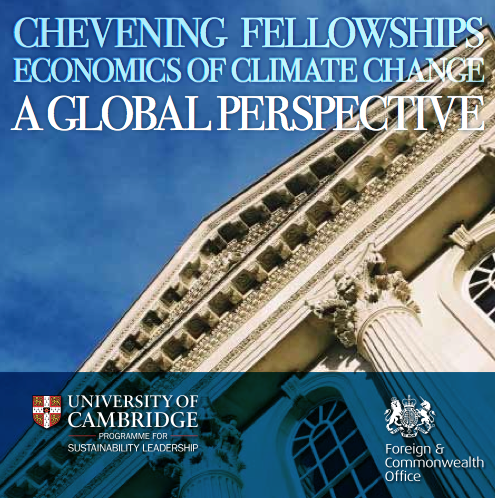
in: Chevening Fellowship – Economics of Climate Change: A global perspective, University of Cambridge

For an emerging economy like India, the response to climate change will be shaped by a number of dynamic factors, complementary and competing at different junctures. The contours of this response will be determined by geopolitical power-play; economic growth; consumer behaviour; poverty and social justice; the influence of incumbent and new businesses; governance and political leadership at the centre and the provinces – and most importantly the ability to attract and generate finances. This paper discusses the influence and interactions of these factors at three distinct levels. First it discusses the global (dis)agreements on climate and some of the boundaries of policymaking. Then the paper discusses the Indian domestic imperatives that are decisively influencing its carbon choices. Finally, it shows that – with the growth in the aspirations and affluence of the Indian middle class – the ‘consumption economy’ will increasingly influence India’s carbon profile.

Here the link to the entire chapter (pdf-file).
For more information on the publication “Chevening Fellowship – Economics of Climate Change: A global perspective”,University of Cambridge, please visit this link.

Standard