Uncategorized

In India we trust’ would be good US policy

Pompeo, New Delhi, mission, inequities, bilateral, democracies, data localisation, missile defence, trump administration, consensus, global affairs, washington, transformation, industrialisation, geoplitical, superiority, Silicon valley, Industrial Revolution, prosperity, leading power

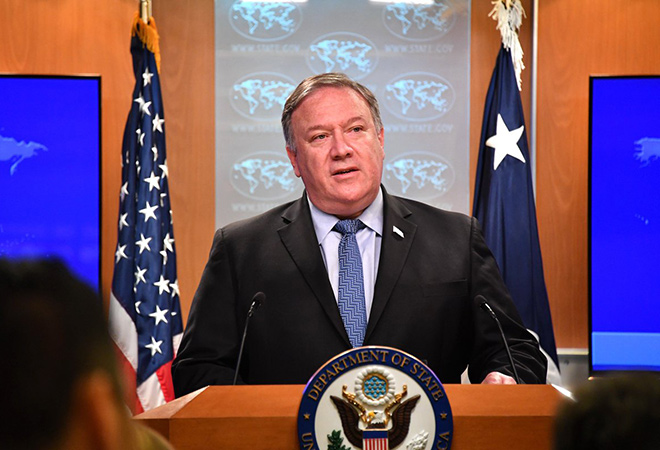
US Secretary of State Mike Pompeo is visiting New Delhi with a mission: to correct perceived economic and strategic inequities in bilateral relations between the world’s oldest and largest democracies.

Three issues, in particular, stand out: India’s recent data localisation measures; the purchase of Russia’s S-400 missile defence system; and, oil trade with Iran. The Trump Administration’s usual negotiating idiosyncrasies—unilateral economic measures and sanctions to use later as bargaining chips—have already preceded the visit.

Underlying these tactics, however, is a widely held consensus in Washington DC to support efforts that restore ‘American leadership’ over global affairs. While the American strategic community may argue over the Trump Administration’s ham-handed methods, the end goal is the same. The thinking is born amidst the lengthening shadow of China’s rise, digital transformation of industrialisation and the global economy, and America’s increasing self-doubt over the continued dominance of its global position and the resilience of the world order it has shaped between the fall of the Berlin Wall and the rise of the Great Wall of China.

India, it appears, is caught in the headwinds of America’s geopolitical and geoeconomic reorientation. Unfortunately, the US is unwittingly undermining its relationship with India while trying to win the zero-sum race for ideological, economical, technological and military superiority.

At a sectoral level, the US is basing its strategy on two faulty premises. The first is economic. The US believes that Silicon Valley possesses the capacity and is vested with the legitimacy to underwrite India’s digital industrialisation.

This line of thinking ignores years of history in industrial development and American geoeconomic partnerships. A strong domestic industry and globally competitive corporations enabled American allies in Europe and East Asia to industrialise. The US, for its part, was a financier and a consumer market. With its recent policies on data governance and security, New Delhi is ensuring that Indian industry and governance propositions will dictate its development and growth during the Fourth Industrial Revolution.

Like with the electronic, automobile and aeronautical industries in Europe or Japan, India will design bias into its industrial policy to incubate its own domestic giants for the digital age. It will also protect its ability to provide security and guarantee the rights of its citizens in cyberspace—an area where American tech companies have certainly been found wanting. Rather than fight the inevitable, the US should partner with India to create an equitable, competitive and secure global regime for cyberspace—especially at a time when the risks of fragmentation are real.

The second faulty premise is strategic. The US is overestimating its long-term ability to dictate India’s relationship with its partners—especially Iran and Russia.

The US is being typically sanctimonious while seeking to dictate to India the terms of engagement with others. When Washington has maintained promiscuous defence relationships with several partners in West Asia and the extended Middle East, including with Pakistan, why expect India to act differently? India will maintain multiple defence and strategic partnerships based on its national security requirements.

More important, the US is ignoring the reorientation of geographies. The 21st century will be defined, in part, by the merger of Asia and Europe into the Eurasian supercontinent. India will be a crucial node in this arrangement, as it will in the Indo-Pacific maritime system.

In Eurasia, New Delhi must partner with Moscow and states like Iran to create order and opportunity for itself. This is India’s long-term prerogative and cannot be held hostage to America’s short-term impulses. It is arguably in the US’ interest to follow India’s lead in the governance of this region, given its integration with Eurasian actors and institutions.

In Eurasia, New Delhi must partner with Moscow and states like Iran to create order and opportunity for itself. This is India’s long-term prerogative and cannot be held hostage to America’s short-term impulses. It is arguably in the US’ interest to follow India’s lead in the governance of this region, given its integration with Eurasian actors and institutions.

The friction in both the economic and defence sectors is a product of faulty ‘big picture’ thinking about the India-US bilateral relationship. In the post-War period, America’s partners have all been dwarfed by its economic might and military capability. The Americans are keenly aware of this. For their own prosperity and security, they crave for a liberal order under American leadership. My friend Michael Fullilove of the Lowy Institute once paraphrased Winston Churchill to justify that “the US-led world order is the worst form of world order, except all those other forms that have been tried.”

This is not necessarily true for India.

A country of India’s size cannot emerge as a ‘leading power’ in a world order tailored to protect and promote the interests of one country. Think about the prospect in absolute quantitative terms. Should India try and ‘fit’ itself into the worldview of a country that has three times it’s land and one-third its population?

What’s more, India’s economy may well surpass that of the US’ in size by the middle of this century. Look at it another way: America will, for the first time in over a century, be the smaller economic actor in a partnership. And unlike with Japan, Korea, Australia or the EU, the US will not be a guarantor of Indian security. Why, then, does Washington assume that its existing partnership templates will work with India?

Of course, there is a lesson in all of this for New Delhi. For too long, Indian policymakers have allowed ‘strategic ambiguity’ to guide foreign policy choices. In a rapidly fluctuating world order, this is bound to end in disaster. India must make clear what role it seeks in the international order and decide upon the means to achieve them.

The government of the day, arriving as it has on the back of a phenomenal election victory, must shape the imagination of Indians as to their place in the world. There are certainly many aspects of the world order that India will support, notably, liberal norms and rules-based trade and security. Nevertheless, it will not be hostage to a ‘US-led’ order. India will continue to push for a greater distribution and devolution of decision-making powers.

Rather than undermine India’s long-term ambitions, it is in America’s interest to recognise India as a co-sponsor and co-guarantor of the liberal order it incubated. This will necessarily involve trade-offs and compromises by both states. But that is expected of a relationship that carries the potential to define the course of the 21st century.

Standard
Uncategorized

Indian exceptionalism and realistic responses to climate change

Samir Saran

At a discussion in Washington DC this spring, I was quizzed with a degree of annoyance on the multiple messages coming out of New Delhi with respect to India’s position on a global agreement to combat climate change. In the same discussion there was also an exasperated inquisition on why Indian needs and priorities must hold the world to ransom (as if there were a consensus) and why India imagines that it merits a special space, attention or exception in the climate arena.

The response to these two central propositions on India and climate change must of course come from the officialdom at Raisina Hills, home to Delhi’s executive offices. However, as we move down the road to COP 21 in Paris, it is crucial that any response, if formulated and then communicated (a bigger ‘if’), would need to engage with the most important climate proposition put before India by the world, and its interplay with the country’s development/growth imperatives.

Viewed from New Delhi, and after sifting through the chaff, the proposition for India’s climate change response posed by a large section of OECD countries, and certainly from the influential capitals in Europe, is fairly straightforward:

1. India must be the first country in the world (of size and significance) to successfully transition from a low-income, agrarian existence to a middle income, industrialised society without burning even a fraction of the fossil fuels consumed by other developed countries. China was the last country to enjoy this privilege. India will be the first that will have to cede this option and of course this may well be the new template for other developing countries to emulate.

2. The scale of this transition and the current economic situation in some parts of the world, alongside the complex and privately controlled innovation landscape, means that there is limited ability for the Annex 1 countries (the developed world) to offer any meaningful support in terms of financing or technology transfer. Official Development Assistance (ODA) is a small fraction of what is necessary today, and India will therefore need to mobilise domestic resources to power the non-fossil-fuel-fired Indian story.

3. Even as India adopts this ‘exceptional’ approach to industrialisation, and creates the necessary financial and commercial arrangements to achieve it, mostly through its own endeavors, the developed world and others want to retain the right to judge Indian performance. India will be monitored with an increasingly extensive system of compliance verification, and will be criticised for its missteps on the journey despite the novelty and scale of its undertaking.

My response to the thesis of ‘Indian exceptionalism’ therefore is that India does not seek to be an exception, but the demands imposed upon it that will require it to be exceptional. This is a truth for others to accept, and the climate reality for which India must discover creative policy. Three distinct narratives among various actors in India have so far shaped its response.

The first set of responses is from a group of people I like to call India’s ‘cold war warriors’. This group believes that no matter the contemporary political, economic and environmental reality, an alternate universe can be constructed through the mandate of the UNFCCC. These persons are the architects of the global intergovernmental processes and have faith in them. They believe that an agreement in Paris this December at COP 21, that is sensitive to Indian needs, will somehow assist in the transition required by India and will ensure that India only needs to make incremental changes to its ‘business as usual’ approach to economic growth and development. This group has ignored the changing economic system, which is increasingly disinvesting from fossil fuels politically, and in terms of financial flows and promoting green energy markets. The ‘green’ economic and market realities that will shape India’s future are seen as something that can be circumvented by creatively crafted text and clauses in a legal (read weak legal agreement) agreement in Paris. Despite 20 years of failure to achieve this ‘world of equity’ with ‘differentiated responsibility’ they continue to believe that a global agreement is the end in itself.

The second set of strategies to the proposition facing India are advanced by a group I refer to as the climate evangelists. They believe that 2050 is already upon us. Commercially viable clean energy solutions are available, and these hold the answer to both our immediate and future energy woes. The opportunities that exist in the creation of a new green economy must be grabbed with both hands. This group wants subsidies and incentives for clean energy technology, and taxes and regulation of fossil fuels. These green pioneers are sanguine that sufficient ‘push’ and ‘pull’ will deliver technology innovation and development on the requisite scale. They reject that fossil fuels are necessary as baseline sources of energy and instead insist that the technological revolution is already here, and that India must get on board or be left behind. Their argument is often a moral one: we have a moral obligation to save the earth for its own sake and for future generations – ignoring the fact that at this level of income disparity, inequality and differential access to the right to life, the planet is in fact being saved for the rich to flourish.

The third set of responses is from the group I call the climate realists. The realists understand that the global climate proposition is inherently unfair, and that India could and probably should push back against such an imposition by the developed world. However, they also recognise that no matter how hard they try to construct a ‘fairer’ agreement in Paris, the combined forces of the market, society and technology are all pointing towards a ‘greener’ transition. The political economy of climate change necessitates a transformation, and it is not necessarily in India’s interests to fight against it. Instead, the realists understand that there is an opportunity to lead in constructing a green economy. They believe that this moment can be used to reshape the tax, financial and global governance systems. They also see no contradiction in also ensuring continued flow of investments and emphasis on lifeline sources of energy for India’s poor.

Analysis shows that India does better than Germany, the United States, China and others on per capita coal dependence, with about a third of the consumption levels of the greenest among these three. It also already commits, as a proportion of its GDP, more towards renewable energy off-take than most (except Germany). It therefore does not need to defend its coal consumption. On the other hand, it must certainly be the champion to encourage ‘greener’ performance from others. The equity that it seeks lies in this. The rich must continue to invest more in renewables. This must be demanded and enforced.

Prime Minister Modi’s recent statements suggest that he may be such a realist as well. He is promoting an aggressive renewable energy thrust, while being uncompromising on the point that lifeline energy will continue to rely on coal for the foreseeable future. When he takes coal off the discursive table, he is not foreclosing the right to use coal; instead he is sharpening the focus on India’s impressive credentials around green growth. He invokes religious texts, civilisational ethos and clever political word-play as he seeks a leadership role for India in global climate policy, and sets the agenda with ambitious plans for transitioning to a new energy paradigm. The ‘house always wins’ is a golden Las Vegas adage with a lesson for global politics too: unless we see strong political leadership of the kind being displayed by Prime Minister Modi and President Obama, the house – in this case national officialdom(s) and global bureaucrats – will prevail again. They will construct a new world order with words, commas and full stops, where nothing, not even the climate, can ever change.

Courtesy: lowyinterpreter.org

Standard
Uncategorized

चुनाव 2019: विकृत होती बहस और सोशल मीडिया का दुरूपयोग

Samir Saran|Bedavyasa Mohanty

ऐसे में जब भारत डेढ़ महीने तक चलने वाले असहमतियों और ध्रुव्रीकरण से भरपूर आम चुनावों की ओर बढ़ रहा है, तो क्या हमारा देश लोकतंत्र की इस सबसे पवित्र प्रक्रिया के लिए खतरा बन चुकी फेक न्यूज (फर्जी समाचार), गलत सूचना और देश के भीतर तथा बाहर से संचालित हो रही चुनावों को प्रभावित करने की कार्रवाइयों के बारे में सतर्क हो चुका है? शीर्षतम सोशल मीडिया कम्पनियों के प्रमुखों की बैठक बुलाने सहित निर्वाचन आयोग की ओर से हाल ही में उठाए गए कदम स्वागत योग्य हैं, लेकिन इतना ही काफी नहीं है। हालां​कि इन कम्पनियों के बीच स्वेच्छापूर्ण नीति संहिता का होना महत्वपूर्ण है, लेकिन महज अनुचित राजनीतिक विज्ञापनों को हटाने और निर्वाचन आयोग के साथ ज्यादा कुशलता से सम्पर्क स्थापित करने भर से ही इस चुनौती से पूरी तरह निपटा नहीं जा सकता। इतने विलम्ब से किए जा रहे उपायों के बूते पर चुनाव में हस्तक्षेप के कई तरह खतरों के टल जाने की संभावना नहीं है, ये खतरे या तो कई महीने पहले ही अस्तित्व में आ चुके हैं या फिर भारत तेजी से बिगड़ती चुनाव व्यवस्था का नतीजा हैं।

आंकड़ों का संग्रह, फेक न्यूज, घेरकर मारने वाली भीड़ और राजनीति

2018 में, भारत में बच्चे चुराने के आरोप में 30 से ज्यादा व्यक्तियों की भीड़ ने पीट-पीटकर हत्या कर दी। इन हिंसक गतिविधियों की शुरुआत होने की वजह उन वीडियो और तस्वीरों के जरिए छेड़ी गई मुहिम थी, जिनमें लोगों को शिकार की तलाश में उनके आसपास घूम रहे बच्चे चुराने वालों और मानव अंगों की खरीद-फरोख्त करने वालों के प्रति आगाह किया गया था। इनमें, भारत में भीड़ की हिंसा की ज्यादातर अन्य घटनाओं की ही तरह अक्सर घुमंतु जनजातियों या धार्मिक और सांस्कृतिक गुटों को निशाना बनाया गया, पुराने मतभेदों का फायदा उठाया गया और नई दरारों के बीज बोए गए। ऐसा मालूम पड़ता है कि अब इस मुहिम की दूसरी पुनरावृत्ति जारी है और पहली बार की ही तरह यह भी सांप्रदायिक आंतरिक भाव ग्रहण करते हुए आगामी आम चुनावों को सीधे तौर प्रभावित कर सकती है।

कुछ खास लागों के समूहों में अविश्वास उत्पन्न करने के लिए इन अभियानों की समन्वयकारी प्रकृति और संदेशों का निर्माण (संदर्भ और भूगोलों के द्वारा) ही उन्हें इंटरनेट पर अफवाहें फैलाने वाले अन्य अभियानों से अलग करता है। अन्य संदेश, जो वर्तमान में तैयार किए जा रहे हैं, वे मुख्यत: चुनाव से संबंधित विषयवस्तु वाले हैं और सामाजिक मतभेदों की खाई को और ज्यादा चौड़ा करने की पद्धति का ही पालन करने वाले जान पड़ते हैं। यही पद्धति गले में क्रॉस पहनकर चुनाव प्रचार करती प्रियंका गांधी वाली फेक न्यूज से लेकर, राहुल गांधी की चुनावी रैली के दौरान पाकिस्तानी झंडे लहराने की झूठी तस्वीरे दिखाने तक में परिलक्षित हुई है। इसी तरह, प्रधानमंत्री नरेन्द्र मोदी को खराब और भयावह रोशनी में दिखाते हुए फर्जी सूचना फैलाने वाले व्हॉटएप्प संदेश भी सोशल मीडिया पर घूम रहे हैं। विडम्बना तो यह है कि कांग्रेस और भाजपा दोनों ही पार्टियां व्हाट्सएप्प ग्रुप्स और टेक्स्ट मैसेजिस के जरिए लक्षित संदेश त्वरित गति से प्रसारित करने के लिए उन पर तेजी से निर्भर होती जा रही हैं। बुरा चाहने वालों ने भी अपने मंसूबों को पूरा करने के लिए इन्हीं माध्यमों को चुना है।

इस तरह की मैसेजिंग के लिए डिजिटल माध्यम महत्वपूर्ण है। इनके जैसे हाइपर-टार्गेटेड अभियान टेलीविजन और रेडियो जैसे परम्परागत मीडिया पर शायद ही कभी मुमकिन हो। 

इस तरह की मैसेजिंग के लिए डिजिटल माध्यम महत्वपूर्ण है। इनके जैसे हाइपर-टार्गेटेड अभियान टेलीविजन और रेडियो जैसे परम्परागत मीडिया पर शायद ही कभी मुमकिन हो। सोशल मीडिया राजनीतिक दलों को अपने संदेश प्राप्तकर्ताओं के मुताबिक विविध तरह की पहचान गढ़ने की इजाजत देता है: शहरी शिक्षित लोगों के लिए विकास, ग्रामीण गरीबों के लिए परोपकारिता और राष्ट्रवादी जोश से भरपूर लोगों के लिए रक्षक की पहचान वाले संदेश बनाए जाते हैं। आंकड़ों के संग्रह और प्रसार के तरीके तैयार होते ही, अन्य कर्ताओं द्वारा हानि पहुंचाने के लिए इनका इस्तेमाल किया जाना एक तरह से निश्चित हो जाता है। उदाहरण के लिए, रूस के बारे में ऐसा मशहूर है उसने 2016 में अमेरिका में राष्ट्रपति पद के चुनाव के दौरान पहले से ही विभाजित मतदाताओं को और ज्यादा बांटने के लिए नस्ल और अप्रवासन से संबंधित भड़काऊ संदेश फैलाने के लिए फेसबुक के हाइपर-टार्गेटेड विज्ञापनों का इस्तेमाल किया था।

इंटरनेट पर सोशल मीडिया अभियान जिस गति और दूरी को कवर करने में सक्षम होते हैं, उसने उन्हें स्टेट और नॉन-स्टेट एक्टर्स दोनों की ‘जरूरत’ बना दिया है। जर्मन चुनाव से ऐन पहले मतदाताओं को प्रभावित करने वाली इन कार्रवाइयों ने कुख्यात रूप से गुप्त राजनीतक रैलियों का आयोजन मुमकिन बनाया, जिनका समन्वय दूर-दराज के इलाकों से सोशल मीडिया के जरिए किया गया। इसलिए साइबरस्पेस में प्रभावित करने वाली इन कार्रवाइयों का असर अब केवल आभासी नहीं रह गया है, बल्कि वास्तविक दुनिया में उनके बहुत अचल और ठोस परिणाम सामने आ रहे हैं।

भारतीय, यूरोपीय और अमेरिकी अनुभव समान और लगातार चलने वाली इस गाथा के अंग हैं,जो तीनों को उत्तरदायी ठहराती है। पहचान और निजी जानकारी से फायदा उठाने का प्रयास करने वाला पूंजीवादी मॉडल भी सूचनाओं के संग्रहों और निजी आंकड़ों को पाने के अपार अवसरों की पेशकश करेगा, ताकि उनका इस्तेमाल व्यक्तियों, समुदायों और देशों के खिलाफ किया जा सके। दूसरा, इन आंकड़ों को तैयार और प्रॉसेस करने की सुगमता (और कम लागत) तथा इनका इस्तेमाल करने के इच्छुक स्टार्टअप्स, कार्पोरेशन्स और देशों — सभी को इन तक समान रूप से पहुंच प्राप्त है। आंकड़ों की व्यवस्था (या उनका अभाव) इस अति-संयोजित यानी हाइपर-कनेक्टिड और अति-अस्थिर दुनिया में राष्ट्रीय सुरक्षा के लिए अकेला सबसे बड़ा खतरा है। तीसरा, इन सभी क्षेत्रों में राजनीतिक दल चुनाव प्रचार के लिए महत्वपूर्ण माने जाने वाले व्यक्तिगत सूचना आधार तैयार करने में शामिल रहे हैं। सोशल मीडिया के विवेकपूर्ण इस्तेमाल और नागरिक सम्पर्क (और सूचना) पर आधारित प्रसिद्ध ‘ओबामा अभियान’ से लेकर अत्याधुनिक ‘मोदी अभियान’ तक, जिसमें मतदाताओं के साथ निजी सम्पर्क कायम करने के लिए संचार के पुराने चैनलों को दरकिनार किया गया, इन दोनों और अन्य नेताओं ने नागरिकों और उनकी प्राथमिकताओं से संबंधित आंकड़ों का विशाल ​संग्रह तैयार किया। आंकड़ों के इन संग्रहों को कौन नियंत्रित करता है? ये कितने सुरक्षित हैं? और क्या अब समय आ चुका है कि नियंत्रक यह सुनिश्चित करने के लिए इसमें हस्तक्षेप करे कि बाहरी व्यक्तियों या किसी कुख्यात ‘घर के भेदी’ द्वारा इन आंकड़ों का इस्तेमाल राष्ट्र के खिलाफ नहीं किया जा सके।

फेसबुक, ट्विटर, एल्गोरिथ्म्स और ईश्वर: कमान किसके हाथ में?

इस समय इन प्रभावित करने वाली कार्रवाइयों के निशाने पर लोकतांत्रिक संस्थाएं हैं — मेनस्ट्रीम मीडिया और नियामक एजेंसियों जैसी संस्थाओं की विश्वसनीयता के बारे में शक के बीज बोए जा रहे हैं। अक्सर ऐसे बाहरी हस्तक्षेप के संकेतों की देशों के बीच तत्काल बिना सोच विचार किए प्रतिक्रिया होती है। उदाहरण के लिए, व्हाट्सएप्प पर फैलाई गई अफवाहों की वजह से होने वाली हत्याओं के कारण भारत सरकार ने 2018 के अंत में मध्यवर्ती उत्तरदायित्व कानूनों में संशोधनों का प्रस्ताव पेश किया था। अन्य बातों के अलावा ये संशोधन मध्यवर्तियों (या संचार सेवा प्रदाताओं) को अपनी प्रणालियों की ट्रेसेबिलिटी-संदेश को मौलिक रूप से भेजने वाले की पहचान करने की योग्यता शुरू करने का दायित्व सौंपते हैं। एंड-टू-एंड एंक्रिप्शन की क्षमता से युक्त प्लेटफार्म्स के लिए तकनीकी रूप से ऐसा कर पाना लगभग असम्भव है। इसलिए इस कानून का पालन करने के लिए कम्पनियों के लिए यह आवश्यक होगा कि वे अपनी सेवाओ से एंक्रिप्शन हटाएं, मौलिक रूप से वे अपने प्लेटफॉर्म्स की निष्ठा से समझौता करें, जिस पर उपयोगकर्ता भरोसा करते हैं।

टेक्नोलॉजी कम्पनियों ने जिस आत्म-नियंत्रण संबंधी संहिता को अब अपनाया है, उसमें उन्हें यह तय करने की स्वतंत्रता दी गई है कि कौन सा राजनीतिक विज्ञापन आपत्तिजनक करार दिए जाने के योग्य है।

टेक्नोलॉजी कम्पनियों ने जिस आत्म-नियंत्रण संबंधी संहिता को अब अपनाया है, उसमें उन्हें यह तय करने की स्वतंत्रता दी गई है कि कौन सा राजनीतिक विज्ञापन आपत्तिजनक करार दिए जाने के योग्य है। यह बात खासतौर पर चिंताजनक इसलिए है, क्योंकि कथित उदार पूर्वाग्रहों और अनावश्यक रूप से दमघोंटू रूढ़िवादी विचारों को आश्रय देने के लिए ट्विटर और फेसबुक जैसे सोशल मीडिया प्लेटफॉर्म्स की पहले से ही नियंत्रकों द्वारा समीक्षा की जा रही है। इस तरह इन प्लेटफॉर्म्स को ज्यादा व्यक्तिपरक अधिकार देने से, ऐसे संगठनों को निर्णायक की भूमिका मिल जाती है, जिनका सृजन लोकतांत्रिक रूप से नहीं किया गया है और जिनकी भारत जैसे देशों में नागरिकों और नीति निर्माताओं के प्रति जवाबदेही भी सीमित है। जहां एक ओर ज्यादातर लोग ‘घृणा फैलाने वाले भाषण’ के हर तरह के स्वरूप के खिलाफ है, वहीं फेसबुक और ट्विटर को सेंसर की भूमिका निभाने का मौका देना हम सभी के लिए चिंता की बात है।

प्रभावित करने वाली कार्रवाइयों के खतरों की प्रतिक्रिया के रूप में इन कदमों को संस्थागत रूप प्रदान करना मूलभूत रूप से भारत के संविधान द्वारा प्रदान की गई स्वतंत्रताओं के मूल को प्रभावहीन बनाने की चेतावनी देता है। इसकी बजाए जवाबी कथानक तैयार करके दुष्प्रचार को नष्ट करने वाले लचीले और दीर्घकालिक समाधान तलाशने प्रयासों पर ध्यान देना चाहिए। तथ्यों की जांच करने वालों, आधिकारिक माध्यमों और मेनस्ट्रीम मीडिया के बीच व्यापक तालमेल से दुष्प्रचार के अनेक स्रोतों को नाकाम किया जा सकता है। कम्पनियां पहले से ऐसे रास्ते तलाशने में जुटी हैं, जिनमें कृत्रिम आसूचना के माध्यम से फेक न्यूज अभियानों की पहचान की जा सके तथा उनकी गतिशीलता कम की जा सके। हालांकि इससे कोई जादुई चमत्कार होने की संभावना नहीं है, लेकिन इस प्रक्रिया को स्वचालित बनाने से इस दुर्भावनापूर्ण विषयवस्तु के प्रसार को काफी हद तक रोका जा सकता है। ऐसे नियमों के निर्धारण पर विनियामक रूप से ध्यान देना चाहिए, जो एल्गोरिथ्म्स के प्रचालन में निष्पक्षता, जवाबदेही और पारदर्शिता सुनिश्चित करने के लिए उनको नियंत्रित कर सकें। आने वाले दिनों में, पूरे डिजिटल क्षेत्र में सबसे महत्वपूर्ण बहस एल्गोरिथ्म्स से संबंधित जवाबदेही को लेकर होगी।

मैं तुम्हारे लोकतंत्र के प्रति लालसा रखता हूं

भारत और उसका लोकतंत्र, उसके क्षेत्र में सभी से अलग-थलग प्रकार का है। पश्चिम और उत्तर के उसके दो पड़ोसी केवल भारतीय अनुभव और संस्था का पतन देखने को लालायित हैं। लोकतांत्रिक भारत, उनके राष्ट्रों, जनता और समुदायों के रूप में उनकी स्थायी नाकामी है। आर्थिक स्तर पर कठोर परिश्रम,विद्वेषपूर्ण राजनीति और सीमा पार से फैलाया जा रहा आतंकवाद भारत को बहुलवादी और लोकतांत्रिक राजनीति के पथ से हटाने में असमर्थ रहे हैं। हालांकि हाल की घटनाओं ने साबित कर दिया है कि खुलेपन और बहुलवाद ऐसे कारक नहीं हैं, कि उनके महत्व की अनदेखी की जाए।

दो प्रवृत्तियों/वास्तविकताओं का मूल्यांकन बेहद गंभीरता के साथ किया जाना चाहिए। पहली, यह तकनीकी युग ऐसी अभूतपूर्व रफ्तार और पहुंच के साथ हस्तक्षेप करने की इजाजत देता है, जिस पर चुनाव की रक्षा करने वाली पुरानी संस्थाओं और राष्ट्र को संचालित करने के लिए डिज़ाइन नहीं किया गया है। सक्रिय होने वाले उपकरण (प्रौद्योगिकियां और कॉर्पोरेट) अब राष्ट्र द्वारा नियंत्रित या स्वीकृत नहीं होंगे। छोटे और कमजोर राष्ट्रों को लागत और अपेक्षाकृत सुगमता इस विकल्प की ओर आकर्षित करती है। और, मतदाताओं का पक्ष जीतने के लिए इस्तेमाल किए जाने वाले आंकड़ों के संग्रह स्वयं लोकतंत्र पर हमला करने के लिए इस्तेमाल किए जा सकते हैं। डिजिटल परिचालन की सबसे खतरनाक विशेषता दरअसल हस्तक्षेप करना या परिणामों को आकार देना नहीं है; यह केवल ऐसी धारणा बनाता है कि हस्तक्षेप करने से परिणाम विकृत हुआ — इस रणनीति का इस्तेमाल शीत युद्ध के दौरान पूर्व सोवियत संघ द्वारा लक्षित राष्ट्र के आत्मा को हतोत्साहित करने के लिए किया गया। इस पर प्रतिक्रिया वास्तविक और सामाजिक, वास्तविक और कथित दोनों तरह की होने की जरूरत होगी।

दूसरी और उपरोक्त से संबंधित ‘सर्वेलान्स कैपिटलिज़म’ (यानी लोगों की गतिविधियों और व्यवहारों की निगरानी के आधार पर जुटाये गए आंकड़ों का मुद्रीकरण) पर बढ़ती बहस तथा देशों और जनता पर पड़ने वाला इसका प्रभाव है। हालांकि इस विकृत ‘डेटा मर्केंटिलिज्म’ में कई तरह की प्रतिक्रियाएं सामने आती हैं, भारत जैसे देशों में हम सार्वजनिक सम्पर्क की रूपरेखा के बारे में निर्णय लेने का जिम्मा कार्पोरेशन्स और मीडिया प्लेटफार्मों को सौंप रहे हैं। उपयोगकर्ता का संपर्क और विज्ञापन राजस्व बढ़ाने के लिए डिज़ाइन किए गए एल्गोरिथ्म्स अब ऐसी राजनीतिक भाषा को सीमित करने के लिए इस्तेमाल में लाए जा रहे हैं, जिन्हें ये कम्पनियां आपत्तिजनक मानती हैं — और इस प्रक्रिया में ‘सर्वेलान्स डेमोक्रेसी’ का सृजन हो रहा है।

उपयोगकर्ता का संपर्क और विज्ञापन राजस्व बढ़ाने के लिए डिज़ाइन किए गए एल्गोरिथ्म्स अब ऐसी राजनीतिक भाषा को सीमित करने के लिए इस्तेमाल में लाए जा रहे हैं, जिन्हें ये कम्पनियां आपत्तिजनक मानती हैं — और इस प्रक्रिया में ‘सर्वेलान्स डेमोक्रेसी’ का सृजन हो रहा है।

भारत, उसकी राजनीतिक पार्टियों, उसके कार्पोरेट्स और उसके क्षेत्रों में काम करने वालों और सबसे ज्यादा उसकी जनता को सतर्क रहने, मिलकर काम करने तथा इस चुनौ​ती से निपटने की जरूरत है, यह एक ऐसी वास्तविकता है, जो रोजाना घटित हो रही है। इनमें से हर एक ने सोच-विचार कर और अनजाने में चुनावों की राजनीतिक अर्थव्यवस्था को विकृत करने में योगदान दिया है और जब तक इनमें से हर एक पक्ष भारत के खजाने की सबसे महत्वपूर्ण परिसम्पत्ति के साथ अपने संबंध को फिर से निर्धारित नहीं करेगा, लोकतंत्र की मृत्यु और ह्रास के पीछे ‘किसी अंदरूनी व्यक्ति की सहायता’ होगी।बेशक इसके पीछे हाथ, ऐसा करने वाले और इससे लाभ उठाने वाले का आईपी ऐड्रेस कहीं और का हो।

ये लेखक के निजी विचार हैं।

Standard
Uncategorized

Communicating Kashmir: Where perception is reality

Samir Saran|Rohit Chopra

The Indian state’s repeated blunders in Jammu and Kashmir have often been chalked down to ineffective political governance and security policy choices. While this is true, it is also time to acknowledge the colossal Indian failure in articulating a coherent, viable narrative about Kashmir and disseminating it effectively. States seldom secure legitimacy if they are unable to shape opinions, perceptions and more importantly the diverse “assessments of existence” of those that they seek to serve and manage. This is not to endorse an “Orwellian order” in which power is maintained precariously through the threat of punitive action. Rather, it is to acknowledge that political legitimacy resides firmly within the rubric of a public sphere favorably disposed to the political regime. In other words, state legitimacy depends on an effective identification with the state, one that is reinforced by persuasive rhetoric through the channels of communication that traverse across political and public life.

The Indian government, however, has displayed remarkable and consistent ineptitude in communicating on Kashmir, with Kashmir and for Kashmir.

It has expended copious amount of resources talking to Kashmir, talking up some elements of Kashmir and talking down others, without any rational assessment of what must inform its priorities and emphases for the state. At its core, India’s communication on this vital subject feeds just one unintended imagery: the portrayal of a significant and growing distance between Srinagar and New Delhi.

Unsurprisingly, the Indian state is constantly at a disadvantage when it comes to narratives on Kashmir. Most international media outlets, for example, continue to juxtapose “Pakistan Administered Kashmir” with “Indian Administered Kashmir,” as if to suggest that there is some real historical equivalence between the two. Pakistan’s long history of employing state-sponsored militias first, and terrorists thereafter, has yet again been normalized as fact by much of the Western media. These same organizations have otherwise obsessed over the “war on terror” when Islamist groups, remarkably similar to those responsible for violence in Kashmir, have wrought their violence on Western targets from London to Paris. For instance, an article in the venerable New York Times, described the recent terrorist attack in Kashmir as a “bombing.” Similarly, internationally recognized terrorist groups have often been referred to as “militants”and their homegrown counterparts as “militias”.

Just to put this pattern of usage in context, the term “militia’ finds mention and a role in the constitution of the United States of America. While its usage in the South Asian context by certain media organizations and persons is a mischievous attempt to frame terrorists as the ‘resistance,’ it also clearly signals a failure of the Indian state in the realm of strategic communications.

Calling out the hypocrisy and bias of the Western media must not be the sum total of India’s response.

The knee-jerk outrage of the Indian state and citizens merely exposes and accentuates the core frailty of our ability to shape meaningful and abiding narratives in the marketplace of ideas. Therefore, it is time to ask how India can strategically reshape and influence the new ‘information sphere’ that is represented by a potent mix of legacy and new media.

There are a few crucial factors that will need be addressed as central to such an effort if it is seriously contemplated by mandarins on Raisina Hill.

Growing information flows in cyberspace negate size and resource asymmetry. Simplistic messages about India being a new “colonial power” go viral on social media—while the reality of a developing and pluralistic democratic state combating religiously motivated foreign terrorists and their local proxies is often lost at a time when even competent news organizations are increasingly Fox-like (and Fox-lite) in their headlines and reportage. Western audiences, who have appointed themselves as the arbiters of Asia’s post-colonial troubles, are more easily swayed by the former than the latter. And their near-theological affection towards an errant Pakistan only exacerbates India’s challenge. Bush Jr.’s approach to galvanize the media sphere by deploying a simple and emotive bumper sticker tag line like the “War on Terror” may not work in the Indian case. His was a distant war in a remote land that many, if not most, Americans were ignorant of; this is a conflict in which one’s own people, in many senses of the word, are implicated.

There is therefore an urgent need to create both sophisticated messaging and means of delivery. The inability of key Indian interlocutors to communicate the low threshold of provocation and unyielding aggression by Pakistan will have adverse implications on Kashmir and its location within larger debates about Indian politics, society, and culture.

The great epics and religious texts of the world, whether the Iliad, Mahabharata, or Bible, tell us that narratives shape external perceptions. And as the age of digital and virtual technologies reminds us so powerfully, they shape our imagined realities as well.

From the thinker Baudrillard we know that in our hyper-mediated age, the real and the virtual are not so much binary opposites as parts of the same continuum of perception. For instance, we must consider the fact that all strategic communication vis-a-vis Pakistan (as framed currently) affects the Kashmir debate. If we need to dislodge, dis-embed and decontextualize Kashmir from the India-Pakistan conflict (a stated Indian objective), our communications game needs to be radically overhauled. India must calibrate its doctrines, bureaucracies and human capital to operationalize an approach that survives the democratic cycles of the central and state government. The Indian state must be able to synchronize official messaging in a way that reaches both a general audience and selected ones. As it does so, it must be prepared to declutter three interrelated but overarching narrative strands.

For one thing, those advocating for Kashmiri independence often conflate the protection of Kashmiri identity with the notion of Kashmiri sovereignty. It is a failure of imagination that has allowed this thinking to flourish.

India has always been a syncretic society. Multiple ethnic, religious, linguistic and cultural identities have flourished over time. The nature of political regimes in the Indian sub-continent could never alter the extent and texture of pluralism and this is unlikely to change now. Three states in the Indian northeast consist of Christian majority populations. There is no reason that citizens in a Muslim-majority state cannot exercise full political and religious freedoms under India’s constitutional setup. This is consistent with precedent in terms of the longuedurée of Indian history and with the spirit of pluralism that marks the reality and ethos of the Indian constitution. As a corollary, can a new narrative help create and revitalize this strong ‘Kashmiri Identity’ to negate the insurgency?

Second, the Kashmiri movement is not a call for “Azadi” in the way the Indian freedom movement envisioned the term. The Indian government would do well to employ counter-narratives to dispel this notion. India’s demands for self-determination were driven by the desire to secure full constitutional rights for every individual. There is little evidence that this is the reality in Kashmir. Every passing year, the demands are clearly driven by extremist fundamentalist impulses that are at complete odds with the notion of democratic freedoms. This is antithetical both to the spirit of India’s freedom movement and its democratic values today. Theological fundamentalism must not be allowed to displace or compete with the secular freedoms guaranteed by the Indian constitution, even if these are less than perfect in delivery.

Instead, all strategic communications must focus on the sustained determination of the Indian state to enhance ‘delivery of democracy”, implicitly recognizing past failure as a necessary precondition for reintegration of the people.

Finally, the Indian state must not allow terrorists to turn into martyrs and freedom fighters. There is little legitimacy to the claim that it is Indian violence that compels young Kashmiris to take up the gun. There is a reason global terrorist groups invest so heavily in multimedia teams and in using the internet as a tool for recruitment. As the examples of mass shooters in the US, terrorist recruits for Al Qaeda, and Western-raised Muslims seduced by the fantasies peddled by ISIS show, engaging stories and compelling narratives are incredibly effective at radicalizing susceptible individuals. This is not to suggest that the Indian state should ignore the real grievances of the Kashmiri people. Rather it is to point out that there is enormous value in communicating the truth about India’s investments in the economic prosperity and governance of Kashmir with a laser focus. This is true of the military as well, which is often the first responder in times of humanitarian or environmental emergencies. It is time to personalize and humanize the Indian state and its apparatus for the people of this geography, however flawed it may be at this time. This is a precondition for engagement.

A mature public diplomacy doctrine must form part of a comprehensive new framework for the state that includes deeper and wider political dialogue and visible economic investments.

India must learn to tell a story that is on point in its message and polysemic in reach. It must resonate with different constituencies across the political spectrum and be easily accessible for domestic and international audiences. The easiest part of all of this is that India has had an incredible story to tell since independence. Despite many hiccups along the way, India continues to deliver greater political and economic freedoms and personal security to its citizens than, arguably, most post-colonial states. And this objective, after all, is the principal motivation for organizing complex societies through democratic values.

Applying this story to Kashmir is complicated by both domestic and external factors. Nevertheless, it holds strong potential for appeal if it is capable of being communicated effectively. During the Cold War, the US established a special Information Agency whose only goal was to better explain American policies and the values that underpinned them. If India is serious about finding solutions in Kashmir, it must invest in institutions and actors that can streamline messaging about what those solutions are exactly.

The views expressed above belong to the author(s).

Standard
Uncategorized

मीडिया पर परोसा जा रहा युद्ध — और मैं

Samir Saran

बालाकोट के सामरिक निहितार्थों की जांच करने वाले समस्त आयोगों और रिपोर्टों के बीच, यह महत्वपूर्ण है कि कथानकों और सूचना के प्रवाह के प्रश्न पर पर्याप्त ध्यान दिया जाए।

बालाकोट, वर्ल्ड, सोशल मीडिया, चोमस्की, हरमन, समाचार, सोशल मीडिया, युद्ध, सूचना युग, समीर सरन
स्रोत: Colin Anderson Productions/Getty

हालाँकि बालाकोट हवाई हमले का गुबार थम चुका है, लेकिन पाकिस्तान और भारत में जन भावनाओं का ज्वार थमने का नाम ही नहीं ले रहा है। जनमत को उकसाने के पीछे काफी हद तक पुराने और नए दोनों तरह के मीडिया की भूमिका जिम्मेदार है। यूं तो वियतनाम युद्ध टेलीविजन पर प्रसारित होने वाला पहला युद्ध था, लेकिन उसकी पहुंच सीमित अमेरिकी टीवी सेटों तक ही थी, भारत में आज हम जो देख रहे हैं, उसकी तुलना बड़ी आसानी से अभूतपूर्व ग्लोबल टेलिविजन कवरेज वाले 1990-91 के खाड़ी युद्ध की कवरेज से की जा सकती है। उस समय, और अब भी, हांफते हुए लोग मिसाइल हमलों और बटालियनों की गतिविधियों की प्राइम-टाइम रिपोर्टिंग से चिपके हुए हैं।

आज, भले ही समय, कर्ता-धर्ता और प्रौद्योगिकियों का स्वरूप बदल चुका है। 1990-91और उसके बाद दोबारा 2003 में, अमेरिकी मीडिया युद्ध को दुनिया भर के लोगों के घरों की बैठकों तक ले गया था। 2019 में, इंटरनेट पर सक्रिय उपयोगकर्ताओं के ग्लोबल नेटवर्क इसे हर एक स्मार्ट फोन तक ले आए हैं। प्राइम टाइम अब महज नौ बजे के समाचार नहीं हैं। अब जब कभी भी ‘सोशल मीडिया का प्रभावशाली शख्स’ वायरल सूचनाएं प्रसारित करता है, तो प्राइम टाइम होता है। इसके बावजूद मीडिया, राजनीति, सत्ता और युद्ध के बीच संबंध हमेशा की तरह परस्पर-निर्भर रहे हैं। और हमारे सार्वजनिक क्षेत्र में मौजूदा समय में मच रहा शोर-गुल हमें इस बात पर सवाल उठाने का बिल्कुल मुनासिब मौका देता है कि क्या बदल चुका है और क्या नहीं।

मीडिया हमेशा से मिलीभगत करके खुद को सरकार द्वारा शामिल किये जाने की इजाजत देता रहा है। उसने विदेश नीति और युद्ध के बारे में सरकार के कथानकों के लिए बार-बार ​अवसर उपलब्ध कराया है।

नोम चोमस्की और एडवर्ड हरमन ने अपनी अत्यंत प्रभावशाली पुस्तक ‘मैन्युफैक्चरिंग कन्सेंट’ में दलील दी है कि “आधिकारिक सूत्रों” और बीट रिपोटर्स के बीच हमेशा से सहजीवी संबंध रहे हैं। बीट रिपोर्टर्स की पहुंच जहां महत्वपूर्ण लीक्स और ब्रेकिंग न्यूज तक होती है, वहीं आधिकारिक सूत्र बिना कोई अतिरिक्त प्रयास किए एजेंडा सेट कर सकते हैं।

जब दर्शकों की संख्या पर व्यक्तियों का अधिकार हो और प्रभाव इतना व्यापक या अनेक परम्परागत न्यूज प्लेटफॉर्म्स से भी बड़ा होतो वे गवर्नमेंट लीक्स के सहज माध्यम बन जाते हैं। माध्यम भले ही बदल चुके हैंलेकिन प्रेरणा वही है।

दूसरा, सामरिक संचार या स्ट्रे​टेजिक कम्युनिकेशन्स की प्रकृति में महत्वपूर्ण बदलाव आ चुका है। 20वीं सदी में, मीडिया और दूरसंचार के बुनियादी ढांचों पर पूरी तरह अमेरिका का एकाधिकार था। उसका समाज बिना किसी तरह की प्रतिस्पर्धा के वैश्विक स्तर पर भावनाओं को प्रभावित कर सकता था। उन्होंने तय किया था कि दुनिया पहले इराक युद्ध (1990-91) को किस नजर से देखे। आज, किसी भी देश, एजेंसी या व्यक्ति के पास ऐसा एकाधिकार नहीं है। सूचना संचार प्रौद्योगिकियों के प्रसार ने क​थानक का लोकतांत्रिकरण कर दिया है। अब हर एक व्यक्ति मीडिया है। हर एक ​वीडियो, ब्लॉग या फोटो घटनाओं का रुख मोड़ सकता है और मोड़ेगा।

युद्ध के दौर में, वास्तविक घटनाक्रमों के बारे में सरकार के लिए आवश्यक है कि वह फुर्ती से और पहल करते हुए प्रतिक्रिया व्यक्त करे। वह कथानक निर्धारित करे और तो और चौबीसों घंटे के समाचारों में आगे रहे। सभी माध्यमों पर प्रसारित किए जा रहे संदेशों और अर्थों में तालमेल होना चाहिए। बालाकोट के हमलों के बाद, यह स्पष्ट है कि भारत सरकार ने ऐसा ही करने का प्रयास किया, जबकि पाकिस्तान सरकार ने मीडिया पर परोसे जा रहे ‘शासन कला’ के प्रभामंडल के भीतर अपनी दुर्भावनापूर्ण कहानियों फैलाने के लिए यहां उपजे खालीपन का फायदा उठाया।

तीसरा, दक्षिण एशिया ‘शांति चाहने वालों’ की पहचान अब नियमित रूप से सरकार और तथाकथित जनता के नए शत्रु के तौर पर कर रहा है। जिस तरह 20वीं सदी के अधिकांश भाग में साम्यवाद अमेरिकी मीडिया के लिए सीमा रेखा रहा, उसी तरह उपमहाद्वीप में शांति की वकालत करने वाले दक्षिण एशिया क्षेत्र में सीमा रेखा जैसे दिखाई दे रहे हैं। भारत और पाकिस्तान दोनों देशों में, हमने कुछ ‘अलग तरह के’ लोग देखे हैं, जो शांतिपूर्ण विकल्पों और समाधानों की पेशकश कर रहे हैं। चोमस्की और हरमन ने लिखा है कि “साम्यवाद-विरोध” की अवधारणा बड़ी आसानी से मतदाताओं को जुटा सकती है, क्येांकि यह अवधारणा अस्पष्ट है (और) इसका इस्तेमाल किसी के भी खिलाफ किया जा सकता है, जबकि साम्यवाद-विरोधी “कुछ भी कर सकता है और कुछ भी कह सकता है” वह भी बिना निगरानी के।

यही मूलभूत आधार वाक्य आज भारत और पाकिस्तान दोनों जगह फिट बैठ रहा है। और इसको केवल उन्हीं लोगों ने बिगाड़ा हैं, जो नैतिकता और जिम्मेदारी के बारे में सोचकर खुद को परेशान करने की जगह विवश समर्थकों को इकट्ठा करना ज्यादा पसंद करते हैं।

यूं तो शांति का निश्चित तौर पर दूर-दूर तक कोई नामो-निशां नहीं है — लेकिन हमारे मीडिया संस्थान और सोशल मीडिया के योद्धाओं ने शांति की संभावनाओं के बारे में विचार तक करना प्रामाणिक अपराध बना दिया है।

चौथा, सामाजिक मीडिया के दौर में, आवश्यकता के अनुरूप या टेलर्ड मैसेज बेअसर हो चुके हैं। उदाहरण के लिए, हॉलीवुड की सफलता का नाता दर्शकों के बड़े समूहों को साथ जोड़ने के लिए उसके द्वारा अत्याधुनिक कम्युनिकेशन्स का इस्तेमाल करने की योग्यता से भी जुड़ा है। दूसरे शब्दों में कहें, तो हॉलीवुड की कहानियों ने बड़ी तादाद में लोगों को आकर्षित किया है। प्रभावी संदेशों में भी ऐसा ही गुण होना चाहिए वे भी अनेकार्थी होने चाहिए।

अक्सर, राजनीतिज्ञ राजनीतिक ताकत हासिल करने की कोशिश में अपने सीमित निर्वाचक वर्गों को आकर्षित करना चाहते हैं। निश्चित तौर पर, जो भी इस बात पर यकीन करता है कि यह लोकतांत्रिक राजनीतिक का सहज परिणाम नहीं है, वह भोला-भाला है। हालांकि, भारतीय सरकारों और राजनीतिज्ञों (विपक्ष में बैठे राजनीतिज्ञों सहित) को यह सीख लेना चाहिए कि सार्वभौमिक स्तर और अपने मूलभूत क्षेत्र में किस तरह संवाद करें। यदि ये दोनों, खासतौर पर संघर्ष के दौरान, एक दूसरे के विपरीत हैं, तो यह राष्ट्रीय ब्रांड है और हित के सा​थ बहुत ज्यादा समझौता किया गया है। या स्ट्रे​टेजिक कम्युनिकेशन्स उभरता हुआ क्षेत्र है और भारत में अनेक लोगों के लिए अच्छा होगा कि इसकी नई जटिलताओं को समझने के लिए वह मूलभूत स्तर से शुरूआत करें।

अंत में, युद्धकाल के दौरान, खामोशी कोई विकल्प नहीं है — लेकिन डींगे हांकना भी कोई विकल्प नहीं है। उदाहरण के लिए, यह बेहद निराशाजनक है कि बहुत से लोग भारत की आधिकारिक प्रेस ब्रीफिंग्स के दौरान दिए गए साधारण संदेशों में अपने संदेश और अर्थ शामिल कर रहे हैं। अनेकार्थी संदेश सहज तौर पर अटकलों और छल-कपट में उलझ जाएंगे। संघर्ष के दौरान संचार या कम्युनिकेशन्स में स्पष्टता और एकरूपता होना बहुत आवश्यक है। किसी भी तरह की अस्पष्टता पर रोक होनी चाहिए, क्योंकि आसमान में मौजूद आंखें यानी निगरानी के लिए लगाए गए कैमरे और सेल-फोन के कैमरे सारा हाल बयां कर देंगे।

बालाकोट के सामरिक निहितार्थों की जांच करने वाले समस्त आयोगों और रिपोर्टों के बीच, यह महत्वपूर्ण है कि कथानकों और सूचना के प्रवाह के प्रश्न पर भी पर्याप्त ध्यान दिया जाए। स्टीफन ल्यूक्स ने पॉवर: अ रेडिकल व्यू में तर्क दिया है कि “शक्ति का सबसे कपट भरा इस्तेमाल” यह है कि “लोगों को.. अपनी धारणाओं, अनुभूतियों को आकार देकर तकलीफ उठाने से रोका जाए और उनकी प्राथमिकताएं ऐसी बनाई जाएं कि वे मौजूदा व्यवस्था में अपनी भूमिका को मंजूर कर लें।” इस बात पर हैरानी हो सकती है कि अगर बेअसर राजनीतिक और सरकारी संचार या कम्युनिकेशन्स, मीडिया के गरजने वाले एंकर और सोशल मीडिया के तीखे प्रभावकर्ताओं का मिलाजुला असर अगर ऐसा न हो। क्या हम, एक समाज के नाते, अपने इस पश्चिमी पड़ोसी के साथ मौजदू जोखिमों और अवसरों के बारे में तर्कसंगत रूप से विचार करने में समर्थ हैं? या हम उन्हें जाने बगैर ही अपने ही बनाए कथानकों से लाचार हैं?

इसलिए, यहां कुछ अहम सवाल हैं, जिनका हल जरूरी है। इस सूचना युग में सरकार को अपनी विश्वासनीयता और प्रामाणिकता कैसे बरकरार रखनी चाहिए? तेजी से ​घटित हो रहे भू-राजनीतिक घटनाक्रमों के बारे में सोशल मीडिया प्लेटफार्म्स को किस तरह प्रतिक्रिया व्यक्त करनी चाहिए? संघर्ष के दौर में मीडिया को किस तरह की नैतिकता और उत्तरदायित्वों का पालन करना चाहिए? और शायद सबसे महत्वपूर्ण बात यह है कि नए मीडिया की भूमिका क्या है: ऐसे व्यक्ति जो इस प्रभाव और ताकत का उपयोग करते हैं? लोकतंत्र के रूप में हमारी परिपक्वता के लिए इन सवालों के जवाब महत्वपूर्ण हैं।

ये लेखक के निजी विचार हैं।

Standard
Uncategorized

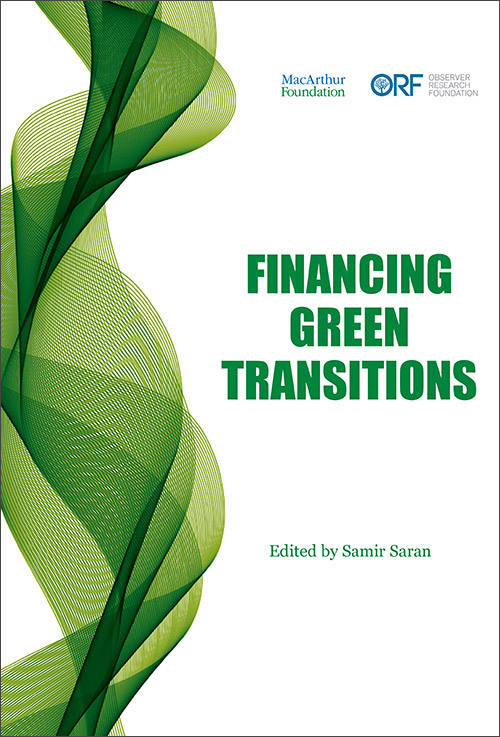
Financing Green Transitions


Climate Action,COP 21,Financing Green Transitions,Paris Agreement

Financing Green Transitions

More than three years after the Paris Agreement was finalised at COP21, it is evident that the developing world is unlikely to receive even the modest amount of US$100 billion annually in climate finance by 2020. This is primarily a result of the collective failure of the developed world to meet their moral and real climate obligations that pre-date the Paris Agreement. This lack of finance for climate action is exacerbated by the fact that the international financial community—banks, asset managers, investors and capital markets—have failed to align their operations with the goals of the Paris Agreement. The involvement of international financial investors, both private and multilateral, in financing green transitions in developing countries has so far been feeble, sporadic and arbitrary. Unless these resources can be leveraged to cater to the development needs of emerging economies, there is a real possibility that the green transitions that we all seek will be incomplete and mostly underwritten by the world’s poorest citizens.

For the past two years, ORF and the MacArthur Foundation have attempted to create a new framework to ensure that the global financial community better responds to the imperatives of the Paris Agreement. Our research acknowledges that official aid and grants are insufficient to meet the burgeoning energy and infrastructure needs of emerging economies. There is no doubt that we require new financial instruments and pipelines to support sustainable development in much of the world. This publication, comprising of 11 policy essays on the subject of climate finance, discusses this objective through multiple lenses. It is a culmination of our efforts to work with a global network of experts and stakeholders to identify bottlenecks and provide new solutions to ensure that emerging economies can access finance to meet their green development goals.

Our series on financing green transitions has largely focused on India, and for good reason: It will be the first large country that must transition to a middle-income economy in a fossil fuel-constrained world. India is also constricted by the same political, regulatory and financial challenges that confront much of the developing world. Given the weak efforts of the developed world to assist the developing countries so far, India has had to chart a path largely through its own economic and financial arrangements. Therefore, an assessment of India’s capacity to now leverage international financial flows and its ability to undertake a low-carbon transition may well provide a reliable template for developing countries to emulate.

Through 11 essays, we explore three broad themes: the role of international investors and institutions; India’s own development policy choices and lessons therein for other developing countries; and the role of human capital in climate-resilient investment.

Our first set of essays analyses the behaviour and financial practises of international financial institutions, investors and credit rating organisations. In “An Incomplete Transformation”, Mihir Sharma argues that Multilateral Development Banks have failed to create bridges between private capital and clean energy/climate resilient infrastructure demands in developing countries. He calls on MDBs to adapt to developing world priorities, crowd-in private capital, and streamline operational activities in emerging economies. In “Financing Climate Resilience”, Vikrom Mathur and Aparna Roy highlight the bias of international investors towards investing mostly in mitigation efforts. Conventional wisdom in the private sector holds that the costs of adaptation and resilience should be borne by governments. Taking a different approach to the problem, Mathur and Roy offer solutions focused on commercial and business opportunities. In two pieces, “Rating Resilience” and “Ratings for Renewable Energy”, Aled Jones studies the limitations of current literature and practices relating to credit rating of infrastructure projects and renewable energy projects and proposes a more holistic framework of risk metrics for both renewable energy and climate resilient infrastructure. Finally, in “The Political Economy of Basel”, Mihir Sharma outlines how the Basel norms have been designed to respond to the interests of a select group of developed nations. He argues that by prioritising macroeconomic stability and implementing new liquidity restrictions, these actors have failed to consider adverse implications on cross-border flows, especially with regards to long-term green investments.

The next set of essays focuses on India’s domestic challenges, particularly in its infrastructure and urban development policy and its efforts to transition to a low-carbon economy. In “PPP model, regulatory oversight and private financing: Evolutionary trinity of India’s infrastructure”, Gautam Chikermane offers a comprehensive historical account of the political economy of India’s infrastructure policy, documenting the many failures that have plagued it. Given that a stable infrastructure policy will have significant implications for green investment choices, Chikermane’s study of India’s policy failures provides valuable lessons. In “Financing Urban Infrastructure for an Evolving India”, Pritika Hingorani, Sharmadha Srinivasan, and Harshita Agarwal examine the reasons for the lack of private-sector involvement in India’s climate-resilient urban infrastructure. They analyse the current regulatory regime for urban infrastructure in India and provide a set of solutions, advancing both public and private sector participation in the future. In “Moving from Growth to Development: Financing Green Investment in India”, Neha Kumar, Prashant Vaze and Sean Kidney explore new financial instruments that India can employ to finance its green infrastructure needs. They outline how India can more effectively scale its green bonds market, leverage international debt capital markets, and harness blended finance to achieve this objective. Finally, in “India and the World,” Aparajit Pandey and I outline three key structural barriers that threaten to undermine India’s rapidly growing green energy sector: the state of its distribution companies, underdeveloped financial markets and inflexible international credit and risk assessment practices. Offering case studies from India’s state and municipal level policies, we argue that India’s ability to succeed in its low-carbon transition will open new pathways for emerging economies around the world.

In our final set of essays, we examine the role of human capital in enabling greater green investment, focusing on leadership and gender. In “Pay for Sustainable Growth”, Charanjit Singh, analyses the executive pay of 31 of India’s top companies showing that by linking management compensation to short-term performance objective, companies are failing to integrate sustainability objectives into their long-term vision. The chapter proposes a restructuring of the private sector’s approach to executive compensation, focused on long-term sustainable economic growth. Lastly, in “Gender and Climate Finance,” Vidisha Mishra posits that even though women and marginalised groups are likely to be more exposed to climate change related risks, they are severely underrepresented in the investment and regulatory classes. Her essay then unpacks the opportunities and benefits of meaningfully building gender concerns into climate finance mechanisms.

Our contributors have attempted to explore the reasons behind the significant shortfall in private finance in relation to low-carbon investments. They have also collectively offered solutions, both domestic and international, with regards to the flow of finance for climate projects. The success of these solutions, however, will be predicated on some boundary conditions that developing economies and the international financial community must meet.

First, developing countries must reclaim the power grid. The large-scale subsidisation of power in the developing world has created significant distortions in energy use, pricing and policy. State-level reform in India suggests that splitting the electrical grid for agricultural and non-agricultural sectors, implementing a credible metering system and providing subsidies as direct benefits can have significant positive effects on the power sector. Without a viable grid, green investments are likely to remain unviable.

The second is to build capacity amongst international investors to understand risk and opportunity in developing states. There is generally a bias stemming from lack of knowledge (information) and capacity (human resources) to assess risks in emerging economies. This ultimately translates into an inability to understand the economic landscape of recipient countries. Further, as one of our authors has highlighted, there are few institutional attempts at gendering climate investments and finance. A lack of female representation in the investor community, especially from the developing world, invariably means that the concerns and voices of the most vulnerable are ignored as financial plans are scripted.

Third, developing countries must build innovative policy tools to leverage new financial instruments and mechanisms. Currently, regulations related to debt and equity markets restrict the flow of international capital into climate action projects. Emerging economies must co-opt their financial sector in the fight against climate change. Financial markets that allow for debt financing and locally issued green bonds for example create a diverse set of instruments that different types on investors can rely on. More ambitious measures can include the creation of a “green investment bank,” which allow the crowding in of private investment in green assets.

Finally, there is a new imperative to overhaul regulatory systems around the world, both in recipient and investing states. Vast pools of money are held by multiple categories of investors, such as pension funds and insurance companies. However, existing regulations limit the ability of fund managers to invest in climate related projects. Further, international credit rating agencies reassess the methodology for assessments of green projects in developing countries. And perhaps most importantly, there is an urgent need to review the current set of Basel Accords as well as the next iteration of Basel IV accords. The macro-prudential regulations were designed to create a more risk-free international banking system but have unintentionally stymied the ability of the financial sector to contribute to climate resilience. The banking community must acknowledge that planetary risk is the largest systemic challenge to financial stability and that mitigating such risk is the most prudential practice.

While these solutions are far from comprehensive, they address some of the most persistent structural barriers to supplying and accessing climate finance. ORF and the MacAuthur Foundation will continue to explore new ways and means to ensure that developing countries can access financing to pursue their low-carbon transitions. We will also continue to study India’s own financial, technological and governance solutions in the hope that these experiences can benefit other countries and communities. We hope that the insights presented in this book will inform academics, business leaders and policymakers in their efforts to better understand the importance of the global financial community finally signing the Paris Agreement.

Standard
Uncategorized

Financing Green Transitions

Samir Saran

More than three years after the Paris Agreement was finalised at COP21, it is evident that the developing world is unlikely to receive even the modest amount of US$100 billion annually in climate finance by 2020. This is primarily a result of the collective failure of the developed world to meet their moral and real climate obligations that pre-date the Paris Agreement. This lack of finance for climate action is exacerbated by the fact that the international financial community—banks, asset managers, investors and capital markets—have failed to align their operations with the goals of the Paris Agreement. The involvement of international financial investors, both private and multilateral, in financing green transitions in developing countries has so far been feeble, sporadic and arbitrary. Unless these resources can be leveraged to cater to the development needs of emerging economies, there is a real possibility that the green transitions that we all seek will be incomplete and mostly underwritten by the world’s poorest citizens.

For the past two years, ORF and the MacArthur Foundation have attempted to create a new framework to ensure that the global financial community better responds to the imperatives of the Paris Agreement. Our research acknowledges that official aid and grants are insufficient to meet the burgeoning energy and infrastructure needs of emerging economies. There is no doubt that we require new financial instruments and pipelines to support sustainable development in much of the world. This publication, comprising of 11 policy essays on the subject of climate finance, discusses this objective through multiple lenses. It is a culmination of our efforts to work with a global network of experts and stakeholders to identify bottlenecks and provide new solutions to ensure that emerging economies can access finance to meet their green development goals.

Our series on financing green transitions has largely focused on India, and for good reason: It will be the first large country that must transition to a middle-income economy in a fossil fuel-constrained world. India is also constricted by the same political, regulatory and financial challenges that confront much of the developing world. Given the weak efforts of the developed world to assist the developing countries so far, India has had to chart a path largely through its own economic and financial arrangements. Therefore, an assessment of India’s capacity to now leverage international financial flows and its ability to undertake a low-carbon transition may well provide a reliable template for developing countries to emulate.

Through 11 essays, we explore three broad themes: the role of international investors and institutions; India’s own development policy choices and lessons therein for other developing countries; and the role of human capital in climate-resilient investment.

Our first set of essays analyses the behaviour and financial practises of international financial institutions, investors and credit rating organisations. In “An Incomplete Transformation”, Mihir Sharma argues that Multilateral Development Banks have failed to create bridges between private capital and clean energy/climate resilient infrastructure demands in developing countries. He calls on MDBs to adapt to developing world priorities, crowd-in private capital, and streamline operational activities in emerging economies. In “Financing Climate Resilience”, Vikrom Mathur and Aparna Roy highlight the bias of international investors towards investing mostly in mitigation efforts. Conventional wisdom in the private sector holds that the costs of adaptation and resilience should be borne by governments. Taking a different approach to the problem, Mathur and Roy offer solutions focused on commercial and business opportunities. In two pieces, “Rating Resilience” and “Ratings for Renewable Energy”, Aled Jones studies the limitations of current literature and practices relating to credit rating of infrastructure projects and renewable energy projects and proposes a more holistic framework of risk metrics for both renewable energy and climate resilient infrastructure. Finally, in “The Political Economy of Basel”, Mihir Sharma outlines how the Basel norms have been designed to respond to the interests of a select group of developed nations. He argues that by prioritising macroeconomic stability and implementing new liquidity restrictions, these actors have failed to consider adverse implications on cross-border flows, especially with regards to long-term green investments.

The next set of essays focuses on India’s domestic challenges, particularly in its infrastructure and urban development policy and its efforts to transition to a low-carbon economy. In “PPP model, regulatory oversight and private financing: Evolutionary trinity of India’s infrastructure”, Gautam Chikermane offers a comprehensive historical account of the political economy of India’s infrastructure policy, documenting the many failures that have plagued it. Given that a stable infrastructure policy will have significant implications for green investment choices, Chikermane’s study of India’s policy failures provides valuable lessons. In “Financing Urban Infrastructure for an Evolving India”, Pritika Hingorani, Sharmadha Srinivasan, and Harshita Agarwal examine the reasons for the lack of private-sector involvement in India’s climate-resilient urban infrastructure. They analyse the current regulatory regime for urban infrastructure in India and provide a set of solutions, advancing both public and private sector participation in the future. In “Moving from Growth to Development: Financing Green Investment in India”, Neha Kumar, Prashant Vaze and Sean Kidney explore new financial instruments that India can employ to finance its green infrastructure needs. They outline how India can more effectively scale its green bonds market, leverage international debt capital markets, and harness blended finance to achieve this objective. Finally, in “India and the World,” Aparajit Pandey and I outline three key structural barriers that threaten to undermine India’s rapidly growing green energy sector: the state of its distribution companies, underdeveloped financial markets and inflexible international credit and risk assessment practices. Offering case studies from India’s state and municipal level policies, we argue that India’s ability to succeed in its low-carbon transition will open new pathways for emerging economies around the world.

In our final set of essays, we examine the role of human capital in enabling greater green investment, focusing on leadership and gender. In “Pay for Sustainable Growth”, Charanjit Singh, analyses the executive pay of 31 of India’s top companies showing that by linking management compensation to short-term performance objective, companies are failing to integrate sustainability objectives into their long-term vision. The chapter proposes a restructuring of the private sector’s approach to executive compensation, focused on long-term sustainable economic growth. Lastly, in “Gender and Climate Finance,” Vidisha Mishra posits that even though women and marginalised groups are likely to be more exposed to climate change related risks, they are severely underrepresented in the investment and regulatory classes. Her essay then unpacks the opportunities and benefits of meaningfully building gender concerns into climate finance mechanisms.

Our contributors have attempted to explore the reasons behind the significant shortfall in private finance in relation to low-carbon investments. They have also collectively offered solutions, both domestic and international, with regards to the flow of finance for climate projects. The success of these solutions, however, will be predicated on some boundary conditions that developing economies and the international financial community must meet.

First, developing countries must reclaim the power grid. The large-scale subsidisation of power in the developing world has created significant distortions in energy use, pricing and policy. State-level reform in India suggests that splitting the electrical grid for agricultural and non-agricultural sectors, implementing a credible metering system and providing subsidies as direct benefits can have significant positive effects on the power sector. Without a viable grid, green investments are likely to remain unviable.

The second is to build capacity amongst international investors to understand risk and opportunity in developing states. There is generally a bias stemming from lack of knowledge (information) and capacity (human resources) to assess risks in emerging economies. This ultimately translates into an inability to understand the economic landscape of recipient countries. Further, as one of our authors has highlighted, there are few institutional attempts at gendering climate investments and finance. A lack of female representation in the investor community, especially from the developing world, invariably means that the concerns and voices of the most vulnerable are ignored as financial plans are scripted.

Third, developing countries must build innovative policy tools to leverage new financial instruments and mechanisms. Currently, regulations related to debt and equity markets restrict the flow of international capital into climate action projects. Emerging economies must co-opt their financial sector in the fight against climate change. Financial markets that allow for debt financing and locally issued green bonds for example create a diverse set of instruments that different types on investors can rely on. More ambitious measures can include the creation of a “green investment bank,” which allow the crowding in of private investment in green assets.

Finally, there is a new imperative to overhaul regulatory systems around the world, both in recipient and investing states. Vast pools of money are held by multiple categories of investors, such as pension funds and insurance companies. However, existing regulations limit the ability of fund managers to invest in climate related projects. Further, international credit rating agencies reassess the methodology for assessments of green projects in developing countries. And perhaps most importantly, there is an urgent need to review the current set of Basel Accords as well as the next iteration of Basel IV accords. The macro-prudential regulations were designed to create a more risk-free international banking system but have unintentionally stymied the ability of the financial sector to contribute to climate resilience. The banking community must acknowledge that planetary risk is the largest systemic challenge to financial stability and that mitigating such risk is the most prudential practice.

While these solutions are far from comprehensive, they address some of the most persistent structural barriers to supplying and accessing climate finance. ORF and the MacAuthur Foundation will continue to explore new ways and means to ensure that developing countries can access financing to pursue their low-carbon transitions. We will also continue to study India’s own financial, technological and governance solutions in the hope that these experiences can benefit other countries and communities. We hope that the insights presented in this book will inform academics, business leaders and policymakers in their efforts to better understand the importance of the global financial community finally signing the Paris Agreement.

To read the full book, click here.

Standard
Uncategorized

Debating a world reorder

Samir Saran| Harsh V. Pant

Every year, the Raisina Dialogue convenes experts from a diverse cross-section of disciplines and professions to address the most challenging issues facing the global community. It is fair to say that for the past few years, the common sentiment is that we live in an age of “disruption,” given the upheavals that have characterized global politics over the last decade. As the dialogue prepares to convene once again in 2019, the world is evolving in response to these disruptions. Older systems of management are straining or already broken, but the new regimes, rules, and concepts that could replace them are still forming. This year, Raisina will take stock of the immediate consequences of these disruptions, and explore how these consequences inform our visions of the emerging world order.

The redrawing of our mental maps of the world is perhaps the most consequential development. The tensions and instability emanating from North America and Europe have reinforced the fragility of the Atlantic system: that it won’t be able to sustain its role as the lynchpin of the international order.

To read more, click here.

Standard
Uncategorized

Raisina Dialogue 2019: Curator’s Note

Samir Saran

Each successive year in the last decade has brought with it disruptions implicating global politics, economics and societies. At the Raisina Dialogue last year, we discussed how best to manage such disruptive transitions. This year, we believe that it is time to look ahead and search for new solutions and frameworks to manage the world. A “World Reorder” is our theme for Raisina 2019—and bold as it maybe, we have little doubt that the moment to reflect on this is already upon us.

Perhaps the most important driver of change is the certainty that 2019 will herald the arrival of truly global politics. The post-war order contributed immensely to the progress and security of nations; yet its ideas, frameworks and institutions are no longer sufficient for a new world.

The small community of nations that designed and sustained it must give way to a more diverse constellation of actors. New powers from the East are only one set of stakeholders—increasingly, global governance must allow for distribution of authority and agency to a more diffused networks of actors, from cities and citizens to corporations and civil society organisations. How we do this will be the key question of our time.

Consequently, we have chosen five themes that are defining a new world order. Perhaps the most consequential of these developments is the emergence of new strategic geographies that are transcending the old divides of East, West, North and South. Second, we analyse the discontent with today’s globalisation paradigms—and how new trade and technology tensions are threatening the future of connectivity and commerce. Third, we explore how technology is compelling us to search for a new contract between the individual, business and the state. Fourth, we ask what ethics will define the development and deployment of new technologies and how they will affect individuals and our societies. Finally, we emphasise the role of leadership—both individual and institutional—in managing the complexities of today’s world.

These are the big ideas that have influenced the design of the Raisina Dialogue 2019. Over the next three days, we have curated over 40 sets of interactions with a global community of leaders and experts in an attempt to paint a picture of a new world order that is rapidly emerging.

A prominent feature of this year’s conversation at Raisina is Europe or more broadly, Eurasia. This supercontinent is without doubt the most dynamic and unpredictable region in the world, one that continues to surprise itself and others around it. Once considered a benchmark for democracy and collective security, the EU is today increasingly roiled by the politics and economics of populism. Equally significant is that the geographical construct of the larger European continent is dissipating. New flows of finance, labour and information are merging Asia and Europe into a single Eurasian supercontinent. The question for the EU and other European actors, therefore, is whether they can act upon these momentous changes or be subsumed by them.

The waters that link this region are undergoing a churn as well. Strategic and economic drivers have brought about seminal changes in the Arctic and the Indo-Pacific.

As climate change transforms the geography of the Arctic, its waters will merge the politics of the Pacific and the Atlantic Ocean, even as the regions’ incumbent powers scramble to create new arrangements. The Indo-Pacific, meanwhile, is already fast becoming a domain for great power competition. Yet, with over 60 percent of the world’s populations residing astride these waters, its potential for scripting new paradigms for globalisation and development is unparalleled. This begs the question, then, of whether these new constructs merely allow us to visualise and manage tensions in the region, or whether they can emerge as a new conduit for development and stability.

The emergence of these new geographies is no coincidence. They are symptoms of a new normal in global politics—the eastward tilt in the concentration of economic wealth and military might. Two prominent questions arise from this trend. For one, what does this mean for the West? Can the liberal international order remain viable even as Western values, norms and influence steadily decline in international affairs? Second, what is the future of governance in Asia? The rise of new powers and interests is necessitating the ideation of new norms and institutions; however, there is little consensus on how to go about this process as old tensions eclipse the potential for cooperation.

The broader shift in economic power will certainly not be free of friction. Indeed, it has already given rise to tensions amongst the great powers of the West and the East.

Both the US and China are exerting their influence upon the rules of trade and commerce—and technology is the flashpoint that may inject a new urgency and ferocity to this contest. This dispute is only one facet of the broader dissatisfaction buffeting the global economic order. The rise of non-market economies and the domestic compulsions of populism and nativist economics are threatening the very foundations of free markets and free trade. How will the economic order that has enabled much prosperity over the past seven decades adapt? More consequentially, what happens if it cannot?

Even as the very foundations of the global order stand on shaky ground, the world is still attempting to address the imperatives of sustainable development. Emerging economies are struggling to access and raise sufficient finance to fuel their sustainable development pathways, while trillions of dollars remain locked up in Western pension funds and insurance schemes. This hints at a deeper issue: that 20th-century development paradigms continue to privilege a small set of actors and reflect their biases, preventing flows of technology and finance where they are most needed. Indeed, we must continue to ask how the global development agenda can be made more diverse by accommodating new voices. Engendering conversations on globalisation and development is certainly one solution; and it must form part of the template that includes underrepresented communities from around the world.

It is time that voices from the dynamic African continent contribute to the deliberations on the future of growth and development; and Latin American perspectives add a new dimension to the voice of America.

For many years, the world remained optimistic that new technologies would provide a voice to these communities and create new pathways for progress. Events in 2018 have compelled us to revisit this consensus. Balancing the imperatives of economic growth, national security and privacy seems harder than ever before. Democracies, it appears, are hard-pressed to achieve this, given that open societies are most vulnerable to manipulation and influence in their political processes. Worryingly, however, despite their outsized influence in our lives, global technology platforms have proven immune to calls for accountability and reform. This year, therefore, the Raisina Dialogue will ask how powerful technology companies can be made more accountable to the constituencies that drive their growth and profit. Or else must we rethink regulation that curtails their influence and reach?

There is, however, little doubt that technology will continue to transform our societies. The fourth industrial revolution will spur new breakthrough innovations and progress, even as it makes redundant extant arrangements for social mobility and economic growth. It will also compel us to reimagine the value of human capital. Our education, healthcare and labour frameworks must shed their 20th-century formats and reflect the realities of today’s knowledge-based information economy. Further, societies will have to grapple with creating ethical frameworks for new technologies as they increasingly become essential to our politics, economics and military postures. In today’s polarised times, these tasks will not be easy.

This year at Raisina, we also explore an often-ignored aspect of governance; one that will be increasingly relevant in today’s complex world: leadership.

In a world buffeted by multiple headwinds, it appears that we are experiencing a dearth of progressive leadership. How can individuals and institutions rise above the political divides that are inhibiting a new consensus?

Finally, we explore the role of India on the global high table. The opening lines of the Mahabharat, one of India’s oldest epics, boldly states that knowledge that eludes its pages may not be found elsewhere. It is fair to aver that India shares the same relationship with the world. Its billion-plus population is an embodiment of all that is right with the world and all that needs resolution. The challenges that it confronts are those that constrain all of us today. It is inexorably destined to be the steward of the liberal order with which it has had significant differences in the past. It is still emerging even as it leads, it raises hopes even as it disappoints. Indeed, India is a “boundary” nation. It is a living experiment where science and religion and identities and ideas intermingle to script a unique narrative of progress.

It is therefore an ideal location to dissect the most important issues that engage us all. It is on these boundaries that durable pathways for a world reorder will be discovered. This year, we have convened over 40 conversations to assess, analyse and argue these emerging realities. With 1,500 participants including 600 delegates and speakers from over 92 countries converging in New Delhi, there will be ample diversity and plurality of opinion. And our concerted efforts towards achieving gender parity have ensured that women account for over 40 percent of our delegates this year.

We hope that the Raisina Dialogue can be an incubator that generates new ideas for a shared planet and our common future; provide a space where contesting ideas can flow freely; and a platform where we may just tease out an elusive consensus. As always, we look forward to hosting you here in New Delhi.

Standard
Uncategorized

रायसीना डायलॉग में आपका तहेदिल से स्वागत है!

Samir Saran

रायसीना डायलॉग में ORF प्रेसिडेंट समीर सरन का स्वागत भाषण।

रायसीना डायलॉग, ORF, Raisina 2019, Raisina Dialogue, समीर सरन
Photolabs@ORF

नार्वे की प्रधानमंत्री महामहिम, सुश्री एर्ना सोलबर्ग;

भारत के माननीय प्रधानमंत्री, श्री नरेन्द्र मोदी जी;

माननीय विदेश मंत्री श्रीमती सुषमा स्वराज जी;

मंत्रिगणों, एडमिरल्स, जनरल्स और दुनिया भर से आए प्रतिष्ठित नेतागणों; तथा हमारे प्रतिनिधियों और प्रतिभागियों

रायसीना डायलॉग के चौथे संस्करण में आपका स्वागत है।

हमारे ऑनलाइन ऑडीअन्स का भी खासतौर पर अभिनंदन — मुझे बताया गया है कि पिछले साल उनकी संख्या 3 मिलियन से ज्यादा थी।

हमें उम्मीद है कि इस साल यह संख्या और भी ज्यादा होगी, क्योंकि इस बार हम रायसीना को मराठी और हिंदी में ट्वीट और कवर करेंगे तथा प्रतिदिन हिंदी में ‘बेस्ट आफ रायसीना’ वीडियो तैयार करेंगे।

मैं 92 देशों से आए 600 प्रतिनिधियों और वक्ताओं का हार्दिक स्वागत करता हूं, जो नई दिल्ली में हमारे साथ 50 घंटे की बहस और चर्चाओं में शामिल रहने वाले हैं। हमें इस बात की खासतौर पर खुशी है कि आज हमारे बीच काफी संख्या में वुमन लीडर्स और वक्ता मौजूद हैं — समस्त प्रतिनिधियों और वक्ताओं में से 40 प्रतिशत से अधिक महिलाएं हैं। अगले साल हम ​इस दिशा में बराबरी लाने की कोशिश करेंगे।

हमें अफ्रीका से पधारे 58 प्रतिनिधियों का स्वागत करते हुए हमें बेहद खुशी हो रही है — एक महाद्वीप, जिसकी आवाज को आवश्यक तौर पर हमारे भविष्य को बहुत अधिक प्रभावित करना चाहिए। हम अफ्रीका के साथ मजबूत रिश्ते बनाने के इच्छुक हैं — और 10 जनवरी को आप इस रोचक महाद्वीप में एक ग्लोबल डिवेलपमेंट प्लेटफॉर्म की मेजबानी करने की हमारी योजनाओं को जानेंगे।

रायसीना यंग फैलोज़ का तहेदिल से स्वागत। इस साल 29 देशों के 48 यंग लीडर्स यहां पधारे हैं — जो अपने देश की सरकार, मीडिया, व्यापार और सिविल सोसायटी के बेहतरीन प्रतिनिधि हैं। मुझे यह बताते हुए खुशी हो रही है कि इनमें आधे से अधिक युवतियां हैं। ये लगभग 1,500 पूर्व सदस्यों के लगातार बढ़ रहे नेटवर्क में शामिल हो जाएंगे, जिनमें से 100 से अधिक सदस्य इस साल फिर से हमारे साथ जुड़ने जा रहे हैं।

हमने इस मंच पर 200 छात्रों और युवा विचारकों को भी आमंत्रित किया है, जिनमें रूस का एक युवा प्रतिनिधिमंडल शामिल है। हम इस समूह का तहेदिल से स्वागत करते हैं और उस दुनिया के बारे में इनके विचार जानने को उत्सुक हैं, जो इन लोगों को विरासत में मिलने वाली है। हम अपने मंच को अलग बनाना चाहते हैं — हम इसे एक ऐसा स्थान बनाने की कोशिश कर रहे हैं, जहां युवाओं के विचार भविष्य में होने वाले विचार-विमर्शों को आकार दे सके।

हम इस साल रायसीना में होने वाली बातचीत और विचार-विमर्श में आप सभी का स्वागत करते हैं!

इस साल हम 80 से ज्यादा चर्चाओं का आयोजन करने जा रहे हैं: अगले तीन दिन तक 41 पैनल्स, 7 प्रमुख भाषणों, 3 अनौपचारिक वार्तालाप, 25 से अधिक स्टूडियो पैनल्स और 9 संबद्ध कार्यक्रमों का आयोजन किया जाएगा।

मैंने और मेरे सहयोगियों ने ऐसा वातावरण बनाने का प्रयास किया है, जो विविधता और प्रतिभा की दृष्टि से समृद्ध हो तथा चर्चा और विचार-विमर्श के लिए अनुकूल हो।

मुझे यकीन है कि अगले दो दिन जानकारी और उत्साह से भरपूर होंगे, और निश्चित रूप से उन प्रस्तावों और साझेदारियों के रूप में परिणत होंगे, जिनसें हमें हमारी गतिशील और जटिल दुनिया का मार्गदर्शन करने में मदद मिलेगी।

रायसीना डायलॉग 2019 में आपका तहेदिल से स्वागत है!

मैं प्रारंभिक उद्बोधन के लिए ORF के अध्यक्ष श्री संजय जोशी का स्वागत करता हूं।

Standard