Uncategorized

Health Policy belongs to the national security domain and different stakeholders must engage

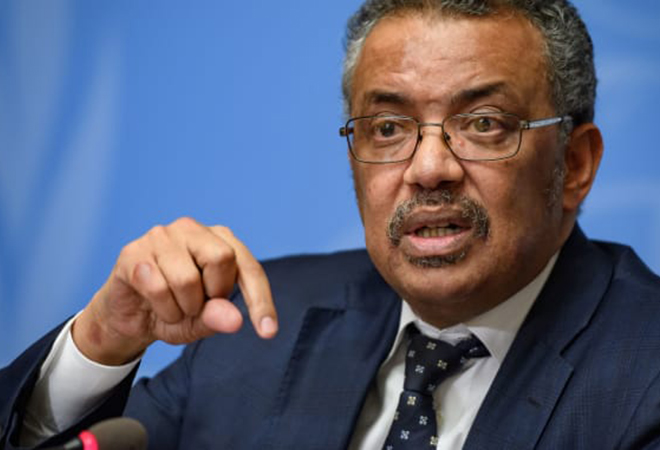
Samir Saran, President, ORF was interviewed by Oxford Political Review in the backdrop of the Indian government’s decision to enforce a complete lockdown, India’s capacities and challenges, and its potential role in the global fight against COVID19.
Covid, Covid19, Health Security Domain, Think Tanks, HCQ, Debate, Political Economy, state capacity, story, Indian Economy, WHO, Smart Lockdown, Digital Platforms, geopolitics, infodemic
Getty

Oxford Political Review: While the strict lockdown demonstrates the Modi government’s determination to control the virus from spreading, is India prepared to handle the pandemic and the massive economic disruption in making?

Samir Saran: Few nations are truly prepared for a pandemic of this nature and scale. India does possess some advantages in terms of the state’s decades of experience when it comes to fighting communicable diseases and natural disasters. But it also has the challenge of responding to this pandemic while continuing to battle legacy health challenges. Its health systems are likely to be overwhelmed unless it is able to moderate the surge of COVID19 and this has motivated the stringent lockdown.

The economic disruptions, on the other hand, will be far harder to manage. While India’s public distribution system may mitigate against severe harm to life and livelihood, the pandemic will hit its vast informal economy the hardest. It remains to be seen whether India can use this opportunity to rectify many of the institutional and administrative limitations that have hobbled this sector for the past seven decades. India now has digitalisation as an ally and it may well be a very powerful policy instrument to respond to a complex Indian economy.

As we enter the next phase of the lockdown, it is apparent that the government is attempting to balance health and life concerns and the economy. It is expected that some sectors including agriculture and manufacturing may be able to restore operations, albeit with limited capacity and under strict safety protocols. This attempt to put together a ‘smart lockdown’ model is something useful for India and other countries as the length of the combat with this pandemic may be considerable.

OPR: In a recent article, you termed the present crisis as an ‘infodemic’ in light of how information itself and information networks affected the discourse on COVID-19. In this context, how do you assess the response of global institutions like the World Health Organization?

SS: It is an unfortunate truth that the WHO’s actions in the early weeks of the outbreak contributed to the ‘infodemic’. Its early recommendations against travel bans and its delay in declaring Covid19 a global public health emergency contributed to many nations acting late and relying on incomplete information. This proved fatal to thousands around the world. The WHO failed both in its advisory role, in failing to alert the world on time, and in its technical role when it continued to amplify China’s assessments on the cause, location, and virality of the outbreak.

The WHO has named and shamed governments including China in earlier instances. This time, by soft peddling the China narrative, the WHO leadership has lost credibility. The organisation is important, and as the Indian Prime Minister mentioned, at the virtual G-20 summit, the WHO needs both strengthening and reform.

OPR: Where does India position itself in the ongoing blame-game between the US and China? As an emerging power with global ambitions, would it be prudent to keep out of these debates with global ramifications. Do you feel that it is high time that India too should contribute to the international opinion on whether any accountability needs to be fixed or not?   

SS: Unlike both the US and China, India is not inclined to see every global challenge from a zero-sum perspective. Delhi is unlikely to dive into shrill conversations about what the virus should be called but there is no equivalence between the US and China on this issue. China concealed facts, their intentions were less than honest, and they must be called out.

That being said, India should certainly not “keep out of the debate”. The real question, after all, is not about semantics, but about China’s growing clout in international organisations—especially the UN and its numerous agencies—and whether this compromises the independence and integrity of these institutions.

The takeaway for India is that it must recalibrate its approach towards global institutions in the decade ahead. Delhi must build its own presence within them and lead coalitions that can advance its own interests as well as limit the ability of other powers to manipulate them. This requires the deployment of both financial and diplomatic resources, which, so far, New Delhi has either been unable or unwilling to do.

OPR: How exactly could COVID-19-driven disruptions alter India’s engagement with her immediate neighbourhood as well as her standing on a global level? On the regional level, India’s assistance to Maldives has been appreciated, but easing the ban on the export of the hydroxychloroquine after President Trump’s tweet is seen as a sign of giving in to the American pressure. Having a large manpower of trained paramedical stuff, a major producer of generic drugs, and consisting of strong logistical capacities covering the expanse of the Indo-Pacific region, what stops India from taking the lead in the global fight against COVID-19?

SS: The Trump incident is best seen for what it is—one more erratic idiosyncrasy of his presidency and the media’s willingness to sensationalise it in both geographies. India would likely have exported HCQ to the US and any other country in need in any case. India has sufficient surpluses and capacity and has been the largest actor in the HCQ supply chain for many years.

Separating the signal from the noise would reveal that India has been one of the few nations willing to show global leadership. Delhi was quick to reach out to SAARC and the G20 in order to help coordinate regional and global responses to the pandemic. India has helped repatriate citizens from around the world as the crisis broke out and has delivered public goods to nations worldwide.

Delhi should use this moment to focus on the challenges at home, to define its own role in the world, and to assess who its actual friends and partners are. For me, how New Delhi is able to steer the Indian population and the Indian economy over the next six to 12 months will be its defining moment. If India gets it right, the world will stand up and take notice. If we get it wrong, others will write our story.

OPR: Besides shaping debates and potential interventions in the domains of foreign policy and economy, Observer Research Foundation (ORF) also runs a Public Health Initiative. Alongside the ongoing efforts by the Indian government as well as the leading industrialists, could think tanks like ORF also a play a role in aiding India’s efforts in addressing the present crisis?

SS: ORF has responded very rapidly to this pandemic as a policy think tank. Through our COVID19 tracker, we are identifying the spread of this disease here in India, and around the world, with accurate and real-time information. We are producing a daily curation of essays and articles from experts in public health, finance, geopolitics and other areas to provide a full assessment of the impact of this pandemic as well as predictions for the future. And we hope to leverage ORF’s digital platforms to inform the public about the different aspects of this crisis.

Think tanks, especially in the emerging world, must shoulder the responsibility of augmenting state capacity; certainly during this pandemic but also in less turbulent times. We remain honest arbiters of a wide spectrum of analyses from across the world in an era where misinformation sprints many miles. Institutions like ours must bring together other institutions and experts who can provide multidisciplinary perspectives and solutions to those who are receptive.

A few years ago, we at ORF argued that health policy belongs to the National Security Domain and that many actors and experts with different perspectives and areas of expertise—including in diplomacy, economics, and technology—must engage with it. This pandemic is forcing many to do exactly this.
Standard
Uncategorized

Coexisting with #Covid19: Saving lives and the economy

Covid, Covid-19, Coronavirus, Indian Economy, Lockdown, reopening, locking down, timeframe, skillful development, global economy, information, infrastructure, communities

Experts at India’s Ministry of Health and Family Welfare published a paper on 9 April, 2020, looking at 41 sentinel sites across the country. It revealed that of the 5,911 severe acute respiratory illness (SARI) patients tested since 15 February, 1.8% have tested positive for Covid19. Of those who had tested positive, 39.2% did not report international travel or any history of contact with a known patient—clearly indicating that at least parts of India are likely in the stage of community transmission. By itself, this is neither unusual nor surprising—it is indeed the nature of pandemics to take root in communities over time.

A total of 179,374 samples from 164,773 individuals have been tested as of 11 April, 2020. Just around 7,703 individuals have been confirmed Covid19 positive. India is testing just over 17,000 samples per day, which is inadequate given the vastness of the country and the current spread covering almost half the districts. This means that the true scale of spread remains unknown and most areas remain potential breakout zones. The spurts that we are witnessing in cities like Mumbai, Delhi, Jaipur, Indore, and Ahmedabad are cause for deep concern.

India is testing just over 17,000 samples per day, which is inadequate given the vastness of the country and the current spread covering almost half the districts.

Despite efforts over the past few weeks to give it a boost, India’s healthcare delivery capacity remains limited. According to the Government, an order for 49,000 ventilators has been placed in view of the low numbers that exist within the system, but it is unclear by when they will arrive and be distributed among the special centres created for Covid19 patients. The Government has acknowledged the need for “rapidly ramping up” the number of Corona-testing facilities, Personal Protective Equipment (PPEs), Isolation Beds, ICU beds, ventilators, and other essential equipment. This only serves to highlight the fact that the current levels of healthcare facilities will not stand a chance of coping with a sudden and huge surge. Hence, a national lockdown was, and remains, the only option since any widespread community breakout will overwhelm medical infrastructure.

A national lockdown was, and remains, the only option since any widespread community breakout will overwhelm medical infrastructure.

If we go by what has been officially stated, more than half of India’s districts are yet to record a single case of Covid19. But the virus may have made its way to many of these districts. Whether or not this is true will only be known through increased testing, which has not happened and is something that needs to be rectified with alacrity.

India has no doubt responded strongly and decisively to the crisis by opting for a countrywide lockdown. According to the Oxford Covid19 Government Response Tracker (OxCGRT) database’s Stringency Index, on 25 March, India was the sixth country to opt for a complete lockdown and achieve a stringency index score of 100.

Yet, the fact remains that the lockdown is a blunt instrument. A country like India cannot afford to indefinitely extend it across regions when a clear assessment of the risk of community spread is impossible for lack of information.

The fact remains that the lockdown is a blunt instrument. A country like India cannot afford to indefinitely extend it across regions when a clear assessment of the risk of community spread is impossible for lack of information.

The lockdown, as we have it now, has virtually brought the national economy to a grinding halt. This hurts the informal workforce, micro businesses, and unorganised labour the most and is bound to have long-lasting implications. The use of a nation-wide lockdown, instead of a fine-grained approach, was a forced hand because of the impossibility of conducting local level assessments of the spread. The cost of not testing smartly or widely enough—whatever the reason—is unfortunately being borne disproportionately by daily wagers and vulnerable groups.

We can only hope that the experts the Government is consulting have briefed the political leadership of the lessons learnt—nationally and globally—over the past months. And that in the next week or two, we will not be blinded by lack of information or intent, or be limited by tentativeness of action. One must make it clear that full marks need to be given for the stringent 21-day lockdown: It was the need of the hour.

However, as of now we have failed to capitalise on the time advantage the lockdown has given us. We need to think on our feet, tap into every resource possible, and formulate an exit strategy rather than make the poor pay for an overburdened system’s lack of agility. We also need to prevent value destruction on account of unimaginative policy.

This is the moment to embrace talent from outside the confines of Government and infuse economic policy with ideas to reignite the Indian economy and tell the world that the India Story is far from over. Prime Minister Narendra Modi must seize the moment.

Various assessments of the post-pandemic world suggest that there is a real threat of gains in poverty reduction being reversed on account of Covid19’s impact on the global economy. India would not remain untouched if this were to happen. We need to act now to mitigate the impact of the blow even if we cannot avoid it entirely.

Various assessments of the post-pandemic world suggest that there is a real threat of gains in poverty reduction being reversed on account of Covid19’s impact on the global economy. India would not remain untouched if this were to happen. 

India is an outlier in terms of the scale and extent of the lockdown. Over the next fortnight, we should aggressively try and map the spread of the virus using methods such as countrywide sample testing or pooled testing. It is encouraging that States like Maharashtra are currently considering such strategies. We need to come up with a blueprint for a staggered approach to get us out of the unsustainable country-level total lockdown.

India cannot be a country in suspended animation waiting for a miracle to happen. For, a miracle won’t happen, no matter how hard we pray for it. That is not how killer viruses run their course. That is definitely not how the Covid19 pandemic is playing out globally. A pragmatic and scientific approach is the only way out of this seemingly impossible maze; that’s how you win a game of Chinese Checkers.

Three stark comparisons have emerged in the past two weeks. Statistically, despite its limited health infrastructure, India has done better than most others—especially advanced nations in Europe and America with fabled health services—in terms of infections, hospital admissions, ICU crowding, and fatalities.

Second, India has witnessed strong cooperation between the Union Government and State Governments (health is a State List subject, a fact often forgotten or unknown to commentators) and there has been bipartisan support for the measures initiated by the Prime Minister. In other democracies, bitter partisan politics over Covid19 have been on display.

Third, India is the only large economy where a lockdown has been accompanied by the near shutting of the national economy, resulting in an unprecedented disruption in jobs, productivity, and revenue.

If prevention is the primary tool India has adopted, then a blanket lockdown cannot be the only instrument we use. Tech and data-driven mapping of senior citizens and those people suffering from non-communicable diseases (NCDs) has to be extensively conducted. Everything from Aadhar and municipal data to digitised hospital records need to be scanned to figure out exactly who must stay home—and will need to be assisted in this regard—and who can be permitted to return to a less-restrictive, soft-lockdown work environment. Community health workers must be deployed for aggressive mapping of villages and urban settlements for the invisible elderly and chronically ill – finding those who do not exist in any current electronic health record is key. Of course, this has to be a ‘privacy sensitive’ exercise.

We have seen skillful deployment of the lockdown by all, but this policy hammer has not been accompanied by a sharp economic respite. Experts from India and abroad seem to converge on the idea that spending is necessary and that money deployed must reach its intended goal within a specified timeframe. These goals must include lifeline protections, support for supply chains and demand stimulation, and wealth protection. While the central government must focus on the macro instruments and agencies, its energy must now also be directed towards protecting capital. The state governments must partner with specialised institutions to respond to local challenges that are contextual and individual and, in such instances, community programmes must be implemented.

We have seen skillful deployment of the lockdown by all, but this policy hammer has not been accompanied by a sharp economic respite. Experts from India and abroad seem to converge on the idea that spending is necessary and that money deployed must reach its intended goal within a specified timeframe.

It could be argued, and correctly so, that human lives matter more than the economy which can be rebuilt. While this sentiment may sustain popular support for strong measures to control and rollback the pandemic, it will not obviate the need to address serious concerns linked to the economy which sustains livelihoods and, hence, life itself.

This is why a staggered exit from the lockdown, accompanied by stepped-up testing to cover every district, is necessary. A containment policy has been drafted and is already being implemented by several states after identifying ‘hot spots’. There is across-the-board agreement on what must not be done—namely, resumption of inter-State travel by plane, train, or bus.

What we need now is an agreement on what can be done. This list must include immediate resumption of agricultural activity (harvesting cannot wait for too long); restarting of certain micro, medium, and small enterprises so that the impact on jobs and income disruption is minimal; and resumption of basic economic activities like reviving stalled supply lines and retail services to ensure the looming crisis of essential goods is avoided while ‘social distancing’ remains in place. In the next stage, resumption of other activities like construction and reopening of some commercial and trading entities can be considered. Industries must then begin to operate under a special safety protocol which will ensure protection.

If the challenge of shutting down India was huge, the challenge of reopening India will be bigger. But India cannot, and must not, remain shut down for longer than what it takes to get its act together. Lives matter; so does the economy. Let’s not force ourselves into a corner where we have to make a false choice.

Standard
Uncategorized

The new world disorder

COVID pandemic has exposed the fragility of global society and governance — and pointed to the way forward.

World Order, Shashi Tharoor, Samir Saran, SAARC, G20, Indian Imperative, Coronavirus, Pandemic, Indian Leadership
Getty

It is unfortunate that the coronavirus pandemic should have plagued the international community at its weakest moment, where national politics and economic parochialism are upending the idea of “one global village”. As Professor Sridhar Venkatapuram correctly notes, we take issue with the current state of the international order in our book, The New World Disorder & the Indian Imperative. It is not the values and norms that it ostensibly professes that we take objection to, but the means through which they have been devised, exercised and often betrayed.

Among the many crises of global governance we document, two, in particular, stand out in regard to this new pandemic. First, the waning legitimacy of international institutions. The WHO’s response to the outbreak, with its indulgence of the official Chinese line for far too long, is an important case in point. Many of our global institutions and their agencies suffer from politicisation, manipulation and a lack of representation, independent leadership and purpose. The second crisis relates to national sovereignty, and its resurgence amidst the wave of nationalism sweeping the world.

Headlines from around the world bear testament to these symptoms. The Trump administration’s “America First” instinct has seen it attempt to source a vaccine for the American people alone from Germany, to cancel pharmaceutical imports from China and to stymie global consensus on the response by insisting on the divisive “Wuhan virus” formula at the G-7 and, currently, at the UN Security Council. Beijing, meanwhile, has got away with letting the virus loose, handling it initially in an opaque manner, and manipulating the institutional architecture that should have responded to it. It is now attempting to play saviour by supplying emergency medical equipment to the world and emergency medical teams to Italy. Experience suggests that nations will pay for this help with silence on China’s misdemeanours. Even the EU has struggled to support its member states in their worst public health emergency in modern history.

We can only look on with disappointment as the thesis of our book plays out in real-time, with such fatal consequences. Our sweeping critique of global governance should not lead to the mistaken conclusion that it is a futile enterprise. Here, we’d like to engage with Professor Venkatapuram’s criticism that our book does not “go into how the global order creates and distributes health risks like COVID19”. It is, in fact, the recognition of the interdependence and shared resilience — and fragility — of our global society that prompted us to undertake this exercise. Had global governance been working effectively, the world would have identified the coronavirus as soon as it emerged; sounded a global alarm earlier about its dangers; and publicised the best practices that should have been adopted by all countries to prevent or limit its spread. That this did not happen is a damning indictment of the state of our new world disorder.

Had global governance been working effectively, the world would have identified the coronavirus as soon as it emerged; sounded a global alarm earlier about its dangers

As our book demonstrates, the coronavirus is far from the first global bug to have bitten us, nor will it be the last. In 2001, we learnt that anger and malice in Afghanistan could take down skyscrapers in New York. The year 2008 saw dormant financial malpractices in the US rapidly metastasise into a global financial crisis. In 2016, Russia tried to register itself in the voter rolls for the US elections. It is clear to us that the sheer complexity and immeasurability of our interdependence requires more global governance, not less.

This perspective also informs the subtext of our book, “the Indian imperative”. The coronavirus outbreak has drawn attention to what these imperatives are in the decades ahead. The first, is providing for our people. India’s vast, mostly undocumented and migrant informal workforce, is already suffering the heaviest damage from the economic fallout. Professions that are predominantly underpaid and unprotected will be collaterals. We remain hopeful that the Indian government and its society will see in this crisis an opportunity to resolve the many socio-economic inequities that plague our country.

This leads us to the second imperative: To use these domestic experiences and policy lessons to shape India’s international engagement. The pandemic has accentuated the governance challenges confronting most emerging economies. Responding to their needs presents India the opportunity to be a very different type of power. The source of the US’ power was its vast geopolitical network of military and diplomatic alliances and economic institutions. China’s rise, on the other hand, was facilitated by its geo-economic power and control over supply chains and trade. As we argue in our book, India will likely be the world’s first development power- with its rise being linked to its ability to provide governance solutions to the development needs of millions from Asia and Africa.

It is also incumbent on India to reboot the ethic of global cooperation. The world is slipping into spheres of influence of exclusive arrangements, limiting our ability to respond effectively to global challenges. India’s early outreach to the SAARC community and its proactive role in the G20 demonstrates that it remains adept at navigating ideological-political diversity comfortably, something it needs to do at home too.

India’s early outreach to the SAARC community and its proactive role in the G20 demonstrates that it remains adept at navigating ideological-political diversity comfortably, something it needs to do at home too.

The coronavirus epidemic is a devastating reminder of the consequences of disorder. It is also a timely memo to sovereign states that the re-assertion of sovereignty must not imply an abandonment of global responsibilities. When the current pandemic is over, the globe must learn lessons about what happened, and how international systems and institutions can be strengthened and radically reformed in order to forestall its recurrence.

Many will find in this pandemic an opportunity to close themselves off to the international community. India must defy such impulses. If anything, Indian leadership in these times — and a new resolve for global governance — may be just the vaccine that the international community needs to navigate a new decade.

Standard
Uncategorized

#Covid19: Dr WHO gets prescription wrong

COVID19, Pandemic, Coronavirus, Tedros, Behaviour, SARS Epidemic, WHO, COVID, World Order, Western Democracies

Comparisons, as the proverb goes, are odious. Hence comparing the raging outbreak of Covid19 with any other pandemic of recent times is best avoided. Yet, it is difficult to track the pandemonium unleashed by Covid19 without recalling how the SARS epidemic of 2002-03 had let loose fear, concern and death in a similar manner. Then, like now, China was slow to acknowledge the epidemic domestically and failed to inform the global community about its possible spread.

There was one crucial difference however: the reaction of the World Health Organization. During the SARS epidemic of 2002-03, WHO was quick to recommend travel restrictions and criticise China for delaying the submission of vital information that would have limited the global spread of SARS.

Even as it was celebrating the successful eradication of SARS after a fierce eight-month battle, WHO warned that the world would not remain free from other novel forms of the coronavirus. The then Director-General of WHO, Dr Gro Harlem Brundtland, implored the international community to investigate possible animal reservoirs that could be a source for future outbreaks and better study the movement of the virus to humans. China’s wet markets were specifically identified as a likely environment for the virus to incubate and jump from animals to humans.

The mutable nature of the virus, coupled with China’s rapid urbanisation, proximity to exotic animals and refusal to tackle illegal wildlife trade and commerce were together termed a ‘time bomb’ by a research paper in 2007. As late as December 2015, the coronavirus family of diseases was selected to be included in a list of priorities requiring urgent research and development. It was earmarked as a primary contender for emerging diseases likely to cause a major epidemic—an assessment which was reiterated in WHO’s 2018 annual review of prioritised diseases.

It is surprising, then, that when a pneumonia-like virus was detected in Wuhan in late-December 2019, the WHO, armed with data and years of subsequent research about the SARS outbreak, reacted as sluggishly as it did. Dr Tedros Adhanom Ghebreyesus, better known as Dr Tedros, the DG of WHO, applauded China’s “commitment to transparency” in the early days of the epidemic in January, despite mounting evidence to the contrary. The WHO then denied evidence of human to human transmission of the novel coronavirus, barely a day after the first case was announced outside China. This is despite the fact that Taiwan, whose exclusion from the WHO deserves an article in itself, had warned the body of this as early as December.

While Beijing informed the WHO on December 31, there are expert estimates that the virus had spread to humans as far back as October. Even after being told, the WHO showed no urgency to send an investigative team, careful not to displease the Chinese government. A joint WHO-Chinese team went to Wuhan only in mid-February and wrote a report with decidedly Chinese characteristics.

Covid19 continued to exhibit characteristics of a pandemic, spreading rapidly around the world. Not only did Dr Tedros and his team fail to declare a public health emergency, they urged the international community to not spread fear and stigma by imposing travel restrictions

Meanwhile, Covid19 continued to exhibit characteristics of a pandemic, spreading rapidly around the world. Not only did Dr Tedros and his team fail to declare a public health emergency, they urged the international community to not spread fear and stigma by imposing travel restrictions. The global health body even criticised early travel restrictions by the US as being excessive and unnecessary. Following the WHO’s advice, the European Centre for Disease Prevention and Control (ECDC) suggested that the probability of virus infecting the EU was low, likely delaying more robust border controls by European states.

These early missteps by the global health body have proved fatal to thousands around the world and will likely adversely affect the lives of millions who now confront a prolonged tragedy and an economic slowdown. Part of the problem can be traced to the WHO’s long-simmering organisational challenges. It is chronically underfunded and has come under repeated scrutiny for its unwieldy bureaucracy and opaque regional offices. Indeed, the WHO’s response to Ebola was similarly criticised by the international community.

But that is not the only problem. It is equally clear that shaping the international health response to the outbreak of the novel coronavirus is one more front in the shifting sands of global power. This is not a first in the WHO’s history. In the 1950s and ’60s, the WHO found itself manoeuvring between the Soviet led Communist bloc and the US. Later, through the 1990s and early-2000s, the WHO was embroiled in a ‘North-South’ debate over pharmaceuticals, intellectual property rights and access to medicine.

It is equally clear that shaping the international health response to the outbreak of the novel coronavirus is one more front in the shifting sands of global power 

China’s growing clout in international organisations is creating new fault lines in global politics, and the WHO has been an early frontline victim. Remember, the WHO, then led by Margret Chan, was one of the first international institutions to have signed an MoU with China to advance health priorities under the contested Belt and Road Initiative. Chan, a Chinese-Canadian, has strong links to the Mainland. Her successor, the Ethiopian politician Tedros, was also seen as a Chinese-backed candidate, a view that recent weeks have only reinforced.

Although the outbreak of the novel coronavirus may bear many resemblances to the 2002-03 SARS epidemic, China’s response and that of the international community do not. During the SARS epidemic of 2002-03, the WHO had strongly criticised China’s opaque data practices and delayed efforts at international cooperation. Subsequently China fired its Health Minister and the Mayor of Beijing in a rare public admission of the early errors it had made.

At that time, China officially disclosed over 1,800 infections and nearly 80 deaths. Today, the novel coronavirus has infected more than 80,000 persons and killed over 3,000 individuals in China alone. Yet, China has not only attempted to censor all official accounts of its early failings but has also employed an overt global disinformation campaign, trying to pinpoint the source of the outbreak as the US or Europe.

The WHO’s overt deference to China’s interests despite this behaviour should be an immediate warning sign to democracies around the world. Over the past decade, Beijing has steadily filled the vacuum in international institutions resulting from the Western democracies, especially the US, cutting funding and participation in these institutions. India has lost battles to China as well—most recently withdrawing its nominee for the Food and Agricultural Organization facing inevitable defeat at the hands of China’s candidate.  It is an irony of our times that the world’s most potent authoritarian state heads over a quarter of all specialised agencies in the UN, ostensibly the centrepiece of the international liberal order.

The WHO’s overt deference to China’s interests despite this behaviour should be an immediate warning sign to democracies around the world. Over the past decade, Beijing has steadily filled the vacuum in international institutions resulting from the Western democracies, especially the US, cutting funding and participation in these institutions

Belatedly, the free world has begun to hit back. The recent victory of the Singaporean candidate in elections to appoint the new director-general of the World Intellectual Property Organization was a setback to Chinese attempts to capture a prized regulatory and norm-setting institution. Will the WHO be the next battleground? To prevent #ViralGlobalisation it must.


Standard
Uncategorized

#Covid19: Made in China pandemic

WHO, Medicines, Pandemic, COVID, Coronavirus, WTO, World Order, Economic System, Geoeoconomics
Getty

Ever since he assumed the post of General Secretary of the Communist Party of China, Xi Jinping has repeatedly announced the Middle Kingdom’s intention to occupy a position of global influence by the middle of the century. Over the past eight years, China has steadily manouevered itself into leadership positions in international institutions, has deepened its stranglehold over global supply chains and has animated old and new geopolitical conflicts. The outbreak of the novel coronavirus in Wuhan and China’s domestic and international response to this pandemic has forced the world to confront the grim realities of Chinese leadership.

Research indicates that had China taken proactive measures to contain and suppress the pandemic earlier in December 2019, the number of #Covid19 cases could have been mitigated by up to 95 per cent. We now know that the opposite happened: local authorities in China suppressed information about the outbreak, even destroying proof of the virus sometime in December. Official censors scrubbed social media posts from medical professionals warning of a new “SARS-like” disease. And as late as mid-January, Chinese authorities denied evidence of any community transmission, allowing the lunar new year celebrations to proceed despite having known about it for at least a month.

As a political regime centred around the absolute inviolability of the Communist Party, China’s domestic reaction should surprise nobody. In many ways, the CPC’s international response reflected the idiosyncrasies of its domestic politics. China delayed notifying the WHO and in permitting it to inspect the situation in Wuhan; released vital genetic information to the international community a full week after it was isolated; and allowed millions of individuals from Wuhan to leave the city unscreened, many of whom then travelled the world. Countries which received much of that traffic are now grappling with more deaths than they can handle.

We know that China was certainly aware of the scale of the health crisis: in the early days of the outbreak, General Secretary Xi was conspicuously missing from state media reports, despite claiming to have addressed the Party about the outbreak in early-January. This would have happened only because of the uncertainty surrounding China’s efforts to contain the virus.  He was made the focal point of the response after his ‘Ides of March’ visit to Wuhan when the CPC was confident that it had the situation under control.

On cue, China’s international response changed gears. The prevailing theme that now dominates Beijing’s state-controlled media is one of China “buying time” for the international community to react—a claim that attempts to deflect attention from the CPC’s and the Chinese State’s failings. Laughably, Chinese officials now appear to be engaged in an authorized and concerted misinformation campaign, with several diplomats and even the MFA spokesperson ludicrously claiming that the US Army was responsible for smuggling the ‘Virus’ into Wuhan.

Beijing’s industrial prowess and control over critical supply chains, including medical supplies, have also added a geo-economic element to the pandemic. It has raced to be seen as providing public goods when other powers are faltering. Like the proverbial Fifth Horseman who is hard to please, past experience informs us, however, that aid and largesse from China is highly contingent on limiting criticism of China and refraining from trying to hold it accountable, leave alone answerable for its many sins of omission and commission. The Belt and Road formula has gone viral – literally.

Beijing’s industrial prowess and control over critical supply chains, including medical supplies, have also added a geo-economic element to the pandemic. It has raced to be seen as providing public goods when other powers are faltering.

To put this in context of the Covid19 outbreak, China’s ambassador to the Philippines threatened to retaliate by cutting imports if Manila did not lift its travel ban in early-February, despite an overwhelming global consensus that restricting travel would contain the spread of the virus. In March, a Xinhua editorial loudly hinted that China may withhold life-saving medical supply chain ingredients from the US amidst the deadly outbreak should political tensions rise.

Barely three months into a new decade, the international community is now confronted by a prolonged public health emergency whose contours and impact are not even vaguely known at the moment. An equally paralysing and fearful consequence is the global economic slowdown as a direct result of China’s irresponsible domestic and international behaviour. A less than inspiring response to the outbreak in the US and much of Europe will likely whitewash China’s offences against the international community in the short term, but the long term implications will last.

After China’s entry into the WTO, scholars asked whether China would be a “responsible stakeholder” in the international system. While the answer has been definitely negative for some time now, China remains well-positioned to claim leadership over the forces of globalisation and the norms and institutions to manage a new wave of connectivity. The right question to ask now is: Can China be a responsible hegemon?

After China’s entry into the WTO, scholars asked whether China would be a “responsible stakeholder” in the international system. While the answer has been definitely negative for some time now, China remains well-positioned to claim leadership over the forces of globalisation and the norms and institutions to manage a new wave of connectivity.

The US was confronted with this question as well in the aftermath of World War II and the Cold War. The international order Washington built and sustained with its allies was certainly not equitable or just. But it was organised around the basis that the common interests of the American people were dependent on the well-being of the international community. It could be argued that the US too was a hegemon and the world lived under American hegemony. Yet it was an accountable hegemon, constrained by American democratic traditions and open to corrective pressure at home and abroad. Its democracy in the words of some was allowed to be penetrated by others including foreign interests and its policies were shaped and sometimes gamed by external actors who could lobby the Congress, engage with its media and be part of the academic and research ecosystems.

China’s global interests, like its domestic interests, stem from a primal survival instinct: preserving the legitimacy, upholding the authority and ensuring the continuity of the omniscient, omnipresent and omnipotent Communist Party. The global outbreak of the made in China novel coronavirus irrefutably demonstrates that the CPC is more than willing to endanger the health of the international community to promote Beijing’s irresponsible hegemony.

As the world irrevocably drifts towards isolationism as an instrument of survival and the Iron Curtain makes a reappearance rebranded as ‘Lockdown’, there couldn’t be a more dismal and grim start to a decade that will increasingly be defined by China’s amoral leadership.

Standard
Uncategorized

An old scourge in a new, uncertain age

Uncertainties will mutate for a long time.

 covid, covid-19, coronavirus, Pandemic, WHO, Health, Xi Jinping
Getty

Having dawdled for weeks, the WHO has finally declared the COVID-19 outbreak a global pandemic. Given that it is too soon to assess how well global institutions and governments have responded to the emerging public health challenge, that discussion is best left for another day. For the moment, three facets of COVID-19 merit comment.

First, we are witnessing what can be described as an “infodemic.” Thanks to social media platforms and an attention-hungry mainstream media, there is an overflow of (mis)information about COVID-19. For many, it can be hard to determine what is true and what is false since exaggeration is the new normal. The relatively restrained public discourse over HIV when it first made its appearance stands out in sharp contrast.

Second, the COVID-19 outbreak proves again that history tends to repeat itself. This is not the first time a killer virus has traveled along connected networks. Nor is it the first time that travelers have carried a virus. Colonial settlers carried gonorrhea, smallpox, and other diseases to the New World. Ships carried plague-infested rodents to foreign shores. Given China’s central role in the global economy and the outward flow of its tourists and labor through the Belt and Road Initiative, what would have once been a local epidemic, like the 2003 SARS outbreak, is now a global health crisis.

Third, COVID-19 has added a twist to emerging political realities. Will China reconsider its ruler-for-life decision or has Chinese President Xi Jinping demonstrated the benefit of opting for a reliable authoritarian system? Will American elections be altered by the national outbreak response and its seemingly significant economic implications? Will the EU be forced to rethink its immigration policy? As China provides aid to Italy and other affected countries, will we see a red dawn of another hue? These uncertainties will mutate for a long time even after the macabre march of the virus has been contained, if not halted.


This commentary originally appeared in Council of Councils — The Council on Foreign Relations.

Standard
Uncategorized

The myth of the liberal order is caught between shifts in domestic attitudes and the balance of global power

Westphalian, Globalisation, International Order, Populist Rule, AfD, EU, Turbulence, Transatlentic, WTo, Global Power, Eurasian, Xi Xinping, Mulitlateralism, Rules, based, Order, Unilateral, Emerging Economies, Resilience, Global Governance
Source: Getty Images

As we approach the end of the second decade of the twenty-first century, it is clear that the international liberal order is facing a moment of crisis. The political, economic and security fundamentals that underpinned it are invalid, with no consensus on others. Globalization is now being confronted by economic nationalism. Attempts are being made to close open borders. Strongmen politicians are leveraging multiple grievances—real and perceived— to legitimize populist rule. And international norms and institutions appear less relevant to managing the global commons. There is a sense that the global order is once again becoming more Westphalian—that the gains of interdependence are being undone. There is a visible reassertion of sovereignty—from democracies and otherwise. And above all, there is an uncertainty about what this century has in store for our societies.

Within the punditry that seeks to understand why the world is as it is today, the overwhelming sentiment is that popular and populist leaders have undermined what was a well-meaning and well functioning international order. We intend to correct this narrative. From our perspective, the world has fundamentally been defined by the spirit of Darwinism: the ‘survival of the fittest’. The processes of global governance merely legitimized what was otherwise coercive state diplomacy. It provided a means to amass and maintain power and wealth without the use of military force. As our book will show, the crisis of global governance is, in many ways, a comeuppance for the custodians of the post-1945 world order. The story of decline does not begin with populist leaders trampling on an existing world order—although they certainly are. These leaders are the product of the contradictions that have always defined the liberal order.

Before we detail this any further, it is useful to set the context. Where are we now? For one thing, the guarantors that once evangelized the liberal international order are themselves being swept away by the undercurrents of these shifts. American elites remain dismayed that the US elected Donald Trump—an individual with no interest in global partnerships or liberal posturing. European elites are mortified by the rise of the Alternative für Deutschland (AfD), the National Rally, Viktor Orbán, and others who represent values ostensibly antithetical to those of the European Union (EU). Those who would stand for globalization and multilateral values, on the other hand, are struggling for relevance. Macron is fighting a wave of popular discontent over his ‘business friendly policies’, while Angela Merkel will have demitted office after fighting a losing battle against a populist resurgence in the EU. From the perspective of Western elites, the norms, institutions and partnerships that were so carefully crafted in the post-war period can no longer sustain their peace, freedoms or security. On the contrary, it is these very ideals that are seemingly the root cause of the problem. The wave of popular anger in the transatlantic community is directed at free movement and open borders; towards globalization and the volatility of interdependence; and towards the elites in politics, business, academia, and media that support these policies. Local identity and sovereignty—both of which the international liberal order was thought to have subsumed—are reasserting themselves everywhere.

The wave of popular anger in the transatlantic community is directed at free movement and open borders; towards globalization and the volatility of interdependence; and towards the elites in politics, business, academia, and media that support these policies.

This domestic turbulence has also shaken the security foundations of the international liberal order—the transatlantic and transpacific partnerships of the United States. A core diplomatic mantra of the Trump administration appears to be irreverence for all that was revered. His administration has adopted economic and security policies that are bordering on hostile towards the EU and Japan. It has been relentless in compelling both to ‘pay more for their own defence’. More than this, Trump has also been willing to raise military tensions in these regions—with Iran in West Asia, and North Korea in East Asia. His willingness to use unilateral force and pressure in lieu of multilateral negotiations has caused much anguish in Europe, Japan and South Korea. More consequentially, perhaps, Trump has been more than willing to undermine the institutional frameworks of the global order—namely the United Nations (UN) and the World Trade Organization (WTO). He sees both organizations as captured by actors inimical to American interests that infringe on the absolute sovereignty of the US.

Amidst this turbulence in the West, there is also a resurgence of the East. The old empires and civilizations of Asia, especially China and India, are beginning to impress upon the world their size and weight. China, undoubtedly, is leading this charge. While the West is thinking local, China is going global. In 2017, President Xi emerged as the unlikeliest defender of globalization, stating, in a very statesmanlike fashion, that the international community ‘should adapt to and guide economic globalization, cushion its negative impacts and deliver its benefits for all countries’. More important, the Middle Kingdom is investing in infrastructure projects across Asia and Europe in an unprecedented effort to connect the two continents. The Belt and Road Initiative (BRI) is a multi-billion dollar geopolitical and geoeconomic thrust that will see China emerge as the chief arbiter of an Eurasian political, economic and security arrangement. In doing so, Beijing is steadily undermining the efficacy and legitimacy of the post-war alliance arrangements. In Europe, the China-led 17+1 arrangement is eroding the EU’s influence over its eastern borders. China’s aggressive naval build-up in the South China Sea (SCS) is displacing American military power in the Pacific, and sowing discord among the member states of Association of Southeast Asian Nations (ASEAN). Its investments in G7 nations like Italy have divided and derailed any potential Western response.

 Amidst this turbulence in the West, there is also a resurgence of the East. The old empires and civilizations of Asia, especially China and India, are beginning to impress upon the world their size and weight.

Equally significantly, China’s rise is being accompanied by an alternative proposition for global governance. Remember, China bears an enduring grudge against those who profess to lead the international order. China’s political histories are stories about humiliation, subjugation and suffering at the hands of outsiders. There is some disagreement in international affairs literature about exactly what change, and how much of it, China actually seeks. This line of thinking, however, misses the point. China is large enough that the influence of its domestic arrangements will be felt organically in other parts of the world. Beijing has only grown more authoritarian at home and more assertive abroad under the presidency of Xi Jinping. And China is certainly exporting bits and pieces of this model. The most obvious manifestation is surveillance technologies that China’s massive technology companies are selling in developing countries around the world. China’s propositions are certainly international; they are infused, however, with Chinese characteristics. It is a proponent of globalization—but a morphed version that prioritizes state-led capitalism with the People’s Republic of China in command. Beijing favours international institutions, but seeks to subvert their original purpose. In the UN, for example, China has attempted to introduce human rights language that privileges and protects state interpretations, as opposed to more universal (read, in Chinese eyes, Western) international values.

The myth of the liberal order is caught between these shifts in domestic attitudes and the balance of global power. And it is crumbling under these pressures because it is unsuited to balancing internationalism and sovereignty, or to managing a more multipolar international system. Many write and speak about the international liberal order with rose-tinted glasses and a sense of nostalgia. This could not be further from the truth. It was hardly international— premised as it was on America’s system of post-war alliances. While it did guarantee sovereign equality, it is difficult to argue that decision-making authority was sufficiently diffused. Instead, important institutions were run by the largest and most powerful countries. The fabled Washington Consensus, meanwhile, privileged the commercial interests of a handful of geographies, often to the detriment of emerging economies, the environment, and the blue-collar worker. Nor was this order truly ‘orderly’. If institutions could realistically impose limits on the unilateral actions of all countries, we would not have seen disastrous Western interventions in the Middle East. Perhaps, the only legitimate claim the international liberal order can truly have is to liberalism itself. It certainly helped that the victors of World War II were all open, democratic societies—even though much of the world was not. With the original guarantors of this order themselves in disarray, it is understandable why its resilience is fraying. The idea of global governance, then, was ultimately a consensus-building framework for the global political, economic and security elite. As a popular right-wing Indian commentator tweeted, ‘The entitled elites don’t believe in the survival of the fittest but the survival of the fatuous, frivolous and the feckless.’ In other words, pedigree, privilege and personal networks have defined who is at the high table—and more important, who isn’t. This may be a Trumpian statement to make—but as our chapters on development and cyberspace will show, both twentieth and twentieth-first century debates have been monopolized by small but vocal and influential communities. The backlash we are seeing today is driven by a groundswell of grassroots opposition to many of its central tenets and philosophies.

If institutions could realistically impose limits on the unilateral actions of all countries, we would not have seen disastrous Western interventions in the Middle East.

Where, then, does the world go from here? We look to India for answers and alternatives. It is not lost on us that it might seem opportunistic for two Indians to make a case for Indian leadership. But the appeal is too strong to ignore. A soon-to-be relatively wealthy, democratic, multicultural state with an instinct that privileges multilateralism and rules-based order, is the perfect antidote to the increasingly parochial and unilateral mood defining global politics. The rules-based order is shared commitment by all countries to conduct their activities in accordance with agreed rules that evolve over time, such as international law, regional security arrangements, trade agreements, immigration protocols, and cultural arrangements. Its identity as an Asian power gives it a sense of responsibility to ideate and execute equitable global rules that protect the interests of the marginalized. And its civilizational philosophy of Vasudhaiva Kutumbakam—the whole world is one family—have tempered its willingness to use force as a means to achieve its political interests. This is not to say that India itself is insulated from the disruptions underway around the world. We see strident nationalism increasingly defining the Indian political space as well. Nor is an Indian ‘rise’ inevitable—inequality remains persistent and social risks and economic mismanagement, as well as the risk of divisive politics, continue to daunt the nation. However, providing solutions for the world at large is a fine motivation for Indians to get our house in order. And India’s phenomenal transformation over the past seven decades gives us much to be optimistic about. Of course, we are conscious that Indian leadership is not an end in itself, but a means. The twenty-first century requires this new ethic in order to revive the legitimacy and efficacy of global governance. The rise of India must catalyse methods for governance that are more inclusive, democratic and equitable than before and its own national experience must temper the mercantilism embedded in today’s market-led growth and development models to one where markets are made to serve humankind. It may be time for a New Delhi Consensus, which is not a metaphor for Indian exceptionalism but a call for a more inclusive and participatory world order. This is the most pressing Indian imperative.

 The rise of India must catalyse methods for governance that are more inclusive, democratic and equitable than before and its own national experience must temper the mercantilism embedded in today’s market-led growth and development models to one where markets are made to serve humankind. It may be time for a New Delhi Consensus, which is not a metaphor for Indian exceptionalism but a call for a more inclusive and participatory world order. This is the most pressing Indian imperative. 

Standard
Uncategorized

A new, fractured global order is upon us. India’s response must evolve accordingly

As political ideologies fail to provide purpose and meaning to individuals, they are increasingly finding refuge in identity and religion. The thin line separating church and state is collapsing rapidly.

coomunity, uncertainty, future, distribution, agency, digital technologies, Arab Spring, New World, Disorder, Century, action
Source: Getty Images

The international community will stumble into the third decade of this century amidst much uncertainty and anxiety about the future. There is a sense that the gains of the past century are being undone, that grievances — real or perceived — are being manipulated by “strongmen leaders” who have gained currency across the world, and that subsequent generations are likely to be worse off than their ancestors. Many blame our current predicament on these leaders, who are seen to have undermined the norms and institutions that their predecessors were instrumental in establishing. Yet these populist figures are not drivers of change; they reflect it.

How did we get here? It is increasingly clear to communities and countries that the distribution of agency in the international system is inequitable and no longer reflects contemporary realities. It is this anger and disappointment, directed against globalisation, that has powered the rise of these strongmen and women.

While the project of economic integration has successfully reduced inequality among countries, its domestic consequences were given insufficient consideration by those evangelising the old global economic order. Should exclusionary economics and the rise of nationalism really surprise us when 10 per cent of the global population controls 84 per cent of its wealth? As the fourth industrial revolution continues to accelerate the demise of manufacturing and implicate organised labour, a deep sense of economic insecurity is fuelling perverse socio-political developments around the world.

While the project of economic integration has successfully reduced inequality among countries, its domestic consequences were given insufficient consideration by those evangelising the old global economic order

The affected individual has found an ally in digital technologies. Ordinary people now possess a loud megaphone to communicate with each other and with the state, sometimes supporting the establishment, and often undermining it. From the Arab Spring at the turn of the past decade to the ongoing protests in Hong Kong, digital technologies have erased the asymmetry between the voice of those in power and those governed. This understanding of digital technologies is now being reassessed as well. The very tools that allow communities to mobilise are fast becoming instruments to subdue and control them. Today’s technologies, defined by ubiquitous surveillance and algorithmic decision making, are concentrating wealth and power into the few hands capable of designing and deploying them. The coming decade will inevitably witness a new tussle between agency and control.

Taken together, the anxieties around technology, globalisation and representation have left democracies around the world struggling to contain discord and discontent. Once characterised by the rule of elite institutions arranged around a set of established principles, democracy’s immediate future is being recast by the changing mood on the streets that is challenging many old norms and values. We are all struggling to define this moment. Scholars and scientists are certainly trying, describing the political climate in democracies variously as illiberal, authoritarian, partial or empty. However it is theorised, it is clear that the texture of democracy will undergo a dramatic shift in the time it takes to fully appreciate the limitations of today’s political projects.

As political ideologies fail to provide purpose and meaning to individuals, they are increasingly finding refuge in identity and religion. The thin line separating church and state is collapsing rapidly. Dislocated from the factory floor and distant from the corridors of power, individuals who once organised themselves under an imagined state of cosmopolitanism are now rallying around a far narrower, tribal sense of self, often located in specificities of place, religion and ethnicity.

Dislocated from the factory floor and distant from the corridors of power, individuals who once organised themselves under an imagined state of cosmopolitanism are now rallying around a far narrower, tribal sense of self, often located in specificities of place, religion and ethnicity.

This fracturing of the political-economic consensus has diminished the international community’s capacity for collective action. The most crucial failure perhaps relates to mitigating climate change. The 2020s are certain to be a crucial decade for climate action and politics. Once a priority only for scientists and activists, the impact of climate change is now more visible and more devastating than any time in history. Consider, for instance, that climate refugees now outnumber those fleeing conflict or looking for economic opportunity. Individuals, businesses and states remain at war with their environment and constrained by short-term thinking in their limited efforts to end this conflict.

When the world is struggling to manage the most pressing existential risk, is it any surprise that other international regimes are equally gridlocked? Twentieth-century rules relating to trade, connectivity, innovation, peace and security have all become forums for the application of perverse unilateral state behaviour. Instead of searching for shared interests that can make these regimes fit for purpose in the 21st century, states are locked into an increasingly destructive zero-sum race.

In these challenging times, defined by what we characterise in our new book as the “New World Disorder”, we cannot overstress how important it is for us in New Delhi to rethink the paradigms that are challenging our world order. Today, the need is for India’s reflexive and discrete responses to these challenges to evolve into the creation of a coalition of like-minded leaders who will use their individual and institutional capacities to respond to the demands of global governance in the 21st century.

This century will take shape in an era of strong leaders, strong corporations and strong communities. It will be an era where cooperation is sporadic, where contest is frequent and consensus is elusive. We hope that India will find the courage to take fresh new initiatives to catalyse a new consensus for our world.


Standard
Uncategorized

Navigating the Digitisation of Geopolitics

Digitization, Geopolitics, frontier, technology, disruption, digital, geopolitical, landscape, platforms, arrangements, gunpowder, MeToo, SAR, digital campaigns, social media, GPS, matrix, relationship, institutions, interoperability, economies, contest, revolution
Source: Getty Images

From the steam engine to penicillin to the atom bomb, the development and deployment of frontier technologies have always been intimately tied to geopolitical disruptions. Those disruptions often manifest as a race towards the acquisition of new technologies – or diplomatic elbowing to consolidate gains from scientific breakthroughs and keep these out of reach of challengers. Tensions fuelled by digital technologies are the most recent manifestation of this historical trend. Yet, today’s technologies, due to the breadth of their reach and the democratization of their ownership, are having a unique influence on the geopolitical landscape.

The differences of digital

Across the three previous industrial revolutions, innovations upended existing balance‑of‑power arrangements. The steam engine and gunpowder facilitated Europe’s colonial ambitions. Using technology, Europe was able to marginalize the cultural relevance of Asia and Africa and contain them within the amorphous formulation of the “Third World”. And the atom bomb helped end World War II, leading to the rise of the United States and creating space and demand for the international liberal order.

Whether it is the emerging contest over trade and technology between the United States and China, disputes between platforms and labour over the terms of employment or disagreement over the regimes managing international data flows that are carriers of intelligence, value and wealth, the Fourth Industrial Revolution is similarly leading to a new period of contest and churn. And, as in the past, a new world order will inevitably result. Nevertheless, four crucial differences set apart digital technologies and the disruption they herald.

The development and deployment of frontier technologies have always been intimately tied to geopolitical disruptions

First, few other technologies have diffused so pervasively across all aspects of human life in the same manner as digitization. Most importantly, none created an external, mediated – or “virtual” – reality, in the way that digital technologies have. As digital spaces mature, the “distance” between the real and the virtual is rapidly collapsing. The virtual world has real world consequences. The “#MeToo” mobilizations on social media catalysed agitations on the street. Digital campaigns across Europe, America and Asia influenced political outcomes of the realm. The 2019 events in Hong Kong SAR offer another example. While protesters deftly leveraged communications technologies to grow their (physical) protests, Beijing responded with heavy‑handed influence operations on Western social media platforms like Twitter and Facebook, meant to advance its own message at home and abroad.

The distinction between biological, digital and virtual will blur further with advances in technologies like brain‑machine interfaces and virtual reality. This will create new surface areas for the application of statecraft. Neat distinctions between the liberal international order, and its presumably illiberal counterpart, will be difficult to draw. After all, the virtual world – as the earlier examples show – has no rules of the road that separate the good from the bad.

Second, geopolitics in the 20th century (and earlier) was almost always concerned with the state. The state was the only unit capable of exercising influence and enforcing outcomes in international politics. Take the example of the Global Positioning System (GPS), which became the fulcrum of American power – thanks to its surveillance and intelligence‑gathering capabilities – especially after the fall of the Berlin Wall. The US government denied India access to GPS data that its military sought during the Kargil conflict in 1999. Digital technologies of a more recent vintage, however, have undermined the state’s monopoly over the affairs of citizens and resources. Geopolitics in the digital era will increasingly be shaped by a plethora of actors, including large technology platforms, sub‑state actors, non‑state actors, digitally mobilized communities and even influential or vocal individuals.

Consider the following developments: content on social media has fuelled violence across Myanmar and Sri Lanka. Chinese companies are selling surveillance tools to governments across the developing word. Online propaganda created by the Islamic State fuelled bombings in Brussels in 2016. The #MeToo community created a global political movement, organically picking up allies without need for negotiations, backroom deals or diplomatic roundtables. These may appear disconnected events. However, they all point to the increasing relevance of non‑state actors in influencing key events – events that may support or undermine state interests or international regimes.

Third, the scale and velocity of technology‑driven events are unprecedented. A decade ago, the conversation about social media and communication technologies centred on their emancipatory potential, as in Iran’s 2009 Green Revolution and the 2010‑2012 Arab Spring. However, this narrative has shifted dramatically: digital technologies are seen as national security vulnerabilities, or even as tools for authoritarian governments to control and subdue large populations. Put differently, the multiple technologies and political processes that are converging have created an environment of unknown variables. It is nearly impossible to predict which technology, or combinations thereof, will produce what type of political consequence or security risk.

Finally, digital technologies have created a “platform planet”. The aggregation of individual identities, mobilization of political voices, determinants of economic growth and provision of national security were earlier processes conducted under national regimes. Today, many of these processes have migrated to the digital and virtual arenas. The Westphalian state will soon co‑exist and be implicated by the amorphous “cloud state”, which exists beyond its geography. In this territory, domestic debates are not limited to citizens, and economic opportunities are dependent on the
architecture of the cloud rather than trade regimes.

Geopolitics in the digital era will increasingly be shaped by a plethora of actors

As a result, the “platform‑ization” of statecraft is visible. In other words, states understand that geopolitical gain will come from the “globalization” of their own technological systems and attendant standards, products, rules, social norms and technical infrastructure. China’s digital governance propositions, for instance, will vastly differ from those of the United States. It should surprise no one that the standard‑setting Institute of Electrical and Electronics Engineers decided, in May 2019, to ban Huawei researchers from publishing in its journals. The move was in
response to the US government’s blacklisting of Huawei from its supply chains, and in deference to the European Union leveraging the General Data Protection Regulation to advance its own cyberspace rules. Other powers like Russia, India and Indonesia are exerting their own interests.

The consequence of these processes, however, has been the increased fragmentation of cyberspace. The platform states are likely to be less interoperable than ever before. The “decoupling” under way between the American and Chinese technological systems is only a precursor of what is likely to come. Other jurisdictions and geographies will be implicated in messy, complex ways that will not resemble a conventional struggle between “superpowers”.

Managing the digital landscape

Collectively, these four trends will help shape the geopolitics of our era even as communities and countries struggle to negotiate a new relationship within national boundaries among the state, enterprises and citizens. Creating and managing global regimes for this new world will require states to anticipate risks to domestic institutions and processes, maintain economic interdependence, identify strategic vulnerabilities and national security challenges, and develop international norms and institutions.

Because the Fourth Industrial Revolution is unfolding as the global landscape becomes increasingly multipolar, no single state will possess the political capital to enforce its own interests. Just like the G20 was incubated to manage the global economy in a multipolar world, there is need for a new digital collective, perhaps a “D20” comprised of the largest digital economies and technology companies. It should function as a steering mechanism of sorts, managing the implications of digital technologies while more formal institutions mature.

The international community must also create mechanisms to facilitate “platform interoperability”. Global stability has always been a function of interdependence – the economic and political matrix of relationships that states enter into. If the fragmentation of our global technological system continues, competition, even confrontation, and instability are inevitable. Arriving at a functional mechanism to allow national technological systems to talk to one another, despite technical, political or social differences, will be crucial.

Informal and normative international rule‑making processes must support both these imperatives. The treaty system functioned effectively in the bipolar and unipolar world of the 20th century. It is no template for the future. In the short term, it is also unlikely that states will be able to achieve a convergence of interests on digital issues. Instead, the international community must work towards standardization in core economic and security operations, while allowing states the flexibility to manage the social and political consequences of emerging technologies domestically. This  may be a suboptimal arrangement, but it is likely to be a more effective one.

There is need for a new digital collective, perhaps a “D20” comprised of the largest digital economies and technology companies

The “emerging technologies” discussed today are mostly those that have matured from internet‑related breakthroughs in the late 20th century. The international community is only beginning to respond to the set of challenges they have raised. What lies ahead? The next few decades will see even more rapid advance in technologies, with some that place the human body at the frontier of innovation, and even a new arena of geopolitical contest. The intervening period will test the world’s ability to learn the right lessons from the tensions that require resolution today – and apply them to build 21st‑century arrangements.


This essay originally appeared in The Shaping a Multiconceptual World

Standard
Uncategorized

Battle for Clean Air is the best climate mitigation strategy

Air Pollution,Clean Air,Climate Change Mitigation,Climate Resilience,National Clean Air Programme

The turn of the decade expectedly brings no respite for societies that have been at war with the environment for centuries. Instances of bushfires, storms, floods and other extreme weather patterns continue to wreak havoc. The last 10 years were the warmest in all of human history. We know that earlier predictions about climate tipping points—the moment in time where a climate cataclysm is likely—were optimistic. As it turns out, we are fast running out of time. This is a global trend which implicates everyone and requires collective action.

The most damaging indictment of our failure is the images of entire cities gasping for breath as fuel emissions, construction dust, commercial businesses and farm waste residue create toxic ambient conditions that are severely undermining the right to breathe. The World Health Organization estimates that air pollution is the leading cause of nearly 7 million premature deaths every year. Even worse—air pollution is an intergenerational killer. 90 percent of all children around the world breathe polluted air and 600,000 die before they turn 15 every year. A recent study by the Centre for Science and Environment in Rajasthan found that one infant mortality takes place every three minutes due to Lower Respiratory Tract infection caused by air pollution. These are staggering statistics that must serve as a wakeup call for government’s businesses and communities. Apathy is not a policy option.

The 2020s must be the decade when the international community finally delivers on the promises of sustainable growth of which right to clean air must be an integral objective. This is easier said than done. It is not certain that we will make the right decisions. Climate change and air pollution are “wicked” public policy challenges. There are multiple interrelated casual factors—from the planets own environmental systems to anthropogenic causes—that are driving our societies and ecology to a crisis. These challenges require leadership resolve and innovative responses.

It is time to acknowledge that complex systems require structural solutions that focus on multiple actors, institutions and processes. There is no silver bullet that can clear this smog that chokes. Ever since the dawn of the industrial revolution over two centuries ago, human societies have consciously accepted the trade-off between growth and the environment. We need new models that can create millions of jobs, drive the economy and eradicate poverty without necessarily sacrificing our environment. Single-minded focus on macroeconomic indicators cannot continue to define our political-economic consensus.

It is time to invest in leadership that cuts across ideologies and identities. This might be a difficult task in today’s polarized and parochial times—but common enemies have always catalyzed new partnerships and alliances. The battle against climate change and air pollution might just be the cause that societies can rally around. The answer ultimately lies in political will and incentive. The commitment to clean air must become an electoral issue—our politicians and leaders must be compelled to fight for votes on a platform that supports the right to breathe.

At the Raisina Dialogue this year, incubating a global green new deal is a crucial priority for ORF and its partners. Securing the right to breathe will be the theme of one of our opening dinners—and it will bring together lawmakers, business leaders and civil society practitioners to debate and discuss how best to achieve this. Over the following two days, the Raisina Dialogue will debate how the development agenda can be de-securitized and reclaimed by local communities; how the international community can support progress towards achieving universal health coverage (UHC); how global governance can respond humanely to climate change induced migration; and how states can leverage the 4IR to rediscover linkages between the economy and environment.

We hope that these conversations strengthen the green transformations that our world so desperately needs. We have already taken the initial steps: At the Raisina Dialogue, ORF will launch a study led by Jayant Sinha, MP which draws on success stories from Germany, UK and California to provide a compelling case for why green transitions make for good economics and politics. It is time to strengthen this process. From e-mobility to renewable energy sources, a new green design should be at the core of our urban agenda. It is time also to operationalize climate smart agriculture rather than relegate it to a buzzword. There is an inherent collateral co-benefit in doing all of this: A political and economic agenda that prioritizes the right to breathe will inevitably catalyse the systemic change urgently needed to mitigate the clear present danger posed by global warming.

Standard