Indo US Cooperation on Internet Governance

|
Original link is here
For the last two decades India has not only accepted but actually revelled in being labelled an “emerging market”. India felt pleased and privileged by this tag, which seemed to signify that it had somehow ‘arrived’.
Strangely enough, the country’s sense of pride came not from being an industrial powerhouse, financial centre, or innovation capital. It was perversely derived from being seen as a ‘market’.
The problem is that markets fluctuate and can be a haven for merely temporary investments. As just a ‘market’, India was consigned to remain the chosen destination for everything the rest of the world produced in excess. Therein lay a deep disconnect — consumption can only go hand in hand with production. Surely India could not have hoped to emerge as a global power on the back of being a mere market, one that ran a trade deficit with over 100 countries!

Aspirations
Clearly, India’s self-image needed a re-boot. This rebooting of India’s 1.3 billion aspirations was conducted by the Prime Minister on the 15th of August last year. He did it with characteristic simplicity, by a simple call for “Make in India”. A call he hoped, would catalyse a seismic shift in India’s image of itself.
The world has changed since the Financial Crisis. Economic growth cannot be taken for granted. According to the IMF, global growth will continue to be under four per cent for some years. Even this nominal growth will not come without innovation to increase productivity, enhance quality and cut costs. And importantly, the race to be at the forefront of global innovation has intensified. India’s economy and enterprises must be prepared to face increasing global competition. “Make in India” must therefore attempt pushing Indian industry through global competition into a tsunami of innovation. It must not be misappropriated for primitive protectionism or misunderstood to imply insular industrialisation.
The “Make in India” initiative is at its core a ‘call to arms’ so that we as a country invest in our most precious resource- our demography. In a few years India will have the world’s largest workforce. It perhaps already is the world’s youngest workforce. Why must our youth be productive and innovative in Silicon Valley alone or help create financial instruments in only London and New York? To rectify this, we must build the eco-systems and conditions that can create the most productive, the most innovative army assembled in human memory; a peaceful army of wealth creators for the society and country.
Skill
“Make in India” is therefore a rallying cry for “Made by India”. Its purpose is to arm close to quarter of a billion youth, between 15-24 years of age, with the tools to be productive. The rallying cry is also immediate. It is to skill around 500 million workers to innovate, create and add value to the global economy. We have in a limited way shown this can indeed be done. We have shown it in the automotive sector, which has rapidly become the seventh largest in the world. We have shown it in refining and petro chemicals where we use the worst quality raw materials and transform them into top-end products intended for the most discerning markets. We have shown it in telecom, where we are constantly innovating to empower millions through technology — a transformation which will soon touch the lives of a billion telephone subscribers in ways not imagined elsewhere.
But in all these areas we have shown it as an exception—an exception that only proves the rule. What has been the rule for India? The rule for India so far has been Jugaad. “Make in India” is not Jugaad. Moving beyond frugal innovation, it means delivering value to the consumer at the bottom of the pyramid, the 800 million or so who live at less than two dollars a day. The bottom of the pyramid also needs value, and it increasingly demands value—not just in manufactured products but in services, in transportation and in financial services. They demand the same value that high net worth consumers of the Atlantic countries demand of their manufacturers and service providers. “Make in India” is a proposition to “Make for this India.” And what is made for this India is relevant to many communities in Africa, Asia and elsewhere too.
Simultaneously, the “Digital India” initiative offers unforeseen opportunities to small producers, farmers, artisans and solution providers. It has the potential to ensure that we find an Indian fingerprint in every mosaic, a little bit of India in everything produced and consumed globally. It offers India the opportunity to leapfrog generations of industrial evolution and become part of global value chains. It offers the chance to make the informal sector—employing more than 90 per cent of the workforce—as productive as the formal sector. There is an unprecedented opportunity to integrate with the global market place, virtually. The “Digital India” initiative can transform “Make in India” to “Make with India.”
Initiative
The “Digital India” initiative is complemented by the Prime Minister’s Jan Dhan Yojana, which has far greater power than any similar initiative to transform the lives of the excluded. Fifteen million bank accounts were opened in one day, and potential remains immense. Jan Dhan Yojana can be a basis for providing access to rural credit, crop insurance, loans to scale MSMEs, and for families and individuals to respond to special events and calamities. Financial inclusion is the building block for unleashing the creative capabilities of this country.
When these three initiatives can be synchronised and skilling the workforce made central to each of them, the prospect for India becomes truly transformational. It becomes a promise that it is now “Time to Make India.”
The writer is vice presdent, Observer Research Foundation. His Twitter handle is @samirsaran
Samir Saran
What is a security actor and how is it different from being a great or major power? In many ways, this question is central to understanding the lack of appreciation of the European Union as an actor in the security arena in India and certainly in some other parts of Asia.
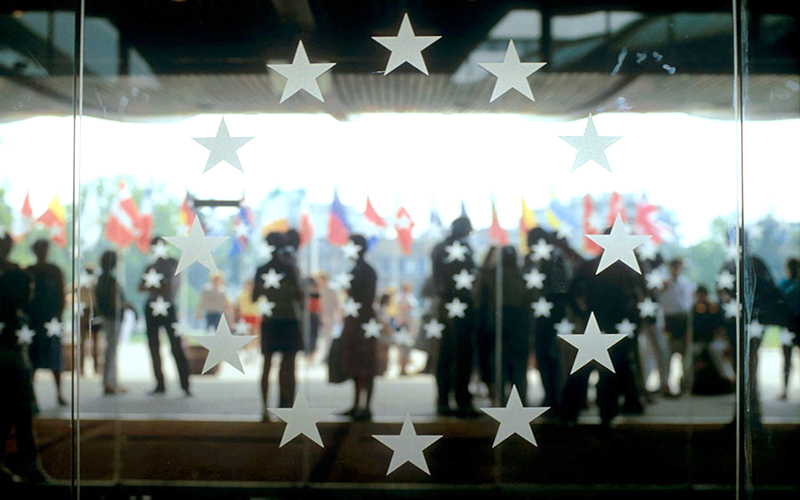
What is a security actor and how is it different from being a great or major power? In many ways, this question is central to understanding the lack of appreciation of the European Union (EU) as an actor in the security arena in India and certainly in some other parts of Asia. The use of the word ‘security actor’ by EU agencies and research institutes is itself perhaps a neutralisation of the phrase ‘major power’. This reveals the ambivalence of the EU to power in contemporary times, despite having given the world several great powers in the past. This ambivalence, and the hesitant Asian comprehension of the EU’s role in the security domain shape the current debate.
However, to move beyond this general understanding and to try and understand the Indian perspective on this issue, three key enquiries are essential. First, does the EU have the agency to be a security actor? Second, does it have the capability and capacity to follow through in this role? And, finally, does the EU, or a significant part thereof, see itself as a Security Actor?
Agency: Who do I call?
The EU is a great economic power and is central to the construction of any polycentric order. In spite of this, it is not viewed as a security actor. Perhaps this can in part be explained by what Henry Kissinger once famously said, in an interview with Der Spiegel, ‘Who do I call if I want to call Europe?’. While the EU now has a number of structures that deal with security its security policy has not evolved to the point where it can shape emerging international security scenarios.
The principal issue is that of integration. Collectively, it appears that the EU thinks of itself more as a civil and economic power, viewing military instruments as an option of last resort. Within the EU, France and the United Kingdom have a different approach in which use of force, or the threat of the use of force is a prominent instrument in their toolbox. Some others like Germany tend to take the opposite view and are generally more reluctant to sanction the use of force.
This can have consequences like France declaring that its permanent membership of the United Nations Security Council will remain a French seat and will not be ceded to the EU. France has also rejected the validity of a UN veto when humanitarian crises loom (as was the case in Syria)[1]. These two French positions have led to both disappointment and alarm in other members of the EU. Damagingly for the EU, the latest crisis in Europe, i.e. the occupation and annexation of the Crimean Peninsula by Russia, has only confirmed this apprehension. The lack of a coordinated EU response is disconcerting, as what we have is a set of nations individually condemning Russian actions and others staying silent.
Trade and commerce across the EU is now so integrated that it allows for similar perceptions and ideas on most macro and several micro economic policies. This allows the EU far greater cohesion and therefore, weight in trade talks. On the other hand, political approaches and realities in each member country vary dramatically. This dissonance between a cohesive economic union and a relatively divided political union has a significant impact on the perception of the EU in a continent like Asia where the realist paradigm dominates. The EU is likely to be seen as a ‘hyper-successful’ regional trading and economic arrangement, but not a unified security actor or a ‘great power’. It is also seen to be creating a large political and security bureaucracy, which churns out some strategic and security objectives, without seeking to possess the hard power elements to realise these set of goals.
Capacity: Acute deficit
Capacity is the key element that will define the EU’s ability in the Asian theatre. In 2012, as per the International Institute of Strategic Studies’ (IISS, London) estimates, Asian defence expenditure exceeded Europe’s. Indeed within the EU, member states are increasingly hesitant to commit towards defence expenditure. Additionally, the focus of current expenditure is on capabilities that are not decisive in the Asia-Pacific theatre or suitable for hard power projection in the classic sense. There is little political and public support for defence expenditure when social spending is deemed a higher priority.
As a result, the EU’s ability to play a role in the international system is going to be far more constrained than ever before. This is perhaps evidenced by the fact that not a single European or EU action has been carried out without US support even when taking on vastly inferior militaries like those of Serbia or Libya.
This acute capacity deficit means that if the EU chooses to act by itself, it comes up against the various perceptions among the EU member states on its role as security actor. On the other hand, if it chooses to act through the agency of NATO to bypass this internal dissonance, it is fundamentally dependant on the US for capacity.
Self-View: “Empire of Norms”
The recent description of the EU being an ’empire of norms’ is another important facet of the view of the EU as a security actor.[2] It connotes a renunciation of the modes and methods of traditional empires in favour of one that leads by example and rules, largely renouncing the use of force and prioritising economic integration. In this, the EU has something to teach the world; the postmodern construction of international relations. But beyond the EU, the post 1989 sense of euphoria, has not translated into political evolution that suggest support for any such new approach to sovereign relations.
The EU firmly believes it has entered a post modern world, whereas in reality much collective action today is directed towards pre-modern situations like Afghanistan, Iraq and Libya. To use an Americanism, ‘when you don’t have dirty work to do you can be dressed in white clothes’. As a result, when the EU piggybacks on US hard power, it can well afford to play the ’empire of norms’ role. This harks back to India in the 1950s and 1960s when India was ‘preachy'[3], telling Europe to peacefully coexist with the USSR, substituting rhetoric, largely to compensate for acute structural weaknesses. Today, India and Europe have traded places and the projection of EU rhetoric is seen as a sign of weakness, borne out by the structural factors discussed earlier.
View from Asia 1: Largely favourable
Immediately after World War II, the main goal was peace and stability and hence there was the need for a specific role for the set of actors who could provide this. But in the 21st century, the narrative has changed. Economic growth and prosperity, in an age of stagnant industrial growth, is the overarching political priority of these times. Even though the world may have moved beyond the post-war quest for peace, to the singular objective of greater economic vibrancy, the EU’s role in securing this objective cannot be denied given its economic agency. However, political stability is a necessary condition for sustainable growth and economic well-being. This stability is to be created and preserved collectively by the old and new powers. Therefore in Asia, in countries such as India, there exists a largely favourable view of the EU’s role in the world. India sees a decisive security role for the EU, albeit as an agent of ‘The Asian Century’.
Following from this, if the EU is a decisive player in the contemporary context, European hard power is not necessarily viewed unfavourably and is a situation that India can negotiate well. A strong EU is good for the balance of power and stability in Eurasia and therefore favourable to India. In fact, a not so uncommon view in India is that if there is a decline in the EU’s hard power, it might contribute to flux in the balance of power in Eurasia, leading to instability. Thus, the EU is still seen as a decisive actor in the security dynamics of Asia. And a real example is the EU’s arms embargo on China, which could be said to contribute to stability in Asia.
However, in India, the EU is also seen as hypocritical in its application and espousal of rules and norms. This is sometimes inimical to the larger objective of stability and prosperity because the EU is perceived to be trying to impose normative frameworks on societies, which are not yet ready to accept them. This is not necessarily an EU-specific flaw. Every country has displayed this hypocrisy where its core interests are at stake. India itself follows a very different set of rules in its own neighbourhood than in the rest of the world. For example, India intervened decisively in 1971 in Bangladesh and for much of the 1980s and 1990s in Sri Lanka. But where its core interests are not at stake, it adopts a very different stance.
While largely hypothetical, India’s main concerns, should the EU decide to play the role of a security actor would be: where and how does the EU want to operate? Does it merely look at its periphery? Or does it seek to project out? If it operates for longer periods of time in Asia, will it be in a continental or a maritime role? Given that the naval dimension and the security dynamics of the Indian Ocean have largely driven much of India’s strategic realignment post 1990, India would almost certainly welcome EU as an offshore balancer. This is evident from the fact that India welcomed the EU-led operation Atalanta aimed at controlling piracy off the coast of East Africa. Similarly, India voiced no concerns at the build up of a formidable projection force off the proximate Myanmar coast following cyclone Nargis, and actively cooperated with US and European navies in the wake of the Boxing Day tsunami in 2004.
View from Asia 2: Geography and sovereignty matter
Multiple path dependencies, along with the overarching economic prosperity objective mean that the EU’s cost-benefit analysis of engaging in Asia, for example, is very different from India’s. The EU would have more to lose economically in any prolonged military engagement in Asia and therefore prefers economic tools such as sanctions. Of course geography matters not just to the EU. This is evident in how India perceived Bangladesh in 1971 and how it perceives the situation in Syria today. In the case of the former, the instability in India’s neighbourhood had a direct impact on India’s demography and security and the cost-benefit analysis of action was very different to the likely costs of EU’s action in the region. Syria, on the other hand, was more of a normative issue for India on how it balanced humanitarian intervention against a breach of the Chemical Weapons Convention (CWC); whereas Syria had a more proximate impact on Europe and subsequently on its cost-benefit analysis of action.
Lastly, in a continent like Asia that has a history of being colonised, sovereignty is an important consideration. From this perspective, the EU’s rather relaxed interpretation of sovereignty, partly used in its explanations for humanitarian interventions, can be seen as unsettling. Moreover, the selective use of sovereignty can erode the credibility of the EU as a whole. For example, defence sales such as those of the Rafale, Gripen or Eurofighter are carried out under sovereign flags and these in turn guarantee certain sovereignties to recipient countries. However, when uncomfortable decisions are taken such as the arms embargo on China, the EU is used as the shield, effectively a policy of safety in numbers.[4] This means bilateral brownie points accrue to individual sovereign constituents of the EU, without translating into advantages to the EU as a whole. However, disadvantages and the resultant negative perceptions are spread across the board and impact on the image of the collective.
Conclusion: Going forward
Going forward, there are four central cleavages between the Indian and European worldviews.
The first has to necessarily be language and the principle source of information that shapes Indian understanding of Europe and EU. Not having a core of experts trained in European languages, a disproportionately small foreign service and a structural incapability to collect primary data[5], much analysis of Europe and the EU rests on secondary source analysis of a euro-sceptic English language press. Consequently, the nature of the EU’s decision making remains even more of a mystery to Indian audiences.
The second is that the EU (for reasons already discussed) is not viewed in India as a credible security actor. In fact, Europe’s recent humanitarian interventions are seen as creating dangerous precedents in Asia, changing the security dynamics in the region and creating fresh security challenges which the EU does not have the capability to deal with. This is where India and the EU are on a collision course. India wants Europe to be more cognisant of its hard security role. In addition, India wants the EU to be responsive to emerging security issues, which will be shaped by new specificities and geographies of conflict. Local understanding and localised responses would be in order and Europe must begin to engage from within and not from outside.
The third is with regard to global governance. European institutes tend to securitise the global commons and global public goods discourse.[6] Every economic and social service provision is being subsumed under a security discourse. This approach may be useful to galvanise public opinion in the Euro-Atlantic community; but in Asia, where societies are still evolving and discovering a balance of narratives between the political and military discourse, it could be dangerous and counterproductive. In countries like Pakistan and Bangladesh, if water, environment and trade become security narratives, discussions within and among these regional countries would essentially become zero sum games. Additionally, the preponderance of the military architecture and defence bureaucracy diminishes the role of democratic institutions and the role of civilian governments. This is counterproductive to the liberal democratic value system that EU espouses. It may appear that in order to compensate for its lack of military heft, the EU seeks to overbalance through the securitisation narratives.
Finally, the central division between the EU and India is the tyranny of grammar. Europe and the EU pursue their interests under the grammar of values, which is sought to be achieved through ideological underpinnings. India has sometimes also couched many of its strategic interests in its own grammar of ethics. Till a new language is discovered where the two can negotiate their individual interests (doing away with ideological sermonising), common ground (based on core interests of prosperity, growth and liberal market framework) will be lost to a rather unnecessary battle of perceived virtues.
(The writer is a Vice President at Observer Research Foundation, Delhi)
Footnote
1. Opinion expressed by French Foreign Minister, Laurent Fabius, 5 October 2013, »ambafrance-in.org«.
2. Jan Zielonka, »Europe as a Global Actor: Empire by example? (PDF)«, International Affairs, 84(3), 2008.
3. Bhaskar Roy, ‘Tharoor questions Nehruvian line’, 10 January 2010, »timesofindia.indiatimes.com«
4. ‘Tharoor for overhaul of Foreign Service Recruitment System’, 8 October 2012,»thehindubusinessline.com«
5. For example, when Finland wishes to raise uncomfortable issues with Turkey, »finnbay.com«.
6. See, for instance, ‘The securitisation of climate change in the European Union’,»climateandsecurity.org«
Courtesy: http://www.bpb.de/internationales/asien/indien/190264/the-european-union-as-a-security-actor


Climate change has become the major global challenge of this young century. For years, the search for solutions has run up against a sharp North-South divide over the historical emissions of developed countries and the parameters of what is termed, in the climate world, “common but differentiated responsibility” for developing nations. A common appreciation of climate and economic equity between disparate countries and regions remains both critical and challenging for the global climate negotiations process if it is to culminate in a major deal in Paris in 2015, and for implementation beyond that date. The authors believe that the only way to remove this roadblock is to forge an “India exception” in global climate talks; doing so is the only realistic pathway to a global climate deal, and could be a key tool in cementing stronger ties between India and the United States, two critical actors in the evolving international order.
The Lima Conference of Parties (COP) in some ways breached the North-South firewall as it sought details of climate action from a larger set of stakeholders, but at another level it reinforced the historic differences between nations on the question of “equity” and “responsibility.” Perhaps more important, the 2014 U.S.-China bilateral agreement on carbon emissions constitutes an important breakthrough in the North-South dynamic—as well as showing that great power agreements on climate change can be forged. In the November 2014 agreement reached between Presidents Xi Jinping and Barack Obama, three important things happened:
China is in a very specific place. Its growth over the past two decades means that while it is still treated as a developing country in climate negotiations, its economic position and influence far surpass that of any other developing country; for example, its emissions and gross domestic product (GDP) per capita remain four times that of India, the only other relatively significant developing economy. To get from a U.S.-China deal to a global one, the next challenge is to find the critical path for other major developing states. Of these, India by far remains the largest, although it is at a far earlier stage on its trajectory of industrial development.
In the spectrum of common but differentiated responsibility, India finds itself uniquely situated between nations that industrialized long ago and can now afford expensive renewable energy production and climate adaptation, and those who largely gain their livelihoods from traditional subsistence practices that continue to follow preindustrial low-carbon practices. India is confronted with the dilemma of being between an identity as an emerging power and as one of the least developed countries. It exhibits the economic weight of an emerging power while still containing many hallmarks of a least developed country in its villages and communities.
Furthermore, the sheer size of its population means that India’s choices about development and climate/energy carry global consequences to a degree that is far greater than any other developing country.
After two decades of economic development that have begun to lift sections of its population out of poverty, India cannot and will not let its development wait for the eventuality of commercially deployable and cost-competitive renewable energy. More than 300 million Indians still have little or no access to modern energy sources―India’s dilemma is that several generations of Indians are on the cusp of prosperity if growth is powered by cheaper energy.
The most accessible option is often carbon-polluting coal. In this, India is similar to all previous industrializing nations, from Britain, Germany and the United States in the 19th and 20th centuries to China in the recent past; all powered their industrialization, rural-urban transition and rise in per capita incomes with fossil fuels.
But India faces a predicament all previous countries that used energy to reduce poverty did not. It stands on the verge of industrialization just as the world may finally be willing to take multilateral action to reduce carbon emissions. Possessing vulnerable coastlines and reliant on the monsoon and glacial melt, India is as vulnerable as any to the consequences of collective action failure on climate. But for India, the tradeoffs between environment and growth are harsher than perhaps anywhere else. India’s overall size in both population and emissions accords it unique attention for a low-income country in the global climate debate; yet its relative poverty and low per-capita energy use compared to every other large emitter creates what Indians view as a justified overriding imperative for poverty elimination.
Figure 1: Climate Inequity
| Country/bloc | GDP per capita (US$, 2013) | Carbon emissions (metric tons per capita, 2010-2013) | Carbon Intensity (kg per kg of oil equivalent energy use, 2010-2013) |
| European Union | $34,290 | 7.4 | 2.2 |
| United States | $53,143 | 17.6 | 2.5 |
| China | $6,807 | 6.2 | 3.3 |
| India | $1,499 | 1.7 | 2.8 |
Source: World Bank
How can India thread the needle between climate disaster and premature economic stagnation? Though the challenge is great, India will be an important enough partner at the upcoming climate talks to articulate a set of red and green lines—what it can and cannot do. India will find it difficult to accede to any deal that will make its ongoing industrialization the first industrial revolution in history to be nipped in the bud by international restrictions. From the Indian perspective, the Chinese must not be the last ones allowed to become a middle-income nation. Given the uncertain prospect of maintaining a steady double digit growth rate in a post-Lehman Brothers world, Indian poverty cannot be frozen by a dateline. At the same time, India needs action from already-industrialized and wealthier nations—including China, which has leveraged 50 percent of the world’s coal consumption to catapult itself to prosperity—to prevent scientists’ dire predictions on a ‘business as usual’ approach to carbon emissions.[1] This would negatively affect India’s poorest along with its economic growth.
India also has a set of green lines outlining its contributions to the climate change fight. Even though under the logic of industrialization India’s emission intensity would be expected to rise in the coming decades (see Figure 1), in the last decade the United Progressive Alliance government committed to reducing emission intensity by 20 to 25 percent by 2020 (from 2007 levels). As India moves from a service- and agriculture-based economy towards greater reliance on manufacturing, rapid urbanization, more intensive infrastructure development and growth of the transportation sector, meeting this carbon intensity target will be a de facto climate mitigation measure and a mark of India’s commitment to climate action. The recent election of Prime Minister Narendra Modi has created the opportunity for all of India to benefit from the renewable energy-friendly policies he pursued as chief minister of Gujarat and has opened up the possibility that India become a leader in cost-competitive renewable energy. India is already the world’s largest biomass, third-largest solar and fourth-largest wind energy producer. India would be open to reducing its relative dependence on coal if a climate framework created meaningful funding and technology transfer to accelerate such efforts.
Figure 2: India’s Climate Actions
| Economy-wide pledges and targets | Submitted to UNFCCC: Pledge to reduce emissions intensity by 20 percent to 25 percent by 2020 submitted to the UNFCCC. Outside UNFCCC: Eight national missions have been introduced under the National Action Plan on Climate Change in 2008 and include mitigation measures focused on promoting solar energy, improving the forest cover of the country and market based mechanisms such as Performance-Achieve-Trade (PAT), which are focused on improving cost effectiveness and energy efficiency in large, energy-intensive industries. |
| Sectoral/programmatic mitigation actions | Submitted to UNFCCC: Agriculture would not be a part of the 20 percent to 25 percent reduction target. Outside UNFCCC: Sectoral actions include emission reductions and low-carbon strategies across important sectors such as power, energy and construction. Strategies include policy instruments/measures such as coal tax, feed-in tariffs and energy codes for commercial buildings. |
| Project-level mitigation actions | Submitted to UNFCCC: Clean Development Mechanisms (CDMs) that allow developed countries to promote climate mitigation projects in developing countries. India hosts a total of 2,295 CDM projects. |
Sources: Fifth IPCC Report; India’s National Adaptation Programmes of Action (NAPA) Profile
India’s growth dichotomy is particularly acute. On the one hand, the price competitiveness of coal makes it the preferred choice given India’s imperative to eliminate poverty and deliver energy to all. Yet at the same time, India’s adoption of renewable energy and low-carbon technology positions it among the global leaders in sustainable growth. Even more significantly, India has a structural frugality to its energy consumption. India’s peaking per-capita emissions are unlikely to ever cross the threshold of five to six tons per capita that still marks the climate action aspirations of developed carbon-intensive economies. In contrast, China is projected to peak at 12 tons per capita.[2] Even without this continued Chinese emissions growth, India would need four times China’s population—and 10 times that of the United States—to achieve total emissions comparable to either country. Therefore, Indian industrialization, even with its coal component, will be greener than many that have come before.
Given the vagaries of growth, its inescapable linkage to poverty reduction and the compelling need to grow to provide jobs for a youthful demography, India will have difficulty accommodating international demands for a national emissions peaking date. As a pluralistic democracy in the midst of vast anti-poverty and electrification efforts often uncoordinated between states, the Centre and the private sector, a peak date cannot be imposed on a decentralized governance structure by a fiat emanating from a competitively elected and therefore precariously changeable authority of the Centre.
India’s combination of dilemmas and promise on climate change demonstrates the folly of expecting comparable mitigation from India as from China, or from emerging economies as a vaguely defined category. India is the country that most uniquely combines large size, low starting point and high potential over the next few decades. China has moved on and is likely to be a developed country by 2030. Many other countries embody one or even two of these factors, but none combine all three—thus making India the most important prospect for mass poverty elimination in the coming decades, and the defining challenge and opportunity for sustainable development.
This unique position is borne out in the data. When compared to the other largest emitters—China, the United States and the European Union (EU)—India has vastly lower per-capita GDP and per-capita emissions; even on emission intensity it is closer to the United States than China (see Figure 1). But there are many less developed countries in a similar category; what makes India’s position different? First, the sheer size of population and scale of the poverty eradication challenge. More profoundly, India’s claim to uniqueness comes from the fact that its growth and concomitant industrial revolution is happening now. It is expected to grow more rapidly than any other region of the world in the next few decades to 2040 (see Figure 3). This growth, thus far largely powered by fossil fuels, is the best opportunity to continue the mass upliftment of citizens from poverty that began in China—and an important tool to maintain Asia’s regional security balance. India’s robust economic growth is itself a compelling contribution to the future, and the world must work together to lift one-sixth of its people out of poverty while also maintaining their environment. India may be one of the countries that is most vulnerable to the effects of climate change, but it is also the country most in danger of losing out on mass poverty elimination and great power status because of a forced transition from fossil fuels.
Figure 3: Relative Economic Growth, 2010-2040
| Country/region | Project Real GDP Growth Rates (average annual percent change) |
| India | 6.1% |
| China | 5.7% |
| Africa | 4.6% |
| Non-OECD Europe/Eurasia | 4.4% |
| Other Asia | 4.3% |
| Mexico/Chile | 3.7% |
| Brazil | 3.4% |
| South Korea | 3.3% |
| Other Central/South America | 3.2% |
| Russia | 2.8% |
| United States | 2.5% |
| Middle East | 2.2% |
| Australia/New Zealand | 2.2% |
| Canada | 2.2% |
| OECD Europe | 1.8% |
| Japan | 0.6% |
Source: US EIA International Energy Outlook 2013 With Projections to 2040, pp. 17-18
In short, there are two conflicting imperatives here. On the one hand, if India chooses to grow through the same carbon-intensive pathway that has characterized every other major country’s growth, there will be no credible prospect for maintaining progress on global carbon reductions. On ‘business as usual’ projections, India would add another EU to the world’s carbon emissions budget within a few decades. On the other hand, denying India the right to grow and confining hundreds of millions to continued poverty is an untenable proposition.
Within any global climate framework, therefore, the authors believe that India should be accorded exceptional status in light of its mass poverty challenge and imminent growth opportunity. Such an exception should be predicated on a rational and pragmatic framework. The first principle must be to support and sustain the poverty elimination efforts of the country, and in this direction, the goal must be that lifeline energy is available to all at affordable prices. This would necessarily imply ensuring development space (and corresponding carbon space) to India and accepting that a peaking date may not be forthcoming anytime soon. The second principle must be for India’s affluent to participate in mitigation efforts globally. And finally, there must be support from countries and communities to equitably share the burden of climate change, based on their current capabilities within and across borders.
Such an exception would have five elements:
Any agreement must ensure India’s rich do not hide behind its poor, while also excluding India from Chinese-level obligations that do not befit a country in an earlier stage of its development trajectory. Given India’s place in its, and the world’s, history, a global peaking date will depend on other nations taking on mitigation to account for India’s exceptional challenge.
An economically invigorated India in several decades can be imagined, one that is powered by broad-based prosperity and a changing energy mix, leading global efforts in environmental adaptation and low-cost renewable energy. But such leadership is only affordable if India’s industrial revolution is made possible. India’s experience in the years ahead could be a valuable pathway to share with other developing countries as they start grappling with a similar dilemma.
India can carry its own water in global climate negotiations, and it can drive its own industrialization. However, the likelihood of squaring the circle between an effective global climate regime and India’s need to develop will increase if the United States plays an active role in helping to forge these arrangements.
There will be predictable opposition. For those motivated primarily by climate change itself, the idea of granting an exceptional status to the world’s most populous country will seem injurious to the prospects of mitigating the more disastrous climate scenarios. The rebuttal is to simply point to the reality that for all intents and purposes, India has a veto on a global climate agreement—both in the room, and more importantly in how any deal is implemented. India has already shown that it is willing to walk away from global negotiations if these threaten its core economic interests. And when it comes to implementation, there is no prospect of any deal that holds out meaningful and enforceable costs for “cheating”. The only source of pressure for compliance will be information flows about behavior and mutual pressure between the top powers. That will be outweighed, in India’s case, by the imperative of poverty elimination.
Moreover, there is a strong strategic imperative for the United States here, which has to do with India’s role in Asia. An India confronted by internationally-imposed restrictions on growth will face serious internal political and democratic challenges. A successful India, in contrast, can play a critical role in stabilizing Asia during an otherwise turbulent transition, and can be a critical partner to the United States.
With the U.S.-China deal, and its $3 billion pledge to the Green Climate Fund, the United States has begun to stake out what it gave away in the late 1990s—namely a leadership position on global climate issues. It has also adopted a realistic stance, recognizing that when it comes to climate, the most practical thing is to pursue a back-to-basics approach, which combines a focus on natural gas (which emits carbon at roughly half the intensity of oil), efficiency and joint investment in renewables. In diplomatic terms, it has adopted a “concentric circles” approach to making progress. Here, the concentric circles start with the United States and China, where these two largest emitters will lead the way by reducing carbon emissions. The next obvious focus is India. Helping India navigate a pathway to a more efficient industrialization is a win-win in terms of climate, international order and U.S. foreign policy.
The United States could also make a critical difference in terms of financing more efficient technologies. The math is simple and compelling. India has, as noted, 800 million poor people, out of which 300 million have no access to modern energy―and India’s population is set to keep rising.[3] Politicians in India thus feel that they have no choice but to continue to pursue every source of energy, clean or not. India will simply continue trying to grow, and that inevitably means greater energy use in the near-term. If India succeeds in doing what China did before, and pulls 300 million people out of poverty, it means adding a population the size of Europe to the overall carbon emissions mix. They are certainly justified in doing this—what possible ethical or moral precepts could justify the OECD countries and some others continuing to emit carbon while 800 million Indians languish in poverty? But this approach will crater any credible efforts to stabilize the climate.
India is, of course, fully open to adopting a more energy-efficient form of industrialization and urbanization if the developed countries provide meaningful financing and access to technologies. A rough estimate of what would be needed for India to adopt more efficient energy pathways during its industrialization is investment of between $50 billion and $100 billion over the next 10 years—in natural gas infrastructure, renewables and clean building technologies. Even this sum does not capture the scale of resources necessary when considering what needs to be done at more local levels. As India’s rural poor increasingly move to cities, its cities will require new infrastructure; 70 percent of its buildings of 2050 have yet to be built. If these are built with existing building technologies, massive carbon emissions will be built in. The new buildings can be constructed with green technology, but India by itself does not have the resources—financial or technological—to do so.
Granted, India could reprioritize its spending and cut down drastically on its planned naval expansion or other defense spending, but the United States and the world may not want it to. As long as China increases its defense budget, the United States wants India to do so too. As long as China is investing in its blue-water navy, the United States wants India to do so too. It is profoundly in U.S. interests that there be a strong and growing India, an India that is domestically stable and contributing to a stable Asia and Indian Ocean.
The United States can make a critical difference. It could reapportion part of its international development budget toward India’s effort and push for greater allocations by the World Bank and other international institutions. It could create a way for U.S. cities that have successfully used clean building techniques to work with Indian cities. It could invest in Indian education in urban development that is informed by the latest science. As mentioned before, the United States recently pledged $3 billion for the Green Climate Fund—it could work within that Fund, and within the World Bank, to ensure that a large proportion of that funding goes to India (the most critical case), and use that financing to leverage private sector and city-based contributions.
Of course, there has already been some U.S. investment in renewable technologies in India. The results have been mixed. U.S. investors complain that the returns are inadequate and that Indian policies are not ready for investment at scale. This is in part because of India’s decentralized decision-making and uncertainty about the ways in which a global climate framework will limit specific pathways. For Prime Minister Modi, this represents a significant challenge. However, if backed by a U.S.-India deal, and against the backdrop of a global climate framework that accepts an exception for India, the timing would be ideal to intensify efforts at policy implementation and to launch a new phase of what would have to be understood as a generational partnership between the United States and India on efficient urbanization. There are challenges to aligning private incentives of U.S. financiers with public incentives in India, but if this effort is initiated by high-level agreement between Obama and Modi, and public monies are available either through bilateral or multilateral tools, the path can be discovered.
An obvious place to start is clean building technologies, something that President Obama has pinpointed as a central goal for U.S. efficiency efforts. The United States and India could form the key building blocks of a global goal on clean buildings and efficient urbanization, which would be critical for locking in energy-efficient development for India.
If the United States partners with India in navigating towards more efficient industrialization and supports an “India exception” in global climate talks—not using climate negotiations to pull up the carbon ladder behind it, but using bilateral ties and the Major Economies Forum on Energy and Climate Change to offer to help build a clean energy ladder for India—it could be the kind of investment that cements ties between these two countries. From the perspective of a stable international order, it would be a big deal; from the perspective of global climate talks, it is the only realistic pathway forward.
[1] Fifth IPCC Report.
[2] Global Carbon Project.
[3] According to latest National Sample Survey data, around 800 million Indians subsist on less than $2 a day, and around 300 million lack access to electricity.
About the Authors
Samir Saran is a senior fellow and vice president at the Observer Research Foundation, India. He is currently working on a research project that maps the impact of various Indian identities on its position at international negotiations on climate change.
Bruce Jones is deputy director of the Foreign Policy Program at the Brookings Institution. He recently published the book The Risk Pivot: Great powers, International Security and the Energy Revolution co-authored with David Steven.
16 December 2014, Observer Research Foundation, Analysis
Original link is here
 This summer, Prime Minister Modi proposed a radical change to Government of India’s economic bureaucracy by announcing the decision to close down the Planning Commission as it existed. Any new organization of Indian economic leadership, however, must learn from the failures and successes of the erstwhile Planning Commission, continuing its best aspects while reforming all that is irrelevant. There are at least five changes that should be considered vital to the new ’avatar’ that the Prime Minister seeks to fashion.
The Planning Commission was a key part of Indian Centre-State fiscal relations, disbursing ’planned’ funds from the ’Centre’ to ’State’ governments. It once served a valuable role in keeping economic policy coordinated in the nation’s early years. Yet this important aspect of federalism had been overwhelmed by developments (the Indian economic liberalisation that made the distinction between ’planned’ and ’unplanned’ expenditure increasingly anachronistic) and political machinations (the tendency of ruling parties at New Delhi to view Planning Commission expenditure as a political tool to influence the State(s)). The new government must recognize the value of national coordination, while leveraging its constitutionally guaranteed pole position within federal processes that empower the provinces. Changing the Planning Commission should entail neither the continued rigid centralisation nor chaotic and wholesale devolution, but a nuanced combination that respects divided economic responsibilities, with the intention of shaping a system where those best placed to deliver results are entrusted with the responsibility — communities, states, the Centre or the private sector.
India’s economic growth has been hampered by excessive governmental management of resources and assets; the new government should use Planning Commission reorganisation as an opportunity for economic reform that will replace inefficient central planning with better arbitration from the market. Prime examples of the problems with the current system is manifested in gas pricing, coal and telecom spectrum allocation among other resources. Audits by the Auditor General and verdicts from the Supreme Court have indicted the systems of government allocation of coal blocks as well as telecom spectrum as being flawed. Government control in many sectors has led to mismanagement, corruption, rent-seeking, and missed opportunities for private investment. A renewed push for reform is needed to overcome the political barriers encountered in relinquishing government control over resources. A key job for the new ’Commission’ should be designing workable market-based solutions for coal, telecom, and other resources.
The Planning Commission at its best was composed of domain experts and academics that provided pertinent advice and economic leadership to the Prime Minister’s Office; at its worst, it was filled with non-specialist bureaucrats and political appointees. Any new body must not only reform this duality of participation, but expand it to include inputs from all relevant economic stakeholders—professionals from the private sector and civil society can give shape and form to pragmatic recommendations for the economy. Of course, any such involvement from stakeholders invested in various sectors of the economy comes with the danger of conflicts of interest, and preventing this remains important. Care should also be taken to have a creative and flexible salary and renumeration structure that can attract private sector experts, so the Indian government receives the best competitive economic advice and is not simply choosing from those unable to succeed at the highest levels of the private sector economy. The private sector is not the enemy of economic development and in fact it is the engine; with the proper incentives and protection against rent-seeking, private sector expertise can be an ally of government policy.
Under the old system, the Planning Commission’s mandate was restricted solely to domestic concerns and some of the more prominent multi-lateral issues. Indeed, it could not take overseas economic interests into account, even as the Indian Diaspora grew and globalisation became a major driver of economic growth. Today, when remittances are the second largest sector in the Indian economy, and Indian corporations are invested globally, Indian economic policy will be suboptimal without strategic thinking on utilisation of international resources. The Centre’s role in ameliorating inter-state and regional disparities will also be hindered without accounting for the differential levels of international access available to different States, for instance Kerala and Madhya Pradesh. In a globalising world with an increasingly internationally engaged India, the government’s economic planning must take into account the world as well as the nation.
Finally, the Planning Commission has had another, perhaps even larger blind spot that if solved could revolutionise governance. The promise of big data analytics, collating information from across India into easily accessible data at the Centre, could allow an unprecedented level of evidence-based policymaking. With the reform of the Planning Commission, bureaucratic opposition to the use of data analytics can now be overcome. Knowledge of how economies actually behave in real time and in granular detail brings governmental planning from earlier eras of often wishful thinking to pragmatic, adjustable action. Government’s own household surveys could be recalibrated and reviewed and then used for policy purposes. These could be triangulated with other data sources including from the public and private sector and used for developing precise policy formulations.
Despite its challenges, federal governmental economic planning remains necessary. The importance of State autonomy should not obscure that this is particularly true for a largely ’unitary’ India , where the ’centre’ draws the big picture by encompassing state-level interests and others beyond national borders. Though the Planning Commission in its old form may have made itself progressively more irrelevant, it is certainly not redundant to have a body of this kind. Should it adopt nuanced federalism, relinquish control of resources to the market, expand its talent pool to the private sector and civil society, acknowledge India’s international economy, and use data analytics for evidence-based policy, Indian economic planning can serve the cause of delivering prosperity to all citizens more effectively.
(The writer is vice president at Observer Research Foundation)
Contemporary version of Shakespeare play has become focus of battle between religious conservatives and creative artists
Jason Burke in Mumbai, The Guardian, 28 November, 2014
Original link is here

Shahid Kapoor stars in Haider the controversial film remake of Shakespeare’s Hamlet
The tone is uncompromising. The language is harsh. The sovereignty and integrity of India has been attacked with impunity, the court documents claim. The unity of the nation has been undermined.
But the source of the alleged threat to the world’s largest democracy is a somewhat surprising one: a cinematic remake of Hamlet.
Shakespeare’s great tragedy has always provoked strong emotion but it is rare that anyone seeks to ban productions of it on the grounds of national security.
On Friday, a court in a northern Indian state will hear that a recently released film of the play in a contemporary local setting should be banned to preserve the emerging economic powerhouse and its 1.25 billion inhabitants from further harm. The lawyers bringing the case are from a group calling itself “Hindus for Justice” and claim to be acting on behalf of the 80% of citizens who follow the faith.
The film has now finished its run, so the move to ban it is largely symbolic. But the case in Uttar Pradesh is being closely watched, seen as yet another skirmish in a long-running cultural war pitting conservatives who say they are defending India’s culture, security and identity against creative artists who argue that they should be free to express themselves.
The film – called Haider – is set in Kashmir, the former Himalayan princedom where separatist insurgents have fought Indian security forces for 25 years. Scenes showing the Indian army committing human rights abuses and the use of a temple for the “play within a play” sequence performed by dancers wearing shoes, are “anti-Indian … divisive [and] hurt the sentiments of Hindus”, the legal petition says.
“Every artist has the right to express whatever they want but … without hurting the sentiments of any community,” said Ranjana Agnihotri, secretary-general of the group bringing the case. “We definitely represent the Hindu community and we feel confident and strong.”
Some commentators say the new Indian government, in power since May and led by a prime minister, Narendra Modi, whose political origins lie in a hardline Hindu revivalist organisation, has inadvertently encouraged an intolerant atmosphere. Others argue the new administration is simply caught in the middle.
“It wouldn’t surprise me if certain elements misappropriated the [new government’s] mandate … for their virulent ways of living and thinking … but they will be disappointed,” said Samir Saran of the Observer Research Foundation, a Delhi-based think tank.
Liberal commentators and writers were targeted through social media during the heated atmosphere of the election campaign and some say they have detected a new edge in recent months.
Sonia Faleiro, a prize-winning Indian journalist, said that abuse was becoming more direct and more overt.
“It is the most startling thing. Some are not even trying to hide their identity. I think there is a sense of empowerment. It is as if there is no reason to pretend any more.”
Ramachandra Guha, a liberal commentator and historian who is himself regularly the target of abuse, said most was aimed at people who were seen as both influential and a threat.
“I’m seen as an apostate, a Hindu who should know better. But the most debased and vulgar abuse is directed at women, particularly liberal and secular women, and especially women who are not Hindu,” Guha said.
The abuse – and attempts to ban the Hamlet film – appear part of an upsurge of efforts to protect what a hardline fringe deem to be “Indian values”.

Indian Bollywood actors Shahid Kapoor, left, and Shraddha Kapoor at a promotoional event for Haider in July 2014. Photograph: STRDEL/AFP/Getty Images
Pramod Muthalik, leader of a group based in the southern state of Karnataka calling itself the Shri Ram Sena, the Army of (the deity) Ram, said the film “encourages terrorism”.
The organisation also mounts expeditions against what Muthalik and other extremists call “love jihad”, the alleged systematic seduction of Hindu women by Muslim men.
“It is a serious problem. There are 30,000 cases in Karnataka alone,” Muthalik said. His members regularly launch “operations” in parks, one of the few spaces in conservative India where unmarried couples can spend time together, usually sitting chastely together on a bench or walking holding hands.
“Sexual activities in public places may be all right in America or Germany or UK but this is [India],” Muthalik said.
Though lacking broad popular support, such groups are a challenge for the government. The BJP has its origins in the nationalist and religious revivalist Rashtriya Swayamsevak Sangh (RSS), or National Volunteer Association, but has tried to distance itself from the more hardline elements in recent months. Rajnath Singh, the home minister, has said allegations of love jihad are baseless. Modi said last week that terrorism has no religion.
“That many ministers are from the RSS is reality, but that does not mean [the organisation] has an undue influence on policy … We are simply following up on our electoral pledges to bring development, prosperity to all Indians and to fulfil all Indians’ aspirations,” said Nalin Kohli, a spokesman for the BJP.
Singh last week described the relationship rather differently, explaining that because so many members of the government were from the RSS, there was no need for the organisation to interfere. “When we ourselves are from the RSS, then what influence will it have to wield? One could have understood the argument of any organisation influencing the government if it had a different identity, a different ideology,” the home minister said.
Observers point to evidence of a careful balancing act as Modi, who spent decades as an RSS organiser, looks to convince hardliners within the Hindu nationalist movement that he is protecting local industries and agriculture and taking a strong stand against neighbouring powers.
Guha said: “It’s yet to settle. There’s an ambivalence. Modi wants to present himself as a reconciler and a moderniser but has to give his pound of flesh to the RSS because they won him the election. He’s made clear that on economics and foreign policy he will not listen to the Hindu right but has been less clear on cultural issues.”
In recent elections in the state of Maharashtra, which includes Mumbai, Modi campaigned on the same platform of governance and economic development that won him the national polls in May while a longstanding alliance with the local hardline rightwing Shiv Sena party was broken.
Saran said Modi, 64, was “steering towards a centre-right position. He is not an agnostic prime minister. He is a Hindu prime minister and will follow his belief system … But he knows that if he wants to be a 10-year prime minister he needs to reach out.”
Clashes over culture have long been part of India’s raucous democracy. In February, conservatives forced a book on Hinduism by well-known US academic Wendy Doniger off the shelves, claiming it was insulting to the faith. An editorial in the Times of India at the time condemned “the growing power of bullying self-appointed censors” displaying “a Victorian hangover with a Taliban temperament”.
In the same month, a press conference held in Mumbai by a band from Pakistan which plays rock influenced by traditional Islamic devotional music was disrupted by Shiv Sena members. The group regularly targets such events.
A spokesman for the group last week said their protest was justified. “We’ve plenty of bands here in India. Why bring one from Pakistan when they are cutting off the heads of our [soldiers],” he told the Guardian.
Other faith communities have also sought to limit freedom of expression. Sale of the Salman Rushdie’s 1988 novel The Satanic Verses, remains proscribed and its author was unable to appear at the Jaipur literary festival in 2012 after Muslim organisations protested.
Politicians too have sought to ban or restrict the sale or production of books. In 2010, MPs loyal to Sonia Gandhi threatened legal action to stop the sale of a “fictionalised biography” of the Congress party leader.
Last year, the government of the southern state of Tamil Nadu blocked the release of a film after complaints that it portrayed the Tamil Tigers, the violent Sri Lankan separatist group, as “terrorists”.
Many of the recent efforts of the Hindu groups appear prompted by rapidly-evolving social behaviour in a fast-changing nation. Some of the conservatives’ objections to Haider, the Hamlet remake, might have been familiar to contemporaries of the author of the original. In the play, one of the hero’s principal grievances is his mother’s hasty marriage to his recently deceased father’s brother.
Ranjani Agnihotri, of Hindus for Justice, said the film gave a bad impression of local women, portraying them as lacking modesty. “That a widow should remarry so quickly is really very shocking,” she said.
Original link is here
Authors: Samir Saran, Senior Fellow and Vice President, Observer Research Foundation; Vivan Sharan, Associate Fellow, Observer Research Foundation, Nov 24, 2014, Council of Councils

Expectations and Challenges in Lima
The Ad Hoc Working Group on the Durban Platform for Enhanced Action (ADP) is mandated with reaching a global agreement by COP 21. Such an agreement would include a vast range of issues including mitigation, adaptation, finance, technology development and transfer, transparency of action, and support for capacity building.
Since the ADP is under the convention, the contours of a new agreement will need to be in consonance with the principles of the UNFCCC, including Common but Differentiated Responsibilities and Respective Capabilities (CBDR/RC). While the principles are meant to guide efforts toward the ultimate objective of the Convention —to stabilize greenhouse gas concentrations—they have not necessarily been fully observed by Annex 1 countries, the countries that had committed to take the lead in these efforts, per Article 4 of the Convention.
Alongside eliciting a renewed commitment from all parties to the mandate from Durban, the Lima meeting should also establish robust processes to consider scientific assessments andreviews (on climate change effects and responses) that are being developed or have recently been submitted to the convention, including the Fifth Assessment Report (AR5) of the Intergovernmental Panel on Climate Change (IPCC). The Lima meeting is also expected to lead to decisions on the contours, time lines, and anchoring in ADP, of the so-called Intended Nationally Determined Contributions (INDCs).
Factors Conditioning a Global Agreement
There are at least four developments that may influence any global agreement on reducing greenhouse gas emissions. These include the domestic political challenges in the United States, the evolving global energy scenario, the European impulse to reindustrialize and regain competitiveness, and the dynamic and evolving role of emerging powers.
Today there are 192 parties to the Kyoto Protocol, yet the world’s second largest emitter, the United States, has failed to ratify the protocol. It has, however, in a submission to the UNFCCC stated that it “supports a Paris agreement that reflects the seriousness and magnitude of what science demands.” Earlier in the year, the U.S. Environmental Protection Agency unveiled ambitious regulations on emissions mitigation for new and existing power plants as part of President Barack Obama’s Climate Action Plan.
While a global agreement without U.S. participation cannot be considered a success, Republican leaders including Senator Mitch McConnell—who is likely to become Senate Majority Leader in the new Congress in January 2015—have publicly criticized the Obama administration’s climate change policies. The U.S. submission on the elements of a 2015 agreement outlines clearly that the country expects certain elements of the Paris agreement to be internationally legally binding. Yet the possibility of the U.S. Congress agreeing to commitments that fulfil the ambitious policy response envisioned in the AR5 remains bleak.
The United States is the world’s largest oil consumer, and oil prices are at multi-year lows. For the first time since January 1994, the United States imported less than three million barrels of crude oil from the members of the Organization for Petroleum Exporting Countries (OPEC) in February 2013. In addition to the shale gas revolution that has inevitably led to an impulse to industrialize in the United States, there is weak demand from China and the EU that has added to the downward pressure on the price of oil. OPEC members are split on establishing a floor price for oil in this scenario, and high energy prices cannot be expected to act as a trigger for industrialized countries to invest heavily in alternative energies.
Adding to the energy sector realities is the fact that the European Commission has explicitlystated that industry will be brought back to the core of European policies. In the midst of burgeoning unemployment, particularly among the youth, the EU agenda is set on bringing industry’s weight to 20 percent of GDP by 2020, from around 16 percent today. To fulfil this agenda, EU member countries are already consuming more hydrocarbons.
According to recent reports, Germany has increased coal consumption by 13 percent and the UK by 22 percent in the last four years. The EU is also negotiating an expansive free trade agreement with the United States
(the Transatlantic Trade and Investment Partnership) that could give further impetus to reindustrialization. In the midst of these fundamental structural shifts, it is unlikely that EU leaders will commit to aggressive and bold climate change measures required of developed countries.
The rise of rapidly growing developing countries and their different development trajectories will also complicate a global agreement. These countries, including China and India, which together account for nearly three billion people, face domestic imperatives to develop further, albeit of different dimensions and scale. India for one has to provide energy to 300 million of its people that have no access and millions more who have only notional access. It also has to provide jobs to nearly twelve million people who enter the workforce every year; a large share of those jobs will need to be generated by the manufacturing sector. This means that India will continue to negotiate for space and time to ensure its broad-based economic development and would ideally like to have the support of Brazil, South Africa, India, and China on this.
It remains to be seen how the recent bilateral agreement between the United States and China could impact the group dynamics and whether this club of countries will continue to weigh in on the climate debate together in the run-up to the Lima and Paris meetings.
The Way Ahead
The COP 20 at Lima will be an exercise in creating trust and credibility mechanisms under the convention. To avoid replicating mistakes from COP 15 at Copenhagen—where negotiations on the draft text fell through in the final hours—the discussions at Lima should be aimed at producing the draft negotiating text for the COP 21. This will enable a transparent and goal oriented process, which will be able to meet many of the expectations and constraints outlined above, at least in the short term.
The factors discussed above indicate that the national contributions as agreed in Paris must be substantive without being burdensome. This can be achieved through an innovative global response that targets three low hanging fruits, assuming the Annex 1 countries demonstrate a new willingness toward fulfilling their commitments on financial and technological flows as per Article 4 of the Convention:
In Lima and Paris, the global community must ensure that obsession with the legal nature of the post-Kyoto agreement does not detract from achieving what is eminently possible. The next year will in any case determine whether or not climate multilateralism will work.
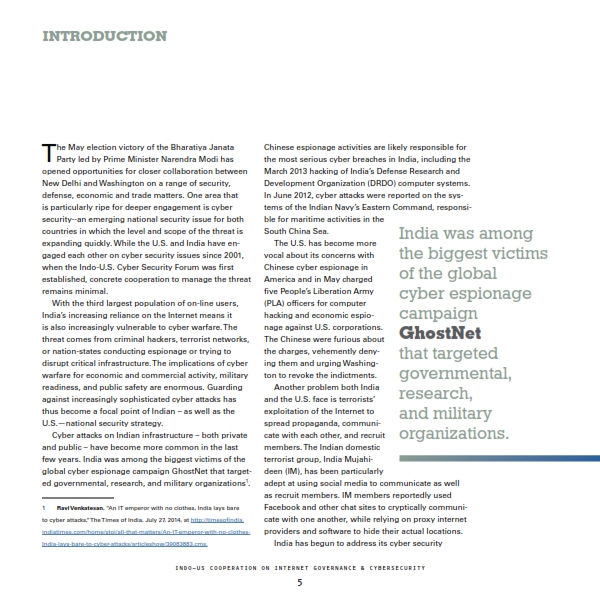
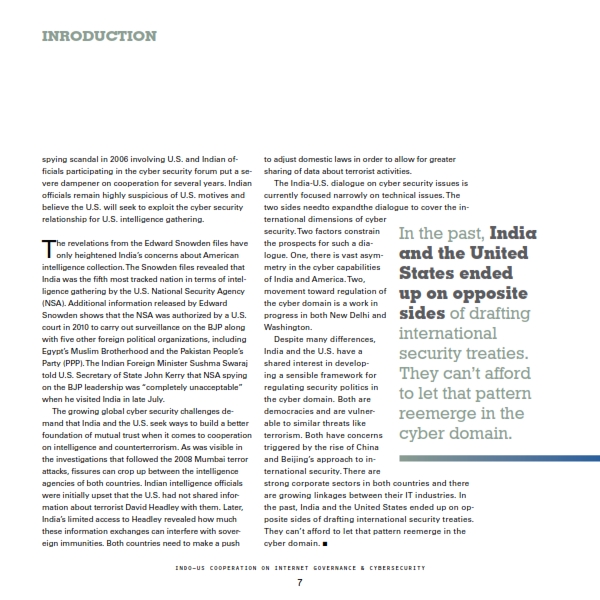
India is one of the biggest beneficiaries of the IT and communications revolution with roughly 25% of India’s GDP growth over the past two decades having been created in the IT and ITES sector. There is little doubt that a larger share of India’s future growth will originate from or be dependent on this digital medium. Therefore, India must be at the Internet governance high table when agreement is reached on managing this most vital global commons. Would India shed the reticence, characteristic of its 20th century approach to multilateralism and re-imagine itself as part of the ‘global management’ with attendant responsibility and rights? Or will the perceived virtuosity of nonalignment continue to see India lead the global outliers and minority stakeholders in this global governance debate? The chapters in this volume does not offer all the answers, but it does raise a series of questions and provides analysis that will allow us all to engage more deeply with this most important element of our contemporary lives.
To read the full journal click here
SEPTEMBER 24, 2014 – WASHINGTON, DC

During Prime Minister Modi’s first 100 days in office, the words muscular, nimble, imperious and obdurate have all been used by commentators to describe his foreign policy. Prime Minister Modi’s special emphasis on India’s neighborhood, whole-hearted embrace of Japan, and successful performance at the BRICS summit are beginning to recast some of the old assumptions and positions that have defined India’s recent engagement with the world. While the prime minister has been able to instill a certain energy and purpose in Delhi, some key domestic imperatives and his own personal preferences are beginning to define India’s global play.
Samir Saran discussed the how the prime minister’s preferences, legacy imperatives, and ambitious agenda to transform the Indian economy could finally define a new and pragmatic approach to the region and the world. Original link is here

 Samir Saran