Uncategorized

भारत को महाशक्ति बनना है तो अगला चीन बनने की कोशिश न करे

Samir Saran

महाशक्ति बनने के लिए भारत को चीन की नकल से बचना होगा
China,Digital India,Globalisation,Labour,Make in India,Manufacturing

भारत इस समय दो  बड़े लेकिन अलग-अलग किस्म के प्रयासों के बीच है।

पहली कोशिश है पिछले दशक के अधूरे एजेंडा को पूरा करना और इसके लिए वह सब उपलब्ध करवाना जिसकी जरूरत किसी भी विकसित अर्थ व्यवस्था को होती है मसलन  आधुनिक बुनियादी ढांचा, ग्रामीण क्षेत्रों में सुविधाएं, सामाजिक सेवाएं व कनेक्टिविटी । दूसरा प्रयास, जो पहले से ज्यादा महत्वाकांक्षी भी है, का लक्ष्य है नौकरियों का सृजन, धन-संपदा में वृद्धि और ऐसे मूल्यों का निर्माण जो एक युवा तथा महत्वाकांक्षी जनसंख्या को फलने फूलने का  अवसर दें, गरीबी को जड़ से खत्म करें तथा जीडीपी में तेजी से वृद्धि हो पाए।

लेकिन ये दोनो प्रयास ऐसे  समय किए जा जा रहे हैं जब वैश्विक स्तर पर हवाओं का रुख विपरीत दिशा में है और स्थितियां काफी प्रतिकूल हैं। मौजूदा हालात में पांच मुख्य बाधाएं हैं जो भारत को विकसित देशों के समूह में शामिल होने से रोक रही हैं।

पहली बाधा है एक ऐसे नए दौर की शुरूआत जहां उदार, स्वतंत्र और लोकतांत्रिक विश्व व्यापार व्यवस्था अपने पुराने स्वरूप की परछाई मात्र है। बहुपक्षीय व्यापार प्रणाली  को प्राथमिकता देने के दिन लद गए, अब उसका महत्व दिन प्रतिदिन कम होता जा रहा है।  इसकी जगह अब मुक्त व्यापार समझौते ले रहे हैं। कई छोटे देश यां क्षेत्रीय समूह  आपस में इस तरहं के समझौते कर रहे हैं। इस तरहं कुछ मुट्ठी भर देश यां क्षेत्रीय समूह जिनके हित इन समझौतो से जुड़े होते हैं, उन्हें व्यापार की शर्तें अपने हिसाब से तय करने के अवसर मिल जाता है।

इसके साथ ही कमजोर विकास दर के कारण दुनिया भर में हम वित्तीय प्रवाहों में ठहराव देख रहे हैं।  दिलचस्प बात है कि विकसित देशों में भी अब  भूमंडलीकरण को लेकर असंतोष के स्वर उठने लगे हैं। यूरोपीय संघ से लेकर यूके व यूएस तक  राजनीतिज्ञों को भूमंडलीकरण के रूप में एक ऐसा बलि का बकरा मिल गया है जिस पर वे घरेलु अर्थव्यवस्था व समाज को प्रभावित करने वाली सारी समस्याओं को थोप रहे हैं।

इस पृष्ठभूमि में भारत को नए बाजारों, वित्तीय संसाधानों के नए स्त्रोतों व नए व्यापार समझौतों की तलाश करनी है।

दूसरा, तकनालाजी के विकास व बढ़ते रोबोटाइजेशन के साथ डिजिटल अर्थव्यवस्था के विस्तार के चलते निर्यात  आधारित   विनिर्माण विकास (मैनुफैक्चरिंग ग्रोथ) की संभावनाएं धूमिल होती जा रही हैं। इन कारणों के चलते विकासशील देशों को सस्ता श्रम होने की बदौलत जो लाभ था वह अब काफी हद तक समाप्त हो गया है। इसलिए मैनुफैक्चरिंग के माध्यम से औद्योगिकीकरण अगर असंभव नही तो कम से कम बहुत मुश्किल तो जरूर हो गया है।

Manufacturing, Globalisation, Digital India, Labour

उभरती अर्थव्यवस्थाओं की कई कमजोरियां उन्हें पीछे धकेलती हैं मसलन कमजोर प्रशासन, ढुलमुल अफसरशाही, गुणवत्ता और सक्षमता से जुड़े मुद्दे, कमजोर आपूर्ति श्रृंखलाएं-सप्लाई चेन- और दक्ष श्रम शक्ति की कमी जबकि उनके सामने  मशीनों और मशीनों से मिलने वाले ज्ञान की चुनौती है।  श्रमिकों की बड़ी तादाद का तब तक कोई फायदा नहीं मिलने वाला है जब तक कि इस श्रम शक्ति को पुनः प्रशिक्षित कर उसे उपयोगी नहीं बनाया जाएगा।

ये सब भारत के लिए मुश्किलें पैदा करने वाला है। हो सकता है कि अगले 10 सालों में भारत को उर्जा की गिरती कीमतों, चीन को छोड़कर बाहर आ रहे उद्योगों और प्रत्यक्ष  विदेशी निवेश का लाभ मिले, पर विनिर्माण यानी मैनुफक्चरिंग के क्षेत्र में प्रतिद्वंद्विता करना भारत के लिए और मुश्किल होता जाएगा।

इस संदर्भ में एक महत्वपूर्ण उदाहरण है कपड़ों और गारमेंट  का उत्पादन विकसित देशों में स्थानांतरित होना।  इससे पहले यह सेक्टर सस्ते श्रम को लेकर बहुत ज्यादा संवेदनशील था इसीलिए सबसे पहले इसी उद्योग को विकासशील देशों में स्थानांतरित किया जाता था। लेकिन आज ये उत्पादन अमेरिका और यूरोपीय संघ में रोबोट चालित कारखानों की  ओर वापिस लौट रही हैं।

वैसे तो यह तर्क भी दिया जा सकता है कि  आर्टीफिशियल इंटेलिजेंस और 3 डी प्रिंटिंग के इस दौर में मैनुफैक्चरिंग अपने मौजूदा स्वरूप् में स्वयं ही समाप्त होने की ओर है। भविष्य में मैनुफैक्चरिंग  को जो भी नया स्वरूप उभरता है इतना तो हम मान ही सकते हैं कि उसका आधार उच्च स्तरीय डिजाइन, पदार्थ विज्ञान,संसाधन प्रबंधन, सुपर कम्प्यूटिंग और सूक्ष्म इंजीनयरिंग होंगे; इन सभी को उपलब्ध करवाने के लिए मूलतः मशीनों का इस्तेमाल होगा, जबकि श्रम की आवश्यकता न्यूनतम होगी।

तीसरी बाधा यह है कि जीवाश्म ईंधनों से निकली ऊर्जा  औद्योगिकीकरण के किसी नए प्रयास में इस्तेमाल नहीं की जा सकती है। पर्यावरण को लेकर जागरूक हो चुके इस विश्व में यह स्पष्ट है कि कम आय और गरीबी से समझौता करके रहने को लोग तैयार हैं पर इसे दूर करने की कीमत वे विकासशील देशों को और ज्यादा कार्बन उगलने की अनुमति दे कर नहीं चुकाना चाहेंगे ।

चौथी बाधा यह है कि परंपरागत औद्योगिक विकास के प्रति वैश्विक वित्तीय  संसाधनों का रूख दोस्ताना नहीं है। अंतर्राष्ट्रीय मुद्रा कोष -आइएमएफ- के एक शोध के अनुसार, ‘‘पेंशन फंड, बीमा कंपनियां, म्युचुअल फंड, व स्वायत्त संपदा फंड जैसे निवेशकों के पास 100 खरब अमेरिकी डॉलर से ज्यादा मूल्य की संपत्तियों का प्रबंधन है।’’ इस अध्ययन के अनुसार बुनियादी ढांचे को दुरूस्त करने के लिए जरूरी और उपलब्ध संसाधनों में सालाना 1 से 1.5 खरब डॉलर का अंतर है। यह कमी विकासशील देशों में कहीं ज्यादा है। इस अध्ययन के अनुसार संसाधनों की मांग और उपलब्धता में ये अंतर इसलिए है क्योंकि निवेशकों के लिए न तो उपयुक्त वित्तीय उपकरण उपलब्ध हैं और वे परंपरागत औद्योगिक परियोजनाओं  को लेकर भी अब बहुत ज्यादा उत्साहित नहीं है। विकासशील देशों में तो दुनिया भर से आने वाली पूंजी और स्थानीय व्यवसायिक पूंजी का निवेश भी अब बुनियादी ढांचे में ही हो रहा है।

पांचवी समस्या है नई खोजों और आविष्कारों  यानी कि अन्वेषण का विस्तार अभी असंतुलित है। नई खोजें और आविष्कार अभी अटलांटिक प्रणाली में ही होते दिखते हैं जबकि एशियाई और अफ्रीकी अर्थव्यवस्थाओं का जोर उपभोग पर नजर आ रहा है। यह एक प्रकार नया अन्वेषण विभाजन यानी कि ‘इनोवेशन डिवाइड’ है। इसे अगर पश्चिमी कंपनियों के लिए बनाए गए बौद्धिक संपदा अधिकारों की व्यवस्था के साथ जोड़कर देखा जाए, जो कई तरहं के अंकुश लगाती हैं, तो विकासशील देशों के लिए बुरी खबर है। ऐसा लगता है कि विकासशील देशों में बस इतना परिवर्तन होगा कि सस्ते श्रम,  कम क्रय क्षमता वाले उपभोक्ताओं  और संसाधनों का स्त्रोत बने रहने के बजाए अब वे उन आंकड़ों का स्त्रोत बन जाएंगे जो पूरी प्रक्रिया को चलाने में महत्वपूर्ण भूमिका निभाते हैं। वे मूल्य श्रृंखला यानी कि ‘वैल्यू चेन’ का एक हिस्सा बन जाएंगे पर असली संपन्नता पहले से विकसित अर्थव्यवस्थाओं में ही पैदा होगी।

इस के चलते  विकासशील देशों की क्रय क्षमता कम रह जाएगी। निर्यात आधारित मैनुफैक्चरिंग तथा तकनालाजी के स्वामित्व से आने वाली आय के अभाव में  इस बात की पूरी संभावना है कि  मध्यम दर्जे की आय तक भी नहीं पहुंचे विकासशील देश  कम उत्पादकता और वेतन के दुष्चक्र में फंस कर रह जाएंगे।

बेहतर भविष्य की राह

वैश्विक आर्थिक विकास के इन पांच रूझानों के  मद्देनजर सवाल ये है कि अब भारत को क्या करना चाहिए?

सबसे पहले तो भारत को अपना घर दुरूस्त करना चाहिए।  मानव समाज का पांचव हिस्सा भारत में है और यह अपने आप में एक बड़ा बाजार भी है और उत्पादक आधार भी। लेकिन अपने विशाल आकार का लाभ उठाने के लिए  भारत को सबसे पहले तो अपने साथ ही मुक्त व्यापार समझौते पर हस्ताक्षर करने चाहिएं।

औपचारिक तौर पर भारतीय गणराज्य का हिस्सा माने जाने वाले लगभग 30 राज्य और केंद्र शासित प्रदेश एक ही अर्थव्यवस्था का हिस्सा हैं। पर हकीकत में उनका आपस में आर्थिक  जुड़ाव यूरोपीय देशों के आर्थिक जुड़ाव से भी कम है। भारत के राज्यों व केंद्र शासित प्रदेशों में अक्सर अलग प्रकार के नियम और विरोधाभासी कर प्रणालियां होती हैं। इसलिए राज्यों की सीमा पार कर एक दूसरे के यहां व्यापार करना बड़ा ही कड़वा अनुभव है। भारत को सभी राज्यों को व्यापार की दृष्टि से एक सूत्र में जोड़ने की जरूरत है।

इस संदर्भ में एकीकृत कर के तौर पर जीएसटी को लागू करना सही दिशा में पहला कदम है क्योंकि इससे ‘मेक इन इंडिया’ के अंतर्गत स्थापित की गई नई मैनुफैक्चरिंग इकाईयों को विविध बाजारों तक पहुंच बनाने में मदद मिलेगी।

Manufacturing, Globalisation, Make in India, Labour

इसके अलावा अन्य सरकारी नीतियां भी इन प्रयासों को और बल देंगीः ‘डिजिटल इंडिया’ बाजारों को  बेहतर ढंग से एक साथ जोड़ रहा है। इससे ई-कामर्स और व्यापार-से -व्यापार यानी ‘बिजनेस- टू-बिजनेस’ अवसर ज्यादा प्रचुरता में उपलब्ध हो रहे हैं। ‘स्टार्ट-अप इंडिया’ से नए उद्यमियों को वित्त और अन्य शुरूआती मदद मिल रही है जो उन्हें इन संभावनाओं का लाभ उठाने के लिए आवश्यक  अवसर उपलब्ध करवा रहा है।

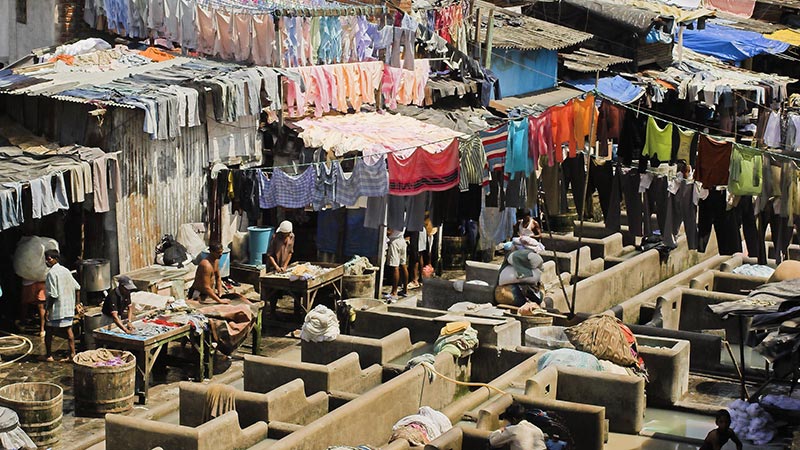
दूसरा, असंगठित रोजगार के प्रति रूख बदलने की जरूरत है। समय आ गया है कि हम असंगठित अर्थव्यवस्था को अभिशाप न मानें, खासकर इस तथ्य के मद्देनजर कि बहुत बड़ी संख्या में भारतीय कर्मी (कुछ आकलनों के अनुसार 90 प्रतिशत से अधिक) इस सेक्टर में काम कर रहे हैं। जरूरत इस बात की है कि सरकार  इस प्रकार का सहायतापूर्ण माहौल तैयार करने पर ध्यान दे जिससे काम करने वालों की इतनी बड़ी संख्या  को ज्यादा सुरक्षा मिले, उनकी उत्पादकता में वृद्धि हो और जहां संभव हो सके उनमें उद्यमिता को बढ़ावा मिले।

अंत में यह कहना होगा कि भारत को अपनी सोच को बड़ा करना होगा। उसे इस संभावना पर गौर करना चाहिए कि किस प्रकार वह औद्योगिकीकरण की प्रक्रिया को लांघ सकता है। भारत को खुद को रोबोटिक्स जैसी नई संभावनाओं के केंद्र के रूप में खुद को स्थापित करने की परिकल्पना करनी होगी, ठीक वैसे ही जैसे जापाना इलेक्ट्रानिक्स, जर्मनी आटोमोबाईल और चीन मैनुफैक्चरिंगे के केंद्र में है और वह भी लागत  के दसवें हिस्से पर।

ऐसे समय में जब कि पूरी दुनिया विकास के अभाव से परेशान है और पुराने मॉडल टूट रहे हैं, भारत को डिजिटल क्रांति का प्रमुख हिस्सेदार बनना होगा और यह सुनिश्चित करना होगा कि उसकी विशाल जनसंख्या इसमें लाभकारी ढंग से शामिल हो सके फिर भले ही वह अनौपचारिक ढंग से हो।

यह टिप्पणी मूल रूप से Quartz India में प्रकाशित हुई थी।

Standard
Uncategorized

How to regulate ride-sharing cab applications like Uber and Ola

Arun Mohan Sukumar| Samir Saran

Caps on surge prices with its effect on market remain under-studied. However, Ola & Uber cannot resist regulation

 Aggregator,App based,Ola,Regulate,Surge Pricing,Uber
independent.

On 31 October, the Central government is expected to announce rules on “surge pricing” by cab aggregators like Uber and Ola, and set in motion a protracted debate over the regulation of India’s digital economy. Surge pricing, which refers to the spike in taxi fares during rush hours, has been a sensitive subject in India, with cab aggregators having had run-ins with regulators in New Delhi and Karnataka. Surge pricing helps stabilize demand and supply during peak office hours, argue companies, while regulators have sought a “cap” on such fares. It is an issue that illustrates well the dilemma facing Indian regulators as they go about calibrating laws to provide affordable Internet services while ensuring that the digital economy remains competitive. Whatever regulations on surge pricing are eventually adopted, their effect will be immediate: If prices are capped, it may provide relief in the short term to consumers, but can also affect the availability of cabs in a particular area, the earnings of taxi drivers, and, of course, the bottom lines of technology companies.

Uber representatives told these writers that “almost all the earnings from surge fares” go to cab drivers. Between October 2013, when it started operations in New Delhi, and September 2016, Uber suggests “less than 8% of trips surged in New Delhi” and the average multiplier—the rate at which users were charged during peak hours—was 1.8 times the normal fareThe case for surge pricing rests on the assumption that a spike in fares will draw cab drivers to a particular location, and consequently balance the demand for rides and the supply of taxis. If markets for traditional goods like oil and tourism witness rise in prices based on output and seasons, there is certainly a case for demand-driven models in technology.

The regulator, meanwhile, is faced with the unpalatable choice between supporting a populist measure like capping fares, or leaving them untouched, in the hope that technology companies thrive in the absence of regulations. Neither decision is informed by evidence: Taxi riders may save a few rupees if surge pricing were to be capped, but it will be insignificant compared to the value of person-hours that will be lost were taxis unavailable during peak hours. If economic productivity is enhanced by technologies, regulations should not have the unintended consequence of limiting their availability. At the same time, leaving technology companies unregulated will induce market distortions and anti-competitive practices, which also affect the consumer. Given this dilemma, we offer a few baseline principles to measure the effectiveness of regulations on ride-sharing models:

  1. Pricing should be the final point of regulation—prices, or caps on prices—should be a factor of urban congestion, availability of cars, a thorough mapping of user demand and consumption patterns, and an assessment of how neighbourhoods correlate to income in Indian cities. Information on these indices can be absorbed into the algorithms of ride-sharing apps, to tailor affordable rides in urban and semi-urban settings. Armed with such information, regulators too can frame better policies, and resist impulses to cap fares.
  2. The private sector should share data with regulators, especially as they relate to safety. Road safety—which should be understood broadly rather than just through accidents or vehicle-related casualties—is the prerogative of states, but there is little sharing of information on this count between ride-sharing companies and state governments. By sharing local crime statistics, governments too can help cab aggregators offer better services, and ensure their availability in areas which are crime-prone or unsafe. Surge pricing is as much a factor of safety as any, since it is reasonable to expect city-based users to pay more for safer rides.
  3. Build capacity among drivers: If ride-sharing companies want prices to be left unregulated, they should be investing in a community of entrepreneurs and drivers to ensure the ready availability of taxis. But for informal tie-ups with loan agencies and banks for their drivers, there is very little that Ola and Uber have done to boost taxi supply, so it is not enough that they push for deregulation of prices alone.
  4. Monitor and regulate anti-competitive practices: Rather than targeting prices, policymakers should be assessing their impact on the entry of new operators into the market. If surge pricing does indeed follow market-based models, they should attract more investors to the sector, and facilitate the entry of cab-aggregator start-ups. If the spikes in prices, however, end up consolidating the monopolistic positions of established players, then regulators should step in. Capping surge prices does little either to open the market, or prevent anti-competitive practices.

The number of motor vehicles per 1,000 people in a country is often used as a metric for its economic development: It is just as illustrative of the future of the shared economy. By most estimates, the US in 2014 had nearly 800 cars per 1,000 people, Germany had 600, and China just 84. India fared at the bottom of this list, with 18 cars for 1,000 people. This number is expected to rise dramatically over the next decade, but it is neither realistic nor desirable to aspire to the numbers that the US or Europe currently have. For one, demands for cleaner air will push the use of public transportation and greener automobile technologies in India. But crucially, they will drive the growth and adoption of transport-sharing models with the aim of reducing carbon emissions and urban congestion. Any decision that affects this sector must consequently be based on informed assessments.

It is premature to push for caps on surge prices when their effects on the market remain under-studied. Cab aggregators like Uber and Ola, on the other hand, cannot resist regulation without investing significantly in the Indian market. The market may drive prices in Western jurisdictions, where users have deeper pockets. Foreign companies should weigh different models in India, innovating using the richness of data for cost-effective solutions to public transport. For tech giants, India remains among the most open digital economies for business, but it cannot be business as usual.

This commentary was first carried out in Livemint
Standard
Uncategorized

India’s new Pakistan strategy: It raises the costs for nurturing terror even if isolating Pakistan is not entirely feasible

Samir Saran| Ashok Malik

In the period following 29 September, India has embarked on a two-pronged Pakistan strategy. First, it has indicated it is willing to use hard force when faced with terrorism and cross old lines, literally or figuratively. Second, it has intensified its campaign to diplomatically “isolate” Pakistan in the neighbourhood. Together these have been called the “new normal”. It is important to examine the contours of this new normal.

For a start, the new normal is not limitless. The use of force in retaliation or anticipation of terrorism is not suggestive of an Indian inclination for a full-scale war; not at all. The Narendra Modi government is conscious of that and has repeatedly said the cross-LoC strikes were targeting terrorism and not the Pakistani military. Diplomatically too the absolute isolation of Pakistan is not feasible. The BRICS summit in Goa was a case in point.

What is possible, however, is to raise the costs for Pakistan for its nurturing of terror, and for those supporting it on various diplomatic and multilateral platforms. Whether it is the Chinese in Goa or the British Foreign and Commonwealth Office, those who support Pakistan or at least not ostracise it will need to go to ridiculous lengths in making arguments or expending diplomatic capital. This by itself may seem meaningless, but does mean Pakistan’s backers — like apartheid-era South Africa’s backers — will be reduced to contortions of logic. In the long term, they would push Pakistan towards behaviour change.

That the Chinese have had to articulate their support for Pakistan and use their veto to protect it places Beijing in new territory and changes its assumptions of a workable relationship with India. That it had to do this even as Bay of Bengal Initiative for Multi-Sectoral Technical and Economic Cooperation (BIMSTEC) identified Pakistan as the roughneck of the region would have been doubly troublesome.

Not everybody is happy at this turn of events. Two groups have reacted to the Indian government’s new posture — and it is a new posture, irrespective of supposed precedents that are trotted out — with some hostility. Domestic critics of Modi would rather believe ISI and its propaganda than the Indian PM. Frankly, this is a feature of most robust democracies. Domestic disaffection with a ruling party influences international postures as well. Take Donald Trump reaching out to Vladimir Putin to spite his Democrat rivals.

Next there are the nuclear ayatollahs and South Asia specialists in the Washington Beltway. India has done something their playbooks did not conceive as possible. The anger is exaggerated because an emerging power has had the gumption to intervene in a geography (Pakistan-controlled) that was underwritten, fattened and perversely tolerated by the feckless academic and security analysts’ lobby in Western capitals.

Ironically, political leaderships and governments in those very capitals have been more understanding of India’s cross-LoC strikes.

Realist political leaders recognise conventional space exists and no amount of nuclear sabre-rattling is going to stop a sovereign power from responding to asymmetric warfare.

Four facts stand out then. One, irrespective of level of damage or intensity of operations, India did act — and told the tale. India has decided to make cross-border response, at a place and time of its choosing, a new possibility in the Pakistan-terror dynamic. What should not be lost is that this time it was Pakistan that was in denial.

Pretending it did not happen allowed Pakistan a face saver and gave its establishment space not to respond or escalate. In doing so, it tore apart the escalation theory it had fed its friends in the West in the first place. That bluff was called and reams of briefing papers and opeds were made to look foolish. The world has to live with this. That space for significant conventional action, under a nuclear umbrella, exists and may be expanded in future has been established.

Two, India didn’t inform any big power before the event and neither did any big power intervene, ask India to back off and advocate (pointless) talks. This was the second bluff that was called: that the world would instantly intervene. It did not. Actually, if and when it does, it could well be to Islamabad’s disadvantage.

Three, contrary to editorial imagination, Pakistan’s army and its civilian arm are managing the implications of the Indian strike in tandem and in a spirit of cooperation. They are both in trouble. The Military Terror Complex allowed the generals immeasurable sway over people and territory. The civilian government benefited from the political advantages of cossetting extremism and the rent-seeking advantages offered by Pakistan being part of terrorism’s global supply chain.

Manipulative use of a journalist to push the idea that Pakistan was rethinking support to terror proxies only points to the desperation with which Pakistan wants to reclaim the international narrative. It is telling that this new tack comes after Nawaz Sharif’s truculent UN speech found absolutely no takers.

Finally, despite the heightened emotions, it is obvious the surgical strikes were not an antidote to terror itself. They were a symbolic strike at a smug sense of immunity that Pakistan had developed, an early warning to Islamabad’s cussed all-weather friends and the beginning of a new diplomacy with Beijing. The Chinese can continue to differ, defy and deny. Even so, the perpetual free pass afforded to them by a reluctant South Block has expired.

This commentary originally appeared in The Times of India.

Standard
Uncategorized

BRICS remains on course for bigger, more effective projects in the years to come

Updated: Oct 17, 2016 21:23 IST, Hindustan Times

Original link is here

brics-summit-in-goa_8ab5bef2-945a-11e6-9285-1c368c2fb449

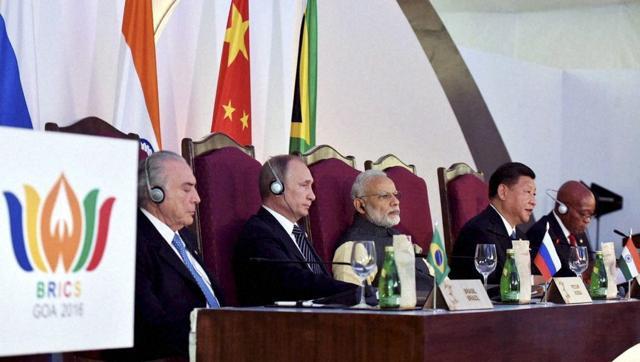
(From Left) Brazilian President Michel Temer, Russian President Vladimir Putin, Prime Minister Narendra Modi, Chinese President Xi Jinping and South African President Jacob Zuma, at BRICS summit, Benaulim, Goa, October 16 (PTI)

Heading into the BRICS summit in Goa last weekend, Indian diplomacy sought four key objectives. First, use the forum to strengthen bilateral relationships with all four countries, especially Russia and China. BRICS as a grouping will undoubtedly be served well, and its mandate strengthened, as a result of political exchanges at the bilateral level. Second, stabilise the BRICS regime at a time when some of its major constituents have been perceived as disruptive forces in the international order. Third, leverage the platform to highlight concerns of cross-border terrorism emanating from Pakistan, and lend momentum to India’s efforts to promote a comprehensive, multilateral instrument to tackle terrorism. And fourth, consolidate and build on the institutionalisation of intra-BRICS initiatives, aimed mainly at promoting economic growth.

All four objectives were materially advanced by New Delhi at the summit, with varying degrees of success. At a time of general turbulence in the international system, whether it is armed conflict in Syria, contestation in the South China Sea or the imminent overhaul of global climate and trading regimes, India can take credit that the summit concluded on a sober, even footing, without letting the political predilections of each power holding sway over the group.

On the subject of terrorism, the Goa declaration strongly endorsed multi-national efforts to tackle the spread of terror networks, and specifically urged countries to crack down on terrorist organisations designated by the United Nations Security Council. It is frankly besides the point that groups based in Pakistan. such as Lashkar-e-Taiba and Jaish-e-Mohammed did not find mention by name in the declaration, since they are groups that are listed by the UNSC under its anti-terror sanctions regime. The references to terrorism in Afghanistan in particular are significant, as they cast a shadow over Islamabad’s conduct in preventing its neighbour from pursuing its “independent political and economic course”. India’s pointed references to Pakistan’s less-than-constructive role in tackling home grown terror networks indicate New Delhi is prepared to sustain its recent efforts to draw ever more global attention to the subject.

The conversations on terrorism in Goa, however, should not detract from the substantial progress that BRICS countries have made in the last year in charting a common economic narrative. Thrown into sharp relief by Britain’s exit from the European Union, the diminishing appetite for integrated markets and indeed, globalisation as we know it, has not deterred BRICS countries from pushing ahead with key economic initiatives.

The Goa declaration correctly highlights the critical role of the New Development Bank (NDB) in attracting foreign investment and supporting renewable energy and infrastructure projects in the global South. Consensus on a BRICS credit rating mechanism was not forthcoming at the 8th summit, given that a consolidated view on perception of financial risk and regulation is a sensitive matter. It is worth noting here that the NDB itself was the product of many such BRICS meetings, both at the level of leaders and sector experts. The credit ratings mechanism is an important initiative that should be pursued with vigour when BRICS finance ministers, industry associations and independent experts now meet over the course of the calendar year to flesh out its details.

Among the biggest takeaways from the summit’s deliberations is BRICS’ continued willingness to take on the unfavourable economic headwinds together, whether by pushing towards greater integration of its markets, facilitating the mutual ease of doing business or providing accessible capital to its businesses. India’s hosting of the BRICS and BIMSTEC summits helped in highlighting that trade ties need to be significantly enhanced, not just among BRICS, but also between BRICS and BIMSTEC countries. On this count, the declaration’s heightened attention and call to build the capacity of micro, small and medium enterprises to ensure they are included in global value chains are significant as they are crucial sources of employment.

The summit declaration also brought the focus back to international norms that promote stability and inclusion in common spaces. At a time when mega-regional trading agreements have significantly altered the discourse on cross-border trade, the summit stressed the need for co-operation in crucial matters relating to Intellectual Property Rights and the digital economy. BRICS members have always attributed a position of “centrality” to the WTO-led trading system, but their endorsement this year is significant.

The Goa declaration reflects an important moment in the group’s history, which has seen the “alternative” powers weighing on the side of liberal, multilateral trading institutions that were conceived by the West. References to the “open and non-fragmented” nature of digital spaces should not be viewed from the prism of Internet governance alone. It is also a pointed reference to the need to keep cyberspace open for commerce, and prevent its “stratification” by exclusive trading regimes.

The BRICS summit in Goa reinforces India’s position as a “bridge” between the liberal institutional order and the potential disruptive impulses of major powers that have opened up the possibility for contestation. Its concurrent hosting of the BIMSTEC heads of state meeting allowed New Delhi to raise the grouping’s profile, and signal its importance to India’s neighbourhood diplomacy in the days to come.

As for the Goa declaration, India may not have had its way on every issue – this is only natural, just as New Delhi sought to moderate the influence of Moscow’s holding the pen at the BRICS Ufa summit last year, the gives and takes of diplomacy ensure a document that is acceptable to all. The Goa declaration ensured the BRICS ship continues to sail steady, and remains on course for bigger and more effective projects in the years to come.

Samir Saran is vice president, Observer Research Foundation, New Delhi


Standard
Uncategorized

Navigating the Digital ‘Trilemma’

Samir Saran

Debates around internet policy have taken centre stage in domestic politics and international relations alike thus the stage is set for Digital Debates

Privacy. Security, Access

Debates around internet policy have taken centre stage in domestic politics and international relations alike. While national debates are shaped by local priorities, politics and contextual ambitions, cyber diplomacy differs from traditional diplomacy in two important respects. First, the stakeholders invested in internet policy include not just states and governments but industry and civil society as well. Second, the norms that define conduct over cyberspace remain diverse, divergent and fluid. Creating a universal set of norms to guide policymaking on digital spaces is further complicated as individual sovereign assessments are significantly implicated by regional and strategic tensions unique to them.

Concurrently, the world is also witnessing two parallel sets of conversations on digital policy. One is largely focused on translating rights from the offline world to the online world. This conversation is premised on a clear understanding of what the rights entail in the offline world; the central task that remains is focussed on demarcating the contours of those rights online. The other, related, conversation attempts to negotiate the very nature of, and need for, these rights. For instance, the European Union holds data protection in the highest regard, enshrining it within the European Charter of Fundamental Rights. At the same time, India, the largest democracy in the world, is yet to explicitly recognise a right to privacy within its constitution. The difference in these approaches transcends legal regimes. The social contract in Europe, a product of legal, cultural and political factors, pried access to data away from the regulators and ceded agency over it to the private citizen. This equilibrium is today reflected in the EU data protection norms. In India, where norms of social behaviour are evolving concurrently with lawmaking, there is no national consensus on a ‘right to privacy’, with some constituencies alleging that a ‘Western’ model may not be fully appropriate,  or would need significant redefinition when applied to the Indian context. In India as in other emerging economies, cyberspace regulation has shouldered the additional burden of delineating and guaranteeing rights that are not necessarily available in offline spaces.

The real challenge therefore lies in creating a public sphere and a digital public sphere that attends to the integrity of both conversations.

Ironically, both these conversations are coloured by concerns about security and access. In the developing world, even as countries strive to ensure affordable access, the proliferation of unsecured devices has lowered the overall standard of digital security. Attempts across the world to enhance cyber security through online intelligence gathering has often had the effect of watering down the right to privacy and stifling free speech, and in some instances even comprising hardware and network integrity. Even though issues around access are largely missing from Atlantic debates, security (motivated by unique and different circumstances) has become an all-encompassing and opaque hindrance in the realisation of the full potential of the internet.

The unique challenge of digital policy is addressing the ‘trilemma’ of reconciling security, rights and access. When we explore both the sets of conversations as discussed above, it becomes evident that while all three are  present in policy formulation on most occasions, one or two are often given more importance. What we must instead strive towards is a re-imagination of these challenges as a equal-sided triangle, where each issue is given the same importance as the other.

Access to the internet is not an end in itself. In India, it is the means for social and financial inclusion. The Indian government has announced plans to slowly transition to a cashless economy while the market remains inundated with cheap and unsecured devices. This, however, is not a central concern to those who remain without access. For instance, individuals in rural India who own smartphones to access government services are often dependent on a family member or another second generation internet user to ‘go online’. Often enough their phones serve as communal devices with one source managing many connections and many accounts. Neither privacy nor security is deliberately accounted for in their daily transactions, leaving them entirely to the mercy of technologies available on the device. To the state that is attempting to foster financial inclusion and digital payments, this ‘human’ component of cyber security is extremely important. How does policy formulation that is still informed by trans-Atlantic notions of privacy contend with these radical realities that defy information or device management?

Of the rights envisaged in the Universal Declaration of Human Rights, many are implicated online. However, the imperative for maintaining the balance between these, sometimes conflicting, rights is more complex online. For instance, the mandate of states to make digital spaces more inclusive and less hostile is often at odds with the overarching imperative to foster freedom of expression. Prominent social media companies like Twitter that were created to allow internet users to voice their opinions online must also constantly attempt to reduce – if not eliminate – online harassment and gender based violence. The translation of offline rights to the digital space is often less than perfect. More often than not it ends up clamping down on one or more rights. For countries that do not have the resources to monitor and tackle online extremism, the restrictions on an open internet are not always imposed by choice but rather by compulsion. How does the objective of maintaining a marketplace of ideas, free of hostility, contend with the universal recognition of free speech?

The threat to an open internet, however, is not only from online radicalisation and hate speech. Opportunities for access – to knowledge, to markets and to people – available online must never cost more than those available offline. Exclusionary mega free trade agreements could potentially render vast swathes of knowledge and data inaccessible to emerging economies. On the one hand, countries and regulators are criticised for heavy-handed censorship or imposing restrictions on an open internet; on the other, restrictive provisions aimed at the digital economy — which in India is yet to fully bloom — could convert the open internet into a luxury. If draconian laws and oppressive governments cannot be allowed to dismantle the openness of the internet neither should commercial arrangements and mercantilist considerations.

Security presents the greatest challenge of the three vertices of this invisible triangle. Cyber security involves the protection of both infrastructure and information. Difficulties arise when in the name of security, governments start to dictate norms of behaviour in cyberspace. This raises the philosophical question of whether the enhancement of a nation’s cyber security automatically means an enhancement of the individual security of every internet user. Or as a corollary, does enhanced individual online security result in higher national security in this sphere? We must also ask: do internal security and cyber security complement each other or will the resolution of one lead to the dilution of the other? This is perhaps best exemplified by the ongoing tussle between the United States government and Silicon Valley. It has been well documented that technological alternatives to bypass government-monitored means of communication are readily available. Keeping this in mind, it seems unlikely that allowing governments access to certain modes of communication will greatly enhance the internal security of a country. The overall security is rather affected by the individual strength of devices and modes of communication available to the citizens.

The common thread that runs through all three issues is data integrity – both national data and individual data. Managing data integrity can serve as the golden median that helps strike a balance between the needs to ensure affordable access, secure cyberspace and enhance rights. Ensuring the integrity of citizens’ data can protect them from commercial exploitation by private entities, intrusion into their lives by the state, and from criminal exploitation by hackers. It can strengthen privacy and foster free expression and exchange of ideas over the internet. Maintaining the integrity of data is therefore something that all states must aspire to. This, and digital anonymity are preconditions to ensuring a safe, discursive space online.

As net exporters of data, Asia and Africa are locked in an uneasy relationship with Western companies that provide most services over the internet. The digital trilemma is acute for emerging economies: access is a ‘here and now’ concern, but is also a factor of the individual security and human rights. A major cyber attack on financial networks could have the consequence of weaning first generation users away from the internet altogether. Regular and unchecked instances of harassment and gender-based violence online could constrain the rights and contribution of women to digital spaces, further skewing inequalities based offline. Platforms purporting to offer affordable internet access should not emerge as walled gardens that restrict the freedoms of speech or expression. Managing the three vertices, therefore, is a delicate process that should eschew dramatic or heavy handed regulation.

The resolution of this invisible triangle, far from being a purely national concern, is central to the stability of digital spaces, which are global commons. Access, rights and security, must be weighed in their own respects and given equal degrees of importance. While responding to the threat of climate change, for instance, all countries recognised that growth, employment and environment were equally important to everyone. A similar realisation must be arrived at in relation to digital policies.

This article originally appeared in the third volume of Digital Debates: The CyFy Journal

Standard
Uncategorized

Digital Debates 2016

Samir Saran

Debates around internet policy have taken centre stage in domestic politics and international relations alike thus the stage is set for Digital Debates

Editor’s Note: Navigating the Digital Trilemma | Samir Saran

Debates around internet policy have taken centre stage in domestic politics and international relations alike. While national debates are shaped by local priorities, politics and contextual ambitions, cyber diplomacy differs from traditional diplomacy in two important respects. First, the stakeholders invested in internet policy include not just states and governments but the industry and civil society as well. Second, the norms that define conduct over cyberspace remain diverse, divergent and fluid. Creating a universal set of norms to guide policymaking  on digital spaces is further complicated as individual sovereign assessments are significantly implicated by regional and strategic tensions unique to them.

Concurrently, the world is also witnessing two parallel sets of conversations on digital policy. One is largely focused on translating rights from the online world to the offline world. This conversation is premised on a clear understanding of what the rights entail in the offline wold; and the central task that remains is focussed on demarcating the contours of those rights online. The other, related, conversation attempts to negotiate the very nature of, and need for these rights. For instance, the European Union holds data protection in the highest regard, enshrining it within the European Charter of Fundamental Rights. At the same time, India, the largest democracy in the world, is yet to explicitly recognise a right to privacy within its Constitution. The difference in these approaches transcends legal regimes. The social contract in Europe, a product of legal, cultural and political factors, pried access to data away from the regulators and ceded agency over it to the private citizen. This equilibrium is today reflected in EU data protection norms. In India, where norms of social behaviour are evolving concurrently with lawmaking, there is no national consensus on a “right to privacy”, with some constituencies alleging that a “western” model may not be fully appropriate,  or would need significant redefinition when applied to the Indian context. In India as in other emerging economies, cyberspace regulation has shouldered the additional burden of delineating and guaranteeing rights that are not necessarily available in offline spaces.

The real challenge therefore lies in creating a public sphere and a digital public sphere that attends to the integrity of both spaces.

Ironically, both these conversations are coloured by concerns about security and access. In the developing world, even as countries strive to ensure affordable access, the proliferation of unsecured devices has lowered the overall standard of digital security. Attempts across the world to enhance cyber security through online-intelligence gathering has often had the effect of watering down the right to privacy and stifling free speech and in some instances even comprising hardware and network integrity. Even though issues around access are largely missing from Atlantic debates, security (motivated by unique and different circumstances) has become an all-encompassing and opaque hindrance in the realisation of the full potential of the internet.

The unique challenge of digital policy is addressing the “trilemma” of reconciling security, rights and access. When we explore both the sets of conversations as discussed above, it becomes evident that while all three are  present in policy formulation on most occasions, one or two are often given more importance. What we must instead strive towards is a re-imagination of these challenges as a equal-sided triangle, where each issue is given the same importance as the other.

Access to the internet is not an end in itself. In India, it is the means for social and financial inclusion. The Indian government has announced plans to slowly transition to a cashless economy while the market remains inundated with cheap and unsecured devices. This however is not a central concern to those who remain without access. For instance, individuals in rural India who own smartphones to access government services are often dependent on a family member or another second generation internet user to “go online”. Often enough their phones serve as communal devices with one source managing many connections and many accounts. Neither privacy nor security are deliberately accounted for in their daily transactions, leaving them entirely to the mercy of technologies available on the device. To the state that is attempting to foster financial inclusion and digital payments, this “human” component of cyber security is extremely important. How does policy formulation that is still informed by trans-Atlantic notions of privacy contend with these radical realities that defy information or device management?

Of the rights envisaged in the Universal Declaration of Human Rights, many are implicated online. However, the imperative for maintaining the balance between these, sometimes conflicting, rights is more complex online. For instance, the mandate of states to make the digital spaces more inclusive and less hostile, is often at odds with the overarching imperative to foster freedom of expression. Prominent social media companies like Twitter that were created to allow internet users to voice their opinions online must also constantly attempt to reduce – if not eliminate – online harassment and gender based violence. The translation of offline rights to the digital space is often less than perfect. More often than not it ends up clamping down on one or more rights. For countries that do not have the resources to monitor and tackle online extremism, the restrictions imposed on an open internet are not always a by choice but rather by compulsion. How does the objective of maintaining a marketplace of ideas, free of hostility, contend with the universal recognition of free speech?

The threat to an open internet, however, is not only online radicalisation and hate speech. Opportunities for access – to knowledge, to markets and to people – available online must never cost more than those available offline. Exclusionary mega free trade agreements could potentially render vast swathes of knowledge and data inaccessible to the emerging economies. On the one hand, countries and regulators are criticised for heavy-handed censorship or imposing restrictions on an open internet; on the other, restrictive provisions aimed at the digital economy — which in India is yet to fully bloom — could convert the open internet into a luxury. If draconian laws and oppressive governments cannot be allowed to dismantle the openness of the internet neither should commercial arrangements and mercantilist considerations.

Security presents the greatest challenge of the three vertices of this invisible triangle. Cyber security involves the protection of both infrastructure and information. Difficulties arise when in the name of security, governments start to dictate norms of behaviour in cyberspace. This raises the philosophical question of whether the enhancement of cyber security of a nation automatically mean an enhancement of the individual security of every internet user? Or as a corollary, does enhanced individual online security, result in higher national security in this sphere? We must also ask, do internal security and cyber security complement each other or will the resolution of one lead to the dilution of other? This is perhaps best exemplified by the ongoing tussle between the United States government and Silicon Valley. It has been well documented that technological alternatives to bypass government-monitored means of communication are readily available. Keeping this in mind, it seems unlikely that allowing governments access to certain modes of communication will greatly enhance the internal security of a country. The overall security is rather affected by the individual strength of devices and modes of communication available to the citizens.

The common thread that runs through all three issues is data integrity – both national data and individual data. Managing data integrity can serve as the golden median that helps strike a balance between the needs to ensure affordable access, secure cyberspace and enhance rights. Ensuring the integrity of citizens’ data can protect them from commercial exploitation by private entities, intrusion into their lives by the state, and from criminal exploitation by hackers. It can strengthen privacy and foster free expression and exchange of ideas over the internet. Maintaining the integrity of data is therefore something that all states must aspire to. This alongside digital anonymity are preconditions to ensuring a safe, discursive space online.

As net exporters of data, Asia and Africa are locked in an uneasy relationship with western companies that provide most services over the internet. The digital trilemma is acute for emerging economies: access is a “now and here” concern, but is also a factor of the individual security and human rights. A major cyber attack on financial networks could have the consequence of weaning first generation users away from the internet altogether. Regular and uncheck instances of harassment and gender-based violence online could constrain the rights and contribution of women to digital spaces, further skewing inequalities based offline. Platforms purporting to offer affordable internet access should not emerge as walled gardens that restrict the freedoms of speech or expression. Managing the three vertices, therefore, is a delicate process that should eschew dramatic or heavy handed regulation.

The resolution of this invisible triangle, far from being a national concern, is central to the stability of digital spaces, which are a global commons. Access, rights and security, must be weighed in their own respects and given equal degrees of importance. While responding to the threat of climate change, for instance, all countries recognised that growth, employment and environment were equally important to everyone. A similar realisation must be arrived at in relation to digital policies.

Read the full issue here.

Standard
Uncategorized

Government of India should not Make in India

Samir Saran|Vivan Sharan

The government should remain a licensor, regulator and adjudicator where neither capital nor technology are in constraint and should not make in India

 Make in India, Horse, Parade

Make in India during the Parade

Source: TopCount

Make in India’s greatest threat is the ubiquitous government-run enterprise itself is recording historically high investments in technology-oriented industries such as telecom and over the top (OTT) services that ride on telecom networks such as financial technology and e-commerce.

The latest infusion of Rs47,700 crore by UK-based telecom giant Vodafone Plc. into its Indian arm is indicative of the fact that the Indian market remains much coveted despite the headwinds to global growth. Manufacturing investments are also targeting the tech-hungry Indian consumer.

Chinese telecom giant Huawei will begin manufacturing smart phones in India this year, the 40th such manufacturing investment in the country in the past two years alone. With such investments and parliamentary consensus on the GST, one may be tempted to conclude that ‘Make in India’ is on track. This may be premature.

India’s transition from an agricultural economy to a service economy has posed a conceptual challenge for many who see industrialisation as the only way to create jobs. Industrialisation requires best-in-class infrastructure, cheap energy and a skilled workforce, all impossible prerequisites to fulfil in the short or medium term. But the ‘digital economy’ offers a way out.

While productivity gains from automation and digitisation have driven industrial growth in advanced countries over previous decades, their effects are not fully felt here.

The digital economy can potentially mobilise millions of Indians, constituting the ‘informal workforce’, bringing them within a more productive fold. India’s biggest challenge is also its best opportunity: it has a large, young and untrained workforce that can intuitively understand applied technology, if given early exposure.

In fact, India can extract greater relative gains from the digital economy than its advanced country counterparts. Real income growth in advanced countries requires sustained and fundamental innovation whereas India can harness incremental innovation towards higher rates of growth (mostly owing to a favourable demographic).

But continued innovation support through private sector investments is not inevitable. Many policymakers mistakenly believe that India cannot be ignored as an investment destination. Nothing is inevitable.

Conversely, Make in India’s greatest threat is the ubiquitous government-run enterprise itself. And this is borne out in a number of technology-oriented industries; which is worrying as successive governments have first created favourable conditions for investments and then jeopardised them.

For instance, the telecom industry, often cited as an example of successful liberalisation, finds itself at a crossroads. It is dependent on falling voice call revenues despite enough global precedent to show that data revenues are the future. The industry lacks the bandwidth to deliver affordable data.

And there is policy inertia to address this, partly due to the existence of BSNL. Policymakers have hesitated from undertaking comprehensive reforms around key challenges such as Right of Way regulations, hoping that BSNL’s networks will save the day. And BSNL has not delivered the goods: the quality of its Internet infrastructure and service ethic are reminiscent of the pre-liberalisation era.

Instead of harnessing a well-designed ‘ring network’ as was originally conceptualised in ‘BharatNet’, India has to settle for optic fibre cables thrown on electricity poles, barely resilient enough to withstand a windy day.

Another competitive technology industry, broadcasting, is another example. While most advanced countries have public broadcasters, few have created legacy issues as profound as Prasar Bharati has here.

The private broadcasting industry has been haemorrhaging money owing to high cost of ‘carriage’ and regulatory restrictions on deriving more revenues. Prasar Bharati has been on the wrong side of both these issues—not readily relinquishing spectrum to private operators which could help lower carriage costs, and forcing private operators to circumscribe their lifeline advertising revenues by applying Mandatory Sharing regulations on high value content such as sports broadcasts. Policymakers have conflated national interest with consumer choice.

The result is that broadcasting investments have been muted over the past decade despite progressive liberalisation of FDI caps. The larger lesson to draw is that governments should not be both regulators and competitors. This is not the easiest pill to swallow, particularly when sentimentality accompanies the notion of government-run enterprise.

The introduction of RuPay cards by the National Payment Corporation of India, which is heavily guided by the Reserve Bank of India, indicates that the government is tempted to enter markets to disrupt perceived monopolies even in the digital economy.

Ironically, India is a party to the US-led dispute with China at the WTO on the Chinese variant of RuPay, called UnionPay. India’s approach therefore is neither consistent nor wise. It is a legacy of the past, wherein the government created markets for ‘old economy’ industries such as energy and infrastructure.

While public enterprises have succeeded, to an extent, in traditional industries, they are not optimized for the new economy which requires constant innovation and high standards of service delivery.

The government should remain a licensor, regulator and adjudicator and let consumer choice select winners in markets where neither capital nor technology are constraints.

This commentary was originally published in Mint


Standard
Cyber Security, Uncategorized

New Norms for a Digital Society

safe_image

While the state continues to exercise its regulatory capacity over digital spaces — a task it will likely keep in the coming years — the internet has magnified the rights and responsibilities of the private sector and end users across the world.

The interaction between states, non-state actors and transnational corporations necessitates the creation of a regime complex that clearly outlines their respective roles. This paper is a first step in that direction, articulating norms that may serve as the baseline for legal and political agreements on cyberspace. Inter-governmental gatherings like the UN Group of Government Experts have largely focused their efforts on the security of networks and ICTs. Multistakeholder organisations and platforms like the Internet Governance Forum, the Internet Corporation for Assigned Names and Numbers, and the Internet Engineering Task Force, have begun to re-orient their mandate, with a view to make their governance more inclusive and accountable.

The set of seven norms and their corollaries identified in this paper may inform the functioning of both intergovernmental and multistakeholder processes. This document also attempts to chart the role of the private sector in digital governance. The end user today is valuable to internet companies, since the data collected from consumers directly contributes to the creation of revenues. If user data is the basis of wealth generation, internet giants have a responsibility to invest in the user by offering local content and innovative technologies that are contextual. This is particularly true in the case of emerging economies and developing countries, where internet businesses should tailor to the unique needs of the next billion users.

This paper argues that effective internet governance requires shifting the locus of digital debates from the Atlantic to the Asia-Pacific and bringing in new voices and views of a new constituency of stakeholders. Similarly, all stakeholders must work towards building the capacity of growing digital economies and first-generation internet users. Efforts to fragment digital spaces by creating alternative “internets” must be avoided. Just as regimes that curtail the freedoms of internet users are undesirable, actions that raise the cost of local innovation and increase barriers to the unrestricted flow of technology, and thereby quality of access, should also be discouraged. These norms are a work in progress, and the author reserves the right to refine them through continued consultations with stakeholders across the spectrum.

1. Online = Offline + more

The protection of rights over the internet requires mechanisms that are unique, contextual and transformative. Rights on the internet should not be limited to those offline, and must build on the edifice of free speech and expression that already exists. Similarly, current regulatory frameworks must evolve in response to the digital medium. Just as traditional broadcasting regulations have become inadequate to regulate online speech, outmoded censorship laws often constrain free expression and impose a chilling effect. Contemporary conversations on privacy must reflect the need to protect sensitive data, while acknowledging its importance for technological innovations that benefit local communities.

NORM: Realising the transformative potential of the internet requires progressive online freedoms that move beyond rights granted offline.

COROLLARY: Real-world regulations must not constrain the advancement of technology; rather, they must evolve in response.

2. Let data flow

Affordable, universal and high-quality access to the internet is among the top policy prerogatives of governments today. Access will require substantial investments in the form of local data centres, internet exchanges and last-mile connectivity. As net exporters of data, developing countries represent a robust market for internet companies. For their digital economies to expand — thereby increasing the share of the global pie — the free flow of trans-boundary data must be coupled with the unrestricted flow of technology. Custodians of data should orient their research and development towards local solutions, and foster domestic entrepreneurship. Data flows, however, should respect the sovereign imperative of law enforcement and security.

NORM: The global free flow of information must necessarily lead to universal access to the internet in emerging economies that is affordable and qualitatively rich.

COROLLARY: Free flow of data must be complemented by free flow of technology that is tailored for local innovative solutions.

Saran_Corollary_2

3. Living in an encrypted world

Governments around the world are locked in debate with industry bodies and civil society for the right to access encrypted communications. Backdoors and forced localisation of data, however, can decrease the overall standard of security in the market, curtail free speech, and violate the integrity of data. Governments should welcome technological developments that incorporate security by design, with a view to preserve the integrity and stability of digital networks.

NORM: Encryption must be the norm.

COROLLARY: Decryption of data must be subject to rigorous standards of judicial review.

Saran_Corollary_3

4. The responsibility to inspect?

States are faced with increasingly dangerous and sophisticated threats from state and non-state actors in cyberspace. The technological and legal capacity for dealing with these threats is often disparate, caused in part by lack of access to proper forensic, investigative and prosecutorial tools. It is the sovereign function of a state to protect its own citizens and infrastructure from such threats, without undue interference or intervention in its affairs. The interconnected nature of the internet demands that governments and businesses across geographies cooperate towards norms of cooperation that mitigate the risk of conflict.

NORM: The responsibility of states to protect cyberspace is a sovereign function, commensurate to their capacity.

COROLLARY: The collective responsibility for protecting cyberspace requires global investments for building capacity in developing countries.

5. Strengthening the base

The ubiquity of low-end smartphones, the growth of affordable data networks in emerging economies, and the relative lack of awareness of cyber vulnerabilities among users leave networks and individuals vulnerable to exploitative practices. Enhancing cyber hygiene among internet users in emerging economies can help substantially decrease the vulnerability of the global digital space as a whole.

NORM: Cyber security must account for, and address technology limitations of the end user at the bottom of the pyramid.

COROLLARY: Local communities must be at the forefront of articulating policy solutions for cyber security.

Saran_Corollary_4

6. Three rules for internet governance

Despite attempts to decentralise and diffuse the management of global internet governance institutions, there are inadequacies in revised accountability mechanisms. The locus of internet governance must shift from big transnational corporations to start-ups, medium and small local enterprises, from governments to multistakeholder communities, and from trans-Atlantic conversations to Asia-centric debates.

NORM: Multistakeholderism should be institutionalised by accounting for diversity in gender, geography and sectors.

COROLLARY: International internet governance must undertake three transitions and accommodate new stakeholders:

  • States → Communities.
  • Trans-national corporations → Small & Medium Enterprises and Startups.
  • Atlantic → Asia and Africa

7. Against the Splinternet

The Domain Name System (DNS) represents a stable and contiguous platform of unique identifiers, comprising numbers and names. Attempts to fragment the internet by creating an “alternative” system or through interference in the functioning of the “root” should weigh its potential impact on internet users, businesses and governments. Just as technical efforts to create a parallel DNS should be discouraged, trade regimes around the digital economy should consider the effect of fragmenting the internet into differential pricing regimes. Affordable and universal internet access can be realised by removing policy barriers to the creation and strengthening of ICT infrastructure.

NORM: The internet should remain unfragmented.

COROLLARY: Differential trade regimes should not raise the cost of doing business in the digital economy nor impede low-cost connectivity to users in Asia and Africa.


ENDNOTES

  1. “Digital globalization: The new era of global flows” McKinsey Global Institute, February 2016, http://www.mckinsey.com/business-functions/digital-mckinsey/ourinsights/digital-globalization-the-new-era-of-global-flows
Standard
Uncategorized

The Great 21st Century Data Rush

Lawfare, Tuesday, June 28, 2016, 12:26 PM


In the digital age, data is currency and information is the energy that drives the 21st century economy. Today, 46.1 percent of the world’s population is online. These 3.4 billion Internet users collectively generate a significant amount of commercial and personal data that can be stored, collated, and analyzed. This data is the lifeline that charts users’ online identities: it can also be monetized by Internet service providers, social media platforms, and end user applications. As a necessary corollary, control over data and the flow of information has become highly politicized. One who controls this data retains the power to shape the global geopolitical order.

Data is intrinsically valuable. Data grants access to an individual’s online activity, lifestyle choices, consumption patterns and so on. It is for this reason that states have been vying to gain access to vast amounts of data either through legal mechanisms or surreptitiously. It is also the backdrop for the evolving global norms around encryption. In many ways, this conversation is reminiscent of the adage of energy politics of the 20th century: he who controls the oil controls the world. There is, however, one central difference: today, every Internet user is the owner of an unending oil field and every Internet non-user is sitting on a potential reserve.

Despite of the Internet being touted as a great “equalizer,” these global conversations are often skewed in favor of the countries that generate data or possess the technological capability to access it. The encryption debate in countries with advanced technical capacities is very different from the countries without them. Until recently, countries with strong technical capabilities were also the most ardent advocates of encryption. This approach was fueled by the belief that the state’s interception capability would always outpace the individual’s encryption capability. Increasingly, this notion is proving to be false. Even the United States realizes that impenetrable encryption could wrest control of data from the hands of the state. It is this insecurity that is causing the pitched battle between Silicon Valley’s encryption evangelists and U.S. law enforcement officials. This insecurity, however, is not unique to the West. Governments in Asia and Africa also drive their own encryption debates out of a fear of losing control over the social order and their capability to monitor their citizens. At the same time, these issues’ importance is also accentuated by the looming threat that their countries’ data will be gathered, stored, and exploited across oceans in another continent.

Cyber diplomacy and geopolitics in these nations is therefore determined by the need to retain control over information emanating from within their countries and the anxiety of this data’s potential misuse by actors outside their borders. As with the conversations around the erstwhile frontier technologies in the nuclear and space domain, this too has a strategic dimension. Unfortunately, these strategic necessities are often responsible for constraining the development of privacy and data protection norms governing the Internet. States insist on perceiving the control of data as a zero sum game. Encryption is perhaps the centerpiece of the falsely dichotomous conversation around security and human rights. Encryption, however, must fundamentally be about human rights.

Encryption is an idea that is grounded in the principles of data integrity and data ownership. The right to encrypt communications is central to the autonomy that we offer all citizens over their own data and who can use, analyze, and access that data and under what conditions. This right automatically grants them the opportunity of determining who can commercially exploit their data. While most of us are comfortable exchanging our personal data for services over the Internet, this decision does not automatically nullify our right to choose how our personal data is used. Naturally, this autonomy must be subject to certain exceptions for law enforcement purposes. However, these exceptions must be considered, pragmatic, and mindful of the human rights imperative. They must not be driven by paranoia and the need for absolute control.

Another noteworthy dimension in this debate is the commercial opportunity that encryption presents. Encryption technology is big business. If data is the new currency then encryption solutions are the new Swiss banks and the market leaders in the tech space like Apple, Facebook and Google are all vying for recognition as “digital Swiss banks.” They are cognizant of the need to protect data, but equally conscious of its commercial value. While they refuse encrypted information to law enforcement agencies, apps and platforms in Google and Apple’s ecosystems innovate and thrive on the availability of big data. It is not public policy that is driving this harvest of data. It is, ironically, the “privacy policies” of major players. Across the pond, European regulators have failed to distinguish the false choice between public and private data with potentially negative consequences for innovation. Indeed, European Internet providers have themselves demanded that privacy norms reflect the need to innovate digitally.

All this is not to question the assumption that the state constantly seeks to monitor digital networks. But the growing trend towards protecting data from the prying eyes of the state poses another important question: is encryption the end of innovation? Increasing law enforcement requests for data retrieval and the myriad ways in which the state collects data en masse are leaving the private sector apprehensive of collecting big data that they may later be required to give up. While this may sound good prima facie, it has a serious downside. Without access to data, the private sector has no means to innovate and tailor their products to the market. The boom in the app economy was fueled largely by creating markets for products and services based on data analysis. Is it possible that the ubiquity of that very data is foretelling the collapse of the market that trades in information?

Ultimately, the debate on encryption must keep three vertices in focus: law enforcement, data privacy, and innovation. The legal standards around data protection and surveillance may vary across jurisdictions—as will the ability of start-ups to innovate—but any policy measures on encryption must arrive at a floating median between these three indicators.

Standard
Uncategorized

Asia’s new normal: Making multilateralism work with multipolarity

Samir Saran| Ashoka Malik

Since the collapse of the Soviet Union, the global political and economic architecture has been undergirded largely by one superpower, which set the stage for an unprecedented period of globalisation managed through multilateral institutions and actors. Now that unipolar moment is giving way to an era of diffused powers, with countries like the US, China and Russia each bearing considerable disruptive capacities, and each struggling to stitch together new norms and rules for these rapidly changing times.

This phase, the beginning of which was marked by the Global Financial Crisis of 2008 and characterised by America’s two bruising wars in Iraq and Afghanistan, has seen a vacuum emerge. Many are seeking to fill it, most determinedly China, but with a push back from countries such as Japan and India. Separately, ISIS and radical energies in the Middle East also seek to grab new space. Russia has chosen this very moment to signal its ability to muddy the Eurasian fields and intervene in the Middle East. The fact is, there is not enough room to accommodate all of these ambitions.

A median will have to be arrived at, but who will sacrifice what?

Today’s ‘multi-power’ reality is most visible in Asia and this can be attributed to the lack of a unifying political and security architecture for the Asian region (or regions). The question then arises: Will the Asian century be defined by contestation or cooperation? And how will Asian powers reconcile multipolarity and multilateralism, a process for which there are no handy 20th century templates? The trans-Atlantic political and economic regimes that were the ‘hub’ of the liberal international order has no parallel in Asia. And the single guarantor of good behaviour (certainty and/or predictability) is clearly absent.

The quest for global or regional leadership is the quest for control of common spaces. If in the earlier centuries, territorial borders and maritime frontiers were the crown jewels, today’s common spaces have been rendered seamless by digital arenas and technology that straddles deep oceans and outer-space. What makes the Asian century unique is the differing conceptions of common spaces by major actors. Continental trade regimes and economic integration will sculpt Asia’s future, but these terms are by themselves contested. How can the competing agendas of, for instance, the Regional Comprehensive Economic Partnership, the Trans-Pacific Partnership and One Belt, One Road be reconciled?

On the digital front, is the internet of today the ‘Splinternet‘ of tomorrow? Is cyberspace the new coliseum for digital gladiators? Asian powers and every power engaged with the region is excited by the potential of the digital economy, but many perceive the virtual world through the territorialism of pre-digital politics. Can the internet be a force for collaboration or is it destined to be a contested arena within and between countries, communities and peoples? How can multilateralism sit with this new paradigm where the power of transnational corporations make the equations more complex?

To be sure, the old fault-lines remain active. The Indo-Pacific system is the world’s greatest maritime trading zone, but political ambitions, too, sail across its seas and waters. In the absence of an Asian equivalent to the Monroe Doctrine (sole power dominance in the region), sovereignty is being contested everyday on the high seas. Robust military capacities sustain these conflicts in the Indian Ocean and Pacific littorals. Will the waters of Asia connect and empower, or will they divide and devastate?

Perhaps the most significant policy question for the Asian century is ensuring the realisation of ‘human value’. How will demographic realities in Asia translate into economic, and by extension, political transformations? The region hosts the youngest as well as the most rapidly ageing populations in the world, suggesting that demography can both be a dividend and a disaster. Growth models of decades past are being rendered obsolete by technological advancements and digitisation. These cripple the notion of a demographic dividend. What are the livelihood avenues available to 21st century Asians? Will unemployment continue to fuel the high-octane nationalist and sub-nationalist movements that Asia is witnessing? Does this detract from the ability of Asian actors to ‘sacrifice’ and ‘compromise’, something that multilateralism demands?

Asia needs to think through these pressing questions and so does the world. After all, the Asian century is not exclusive to Asia. It is as much about the rise of Asia, Asian actors and Asian institutions as it is about others who engage with the continent. Challenges and transformations in the region will define not just this continent’s century, but that of the planet.

Asia will shape the 21st century as much as the Atlantic consensus shaped the 20th century, or Europe, the 19th.

Contestation or competition?

In the seven decades since 1945, the US largely succeeded in scripting some significant rules that still survive, and they have guaranteed the stability of global institutions that are the bedrock of contemporary multilateralism. The UN system, the key security treaties, conventions and norms for managing common spaces, all emerged from the conversations of that era. The period since 1990 saw the triumph of the liberal order, and placed the globalisation project firmly within the Atlantic consensus.

The economic imperative to rebuild post-war Europe inevitably necessitated some of these political responses and military instruments. Superpowers became the global guarantors of predictability, whether in trade and commerce or the security domain, and by extension, of multilateralism. This task is now devolving in Asia, but in an Asia that has not been dominated by one sovereign power since the times of Genghis Khan, and an Asia that is stubbornly multipolar.

Asia needs to discover a bridge between multipolarity and multilateralism

This is occurring at a moment when many holdover institutions are flailing, if not failing. The UN resembles not an NGO, as is often suggested, but a think tank. It offers a good platform for talking about norms and rules, but is ill-equipped to enforce any. Inaugurated in 1995, the WTO is in a premature midlife crisis. So where are the new institutions for the Asian century? Where are the important conversations taking place, and among whom? Or, is it time to face up to the harsh truth and accept that rules, actors, institutions, arrangements and ethics that may be able to serve the Asian century are yet to be discovered, born, written and even conceived?

Perhaps, it is time to pursue a new project, one that begins to create a political Asia. Like the Atlantic order needed to flourish on the basis of the Bretton Woods and UN systems, Asia needs a new management, a new board of directors and a new security architecture. At the very least, this system needs to bring three resident actors (China, Japan and India) and two regional stakeholders (the US and Russia) to the same table. Other sub-regional influencers should be drawn in as well.

The East Asia Summit, of which all these countries are members, has been suggested as a possible fulcrum of such an architecture. Yet, the East Asia Summit is insufficient to address the concerns of Central and West Asia. Is an expanded mandate for the G20 (seven Asian countries, two more if one were to include Turkey and Russia) the answer? Alternatively, is a greenfield institution inevitable?

Three possibilities — distinct, but not mutually exclusive — emerge. At the commencement of the 21st century, Asia’s politics resembles the fraught, rudderless multipolarity of the beginning of the 20th. It took 50 years and two wars for that reckless order to settle into a multilateral equilibrium. Asia has to do it better, faster and without the external stimulus of a great War. As the dowager power, the US can incubate new institutional arrangements in Asia, playing Greece to emergent Asia’s Rome, to borrow from Harold Macmillan’s description of the post-war relationship between Britain and the US.

Should the US choose to bequeath the liberal, international order to Asian forces, India will be the heir-apparent. India would not, under this circumstance, play the role of a great power — because Asia is too fractious and politically vibrant to be managed by one entity — but simply that of a ‘bridge power’. India is in a unique and catalytic position, with its ability to singularly span the geographic and ideological length of the continent. But two variables will need to be determined. Can the US find it within itself to incubate an order that may not afford it the pride of place like the trans-Atlantic system? And, can India get its act together and be alive to the opportunity it has to become the inheritor of a liberal Asia?

The second possibility for an Asian order is that it resembles the 19th century Concert of Europe, an unstable but necessary political coalition of major powers on the continent. The ‘big eight’ in Asia (China, India Japan, Saudi Arabia, Iran, Australia, Russia and America) would all be locked in a marriage of convenience, bringing their disparate interests to heel for the greater cause of shared governance. Difficult as it would be to predict the contours of this system, it would likely be focused on preventing shocks to ‘core’ governance functions in Asia, such as the preservation of the financial system, territorial and political sovereignties and inter-dependent security arrangements. Given that each major player in this system would see this as an ad hoc mechanism, its chances of devolving into a debilitating bilateral or multi-front conflict for superiority would be high — very much like the Concert that gave way to the First World War.

A third possibility could see the emergence of an Asian political architecture that does not involve the US. This system — or more precisely, a universe of subsystems — would see the regional economic and security alliances take a prominent role in managing their areas of interest. As a consequence, institutions like ASEAN, the Shanghai Cooperation Organisation, the AIIB, the Gulf Cooperation Council and the South Asian Association of Regional Cooperation will become the ‘hubs’ of governance. The US would remain distantly engaged with these sub-systems, but would be neither invested in their continuity, or affiliated to its membership.

Rather than crystal gazing these three possibilities, our objective is to gauge the political underpinnings behind an emerging Asian architecture. Very simply: will it be defined by contestation or cooperation? Can the US incubate a political order that is largely similar to existing multilateral systems or will the cost of creating disruptive institutions keep Asian countries from buying into them? And finally, can any credible pan-Asian governance institution successfully absorb — or at the very least acknowledge — the cultural, economic and social differences that characterise the continent? The quest for the Asian century is not for the Holy Grail of shared governance, but diagnosing the right means to reach a sustainable and inclusive platform.

This post originally appeared as a two part series in The Interpreter.

Standard