Uncategorized

Moving towards a secure digital economy

Samir Saran| Vivan Sharan

Even as incessant political bickering is polarizing opinion on demonetisation, India is making a significant transition to a digital payments ecosystem. This project endeavours to breach the urban-rural divide, geographical exclusions of the real world, and income criteria that privileged only a few with access to certain private and public services. This new digital payments ecosystem is brutal in its attempt to alter the way India transacts, trades and is taxed.

A wider adoption of digital payments will invariably change the dimensions of risks, crime and security as well. If pickpockets were a common menace some decades ago, cybercriminals may dominate conversations in the days ahead as they eye digital and online transactions. While the “pickpocket” had to select a relatively “fat target” to make the effort and risk worthwhile, the cyber thief will have a low-risk environment (lack of forensic capabilities, human capacities and attribution challenges) and an expansive reach of technology that will make even “petty pickings” attractive. And although cybercrime will affect us all, it will harm the poor disproportionately. It could ravage the small savings of many, deprive them of their meagre means and, most importantly, result in erosion of trust in the financial ecosystem currently being built. It is, therefore, important that the government pay heed to small fraud.

Read Also | Demonetisation

An early warning of this was provided by the frisson of panic that followed the cautionary message from the newly launched Bharat Interface for Money application (BHIM app) on 4 January 2017: “Users please beware: Decline all unknown payment requests you may get! We will work on an update, which will allow you to report spam.” This response is inefficient and leaves the ecosystem vulnerable to malicious intent.

Governments around the world and here in India must respond to this new dimension, where “petty cash is big money” and digital pickpockets pose a range of threats to individuals, institutions and economic stability itself. Most governments have left themselves with little time to create the requisite mitigation capabilities. The velocity of digitization and technology adoption must necessitate a response from policymakers different from what was the norm in the “public sector era”, where Centrally controlled banks and enterprises offered a modicum of stability, privacy, and security (with less efficiency). To achieve this, a comprehensive approach for securing the digital ecosystem must be devised and some actions must be taken immediately.

First, there are a multiplicity of stakeholders operating networks and tools that pose varying degrees of risk. This, in turn, demands differentiated security responses. These include the Reserve Bank of India (RBI)-run National Electronic Funds Transfer (Neft) and Real Time Gross Settlement (RTGS), the National Payment Corporation of India’s (NPCI’s) Immediate Payment Service (IMPS) on which the Unified Payments Interface (UPI) currently operates, traditional card networks, mobile payments solutions, various banking apps. In a report released in December 2016, the Union ministry of finance’s committee on digital payments suggested a hierarchical approach based on the level of “systemic risk” posed by different tools and networks. This must form the design basis going forward.

Second, while industry is consulted by expert committees such as the one referenced above, an inclusive multi-stakeholder consultative process must become the norm for policymaking itself, to avoid arbitrariness. This can be done by instituting multi-stakeholder consultations that are transparent and inclusive. This is the model India has agreed is best suited to govern the Internet internationally, and it’s time to adopt consonant processes at home.

Third, while the “mobile” is being hailed as a replacement for physical wallets as well as a proof of identity through its widespread use in second-factor authentication of digital payments, government and users should be circumspect about the risks involved. For instance, there is evidence to suggest that distributed denial-of-service (DDoS) attacks—in which a multitude of compromised systems attack a single target, causing denial of service for users of the targeted system—are increasingly targeting the applications layer rather than the network layer of the Internet. In layman terms this means a sophisticated mode of cybercrime is being unleashed on unsuspecting users of mobile applications and popular software.

Mature hardware-based solutions, such as tamper-proof Universal Integrated Circuit Cards and Embedded Secure Elements, are being tested against the latest forms of cyberattack. Software-based solutions such as Host Card Emulation are also relatively secure but require upgrades through the cloud, placing large data demands on the user and testing the service capabilities of the issuer.

Globally payment solutions that have been able to integrate hardware- and software-based security exist, but domestic mobile payments providers are relying largely on software-based security solutions. And while the Indian government’s Computer Emergency Response Team, RBI and NPCI are undertaking security audits of payment solutions, it is important that users be given standardized information to make informed choices, particularly when the digital adoption drive is at its height.

Lastly, it may be useful for the government to think of the digital payments ecosystem, now anchored by the NPCI, as analogous to the Internet. And much like the Internet, the National Financial Switch (the infrastructure backbone of all Indian ATMs, operated by the NPCI) must acquire robust redundancies offered by private-sector partnerships in order not to be a vulnerable single point of failure—which can potentially be compromised by self-styled “legions” of hackers. The NPCI should be managed through multi-stakeholder groups that can help with standard-setting, and can ensure that the payments ecosystem serves the common citizen, making even a small transaction online.

This commentary was first published in Live Mint.

Standard
Uncategorized

Time to face up to cyber threats

Samir Saran

Cyber insecurity is now a global risk no different from the warming climate or forced displacement. Is such insecurity a business risk or a “public bad”?

 Cryptocurrency,Cyber Insecurity,Digital Economy,Digital India,Digital Infrastructure,Digital Payments,Global Commons,ICT,Innovation,Internet of Things
Courtesy: Gresham College

Crimes in cyberspace, by one estimate, now cost the global economy $445 billion a year. Cyber insecurity is now a global risk no different from the warming climate or forced displacement. Is such insecurity a business risk or a “public bad”? If the security of digital infrastructure is viewed as a business risk, who should mitigate it? Should states be responsible for the integrity of networks and data within their territories, failing which they will be classified as “risky” to do business in in the digital economy? Were cyber insecurity treated as a “public bad”, governments could justifiably conclude that vulnerabilities in one device or platform affect an entire ecosystem, and create a liability regime that shifts the burden on the private sector.

These issues are important to ponder as the Digital India programme and demonetisation encourage the rapid adoption of digital payments technologies. It is not only difficult to assess the “risk” of transacting in the digital economy, but also determine who such risks should be absorbed by. For instance, a high-end device may be able to offer security on the back of its tightly controlled supply chain, but what if an end user, by opening the door to a hidden exploit, compromised its operating system?

Three crucial trends will decisively influence the future of cyber security — the centralisation of data, the arrival of connected devices, and the rapid adoption of digital payments technologies. Centralised control over data can make access to databases easier and more vulnerable to attacks. The Internet of Things (IoT) ecosystem is set to explode, with more than 24 billion devices expected to be connected to the Internet by 2019. The sheer scale, size and diversity of the IoT environment makes risk difficult to measure.

Read | The great 21st century data rush

Perhaps the most important factor is the scale and speed at which digital payments have been adopted across the spectrum of transactions. Payment gateways work the same for all users irrespective of the volume or commodities/services transacted, but they are accessed on devices that vary greatly in their ability to protect data. How would insurers gauge the risk inherent in such a diversified market? Consider then, these key questions and conundrums.

First, if cyberspace is a global commons, will the socialisation of “bad” follow the “privatisation of profits”?

Unlike the environment, the oceans or outer space, digital spaces are not discovered — they are created. Cyber insecurity has been made out to be a global threat but the fact remains that the economic gains from securing digital spaces still accrue to a few countries and corporations. Do developed markets have a common but differentiated responsibility to secure digital spaces? If it is the responsibility of all, can developing countries also get a share of the economic gains from electronic commerce?

Cyber insecurity has been made out to be a global threat but the fact remains that the economic gains from securing digital spaces still accrue to a few countries and corporations.

Second, cybersecurity is a private service — how can we make it a public good?

Digital spaces are common to all, but the provision of their security is increasingly guaranteed by the private sector. This is in stark contrast to governance models in emerging markets, where the state underwrites law and order. How can the public and private sectors work together to provide this common good?

Third, India is moving towards security by identity, but many advanced economies believe security comes through anonymity. Are we on the wrong side of history?

Encryption is becoming the norm in advanced economies, as a result of which data is increasingly out of the reach of law enforcement agencies. On the other hand, India has moved towards biometric identification programmes that place a premium on identity. The “Aadhaar impulse” is driven by a requirement to target beneficiaries effectively, but without strong data protection regulations, the digital economy would be less than secure.

Read | Framing multistakeholder conversations on encryption

Fourth, if cash-based systems, ATMs and payment gateways are increasingly vulnerable to cyber-attacks, are “distributed ledger technologies” going to make governments adopt cryptocurrencies?

Blockchain and other technologies that “crowdsource” the authentication of online transactions using bitcoins are more difficult to target, because they are by their very nature, distributed ledgers. Will the increasing insecurity of the fintech ecosystem push us towards cryptocurrencies?

Fifth, cyber security is an expensive proposition in advanced economies, where the most sophisticated instruments are also assumed to be the safest. How can India apply its famed “frugal innovation” in this space, and protect the user while providing affordable access to the Internet?

The ICT supply chain in India is only as strong as its weakest link: the end user. If the user is from rural India, with a limited understanding of the devices and transactions she accesses, her device is a point of vulnerability. If the device itself is “low-end”, which places a premium on cost over security, this forms a lethal mix that endangers the security of all users in the ecosystem. India cannot afford a false separation between access and security in digital spaces, as the qualitative nature of access will determine ICT security for a billion people.

Sixth, who determines the risk of transacting on the Internet, and how?

If transactions in cyberspace will invariably carry an element of risk, who will guarantee them? The buyer, seller or intermediary? As in the case of shipping, will we see a form of cyber-insurance applied to cover the risk of malicious attacks online?

Developments in cyber security leads one to surmise that economies will soon be subject to a risk-assessment based on the integrity of their networks. Risk-based assessments offer predictive value and guarantees of stability to businesses, but they should not perpetuate inequities that exist offline.

Limited means to enhance cybersecurity in developing economies should not set back investments in the digital economy, which in turn create a vicious cycle rendering the overall ecosystem insecure. The international community must articulate ways in which such risks can be mitigated, and facilitate access in emerging markets to technology and finance that generate investments in cybersecurity.

This commentary originally appeared in Hindustan Times.

Standard
Uncategorized

A reluctant digital power emerges from the shadows

Samir Saran

Earlier this week, the Dutch foreign ministry formally handed the reins of the Global Conference on Cyber Space (GCCS) over to the Indian government, capping a remarkable transformation in New Delhi’s cyber-politik. After being dubbed an outlier democracy that closed ranks with autocratic regimes in Internet governance, India will in 2017 be the first non-OECD country to host the GCCS. The global conference is an outcome of the 2011 “London Process”, set up to foster conversations towards “a secure, resilient and trusted global digital environment”. The GCCS, which has since travelled to Budapest, Seoul and The Hague is easily the biggest global platform of its kind. This process is shepherded by the US, UK and other European partners.

The 2017 iteration is a rite of passage both for the GCCS ­– which is now expected to open itself to a host of southern conversations on digital access and connectivity – and India, which is casting away its image as a reluctant digital power. On this count, New Delhi is now beginning to carve a new partnership with countries that it was earlier reluctant to engage through other collectives like the Non-Aligned Movement or the G-77.

India’s cyber diplomacy is reflective of its own internal transformation. The government appears willing to catalyse economic activity in this sector, engage the private sector (with an unmistakable soft spot for a public sector role as well) and create platforms like Digital India that build on and significantly expand the ambitions of previous national initiatives. New Delhi today aspires to be on the global board of directors who manage the governing architecture of the internet – strengthened by its rich and sometimes noisy debates, vibrant private sector, expanding security capabilities, entrepreneurial potential, and rich diplomatic history.

This story of this transformation began in the summer of 2015, when India understood that “multistakeholderism” was not only a posture of the strong, but also opened possibilities for those who could benefit from the “beyond government” eco-system. That its private sector is yet to seize this initiative fully is another matter. It was also important for India as a democracy to be in the right quadrant of this debate. New Delhi’s willingness to engage the liberal democracies on cyber norms and Internet governance, first as a core interlocutor and now as the host of the GCCS, is a sign of the times to come. The world’s largest democracy is today its fastest growing economy, so there is more than just normative value in the idea of Indian leadership.

An arena like the GCCS lends its host significant discursive space and agenda-setting abilities. The Netherlands used the platform to position itself as a European driver of global conversations on cyber norms, especially around stability. India must do the same. New Delhi can not only carry forward the agenda of the previous rounds but also tailor them for the next 4 billion waiting for access to cyberspace. Questions around affordable connectivity, improved quality of access and data security at the bottom of the pyramid do not serve an ethical endeavour alone; India’s pragmatic business interests are served in an environment where nearly half the world’s population are underserved by the systems and services developed in the West.

The next generation of Internet users in Asia, Africa and Latin America will rely on frugal innovation, open source software, local language computing and scalable enterprise solutions for “smart” cities or villages. These are areas in which India has shown promise or proven leadership. The GCCS should therefore serve as a platform to showcase the transformative potential of the Internet for emerging markets, and what role India can play in aiding this transformation.

The conference allows India to set a forward-looking agenda for the global digital economy, and steer the geo-political discourse on cyber stability that has been vitiated by the spate of serious, transnational electronic intrusions over the last two years.

To enable its effective stewardship of the London Process and the GCCS, India should

1) Develop the maturity to enter into, and entertain, multistakeholder conversations on issues it has normally been averse to broach: these would include offensive cyber norms, the role of the private sector in Internet governance, encryption and data integrity. Regardless of the final Indian “position” on the issue, it is important that New Delhi pays attention to the multiplicity of stakeholders and voices that influence global cyber politics.

2) Create domestic cross-sectoral buy-in to support the London Process as a host, which is a two-year responsibility that is not limited to convening the GCCS. India should go beyond the tactical selling of government programmes and strategically position itself as a global contributor willing to engage on issues that are critical to others. It may well be that the government’s flagship programmes can be replicated in other economies, but India’s private sector and civil society are crucial to fostering institutional linkages that make business and strategic inroads possible.

3) Be inclusive and welcoming to all who engage and seek to partner India as a liberal digital power and digital economy. New Delhi’s Internet diplomacy does not necessarily have to reflect its traditional moorings, because developments in cyberspace will both alter and question fundamental assumptions about global trade and data flows. In the interim, India would do well to invite capital, talent and technology, and nurture a domestic environment where they can flourish. It would be myopic not to recognise the trans-hemisphere connections and their political implications that the GCCS has now brought to bear. New Delhi must confidently pursue its engagement with advanced economies, keeping in mind its own political and economic bottomline.

4) Fashion a “whole of government” approach over the next two years and look beyond the security and ICT ministries. This effort must include other sectors that are digitalising and rely on digital technologies, and marry India’s cyber diplomacy with its economic diplomacy. It must be led by one or two cyber space envoys that India should appoint, formally or otherwise, for the next two years. And it must undertake the process of shaping the GCCS agenda immediately by engaging with as many nations as it can for the process to be inclusive.

India’s hosting of the GCCS and the London Process next year is a chance to consolidate its leadership in foreign policy frontiers like cyber and climate change, where the international regime is not yet on firm ground. New Delhi has demonstrated its willingness to move from the margins to the centre of these debates, but now it is incumbent on the government to build the eco-system that can support its diplomatic leadership. The global conference is an opportunity for India to demonstrate that multistakeholderism is sustainable, even desirable as countries chart out the social contract between their governments, internet companies and end users.

This commentary originally appeared in The Wire.

Standard
Uncategorized

जलवायु परिवर्तन और मानवाधिकार

Samir Saran|Vidisha Mishra

भारत समग्र रूप से ऊर्जा का दुनिया का चौथा सबसे बड़ा उपभोक्ता है, साथ ही दुनिया का तीसरा बड़ा कार्बन उत्सर्जक देश भी।

जलवायु परिवर्तन मानव अधिकारों पर प्रत्यक्ष और परोक्ष दोनों ही तरह के खतरे पेश कर रहा है। इनमें भोजन का अधिकार, पानी और स्वच्छता का अधिकार, सस्ती व्यावसायिक ऊर्जा हासिल करने का अधिकार और इसे विस्तार देते हुए विकास का अधिकार भी शामिल है। मजबूरी में किए गए व्यापक स्तर पर पलायन, जलवायु से जुड़ी संघर्ष की स्थितियों के खतरे, स्वास्थ्य और स्वास्थ्य व्यवस्था को सीधे और परोक्ष खतरे तथा जमीन और जीविका पर होने वाले प्रभाव, ये मुद्दे दर्शाते हैं कि जलवायु परिवर्तन और मानव अधिकार संबंधी चिंताएं बहुत नजदीक से एक-दूसरे से संबद्ध हैं। सम्मान पूर्वक जीने का अधिकार ही नहीं बल्कि जीवन का अधिकार भी दाव पर है।

जलवायु परिवर्तन की समस्या के मूल में एक अनोखी विडंबना है — जो देश इस समस्या के लिए सबसे कम उत्तरदायी रहे हैं, वे ही इससे सबसे ज्यादा प्रभावित होने वाले हैं। ग्रीनहाउस गैसें विकसित देशों की आर्थिक गतिविधियों की वजह से पैदा हो रही हैं, लेकिन जलवायु परिवर्तन का सबसे ज्यादा बदलाव देखने को मिलेगा गरीब देशों पर। विषम परिस्थिति का सामना करने की बेहतर क्षमता रखने वाले लोगों के मुकाबले वे लोग ज्यादा प्रभावित होंगे जो पहले से समस्याग्रस्त और वंचित हैं। जलवायु परिवर्तन का प्रभाव तो सभी देशों पर होगा, लेकिन यह सबको एक समान प्रभावित नहीं करेगा।

मौजूदा समय में, हर वर्ष होने वाली इंसानी मृत्यु में लगभग एक तिहाई के पीछे गरीबी से जुड़ी वजहें होती हैं। जलवायु परिवर्तन के बढ़ते प्रभाव को देखते हुए यह स्थिति भविष्य में और खराब ही होगी। गरीबों में भी महिलाओं और लड़कियों का अनुपात ज्यादा है जिसकी वजह से वे समस्या की चपेट में और ज्यादा आती हैं। उदाहरण के तौर पर ग्रामीण भारत में, खास तौर पर महिलाओं पर ही यह जिम्मेवारी होती है कि वे खाना और पानी उपलब्ध करवाएं। इसलिए जमीन की पैदावार पर पड़ने वाले जलवायु परिवर्तन के असर, जल की उपलब्धता और खाद्य सुरक्षा का बहुत सीधा असर महिलाओं पर पड़ता है। इसी तरह वर्ष 2004 में आए भूकंप और सुनामी ने दिखाया है कि आपदा के दौरान भारतीय महिलाएं कैसे ज्यादा प्रभावित होती हैं। इस दौरान प्रभावित इलाकों में महिलाएं पुरुषों के मुकाबले चार गुना ज्यादा संख्या में मारी गईं। यह एक उदाहरण है कि जलवायु परिवर्तन किस तरह मौजूदा विषमताओं को और बढ़ाता है। यह भारत के लिए जानलेवा हो सकता है, जहां लैंगिक के साथ ही जातीय और वर्ग संबंधी विषमताएं भी तय करती हैं कि किसी नागरिक को कितने मानवाधिकार हासिल होंगे।

जलवायु पर हो रही अंतरराष्ट्रीय बातचीत में जहां पर्यावरण की रक्षा और आने वाली पीढ़ियों के लिए प्राकृतिक संसाधनों को सहेजने पर जोर होना ही चाहिए, यह भी जरूरी है कि वे दुनिया भर की खतरे की जद में रहने वाली आबादी की तात्कालिक विकास की चुनौती को कतई दाव पर नहीं लगाएं। इसके लिए जरूरी है कि जलवायु परिवर्तन पर हो रही बहस समानता, ऊर्जा तक पहुंच और साझेदारी पर केंद्रित हो। विकास सिर्फ आर्थिक और सामाजिक जरूरत नहीं, यह जलवायु परिवर्तन को ले कर अपनाया गया बेहतरीन उपाय भी है। खतरे की जद में जीने वाली आबादी के जीवन, स्वास्थ्य और जीविका के मौलिक मानवाधिकारों को सुरक्षित रखने के लिए यह जरूरी है कि हम ऐसे विकास को बढ़ावा दें जो चुनौतियों का सामना करने की ऐसे विशेष वर्ग की क्षमता और उनकी संपत्ति को बढ़ा सके और साथ ही जलवायु परिवर्तन के उपायों को भी कामयाबी से लागू कर सके।

दुनिया की सर्वाधिक गरीब 1.2 अरब आबादी के अनुमानित 33% लोगों का ठिकाना भारत है। इस जैसी उभरती अर्थव्यवस्था के लिए खास तौर पर यह बहुत प्रासंगिक है। विकास के अधिकार की रक्षा करना यहां बहुत अहम है क्योंकि यहां यह तथ्य जीवन के अधिकार से जुड़ा है। इस लिहाज से सफल नजरिया वह होगा जिसमें पर्यावरण रक्षा और गरीबी उन्मूलन को पूरी तरह से अलग-अलग लक्ष्य के तौर पर नहीं देखा जाता हो। आप ऐसे ब्रह्मांड की रक्षा किस नैतिकता के आधार पर करेंगे जिसमें एक तिहाई मनुष्य जीवन के चार दशक से ज्यादा नहीं देख पाते, जबकि आबादी का सातवां हिस्सा आठ दशक से ज्यादा का जीवन जीता है।

जलवायु परिवर्तन संबंधी वार्ता में ऊर्जा उत्सर्जन को विकास से अलग रखने के सिद्धांत पर जिस तिव्रता से बात की जा रही है उसमें इस बात का भी खतरा है कि विकासशील देशों में मानवाधिकारों के हनन की आशंका और बढ़ जाए। उत्सर्जन को आर्थिक विकास से ‘पूरी तरह अलग रखने’ की प्रचलित कथ्य की संभावनाओं पर अर्थशास्त्री टिम जैक्सन ने विचार किया है। उनका निष्कर्ष है कि अर्थव्यवस्था के अनुपात में उत्सर्जन की बढ़ोतरी की रफ्तार को थामा तो जा सकता है, लेकिन जब अर्थव्यवस्था विस्तार ले रही हो, उसी दौरान उत्सर्जन को थामना या नकारात्मक विकास की ओर मोड़ना अकल्पनीय है, भले ही कार्बन-बचत तकनीक उपलब्ध हो गई हों।

भारत को अभी अपनी ऊर्जा खपत के चरम पर पहुंचना बाकी है और यह अभी भी प्रति व्यक्ति 2000 वॉट की न्यूनतम जीवनरेखा ऊर्जा उपलब्ध करवाने में संघर्ष कर रहा है। पहली दुनिया के नागरिक वर्ष 2050 में बिना अपने मौजूदा जीवन स्तर को घटाए प्रति व्यक्ति इतनी ही ऊर्जा की खपत कर रहे होंगे (1998 के फेडरल इंस्टीट्यूट ऑफ टेकनालॉजी, ज्यूरिक के अध्ययन के मुताबिक)। शोध बताते हैं कि विकासशील देशों में गरीबी उन्मूलन और जीविका के साधन उपलब्ध करवाने के लिए ऊर्जा तक पहुंच को सुनिश्चित करना आवश्यक है। हालांकि भारत में प्रति व्यक्ति ऊर्जा का उपयोग चीन, अमेरिका या यूरोपीय संघ के मुकाबले बहुत कम है, लेकिन भारत समग्र रूप से ऊर्जा का दुनिया का चौथा सबसे बड़ा उपभोक्ता है और साथ ही दुनिया का तीसरा सबसे बड़ा कार्बन उत्सर्जक देश भी। भारत को स्वच्छ ऊर्जा के एजेंडे पर चलते हुए जलवायु परिवर्तन पर जारी वार्ता में दोहरे लक्ष्य को हासिल करने के नजरिये पर चलना है जिसमें आर्थिक विकास और मानव विकास के लिए ऊर्जा तक पहुंच दोनों शामिल हैं।

विकसित दुनिया के अधिकांश हिस्से को इस बात की चिंता है कि जहां उन्होंने आम तौर पर अपने कोयला उपयोग को हाल के समय (वित्तीय संकट के बाद) में घटाया है, भारत ने इसी दौरान इसके उपयोग को बढ़ाया है। हालांकि विश्लेषण से पता चलता है कि उपयोग में इस बढ़ोतरी को जलवायु के प्रति किसी देश की जवाबदेही से जोड़ कर नहीं देखा जाना चाहिए। बल्कि इस बात पर जोर दिया जाना चाहिए कि प्रति व्यक्ति आधार पर कोयले के दहन में भारत का योगदान अमेरिका के मुकाबले पांचवां हिस्सा भी नहीं। यूरोपीय संघ के मुकाबले यह एक तिहाई है। हम 2050 तक, जब पृथ्वी की अनुमानित आबादी नौ अरब होगी, प्रति व्यक्ति उत्सर्जन को दो टन सीओ2 तक सीमित करना चाहते हैं, ऐसे में हमें व्यक्तिगत ऊर्जा उपलब्धता, कार्बन छूट, इंधन विकल्प और जीवनशैली उत्सर्जन इन सब को सम्मिलित रूप में देखना शुरू करना होगा। यहां हमें जीवनरेखा ऊर्जा और जीवनशैली ऊर्जा के बीच के अंतर पर खास तौर से जोर देना होगा। जीवनरेखा ऊर्जा वह न्यूतन ऊर्जा जरूरत है जिसके आधार पर हम मूल मानवीय जरूरतों को पूरा करते हैं। इसका आकलन जीडीपी विकास दर लक्ष्य और एचडीआई स्तर के साथ ही पूर्व निर्धारित विकास लक्ष्यों को हासिल करने के लिए आवश्यक ऊर्जा की जरूरतों के अनुमान के आधार पर किया जा सकता है। जीवन-रेखा ऊर्जा विकसित देशों के नागरिकों की न्यूनतम जीवनशैली संबंधी जरूरतों को पूरा करने के लिए पर्याप्त होती हैं, उससे ज्यादा ऊर्जा को जीवनशैली ऊर्जा की श्रेणी में रखना होगा। इसलिए भारत भले ही स्वच्छ ऊर्जा की ओर बढ़ने के लिए पुरजोर संघर्ष कर रहा हो, लेकिन अपने औद्योगिक आधार को और अर्थव्यवस्था को बढ़ाने के लिए इसकी कोयले के उपयोग पर निर्भरता लाजमी है। विकास और गरीबी उन्मूलन के बिना भारत नवीकरणीय ऊर्जा या जलवायु परिवर्तन के लिहाज से जरूरी चीजों में निवेश नहीं कर पाएगा। संक्षेप में कहें तो, ‘अगर भारत को सफलतापूर्वक हरित ऊर्जा के लक्ष्य को हासिल करना है तो इसे अपनी कोयला क्षमता को बढ़ाना होगा।’ कार्बन का मौजूदा असमान बंटवारा जलवायु न्याय और हिस्से को ले कर चल रही चर्चा से हमें दूर करता है।

इस साल दिसंबर के दौरान कांफ्रेंस ऑफ पार्टीज (सीओपी) की 21वीं बैठक के दौरान, 193 देश स्वैच्छिक और स्व-निर्धारित राष्ट्रीय लक्ष्य तय कर एक वैश्विक जलवायु समझौता तैयार करने की कोशिश करेंगे। पैरिस में होने वाले समझौते में यह जरूर सुनिश्चित किया जाना चाहिए कि भावी पीढ़ियों के अधिकारों की रक्षा पर इतना ज्यादा ध्यान केंद्रित न हो कि यह विकासशील देशों की खतरे की जद और संकट में रह रही आबादी के जीवन को ही खतरे में डाल दे।

भले ही जलवायु का प्रभाव धीरे-धीरे हमारे लिए सामान्य होता जा रहा हो, लेकिन जलवायु परिवर्तन से होने वाली प्राकृतिक आपदाएं और आत्यांतिक मौसम की घटनाएं पहले से ही उन आबादी पर कहर ढा रही हैं और आने वाले समय में ये और बढ़ने वाली हैं।

इस संदर्भ में अधिकार-आधारित नजरिये के जरिये ‘जिम्मेदारियों, असमानताओं और खतरों का विश्लेषण’ किया जा सकता है और ‘भेद-भाव तथा ऊर्जा के असमान बंटवारे का समाधान’ कर सकती है जैसा कि संयुक्त राष्ट्र मानवाधिकार आयोग ने निर्धारित किया है। यह सुनिश्चित किया जा सकता है कि ऐसी जिम्मेदारियां राज्यों के लक्ष्य और वादे पर लागू हों और इसलिए भविष्य में जलवायु परिवर्तन संबंधी व्यवस्थाएं जलवायु परिवर्तन की वजह से प्रभावित हो सकने वाली आबादी के अधिकारों की रक्षा पर ध्यान दे। यूएनएफसीसीसी की ओर से घोषित विकास के अधिकार की घोषणा में इन मानवाधिकार सिद्धांतों पर जोर दिया गया है और राज्यों की ओर से इन मुद्दों के समाधान पर जोर देता है। इस दौरान उन्हें साझा लेकिन भिन्न-भिन्न जवाबदेहियों और संबंधित क्षमता का ध्यान भी रखना होगा ताकि मौजूदा और भविष्य दोनों की ही पीढ़ियों को लाभ मिल सके।

अब तक बनी हुई भारी असमानता वाली मौजूदा दुनिया में सभी देशों के लिए कम कार्बन वाले, जलवायु-सक्षम और सतत विकास के लक्ष्य को हासिल करना तब तक संभव नहीं है जब तक कि वित्त, तकनीक और क्षमता निर्माण में अंतरराष्ट्रीय सहयोग नहीं हो। इस बात पर भी ध्यान दिए जाने की जरूरत है कि जलवायु परिवर्तन के शमन की तब तक कल्पना नहीं की जा सकती जब तक गरीबी उन्मूलन पर ध्यान नहीं दिया जाए और राष्ट्रों के बीच और उनके अपने अंदर जलवायु न्याय को सुनिश्चित नहीं किया जाए। मानवाधिकारों को जलवायु संबंधी कदमों के साथ जोड़ कर और विकासशील देशों में महिलाओं और बच्चों जैसे सबसे ज्यादा खतरे में रहने वाली आबादी को अधिकार संपन्न बना कर उन्हें जलवायु अनुकूलन और शमन की प्रक्रिया में भूमिका निभाने लायक बनाने से प्रभावों को दूर करने की यह प्रक्रिया काफी तेज हो सकती है। ऊर्जा तक पहुंच सुनिश्चित करना लैंगिक समानता, महिला अधिकार और सबको समाहित करने वाले विकास के लिहाज से भी सहायक होगी।

पेरिस सम्मेलन से पहले भारतीय प्रधानमंत्री ने वैश्विक समुदाय से अपील की है कि वे जलवायु परिवर्तन पर ‘जलवायु न्याय’ को तरजीह दें। गरीबों का कम-उपभोग अमीरों के अधिक-उपभोग के लिए सब्सिडी उपलब्ध नहीं करवा सकता, यह बात देशों के अंदर और विभिन्न देशों के बीच भी एक समान लागू होती है। भविष्य के समझौतों के टिकाऊ और सफल होने के लिए यह जरूरी है कि राज्य बयानबाजी और शक्ति प्रदर्शन से ऊपर उठ कर पर्यावरण संरक्षण के साथ ही जीवन और विकास (बराबर न हो तो समतामूलक ही सही) के अधिकार को भी आगे बढ़ाने की दोहरी जवाबदेही को उठाने को तैयार हों।

यह लेख प्रकाशन ग्लोबल पॉलिसी जर्नल से लिया गया है।

Standard
Uncategorized

Rethinking the future of Asia: Moving beyond US dominance

Samir Saran| Ashok Malik

Asia will shape the 21st century as much as the Atlantic consensus shaped the 20th century, or Europe the 19th. But to get there, Asia has to pursue a new project, one that begins to create a political Asia.

Like the Atlantic order flourished on the basis of the Bretton Woods and UN systems, Asia needs a reordering of the global landscape. We need a new management, a new board of directors and a new security architecture.

Any usable platforms?

At the very least, this emerging Asian system needs to bring three resident actors (China, Japan and India) and two regional stakeholders (the United States and Russia) to the same table. Other sub-regional influencers should be drawn in as well.

Could the East Asia Summit, of which all these countries are members, serve as a possible platform for such an architecture? Not quite. The East Asia Summit cannot really address the concerns of Central and West Asia.

Alternatively, Ii an expanded mandate for the G20 (seven Asian countries, two more if one were to include Turkey and Russia) the answer? Or do we need to think about a greenfield institution?

Three possibilities

Three possibilities — distinct, but not mutually exclusive — emerge. At the commencement of the 21st century, Asia’s politics resembles the fraught, rudderless multipolarity of the beginning of the 20th.

It took 50 years and two world wars for that reckless order to settle into a multilateral equilibrium.

Asia has to do it better, faster and without the external “stimulus” of a “Great War.” As the dowager power, the United States can incubate new institutional arrangements in Asia, playing Greece to emergent Asia’s Rome, to borrow from Harold Macmillan’s description of the post-war relationship between Britain and the US.

Option 1: India as the bridge power

Should the United States choose to bequeath the liberal international order to Asian powers, India will be the heir-apparent.

However, India would not play the role of a great power, but simply that of a “bridge power.” Asia is too fractious and politically vibrant to be managed by one entity.

India is in a unique and catalytic position, with its ability to singularly span the geographic and ideological length of the continent.

But for that to become a distinct possibility, two variables will need to be determined:

1. Can the US find it within itself to incubate an order in Asia that may in the future not afford it the pride of place like the trans-Atlantic system?

2. Can India get its act together and utilise the opportunity that it has right before it to become the inheritor of a liberal Asia?

Option 2: An Asian “Concert of Nations

The second possibility for a future Asian order is that it resembles the 19th century Concert of Europe. That would mean opting for an unstable but necessary political coalition of major powers on the continent.

The practical result would be that the “Big Eight” in Asia (China, India Japan, Saudi Arabia, Iran, Australia, Russia and the United States of America) would all be locked in a marriage of convenience (one hopes).

To be sure, aligning their disparate interests for the greater cause of shared governance, in one way or another, is a desirable outcome.

Difficult as it would be to predict the contours of this system, it would likely be focused on preventing shocks to “core” governance functions in Asia.

These include the preservation of the financial system, territorial and political sovereignties and inter-dependent security arrangements.

Given that each major player in this system would likely see this merely as an ad hoc mechanism, there is a potential major downside: Its chances of devolving into a debilitating bilateral or multi-front conflict for superiority would be high — very much like the (European) Concert of Nations eventually that gave way to the First World War.

Option 3: Sidelining the US?

A third possibility could see the emergence of an Asian political architecture that does not involve the United States. This system — or more precisely, a universe of subsystems — would see the regional economic and security alliances take a prominent role in managing their areas of interest.

As a consequence, institutions like ASEAN, the Shanghai Cooperation Organization, the AIIB, the Gulf Cooperation Council and the South Asian Association of Regional Cooperation would become the “hubs” of governance.

The United States, for its part, would remain only distantly engaged with these sub-systems. It would be neither invested in their continuity nor be part of its membership.

Which outcome?

Rather than crystal gazing these three possibilities, our objective is to gauge the political underpinnings behind an emerging Asian architecture. Very simply, the question is: Will it be defined by contestation or cooperation?

Quite a bit will depend on the stance of the United States. Can the US incubate a political order that is largely similar to existing multilateral systems? Or will the cost of creating disruptive institutions keep Asian countries from buying into them?

Beyond the U.S. dimension, can any credible pan-Asian governance institution successfully absorb — or at the very least acknowledge — the cultural, economic and social differences that characterize the continent?

Conclusion

The quest for the Asian century is not about finding the Holy Grail of shared governance, but diagnosing the right means to reach a sustainable and inclusive platform.

This commentary originally appeared in The Globalist.


Standard
Uncategorized

जलवायु परिवर्तन और मानवाधिकार

Samir Saran|Vidisha Mishra

भारत समग्र रूप से ऊर्जा का दुनिया का चौथा सबसे बड़ा उपभोक्ता है, साथ ही दुनिया का तीसरा बड़ा कार्बन उत्सर्जक देश भी।

जलवायु परिवर्तन मानव अधिकारों पर प्रत्यक्ष और परोक्ष दोनों ही तरह के खतरे पेश कर रहा है। इनमें भोजन का अधिकार, पानी और स्वच्छता का अधिकार, सस्ती व्यावसायिक ऊर्जा हासिल करने का अधिकार और इसे विस्तार देते हुए विकास का अधिकार भी शामिल है। मजबूरी में किए गए व्यापक स्तर पर पलायन, जलवायु से जुड़ी संघर्ष की स्थितियों के खतरे, स्वास्थ्य और स्वास्थ्य व्यवस्था को सीधे और परोक्ष खतरे तथा जमीन और जीविका पर होने वाले प्रभाव, ये मुद्दे दर्शाते हैं कि जलवायु परिवर्तन और मानव अधिकार संबंधी चिंताएं बहुत नजदीक से एक-दूसरे से संबद्ध हैं। सम्मान पूर्वक जीने का अधिकार ही नहीं बल्कि जीवन का अधिकार भी दाव पर है।

जलवायु परिवर्तन की समस्या के मूल में एक अनोखी विडंबना है — जो देश इस समस्या के लिए सबसे कम उत्तरदायी रहे हैं, वे ही इससे सबसे ज्यादा प्रभावित होने वाले हैं। ग्रीनहाउस गैसें विकसित देशों की आर्थिक गतिविधियों की वजह से पैदा हो रही हैं, लेकिन जलवायु परिवर्तन का सबसे ज्यादा बदलाव देखने को मिलेगा गरीब देशों पर। विषम परिस्थिति का सामना करने की बेहतर क्षमता रखने वाले लोगों के मुकाबले वे लोग ज्यादा प्रभावित होंगे जो पहले से समस्याग्रस्त और वंचित हैं। जलवायु परिवर्तन का प्रभाव तो सभी देशों पर होगा, लेकिन यह सबको एक समान प्रभावित नहीं करेगा।

मौजूदा समय में, हर वर्ष होने वाली इंसानी मृत्यु में लगभग एक तिहाई के पीछे गरीबी से जुड़ी वजहें होती हैं। जलवायु परिवर्तन के बढ़ते प्रभाव को देखते हुए यह स्थिति भविष्य में और खराब ही होगी। गरीबों में भी महिलाओं और लड़कियों का अनुपात ज्यादा है जिसकी वजह से वे समस्या की चपेट में और ज्यादा आती हैं। उदाहरण के तौर पर ग्रामीण भारत में, खास तौर पर महिलाओं पर ही यह जिम्मेवारी होती है कि वे खाना और पानी उपलब्ध करवाएं। इसलिए जमीन की पैदावार पर पड़ने वाले जलवायु परिवर्तन के असर, जल की उपलब्धता और खाद्य सुरक्षा का बहुत सीधा असर महिलाओं पर पड़ता है। इसी तरह वर्ष 2004 में आए भूकंप और सुनामी ने दिखाया है कि आपदा के दौरान भारतीय महिलाएं कैसे ज्यादा प्रभावित होती हैं। इस दौरान प्रभावित इलाकों में महिलाएं पुरुषों के मुकाबले चार गुना ज्यादा संख्या में मारी गईं। यह एक उदाहरण है कि जलवायु परिवर्तन किस तरह मौजूदा विषमताओं को और बढ़ाता है। यह भारत के लिए जानलेवा हो सकता है, जहां लैंगिक के साथ ही जातीय और वर्ग संबंधी विषमताएं भी तय करती हैं कि किसी नागरिक को कितने मानवाधिकार हासिल होंगे।

जलवायु पर हो रही अंतरराष्ट्रीय बातचीत में जहां पर्यावरण की रक्षा और आने वाली पीढ़ियों के लिए प्राकृतिक संसाधनों को सहेजने पर जोर होना ही चाहिए, यह भी जरूरी है कि वे दुनिया भर की खतरे की जद में रहने वाली आबादी की तात्कालिक विकास की चुनौती को कतई दाव पर नहीं लगाएं। इसके लिए जरूरी है कि जलवायु परिवर्तन पर हो रही बहस समानता, ऊर्जा तक पहुंच और साझेदारी पर केंद्रित हो। विकास सिर्फ आर्थिक और सामाजिक जरूरत नहीं, यह जलवायु परिवर्तन को ले कर अपनाया गया बेहतरीन उपाय भी है। खतरे की जद में जीने वाली आबादी के जीवन, स्वास्थ्य और जीविका के मौलिक मानवाधिकारों को सुरक्षित रखने के लिए यह जरूरी है कि हम ऐसे विकास को बढ़ावा दें जो चुनौतियों का सामना करने की ऐसे विशेष वर्ग की क्षमता और उनकी संपत्ति को बढ़ा सके और साथ ही जलवायु परिवर्तन के उपायों को भी कामयाबी से लागू कर सके।

दुनिया की सर्वाधिक गरीब 1.2 अरब आबादी के अनुमानित 33% लोगों का ठिकाना भारत है। इस जैसी उभरती अर्थव्यवस्था के लिए खास तौर पर यह बहुत प्रासंगिक है। विकास के अधिकार की रक्षा करना यहां बहुत अहम है क्योंकि यहां यह तथ्य जीवन के अधिकार से जुड़ा है। इस लिहाज से सफल नजरिया वह होगा जिसमें पर्यावरण रक्षा और गरीबी उन्मूलन को पूरी तरह से अलग-अलग लक्ष्य के तौर पर नहीं देखा जाता हो। आप ऐसे ब्रह्मांड की रक्षा किस नैतिकता के आधार पर करेंगे जिसमें एक तिहाई मनुष्य जीवन के चार दशक से ज्यादा नहीं देख पाते, जबकि आबादी का सातवां हिस्सा आठ दशक से ज्यादा का जीवन जीता है।

जलवायु परिवर्तन संबंधी वार्ता में ऊर्जा उत्सर्जन को विकास से अलग रखने के सिद्धांत पर जिस तिव्रता से बात की जा रही है उसमें इस बात का भी खतरा है कि विकासशील देशों में मानवाधिकारों के हनन की आशंका और बढ़ जाए। उत्सर्जन को आर्थिक विकास से ‘पूरी तरह अलग रखने’ की प्रचलित कथ्य की संभावनाओं पर अर्थशास्त्री टिम जैक्सन ने विचार किया है। उनका निष्कर्ष है कि अर्थव्यवस्था के अनुपात में उत्सर्जन की बढ़ोतरी की रफ्तार को थामा तो जा सकता है, लेकिन जब अर्थव्यवस्था विस्तार ले रही हो, उसी दौरान उत्सर्जन को थामना या नकारात्मक विकास की ओर मोड़ना अकल्पनीय है, भले ही कार्बन-बचत तकनीक उपलब्ध हो गई हों।

भारत को अभी अपनी ऊर्जा खपत के चरम पर पहुंचना बाकी है और यह अभी भी प्रति व्यक्ति 2000 वॉट की न्यूनतम जीवनरेखा ऊर्जा उपलब्ध करवाने में संघर्ष कर रहा है। पहली दुनिया के नागरिक वर्ष 2050 में बिना अपने मौजूदा जीवन स्तर को घटाए प्रति व्यक्ति इतनी ही ऊर्जा की खपत कर रहे होंगे (1998 के फेडरल इंस्टीट्यूट ऑफ टेकनालॉजी, ज्यूरिक के अध्ययन के मुताबिक)। शोध बताते हैं कि विकासशील देशों में गरीबी उन्मूलन और जीविका के साधन उपलब्ध करवाने के लिए ऊर्जा तक पहुंच को सुनिश्चित करना आवश्यक है। हालांकि भारत में प्रति व्यक्ति ऊर्जा का उपयोग चीन, अमेरिका या यूरोपीय संघ के मुकाबले बहुत कम है, लेकिन भारत समग्र रूप से ऊर्जा का दुनिया का चौथा सबसे बड़ा उपभोक्ता है और साथ ही दुनिया का तीसरा सबसे बड़ा कार्बन उत्सर्जक देश भी। भारत को स्वच्छ ऊर्जा के एजेंडे पर चलते हुए जलवायु परिवर्तन पर जारी वार्ता में दोहरे लक्ष्य को हासिल करने के नजरिये पर चलना है जिसमें आर्थिक विकास और मानव विकास के लिए ऊर्जा तक पहुंच दोनों शामिल हैं।

विकसित दुनिया के अधिकांश हिस्से को इस बात की चिंता है कि जहां उन्होंने आम तौर पर अपने कोयला उपयोग को हाल के समय (वित्तीय संकट के बाद) में घटाया है, भारत ने इसी दौरान इसके उपयोग को बढ़ाया है। हालांकि विश्लेषण से पता चलता है कि उपयोग में इस बढ़ोतरी को जलवायु के प्रति किसी देश की जवाबदेही से जोड़ कर नहीं देखा जाना चाहिए। बल्कि इस बात पर जोर दिया जाना चाहिए कि प्रति व्यक्ति आधार पर कोयले के दहन में भारत का योगदान अमेरिका के मुकाबले पांचवां हिस्सा भी नहीं। यूरोपीय संघ के मुकाबले यह एक तिहाई है। हम 2050 तक, जब पृथ्वी की अनुमानित आबादी नौ अरब होगी, प्रति व्यक्ति उत्सर्जन को दो टन सीओ2 तक सीमित करना चाहते हैं, ऐसे में हमें व्यक्तिगत ऊर्जा उपलब्धता, कार्बन छूट, इंधन विकल्प और जीवनशैली उत्सर्जन इन सब को सम्मिलित रूप में देखना शुरू करना होगा। यहां हमें जीवनरेखा ऊर्जा और जीवनशैली ऊर्जा के बीच के अंतर पर खास तौर से जोर देना होगा। जीवनरेखा ऊर्जा वह न्यूतन ऊर्जा जरूरत है जिसके आधार पर हम मूल मानवीय जरूरतों को पूरा करते हैं। इसका आकलन जीडीपी विकास दर लक्ष्य और एचडीआई स्तर के साथ ही पूर्व निर्धारित विकास लक्ष्यों को हासिल करने के लिए आवश्यक ऊर्जा की जरूरतों के अनुमान के आधार पर किया जा सकता है। जीवन-रेखा ऊर्जा विकसित देशों के नागरिकों की न्यूनतम जीवनशैली संबंधी जरूरतों को पूरा करने के लिए पर्याप्त होती हैं, उससे ज्यादा ऊर्जा को जीवनशैली ऊर्जा की श्रेणी में रखना होगा। इसलिए भारत भले ही स्वच्छ ऊर्जा की ओर बढ़ने के लिए पुरजोर संघर्ष कर रहा हो, लेकिन अपने औद्योगिक आधार को और अर्थव्यवस्था को बढ़ाने के लिए इसकी कोयले के उपयोग पर निर्भरता लाजमी है। विकास और गरीबी उन्मूलन के बिना भारत नवीकरणीय ऊर्जा या जलवायु परिवर्तन के लिहाज से जरूरी चीजों में निवेश नहीं कर पाएगा। संक्षेप में कहें तो, ‘अगर भारत को सफलतापूर्वक हरित ऊर्जा के लक्ष्य को हासिल करना है तो इसे अपनी कोयला क्षमता को बढ़ाना होगा।’ कार्बन का मौजूदा असमान बंटवारा जलवायु न्याय और हिस्से को ले कर चल रही चर्चा से हमें दूर करता है।

इस साल दिसंबर के दौरान कांफ्रेंस ऑफ पार्टीज (सीओपी) की 21वीं बैठक के दौरान, 193 देश स्वैच्छिक और स्व-निर्धारित राष्ट्रीय लक्ष्य तय कर एक वैश्विक जलवायु समझौता तैयार करने की कोशिश करेंगे। पैरिस में होने वाले समझौते में यह जरूर सुनिश्चित किया जाना चाहिए कि भावी पीढ़ियों के अधिकारों की रक्षा पर इतना ज्यादा ध्यान केंद्रित न हो कि यह विकासशील देशों की खतरे की जद और संकट में रह रही आबादी के जीवन को ही खतरे में डाल दे।

भले ही जलवायु का प्रभाव धीरे-धीरे हमारे लिए सामान्य होता जा रहा हो, लेकिन जलवायु परिवर्तन से होने वाली प्राकृतिक आपदाएं और आत्यांतिक मौसम की घटनाएं पहले से ही उन आबादी पर कहर ढा रही हैं और आने वाले समय में ये और बढ़ने वाली हैं।

इस संदर्भ में अधिकार-आधारित नजरिये के जरिये ‘जिम्मेदारियों, असमानताओं और खतरों का विश्लेषण’ किया जा सकता है और ‘भेद-भाव तथा ऊर्जा के असमान बंटवारे का समाधान’ कर सकती है जैसा कि संयुक्त राष्ट्र मानवाधिकार आयोग ने निर्धारित किया है। यह सुनिश्चित किया जा सकता है कि ऐसी जिम्मेदारियां राज्यों के लक्ष्य और वादे पर लागू हों और इसलिए भविष्य में जलवायु परिवर्तन संबंधी व्यवस्थाएं जलवायु परिवर्तन की वजह से प्रभावित हो सकने वाली आबादी के अधिकारों की रक्षा पर ध्यान दे। यूएनएफसीसीसी की ओर से घोषित विकास के अधिकार की घोषणा में इन मानवाधिकार सिद्धांतों पर जोर दिया गया है और राज्यों की ओर से इन मुद्दों के समाधान पर जोर देता है। इस दौरान उन्हें साझा लेकिन भिन्न-भिन्न जवाबदेहियों और संबंधित क्षमता का ध्यान भी रखना होगा ताकि मौजूदा और भविष्य दोनों की ही पीढ़ियों को लाभ मिल सके।

अब तक बनी हुई भारी असमानता वाली मौजूदा दुनिया में सभी देशों के लिए कम कार्बन वाले, जलवायु-सक्षम और सतत विकास के लक्ष्य को हासिल करना तब तक संभव नहीं है जब तक कि वित्त, तकनीक और क्षमता निर्माण में अंतरराष्ट्रीय सहयोग नहीं हो। इस बात पर भी ध्यान दिए जाने की जरूरत है कि जलवायु परिवर्तन के शमन की तब तक कल्पना नहीं की जा सकती जब तक गरीबी उन्मूलन पर ध्यान नहीं दिया जाए और राष्ट्रों के बीच और उनके अपने अंदर जलवायु न्याय को सुनिश्चित नहीं किया जाए। मानवाधिकारों को जलवायु संबंधी कदमों के साथ जोड़ कर और विकासशील देशों में महिलाओं और बच्चों जैसे सबसे ज्यादा खतरे में रहने वाली आबादी को अधिकार संपन्न बना कर उन्हें जलवायु अनुकूलन और शमन की प्रक्रिया में भूमिका निभाने लायक बनाने से प्रभावों को दूर करने की यह प्रक्रिया काफी तेज हो सकती है। ऊर्जा तक पहुंच सुनिश्चित करना लैंगिक समानता, महिला अधिकार और सबको समाहित करने वाले विकास के लिहाज से भी सहायक होगी।

पेरिस सम्मेलन से पहले भारतीय प्रधानमंत्री ने वैश्विक समुदाय से अपील की है कि वे जलवायु परिवर्तन पर ‘जलवायु न्याय’ को तरजीह दें। गरीबों का कम-उपभोग अमीरों के अधिक-उपभोग के लिए सब्सिडी उपलब्ध नहीं करवा सकता, यह बात देशों के अंदर और विभिन्न देशों के बीच भी एक समान लागू होती है। भविष्य के समझौतों के टिकाऊ और सफल होने के लिए यह जरूरी है कि राज्य बयानबाजी और शक्ति प्रदर्शन से ऊपर उठ कर पर्यावरण संरक्षण के साथ ही जीवन और विकास (बराबर न हो तो समतामूलक ही सही) के अधिकार को भी आगे बढ़ाने की दोहरी जवाबदेही को उठाने को तैयार हों।

यह लेख प्रकाशन ग्लोबल पॉलिसी जर्नल से लिया गया है।

Standard
Uncategorized

PM must ensure demonetisation does not increase government’s role in citizens’ lives

Samir Saran|Vivan Sharan

By demonetisation move, PM has enacted strong policy that has removed nearly all currency from circulation, without an immediate recourse to replenishment.

 Cashless, Denomination Notes, Surveillance

The Cashless society

By the demonetisation move, Prime Minister Narendra Modi has enacted a strong policy that has removed nearly all currency from circulation, without an immediate recourse to its replenishment.

This move again positions him as a disrupter of the status quo, an attribute increasingly being endorsed by voters across the globe. If he has to carry this disruption to its logical political outcome, significant support will need to come from the ‘JAM ecosystem’ (Jan Dhan, Aadhaar and Mobile).

This political gambit puts into sharp relief the importance of what the government does next. Its job has just begun and uncertainty about long-term outcomes will persist until complementary steps are taken. Since the central proposition put on the table is that business as usual is no longer acceptable, the important question is: what next? To answer this, it is useful to first benchmark India’s cash economy against ‘emerging market’ peers.

In terms of ‘narrow money’, which includes coins and notes in circulation and other currency equivalents easily convertible to cash, India has a higher cash-to-GDP ratio (11.77%) than all its Brics counterparts. There are also extreme benchmarks set by advanced countries such as Sweden, which aims to go completely cashless (something that may be neither desirable nor doable in India’s case), and has a cash-to-GDP ratio of close to 2%.

Within Brics, South Africa is a standout performer with a cash-to-GDP ratio of under 5%. Like India, South Africa has well-developed telecom networks, large and rising number of internet users and a thriving innovation culture in digital payments. The additional South African ingredient that seems to be missing in India is a supportive institutional environment. Modi’s litmus test will be whether he can overcome legacy issues that plague India’s institutional ecosystem that inhibit the evolution to a cash-light economy.

One such issue is the over-reliance and unhealthy prioritisation of the government-run digital payments solution to the detriment of private service providers. Modi’s promise of ‘less government, more governance’ should certainly not include the perpetuation of a digital payments ecosystem dominated by government-backed entities. Instead, it must focus on building partnerships that leverage entrepreneurial energies outside of the government. Digital payments currently constitute only around 5% of all consumer transactions and need a dramatic and exponential ramp-up.

While the RBI has adopted a digitalfocused ‘Payments and Settlement Systems Vision’ in June, there is no mention of any competition issues that should ordinarily be considered when safety, efficiency and universal access are stated goals of this vision. Further, there exists a conflict when the government-sponsored digital infrastructure backbone, the National Payments Corporation of India (NPCI), also establishes the terms of engagement of the emergent digital payments ecosystem. The NPCI promotes the RuPay card, which has been pushed out to most citizens who have opened Jan Dhan accounts.

After demonetisation, the NPCI has waived switching fees paid for all RuPay issuing and acquiring member banks for points of sale and e-commerce transactions (till the year-end), ostensibly to promote its own product. Here, the licenser, regulator and the business entity are one, and are perversely gaming politics and policy. This is not avirtue for any market seeking to promote itself as business-friendly.

But it’s more than just the ‘ease of doing business’ that is at stake. It would be clear to incumbent card networks that they may have lost the opportunity to service the 800 million who make up the bottom of the economic pyramid to the supply-led RuPay proposition. But the government must also recognise that an army of stakeholders will be required to increase both the volume and value of digital transactions. For instance, there is negligible payment acceptance infrastructure in rural areas, despite RuPay’s dominant presence over the last few years.

The immense task of ensuring ubiquitous acceptance infrastructure is not something government can achieve alone. RuPay will need to work with its counterparts. Risks that come from having created a single point of infrastructural failure through the NPCI are immense and real. One such threat materialised when cyber attacks were witnessed over the last few months that affected 3.2 million debit cards.

GoI must ensure that demonetisation is not seen as a time for increasing the role of government in the lives of citizens, rather as a moment to rationalise it. The government has the responsibility to balance security, access and competition as the digital economy evolves. This has to be done through sensible policies and regulations, not through predatory business interventions.

This commentary originally appeared in The Economic Times.

Standard
Uncategorized

Muddling through Marrakech

Samir Saran

To those gathered in Marrakech to respond to what is inarguably one of the most important political and economic challenges of our times—climate change

 Earth, Water, Climate Change

As the UN climate conference got underway on 7 November, fate and the US electorate delivered a body blow to the ambitions of many gathered in Marrakech to respond to what is inarguably one of the most important political and economic challenges of our times—climate change. Voters in the US exhibited their disdain for a globalisation that was perceived to have favoured only a few. They rejected the internationalist proposition of the Hillary Clinton campaign. They vented their frustration at the notion of global governance that took away the rights of communities to decide their own future by placing political agency within a complex architecture that was distant and cold.

And they rejected the solutions offered by liberal elites on various issues, including trade, employment, growth and sustainability, by casting their votes in favour of Donald Trump. In the end, he had the more appealing manifesto, rejecting facets of US policies that had sustained over two decades of unfettered globalisation.

Marrakech’s outcome was sealed on 8 November. It was only the evangelical obstinacy of those present that allowed the forum to continue to plod along a path that arguably had been rejected by world’s most influential and oldest democracy.

Perceptions and assessments of climate-change action, climate governance and response to global warming mirrored a growing secular view on the negative experiences of globalisation itself.

These experiences can be clubbed in three broad sets of issues.

First, global action diluted democratic agency as a result of the processes of global governance. These processes had allowed themselves to be captured by a small group of ideologues spanning the globe and proliferating different sectors. Their world view inhabited a narrow spectrum of thought with no room for dissent and only contempt for those who did not conform. Global governance worked for those who could reach the forums where debates unfolded. Contrarians, even if they did reach the gates of such forums, found their ability to weigh in and be heard meeting insurmountable barriers.

The second grievance stemmed from a sense of injustice, where at least the popular perception was that globalisation favoured a select elite. Rules were made to perpetuate the hegemony of some and while all may have benefitted from it a little, transformational change continued to be available to only a few. Globalisation and its agents and institutions lacked legitimacy, and they did not even care to rectify this impression.

The third issue was the inherent hypocrisy in the communications and intent of those defending and promoting the ideal of one planet and one humanity. Rich countries, communities and individuals had done little to demonstrate their intention to share their prosperity with those left behind. Their manipulative attempts to evade tax, dilute their commitment to global development aid, and profit under the garb of “innovation rewards” of what were described as “global challenges” and “public bads” had diminished an internationalism that sought to create trade, economic and social interconnectedness.

Climate Change, Morocco, Marrakech
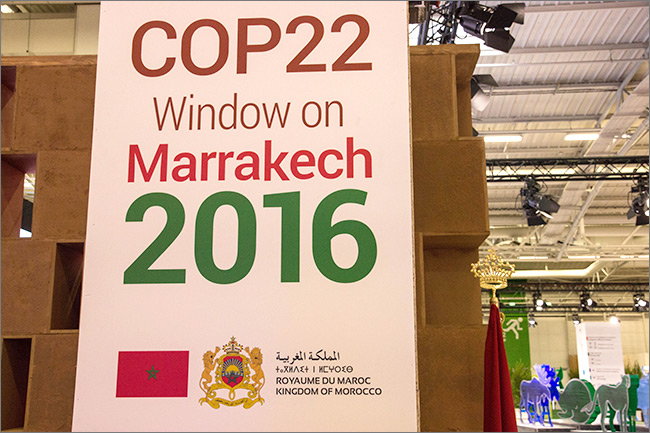
COP22 in Marrakech, Morocco, 2016 | Source: Climate Change Org

For many who had spent a better part of the decade achieving the gains (modest) that were signed into an agreement in Paris, the 2016 US election appeared as a mandate against climate action. Rejection of Barack Obama and Clinton-style globalism does implicate the future of climate action as a collective. But exactly how?

Climate debates suffered from all the failings of “Project Globalisation”. They were designed in a manner that any climate action would benefit the few winners and burden the many. Some new winners would be admitted if they signed up to the “new deal”. Climate action reeked of hypocrisy, with rich countries unable and unwilling to commit any significant amounts to support the “loss and damage” and adaptation challenges of the poor. Even on mitigation, the global commitment of a $100 billion remains implausible.

Finally, national actions are defined through a club of woolly eyed “multilateral elites”—all belonging to a Hegelian land. And all reaching the same policy prescriptions irrespective of context, capacity, capability and reality. In the age of hypermedia and an intensely participative public sphere, climate politics appeared distant, cold and undemocratic.

Marrakech points to three much needed next steps.

Climate Change, Morocco
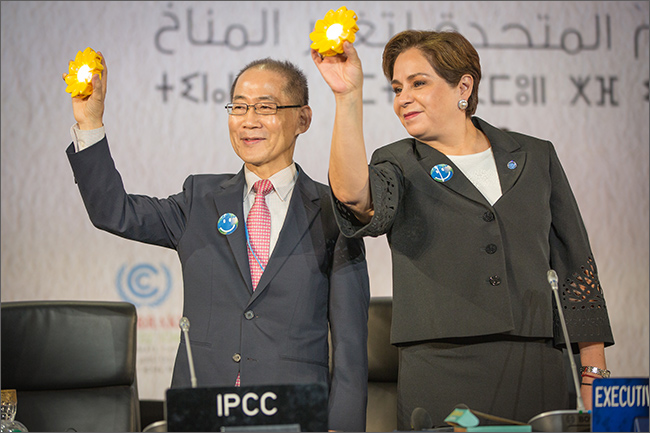
Opening Ceremony of the Marrakech Climate Change Conference | Source: UN Climate Change

First, nations matter, and any effective climate response will be national and regional. Allow them agency and choice, and do not impose solutions and alien pathways. The “rule book” to monitor national actions should be thrown out lest it be seen as another elite attempt to undermine popular will.

Second, do not allow hypocrisy to destroy the planet. If the rich are concerned for their grandchildren, they must at least guarantee decent living for the current generation of the poor. Put the $100 billion on the table. Then allow your funds and banks to invest in emerging and developing countries and begin to price innovation for the bottom of the pyramid.

Third, climate change as we conceive it, is already upon us and will not suddenly manifest itself in 2020. The rich must underwrite and take responsibility for the devastation that many confront today, and only then will they be able to enlist and seek action from others. Else, climate is a great leveller. We will all boil together, and the poor may have less to leave behind.

This commentary originally appeared in The Mint.

Standard
Uncategorized

Prospects for EU–India Security Cooperation

Samir Saran|Gareth Price| John Joseph Wilkins|Kanchi Gupta

There is a clear imperative for greater understanding between the EU and India on a range of security concerns. Until recently, this imperative has not been obvious. India’s focus has been inward-looking, predicated on the need for rapid economic growth. However, since 2014, the BJP–led government in Delhi has demonstrated a much greater emphasis on foreign policy; in 2015 the foreign secretary, Dr. S. Jaishankar, argued that ”India wants to be a leading Power rather than just a balancing Power.” And while the EU has faced a range of difficulties in recent years — among them, economic challenges since the 2008 financial crisis, terror incidents across Europe, and a surge in refugee inflows — these have increased its focus on constructing both an outward and forward–looking foreign policy.

The European Union and India have been engaged in a strategic partnership since 2004. The 13th Summit, held in March 2016, directly advocated advancing cooperation in the field of security. Counter-terrorism had been an element of EU-India engagement since the strategic partnership was agreed. Other thematic issues raised at the 2016 Summit as subjects for dialogue and engagement included cybersecurity, counter-piracy and non-proliferation. In terms of regional concerns,the EU and India stressed their shared concerns or interests regarding a number of countries or regions, including Afghanistan, Pakistan, Nepal, North Korea, Iran and West Asia/the Middle East — in particular Syria.

Chatham House, the EU Institute for Security Studies, and Observer Research Foundation held a closed–door workshop and a public conference on ‘Prospects for EU–India Security Cooperation’ in September 2016 exploring the scope for engagement on three of these issues:West Asia, maritime security, and counter-terrorism and radicalisation. The workshop discussed the potential contours of EU–India collaboration, as well as the hurdles to their enhanced engagement. Each of the issues is of paramount concern both to India and the EU, but each of these differ in terms of existing cooperation and the underlying interests. The degree of cooperation feasible will be contingent both on political will and capacity, but for each issue ORF established a range of potential options for collaboration, ranging from specific and granular opportunities for shared learning, to more aspirational dialogues seeking to establish shared frameworks for collaboration in dealing with such challenges.

West Asia has historically been a bridge connecting Europe with Asia. As their shared periphery, developments in the region — including conflict — have a severe effect on both the EU and India.Both rely on petrochemical imports from the region; the EU is suffering from inflows of refugees escaping conflict; millions of Indians work in West Asia. The current economic downturn is affecting the livelihood of many Indians. And India has had to evacuate its own (and other South Asian) nationals from, inter alia, Yemen, Lebanon and Libya in recent years.

India’s engagement with West Asia is self-evidently on an upward trend highlighted, for instance, by the recent decision to make the Crown Prince of Abu Dhabi the guest of honour at India’s 2017 Republic Day celebration. Yet neither the EU nor India conceive of each other as primary interlocutors in relation to West Asia. This may reflect both the geopolitical reality and the staid policy approaches on both sides. The interests of the EU and India are more likely to be converging than currently framed and understood. Initiating dialogue now, to understand better the two sides’ interests in West Asia, will pay dividends in the years to come when close collaboration will be inevitable.

There is significant scope for better cooperation on the issue of maritime security. The Indian Ocean is the venue for the EU’s most successful military mission to date — EU NAVFOR or Operation Atalanta, coordinating anti–piracy operations off Somalia with a host of countries including India. EU engagement in the Indian Ocean also includes EUCAP Nestor, the financing of the Indian Ocean Commission and the EU–CRIMARIO project intended to improve maritime security in the entire region. At the very least, maritime security offers scope for enhanced dialogue; at the more aspirational level, the EU and India — sharing interests in maintaining open sea lanes of cooperation — could work together promoting the UN Convention on the Law of the Sea as the basis of maritime governance. Further, while Operation Atalanta has proved successful thus far, piracy will remain a threat until the root causes — on land rather than at sea — have been tackled. Both sides have a palpable interest in stabilising Somalia and other fragile coastal geographies.

The emergence of piracy in the Western Indian Ocean has provided a unique opportunity for navies from within and outside the region to join forces in addressing a concrete security threat. There is a need to seize the momentum and build upon this positive experience to foster operational cooperation also in other maritime security domains or in combatting sea-borne crime such as smuggling and IUU fishing. The Indian Ocean Rim Association (IORA) is the primary multilateral forum promoting stability and rules-based conduct in the Indian Ocean. The experience, interests and presence of the EU in the Indian Ocean could make the EU a valuable dialogue partner of IORA.

Counter–terrorism has been a subject for EU–India discussion since the strategic partnership was forged. The joint declaration at the 2016 summit highlighted the determination of the EU and India to work together to tackle terrorism. Cooperation is extant in areas such as financing terrorism, designating groups as terrorist and working together in the UN system.

Yet there is scope to deepen cooperation. The EU is committed to helping India’s Smart Cities initiative. This offers great scope to focus on resilience building — whether in relation to disasters or terrorist attacks. Radicalisation is another area in which the EU and India could work together. For the EU, domestic Islamic militancy is a relatively new phenomenon — until the attacks in Europe of 2004 and 2005, it had been seen as a foreign policy concern rather than an internal European problem. Despite having a Muslim population of more than 180 million, Indian Muslims have been relatively immune from radicalisation, certainly in contrast to European Muslim populations. Understanding the causes of this could offer insights to the EU. At the same time, there are growing incidents of radicalisation in India, though from a low base. Are there lessons from European understanding of the process of radicalisation — notably online radicalisation — for India? Existing cooperation on cybersecurity could feed into this shared understanding. Countering Violent Extremism online will remain a common challenge for all liberal societies and working together to share, learn, and discover technologies and methods to respond to this contemporary threat must be part of the agenda.

EU and India are only now beginning to appreciate the importance of the other,when engaging with global security challenges. The EU brings a range of experiences to the table that are relevant for India. The EU recognises that today’s security challenges require a full spectrum approach — pure military solutions rarely work. The EU played a pivotal role in resolving the Iranian nuclear issue. And while India and the EU may approach issues — such as the challenges facing West Asia — from different perspectives, initiating dialogues and conversations to better understand these different perspectives now will prove beneficial, as India’s global role becomes more apparent.

Recommendations

West Asia

  • The EU and India have clear-cut complementarities in regard to peacekeeping operations, under the auspices of the United Nations. There is scope for engagement both at a Track 1.5 and a Track II level, to explore concrete options for collaboration.
  • India has proven highly competent in evacuating its own and third–country nationals from West Asia. The EU and India should establish an official level working group to share best practises on evacuation and explore avenues for a cohesive approach.
  • The EU and India should initiate an annual Track II dialogue to deepen understanding of synergies and divergences in their interests and approaches, and suggest common solutions to mitigate and manage the conflicts in West Asia.
  • Other potential areas for greater collaboration would be the development of energy infrastructure projects, greater coordination with the respect to the developments in Afghanistan (where both the EU and India have similar objectives), and third–party mediation, for instance between Saudi Arabia and Iran.

Maritime security

  • The EU and India should establish a regular high–level, official dialogue on maritime security within the strategic partnership to build trust and explore avenues for further cooperation. This could include SAR/HADR operations, tackling sea-borne crime such as smuggling or IUU fishing, and potentially joint maritime or evacuation exercises.
  • To improve maritime security in the Indian Ocean, the EU and India should cooperate on promoting Maritime Situational Awareness — building human and technological capacity on information sharing, maritime surveillance, search and rescue missions, and data collection — bilaterally, as well as with other countries of the Indian Ocean rim.
  • There is a need for a comprehensive, multilateral maritime security and governance regime for the Indian Ocean. Existing regional organisation, with IORA at the forefront, should include discussions on maritime security in view of building such a regime in the future. Given its experience, sustained interest, presence, and involvement in the Indian Ocean, the EU could become a valuable dialogue partner of IORA.
  • There is scope for enhanced joint scientific research on maritime issues, potentially under the remit of the EU’s Blue Growth initiative; a long–term strategy to support sustainable growth in the marine and maritime sectors.

Counter-terrorism and radicalisation

  • The EU and India have agreed to share experiences of their response to terrorist attacks. Under its support for India’s ‘Smart Cities’ initiative, building urban resilience to terrorist attacks and other disasters, should be a primary objective within the initiative.
  • There is scope for enhanced understanding of why India has proven to be relatively immune from radicalisation. In addition, there is scope for the EU to engage with India on its learnings regarding the causes of radicalisation. In particular, online radicalisation is a growing challenge, and India’s fast–growing number of smart phone users provides cause for concern; India has the third highest number of Internet users in the world. Similarly, there is scope for greater understanding and collaboration between the EU and Indian approach towards countering violent extremism.
  • The EU and India should launch a dialogue to discuss approaches to rogue states, and terrorist groups and individuals. EU and India must develop shared understanding and basis for identifying such ‘states’, the process and basis for sanctioning them and thereafter measuring the effectiveness of targeted sanctions.
  • There is scope for greater functional cooperation: this could involve developing common situational awareness and identification of terrorist groups and coordinating measures aimed at preventing terror financing and the movement of terrorists. Furthermore, there is at the minimum, potential for the exchange of best practices including those pertaining to deployment of new technology and tools.

Read the full issue here.

Standard
Uncategorized

जलवायु के जंजाल से कोयले को अभी मुक्त् रखने की जरूरत

Samir Saran|Vivan Sharma

जलवायु परिवर्तन रोकने की आड़ में रचा जा रहा है’कोयला पाखंड’

पेरिस जलवायु शिखर सम्मेलन से पहले भारत ने जलवायु परिवर्तन को धीमा करने और इसे अनुकूल बनाने के उद्देश्‍य से 2 अक्‍टूबर को राष्ट्रीय स्तर पर निर्धारित अपने अभीष्‍ट योगदान (आईएनडीसी) की बाकायदा घोषणा कर दी। भारत ने अपनी कार्बन उत्‍सर्जन तीव्रता को वर्ष 2005 के स्‍तर की तुलना में वर्ष 2030 तक 33 से 35 फीसदी तक घटाने का इरादा व्‍यक्‍त किया है। वैसे तो अनेक हलकों में इस प्रतिबद्धता की भूरि-भूरि प्रशंसा की गई है, लेकिन हरियाली के पैरोकारों ने अटकलों के ठीक अनुरूप ही भारत कीस्वच्छ ऊर्जा संबंधीदुष्कर महत्वाकांक्षा को नजर अंदाज कर दिया है औ रइसके बजाय कोयले पर भारत की निर्भरता पर अपना ध्यान केंद्रित किया है।अत: अब समय आ गया है किइन विशेषाधिकार प्राप्त ‘हरियाली के पश्चिमी पैरोकारों’के ‘कोयला पाखंड’ को बेनकाब कर दिया जाए।

भारत की कुल ऊर्जा खपत चीन, अमेरिका, यूरोपीय संघ और ओईसीडी के मुकाबले कहीं भी नहीं ठहरती है।जलवायु परिवर्तन से जुड़ी वार्ताओं में भारत मानव विकास के लिए ऊर्जा तक पहुंच की केन्द्रीयता को निरंतर प्रतिबिंबित करता रहा है। इन वार्ताओं में भारत के प्रामाणिकरुख की पुष्टि विभिन्‍न आंकड़ों जैसे किऊर्जा तक पहुंच और मानव विकास सूचकांक (एचडीआई) के बीच के सकारात्मक सह-संबंध से भी होती है।

जीवन रेखा ऊर्जा

वैसे तो अनेक अनुमानों में यह बताया गया है किविकास लक्ष्यों को पाने के लिए कितनी ऊर्जाकी जरूरत है(हम इसे ‘जीवन रेखा ऊर्जा’ कहते हैं), लेकिन एक दिलचस्प बेंचमार्क 2000-वाट (डब्ल्यू) वाली सोसायटी से जुड़ा हुआ है, जोस्विट्जरलैंड के एक अनुसंधान समूह के निष्कर्षों पर आधारित है।अनुसंधान में कहा गया है कि प्रति व्यक्ति 2000-वाट ऊर्जा का एक बुनियादी स्तर हैजिसका वास्‍ता आवास, गतिशीलता, भोजन, खपत (विनिर्मित वस्तुओं) और बुनियादी ढांचागत सुविधाओं से है। विदेश संबंधों पर यूरोपीय परिषद के लिए एक आगामी प्रपत्र मेंहमने यह दलील दी है कियदि जीवन रेखा ऊर्जा संबंधी जरूरतों को पूरा करने की दिशा में कोयले की खपत के लिए भारत को दी गई ‘गुंजाइश’ नाममात्र भी न्यायसंगत है,तो भारत को विकास और तरक्‍की से जुड़ी अपनी आकांक्षाओं के लिए समझौता करने की कतई जरूरत नहीं है।

औसतन, अमेरिकी नागरिक कोयले अर्थात ‘अप्रिय ईंधन’का उपयोग करते हुए इस जीवन रेखा ऊर्जा बेंचमार्क की लगभग पूर्ण सीमा तक उपभोग करते हैं। वहीं, दूसरी ओर भारत कोयले के जरिएइस बेंचमार्क के केवल 19 प्रतिशत का ही उपभोग करता है।वास्तव में, ओईसीडी देशों के नागरिकों कोगैर-ओईसीडी देशों की तुलना में 2000-वाटवाले बेंचमार्क के सापेक्षअपनी ऊर्जा जरूरतों का एक बहुत बड़ा हिस्‍सा कोयले से प्राप्‍त होता है।

उल्लेखनीय है कि वर्ष 2014 में भारतीयों का औसत उपभोग अमेरिकियों की औसत कोयला खपत का लगभग 20 प्रतिशत और ओईसीडी की जनता की औसत कोयला खपत का लगभग 34 प्रतिशत आंका गया था।हालांकि, विकसित देश इस बात को लेकर काफी चिंतित हैं कि जहां एक ओर वे प्रति व्यक्ति कोयला खपत को वित्तीय संकट से पहले के स्तरकी तुलना में कम करने में कामयाब रहे हैं, वहीं दूसरी ओर भारत में इसी अवधि के दौरान कोयले की खपत बढ़ गई है।अपने विश्लेषण मेंहमनेइस ओर ध्‍यान दिलाया है कि जिस तरह से वित्‍तीय संकट के बाद विकसित देशों में कोयले की खपत में आई कमी इस तथ्‍य की पुष्टि निश्चित तौर पर नहीं करती है किवे अब जलवायु के प्रति कहीं ज्‍यादा ‘जिम्मेदार’हो गए हैं,ठीक उसी तरह से भारत में कोयले की खपत में दर्ज की गई वृद्धि उसकी ‘लापर वाही’को कतई प्रतिबिंबित नहीं करती है।

वित्‍तीय संकट के बाद नजर आ रहे दो अहम रुझानों से इस तथ्‍य को कहीं बेहतर ढंग से समझाया जा सकता है। पहला, जहां एक ओर विकसित देश ऊर्जा की खपत को पूर्णरूपेण कम करने में जुट गए हैं, वहीं दूसरी ओर विकासशील देश ऊर्जा की खपत को बढ़ाते रहे हैं। हालांकि, यह गति धीरे-धीरे कम हो रही है।दूसरा, जहां एक तरफ विकसित देश प्राथमिक ऊर्जा खपत के मुकाबले कोयले की खपत में कहीं ज्‍यादा तेजी से कटौती कर रहे हैं, वहीं दूसरी तरफ विकासशील देशों में प्राथमिक ऊर्जा खपत के मुकाबले कोयले की खपत में कहीं ज्‍यादा तेजी से वृद्धि हुई है। इससे साफ जाहिर है कि औद्योगिक खपत (विनिर्माण और नौकरियां) विकासशील देशों के मामले में जीवन रेखा खपत मैट्रिक्स का एक अहम हिस्सा है।

विकास व तरक्‍की की कड़ी

अनेक वित्तीय संस्थानों जैसे कि अमेरिकी एक्जिम बैंक ने कोयला आधारित विद्युत उत्पादन परियोजनाओं का वित्त पोषण बंद कर दिया है। विश्व बैंक भी इसी दिशा में आगे बढ़ता नजर आ रहा है। हालांकि, कोयले की खपत विकासशील देशों में बढ़ती जा रही है और ऊर्जा के उत्‍पादन स्‍तर को बढ़ाने के लिहाज से कोयला आधारित ऊर्जा ही अब भी सबसे व्यावहारिक विकल्प है।यह प्रवृत्ति आर्थिक विकास को जीवन रेखा ऊर्जा से अलग कर देती है और विकास के भीतर तरक्‍की के केंद्रीय लक्ष्य को एक किनारे पर रख देती है।

भारत की स्थिति न तो प्रति व्यक्ति कोयला खपत के मामले में विकसित देशों की भांति है और न ही उसकी तुलना चीन से की जा सकती है।वास्तव में, हमने तो यह बाकायदा दिखा दिया है कि भारत विकसित देशों की तुलना में 2000-वाटबेंचमार्क के कहीं ज्‍यादा बड़े हिस्‍से को ‘स्‍वच्‍छ’ ईंधनों के जरिए हासिल करेगा।अत: भारत के लिए इस बात की काफी गुंजाइश है कि वह अक्षय ऊर्जा पर अपने विशेष जोर को तेजी से आगे बढ़ाने का सिलसिला जारी रखते हुए अपनी कोयला खपत को बढ़ाए।और यह ठीक वही स्थिति है जिसे भारतीय आईएनडीसी प्रतिबिंबित करते हैं।

भारत ने वर्ष 2022 तक 175 गीगावाट की नवीकरणीय ऊर्जा क्षमता हासिल करने का लक्ष्य रखा है और इसके साथ ही उसने ‘ईंधनों की आपूर्ति सुनिश्चित होने’ पर 63 गीगावाट परमाणु ऊर्जाप्राप्‍त करने कावादा किया है।भारत भी उन चुनिंदा विकासशील और विकसित देशों में शामिल होगा जो अपनी जीवन रेखा ऊर्जा जरूरतों का एक बड़ा हिस्सा गैर-परंपरागत स्रोतों से हासिल करेगा।

इस बात पर विशेष जोर देने की जरूरत है किअपनी ऊर्जा खपत को पहले ही चरम पर पहुंचा चुके विकसित देशों के विपरीत भारत को प्रति व्यक्ति 2000-वाट की जीवन रेखा ऊर्जा सभी को मुहैया कराने की कोशिश करनी चाहिए, भले ही वह इस ऊर्जा मिश्रण को स्‍वच्‍छ करने में क्‍यों न जुटा हो। भारत अपने औद्योगिक आधारको बढ़ाने, मानव विकास सूचकांक (एचडीआई) को बेहतर करने और अपनी अर्थव्यवस्था को विकसित करने के लिए कोयले की खपत के क्रम को आगे भी जारी रखेगा। इससे भारत को गैर-परंपरागत स्रोतों में भारी-भरकम निवेशकरने के लिए वित्‍तीय क्षमता हासिल होगी। भारतीय आईएनडीसी इस चिरस्थायी विरोधाभास को प्रतिबिंबित करते हैं। भारत को अगर सफलतापूर्वक पर्यावरण अनुकूल बनना है, तो उसे अपनी कोयला क्षमता विकसित करनी होगी।

विकसित देश जैसे कियूरोपीय संघ में शामिल राष्‍ट्र अपने उत्सर्जन को वर्ष 2050 तक घटाकर प्रति व्यक्ति दो टन के स्‍तर पर लाना चाहते हैं, जो आगे चलकर प्रति व्यक्ति उपलब्धकुल कार्बन‘गुंजाइश’ को प्रतिबिंबित करेगा, बशर्ते किपूरा विश्व ग्लोबल वार्मिंग को सीमित करके प्रबंधन योग्‍य स्तर पर लाने के पक्ष में हो। वैसे तो पेरिस का मार्ग इस तरह के अच्छे इरादों से प्रशस्‍त प्रतीत होता है, लेकिन यह आवश्यक है किइस धरती पर रहने वाला हर व्‍यक्ति समुचित कार्बन प्रोफ़ाइल हासिल करने की ओर आगे बढ़ना शुरू कर दे। इसके दो स्पष्ट प्रभाव होंगे।

पहला, भारत जैसे बड़े विकासशील देशों को नवीकरणीय ऊर्जा के तय मानकों मेंअवश्‍य ही उतना निवेश करना चाहिए, जो विकसित देशों से मेल खाता हो। दूसरा, विकसित देशों को अवश्‍य ही प्रति व्यक्ति कोयलाखपत को घटाकर उस स्‍तर पर लाना चाहिए, जोकोयले के माध्‍यम से भारत की भावी जीवन रेखा खपत के बराबर होगा।

आसान शब्दों में कहें, तो जब भी एक नया कोयला संयंत्र भारत में लगे, तो ओईसीडी में एक कोयला संयंत्र को बाकायदा बंद कर दिया जाना चाहिए।यदि कोयले के उपयोग को स्वच्छ स्रोतों से प्रतिस्थापित किया जा सकता है, तो यूरोपीय संघ और अमेरिका में करोड़ों टन की कोयला क्षमता को बेहद आसानी से निपटाया जा सकता है। भारत अपनी संभावित जीवन रेखा ऊर्जा जरूरतों के पांचवें से भी कम हिस्‍से को पूरा करने के लिए कोयले का उपयोग करता है,जबकिओईसीडी के सदस्‍य देश अपनी दो-तिहाई ऊर्जा जरूरतों को पूरा करने के लिए इस ‘अप्रिय’ ईंधन का उपयोग करते हैं। अत: अब समय आ गया है कि हम मिल-जुलकर कुछ ठोस तय करें। बेशक, हम ऐतिहासिक जिम्मेदारी लेने की सलाह नहीं दे रहे हैं। हम केवल सुरक्षित भविष्‍य के लिए कंधे से कंधा मिलाकर चलने की सलाह दे रहे हैं।

यह टिप्पणी मूल रूप से The Hindu में प्रकाशित हुई थी।

Standard