BRICS, Columns/Op-Eds, Uncategorized

After Doklam, India and China must begin anew at the Xiamen BRICS meet

India will have to learn the fine art of staring down the dragon to preserve its political space, while embracing China for some important economic opportunities. At Doklam, it did the former; will a different India turn up at BRICS?

Hindustan Times, September 3, 2017, Opinion

Original link is here

pm-modi_32f6a540-8f0f-11e7-a11b-07a9009e9c44.jpg

PM Modi with Russian President Vladimir Putin, Brazilian President Dilma Rousseff, Chinese President Xi Jinping and South African President Jacob Zuma after the welcome ceremony at the 7th BRICS Summit in Ufa.(PTI)


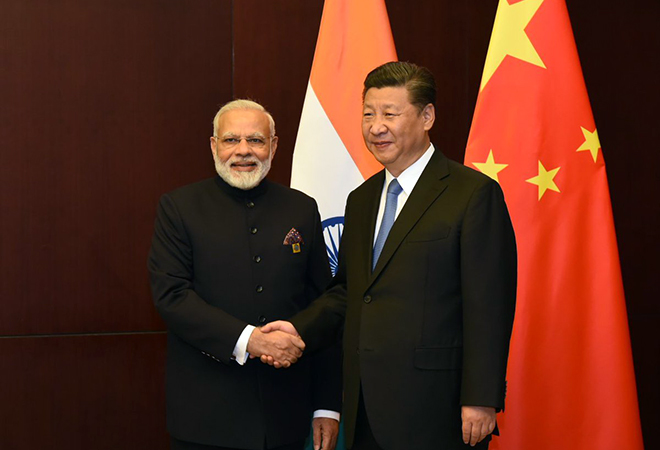
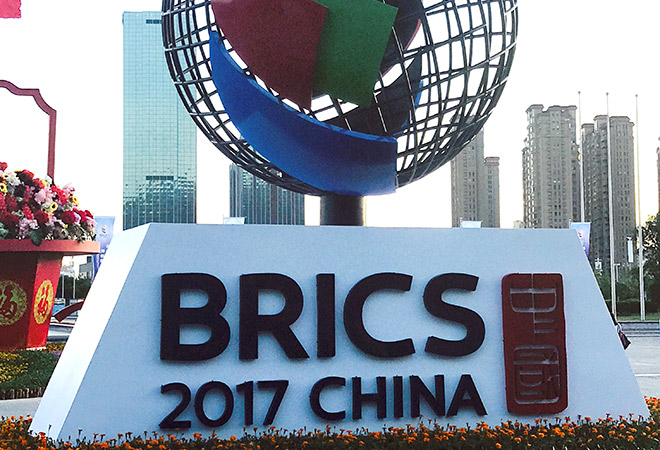
Leaders of Brazil, Russia, India, China and South Africa (BRICS) have gathered this past weekend for the ninth annual BRICS summit in Xiamen, China. The prolonged Himalayan standoff between India and China will cast its shadows on this meet and will certainly add a new dimension to discussions on the future of this plurilateral.

The BRICS emerged out of a global order dominated and managed by the United States (US) post the break of the Soviet Union. The US led institutions catalysed global trade and financial flows, which in turn also helped in the organic growth of most of the BRICS economies. Despite their growth, their marginal role in management of key global institutions created an undesirable asymmetry in world affairs. BRICS came about as a vehicle to respond to this, and together they hoped, they would be able to loosen the vice-like grip the Atlantic system had on existing governance institutions.

There were two unstated principles that shaped the ethics of the BRICS formation. First, each nation placed a premium on sovereignty and its importance in the conduct of world affairs, and second, each state sought greater pluralism and equity in decision-making processes in a multipolar world.

The China and India standoff at Doklam compels us to revisit these organising principles. The Doklam incident was a contest around sovereign concerns. These concerns are rooted in history and muddied by China’s determination to implement a political and economic arrangement across Asia that is insensitive to the territorial rights of India. The Belt and Road Initiative (BRI) and the associated China Pakistan Economic Corridor (CPEC) are but thinly veiled attempts to shape an Asian order that plays by the Chinese rulebook alone. While BRICS symbolises a multipolar world, BRI and CPEC are the harsh face of an undesirable and unipolar Asia.

Further, China’s latest attempt at creating a ‘BRICS Plus’ platform, comprised of states who happen to be key actors in the BRI, makes it clear that it sees BRICS as an adjunct of the BRI and merely as a vehicle to catalyse its larger ambitions.

These events make it clear that we must shed the romantic notion that ideological convergence is possible within BRICS. Each member must see the group for what it is—a twenty first century ‘limited purpose partnership’ among states to achieve specific sets of outcomes. There is nothing inherently improper about such an alliance, however, if progress is to be made, it will be predicated on creating effectively designed institutions.

The most successful BRICS endeavour has been the creation of the New Development Bank. The time has come to build on this initiative and focus on creating more institutions for greater cooperation in issues such as finance, urbanisation, sustainable development and the digital space. This could include setting up a BRICS credit ratings agency, a BRICS research institution and institutionalising the process of managing the global commons such as the oceans and outer space.

It is obvious that each of the BRICS members will have their own reasons for being at Xiamen. Russia continues to see it as a geopolitical bulwark against the US, all the while tacitly acquiescing to Chinese leadership. South Africa will present itself as the leading voice of the African world and will raise issues of peace and development for the continent at the summit, while Brazil, which is undergoing a period of domestic turmoil, is unlikely to be too innovative or demanding. China is far more certain of what it seeks.

For India, this year’s summit becomes important. India will have to learn the fine art of staring down the dragon to preserve its political space, while embracing China for some important economic opportunities. At Doklam, it did the former; will a different India turn up at BRICS? Forums like Xiamen allow India and China the chance to begin anew.

As we enter the second decade of BRICS, Xiamen would have to be the arena where the members recommit to upholding the founding principles of the BRICS. Thereafter, they must chart a new roadmap for greater institutionalisation of the group’s interests.

Samir Saran is vice president at the Observer Research Foundation and tweets at @samirsaran

The views expressed are personal


Standard
Uncategorized

Privacy Inc.: The one where Supreme Court saved Aadhaar

Samir Saran

The Supreme Court’s recent 547-page verdict affirming the fundamental right to privacy of Indians should not come as news to technology companies. The court merely codifies what should have been an article of faith for internet platforms and businesses: the user’s space is private, into which companies, governments or non-state actors must first knock to enter.

The technical architecture of Aadhaar and its associated ecosystem too will now be tested before a legal standard determined by the court, but the government should see this judgment for what it is – a silver lining.

The verdict bears enough hints to suggest the Supreme Court sees the merits in a biometrics-driven authentication platform. In fact, Justice Chandrachud impresses upon the possibility of better governance through big data, highlighting that it could encourage ‘innovation and the spread of knowledge’, and prevent ‘the dissipation of social welfare benefits.’

The court’s words should spur the government to create a “privacy-compliant Aadhaar”, but this requires a serious and systematic thinking on the part of its visionaries and architects. Private sector too will have to put “data integrity” and privacy at the core of their consumer offerings and engagement.

To begin with, the government must account for Aadhaar’s biggest shortcomings — its centralised design and proliferating linkages.

A central data base creates a single, and often irreversible, point of failure. The government must decentralize the Aadhaar database. Second, Aadhaar must be a permission-based system with the freedom to opt-in or out, not just from the UID database but from the many services linked to it. This must be a transparent, accessible and user friendly process.

With a “privacy-compliant” Aadhaar, the government would not merely be adhering to the Supreme Court verdict. It would also be on the verge of offering the world’s most unique governance ecosystem, a feat that more technologically advanced nations such as America and China have failed to achieve.

Take Beijing’s efforts in this space, for instance. In 2015, the government of the People’s Republic of China unveiled a national project to digitize its large, manufacturing-intensive economy and to create a digital society. The “Internet plus” initiative, as it was called, aimed for the complete “informationisation” of social and economic activity, and harvest the data collected to better provide public and private services to citizens. China has no dearth of capital or ICT infrastructure, but the ‘Internet plus” initiative has struggled to take off in any significant way, nor has it found any international takers. The project suffered from a fundamental flaw: Beijing believed by gathering information — from personally identifiable data to more complex patterns of user behaviour — the state would emerge as the arbiter of future economic growth, consumption patterns and indeed, social or political agendas.

Supreme Court, Digital Frontier, Judgement, Chandrachud

But trust in the digital ecosystem, as the failed Chinese government attempt at technology enabled social-engineering shows, can only be built by addressing those needs which extend to the demand for freer expression, political dialogue and economic mobility. On account of its closed governance model, Beijing has arguably failed to generate such trust among internet users. China’s failure to move forward on its grand digital project bears lessons for India.

If a project like Aadhaar is to succeed, its underlying philosophy must be premised on two goals: first, to increase trust and confidence in India’s digital economy among its booming constituency of internet users, and second, to ensure that innovations in digital platforms also result in increased access to economic and employment opportunities.

A privacy compliant Aadhaar creates trust between the individual and the state, allowing the government to redefine its approach to delivering public services. The Aadhaar interface, that UPI and other innovations rely on, could well generate a ‘polysemic’ model of social security, where the same suite of applications cater to multiple needs such as digital authentication, cashless transfers, financial inclusion through a Universal Basic Income, skills development and health insurance.  But such governance models should not be based on a relationship of coercion or compulsion. It is heartening that the country’s political class has embraced the court verdict, with BJP’s leaders like Amit Shah affirming their commitment to create a “robust privacy architecture” and the Srikrishna Committee’s efforts to recommend one.

A key reform missing in current debates about the UID platform is the government’s accountability for its management. Aadhaar, to this end, should have a chief privacy officer — or indeed a “privacy ethicist” not unlike the major technology companies —who will be able to assess complaints, audit and investigate potential breaches of privacy with robust autonomy.

An Aadhaar based ecosystem which is both privacy-compliant and has built a bottom-of-the-pyramid financial architecture would inspire confidence in other emerging markets to also adopt the platform, with Indian assistance.

Companies and platforms must internalise that promise of black box commitments towards privacy and data-integrity may no longer suffice. These commitments must be articulated at the level of the board and communicated to each user that engages with them. Overseers of data integrity must be appointed to engage with users and regulators in major localities.

India’s digital growth story must be scripted by its people and for its people. The Indian state, however, has an important role to play here — it should catalyse technology platforms that provide reliable, affordable and qualitative internet access to citizens. But most importantly, the state should articulate a bold political, legal, and a philosophical narrative that can drive innovations, both by public and private organizations, in India and abroad. With a privacy compliant Aadhaar, this narrative could be one of empowerment, inclusivity and prosperity enabled by digital networks.

(A shorter version of this article was published in Economic Times)

Standard
Uncategorized

Why the dragon would be a bigger loser in a clash with the elephant

Samir Saran

The standoff at Doklam is less a boundary incident involving India, China and Bhutan, and more a coming together of geopolitical fault lines.

 Xi, Modi, Narendramodi, dragon, tiger

The ongoing standoff at Doklam Plateau is less a boundary incident involving India, China and Bhutan and more a coming together of geopolitical faultlines in Asia that were long set on a collision course. China’s wanton aggression, and India’s refusal to be intimidated by it, stem from the different realities they live in. China believes it is destined to lead Asia, and indeed the world, by a process in which other actors are but bit players. India is strongly convinced of its destiny as a great power and an indispensable player in any conversation to re-engineer global regimes.

It is against the backdrop of these competing ambitions that China’s provocations on the Doklam Plateau must be viewed. As the race to establish an Asian order — or at least determine who gets to define it — intensifies, China will test Indian resolve and portray it as an unreliable partner to smaller neighbours. The current differential in capabilities allows China to provoke and understand the limits of India’s political appetite for confrontation, and create a pattern of escalation and de-escalation that would have consequences for New Delhi’s reputation. Its border transgressions are aimed at changing facts on the ground, and allowing for new terms of settlement. For China to engage in a game of chicken, however, would be counterproductive.

The current differential in capabilities allows China to provoke and understand the limits of India’s political appetite for confrontation, and create a pattern of escalation and de-escalation that would have consequences for New Delhi’s reputation.

In case of an armed conflict, the bigger loser will be China. The very basis of its “Peaceful Rise” would be questioned and an aspiring world power would be recast as a neighbourhood bully, bogged down for the medium term in petty, regional quarrels with smaller countries. For India, a stalemate with a larger nuclear power will do it no harm and will change the terms of engagement with China dramatically.

Through the Doklam standoff, China has conveyed three messages. The first is that China seeks to utilise its economic and political clout to emerge as the sole continental power and only arbiter of peace in the region. Multipolarity is good for the world, not for Asia. When India refused to pay tribute in the court of Emperor Xi Jinping, through debt, bondage and political servility that the Belt and Road Initiative sought from all in China’s periphery, it invited the wrath of the middle kingdom. Confrontation was but a matter of time.

The second message from Beijing is that short-term stability in Asia does not matter to China, because it does not eye Asian markets for its growth. Through road and rail infrastructure along the Eurasian landmass and sea routes across the Indian Ocean and the Mediterranean, China hopes to gain access to an eighteen trillion dollar European market. Given this reality, no Asian country can create incentives for China to alter its behavior simply with the promise of greater economic integration.

Short-term stability in Asia does not matter to China, because it does not eye Asian markets for its growth.

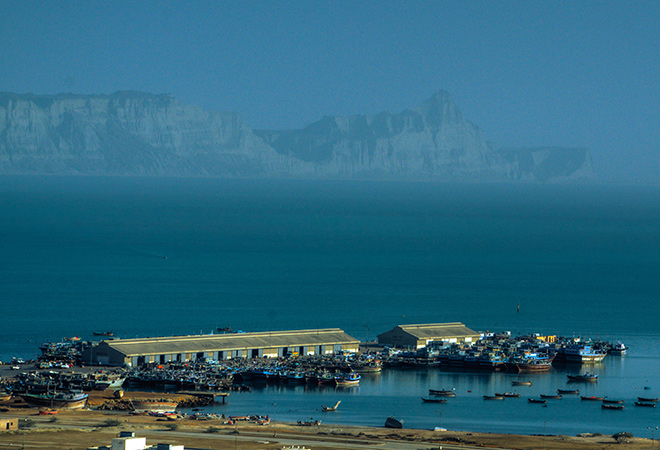
And finally, Beijing has signalled that Pax Sinica is not just an economic configuration, but also a military and political undertaking. Its aggressive posture in the South China Sea, disregard for Indian sovereignty in Jammu and Kashmir, divide and rule policy in the ASEAN region, and strategic investments in overseas ports such as Gwadar and Djibouti are all indicative of its intention to establish a Sino-centric economic and security architecture, through force if necessary. The election of Donald Trump in the United States and political divisions in Europe has only emboldened China’s belief that the reigns of global power are theirs to grab.

Given these stark messages from the eastern front, what can New Delhi do?

The options are limited. The first is to acquiesce to Chinese hegemony over Asia. In the past, India’s foreign policy has attempted to co-opt China into a larger Asian project, from Nehru’s insistence on China’s position on the United Nations Security Council to facilitating its entry into the World Trade Organisation. It is clear today that it was the wrong approach and continuing to play second fiddle to the Chinese will not only involve political concessions but also territorial ones to China-backed adversaries like Pakistan.

The second option for India is to set credible red lines for China by escalating the cost for its aggressive maneuvers around India’s periphery and to increase the cost of “land acquisition” for the Chinese.

Pakistan’s approach vis-à-vis India may prove to be enlightening in this respect. Its development of Tactical Nuclear Weapons (TNW) to offset India’s superior conventional abilities and a wide range of asymmetric warfare techniques have ensured that India is disproportionately engaged in regional affairs. For long, the Indian commentariat and diplomatic corps have believed the boundary dispute with China should be suppressed because the bilateral relationship is worth more than just territorial skirmishes. In doing so, they have normalised Beijing’s behaviour, which now allows it to turn the tables and make unsettled boundaries a ceaseless source of tension for India. It is time, therefore, to elevate the boundary dispute as a matter of primary strategic concern and to articulate options to counter Beijing’s threats on the eastern flank. It has done the former by staying away from a project that paid little heed to its sovereignty and territorial concerns. It is time to muster steel and to put together a blueprint for the latter.

China is attempting, vainly, to draw India into a conflict that it believes will prematurely invest it with the label of “first among equals” in Asia. Ironically, Beijing has failed to acknowledge that India does not have to behave like a 10 trillion dollar economy when it is not one — skirmishes, like the one at Doklam Plateau, can be swiftly and aggressively countered by India with little or no loss to its reputation. After all, it would be defending its sovereignty, and in the process, goading China’s smaller neighbours into a similar path. If China wants to be relegated to a disputed regional power, it has only to needle India into a new season of skirmishes and into exacerbating — politically, militarily and diplomatically — Beijing’s multiple land and maritime disputes in Asia.

This commentary originally appeared in NDTV.com.

Standard
Uncategorized

Time to restate the organising principles of BRICS

Samir Saran

The text of the speech delivered by ORF Vice President Samir Saran at the inauguration of the 9th BRICS Academic Forum in Fuzhou, China.

चीन, फूजौ, ब्रिक्स अकादमिक फोरम, ORF, समीर सरन, एजेंडे, भूमिका, बदलाव, विकल्‍प, संप्रभुता, सार्वभौम समानता, सम्मान, जीडीपी, सैन्य शक्ति, नई दुनिया, अगुवाई, आवश्यकता, संस्थागत, सफलता, आवश्यकता, 2016, BRICS, विकास, महत्वपूर्ण

Excellencies, colleagues and friends, members of the academic community and think tankers from the BRICS countries..

Warm greetings from the Indian academic delegation. We are delighted to be here and look forward to two days of debates, discussions and the opportunity to renew old friendships and begin new ones. On behalf of our team, I thank our hosts, the China Council for BRICS Think Tank Cooperation for the wonderful setting and immaculate arrangements, and for all the work that has gone into putting this together.

We, the BRICS Think Council met this morning to take stock of all that transpired under the Indian leadership of BRICS in 2016 and to deliberate on what we would like our governments to pursue under the Chinese Presidency. We will, at the end of the two days, put forward an outcome document that will capture our wish list flowing from the conversations that will happen here. Each of you — through your presentations and interventions will co-author this document — so I encourage all to participate vigorously in the debates that lie ahead.

This is a special year. We are meeting at the 9th Academic Forum, and at the end of this year, we will be completing 10 years of our cooperation.

The BRICS next year will be turning 10 as an institution.

As we complete the first decade of this partnership, it is perfect moment to look back and look ahead. It is perhaps time to restate the BRICS agenda, relocate the role of BRICS in the world of today — that is changing fast — and reaffirm the organising principles that brought us together.

The BRICS agenda and its role must continue to be shaped by two words: “change” and “alternative”.

We came together to change the lives of millions in our countries, and in countries around us, that have been left out of the economic mainstream and have been left behind. Their lives must change, their aspirations need to be catered to. We must consider their future to be ours. This ambition is now encapsulated in the SDG Goals and other development challenges that humanity has accepted as being vital. BRICS must lead this process with their energy and leadership, with their experience and resources and with compassion — a changed development paradigm must be at the core of the BRICS agenda for the next 10 years.

The second word we must always focus on is “alternative”. We must achieve this change through alternate pathways, one that are inclusive, democratic, participatory and sustainable. A BRICS counter-narrative, an alternative must be crafted amongst the academic community. We are unlikely to change the world if we follow the same pathway that the developed world discovered. Be it healthcare or wellness , be it migration policies, be it the way we organise our cities and fuel them, educate our people and unleash their creative energies, we will need to discover and document BRICS solutions that will offer a counter point to the knowledge regimes that define the world of yesterday. And this must be a central quest of the BRICS academic community.

As we move towards being this force of positive change, we will need to create more institutions and frameworks to make it happen. The New Development Bank, the Contingency Reserve Arrangement are just the beginning. The BRICS institutionalisation would be a pre-requisite for its success. In 2016, the Indian Presidency recognised this to be the single most important aspect of BRICS development — it proposed research institutions, rating agencies, bodies that would strengthen trade and commerce and frameworks that would deepen intra-BRICS cooperation. This project must indeed be continued under the Chinese leadership as we move to South Africa in 2018.

I mentioned that we need to relocate BRICS in the new world. Indeed it is a new world, since we last met in New Delhi, change has swept through US and Europe and more change is coming. Some of the assumptions of the past decade around trade and globalisation may no longer be valid and nationalism and petty politics seems to be a secular phenomenon.

The BRICS leadership is needed at these times.

It seems BRICS will need to be the architects and new champions of a new format of multilateralism and indeed of globalisation 2.0.

As we infuse energy and leadership into these two processes, revitalise global trade, global financial flows, movement of people and ideas and indeed challenge the disruption to the process of global integration, it will require all of us to make a new case and a new blue print — where our individual roles and collective responsibilities will need to be reaffirmed. We will need to navigate this process through our own political systems, something that clearly is not easy for some of us.

A quick note of caution, even as we witness power vacuum and leadership gap, we must resist the temptation to fill those spaces with more of the same, The hegemonic structures and actors must not be replaced by a new hegemon. The paternalistic political structures must not be now owned by a different country or group of countries, otherwise we will not be agents of change and creators of counter-narratives. We will remain the servers of status quo and prisoners to power.

It is time to restate the organising principles of BRICS as I see them. Two factors more than any other have allowed us to come together and work together over the past 10 years.

  • Respect for sovereignty of each other, and those around us, and,
  • The common demand for pluralism and democracy in the conduct of international affairs.

BRICS has always respected sovereignty and sovereign equality. It is only here at BRICS that irrespective of our GDPs and military might, each of us have equal voice, equal voting rights and plural discursive space. We have respected each others’ sovereign concerns admirably and we have served the cause of democracy in the conduct of international relations well. We have to preserve and re-serve these organising principles.

Even as we all evolve in our own ways, these must remain the core principles for BRICS. There have been some headwinds recently that have drawn my attention to these aspects. Since we are among friends, I should unhesitatingly draw your attention to these — if we lose this ethos and ethic — we lose the BRICS.

I thank our hosts once again and look forward to two days with you. Namaste.

Standard
Uncategorized

पाक और पीओके में चीन खोज रहा माकूल जगह

Samir Saran

सीपीईसी न केवल ‘परस्पर सम्मान’ के पंचशील के महान सिद्धांत की धज्जियां उड़ाएगा, बल्कि कश्मीर विवाद के किसी भी शांतिपूर्ण समाधान की सारी संभावनाओं को भी खत्म कर देगा।

CPEC, China, sovereign claim, Gwadar

ग्वादर, पाकिस्तान

स्रोत: फ्लिकर यूज़र उमैरअदीब

चीन इस सप्ताह कई देशों के राष्ट्राध्यक्षों के सम्मेलन के जरिये वन बेल्ट, वन रोड (ओबीओआर) पहल को राजनीतिक रूप से बड़े पैमाने पर दुनिया के सामने प्रदर्शित करने की जुगत में लगा है। इसे देखते हुए भारत को भी अपनी एक ठोस और मजबूत नीति बनाने की जरुरत है। पिछले दो वर्षों से भारत गौर से देख रहा है कि चीन किस प्रकार ओबीओआर के लिए राजनीतिक समर्थन पाने के लिए एशियाई शक्तियों पर डोरे डालने की कोशिश करता रहा है। भारत ने बहुत बारीकी से चीन को बता दिया है कि इतने बड़े पैमाने पर एक अंतःक्षेत्रीय परियोजना के लिए पहले एक व्यापक परामर्श किए जाने की जरुरत है।

जब चीन ने भारत की इस गुजारिश को तवज्जो नहीं दी तो भारत ने जम्मू एवं कश्मीर के उन क्षेत्रों पर — जिनसे होकर चीन-पाकिस्तान आर्थिक गलियारा (सीपीईसी) गुजरेगा-अपने खुद के संप्रभुतापूर्ण दावे को लेकर बिल्कुल सर्वोच्च स्तर पर अपनी चिंताएं जाहिर करनी शुरु कर दी।

भारत की संवेदनशीलता के प्रति चीन की घोर उपेक्षा को देखते हुए ऐसा लगता है कि ओबीओआर की आर्थिक क्षमता को लेकर कोई भी बहस अब अव्यावहारिक हो गई है। भारत ओबीओआर में शामिल हो या न हो, इस विषय पर तब तक कोई गंभीर बहस नहीं हो सकती जब तक भारत यह महसूस नहीं करता कि इस परियोजना द्वारा उसकी राजनीतिक संप्रभुता-जोकि शासन का मूल आधार है-का सम्मान किया जा रहा है। इसके बिल्कुल उलट, सीपीईसी (ओबीओआर का जीवन और उसकी आत्मा) ऐसे लहजे में भारत की क्षेत्रीय अखंडता को धमकी दे रहा है जो 1962 के बाद स अब तक नहीं देखा गया था।

भारत की संवेदनशीलता के प्रति चीन की घोर उपेक्षा को देखते हुए ऐसा लगता है कि ओबीओआर की आर्थिक क्षमता को लेकर कोई भी बहस अब अव्यावहारिक हो गई है।

चीन ने पाकिस्तान के साथ अपने आर्थिक गलियारे के जरिये जनसांख्यिकीय एवं भौगोलिक सीमाओं की रूपरेखा को नाटकीय तरीके से फिर से बनाने का प्रस्ताव रखा है। वह एक बेपरवाह और निर्लज्ज, संघर्षपूर्ण और नव-औपनिवेशिक टकराव के तरीके से दक्षिण एशिया पर कब्जा करने की कोशिश कर रहा है।

चीन इस व्यापक क्षेत्र में लगातार महत्वपूर्ण अचल परिसंपत्तियों पर कब्जा कर रहा है। वह दक्षिण चीन सागर में द्वीपों का निर्माण कर रहा है, पूर्वी चीन सागर में पड़ोसी देशों के क्षेत्रीय दावों को नकार रहा है और यहां तक कि मलक्का जलडमरूमध्य में भी और अधिक नियंत्रण स्थापित करने की जुगत में लगा है।

चीन ने वित्तीय संसाधनों के जरिये मध्य एशिया में अपना राजनीतिक वर्चस्व स्थापित कर लिया है। अब उसकी कोशिश सीपीईसी मार्ग के जरिये न केवल ग्वादर में बल्कि गिलगिट-बाल्टिस्तान में भी ऊपरी तौर पर तो केवल आर्थिक लेकिन गुप्त तरीके से सैन्य केंद्र और सैन्य आधार स्थापित करने की भी है।

पाकिस्तान चीन के संरक्षण एवं उसके धन के बदले उसे इस प्रकार के क्षेत्र सौंप देने को तैयार है। इसका सबसे स्पष्ट उदाहरण ‘जमीनी स्तर पर तथ्यों’ को बदलने के द्वारा कश्मीर विवाद का राजनीतिक समाधान ढूंढने का प्रयास है।

अगर चीन विवादित समुद्रों में पूरे द्वीप का निर्माण करने के जरिये दक्षिण चीन सागर में कामयाब हो गया तो सीपीईसी ऐसी स्थायी या अर्ध-स्थायी परियोजनाओं का निर्माण करेगा जो गिलगिट-बाल्तिस्तान में अर्थव्यवस्था एवं समाज की प्रकृति को बदल देगी। इस क्षेत्र में चीनी तथा पंजाबियों की बाढ़ सी आ जाएगी जो न केवल इस स्थान का दोहन करेंगे बल्कि साझा लाभ के लिए इसकी सभ्यता को भी नष्ट कर डालेंगे।

सीपीईसी न केवल ‘परस्पर सम्मान’ के पंचशील के महान सिद्धांत की धज्जियां उड़ाएगा, बल्कि कश्मीर विवाद के किसी शांतिपूर्ण समाधान की सारी संभावनाओं को भी खत्म कर देगा। वास्तव में, पाकिस्तान एवं चीन यह सुझाव दे रहे हैं कि इस बात पर विचार किया जा सकता है कि जम्मू कश्मीर (और गिलगिट-बाल्तिस्तान तथा संभवतः लद्वाख) को उनकी विशिष्ट आर्थिक, राजनीतिक एवं सैन्य विशेषताओं के आधार पर अलग अलग इकाइयों में जुदा कर दिया जाए।

सीपीईसी से इस आशंका को भी बल मिल रहा है कि पाकिस्तान द्वारा दी गई आर्थिक रियायत के जरिये वे क्षेत्र भी सौंप दिए जाएंगे जिसके लिए 1963 का चीन-पाकिस्तान समझौता एक पूर्व उदाहरण है। विडंबना यह है कि विवादित क्षेत्रों में आर्थिक गतिविधियों में चीन की भागीदारी ताईवान एवं तीसरे पक्षों के बीच एफटीए पर उसकी खुद की नीतिगत प्रकृति के खिलाफ है।

सीपीईसी में निवेश के मामले में ब्रिटेन एवं ईयू की मिलीभगत है। वास्तव में, चीन एशिया में पश्चिमी राजनीतिक लाभ को सीमित करने और भारत विरोधी उग्रवाद का प्रायोजन जारी करने के लिए यूरोप के धन का इस्तेमाल कर रहा है।

शिनजियांग प्रांत में चीन का कट्टरपंथी दृष्टिकोण इस बात का संकेत देता है कि सीपीईसी गिलगिट-बाल्तिस्तान का क्या हश्र कर सकता है। 2000 की जनगणना में कहा गया कि जहां शिनजियांग में स्थानीय उईघुर मुस्लिम आबादी 48 प्रतिशत के साथ सबसे बड़ी स्थानिक समूह बनी रही, हान चीनियों की आबादी 40 प्रतिशत तक जा पहुंची। 1950 के दशक में उईघुर की आबादी 90 प्रतिशत तक थी जिसे देखते हुए यह बदलाव आश्चर्यजनक था।

कहा जाता है कि आज हान चीनियों का इस प्रांत पर दबदबा है क्योंकि वे आर्थिक रूप से समृद्ध हैं और उनके पास सर्वश्रेष्ठ नौकरियां एवं सरकारी ओहदे हैं। उईघुर की संस्कृति एवं रिवाजों को कुचल कर रख दिया गया है। रमजान के दौरान उनके रोजा रखने पर पाबंदी है, मुस्लिम बच्चों को ‘उग्रवादी’ कहा जाता है और यहां तक कि उनकी दाढ़ी की लंबाई पर भी नजर रखी जाती है।

तो क्या गिलगिट-बाल्तिस्तान एैसे बदलावों का अगला पड़ाव है। पाकिस्तान ने उस नियम को समाप्त कर दिया है जिसके तहत गिलगिट-बाल्तिस्तान में बाहरी लोगों के जमीन खरीदने पर मनाही थी। इस शिया बहुल क्षेत्र में सुन्नियों का जबर्दस्त विस्तार हुआ है और पूरे पाकिस्तान से लोग आकर यहां बस रहे हैं। साउथ एशिया इंटेलीजेंस रिव्यू के अनुसार ‘जनवरी 2001 तक 1ः4 (बाहरियों और स्थानीय लोगों) की पुरानी आबादी का अनुपात बदल कर 3ः4 हो चुका था।’

सीपीईसी गिलगिट-बाल्तिस्तान दो सर्वोच्चवादी परियोजनाओं: वहाबीवाद एवं हान-वाद के संघर्षपूर्ण निकट प्रभावों का मिलन स्थल बना देगा। इन दोनो ही संप्रदायों का उद्वेश्य समुदायों का पूर्ण सामाजिक वर्चस्व कायम करना है।

यह न केवल क्षेत्र की जनसांख्यकीय संरचना को बदल कर रख देगा बल्कि गिलगिट-बाल्तिस्तान को एक स्थानिक, धार्मिक एवं सांप्रदायिक संघर्ष के एक विस्फोटक स्थिति वाली जगह में भी तबदील कर देगा।

और अंत में, संप्रभुता की चिंताओं के प्र्रति चीन की निर्लज्जतापूर्ण उपेक्षा ने भारत के साथ उसके द्विपक्षीय संबंधों की मूल आत्मा को समाप्त कर दिया है, जो लंबे समय से गैर-हस्तक्षेप, क्षेत्रीय अखंडता एवं विवादों के शांतिपूर्ण समाधान के सिद्धातों के प्रति सम्मान का आधार था। अब अगर वह आधार ही नहीं रहा तो भारतीय नीति निर्माताओं को निश्चित रूप से गंभीरतापूर्वक चीन के नेतृत्व वाली बहुपक्षीय पहलों में शामिल होने के लाभों पर फिर से विचार करना चाहिए। यही नहीं, कुछ लोग ब्रिक्स सहयोग को आगे बढ़ाने की राजनीतिक व्यावहार्यता पर भी सवाल उठा सकते हैं।

सीपीईसी भारत पर गिलगिट, तिब्बत, शिनजियांग एवं भीतरी मंगोलिया के उत्पीडि़त लोगों के लिए अप्रत्यक्ष समर्थन देने का घरेलू दबाव पैदा करेगा। यह सीपीईसी के रास्ते के एक अन्य छोटे स्टेशन बलूचिस्तान में ऐसे मुद्वों को रेखांकित करने के लिए अधिक प्रत्यक्ष हस्तक्षेप कर सकता है। जहां भारत की 2.5 ट्रिलियन की अर्थव्यवस्था किसी भी प्रत्युत्तर के अवसर को सीमित कर देती है, ये कदम भविष्य के लिए एक मानदंड के रूप में कार्य करेंगे।

वर्तमान में, यह हो सकता है कि भारत उस सीमा तक जाकर प्रतिक्रिया न जताए अर्थात अपनी संप्रभुता के उल्लंघन का जवाब इसी अनुपात में चीन की संप्रभुता का उल्लंघन करने के रूप में न दे। लेकिन चीन के नीति निर्माताओं को निश्चित रूप से भारत को उसकी क्षमता और उसके धैर्य की परीक्षा लेने के लिए विवश नहीं करना चाहिए जिससे कि वह वन बेल्ट, वन रोड ( ओबीओआर) की राह में भीषण बाधाएं न खड़ी कर दे।

यह लेख मूल रूप से टाइम्स ऑफ इंडिया में छपा था।

Standard
Uncategorized

The new rules of data application

Samir Saran

The three-way contract between the user, service provider and app provider will determine several questions in the future.

Big Data,Digital Economy,Innovation,Internet Economy,Internet of People,Internet Revolution,Jio,Technology Ecosystem
Photo: Marcin Ignac/Flickr

Long at the margins of the telecom and Internet revolutions, India is today moving towards pole position on data consumption. The recently released Boston Consulting Group — The Indus Entrepreneurs (BCG-TiE) report on India’s Internet economy suggests the country is the “second highest” in terms of mobile Internet adoption, clocking at 391 million users. India’s digital economy, according to the same report, is expected to double its value to USD 250 billion, and contribute to 7.5% of the country’s GDP in three years. Perhaps the most astonishing estimate is the projected data consumption per user: The average Indian will likely consume 7 to 10 GB per month by 2020.

Contrast this to the findings of the 2016 Ericsson Mobility Report that suggested data usage in India is slated to increase five-fold by 2021, rising to 1.4 GB per active smartphone. The five to seven times difference in projected data consumption between the Ericsson report of 2016 and the BCG-TiE one of 2017 can be attributed to a disruptive intervention and a data hungry consumer.

Jio, Reliance Industries Limited’s technology startup, provided that disruptive intervention, and is perhaps the most influential driver behind the new numbers in the BCG-TiE report. The numbers, however, are only the tip of the iceberg because there are deeper transformations that await the digital sector. Four such transformations will prompt traditional telecom companies to compete and create new revenue streams that cannot rely on connectivity alone. Concurrently, they will compel Indian regulators to rethink new “rules of the game” for catalysing what is today referred to as the “platform” economy riding on dumb pipes.

The death of voice

Telecom companies should acknowledge the reality that traditional voice-based communication is now a market utility, not a luxury. “Voice” based communication companies will be pressed to invest in new infrastructure and ecosystems that meet the demand for videos and data-driven apps. In practice, this would mean investing in infrastructure, and a new cadre of experts and engineers who can not only build platforms but respond agilely to disruptive innovation taking place over such telecom infrastructure. Unless they can create this new technology ecosystem, they will perish.

An Internet of People

Unprecedented data connectivity in the hands of half a billion (and growing) Indians will create an “Internet of People”, with each user signifying multiple opportunities to generate value for the platform economy. The Indian government’s flagship Digital India programme is perhaps the biggest public sector effort anywhere in the world to create such an ecosystem. The “Internet of People” in turn gives rise to a major challenge: will the innovations for Indians be created and hosted in India, or will the biggest platforms all be based abroad, leaving little room for the Indian platform economy to grow?

As custodians of data, Indian businesses should build capacities for Big Data analytics, create tailored services and products for local consumers in local languages, and in the process, generate employment, unleash entrepreneurial spirits, and indeed, catalyse technology-driven social transformation.

The individual is therefore the biggest driver of India’s platform economy.

In his remarks at a recent conference, the Chairman of RIL Mukesh Ambani offered a way to promote Indian entrepreneurship at the local level. If data is the new currency, he argued, businesses must aim to keep it within India. “Keep in India”, as he phrased the objective, would be aimed at ensuring innovation by Indian companies at the app layer, expanding the breadth and depth of the platform economy.

Unlike iterations for data localisation made by security officials or regulators, Mr. Ambani pitched “Keep in India” as a business proposition, arguing that data is the bedrock for value generation and innovation.

Policies for the platform economy

As India moves to a 10 trillion dollar GDP by the early 2030s, the fuel of choice will be “bits and bytes”. If data is indeed the new oil, how is India prepared to secure this valued commodity? Regulatory questions around cybersecurity and data protection as it relates to civilian networks in India remain woefully unaddressed. Policy debates in this space have been “principle-heavy”, seeking a golden median for regulation (say, for encryption or net neutrality) that can be emulated nationally. Instead, digital economy regulation should be “function-heavy”, prescribing rules of conduct for businesses and governments based on the end uses that data is deployed for.

The three-way contract between the user, service provider and app provider will determine questions like: Who shares access to data? Can service providers innovate as nimbly as small start-ups providing applications on their platforms? How should applications be priced, and should this be reflected in data tariffs? Some of these questions are already part of the ongoing debate over affordable digital access in India.

Jio is only one example of the disruption that is set to reverberate across the digital sector in India. That a company like Reliance can bring its considerable resources to bear on a digital enterprise definitely sets Jio apart from others. But the reality is that its digital infrastructure will generate little to no value for Jio, its nearest competitor or the next entrant into this sector. Innovation at the top, at the level of the platform, will expand the digital economy pie in India. Already, Jio has emerged as a big contributor to Facebook’s latest quarterly revenues from Asia. How can Indian platforms avail the same benefits? It is crucial that India’s businesses, entrepreneurs and regulators train their sights on the application of data, rather than the tubes that deliver them to consumers.

A short version of this article appeared in the Economic Times.

Standard
Uncategorized

The Future of the Indian Workforce

Samir Saran|Vivan Sharma

The informal economy is growing in India, and that may be a good thing. Even as policy-makers around the world attempt to grapple with challenges linked to labour productivity and ageing, India’s circumstances are unique. By 2030, when most major countries will have middle-aged or elderly workforces, India will still be young. Around 36% of the Indian population in 2011-12 was 17 years or younger and around 13% was between 18 and 24 years (Table 3.3). The informal economy also accounted for nearly half of the employment for those between 18 and 24. Therefore, the discussion on the future of India’s informal workforce must be brought to the forefront when discussing growth, employment, sustainability and poverty eradication efforts.

Read the full paper here.

This paper has been published in the OECD Library under Chapter 3 – ‘Risks and Opportunities for Inclusive Societies in Developing and Emerging Countries’ of the book titled, ‘ Beyond Shifting Wealth: Perspectives on Development Risks and Opportunities from the Global South’. 

Standard
Uncategorized

The next chapter in Internet governance

Samir Saran

Once cradled by global ideals, the multistakeholder community that manages the global commons of cyberspace must now be nurtured by local realities.

 civil society, advocates, not-for-profit organisations, Internet governance, multistakeholder community
Photo: Eric Bridiers/CC BY-ND 2.0

The inclusion of “civil society” — an umbrella group of activists, advocates, not-for-profit organisations, and even the academia — in Internet governance ranks among the most significant achievements of this decade in international relations. For a while, it appeared the “global, multistakeholder community” that drove normative processes like the 2014 NetMundial conference in Brazil, would stitch together rules for managing the global commons of cyberspace.

That assumption today stands on shaky ground. If multistakeholder models of Internet governance were itself a product of globalisation, its future appears uncertain in this current climate of “de-globalisation” and localism.

So, if states and strongmen have reclaimed political authority over national governance, why would they allow digital economies to function outside their remit? What’s more, these popular political leaders have discredited the private sector, which was expected to underwrite the global expansion of digital networks.

Today, companies have neither the appetite nor the legitimacy to incubate such governing platforms. Instruments of globalisation like the Trans-Pacific Partnership were supported by big technology corporations, but as the TPP’s demise shows, the mood across much of the world appears to favour protectionism over expanded trade. If the private sector recedes, multistakeholderism loses its most powerful advocate.

The inclusion of “non-state” actors in global governance itself emerged from a political context, which no longer exists. A world bruised by the global financial crisis mistrusted governments, and created a network of institutions that would not be managed by states alone.

The formation of the G20 (and its sister groupings for businesses and civil society like B20 and C20), short-lived government-bank partnerships, and the renewed focus on cross-border trade all, but ensured that the private sector and non-governmental organisations were seated at the high table of international politics.

Digital spaces benefited immensely from this geoeconomic moment. Whether to widen their consumer base, sustain their fledgling online presence, or ensure connectivity, businesses and governments realised they needed the Internet. Digital networks, therefore, became the conduit for globalisation.

Ironically, digital spaces also sowed the seeds of the current anti-globalisation mood. By shrinking geographies, social media platforms brought divergent, often conflicting voices in proximity to each other. Such online polarisation spilled over into the real world, pitting communities in a zero-sum game.

Majoritarian movements unleashed across the world threw up political strongmen, who in turn renewed the mandate of a strong nation-state. Governments today are more powerful than ever, enforcing protectionist policies, limiting migrants, micromanaging currency supplies, and engaging in widespread surveillance.

This moment in international politics should offer pause to the multistakeholder community, which finds itself in danger of being sidelined by governments — perhaps for good reason.

“Multistakeholderism 1.0” reflects a sharp bias towards transnational corporations, and powerful, omnipresent civil society actors, while constituents from the global South have had their voices hijacked.

As the plethora of cyber policy conversations at the 2017 Munich Security Conference demonstrated, matters of the Internet are essentially a dialogue between white males shouting across the Atlantic. Meanwhile, the biggest technology giants have woefully under-invested in local talent, resources and needs.

This model is synonymous with the absence of government from governance, and relied mostly on the benevolence of markets. This is unsustainable, and will prompt state agencies to step into the governance vacuum created by continuing market failures.

What is the solution to this crisis of conscience and confidence for the multistakeholder community? First, the role of the state should be reviewed in multistakeholder processes. State-led institutions still hold political appeal, especially in democracies, and Internet governance must work with this real and popular mandate of governments.

The state in developing countries continues to guarantee the security of digital infrastructure and networks as a public good, a role that must be acknowledged in multistakeholder platforms. Second, domestic multistakeholder conversations on Internet governance need to be strengthened to ensure marginalised communities that do not have the wherewithal to participate in global dialogue are uniquely represented.

Finally, the thrust of multistakeholder Internet governance itself requires reformation. So far, such processes have sought to promote the openness and freedom of digital spaces and conversations, a laudable goal in which civil society plays an important role. But little energy has been spent on ensuring affordable digital access, and in conceptualising how the next billion will engage with digital platforms.

Will first-generation Internet users in the Asia-Pacific and Africa rely entirely on mobile devices, triggering new conversations on platform security? Are digital policies equipped to handle the proliferation of local language content across devices? Are emerging Internet of Things ecosystems interoperable? Will new Internet users be discouraged from digital spaces by subversive activity online? Will insurance hurdles and cyber-risk ratings retard the growth of digital economies in some regions? These are complex questions that should be confronted by “Multistakeholderism 2.0”.

Multistakeholderism 2.0 requires a democratisation of the process of Internet governance and pluralism in uncovering the universality of the so-called “core values” that influence policy conversations. Recent political developments in the US and Europe suggest the sanguine belief of the existence of a “global civil society” — rallying around common values or ethics — will be tested in the days to come. Therefore, the success of Multistakeholderism 2.0 will be contingent on bringing local communities, businesses and leadership to the forefront of Net politics. As commentators like Latha Reddy argue, countries like India will not only have the obligation to speak for the second largest constituency of Internet users, but also the largest population of unconnected citizens. To serve them, multistakeholderism, cradled by global ideals, must now be nurtured by local realities.

This commentary originally appeared in Live Mint.

Standard
Uncategorized

Globalism, radicalism, populism on Raisina Hill

Samir Saran

The keynote speeches by three world leaders at the Raisina Dialogue stood out for their pronouncements on globalisation.

Raisina Dialogue, Raisina Hill, globalisation, radicalism, Narendra Modi, Stephen Harper, Boris Johnson
Photolabs@ORF

In many ways, the Raisina Dialogue hosted by Observer Research Foundation and the Ministry of External Affairs, Government of India, set the tone for the year’s momentous developments in geopolitics. 2017 is yet to complete fifty days, but the events of the last few weeks will have a lasting impact on our times. The Raisina Dialogue, in particular, highlighted the clash between liberal “internationalism” and the radical movements that threaten to upend it. Keynote speeches by three leaders at Raisina stood out for their pronouncements on globalisation. The first, by India’s Prime Minister Narendra Modi, sounded a note of caution about the “gains of globalisation” being at risk. “Economic gains are no longer easy to come by,” said PM Modi, who went on to cite the “barriers to effective multilateralism.” The Prime Minister’s message was direct and simple: that globalisation needs new inheritors who can help promote the projects, regimes and norms of the 20th century. This responsibility would invariably fall on the shoulders of a class of nations that we have come to know as “emerging powers.”

“Globalisation needs new inheritors who can help promote the projects, regimes and norms of the 20th century.” — Narendra Modi

A second perspective on globalisation came from former Canadian PM Stephen Harper, who highlighted the role that religion plays in these turbulent times. Mr. Harper noted the role that Pope John Paul II, a Pole, played in providing “anti-communists in Poland effective leadership outside the country” in their struggle against the Soviet Union. PM Harper was hinting at the capacity of a religious leader whose tacit support of the Western ethos ensured resistance to entrenched nation-states. In this respect, religion returned to world politics (to destroy the Soviet Empire) in the eighties, long before the rise of the Islamic State. Can tendencies driven by religious sentiment today — whether through the rise of terrorist groups like ISIS, or through the counter-movements against migration in Europe — defeat the globalisation project driven by states?

Can tendencies driven by religious sentiment today defeat the globalisation project driven by states?

And finally, British Foreign Secretary Boris Johnson offered yet another take on globalisation, in balancing his full-throated defence of Brexit with his call for greater economic cooperation with Britain. The “selective” or “a la carte” globalisation that Secretary Johnson pushed for at the Raisina Dialogue reflects the desire of many Western states to preserve its economic benefits while assuaging “nativist” tendencies at home.

What do these three speeches at the recently concluded global conclave tell us about the world today? For one, they concede that globalisation of a certain kind has run its course. This was a globalisation spurred by Western leadership in the 20th century, promoting ideas and institutions to salvage economies that had been devastated after two great wars. The urgency and desire to create those linkages no longer exist in the trans-Atlantic universe, so this period is witnessing selective de-globalisation.

Second, the leaders’ speeches acknowledge that globalisation is a victim of its own success. In true Hegelian fashion, the “idea” has been destroyed by its “actualisation.” Globalised economies today promote the free and rapid flow of information, bringing communities, societies and peoples together. These connected networks are by no means homogenous. They are miscellaneous groupings that often have little in common, by way of political heritage or intellectual traditions. As a result, they begin to sense their respective differences quickly and conspicuously. To be sure, the world was just as polarised or opinionated before the Information Age. But digital spaces have made distances shorter, and differences sharper.

Digital spaces have made distances shorter, and differences sharper.

Third, their utterances indicated globalisation is in need of new torchbearers, who may not be able to project strength or underwrite stability in the same vein as the United States or Europe, but will preserve its normative roots regionally. These torchbearers will emerge from Asia, Africa and Latin America: they may not be connected by a lingua franca but their political systems will share a common commitment to free expression and trade. Their rise will be neither smooth nor inevitable. If disruptors today find the cost to destabilise the global system rather low, its custodians realise it is expensive to fix the mess they leave behind.

Prime Minister Modi astutely observed at the RaisinaDialogue that the dust has not yet settled on what has replaced the Cold War. Russian Parliamentarian Vyacheslav Nikonov, one of the speakers at the Dialogue, went one step further: “We may not be the number one military in the world,” he said, “but we [Russia] are not No. 2 either.” With the traditional leadership of Western powers giving way to the rise of regional powers, it is anyone’s guess if they will emerge as preservers or destroyers.

Above all, the speeches by Mr. Modi, Mr. Johnson and Mr. Harper at the Dialogue reflect their desire to couch globalisation in normative terms. The Washington Consensus was not solely about free markets, but also untrammelled expression and political dissent. The room for promoting such norms, for all the reasons mentioned above, is considerably limited today. The rise of China presents perhaps the biggest challenge to an ideas-based global order. Beijing has pursued with transactional vigour and single-minded ambition the setting up of regional financial architecture to bankroll its infrastructure projects. These initiatives place little regard for notions held sacred in the international order.

At the Dialogue, PM Modi highlighted the importance of these norms for the continued execution of the globalisation project. “Only by respecting the sovereignty of countries involved, can regional connectivity corridors fulfil their promise and avoid differences and discord,” said PM Modi.

It should be clear then that there is only one legitimate inheritor to the global liberal order of any consequence: India. New Delhi alone can pursue the expansion of regional and global economic linkages while staying true to the ideals that drive them. The Raisina Dialogue itself was an example of how a global platform can be forged in India, bringing together contradicting opinions and voices from across the world. As the steward of the process, the Prime Minister cited the Rig Veda, inviting “noble thoughts […] from all directions.” The future of the globalisation project is intimately tied to India’s modernisation and rise. There is no growth without ideas, and conversely, no innovation without prosperity. India is the world’s best shot and perhaps the last shot at achieving both in these turbulent times.

Standard
Uncategorized

India needs to articulate the principles of managing world affairs

Samir Saran

The Indian example and its democratic choices are persuasive and much needed in the world.

BRICS,New Development Bank,Soft Power

Historian and sociologist Krzysztof Zalewski sits down for a Q&A with ORF Vice President Samir Saran.

Krzysztof Zalewski: India is a large country, both in terms of its population and its land area, with a fast-growing economy. It is perceived as a major new player on the global stage. What would the world order look like if co-organised by India?

Samir Saran: India’s impact on the world order is already significant, but it is a ‘work in progress’ at the same time. It is significant, because it is a telling story of a poor, developing country adopting robust democracy as the principle political instrument to improve the lives of its people. While India’s peers have fiddled with democratic and liberal ambitions, the Indian example and its democratic choices are persuasive and much needed in the world generally and in its own neighbourhood particularly. This story is a source of India’s soft power.

It is still a work in progress because a few concrete ideas need to crystallise. Over the next couple of years India needs to articulate its view of the world and on the principles of managing world affairs. What could be our proposition? Will it be based on key Indian realities like its democratic experiences, high-tech industry, expanding service sector, and agrarian transformation? India will need to arrive at an internal consensus on what is the Indian proposition.

KZ: So what would be the nature of India’s influence in the world?

SS: We need to answer a few questions internally first. Will India be seeking to replace old powers with a new face? Or is it going to change the ethos of how we manage our affairs collectively? As a country that will rise from the third world to soon become the third largest economy of the world, I am sure there would be expectations that the inclusive governance frameworks, which have been sought by India from the time of its first Prime Minister Nehru to its current Prime Minister Modi, must be what the Indian proposition should be based on. It will still take India another two decades to get to this point and this time should be spent on building up domestic debate and participating in conversations on the subject.

KZ: Every new power tries to formulate its ideological appeal when it is rising. We know what the American Dream is; in the last few years we have heard much about Chinese attempts to formulate the Chinese Dream. So what would be the Indian Dream in your personal view?

SS: Any Indian dream would not be too different to the ones of our founding fathers or even those of our current leaders. It has to be one that envisions a result in the eradication of poverty, disease and despair. In other words, the challenge is to integrate into global economic processes the approximately 500 million Indians who were born in the last 25 years and about four times that number born globally in the same period. They all want to have jobs, they all have dreams, they all have aspirations. Many were denied their dreams because of the colour of their skin, because of the place they call home, or because incumbents have refused to allow them a fair share of this world. India must attempt to find space for them in the global order.

KZ: Here in India I find many people are fascinated by the Chinese example and are sometimes a bit frustrated both by the slow decision-making process, normal for a democratic society, and the very complicated Indian federal system. So is it possible that Indian society will find the Chinese model increasingly attractive?

SS: Yes and no. To answer the first part of your question, many of us, and perhaps the vast majority, imagine ourselves as open, liberal and democratic people. We are far more comfortable with the values enshrined in the liberal order. India, in the second half of the century, will be one of the largest contributors to and defenders of the liberal order. In a sense, we will inherit the responsibility of serving these values, just as the Americans have been doing since the second half of the 20th century. In my opinion, it will be impossible for international liberalism to survive unless India takes the baton by then. The rest of the big international players will not necessarily have the affinity to Western European and American models of global governance.

While we do criticise our complex decision-making processes, which delay and sometimes deny development, in my mind, this criticism is not directed at the foundations of the political system that we have chosen and that we are governed under. While we admire the Chinese, we also admire the Germans and the Japanese. There is a greater allusion to China because it has been a fellow developing country and it offers us a real target to chase.

KZ: One of the instruments India has developed to become more visible as a global player is the BRICS group. In the Oxford Handbook of Indian Foreign Policy you have recently written a wonderful article on what BRICS is for India. From this I conclude that the BRICS grouping is a bit like a train with passengers leaving it at different stations.

SS: I am not speaking for the government of India, and I am certainly not speaking about the ambitions of China, South Africa, Brazil or Russia. I would argue that BRICS is a transitory vehicle for India. For a long time we were heading the global trade union, we were the driving force behind G-77 and Non-Aligned Movement, we were the energy which created third world institutions. Now we are a power that needs to contribute towards growth, peace and sustainability, and we will need to bear the costs of these as well. India will need to become a net provider in the global development architecture.

BRICS will help move India from the position of a global trade union leader to that of a global manager. We must do this carefully. We have to leave our erstwhile partners in this process, and it is more palatable if we part company in favour of BRICS than the OECD, given current realities.

KZ: So what does BRICS bring India in concrete terms?

SS: We are learning how to build new institutions of global governance, such as the New Development Bank (NDB) and the Contingency Reserve Arrangement (CRA) to manage liquidity and currency crises in the BRICS countries. We are also thinking of creating a credit rating agency, and about strengthening the WTO. We have also established security and energy working groups under the national security advisors within the forum of BRICS.

BRICS is important for the messaging it provides to India’s domestic audience. It motivates Indian citizens to be part of something bigger, to contribute to global challenges and realise greater responsibility, such as through the BRICS fund put to disposal during the eurozone crisis few years ago.

KZ: You mentioned the New Development Bank. In Asia a number of institutions of global economic governance are emerging, such as the Asian Infrastructure Investment Bank. How do you see the division of labour between these two institutions?

SS: The AIIB is exactly what the name suggests: it is a bank that focuses on Asian needs in developing infrastructure, in which India is the second biggest equity holder. The NDB has different goals and a different structure, which is novel, as every participant has equal rights. It will help finance not only infrastructure, but also place emphasis on social goods, such as advancing healthcare and stimulating small and medium enterprises. Joseph E. Stiglitz, the previous head of the World Bank, has argued that the world needs many more such institutions. Indeed, AIIB and NDB are only two of the many more institutions which need to emerge in order to transfer global savings into investments in developing countries.

KZ: The NDB has five member states with equal voting rights despite the vast difference of economic power within the BRICS. But it is open to other participants.

SS: 49% of the ownership can go to entities outside of BRICS member countries. It already envisages that other international institutions and maybe even countries can contribute. And I think over the next 2-3 years we will see that happening. The largest percentage of shares will be held by the BRICS countries, the rest can be owned by different states and institutions. It is important for the bank to have Americans, Scandinavians, and other Europeans on board. It will improve the bank’s rating, which means the cost of capital will go down.

KZ: If one wanted to encourage the Polish government to participate, what kind of arguments should be used?

SS: I would use two kind of arguments. Firstly, there is a huge disparity between development needs and the available capital. If Poland believes development infrastructure is an important area, the NDB is a useful vehicle for global economic development. Secondly, the NDB is a new bank, so if you come in early, you can still co-create this institution and have a say in the decision-making processes of the bank.

KZ: The NDB is just a part of the BRICS agenda for a change in global economic governance. But in my country it is sometimes perceived as a rival to the geopolitical order we generally support, a rival of the US. How would you convince people that you would like to contribute to the world order and not to fundamentally challenge it?

SS: The way you perceive BRICS’ contribution depends on where you are sitting. If you control global institutions, you will always look at newer constructs providing similar services to the global community with a certain degree of scepticism. BRICS is often accused of undermining the established international financial institutions, such as the World Bank or IMF, which is not true. I think BRICS does not have the capacity to be adversarial even if it wanted to play such a role. BRICS offers complimentary institutions in financial security and in other fields. It will deliver these services to those who need them most, that is, the underdeveloped countries. And it will do it in a manner different from what the OECD countries have done so far. So if it can lend money without the same conditions the World Bank does, and it can lend money directly to the sectors which will create jobs in Asia and Africa, it is contributing to creating solutions in these countries, and this will give it credibility in Asian and African countries. If the only difference between the NDB and the World Bank are the ethnicities of its managers, we would only be replacing one set with another and business will continue as usual. The credibility of BRICS will be assessed by the quality of the institutions it offers. Can the member countries create a credible BRICS rating agency, can they create secure digital economies, can they create an effective energy agency? So the challenge is really to create institutions.

KZ: Commenting on the BRICS summit in Goa last autumn, the media tended to focus on Indian attempts to isolate Pakistan. What should be done in order to prevent current political issues from dominating the BRICS agenda?

SS: We must not allow bilateral politics to define the narrative of these institutions; they must be bigger than the individual members.

We need to create a comfortable arms-length distance between bilateral relations of BRICS member states with third parties and the agenda of the grouping as such. If you look at the outcome document, Pakistan is not mentioned. Principles are mentioned. As long as you can discuss (within BRICS) principles of countering terrorism, it is helpful. If you try to shame and blame, you make cooperation weaker. BRICS should, however, continue to focus on strengthening economic cooperation.

This interview originally appeared in CSPA.

Standard