India, Maritime Security, Writing

Steady hand on the helm: India charts a confident course in global maritime transformation

India is strengthening its maritime presence and global trade links. New initiatives aim to boost shipbuilding and shipping capacity. India is also focusing on sustainable practices and digital transformation in its ports. These efforts position India as a key player in global maritime security and economic stability, fostering cooperative growth and reliable supply chains for many nations.

Over four-fifths of world trade still moves by sea. As geopolitical tensions buffet maritime routes, India’s role in protecting the global commons grows ever more strategic. The transition from SAGAR (Security and Growth for All in the Region) to MAHASAGAR (Mutual and Holistic Advancement for Security and Growth Across Regions), alongside the Maritime Amrit Kaal Vision 2047, reflects India’s intent to anchor both regional stability and global connectivity.

Under the Sagarmala initiative, India has expanded port infra, shipbuilding and port-linked industrialisation at record pace. In FY25, India’s 12 major ports handled an unprecedented 855 mn t of cargo – a 4.3% y-o-y rise. Container throughput grew by 10%, fertilisers by 13%, and petroleum traffic by 3%. For the first time, Paradip and Deendayal ports each crossed the 150 mn t mark, underscoring India’s operational maturity.

Yet, India’s ambitions extend beyond trade logistics. Despite its overwhelming dependence on maritime commerce – 95% by volume and 70% by value – India’s share in global shipbuilding remains modest, at about 1%, with its shipping registry accounting for only 0.8% of the world’s vessels. To remedy this strategic deficit, GoI has unveiled a ₹69,725-cr programme aimed at expanding shipbuilding capacity, financing mechanisms, skill development and regulatory reforms.

These measures, expected to add 4.5 mn gross t in capacity and generate over 3 mn jobs, mark Sagarmala 2.0, a comprehensive effort to position India among the world’s leading shipbuilding and shipping nations. The goal is clear: to secure at least 10% of global shipbuilding and ownership over the next decade, insulating India from external vulnerabilities and asserting its place in the global maritime economy.

The future of maritime growth, however, must be sustainable. India’s plan to establish green hydrogen hub ports in Kandla, Paradip and Tuticorin represents a decisive turn toward decarbonised shipping and industrial ecosystems. These hubs will leverage the country’s vast RE potential to power cleaner supply chains, spur green hydrogen exports and anchor new industrial clusters.

Simultaneously, digital platforms such as SAGAR SETU and the National Logistics Portal-Marine are facilitating a transition to a smart, paperless and transparent ecosystem, enabling real-time cargo tracking and seamless global integration.

India’s port-led development is no longer an inward-looking exercise. It is becoming a template for cooperative growth. The MAHASAGAR framework highlights the indivisible link between security and prosperity, drawing like-minded nations into shared maritime resilience. India’s participation in strategic corridors – from India-Middle East-Europe Economic Corridor (IMEC) to the Chabahar Port initiative – demonstrates how it is shaping the geography of global connectivity.

India’s maritime rise, therefore, is not a solitary journey. It is a collective ascent. It anchors supply chains, stabilises economies and offers the world a new pole of reliability in turbulent times. As the seas churn with uncertainty, India’s steady hand on the helm ensures that many more nations can sail ahead with confidence.

Source: Economic Times, October 29, 2025
Standard
Commentaries, foreign policy, India, international affairs, Maritime Security, Strategic Studies

Britain should shed its China obsession to seize the moment in the Indo-Pacific

Post-Brexit Britain needs to move away from its China-centric policy and step up trade engagements in the region, which offers potential for win-win economic gains. London should also look to join its allies, including the US, India, Australia in the support of regional security to manage the risks posed by Beijing

 Britain, Indo-Pacific, Singapore, China-centric, Engagements, region, Australia, regional security

We are living through the Indo-Pacific Century – a moment of great opportunity in world history when the balance of power and wealth is shifting eastward for the first time in hundreds of years.

But 2020 has offered proof that this century will also be a challenging one.

First, the coronavirus pandemic has been the biggest shock to the global economy for decades. Even countries that have avoided the worst of the public health crisis have seen significant negative economic effects. The disease has served to underline how globalisation has connected all of us, for better and for worse.

Second, the pandemic has been accompanied by a more assertive China. In recent months, Chinese troops have had a bloody face-off with India along the border between the two countries in the Himalayas, while Beijing continues to aggressively press its claims in the South China Sea – all this amid its extension of control over Hong Kong through the controversial national security law.

These factors may have contributed to Britain’s decision to ban Huawei from its 5G network, as Australia did earlier. Telecommunications will play an increasingly central role in developing closer security partnerships, and Britain’s choice is a clear indication of the country’s willingness to continue to work shoulder to shoulder with the United States and its other partners. The UK is not alone in this realisation. India, the US and Japan have also banned, or are considering banning, Chinese apps.

This context prompts a vitally important question. How can Britain better partner and work with countries in a region spanning an area extending from India to Japan and reaching down to Australia and the South Pacific, to partake in the growth-led opportunities and manage the risks posed by a prosperous and expansive China?
A London think-tank, Policy Exchange, has announced an Indo-Pacific Commission that we are part of, to examine these issues. Together with other experienced policymakers from around the world, we will discuss and recommend new approaches Britain and its allies can take to further the rules-based order across this strategically important region. Naturally, for the UK, this interest also reflects a new post-Brexit awareness of the importance and potential of the Indo-Pacific, as London looks beyond the European Union to strengthen alliances and explore new markets.
Our advice to Britain, though it applies to other countries, would start with two basic ideas. First, avoid being too China-centric. As the commission’s chairman, former Canadian prime minister Stephen Harper, has observed, a focus on China alone – both its positives and negatives – would be to overlook the myriad opportunities for trade and other cooperation on political, defence and diplomatic issues with countries including Japan, India, South Korea, Australia, Indonesia and Singapore in the Indo-Pacific region. Think, for example, of the opportunities that the City of London could explore in South and Southeast Asia in financial innovation, in which it is a world leader.
Second, Britain should reimagine its place in the world order. It might have retreated from “East of Suez” more than half a century ago but this is the time to step up. As the world’s fifth-largest economy, there are potential win-win economic gains to be made in the Indo-Pacific; for example, in entering existing multilateral trade agreements, as well as bilateral agreements with Australia, India, Japan and other growing Asian economies.
Britain also remains a leader in innovation and technology, as shown by the phenomenal global success of entrepreneurs like James Dyson, whose company is now headquartered in Singapore and whose technology and products are considered a global standard for future-oriented innovation. More recently, the leadership role of the UK can be seen by the strides Oxford and Astra-Zeneca are making on a Covid-19 vaccine. Astra-Zeneca has partnered with the Pune-based Serum Institute of India, which is the largest vaccine maker in the world by volume, to manufacture 1 billion doses of this vaccine.
Britain also remains a leader in innovation and technology, as shown by the phenomenal global success of entrepreneurs like James Dyson, whose company is now headquartered in Singapore and whose technology and products are considered a global standard for future-oriented innovation
This is a precursor to the potential of partnership between Britain and the Indo-Pacific countries. This leadership – bolstered by the fact the UK is home to no fewer than six of the top 50 universities in the world – means that the country has the potential to be the knowledge lab for the Indo-Pacific economies, where many young people still see the UK as their key destination for education and business.
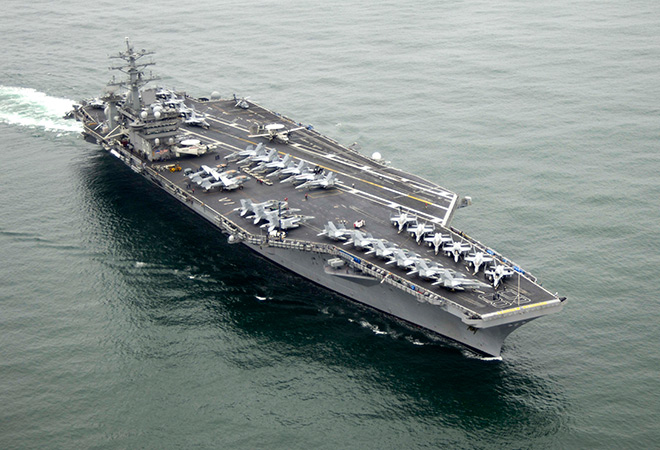
Just as the UK should build on existing multilateral trade agreements in the Indo-Pacific, it should also look to join its allies in the support of regional security and defence. What are the most effective ways for London to join partners and allies – notably India, Australia and Japan – to strengthen regional security through defence engagement and presence? One answer can be found in the recent news that British officials are debating whether to base one of the UK’s new aircraft carriers in the Far East, where it would conduct military activities with allies including the US and Japan.

Just as the UK should build on existing multilateral trade agreements in the Indo-Pacific, it should also look to join its allies in the support of regional security and defence

This, of course, builds on what is already happening, with Japan’s Maritime Self-Defence Force conducting trilateral exercises recently in the Philippine Sea with the Australian Defence Force and the USS Ronald Reagan Carrier Strike Group. Britain, as a permanent member of the UN Security Council – and a country with existing defence arrangements with Singapore, India, Malaysia, Australia, New Zealand and Japan – can play a role here, not least in the context of the contested South China Sea. Britain has an opportunity in the Indian Ocean as well. It should seize this new geopolitical moment and participate in the shaping of a new coalition along with India and the US.
Standard