Original link is here



Original link is here
In September this year, the Sustainable Development Goals (SDGs) were agreed upon by world leaders in New York and this month, countries will attempt to agree on a global deal to combat climate change in Paris. The actual success (going beyond the symbolic consensus) of both the SDGs and a potential climate agreement is contingent on technology and the extent to which it is shared, adopted and dispersed successfully.

Technology innovation, development and transfer are key to eradicating poverty, striving for equity in global lifestyles, and avoiding dangerous levels of climate change. For technology to be effectively applied to the global development and climate agenda, however, a few systemic flaws and some new realities need to be acknowledged and then responded to. A technology-centric response to the problems of the 21st century will require formulation of policies that reflect the changing nature of global technology flows, production and consumption paradigms.
The regimes of technology innovation and transfer currently in use are from a period when developed countries were both producing and consuming the products of technology innovation. This meant innovation led to increased purchasing power in the local community and the extended neighbourhood. It was therefore easier for people to absorb such innovation and pay for it. These structures are incongruous with the consumption realities of today, underpinned by globalisation. Technology innovation and production still occur in developed countries but the largest group of consumers are now in developing countries.
The scale of consumption in Asia in particular is creating new markets for corporations from the OECD countries. This trend is going to become a new reality in coming years. The McKinsey Global Institute predicts that nearly half of the economic growth between 2010 and 2025 will come from 440 cities in emerging markets. China and India will naturally lead this new consumption paradigm. And Asia will soon be joined by Africa in the shopping aisle.
Alongside these new consumers is another nuance that must be factored into the debate around technology. The largest economies of tomorrow will comprise large numbers of low income and poor households. Big economies will remain poor societies for some time to come in this century. Therefore, technology and royalty regimes around technology must cohere with development assistance paradigm and the global development agenda that seek to improve the lives of the poor.
Developed countries have provided Official Development Assistance (ODA) (defined as financial flows administered by governments towards economic development and welfare of developing countries) of about 0.29% of their own gross national products. However, what would be interesting to uncover is the amount of returns that have been repatriated to the rich economies by way of royalties that allow technology access for the developing world. For example, as per figures from the World Bank, India received US$2.4 billion in ‘net official development assistance and official aid’ in 2013. To put such figures in context, Merck, a global pharmaceutical giant, reported pre-tax profits of just under $1.6 billion in 2014. The contribution of technology royalties earned from the developing world to that figure needs to be calculated. Imagine 500 such companies which are leaders in their domain, and it is easy to see why the developmental aid flowing to parts of Asia and Africa simply does not match the scale of the money flowing out to pay for access to technology. The OECD countries, their corporations and institutions are giving with one hand and taking back with both.
A recent example of the burden of technology access are the Nokia royalty payments that flowed from India to Finland. Between 2006 and 2014, Nokia’s Indian subsidiary paid over INR 20,000 crore to its Finnish parent as royalties for the technology used in its manufacturing facility in Tamil Nadu. In 2013, Indian authorities alleged that Nokia owed over INR 2,000 crores to India on tax on the royalty payments. While this tax dispute continues, the outflow of $3 billion as royalty for handsets made by Indian factory workers — that Nokia was selling to lower and middle class Indian consumers – clearly demonstrates the profit motive of the parent is supreme.
Since royalty outflows far outweigh inflows from developmental assistance, it might make more sense for developed countries to subsidise technology diffusion in developing countries by paying their own corporations, to allow for open access to technology in developing country markets. That would perhaps deliver a better return on the money being spent by Western nations to support development in the global south, particularly given the increasing linkages between technology access and economic development.
In order to achieve the SDGs, it is also time to re-evaluate the global patents regime. For instance, Michele Boldrin and David K Levine, two economists from Washington University, St. Louis, have pointed out that the current patent/copyright system discourages inventions from actually entering the market. They opine the intellectual property rights (IPR) system only helps large corporations and multinational corporations rake up profits, noting that the majority of patents are registered by corporations rather than individual innovators. Boldrin labels intellectual property ‘intellectual monopoly’, arguing that it hinders innovation and wealth creation.
All of this does not mean that India and other developing countries do not need to look inwards and explore policies and practices for creating a culture and system that encourages innovation. The demographic dividend offers these countries a chance to develop a generation of technologists innovating for the bottom of pyramid needs. At the same time, real cooperation with the OECD countries on joint R&D will enable a blending of product innovation capabilities of the developed world and process innovation that some of the developing countries have excelled in. India’s position is that technology transfer is not enough in itself, just like Foreign Direct Investment (FDI). Domestication and indigenisation of technology are prerequisites to development as well as for a non-liner growth trajectory.
Joseph Stiglitz has noted that the most defining innovations of our time were not motivated by profit but rather by the quest for knowledge. The patent system was created to reward innovators but is now stifling innovation, feeding the hunger for profits and perpetuating the north-south divide. In order to support the development agenda, combat climate change, achieve parity in global lifestyles and shape an equitable planet, the tyranny of technology must be replaced by the technology panacea.
Governmental resources and policies must be directed towards encouraging open innovation so as to avoid the incumbent’s monopoly on the current system, which is compromising the ability of developing countries to fight poverty and guarantee the right to life. There is a need for studies that examine the impact of the IPR regime on economic activity in specific sectors that will demonstrate where IPR can stimulate innovation and where it does not. The SDG and climate agendas, perhaps the defining themes of the next few decades, cannot be held hostage to the ability to pay, for a perceived entitlement to profit perversely. It is time to examine the economic distortions that have altered the founding principles of patent and intellectual property right regimes. And it is absolutely the time to re-price innovation, to deliver for the bottom of the pyramid.
A longer version of this article appeared in Global Policy and can be found here.
Photo courtesy of Flickr user World Bank
Original link is here

The Indian proposition at Paris is fairly apparent and uncomplicated; it is also ambitious and steeped in India’s reality. The proposition which is delineated in India’s Intended Nationally Determined Contribution (INDC), can be seen to be responding to three core principles. The first foundational principle of any Indian contribution to the global effort on combatting climate change has to be to ensure that India’s wealthy – individuals, corporations and institutions — must not hide behind the country’s poor. They must bear the same level of responsibility and adhere to the same set of rules (agreed or normative) as global elites anywhere else in the world.
This can be accomplished in fairly simple ways, and certainly by taxing conspicuous consumption at many transaction points (rather that making production costlier and thereby socialising the cost of climate mitigation). This is already underway. The bulk industrial user pays comparable commercial tariff to similar users in the developed world. Indian cities have introduced consumption-based graded electricity tariffs and this principle is being, and needs to be extended to transportation fuels, gadgets and appliances and indeed to other spheres where embedded energy use tends to be socialised. Already, on an average, an Indian spends more on procuring renewable energy relative to their incomes than the average American, Chinese and Japanese. India is determined to showcase its leadership in renewable energy consumption. It is today, the world’s largest biomass, third-largest solar, and fourth-largest wind energy producer. The INDC outlines India’s ambition to significantly scale up renewable energy capacity in the country with a target to achieve 175 GW of renewable energy capacity by 2022. The elite and entrepreneurial Indians form part of this first INDC proposition.
The second principle is that India does not see any fundamental incoherence between being structurally dependent on coal while also leading a global green transition. These are mutually exclusive realities and if India can get this transition right, it will have a unique model of industrialisation that can be shared with many other countries that are further down the development pathway. Coal is still a necessity for multiple lifeline initiatives of the country to lift millions out of poverty. Clean energy, on the other hand, is a transformational opportunity – a moment for India to not only assume moral leadership but to develop competitive advantage in a new paradigm for growth in a fast-changing world. The INDC document recognises that India’s electricity demand is set to increase from 774 TWh in 2012 to 2,499 TWh in 2030.

This increase is necessary if the country is to industrialise, eradicate poverty and provide its population with better living standards. This growth in energy base is predicated not only on the exponential ramp up of the clean energy generation capacity as mentioned earlier, but also through a steady and calibrated increase in its fossil fuel based generation. And as facts indicate, the unnecessary alarmism on India’s ramp-up of coal is shallow. An average Indian today burns less than 20 percent of the coal consumed by an average American or Chinese and about a third of the per capita OECD appetite1 . Further, India’s peaking per-capita emissions even after this four-fold growth in energy consumption is not likely to cross the threshold of between five to six tons per capita. In fact, based on the INDC submissions, none of the major developed nations will achieve this level of per capita emissions. The bottom line then is that, while India will “Go Green” and is seeking to lead the green transition (Solar Alliance is an example), it will also have to “Grow Coal” to meet its development objectives.
And while it is doing that, there is no reason why the veil of faux moralism that envelops the lazy European political class should prevent India from seeking efficiency gains in the coal sector. If we are to grow coal, it makes sense to do it in the cleanest way possible. 111 coal-fired power plants in India resulted in 665 million tonnes of carbon dioxide emissions in 2010 – 2011 from an installed capacity of 121 GW. In 2030, it is estimated that India’s coal capacity will be anywhere between 300 – 400 GW. The World Coal Association (WCA) estimates that a 1% improvement in the efficiency of a coal power plant results in reductions of 2-3% in CO2 emissions. Investment in improving efficiency of coal-fired power stations through improvements in boiler efficiency and support for purchase of super critical technology is the low hanging fruit in the climate battle. A 1% improvement over 10 years in the efficiency of just currently operating coal power plants in India will save the entire current emissions of Belgium. A 1% improvement in future coal capacity will save the entire current emissions of Australia2 . At the same time, the irrational alarmists residing within India and in the developed world must note that despite the necessary growth of coal, India’s emission will peak lower than any other country that would have industrialised before it and its transition time will be much quicker.
Finally, India, due to its diverse agro-climatic regions, is already experiencing the negative impacts of climate change and extreme weather conditions. It will need to create innovative social policies and business models that are able to increase the resilience of local communities and help fund and strengthen the nation’s adaptive capacities to climate change. Any development policy implemented today must always be to increase the ability of the poor and weak to respond to climate change. Despite the adverse impact climate change will have on sectors such as agriculture and coastal economies, the Indian government recognises that assistance from the developed world on climate change adaptation will not be forthcoming. Taking this into consideration, the Government of India has indicated its intention to set up its own domestic adaptation fund in its INDC. If global partnerships contribute in this effort, vital resources can then be diverted to further bolster mitigation actions.
Having outlined the Indian proposition, let me now define three structural infirmities in the global system that must be resolved if collective action on climate change is to be successful. The first stems from the tyranny of incumbency. Carbon space capture by incumbents has created limited room for the development needs of those who require this space to breathe and grow. Therefore, before carbon space or resource space can be retrieved, the discursive space needs to be reclaimed for a sensible conversation on climate change. The discourse needs to change from the unavailability of carbon space in light of climate realities to one where carbon space is vacated by developed countries so as to accommodate the needs of developing nations. For every new coal plant that comes up in India, one in the West should be shut down. The early raiders of the 19th and 20th century got away with the carbon loot but it’s time that carbon space is reclaimed. When a shift from unavailability to accommodation takes place and when incumbents within and across nations are encouraged and compelled to cede space, we will find that there is new room to manoeuvre.
Second, if green energy is seen as a collective global response to mitigate carbon emissions, it is self-defeating to sustain a global system where the cost of green energy installations in countries that have the potential to ramp up such installations quickly and more widely, such as India. Is 24% to 32% more costly? In essence, we are perpetuating a system that reduces mitigating capacities by a fourth. To correct this, we will have to seriously re-organise the alignment of banking norms, global financial institutions, and climate and development imperatives at a granular level. The bankers, investors and innovators must be made co-stakeholders and must bear similar responsibilities to those borne by nations and communities. At present, the financial system is agnostic, if not explicitly climate-unfriendly.
This brings me finally to the vexed issue of technology. If access to technology has a price tag (by way of royalty payments) higher than the forthcoming development aid or climate finance, then we must realise we are in a system where the poor are underwriting the cost of mitigating climate change and we have succeeded in creating a system where the polluter profits and victim pays. This not only undermines the moral pivot of responsibility but turns the idea of differentiated responsibility on its head. Difficulties in technology flows will also compromise ambitious action by developing countries such as India.
India’s INDC predicate the success of India’s ambitions on the availability of technology (some of which are listed) and financial flows (not aid) at commercial, competitive rates from the financial system. Specifically on financial flows, the INDC’s call for new and additional finance for climate change, recognising the fact that there is currently a huge shortfall in supply and demand for climate finance. The International Energy Agency (IEA) has stated that except for a “breakthrough at the Paris UN climate conference in 2015,” the existing international framework and market structures will be unable to mobilise funds for climate action at the required pace or scale. Simply put, the fewer the impediments to access technology and finance, the greater the probability of success for India to lead an ambitious effort on climate change.
Samir Saran is vice president at the Observer Research Foundation
________________________
1European Council on Foreign Relations, Samir Saran & Vivan Sharan, The false debate on India’s energy consumption,
http://www.ecfr.eu/what_does_india_think/analysis/the_false_debate_on_indias_energy_consumption.
2Based on author calculations
Original link is here
In international negotiations, India finds itself caught in a shrill and binary debate pitching growth against climate
India’s position in climate negotiations is based on the importance of access to energy for human development. This is supported by data, including the positive correlation between energy access and the Human Development Index (HDI).[2] Estimates vary on how much energy is needed to meet basic human needs (hereafter referred to as “lifeline energy”). The methodologies vary depending on whether these basic needs are considered through the prism of GDP growth targets, HDI levels, or calculations of the energy needed to meet a predetermined set of development goals.[3]
This essay will argue that, if the climate debates have allowed even a nominally equitable level of coal consumption towards meeting lifeline energy needs, India currently has immense room for manoeuvre. The analysis relies on a benchmark metric: that 2,000 watts  per capita is a basic level of lifeline energy, covering housing, transport, food, consumption (of manufactured goods), and infrastructure. This is based on a study by Novatlantis, which demonstrates that this level of consumption could power daily life in Western Europe.[4] Therefore, lifeline energy is defined liberally in this study, as being high enough to cover the minimum lifestyle needs of citizens in developed countries.
While developed countries such as OECD and EU member states have reduced per capita coal consumption since the financial crisis, developing countries such as India have increased consumption over the same period. This reduction by developed countries does not necessarily reflect a greater degree of climate “responsibility”, and, conversely, the increase in consumption by India does not reflect “irresponsibility”, as this analysis will demonstrate. Table 1 shows the total per capita consumption of key regions and countries that are shaping the climate change discourse.
| Countries/Regions | 2005 | 2009 | 2014 |
| US | 2,580.8 | 2,147.5 | 1,887.6 |
| China | 1,324.4 | 1,674.4 | 1,909.6 |
| Germany | 1,308.9 | 1,162.7 | 1,269.7 |
| Japan | 1,260.2 | 1,127.9 | 1,321.5 |
| India | 217.2 | 279.3 | 377.3 |
| World | 640.9 | 675.7 | 717.3 |
| of which: OECD | 1,316.0 | 1,143.0 | 1,100.6 |
| Non-OECD | 484.7 | 571.9 | 635.1 |
| EU | 846.8 | 705.6 | 704.8 |
Source: BP Statistical Review of World Energy, 2015; The World Bank; author’s calculations
Taking a closer look at coal consumption before and after the financial crisis, it is apparent that the trends are nuanced. Two key sub-trends are visible in Table 2, which tracks coal consumption against total primary energy consumption. The first is that, while developed countries have been cutting total energy consumption, developing countries have been increasing it, albeit at a gradually declining pace since the crisis. Second, while developed countries have cut coal consumption faster than total primary energy consumption, developing countries have increased coal consumption faster than total primary energy consumption. Clearly, then, coal consumption is very much part of the lifeline consumption matrix for developing countries since they require base load generation for industrial-driven economic growth (which is a prerequisite in countries such as India for improving the HDI and generating employment).
| Regions | Category | 2006 | 2009 | 2010 | 2011 | 2012 | 2013 | 2014 |
| OECD | TOTAL | 0% | -5% | 3% | -2% | -1% | 0% | -2% |
| COAL | 0% | -11% | 6% | -2% | -5% | 0% | -2% | |
| Non-OECD | TOTAL | 4% | 0% | 4% | 4% | 2% | 1% | 1% |
| COAL | 6% | 2% | 2% | 6% | 1% | 1% | 0% | |
| EU | TOTAL | 0% | -6% | 4% | -4% | 0% | -1% | -4% |
| COAL | 3% | -12% | 5% | 2% | 3% | -3% | -7% |
Source: BP Statistical Review of World Energy, 2015; The World Bank; author’s calculations
Finally, Table 3 shows that the average citizen of the US and of China both consume nearly the entire 2,000W lifeline energy benchmark in the form of coal. Conversely, in India’s case, only about 19 percent of the 2,000W benchmark is consumed in the form of coal. In fact, citizens of OECD countries get a much larger proportion of their energy needs from coal than citizens of non-OECD countries. This is also a function of the disparity in per capita energy consumption as a whole between developed and developing countries – while coal consumption as a percentage of lifeline energy in developed countries is decreasing, the gap between the per capita coal consumption of developing and developed countries remains vast.
| Countries/Regions | 2005 | 2009 | 2014 |
| US | 129% | 107% | 94% |
| China | 67% | 84% | 95% |
| Germany | 65% | 58% | 63% |
| Japan | 63% | 56% | 66% |
| India | 11% | 14% | 19% |
| World | 32% | 34% | 36% |
| of which: OECD | 66% | 57% | 55% |
| Non-OECD | 24% | 29% | 32% |
| EU | 42% | 35% | 35% |
Source: BP Statistical Review of World Energy, 2015; The World Bank; author’s calculations
The World Bank’s Special Envoy on Climate Change recently stated that “clean energy is the solution to poverty, not coal”.[5] This is a view that resonates within a number of development-financing institutions based in OECD countries. For instance, the US Export-Import Bank stopped funding greenfield coal power generation projects worldwide in 2013. The World Bank also seems to be moving in this direction, even though coal consumption has been increasing in developing countries and coal-based energy remains the most practical option at a large scale.[6] This narrative isolates economic growth from lifeline energy and skirts over the role of growth in development.
The preceding analysis attempts to address some myths related to coal consumption. First, in per capita terms, developed countries in fact consume much more coal than developing countries: The average OECD citizen consumes about double the coal of the average non-OECD citizen. China is a notable exception. And if Chinese per capita coal consumption is a benchmark, the debate on India’s consumption is clearly redundant.
The average Indian already spends much more on renewable energy (as a proportion of income) than counterparts in China and the US
The per capita trends show that India will supply a larger proportion of its 2,000W benchmark through clean(er) fuels than developed countries. There is enough room for India to increase its coal consumption while continuing to accelerate its renewable-energy thrust. India has set a target renewable-energy capacity of 175 gigawatts by 2022. This means that it will be among a handful of countries to source a large proportion of its lifeline energy needs from non-conventional sources. The average Indian already spends much more on renewable energy (as a proportion of income) than counterparts in China and the US.[7] To spend even more, purchasing power will need to grow, and so, in turn, will lifeline consumption.
This has clear implications for India, and for other similarly placed developing countries. Unlike developed countries, which have already seen peaks in their energy consumption, India must respond to two imperatives. First, to increase its lifeline energy as well as clean energy. This means that the country will have to ensure financial flows towards lifeline energy, make coal consumption more efficient, and engage with the international financial system to ensure that regulations do not make clean energy investments more costly than they already are. Second, and at the same time, lifestyle emissions need to start adhering to or approximating the Swiss model, which shows that “daily life in Western Europe could be powered by less than one-third of the energy consumed today&rd[8] The estimated 20 million people at the top of India’s socio-economic pyramid, and large companies that consume as much energy as counterparts in developed countries, must be included within the paradigm of “climate responsibility”.
[1] In 2014, China accounted for more than half the world’s coal energy consumption, at around 3.9 billion tonnes of oil equivalent, while Organisation for Economic Cooperation and Development (OECD) countries consumed just over half this figure. China’s target of capping coal consumption at 4.2 billion tonnes by 2020 was welcomed by OECD countries. See data from the BP Statistical Review of World Energy, June 2015, available athttp://www.bp.com/content/dam/bp-country/de_de/PDFs/brochures/bp-statistical-review-of-world-energy-2015-full-report.pdf; “China seeks to cap coal use at 4.2 billion tonnes by 2020”, Agence France-Presse, 19 November 2014, available athttp://economictimes.indiatimes.com/news/international/business/china-seeks-to-cap-coal-use-at-4-2-billion-tonnes-by-2020/articleshow/45205271.cms.↩
[2] UNDP, 2013; The World Bank, n.d.↩
[3] Shripad Dharmadhikary and Rutuja Bhalerao, “How Much Energy Do We Need?”, Prayas Energy Group, May 2015, available athttp://www.prayaspune.org/peg/publications/item/298-how-much-energy-do-we-need-towards-end-use-based-estimation-for-decent-living.html(hereafter, Dharmadhikary and Bhalerao, “How Much Energy Do We Need?”)↩
[4] Novatlantis, “The 2,000-Watt Society”, 2007.↩
[5] Rachel Kyte, “World Bank: clean energy is the solution to poverty, not coal”, theGuardian, 10 August 2015, available at http://www.theguardian.com/sustainable-business/2015/aug/07/world-bank-clean-energy-is-the-solution-to-poverty-not-coal.↩
[6] Sunjoy Joshi and Vivan Sharan (eds), “The Future of Energy”, Observer Research Foundation, 2015, available at https://www.economic-policy-forum.org/wp-content/uploads/2015/02/ORF-EPF-Final-Report-The-Future-of-Energy.pdf.↩
[7] Samir Saran and Vivan Sharan, “Indian leadership on climate change: Punching above its weight”, Planet Policy blog, The Brookings Institution, 6 May 2015, available athttp://www.brookings.edu/blogs/planetpolicy/posts/2015/05/05-indian-leadership-climate-change-saran-sharan.↩
[8] Dharmadhikary, Shripad and Bhalerao, Rutuja, “How Much Energy Do We Need?”, Prayas (Energy Group), May 2015.↩
October 7, 2015 03:47 IST | Samir Saran and Vivan Sharan, The Hindu
Original link is here

Ahead of the Paris climate summit, India announced on October 2 its Intended Nationally Determined Contributions (INDCs) for climate change mitigation and adaptation. India intends to reduce its carbon emissions intensity by 33-35 per cent by 2030, from its 2005 levels. While this commitment has drawn fulsome praise from many, the green ayatollahs have predictably ignored its herculean clean energy ambitions and focussed on Indian dependence on coal. It is time to lay bare the ‘coal hypocrisy’ of these privileged ‘western greens’.
India’s total energy consumption is a fraction of that of China, the U.S., the European Union and the OECD. Its position at the climate change negotiations has continued to reflect the centrality of access to energy for human development. And India’s normative position is supported by data, such as the positive correlation between energy access and the Human Development Index (HDI).
Lifeline energy
While a number of estimates exist on how much energy is needed to meet development objectives (we call it ‘lifeline energy’), an interesting benchmark is that of the 2000-Watt society, based on a Swiss research group’s findings. The research states that 2000-W per capita is a basic level of energy which accounts for housing, mobility, food, consumption (manufactured goods) and infrastructure. In a forthcoming paper for the European Council on Foreign Relations, we argue that if the ‘space’ allocated to India for coal consumption towards fulfilling lifeline energy needs is even nominally equitable, India does not have to compromise on its development and growth aspirations.
On an average, U.S. citizens consume nearly the full extent of this lifeline energy benchmark using coal, the ‘dirty fuel’. India consumes only 19 per cent of the benchmark through coal. In fact, citizens of OECD countries get a much larger proportion of their energy needs relative to the 2000-W benchmark from coal than non-OECD countries.
It is important to note that in 2014, the average Indian accounted for around 20 per cent of the average American’s coal consumption and around 34 per cent of those from the OECD. What has caused concern in the developed world is that while they have reduced per capita coal consumption relative to pre-financial crisis levels, India has increased consumption over the same period. In our analysis, we point out that just as reduced coal consumption of developed countries following the crisis does not necessarily reflect a greater degree of ‘responsibility’ towards the climate, the increase in consumption by India does not reflect ‘irresponsibility’.
This is better explained by two key trends, visible after the crisis. One, while developed countries have been cutting down energy consumption as a whole, developing countries have been increasing consumption, albeit at a gradually declining pace. Two, while developed countries have been cutting coal consumption faster than primary energy consumption, developing countries have increased coal consumption faster than primary energy consumption. Clearly then, industrial consumption (manufacturing and jobs) is very much part of the lifeline consumption matrix for developing countries.
Growth-development link
Many financial institutions such as the U.S. Exim Bank have stopped funding coal-based power generation projects. The World Bank also seems to be following in this direction even though coal consumption has been increasing in developing countries and coal-based energy remains the most practical option of scale. This tendency isolates economic growth from lifeline energy and skirts the central goal of development within growth.
India is neither in the same basket of per capita coal consumption as developed countries nor comparable to China. In fact, we have shown that India will meet a larger proportion of the 2000-W benchmark through ‘clean’ fuels than developed countries. Therefore, there is enough room for India to grow its coal consumption while continuing to accelerate its renewable energy thrust. And this is precisely what the Indian INDCs reflect.
India has set a target of renewable energy capacity of 175 gigawatts by 2022; and has promised to achieve 63 GW of nuclear energy if “supply of fuels is ensured”. It will be among a handful of countries to source a large proportion of its lifeline energy needs from non-conventional sources, across the developing and developed worlds.
It is worth emphasising that unlike developed countries that have already peaked their energy consumption, India must first strive to provide the 2000-W per capita lifeline energy to all, even as it seeks to clean this energy mix. India will continue to consume coal to grow its industrial base, improve HDI and develop its economy. This in turn will allow it the financial capacity to invest heavily in non-conventional sources. The Indian INDCs reflect this enduring paradox; India will need to grow its coal capacity if it is to successfully go green.
Developed countries such as those within the EU want to reduce their emissions to two tonnes per capita by 2050; which will in turn reflect the total carbon ‘space’ available per capita if the world is to limit global warming to manageable levels. While the road to Paris is paved with such good intentions, it is essential that each person on this planet begins to move towards an equitable carbon profile. This has two clear implications.
First, large developing countries such as India must invest in renewable energy benchmarks that match developed countries. Second, developed countries must pare down per capita coal consumptions to levels which would match India’s lifeline consumption through coal in the future.
Simply put, every time a new coal plant comes up in India, one should be shut down in the OECD. If coal use can be substituted by clean sources, then millions of tonnes of coal capacity in EU and the U.S. are low hanging fruits. India uses coal to satisfy less than a fifth of its potential lifeline energy needs, while OECD countries use this ‘nasty’ fuel to satisfy two-thirds of theirs. It is time to meet in the middle. No, we are not suggesting historic responsibility; only the one we jointly shoulder for tomorrow.
(Samir Saran is vice-president and Vivan Sharan is visiting fellow at the Observer Research Foundation, India)
‘India First’. This phrase, used liberally by the then Indian prime ministerial candidate from Gujarat, Narendra Modi, captured the imagination of many Indians because it responded to the Indian moment.
In 2013-14, Candidate Modi and his Bharatiya Janata Party (BJP) were determined to restore a semblance of pride in a population scarred by corruption scandals and government bloopers. The national shame resulting from the ghastly rape of December 2013 destroyed brand India and darkened the national mood. And the economy, India’s invincible proposition to the world for over a decade, began to head south. The nation was restless and impatient. There was a growing clamour for strong leadership.
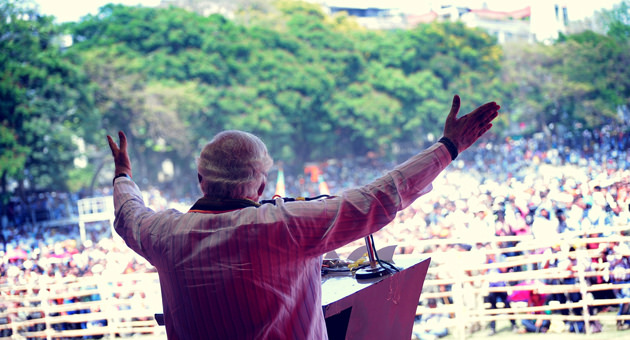
This was the India of just over two years ago, when #NaMo began to trend on social media. This was when Candidate Modi would have sensed that he had a fair chance of winning. This was also when the ‘man of action’, the new loh purush (‘man of steel’), made his promises to an expectant nation and laid out his vision of a re-energised India.
Nearly a year later, it is a good moment to reflect on that promise.
It would be fair to say that there seem to be two Modis. The first is Prime Minster Modi on the world stage, a rock star when he’s abroad and when he receives foreign dignitaries. He is flamboyant in resetting the India narrative in Western capitals and closing in on lucrative partnerships in Asia. He has injected new dynamism in how India engages with its neighbourhood. He deploys slick messaging and leverages the Indian diaspora to create a sense of optimism. The US President waxes eloquent about him in TIME and even the Germans acknowledge the masterful conduct of the ‘Make in India’ outreach at their prestigious industrial fair.
Then there is the Prime Minister at home, with a different look and feel about him.
He is determined at one level, as he stakes his political capital on reforming the land acquisition law, and while pushing forth a slew of new initiatives like replacing the economic planning body (the Planning Commission) with a contemporary organisation. On the other hand, you sense there are some wrinkles that are yet to be ironed out. There are times when you can see him pensively watching parliamentary proceedings as the lack of majority in the upper house impedes him. There is reluctance while communicating his vision and policies, and an inability to deploy the same communication means to reach out to citizens that got him the top job in the first place.
Clearly then, as we clock in year one, there is much to be done at home for the Indian Prime Minister, if the disconnect between the external messaging and the politics at home is to be reconciled.
India’s most powerful proposition to the world remains an India that offers opportunity to Indians and to others who want to engage with it. It was on this promise of hope, domestic reform and growth that Modi was elected. His election slogans held a two-fold promise: Acche din aane wale hain (‘good days are about to come’), and na khaoonga, na khaane doonga (‘neither will I take bribes nor will I allow others to’). These slogans alluded first to a government that delivers on its promises and is sensitive to the aspirations of youth, and second to a commitment to systemic reform, with corruption a metaphor for bad governance.
Once the scale of his victory became clear, the Prime Minister’s first tweet was acche din aa gaye (‘good days have come’). Implicit in this declaration was that his election was a mandate for change and that change would be rapid, not incremental. If expectations of the new government were high, it was because Modi himself led India to expect a tectonic shift.
The Modi campaign was clever in seizing upon a rare confluence of the needs of big businesses and the bottom of the pyramid. Both needed financial-sector reforms and innovation. While at one end investable capital was needed through creative instruments, at the other end basic financial inclusion, distress loans and lifeline banking were crucial.
Big businesses sought employable human capital to scale up operations, to climb global value chains and to optimise labour productivity (a fifth of China’s). The bottom of the pyramid needed skilling initiatives, basic education, digital literacy and technical education that would allow them to participate in the modern economy and make their ‘mom and pop’ operations more profitable.
Both big business and small operations needed market access, roads, ports, energy and digital highways that would allow them to compete in the global marketplace. To deliver on these was essentially the ‘Modi Promise’.
So it was not surprising that in his early days he rolled out the ‘universal banking scheme’ (Jan Dhan Yojana), the Digital India Initiative and the ‘skilling’ initiatives alongside the ‘Make in India’ thrust. Earlier this year, in its first full budget, the Modi Government announced schemes to support micro-enterprises, innovation start-ups and a pro-industry economic orientation that was appreciated by many. The Finance Commission recommendations on federalising tax receipts and giving more to state governments was accepted. Several social sector and welfare schemes were left to the autonomous design of state governments. India was seen to be moving towards a more decentralised system that resonated with the campaign promise of ‘More Governance, Less Government.’
While the schemes and initiatives announced were on the ball, some of the tactics and processes that their success may depend upon need to be rethought and reorganised. Four in particular need attention.
First, the PM may have to oversee a more sophisticated management of parliament. BJP has to reach out to a variety of political actors in the upper house of parliament (and their own coalition partners) effectively. They are unlikely to have the numbers for a few years and the country may run out of patience before then.
The second would be to be mindful of the contradiction between seeking to expand one’s political base across the country while at the same time striving to deliver economic restructuring that responds to promises and expectations. As the political expansion takes place, policy compromises may seem tempting and could dilute the ‘Modi mandate’. Already the talk in some circles is that the real opposition the Prime Minister faces is within his party. The nationalist and insular component of the Rashtriya Swayamsewak Sangh (the parent organisation of the ruling party) is vocal in its opposition to a number of forward-looking measures the Government may opt for, be it issue foreign investment in certain sectors, labour reform or the reorganisation of the food and agriculture sectors.
The third is the fundamental tension between the centralisation and concentration of power within the Prime Minister’s Office, and the ambition to federalise and devolve governance horizontally and vertically. The Prime Minister’s Office is already under some flak for empire building, delays and inefficiency. What worked in Gujarat may not work for India.
And finally, the PM’s core instinct to operate through the bureaucracy (or a select few among them) may preclude the possibility of lateral hiring of talent that many of his key initiatives do need. While the Chief Minister-civil servant duopoly served Modi well in Gujarat, the decision-making high table may well have to be enlarged if real change is to be effected in New Delhi.
The Government’s honeymoon is perhaps already over and realistically it has another 6 to 12 months to start putting flesh on the bare-bone schemes and ideas announced this past year. If these do not eventuate, one may well witness emptier stadiums abroad and hear shriller voices at home. Ultimately, for PM Modi to sell the Incredible India story, he will need to make India credible.
Photo by Flickr user Global Panorama.
When the family loyalist was summoned to the sanctum sanctorum by the “High Command” there must have been trepidation and unease in his mind. The organisation after all had just been humbled, humiliated and vanquished at the hustings. As Madam Gandhi asked A.K Antony to introspect and dig deep to find the causes of the Congress Party’s crushing defeat in the 2014 general elections, he must have recalled the string of fallen angels who preceded him, like Azazel and Lucifer. These angels were, as Milton describes them in Paradise Lost, “brighter once amidst the host of Angels, than the sun amidst the stars”. Their fault however was stepping out of line and questioning and defying god.
Clearly then, one implicit parameter for Saint Anthony (if he knows what’s good for him) was to avoid Lèse-majesté when talking of the Holy Trinity – Mother, Son and Daughter. While one has access to his report outside of the usual gossip one hears, it doesn’t exactly take a genius to figure out who and what was left out under the garb of “collective responsibility”. With a great deal of certainty, one may assume that the following seven reasons never made it into the “introspection” report.
The first reason for the loss has to be the undue influence, in party matters, of people like Mr Anthony himself. Some of them clearly irrelevant to contemporary Indian politics, many just sycophants whose raison-d-etre’ were the favourable whims of 10 Janpath, most lacking organisational credibility and legitimacy, and all, so far divorced from ground reality that their influence on party strategy was recipe for failure. Party politics was managed by the extended household of the former first family, not by those with personal political weight and credibility among the people.
By the end of his second term in office, the former Prime Minister was the second reason for what unfolded. He broke his own promises though he never broke his silence. He sold India the hope of reforms and inclusive growth – of a market oriented liberal democracy. By the end of 2009 India was back to the 80s’. All corporates were once again thieves, market based reforms were passé, licence raj had been replaced by regulator raj and corruption was rampant. The Prime Minister who reformed India in 1991 as its Finance Minister presided over a period that destroyed the country’s entrepreneurial spirit and scarred its enterprising soul.
Following from this a dated approach in responding to contemporary needs was the third reason for failure. The infatuation with ‘doles’ to the poor, as against offering ‘agency’ to them, represented a re-institutionalisation of feudal thought. India of 2014 is not the India of 2004. It is younger, low-income and seeking opportunities. What was on offer was continued state patronage and welfare schemes, which may have appealed to a poorer and older demography of the past. India today, is young and aspirational and has dreams that transcend promises of lifeline existence. The poor were the target vote-bank and the approach seemed to imply that the party would thrive because of incessant poverty.
The mediocre branding of the protagonist-in-chief, Rahul Gandhi was to be the next reason. He could not relate to the people, and his moral renunciation and episodic political participation was disingenuous. His contrived anger against corruption, his feeble remorse for the riot victims of 1984, his convoluted commitment to a progressive India and his role as an ‘outsider’ was poorly thought through and badly executed. There were limited takers for the “RaGa” proposition.
The fifth, reason would have implicated ‘Madam’ herself. Democracy seldom allows power without responsibility and even when it does, it remains a fundamentally bad equation. Maybe the Philippines could accept an Imelda Marcos, Egypt a Suzanne Mubarak and Argentina an Eva Peron, but India persistently rejected quasi-democratic authoritarian regimes that those three were. The leadership may very well have been benign. The leader may not have hoarded shoes like Imelda; or stolen money like Eva; or adopted a “country be damned, my son first” attitude like Suzanne. Yet ‘Madam’ was ultimately responsible for everything and refused to accept that this comes attached to the immense power that she enjoyed. India was fooled once, by the buffer that the Prime Minister offered, but they were not willing to be fooled a second time round.
The communication and engagement with the electorate has to be the sixth reason. Spokespersons were patronising and arrogant, hectoring and often aggressive, even as they justified by the unjustifiable. They were masters of phrase and prose and so proud of their glib talk they forgot political communication is a dialogue. They said what they wanted to, and were willing to hear only their own voices. They criticised the feedback from Social Media as being sentiments of enemies and irrelevances. Well-meaning advice was rejected as coming from those who had made a pact with the devil. The cries, the pleas and the anger were ignored. The government spoke to itself even that was with discordant voices.
The last and most important reason for the defeat is that the preceding six paragraphs will not find their way into the report. To win one needs to accept the truth – no matter how bitter. If one cannot or deliberately refuses to understand what really went wrong, one cannot fix things – expect superficially. But the fact remains that that the “high command” wishes to guard its position and that of its progeny. The fact remains that everyone in the Congress core committee wish to hide their de-facto irrelevance and that spokespersons like bad singers do not want to hear that they are bad at what they do.
So what would St Anthony’s concluding paragraph be? Presumably that the incumbent too would be “led astray” by those who surround him and their lust for power. Ultimately his conclusion would be that nobody in the congress was wrong, and all they need to do for the next ‘sonrise’ is for the current dispensation to falter, and inevitably it will.
20:32 GMT, 9 September 2014, Mail Online India
Original Link is here
Tragedy has struck Kashmir once again.
That it is perhaps the severest since Independence is undeniable.
The human despair, spirit and resolve are all on display, and the entire country (real and virtual) seems affected by nature’s cruel intervention.
The efforts to rescue those stranded are feeble as the institutions, infrastructure and administrative resilience have been found wanting – yet precisely because of this, the courage and heroic efforts of individuals and some organisations stand out in stark contrast.

Floods: The entire country (real and virtual) seems affected by nature’s cruel intervention.
Even as the embankments built in the times of the Maharaja have been breached by ravaging waters, the unfolding tragedy and response is also about the ‘angels or demons’, depending on your take on it – Social Media and the Armed Forces.
A recent report in a leading daily had one of the most powerful men in India, its Home Secretary, observe, “I simply cannot speak to anyone in J&K.”
The last 72 hours have seen the near total collapse of the phone network, and power lines have collapsed. This has complicated coordination and rescue, because stranded people have no way of telling rescue centres of their plight.
Worse still, Delhi is cut off from the Government of J&K, while the Government of J&K is cut off from the army, which is coordinating rescue efforts.
The army is the only body there that has managed to maintain some semblance of intra-organisational communications due to satellite phones. However, it has no way of knowing the location where people are stranded, or how many and how critical their situation is, since the normal method – air reconnaissance – is difficult at best given the cloud cover and weather.
And the much-vilified social media is coming to the rescue. Even as large parts of the mobile communication infrastructure have collapsed, some wireless communication and the traditional wire line communication networks have allowed people access to social media and various messenger services, websites, and some agencies.

To the rescue: Social media has helped save the stranded
It has also allowed a degree of dissemination of situational reports, videos and distress messages, many of which have reached the army.
Whatsapp, FB messenger, Twitter and others are the most potent tools for the rescue teams in the valley today.
As a result what we have is the army using satellite phones to communicate, but basing its rescue efforts significantly on guidance from Whatsapp, Facebook and Twitter.
In that sense these have effectively replaced the search helicopter, the emergency beacon and the communications network of the valley.
For the governments at the Centre and in the state of J&K, which have frequently demonised social media, this must be a moment of revelation.
In February this year, the then Home Minister, Sushil Kumar Shinde, had vowed to “crush social media” to great applause from within his party and some others.
Yet today the home secretary cut a sorry figure, claiming “there is no means to communicate with anybody” till the 15 wireless systems he has sent to be set up in the valley come online.
Social Media, angel or demon? Let the debate begin.
The second story is that of the ‘men in green, blue and white’. Among the nation’s armed forces, they are reviled by a few liberals and a section of those in Kashmir, at the receiving end of Pakistani venom and terror, and frequently derided by the political class in the state and centre.
Yet had it not been for the army’s rescue teams and its “infrastructure of occupation,” as secessionists would call it, how many more lives would have been lost?
At a time when the democratically-elected government of J&K has failed in its civic duties in buttressing the embankments (which they should have known about anyway) and a home ministry that is fumbling in the dark, it is this supposed villain that has come out as the knight in shining armour.
It is this same “infrastructure of occupation” – helipads built on apple orchards, hospitals built on peach orchards and supply dumps built on farm land – that are now being used so effectively to rescue the stranded, treat the wounded, and provide relief supplies to the displaced.
It is this same infrastructure with its bulldozers that is being used to clear roads, and the army trucks that sustain the “occupation” that are being used to ferry in essential supplies for the “occupied”.
Given the police, local government and central government networks failed within the first few hours of the flood and the Doordarshan system which could be used as an emergency communications system also collapsed in this period, it has been the army’s communication systems that have provided the only link between J&K and the rest of the country.
It is the maligned Armed Forces Special Powers Act used to “suppress” Kashmiris, that the army is using to deliver critical supplies to the “occupied”.
And yet vultures who some in Kashmir refer to as “freedom fighters”, would rather support infiltration even at this time, then help their brethren. The IAF, let this debate end.
This is not to say that social media and the deployment of the Armed Forces are always virtuous. The use of social media for malicious purposes is proven. The use of the medium to incite and radicalise is also rampant.
Yet it is a force for good as we saw this past week.
Challenge and vilify the user, do not condemn the tool.
Similarly, the deployment of armed forces has resulted in actions that are highly avoidable. Some of their heavy-handed interventions have resulted in justifiable anger and resentment.
Here again, challenge the political mandate and policy direction from the government, not the army, which remains a force for good.
The writer is vice president at the Observer Research Foundation. His twitter handle is @samirsaran
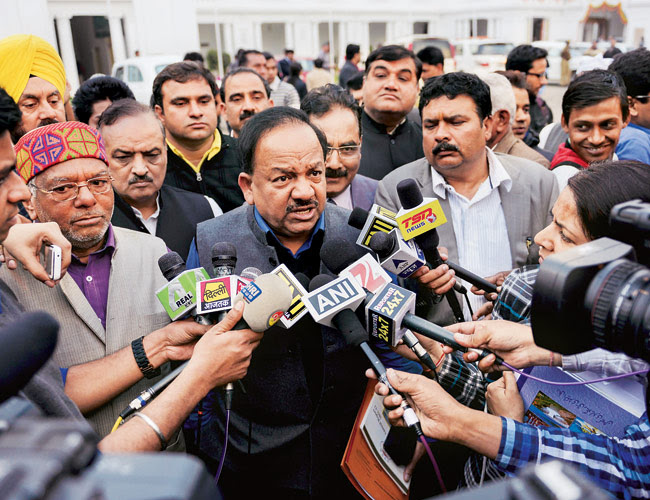 The editor’s free articulation of his views can ensure voices of public figures can often be drowned out.
I am a noble soul and was a spiritual glint in my parent’s eyes. I am the editor of a newsroom in the mightiest democracy of the developing world. I have immense responsibilities; to my image, to my brand, to my viewers and to my ever growing legion of fans. News is all about perceptions and I am the master conjurer; I love stoking your imagination and I love being an Editor.
For the last twenty-five years I have been part of a great game that I first devised and then played, with the rules always keeping up with my moods. News is, but a reason that brings me and mine closer, our monologue is what defines the nation, my sermons are what weaves together the believers and my outbursts are what keep the nation straight. I answer to a higher calling and carry a spiritual burden. I love being a digital gladiator, I love being an Editor.
I am the toast of the town. I have the best cars, reside in posh parts of town, host the fanciest of parties and am invited to every classy bash. Everyone who is anyone has my mobile number. Those who want to be someone, want my number. The numbers I delete are of those about to be obsolete. My recommendations for minister, for constitutional posts, for everything that means anything under the Indian sun, count for everything. I love being the hub, I love being an Editor.
Edicts
The past two decades or more of political chaos were the cue for me to assume leadership. In the absence of a worthy national leader, every ram, shyam and ghanshyam, in or out of the cabinet,tripped over themselves to give me a scoop -through leaked cabinet papers, or edited taped conversations. I know about government decisions before they happen. My voice on prime time is the national edict of the day. My criticism rolls back domestic policies and my whims lead to or prevent international crisis. I love being responsible. I love having the troubles of the world rest on my broad shoulder, I love being an Editor.
The Clintons talk to me of their plans and Kerry curries favour with me. I discuss the Middle-East with the Sheikh, human rights with The Aga Khan and secularism with the Pope. I know more about climate change, trade, IPR and security than I care to remember. Yet, my humility allows me to invite meek voices on my show. I need them as I need to share my wisdom. It is my adherence to the highest principles of corporate social responsibility that makes me share my studio with lesser beings. I love being humble. I love being an Editor.
What impresses me most about myself is how politically correct I am. I question the morals of politicians and businesses and babus and all the wayward souls. I fight to keep my studio mine alone. It is an endowment from the almighty. I resist any attempt by any political party, ideology or business agenda to capture this sacred space.
I show great accommodation when the nation seeks it. I allow colleagues to promote political agendas for months before finally taking the plunge and joining a political party. This is not space capture by a political unit as some have observed. This is a training programme for becoming spokespersons of political parties. I love grooming leaders. I love being an Editor.
Business
My job requires courage and this is what excites me most. I stand besides booming guns in the Himalayas because this makes for good TV. Yes, the infantry may cop a bit of counter fire – but that is the nature of the beast and brutes. I courageously describe the progress of counter terror operations in Mumbai to our next door neighbour, because you see news is global, information is power and would it be fair to deny me to the rest of the world? I love being valourous, I love being an Editor.
I hate the corporates and everything they stand for. They take credit for creating the business we’re in. Just because they created the platform, the networks and provided the technology and funds? Huh! They’re missing the wood for the trees because ‘I am Content’ and therefore I am the business.
Accountability
I hate their demanding accountability from the newsroom. What do they know about the power of this space? Or, how to exercise it. After all, did I not suppress a coal scam or two or a pharmaceutical fraud with sophistry? Did I not exonerate guilty as hell CEOs in the court of public opinion? Heck! Did I not cover up my virtuous friends land grabs in and around Delhi? I hate transparency, cloak and dagger love is so much fun. I love all the deals in the dark. I love being an Editor.
But the moment seems to be slipping away and a new game is in town. A man elected by the masses is in power, a government with a mandate to govern is on the job. And these accursed ministers appointed without my blessings. Aagh! Journalism through “access”, once a fine art is now dying, much like those dying crafts this nation hates to treasure and preserve. I feature in my sob stories every now and then. Self-pity is my companion, international press my friend. I’ll have to bide my time. Better still, I think I’ll perfect the prototype of a new-age victim. I love being a martyr, I loved being an Editor.
– The writer is vice president at the Observer Research Foundation and tweets as @samirsaran

 Samir Saran