Category Archives: climate change
Task Force 06- Strengthening Multilateralism and Global Governance : Toward a New Global Security Paradigm
Samir Saran with Luis Gomez Echeverri, Maja Groff, Heide Hackmann, Mauricio Antonio Lopes, Pradeep Monga, Pratik Patil, Elena Rovenskava
Amidst increasing global connectivity and accelerating global change, the global security framework has become insufficient, contributing to a crippling dysfunctionality in international cooperation. The current security framework, focused almost exclusively on a narrow notion of military security, is insufficient to address escalating ‘threats without enemy,’ such as climate change, biodiversity loss, and pollution, which increasingly endanger the lives and dignity of all populations. This policy brief recommends a global social-ecological security framework, rooted in the science- informed understanding of social and biophysical realities, to address the evolving needs and challenges of the 21st century.
Our recommendations to operationalise this paradigm include: a reinvigorated commitment to multilateralism and peace as a pre-requisite; public participation in shaping the new inclusive international governance framework; development aid and green finance as key levers; a focus on building resilience (especially food security); and, strengthening anticipation of and response to interconnected global shocks. We propose a G20-initiated formation of a high-level working group to catalyse the creation of this new framework. Such a process must involve relevant stakeholders, leveraging new possibilities afforded by technological tools (such as AI).
Implementing this ambitious agenda will be challenging, but continuing on a business- as-usual trajectory is a ‘lose-lose’ spiral likely to trigger social and ecological crises. Bold leadership from the G20 is needed more than ever to reinvent multilateralism and thus ensure sustainable well-being for all.
Read more here.
Rethinking climate governance
New approaches should reduce the cost of capital, bridge the technology divide and develop new pathways to cooperation.
Climate change is the most salient example of a challenge that demands global cooperation to solve. Yet, this necessity has so far failed to translate into a cooperative mechanism that can withstand geopolitical shocks, partly because trust in the current approach is eroding.
The challenge: global frameworks haven’t kept emissions from rising
In 2023, the world breached the critical 1.5°C average temperature rise barrier for the first time. It is now visibly evident that the impacts of human activity on the climate are no longer a thing of the future. Climate-induced natural hazards are now among the foremost threats to lives and livelihoods, as witnessed by the devastating floods in Libya, East Africa, Italy, Yemen and Pakistan in 2023 alone. The Global South is particularly vulnerable, with some estimates suggesting that the gap in economic output between the world’s richest and poorest countries could be as high as 25 per cent compared to a world without climate change. The future looks even bleaker, with predictions from the Intergovernmental Panel on Climate Change (IPCC) suggesting that if current emission pathways are maintained, average temperatures could rise 3.2°C by 2100.
Yet the global climate governance framework has failed to deliver. Despite various landmark agreements in Rio (1992), Kyoto (1997) and finally Paris (2015), emissions have continued to rise. Trust has broken down between developed and developing countries, given that the former have not only refused to make binding commitments on emission reduction, but have also failed to deliver on whatever meagre promises they did make – for example, to provide $100 billion annually to the developing world by 2020.
However, the fact is such tussles distract from the real scale of the problem. The final text at COP27 noted that between $4 and $6 trillion needed to be invested annually in renewables and decarbonisation solutions if the world was to stay on track to its Paris commitments. Even less ambitious targets, such as the 2022 Report of the High-Level Expert Group on Climate Finance, noted that annual investments would have to be between $2 and $3 trillion annually, with at least $1 trillion of that being foreign private investment. Instead of identifying solutions to raise and target flows of this scale, global governance has lost its way fighting over small, insignificant change.
The $100 billion figure has been left behind by events. It is now necessary to think in trillions. For that to happen, the debate needs to be reframed away from questions of guilt and compensation and towards obligation and opportunity. Fortunately, restructuring climate investment as an opportunity is entirely possible given that the technologies to combat climate change are becoming increasingly cost-effective: The IPCC estimates that the global average cost of renewable energy has dropped by up to 85 per cent since 2010. As a consequence, over 80 per cent of climate projects in the developed world are financed by the private sector, which sees a clear business case for green investment in those geographies.
However, investment in the Global North alone will not address a global problem. Only around 25 per cent of global climate finance currently flows to the Global South, although the developing world is where vast new investments in infrastructure and energy access are actually needed. The prohibitive cost of capital in the emerging world means that, in contrast to the developed world, only 14 per cent of green investment originates from private savings.
A new approach for rethinking climate governance
The differentials in the cost of capital between the Global North and South are prohibitive and the largest constraint on private investment flowing into climate action where it is most needed.
There is now a need to rethink global climate governance. The fundamental imbalance is this: While the developed world has been the key contributor to historical emissions, future emissions will be concentrated in the developing world. For instance, the International Energy Agency (IEA) estimates one-quarter of global energy demand growth between 2019 and 2040 might come from India alone. This energy growth is natural if crippling energy poverty in countries like India is to be addressed. The advantage for policymakers is that much of the energy infrastructure in these countries is yet to be built, and there is an opportunity for new, greener development that does not mimic carbon-intensive pathways adopted by the developed world. Development is energy-intensive, but it does not have to be carbon-emitting.
It is necessary to not just increase the amount of private capital deployed in the Global South, but also to ensure the scope of such investment is widened to include adaptation. Scaling up private investment into renewable energy, particularly grid-scale solar power, is easy to at least imagine. Yet other use cases for climate capital are no less important and need to be financialised. Traditional water conservation methods, regenerative agriculture, drought-resistant practices and seeds, low-cost community infrastructure like bunds to protect against sea level rise and salination – all these can no longer be financed out of public finances alone and must be seen as priority targets for private capital. Finally, the technology needed to scale up green energy solutions also remains concentrated in the developed world and China, requiring the Global South to often pay a heavy premium for using these technologies. Resolving these inequities and addressing the geopolitics around those imbalances will be imperative for achieving the Paris targets and necessitate a radical re-imaging of global cooperation around climate action.
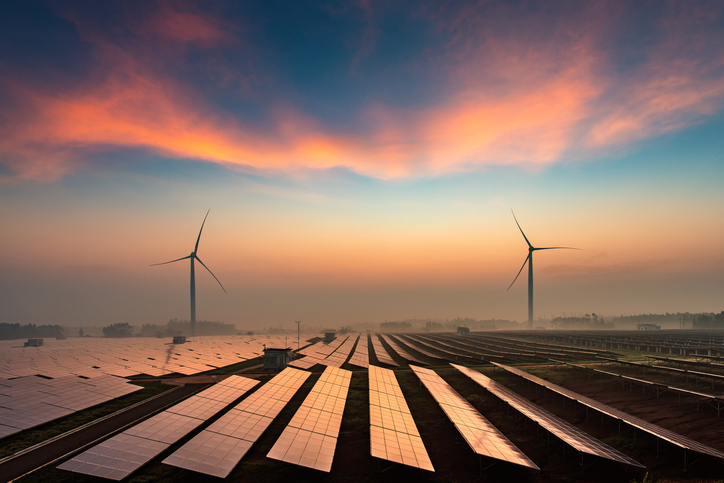
Fortunately, climate action aligns well with the national development strategies of much of the emerging world. The Indian G20 Presidency highlighted the need to place green development at the heart of the climate action agenda. For the global energy transition to be successful, the right conditions need to be created for the Global South to use this transition as a means to eliminate energy poverty, create new economic opportunities and resolve existing gender and health inequalities. The outcome from COP28 in Dubai has kindled renewed hope for multilateral climate cooperation. For the first time there is a clear consensus on the need to transition away from all forms of fossil fuels. The operationalisation of the loss and damage fund and the decision on the global adaptation goal also sends a strong message that adapting to the impacts of climate change is now just as important as mitigation. Yet, the decisions from COP28 fall short of outlining a clear pathway for providing the means of implementation necessary for effective climate action in the Global South. Going forward, ambition must be combined with equity if the United Arab Emirates consensus is to be implemented.
The following are proposals to reimagine global climate governance:
Reduce the cost of capital: The global financial architecture needs urgent reform and re-targeting. Much climate investment requires capital upfront, with savings paying out over long tenures, sometimes in decades. The differentials in the cost of capital between the Global North and South are prohibitive and the largest constraint on private investment flowing into climate action where it is most needed. Ending this problem will need a vast expansion of guarantees and Multilateral Investment Guarantee Agency (MIGA)-like schemes.
Traditional reasons for this spread in capital costs are related to the political risks of investing in developing countries. Sovereign risk is, of course, real, but it is also often exaggerated. Certainly, reducing the spread of sovereign risk is a vital task for international financial reform. Climate risk is the greatest threat to the stability of the international financial system. Sovereign risk cannot be allowed to outweigh climate risk.
Bold new initiatives are needed to address the question of sovereign risk delaying climate action. For example, it may be necessary to produce internationally administered pools of capital that directly discount the cost of capital for projects and platforms related to climate action.
India’s experience with digital public infrastructure has shown that there are other possible approaches. The creation of global public goods need not be cost-intensive. A global pipeline of 10,000 climate projects, each with a clear timeline, risk-reward payoff, and carbon scoring – which together might mitigate a significant proportion of future emissions – would represent such a global public good. A green infrastructure database on such a scale would allow for the much faster and more transparent mobility of green capital.
Thus, the mandate and lending patterns of multilateral development banks (MDBs) must be changed if they are to tackle the climate change. These entities can be instrumental in channelling greater financial flows to the Global South by taking on some of the risks that prevent private capital flows to these geographies. While the key areas for reform have been identified by several independent committees, there is a need for clear, time-bound action. An independent committee under the Indian G20 Presidency has put forward a roadmap for MDB reform, aiming to make the provision of global public goods a pivotal mandate alongside existing priorities. This roadmap must be made more ambitious, along the lines suggested above.
Bridge the technology divide: The lesson of the pandemic for the developing world was that even lifesaving technology in a health emergency may not flow quickly enough between the Global North and the Global South. It is natural, therefore, to ask how technological diffusion will work in the climate space.
The global understanding of intellectual property in the health sector is that patent protection is vital for innovation but also that, on occasion, governments may have the duty to override protections in the face of emergencies. The right to issue compulsory licences is rarely invoked but is a vital part of the international property rights landscape. A similar mechanism needs to be deliberated on for climate tech. The presence of the possibility of compulsory licenses also ensures that many companies have the incentive to be good global citizens and provide voluntary licences that spread access to lifesaving technology while preserving a satisfactory share of their profits. Regulators and global institutions need to be able to create a parallel set of incentives for climate tech.
Fortunately, emerging economies are also seeing the emergence of a home-grown cleantech ecosystem driven by start-ups looking to disrupt traditional energy systems. This innovative sector might solve the problem of scaling up climate tech, but home-grown innovation continues to suffer from a lack of available public funds to incentivise research, reduced access to cutting-edge tech and a shortage of early-stage risk capital to bring certain technologies to commercial scale. Creating the right mechanisms to connect available risk capital in the Global North to cleantech ecosystems in the emerging world will be essential to bridging this innovation gap. Voluntary licensing can play a role in this mechanism as well.
Repositioning the start-up sector in the emerging world towards climate goals is a matter of allowing for potential rewards through the creation of risk funds. A simple $100 billion climate tech fund that would disburse money to 120-odd companies in the Global South, including start-ups with clear roadmaps for scaling up climate tech, would greatly multiply the mitigation effect per dollar of its money.
Spotlight the climate-health-gender nexus: The climate conversation needs to be made personal, especially for the vast populations of the Global South. Women, for example, are most affected by climate change and serve on the frontlines of adaptation. They should lead the effort to counter it. Female leadership in the climate field is both practical and essential. Creating women-led projects investing in female leadership will allow for the conversation about climate to move from an elite 30,000-foot discussion to one related to the real requirements and concerns of households.
Women are also the most likely to bear the health impacts of climate-related hazards.
For countries across the world, public health systems will have to adapt and shift scale in response to new climate-related risks. Putting health at the centre of the climate conversation will also allow for a further personalisation of climate policy. It will create new reasons for and loci of climate action.
Multilateral forums such as the United Nations Framework Convention on Climate Change (UNFCCC) and the G20 must better acknowledge and differentiate impacts of climate change on health outcomes across genders and craft women-led initiatives to mobilise societal support for political action. It is essential to establish appropriate mechanisms that include and build capacities of this key population segment to shape global and national action on climate.
Build new pathways for cooperation: While traditional multilateral mechanisms – such as the UNFCCC and other organs of global climate governance – may have fallen short at times, there is nevertheless an opportunity for global action that transcends geopolitical divides. India’s approach to its G20 presidency prioritised consensus in contested times. Even at the height of geopolitical polarisation, every major country is nevertheless moving, for its own reasons and out of a sense of responsibility, to take national action on mitigation and adaptation. In other words, climate action is the location of “inadvertent cooperation” between great powers and the driver of greater regional dialogue as well.
It can and should be viewed as a mechanism for restoring global stability and trust in multilateralism – if, that is, parties live up to their own commitments. This inadvertent cooperation should be captured and energised through new partnerships, institutions and dialogues. Countries with the coincidence of capabilities and concerns can collaborate in smaller groupings for faster and more ambitious action. UN-led discussions may suffer from “zero-sum” approaches and offer outcomes with only minimal ambition. They offer a suitable location for the mutual blame game, but global climate action must proceed nevertheless and build on the national action and inadvertent cooperation that is already visible.
This co-authored article with Danny Quah was first published on the World Economic Forum (WEF) as part of its White Paper on ‘Shaping Cooperation in a Fragmenting World’.
Raisina Files 2024 – The Call of This Century: Create and Cooperate
This edition of the Raisina Files is infused with this conviction. The call of this century is to dispense with cynicism and to embrace what is appearing and emerging. A call to work towards inaugurating an inclusive and sustainable future. Rising up to the task requires us to create and cooperate, to build communities fit for this purpose.
This volume comprises contributions from an ensemble of thinkers who problematise, and attempt to answer, the pressing questions that matter. What are the power dynamics between a State and its citizens in this age of the digital? How do we protect our children in their always-online world, while preserving their agency and rights? If the current Western-led mechanisms of international aid are failing to meet the needs, how do we ensure that assistance truly reaches the grassroots? What transformations do our food systems require so they can be fit for the zero-hunger goal? As we move to the green frontiers, how will women lead the change? And how does the global financial system become just that—global?
Read it here.
Net zero by 2070: Financing India’s biggest infrastructure buildup
India’s goal of reaching net zero presents a crucial challenge and opportunity. Its success depends on financing key sectors effectively, thus, shaping the pace of decarbonisation.
At COP26, India set itself the ambitious target of achieving net zero carbon emissions by 2070. Fulfilling this target will require critical sectors such as power, industry, and transport to switch from current production methods to low-carbon technologies. To help manage the economic growth and minimise the negative impact on businesses and the public.
In essence, the net-zero target presents itself as India’s biggest infrastructure and employment generation opportunity for the next 50 years. As per some estimates, solar and wind installations will need to grow 70 times from current levels to reach 7,700 GWs to achieve net zero by 2070. In addition to this, the country will need to build infrastructure to support 114 MMTPs of green hydrogen production. Estimates for this asset buildup place the costs of transitions for electricity, industries, and transportation at over US$ 10.1 trillion. However, current capital sources are sufficient to cover asset buildup valued at US$ 6.6 trillion, leaving a deficit of US$ 3.5 trillion.
The net-zero target presents itself as India’s biggest infrastructure and employment generation opportunity for the next 50 years.
Therefore, the magnitude of the asset buildup and the management of the human aspects of the transition will pose the most significant challenge and opportunity for India’s economy in the coming decades. Finance will be critical in this aspect as the country needs an average mobilisation of over US$ 200 billion annually for the next 50 years. Not just the scale but also the delivery of the finance to these sectors will decide the eventual pace of decarbonisation.
We suggest six steps that could aid in achieving this scale of finance. Essentially, financing will depend upon a three-step function of raising capital, deploying it (e.g., making loans) and collecting it back (e.g., recovery of the principal and interest). Each of our suggestions aims to solve some key problems within this three-step financing process.
The first step should be to notify sectoral targets, if possible, all the way up to 2070 and create an aligned taxonomy for achieving the same. The taxonomy would allow financiers to understand the funding potential of projects and mitigate the transition risk by answering what’s green and what’s not. Such a step could also help augment the capital-raising ability of financial institutions and corporates as they can tap lines of credit that are aligned to these targets for e.g., green or transition bonds.
The taxonomy would allow financiers to understand the funding potential of projects and mitigate the transition risk by answering what’s green and what’s not.
The second step entails leveraging public funds to mitigate lending risks and enhance the accessibility of finance at competitive rates, particularly for emerging business models and innovative technologies. This step is particularly important for a financial system which is shifting from financing fossil fuels to new age low-carbon technologies. By using de-risking structures, financial institutions can feel more comfortable deploying loans into new-age and green businesses with unique requirements and limited credit histories. For instance, electric vehicles (EVs) are expensive upfront, and bankers may have a limited understanding of the technology, leading to conservative lending practices. Credit guarantees at attractive rates can both help alleviate these concerns and allow for deeper financing penetration.
Third, like China, which today houses four of the largest five banks in the world, India should look at building massive banks and infra-debt funds that could allow for improved finance availability for mega RE, green hydrogen and other infrastructure projects marked by long gestation period to be built at a pace not seen in the past.
Fourth, the country could moot the greater participation of the foreign banks, which could bring in the much-needed foreign capital as well as take the currency risk, to finance the asset buildup in the country. This will require greater coordination among policymakers and regulators, often a rarity in India, to identify the key bottlenecks that have led to many foreign banks shutting shop in the country or getting reduced to fringe players in the lending ecosystem of the country.
Fifth, deepening the bond market and boosting other refinancing instruments will help create a greater flow of debt capital towards greenfield projects in the country by freeing up the books of debt providers like banks.
India must increasingly leverage its growing global influence to drive reforms in the international financial system, which currently obstructs the flow of climate finance beyond the developed world.
Sixth, to address the quantum challenge, public money could be used to incentivise foreign investors to make investments, who at present shy away from the country since investments are inherently expensive owing to currency hedge costs, in green projects in the country.
Finally, domestic and currently available foreign sources alone will not be sufficient to meet this financial challenge. India must increasingly leverage its growing global influence to drive reforms in the international financial system, which currently obstructs the flow of climate finance beyond the developed world. Specifically, expediting the reform agenda of Multilateral Development Banks (MDBs) prioritised during the Indian G20 presidency is essential. These entities must now be equipped to better utilise their resources to mitigate risks associated with private climate investments in the Global South. India must also better utilise plurilateral groupings such as the BRICS to address specific challenges. This includes establishing a dedicated pool of capital aimed at lowering the costs of green financing and fixing flaws in the credit rating systems that continue to be biased against the EMDEs.
Co-authored with Vaibhav Pratap Singh for the ORF Website
The Only Way to Make Climate Progress
Green technology and capital is concentrated in rich countries. Here’s how to address the north-south divide.
The recent United Nations climate summit, known as COP28, offered a glimmer of hope for international climate action. Negotiators struck a deal to transition the world away from fossil fuels and formally approved a loss and damage fund to support the countries that are most vulnerable to climate impacts. Yet COP28 fell short in one major area: It did not outline a clear pathway for funding and implementing climate action in the global south.
The implications of this will be felt around the world. Despite landmark U.N. climate agreements, global emissions have continued to rise. New research suggests that the world will breach the critical threshold of 1.5 degrees Celsius of warming above preindustrial levels by the end of the decade.
As emissions peak in the developed world, future emissions growth will be concentrated in the global south. Yet the resources needed to limit these emissions—namely, green technology and capital—are concentrated in the global north.
The global energy transition will only be successful if the international community fixes the north-south divide. Critical capital must no longer be withheld from the parts of the world that require it the most. There is an urgent need for leaders to reimagine climate cooperation. They can do this by ensuring that the global south has access to the financing, technology, and forums it needs to scale up energy access, support communities most affected by climate change, and make progress on climate targets.
The global energy transition will only be successful if the international community fixes the north-south divide. Critical capital must no longer be withheld from the parts of the world that require it the most.
Countries in the global south have felt cheated by international climate conferences that often overlook their voices and needs. These nations are particularly vulnerable to the impacts of a warming planet; in 2023, climate-induced natural hazards were among the foremost threats to lives and livelihoods in places including Libya, Yemen, Pakistan, and East Africa.
Yet countries in the global north have not only refused to make binding commitments to reduce emissions, but have also failed to deliver on the meager promises they have made, such as a 2009 commitment to provide $100 billion annually to the global south by 2020.
The resulting tussles between both sides distract from the real scale of the problem. It is not enough to think in terms of billions. The final text at the 2022 U.N. climate summit noted that the world would need to invest between $4 and $6 trillion annually in renewables and decarbonization solutions to transition to a low-carbon economy. Even less ambitious targets call for between $2 and $3 trillion in annual investments. Yet instead of identifying solutions to raise this kind of money, negotiators have fought over small, insignificant change.
Most of these investments will need to go to the global south. Currently, only around 25 percent of global climate finance, both private and public, flows to the global south. Yet in the next three decades, most global energy demand growth will come from these countries as they seek to address severe energy poverty. The International Energy Agency has estimated that one-quarter of this growth between 2019 and 2040 could come from India alone.
Since much of the global south’s energy infrastructure has not been built, there is an opportunity for development that does not follow the carbon-intensive pathways of the global north.
Most of these investments will need to go to the global south. Currently, only around 25 percent of global climate finance, both private and public, flows to the global south.
The good news is that green technologies have become increasingly cost-effective; the Intergovernmental Panel on Climate Change has estimated that the average cost of solar and wind energy and batteries has dropped by up to 85 percent since 2010. But the private sector only tends to see a clear business case for green investment in the global north, where more than 80 percent of total global climate finance is concentrated. In the global south, by contrast, only 14 percent of green investment comes from the private sector.
That’s because climate investment often requires considerable upfront capital and can take years to yield substantial returns. That initial investment has proved a hurdle for the global south to securing private funding. The International Energy Agency has estimated that the nominal financing costs for green energy can be seven times higher in developing and emerging economies compared with the United States and Europe.
This imbalance in capital costs is partly due to sovereign risk, or the political risks of investing in developing countries. Yet, while sovereign risk is real, it is often exaggerated and should not outweigh climate risk, which poses the greatest threat to the stability of the international financial system.
The technology needed to scale up green energy solutions also remains concentrated in the developed world and China. The global south often has to pay a heavy premium to use these technologies, including solar panels, wind turbines, and battery storage technologies.
Global leaders will need to resolve these disparities to meet their climate targets. Fortunately, climate action already aligns with much of the global south’s national development strategies. As the rotating president of the G-20 last year, India highlighted the need to place green development at the heart of climate action. But the global south can’t do it alone.
The global south often has to pay a heavy premium to use these technologies, including solar panels, wind turbines, and battery storage technologies.
There are four critical steps that the international community can take to rebuild trust in the climate action process and advance global cooperation.
First, the international financial system needs urgent reform to encourage more private funding in the global south. This will be essential to renewable energy projects and other mitigation measures. But it will also support adaptation efforts, including regenerative agriculture, drought-resistant practices, and low-cost community infrastructure such as bunds to protect against sea level rise and salination.
Multilateral and bilateral development institutions should expand financial guarantees and blended finance mechanisms to reduce the perceived risks associated with investments in the global south. For example, G-20 countries could create a pool of capital—administered by an agency such as the Multilateral Investment Guarantee Agency, which is housed in the World Bank—with the sole aim of reducing the cost of capital for climate-related projects.
Multilateral development banks must also be reformed to tackle the climate crisis. These banks can be instrumental in taking on some of the risks that hinder private capital flows to the global south. An independent committee under India’s G-20 presidency put forward a road map to reform such banks so that they prioritize eliminating extreme poverty; tripling sustainable lending levels; and creating a new, flexible funding mechanism. The G-20, as well as the World Bank and International Monetary Fund, should build on this road map by establishing hard timelines for implementing the reforms and ensuring support for green projects.
Second, the international community must ensure that the global south has access to technology it needs for the energy transition. In the health sector, there is a global understanding that while intellectual property protection is vital for innovation, governments may have to override protections in emergencies; in those rare instances, governments can turn to compulsory licenses to use a patent without the consent of the patent holder. Despite this precedent, the COVID-19 pandemic showed the world that even lifesaving technology may not flow quickly enough to the global south in a health emergency.
Before climate emergencies worsen, regulators and global institutions need to identify clearer mechanisms to share intellectual property rights for critical technologies and disseminate climate tech. This will be essential to ensuring that the green transition is not afflicted by severe delays and global disputes similar to those witnessed during the pandemic.
Emerging economies are also starting to see homegrown clean tech ecosystems driven by start-ups looking to disrupt traditional energy systems. Yet this sector suffers from a lack of public funds, reduced access to cutting-edge tech, and a shortage of early-stage risk capital to reach commercial scale. New mechanisms to connect risk capital in the global north to the clean tech sector in the global south will be essential to bridging the technology gap—for instance, a $100 billion fund that would disburse money to around 120 companies in the global south, including start-ups that plan to scale up climate tech.
Emerging economies are also starting to see homegrown clean tech ecosystems driven by start-ups looking to disrupt traditional energy systems.
Third, multilateral forums, such as the UNFCCC and the G-20, should better acknowledge the role of women in climate action, especially in the global south, and create women-led initiatives to mobilize support for political action on climate. Women are especially vulnerable to the effects of climate change—in many countries, they bear the responsibility of securing resources such as food and water that are made scarcer by global warming. Investing in female leadership will help shift the climate conversation from an elite discussion to one grounded in the real concerns of households.
Women are also the most likely to face health impacts from climate-related hazards, and public health systems worldwide will have to adapt to new climate-related risks. Putting health and gender equality at the center of the global climate conversation will create new reasons for climate action.
Finally, the world needs to build new pathways for climate cooperation. Despite geopolitical divides, nearly every country has a national action plan for climate mitigation and adaptation. Climate action has driven greater regional dialogue, including through the African Union’s Climate Change and Resilient Development Strategy and Action Plan and Central Asia’s Bishkek High-Level Dialogue on Climate Change and Resilience.
Climate action has also led to inadvertent cooperation among great powers, such as the United States and China. This kind of cooperation, which is often driven by the private sector, has been a key enabler of supply chains essential for green energy growth.
Countries with similar capabilities and concerns should collaborate in smaller groupings for faster and more ambitious action.
Climate cooperation can—and should—become a way to restore global stability and trust in multilateralism. Leaders should energize inadvertent cooperation through new partnerships, institutions, and dialogues. Countries with similar capabilities and concerns should collaborate in smaller groupings for faster and more ambitious action. The “climate club” that German Chancellor Olaf Scholz launched at COP28 to support decarbonization among some 36 member states is a good start. But the world needs an alliance with equal representation from partners in both the global north and south that can implement a binding finance package to channel transformative climate finance to the global south.
The international community must reimagine the global climate governance framework to address the scope of today’s climate challenge. As the clock ticks down to prevent catastrophic warming, only innovative approaches can mitigate damage to our planet. Key to this will be ensuring that the most vulnerable countries are no longer shut out of the capital and technology that they need to transition to green, resilient economies.
This commentary originally appeared in Foreign Policy.
Controversies aside, COP28 is a real chance to put Global South at centre
As the world reels from the impact of the hottest year on record in 2023, the attention of the global community turns to COP28 for solutions to the climate challenge. While the previous decades of the UN Framework Convention on Climate Change (UNFCCC) negotiations have failed to deliver effective and equitable climate action, this year’s COP in the UAE is a unique opportunity to move from empty promises to real action.
Real action on climate requires pragmatism. It would centre the specific needs of energy-poor countries in the Global South. It would recognise that the energy transition for much of the world is just that: a transition, in which legacy fuels are both rendered more efficient and used to finance the scale-up of renewables. Sermonising western COP presidencies have rarely understood the basic needs of the developing world.
While COP28 might have attracted concern for naming a president-designate who also runs a large fossil fuel company, the fact is that this is cause for optimism. Dr Sultan Al Jaber does indeed run Abu Dhabi’s national oil company — but he also founded the renewable energy giant Masdar, which pioneered efforts to spread green capital across multiple countries and geographies. A pragmatic climate solution for the Global South would similarly prioritise the spread of enterprise, of solutions, and of technology.
Dr Al Jaber and COP28 have a hard task ahead of them. Estimates indicate that nearly all developed nations, with only two exceptions, are significantly off-course in meeting their Nationally Determined Contributions (NDCs). This stark deviation stands as the primary obstacle preventing the realisation of the Paris Climate Goals. Those most culpable for the climate crisis persist in evading their responsibilities. Responsibility for climate finance is even more important. Developing economies will require around $2 trillion annually to meet emission targets and cope with the impact of climate change. In stark contrast, the world has fixated on bickering over a meagre $100 billion annual target for financing from the developed world. We are currently fighting over bicycles when what is required is a Mercedes.
The UAE COP is well placed to establish a new pathway that places the Global South at the centre. It also comes at a time when there is already momentum around Global South led multilateral cooperation. In particular, the Indian G20 Presidency has already demonstrated the ability to build consensus around such a climate agenda. Notably, the inclusion of the Green Development Pact in the New Delhi Leaders’ Declaration creates a cohesive narrative around climate action as a catalyst for sustainable and inclusive growth. India has highlighted a few priority action areas which must now be taken forward in the coming year, and COP28 is an ideal starting point.
First, reducing cost of green capital in the developing world is crucial, as these can be nearly seven times higher than in OECD countries. The IMF estimates that emerging and developing economies (EMDEs) have accounted for 80% of global growth since 2008. However, only 25% of climate finance has flowed to these geographies. By design, the current international financial architecture prevents growth from being green. It is imperative to create a global inventory of green projects with a guarantee that each project can access capital at a similar cost. This guarantee can be facilitated by a transnational institution similar to the Multilateral Investment Guarantee Agency (MIGA). Response to a planetary crisis must not be compromised by perceived political risks.
Second, COP28 must look to institutionalise climate action as an explicit mandate for Multilateral Development Banks, aligning with the MDB reform agenda put forward during the Indian G20 Presidency. The recently expanded BRICS grouping can also be utilised to further the reform agenda. The newer capital-rich members of the grouping should be galvanised to create a line of funds for Green Transitions within the New Development Bank. This can serve as a boutique model which can increase pressure on West-controlled institutions to accelerate their efforts.
Third, progress must be made on the Global Goal on Adaptation (GGA) with a focus on identifying concrete instruments to meet the distinct adaptation finance needs of different regions, particularly for the most vulnerable communities. Furthermore, the GGA should serve as a platform to underscore the repercussions of climate change on health and gender, identifying integrated strategies to tackle these interconnected crises. The Loss and Damage Fund must also be operationalised with concrete financing commitment from the developed world.
Fourth, innovation in climate technologies in the Global South must be encouraged. In particular, green startups should be supported by creating effective knowledge sharing mechanism within the UNFCCC and establishing a social impact fund to support promising green projects.
Finally, it is crucial to diversify and make green technology value chains accessible to all. Presently, China holds disproportionate control over the raw materials and technologies vital for green energy. It is critical to break free from this monopoly and ensure that Beijing does not wield a veto over our green future.
Source : Times of India, December 3, 2023
 Samir Saran