China, COVID-19, Research, security, Writing

India’s security choices during the COVID-19 pandemic

At the start of the 2020s, India has been confronted with a massive viral spread and a relentless People’s Liberation Army (PLA) on its borders. Last year, even as India was responding to the pandemic that originated in Wuhan, it had to mobilise its forces to counter Beijing’s invasion on the Himalayan heights. Both resulted in loss of lives and both show no signs of going away. While the virus is threatening to rise again in a ‘third wave,’ China has literally dug in at high altitudes in its quest to secure real estate and territory that it believes is crucial for its Belt and Road Initiative (BRI), that provides access to a warm water port in the Arabian Sea, and that is critical to a larger project that seeks to reshape the geopolitical map of Asia. While the two nations have taken modest steps to disengage, military and diplomatic negotiations have not yielded substantive results.

In June 2021, reports emerged that China had been ramping up infrastructure along the Tibetan border. Following this, around 200,000 Indian soldiers have been deployed on the frontier, an increase of over 40 percent from 2020. For India, China poses a clear and present danger. To respond to an expansive and belligerent northern neighbour, it has to reorient its conception of its security as well as deployment of its political and diplomatic resources. This was not the case until very recently.

For India, China poses a clear and present danger. To respond to an expansive and belligerent northern neighbour, it has to reorient its conception of its security as well as deployment of its political and diplomatic resources.

Pakistan had been the major preoccupation since Independence in 1947. Its occupation of parts of the Indian state of Jammu and Kashmir, its export of terror to India as a means of waging an asymmetric war, and its nuclear proliferation had positioned it as the main threat to India’s national security. For long, China had escaped critical scrutiny despite provocative actions. The Indian security establishment was not very vocal when China tested an atomic device during President R. Venkataraman’s state visit in May 1992 — clearly intended to send a message to India. Indian Defence Minister George Fernandes’ prophetic assertion at the turn of the century that China, not Pakistan, was India’s “potential threat No. 1” was not universally shared in the strategic community in New Delhi.

In their public speeches, Chinese leaders declared their preoccupation with the welfare of their people. They took great pains to position China as a responsible power that avoided international confrontation. In hindsight, they clearly succeeded. From the ‘returns seeking’ investors in the United States to the political leaders in Europe and Asia who wanted a piece of the Chinese economic pie, all bought into this masterly conduct of statecraft. For India, the urge to keep China in good humour was also implicated by the border conflict of 1962. Relations had thawed only a quarter-century later. Prime Minister Rajiv Gandhi’s visit to Beijing in 1988 paved the way for the Sino-Indian Bilateral Peace and Tranquility Accords inked in 1993 and 1996 to stabilise the Line of Actual Control (LAC).

From the ‘returns seeking’ investors in the United States to the political leaders in Europe and Asia who wanted a piece of the Chinese economic pie, all bought into this masterly conduct of statecraft.

With stability along the boundary, trade and cultural ties between the two nations began to flourish. The boundary pacts mandated that large numbers of troops would not be amassed along the border, and that there would be no attempts to alter the status quo unilaterally. The Indian establishment believed that the border accords would be “peace for our time.” This search for fool’s gold would lead to India curtailing its multilateral naval exercises and slowing down infrastructure development in critical sectors of the India-China border. Influential voices in the Manmohan Singh government (2004-2014) believed India’s security interests would be served if it did not upset China.

Pushback came only in 2013, when transgressions by Chinese forces in Depsang were diplomatically and militarily countered. Yet, here too there was much discussion and debate in the upper echelons of government. Greater clarity was to emerge in 2014 when India, under the newly elected Prime Minister Narendra Modi, was at the receiving end of Chinese incursions in Ladakh even as a summit was under way with the visiting Xi Jinping. With two episodes in close succession, it would be fair to say that a change in India’s approach to its northern neighbour was thrust upon it.

The Indian establishment believed that the border accords would be “peace for our time.” This search for fool’s gold would lead to India curtailing its multilateral naval exercises and slowing down infrastructure development in critical sectors of the India-China border.

In recent years, India has been able to recalibrate its approach towards the Middle Kingdom even as the world order is changing. The US-India partnership has evolved rapidly. Washington has helped thwart moves by China to internationalise the issue of Jammu and Kashmir, enabled India’s entry into the international nuclear order and brought pressure on Pakistan to crack down on terrorism. The Quad grouping, where Japan and Australia join the duo to keep the Indo-Pacific region inclusive and open to all, is working on providing alternatives to the BRI and is seeking a number of resilient arrangements, including on technology supply chains. A Quad vaccine for all is on the anvil and other countries are looking to partner with the Quad on important global issues.

The ‘La Pérouse’ maritime exercises in the Bay of Bengal, with France joining the Quad members, and the Australia-France-India ministerial dialogue demonstrate that the idea and the ideals of ‘Quad Plus’ are gathering steam. The UK has floated the ‘Democracy 10,’ which includes the Quad countries, to tackle issues related to 5G and emerging technologies that may have a bearing on collective security. Whitehall’s recent assessment of its economic, security and diplomatic interests may see it engage more deeply with India in the Indo-Pacific. Old Europe is certainly finding a place at the core of India’s security calculations.

A testament to India’s recalibration is NATO Secretary General Jens Stoltenberg’s pitch, at the Raisina Dialogue 2021, to broaden cooperation. NATO views the rise of China as having huge security implications and assesses India as its partner. PM Modi’s historic Porto Summit with leaders of the EU and 27 EU member-states helped boost cooperation on terrorism and maritime security. The ‘connectivity partnership’ between the EU and India seeks to finance projects in other nations, offering an alternative to China’s BRI.

NATO views the rise of China as having huge security implications and assesses India as its partner.

Even as India strengthens and redirects its relationship with the old world, Russia remains the X factor. New Delhi’s strategic ties with Washington have become a sore point for the Kremlin. If two new poles emerge — the US and its partners and allies, and the Beijing-Moscow ‘axis ’ — India’s room for manoeuvre may be affected. India is alive to this possibility and is redoubling its efforts to work with Russia, its largest weapons supplier over the past decades. India has to convince President Putin that the bilateral relationship allows him greater latitude while dealing with his southern neighbour. Through back channels, India also has to work towards a reset between the US and Russia and to convince the EU that pushing Putin into Xi’s corner is dangerous and counterproductive. The recent Biden-Putin summit may have gone some way in making this a possibility.

A resurgent China, with its plan to establish regional hegemony in Asia even as it tries to split and dominate Europe, is Delhi’s biggest security challenge. The Indo-Pacific will define the future of the Asian Century. India has been astute in ensuring that its partners and fellow stakeholders from the Atlantic order work closely with it to navigate the choppy waters of the Indo-Pacific.


An abridged version of the above was published for the Lennart Meri Conference.

Standard

With contributions from

Kanti Bajpai, Hoo Tiang Boon, Sujan Chinoy, Bill Emmott, Frédéric Grare, Suhasini Haidar, Quah Say Jye, Tsutomu Kikuchi, Chung Min Lee, Tanvi Madan,  Kishore Mahbubani, Kalpit A. Mankikar, Rana Mitter, C. Raja Mohan, Samir Saran Teresita Schaffer, Ayesha Siddiqa, Peter Varghese, Igor Yurgens

About the Book

In July 1971, US National Security Advisor, Henry Kissinger, made a secret visit to China to meet top Chinese leaders. This inaugurated a new phase not just in US-China relations but in contemporary history. That visit and the subsequent US-China relationship, including the US decision to invest in China’s economic rise and admit it into the World Trade Organisation, combined to firm up the foundations of China’s rise as a world power.

For more than four decades, the leadership of the two countries had a secretive pact, which worked well to each other’s benefit. The US helped power China’s economic growth in the hope that Beijing would turn a new political leaf and adopt Western practices (e.g. democracy). China grew economically and militarily, used its financial prowess to spread its influence across continents, as four generations of Chinese leaders built their nation at the expense of the US.

Half a century after Kissinger’s historic visit, the US and China are today engaged in a trade war bordering on a new Cold War. Washington is not openly talking about “de-coupling” from China, which has begun to challenge its global dominance, but it might very well be. China has already established itself as a dominant power across Eurasia. More worryingly, China is militarily and economically threatening its neighbours, including Japan, Korea, Vietnam, Taiwan, Australia, Philippines, Indonesia and India.

This collection of critical essays examines the impact, consequences and legacy of Kissinger’s first, door-opening visit to China and how it has shaped world order.

Books, China, Writing

A New Cold War: Henry Kissinger and the Rise of China

Image
China, foreign policy, Great Power Dynamics, India, international affairs, Research, Strategic Studies

Communist Inc: The Pandemic and China’s World

Co-authored with Akhil Deo

The Communist Party of China will celebrate the 100th anniversary of its founding this July. This marks the first significant milestone in Chairman Xi’s “China Dream”, a project that will ostensibly culminate in 2049, the 100th anniversary of the founding of the People’s Republic, with associated aspirations of China cementing its position as a global power. In our book, Pax Sinica, we had detailed three instruments that are crucial to these ambitions: Leadership over global institutions and processes, a conducive environment for achieving “discourse power”, and the construction of new international coalitions. China seeks to control global institutions and rule-making processes, grease and dominate the media and public sphere into a favourable disposition, and enter into perverse partnerships with other nations, described as a “loan for sovereignty” arrangement in one of its avatars.

The onset of the pandemic has made many of these strategies more visible, even as it highlighted the opportunities and challenges that lie ahead for China.

China’s global dominance strategies

For the past decade or more, China has pursued a dual strategy of co-opting post-war institutions while simultaneously pursuing its own brand of multilateralism through the Belt and Road Initiative (BRI) and an assortment of formal and informal fora, such as the Shanghai Cooperation Organisation. Three approaches guide China’s strategy: Building global influence and prestige; shaping and/or altering key norms, standards, and processes; and creating the capacity to withstand pressure for selectively disregarding international rules.

The fruits of these efforts were visible amid the pandemic, most controversially at the WHO, which struggled to balance its commitment towards transparency and accountability, and its operational reliance on and systematic infiltration by China. Under cover of the pandemic, China has made more significant inroads as well. In April 2020, China was appointed to the influential United Nations Human Rights Council (HNRC) consultative group, which plays a crucial role in selecting global monitors for free speech, arbitrary detention and forced disappearances—the very rights that Beijing crushed in Hong Kong and Xinjiang.

One aspect of this ploy of the Communist Party of China (that effectively and absolutely owns the country) that often goes unnoticed in India is China’s leadership in technology standard-setting organisations. Over the past decade, Beijing has improved its representation in, and submissions to, the technical committees and sub-committees of organisations like the International Organisation for Standardisation and the International Electrotechnical Commission. In March 2020, China’s Standardisation Administration published an innocuous document outlining the elements of a more ambitious strategy known as China Standards 2035. The 15-year blueprint will chart a pathway for China to dominate standards in emerging industries, giving it the ability to set the terms of international trade and even define the relationship between technology and society globally.

Augmenting China’s influence in international organisations and standard-setting bodies is its global media and narrative management strategy—an essential facet of “discourse power”

Augmenting China’s influence in international organisations and standard-setting bodies is its global media and narrative management strategy—an essential facet of “discourse power”. Chairman Xi alluded to this in a recent speech, calling for China’s media to develop an “international voice”. The research in our book highlighted what scholars called China’s policy of “borrowing a boat to go out into the ocean”. In other words, China’s use of paid inserts and large advertisements in newspapers allows it to propagate its narratives. Two recent reports provide insight into how significantly these efforts have evolved and intensified.

The first, by the Associated Press and the Oxford Internet Institute, describes China’s use of bots and fake social media accounts to amplify its “wolf warrior” diplomats and their proxies online. While China has previously used these tactics in Taiwan and Hong Kong, such operations have taken on a global scope amid the pandemic. Beijing’s appetite for misinformation, exemplified famously by Zhao Lijian’s claim that the coronavirus originated outside China, only exacerbated the challenge. The second, from the International Federation of Journalists, posits that Beijing’s strategy of syndication appears to be paying off. Over the year, its inserts into local media, increasingly in vernacular, along with a more engaged diplomatic community, have bolstered its visibility in the developing world.

Beyond its media strategy, China continues to fund educational institutions through opaque means, sometimes with attached costs to academic freedom. The Communist Party also increasingly hosts foreign diplomats and security officials for training programmes on “information management” and sponsors ruling party politicians around the world to attend training sessions on party building and governance. In 2020, under pressure from Western scrutiny, Beijing rebranded its infamous Confucius Institutes and handed over operations to a ‘non government organisation’ defined by the party. However, the US and Europe aren’t necessarily the targets of its educational and cultural investments. A report from Aid Data in 2018 revealed that countries that are more aligned with China’s foreign policy receive the bulk of its largesse. While it is unclear yet what gains have accrued to Beijing from such initiatives, they represent a formidable institutionalised apparatus to export its ideology and political practices.

The Communist Party also increasingly hosts foreign diplomats and security officials for training programmes on “information management” and sponsors ruling party politicians around the world to attend training sessions on party building and governance

Backdoor entry into the EU

Finally, we had highlighted China’s strategy of building new coalitions and undermining existing ones. Nowhere was this more apparent than Europe, where Beijing’s 17 + 1 platform for engaging with Central and East European (CEE) nations had triggered concern about its “divide and rule” tactics. To some extent, China’s investments in the region have paid off— with countries like Greece and Hungary scuttling the EU’s efforts to criticise China’s violations of international law in the South China Sea and the passing of the national security law abuses in Hong Kong.

2020 dampened this momentum for China—and demonstrated that large powers can still secure their peripheries. Several East and Central European leaders expressed dissatisfaction with the pace of investments and many were no-shows at the China-led forum. Many have also signed onto the US’s Clean Network Initiative, intended to prevent the entry of China’s 5G companies into key markets. The Baltic states, meanwhile, were more apprehensive about Russia than they were keen on Chinese investments.

Nevertheless, the 17 + 1 platform is but one instrument in China’s more global “perverse diplomacy” toolkit, and writing it off is premature. It marks a permanent presence that China now enjoys at the EU’s doorstep, one that the CEE can always leverage for better terms from Brussels. At the very least, China is now a voice in domestic EU debates.

China also hosts a web of high-level forums and summits in nearly every part of the world, including the Arab states, Africa, Latin America, and the ASEAN. Beijing’s vaccine diplomacy has won it praise in most of these geographies—especially in the face of Western absence and selfish acts of the past year. These forums augment and bolster various initiatives, ranging from China’s infrastructure investments to promoting its technology propositions. And its economic presence and investments are buying it diplomatic support as well. For instance, the support of African states has been crucial for China when its record in Xinjiang and Hong Kong was questioned in the UN in 2020 and 2019.

When looking at the pandemic in retrospect, Chinese leaders will likely see parallels to the 2008 financial crisis—one more milestone in the long decline of the West, and China’s rise. Beijing robustly managed the pandemic at home and stepped up to provide global public goods. To be sure, it faces new headwinds: Public opinion of China has plummeted in the West, the Biden administration is gearing up for great power competition, the EU has ‘frozen’ its latest investment deal with China, and institutions like the G7 are stepping up to offer alternatives to the BRI.

Public opinion of China has plummeted in the West, the Biden administration is gearing up for great power competition, the EU has ‘frozen’ its latest investment deal with China, and institutions like the G7 are stepping up to offer alternatives to the BRI

Elsewhere, the message from China over the past year is resilience and continuity. It remains committed to an alternative form of globalisation via the BRI. Its influence over international institutions will only grow, proportional to its wealth and power. Beijing’s media is increasingly savvy in projecting and protecting its core interests. Further, contrary to the perception that China is “friendless”, it can call upon nations to support it when it matters. And even when there is pushback, it is often haphazard. The recently announced “Build Back Better World”, while grand in intent, struggles with the contradictions within the group on their assessment of the Middle Kingdom. Key countries have chosen trade over security and valuations over values in their engagement with China.

The future of the Indo-China relationship 

Where does this leave India? Our book warned that Doklam was unlikely to be the last border confrontation between the two Asian powers. We argued that it opened a new tense period between India and China—an Asian Cold War. The Galwan Valley Clash confirmed the advent of a new era of high altitude faceoffs with possible ramifications in the oceans as well. This rift has only grown wider amid the pandemic. China’s belligerence in the Himalayas, and India’s restriction on Chinese technology platforms as well as its alignment with coalitions competing with China have all but cemented contestation. This will drive engagement in the years ahead.

New Delhi will confront a more fundamental dilemma: On the one hand, political tensions with China will remain high. But on the other, it is dependent on trade with China for its economic objectives—a dependence that will likely remain given the adverse economic consequences of the pandemic. Indeed, data published by Chinese customs officials revealed that trade with India boomed in 2021, even as Beijing appears to be consolidating its position in the Himalayas. How India resolves this contradiction and builds a security posture that accounts for this will indeed define the relationship.

New Delhi needs clarity of thought and a national consensus on China. In the coming days, it will have to take a leaf out of the Chinese playbook and engage in trade with the one that seeks to do it harm. Its economic engagement must be alive to this and its security considerations immune from these entanglements. It must realise that it cannot trade or talk its way into a better relationship with Beijing. These are important but essentially sideshows to the principal theatre of engagement. Deceit and political muscularity is the new grammar of the bilateral that China has proffered. With limited recourse available, the time for India’s legendary ambiguity is long past.


PAX SINICA: Implications for the Indian Dawn, by Samir Saran and Akhil Deo, is available here.

Standard
China, Great Power Dynamics, Strategic Studies, USA and Canada

From Xi with love: A New Year greeting to the new POTUS

Among the more memorable lines from Albert Camus’ haunting novel, The Plague, possibly the most read and quoted book in the Year of the Pandemic, is a starkly stated fact: “Stupidity has a knack of getting its way.”

If “You are on mute” was the most common interjection during COVID-19-enforced digital conversations in the conference circuit, a close second would be the assertion, “We have to work with a rising China to make it a responsible actor.” You could voice this assertion, or a similar variant, at a think-tank discussion or official consultation in Western Europe or America and be appreciated for possessing a wise and rational mind. If you were to say it many times over with panache and flair, you could bag a serious policy job in that part of the world. Money talks; the profundity of banal wordsmiths runs marathons.

The Old World cannot ‘make’ China act in any way it tells it to.

For there are two fatal flaws in this line of thought. The first flaw has to do with “the rise of China.” This is the last decade’s conversation; outdated and irrelevant. China has already risen, and it is everything many did not wish it to be, even as they were investing in its emergence. Deal with it now by accepting this reality. The second flaw pertains to the rather misplaced assessment of Western power embedded in these seemingly highfalutin but inane assertions. The Old World cannot ‘make’ China act in any way it tells it to. In fact, the West does not even know what it wants from China besides trade and investment. A popular refrain of yesteryears was that while all countries have an army, in Pakistan, the army has a country. Today’s refrain is reflected in what someone recently said, without exaggerating: In Germany the auto industry has its own union, the European Union.

2020 was a crucial year for China. Its claim to global leadership was severely tested by its role in, and early mismanagement of, the COVID-19 pandemic. It faced pushback, including from unexpected quarters, on its deluge of misinformation and its subversion of international institutions to divert attention from its malfeasance. The pandemic was to be the moment of reckoning, when the old and new powers would come together and hold Beijing to account. Predictions that the pandemic would prove to be China’s ‘Chernobyl moment,’ however, have turned out to be hollow. China was among the few countries that weathered the public health crisis with a modicum of control. A year later, it is leveraging trade, technology and international development to capitalise on this and further consolidate its influence and power. As a new American President prepares to assume office, China has sent him a greeting card with three messages conveying the terms of Beijing’s engagement with Washington and other world capitals.

What else could explain why the EU enthusiastically rushed to conclude the EU-China Comprehensive Agreement on Investment?

The first message is that China is too big to be ignored and too wealthy to displease. This is the obvious subtext of the EU-China Comprehensive Agreement on Investment (CAI). What else could explain why the EU enthusiastically rushed to conclude this agreement? Brussels ignored the Biden transition team’s pleas to delay the agreement. It ignored China’s rogue behaviour in 2020 — a massive human rights crackdown in Hong Kong and Xinjiang, a destabilising escalation of tensions in the Himalayas, its aggressive ‘wolf warrior’ diplomacy, and the economic coercion of Australia, among others. The EU even ignored its own evolving assessments of China, with expressions like “European values,” “systematic rival,” and “strategic autonomy” proving to be meaningless phrases that are no more than an anodyne dressing for a toxic salad. The EU has not only handed Beijing a victory ahead of the transition in Washington, but it has also bolstered China’s belief that its centrality to global value chains provides it with clout beyond its own imagination.

year of the pandemic, COVID-19, pandemic, prophetic prediction, US, turbulent change, political strains, irrationality
Among the more memorable lines from Albert Camus’ haunting novel, The Plague, possibly the most read and quoted book in the Year of the Pandemic, is a starkly stated fact: “Stupidity has a knack of getting its way.” Photo illustration: Anton Petrus — Getty

The second message is that China is too big to punish. Under President Donald Trump, the US attempted to systematically choke China’s access to global technology supply chains through sanctions, export controls, and coercive diplomacy. While those efforts have had some success, China has doubled down on its efforts to indigenise the development of breakthrough technologies — an effort that has seen remarkable success during the past two decades. Now it plans to return the favour. In early January, China’s Ministry of Commerce published rules encouraging firms incorporated in China to defy sanctions and export controls, and threatened to punish those that do not. When, and not if, these rules are implemented, technology and financial firms in particular will find themselves caught between a rock and a hard place. These rules are a clear warning to the Biden Administration and to its supporters and funders from Wall Street and Silicon Valley. The Chinese Communist Party (CCP) is betting that America Inc. will prefer to devote resources to lobby Washington for a rapprochement with Beijing rather than contend with fragmentation and the attendant loss of profits.

The pandemic has accorded China the chance to offer developing nations not just infrastructure finance, but a multifaceted development opportunity — one that further entrenches China’s norms, standards and preferences.

The final message is that China is simply too big to fail. Media pundits are reading a slowdown in Belt and Road (BRI) investments as a sign that China is reconsidering the project’s utility. This is way off the mark. The institutions and mechanisms of the BRI are rapidly turning into conduits for China to deliver global public goods and will remain so even as project-funding is rationalised. State Councillor Wang Yi made three priorities explicit for 2021 in his speech at December’s Belt and Road Forum: The Heath Silk Route, the Digital Silk Route and the Green Silk Route. Each plays to China’s strengths and are crucial components of its 2021 white paper on international development cooperation. The pandemic has accorded China the chance to offer developing nations not just infrastructure finance, but a multifaceted development opportunity — one that further entrenches China’s norms, standards and preferences.

These messages should not come as a surprise to those who track Beijing. As we argued in our book Pax Sinicathese recent developments represent China’s continuing efforts to recast globalisation and international governance in its own image. The year 2021 is an important milestone for the CCP and for Chairman Xi Jinping. It marks the 100th anniversary of the founding of the CCP, the first of two centenaries central to the realisation of the ‘China Dream.’ Leading up to this point, ‘Core Leader’ Xi has consolidated his hold over the CCP, and the party has, in turn, consolidated its control over society, industry, military and every aspect of policy. Xi has already acknowledged that the path towards global leadership by 2049 — the centenary of the founding of the People’s Republic of China — will be defined by “turbulent change.” While he did not explicitly say so, external risk fuelled by geopolitical rivalry with the US and a more wary international community were likely on his mind.

China’s messages should not be interpreted as a prophetic prediction of its continued and unchallenged rise or that it is immune from political strains and irrationality.

These three messages to the world in early-2021 indicate how China is anticipating and responding to emerging realities. Yet, China’s messages should not be interpreted as a prophetic prediction of its continued and unchallenged rise or that it is immune from political strains and irrationality.

The pandemic has bookended an international order living out its last days, much like King Lear. Contrary to popular expectation, a Biden White House will not — or, cannot, if you prefer — reverse this trend. The world will still be driven by populism and fragmentation. Communities across geographies are anxious about change. Information disorder, technological and industrial developments, and ecological crises are demanding new ideas and leadership. China is the first power to have a dark but coherent proposition — one defined by techno-authoritarianism and state control.

Is there any other alternative on the table? Or will the decline of the incumbents be scripted by Beijing and its growing global constituency of cheerleaders

.

Standard
China, European Union, Multilareism, Strategic Studies

The European Union, CAI, and the abyss

On 30 December 2020, an EU Press Release proudly declared “Leaders concluded in principle the negotiations on the EU-China Comprehensive Agreement on Investment (CAI).” The conclusion — at least of this stage of the negotiations (the agreement will still have to withstand the scrutiny of the European Parliament) — has already spawned a cottage industry of commentaries.

The great and the good, particularly from the fields of Economics and Law, are having quite a time pondering and speculating over the (rather limited) detail that is available. Academic chatter is bubbling away on a range of issues: On what the agreement could mean for issues of Level Playing Field; how the terms that the EU has secured for itself compare with the US-China Phase 1 agreement (note that even though the EU-China deal is on investment while the US-China was on trade, there are some overlaps on issues like Forced Technology Transfer); how enforceable would social and environmental clauses turn out to be that the EU is touting as a major win; and so on and so forth? But much of this punditry, while tantalisingly delicious in the technocratic safety bubble that it lives in, reminds us of Nero fiddling as Rome burns. This is not the time to be bean-counting economic gains and losses. The abyss, which the EU has been gazing so greedily into, is staring back its Medusa stare.

The abyss

There is much that is wrong with the deal, which we could point to, in both process and implications.

We could look askance upon the remarkable haste with which the European Union — normally a lumbering, complicated, and bureaucratic machine — has pushed this deal through. Or we could suggest that the Zaubertrank at work now be made the official beverage for the bureaucracy in Brussels.

We could raise an eyebrow at the fact that the final negotiations took place at what is usually expected to be the quietest time of the year: Holiday closures, understaffed newspaper offices, and tired citizens desperately trying to catch a breath or two in the period that is so sweetly described in German as “zwischen den Jahren” (the quiet time in between the years). Our raised eyebrows could perhaps rise further still if we turned our attention to the fact that people across Europe are caught in a surging second wave of the coronavirus pandemic (on the day that the deal was signed, Germany reached a new and depressing record of daily deaths due to COVID-19). And we could applaud that neither the pandemic nor the holiday despair could prevent this ‘systemic rivalry’ from being recast.

We could question not only the timing of the EU-China party, but also the choice of protagonists: In what capacity was President Macron present at this meeting? The impression that screenshots of the meeting give is that the two largest economies of Europe — Germany and France — are in the driver’s seat; all the attention that the union claims to give to representation and accountability for its remaining 25 members (to be reduced to 24 with Britain exiting on 31 December) is little more than lip-service.

We could even — if we were thus inclined — point out politely that we are not convinced by the European Commission President, Ursula von der Leyen’s, claim that the “Agreement will uphold our interests and promotes our core values. It provides us a lever to eradicate forced labour.” The clauses, at least as they are reported in the EU’s Press release, are weak. They are, in fact, so weak, that one might almost want to graffiti LOLOL (Laugh Out Loud On Labour standards) all over it, were it not for the tragic and horrendous human rights violations that are reported in Xinjiang.

We could raise all these issues, and more along such lines. But they still would not get us to the crux of a matter that is deeply political.

The abyss stares back

International trade and investment — for all the conceits that many economists and lawyers seem to have about these issues — are inherently political. And they have become even more political in the context of China’s rise: Not only because of the use and abuse of multilateral rules by non-market economies (which is what defenders of CAI tend to focus on), but also because of the fundamental difference in values that should define the goals of multilateral cooperation. Contra the inclination of technocrats to reduce values to labour and environmental standards, values include first-order principles of democracy, liberalism, pluralism, and more. And international trade and investment, especially in a world where interdependence can be weaponised, have become just too important to be left in disciplinary silos or technocratic bubbles. CAI is not “just” a matter of investment, or even standards; it is a matter that has potentially serious security implications. It begins to dramatically alter who we are as a society, community and people.

China has, perhaps, more than ever in 2020, given Europe ample evidence of these differences. It has threatened and bullied democratic Australia for having the gumption to push for an enquiry on the origins of the pandemic. Its new security law has all but abolished the promise of “one country two systems” for Hong Kong. Its adventurism in the neighbouring seas has increased. Its border conflict with India has escalated to a new level. Its increasing use of “wolf-warrior diplomacy” has even given up the pretence of sweet talk on many issues that most democracies hold dear.

Despite all these clear provocations, the EU has done little to update its strategy. It has — almost religiously — continued to repeat its mantra of 2019: It sees China as its partner, competitor, and rival. This, in fact, was nothing but fence-setting — and with the conclusion of the CAI negotiation, the EU has signalled to its own people, its allies, and indeed to China, which side of the fence it prefers.

The CAI — despite von der Leyen’s claim that it will help the EU defend multilateralism — is not multilateral at all. It is a bilateral deal with an authoritarian power that seems to have a very different understanding of multilateralism. It comes at an especially ill-opportune time. It signals to China that the EU now, not only turns a blind eye to, but actually rewards its increasingly aggressive behaviour. It suggests that the EU has scarce regard for its closest ally — the United States — which, under the incoming Biden administration, had clearly revealed that it would like to work together on China. It does not reassure other democracies — such as Australia, Japan, and India — and it also undermines the potential for alliances with like-minded players. And the deal is a slap in the face of multilateralism: It shows how, for all its talk in favour of reforming multilateralism, the EU actually attaches greater worth to a bilateral deal with a country that has contributed significantly to the breaking of the system.

In the 1990s, many were determined to embrace the “middle kingdom” and integrate it with the multilateral trading arrangement. The argument was that this would make China more like ‘us’. Tragically, many in the EU today are more like China instead. This agreement marks the move of the Union from ‘values’ to “valuations” and from ideals to trade.

Importantly, these are all choices that the EU has made. They cannot be fobbed off on China. China has simply gamed a round of Realpolitik rather effectively. Europe, in contrast, has weakened its own hand, given short shrift to its own values, and undermined the position of its friends and allies.

Standard
China, foreign policy, Great Power Dynamics, India, Sustainable Development, USA and Canada

If the EU fails, we can say goodbye to the liberal order

Eastern Focus: To what extent is Europe important for the future of the world order? Europeans feel like they count less and less on the world scene.

Samir Saran: Europe is, paradoxically, the single most important geography that will define the future trajectory of the global order. If Europe remains rooted in its fundamental principles – of being democratic, open, liberal, plural, supporting a transparent and open market economy, defending rule of law, the rights of individuals, freedom of speech – the world will have a chance of being liberal. If the European Union is split between the north and south, east and west and we see a large part of it deciding to give up on the Atlantic project and align with more authoritarian regimes – which is quite tempting, due to the material side attached to the choice – that will be the end of the Atlantic project. An EU that is not united in its ethics is an EU that will eventually write its own demise. How will Europe swing? Will it be an actor, or will it be acted upon?

I have the belief that post-pandemic EU, as a political actor, will see a new lease of life. A new political EU may be born as the pandemic ends. Unless that happens, I believe this is the end of the European Union itself. It is a do it or lose it moment. Unless Europe becomes strategically far more aggressive, far more expansive, aware of its role, obligations and destiny you will see an EU that fades. For me, the most important known unknown is the future of Europe. Will the EU hold? Will the 17+1 become more powerful than the EU 27? Which way will the wind blow on the continent? Will it really be the bastion of the liberal order or will the liberal order be buried in Europe?

The Indo-Pacific is the frontline for European safety

EF: We’ve been used to only existing as part of the transatlantic relationship. In the past few decades, Europe has never really seen itself as an individual actor, but rather in coordination with the US. That is something that is starting to shake now. Do you see Europe acting on its own terms, as a global actor, in the positive case in which the member states do get their act together? Are we rather going to continue to act together with the US? Or find some other partners?

SS: I suspect that with Brexit, you might see a far more cohesive EU, organised around the French military doctrine and French military posture. With an absent UK, I have the feeling that the political cohesion of the EU will increase and that the EU will be far more coordinated in its approach to the geostrategic and geopolitical questions. France realises that by itself, without the size of the EU, it might not be a significant actor. A French military presence will be compelling only if it acts on behalf of the EU.

Europe believed that it could change China by engaging with them, however I suspect China will change the EU before the EU changes China.

In terms of other partners, Europe has made one error. Europe believed that it could change China by engaging with them, however I suspect China will change the EU before the EU changes China. The mistake that the EU makes is that it imagines that an economic and trading partnership will create a degree of political consensus in Beijing. Nevertheless, Beijing is not interested in politics, but in controlling European markets.

What Europe should do is to consider the importance of India. If the European continent needs to retain its plural characteristics, South Asia is the frontline. What is happening today between India and China is actually a frontline debate on the future of the world order. The Himalayan standoff is just the first of the many that are likely to happen unless this one is responded to. If China is able to change the shape of Asia and recreate the hierarchical Confucian order, don’t be surprised if the fate of Europe will follow the same path. If Europe needs to feel secure in its own existence it needs to create new strong local partnerships – with India, Australia, Indonesia, Japan. The EU needs to see itself as an Indo-Pacific power. The Indo-Pacific is the frontline for European safety. If the Indo-Pacific was to go the other way, the mainland is not going to be safe.

EF: What do you think about the CEE’s role in the new emerging order? We see an increased competition for hearts and minds here. How could India help, in an environment of increased competition and active engagement of China in this space?

SS: The Central Europeans are going to be the centre of attention for many actors. China will buy their love, America will give military assurances and so on. In the near future, many actors will realise the importance of the CEE, simply because it is these countries that will decide which way Europe finally turns. In some ways they are the swing countries, the swing nations that are going to decide whether Europe remains loyal to the ideals of its past or decides to have a new path. CEE countries are in many ways the decisive countries.

CEE has two important options and two important pressures. The options: will they be able to create a consensus (between the Chinese, the Russians, the Old Europe and the new countries like India) or will they be an arena for conflict? Can we create a ‘Bucharest consensus’, where the East and the West, North and the South build a new world order and the new rules for the next 7 decades? If you play it wrong you might become the place where the powers contest, compete and create a mess.

There are also two pressures. Firstly, there is an economic divide in Europe. You are at a lower per capita income, you need to find investment funds for the infrastructure, employment, livelihoods and growth, which results in an economic pressure that needs to be tackled. Therefore, Europe will have to decide if the provenence of the money matters. Does it matter if it is red or green? Does it matter if they come from the West or the East? That is one pressure that needs consideration. How do you meet your own aspirations, while being political about it?

The other pressure is the road you want to take. How do you envisage the future? Is it going to be a future built on cheap manufacturing? Being an advanced technological society, are you going to be the rule-maker of theFourth Industrial Revolution or its rule-taker? Secondly, the nature of the economic growth that you are investing in becomes another pressure. This is the second choice that the CEE will have to make. In that sense, I believe that India becomes an actor. As we have experienced this in the past 20 years, we are one of the swing nations that could decide the nature of the world order, thus we may share this experience with you. We have also decided that we don’t want to be a low-cost manufacturing economy like China, but rather a value-creating economy, building platforms. Even if we have a small economic size, we have a billion-people digital platforms, digital cash system, AI laboratories and solutions.

What is happening today between India and China is actually a frontline debate on the future of the world order. If China is able to change the shape of Asia and recreate the hierarchical Confucian order, don’t be surprised if the fate of Europe will follow the same path.

As we move into theFourth Industrial Revolution, the tyranny of distance between Europe and India disappears. We don’t have to worry about trade links, land routes and shipping lines. Bits and bites can flow quite rapidly. As we move to the age of 3D printing, to the age of quantum computing, of big data and autonomous systems, the arena where we can cooperate becomes huge.

India gives Europe room to manoeuvre, room to choose. When it comes to choosing, besides the traditional American and Chinese propositions, there is also a third one – India, a billion-people market.

EF: Do you expect that there is going to be a shift in the EU toward reshoring and ensuring that manufacturing is not captive to Chinese interests or to Chinese belligerence?

SS: I think that we are going to see a degree of reshoring everywhere. It is not going to be only a European phenomenon. Political trust is going to become important. Political trust and value-chains are going to affect one another. Countries are going to be more comfortable with partners who are like-minded. They don’t have to agree on everything, but they should be on the same ideological and political spectrum.

There are two reasons for this. One is the pandemic that we are currently facing and in a way it exposed the fragility of globalisation as we know it. The hippie and gypsy styles of globalisation are over. I think that people are going to make far more political decisions. The second is that as we start becoming more digitalised societies, individual data and individual space are going to be essential, thus you don’t want those data sets to be shared with countries whose systems you don’t trust. Value is going to increasingly emerge through intimate industrial growth, far more intimate in character – it is going to be about the organs inside your body, it is going to be about the personal experiences, about how we live, transact, date or elect. They are all intimate value chains. The intimate value-chains will require far greater degree of thought than the mass production factories that created value in the XXth century.

The EU may be setting the format for managing our contested globalisation

EF: You mention the rising value of trust, as a currency even. In Europe, we often point out that we are an alliance based on values. But even our closest partner, the US seems to be moving in a much more transactional direction, let alone China and others. You are describing a worldview that is relying increasingly on shared values, at least some capacity to negotiate some common ground, on predictability, whereas in many ways it seems that things are moving in the opposite direction, a much more Realpolitik one. Is this something that is going to last?

SS: The pandemic has brought this trend to the fore. People are going to appreciate trust and value systems more than ever. But I think this was inevitable. If you would recall, India used to be quite dismissive of the EU, calling it “an Empire of gnomes”, with no strategic clout. But if you look at the last two years, India has started to absorb, and in a sense to propose solutions that the EU itself has implemented in the past. India came up with an investment infrastructure framework in the Indo-Pacific that should not create debt trap diplomacy, should create livelihoods, respect the environment and recognise the rights and sovereignty of the people. India came up with this when it saw that the Chinese were breaking all rules and all morality to capture industrial infrastructure spaces. The Americans under Donald Trump also came up with the Blue Dot American project for the Indo-Pacific – a framework that was based on values. Whenever you have to deal with a powerful political opponent you throw the rule book in there. If you don’t want to go to war with them, you will have to manage them through a framework of laws, rules and regulations. The value systems are a very political choice. They are practices and choices enshrined in our constitutions and foundational documents. Therefore, dismissing values and norms as being less political or less muscular is wrong. The EU, “the empire of gnomes” that was much criticised for the first two decades as weak and not geopolitical enough, may well become an example for other countries. If it remains solvent, a vibrant union, and if it is not salami-sliced by the Chinese in the next decade, the EU may well be setting the format for managing our contested globalisation.

This pandemic is the first global crisis where Captain America is missing

EF: How does India see the future of the Quad? Usually the Quad is associated with a certain vision of the Indo – Pacific, free from coercion and open to unhindered navigation and overflight. Are we going to see the emergence of a more formal geopolitical alignment or even an alliance to support a certain vision about Asia?

SS: The Quad is going to acquire greater importance in the coming years. It is going to expand beyond its original 4 members. We’ve already seen South Korea and the Philippines joining the discussion recently. We are going to see greater emphasis by all members doing a number of manoeuvres, projects and initiatives together. The next 5 years will be the age of the Quad. The pandemic started this process. I see three areas where the Quad can be absolutely essential.

One is in delivering global public goods, keeping the sea lines open and uncontested so that trade, energy and people can move with a degree of safety and stability. In a sense, I see the Quad replacing the Pax Americana that was underwriting stability in certain parts of the world.

The second area is going to be around infrastructure and investments in certain parts of the world. I see the Quad grouping many initiatives that will allow for big investments in countries which currently have only one option – China. The Quad will be able to spawn a whole new area of financial, infrastructure and technology instruments closer to the needs of Asians, South Asian, East African, West Asians including the Pacific Islands. The Quad will be the basis of this kind of relationships in the upcoming years.

Thirdly and most importantly, the role of the Quad will be to ensure that we won’t reach a stage where we have to reject the Chinese. None of us wants a ‘No China’ world, because all of us benefit from China’s growth and economic activities. Many of us have concluded that the only way to keep the Chinese honest in their engagements, economical or political, is to be able to put together a collective front in front of them, not negotiate individually. The EU has done that longer than anyone else and that’s why the Chinese don’t like the EU and apply a ‘divide and conquer’ methodology to get more favourable deals. The Quad is in many ways an expression of that reality, as well of that the middle powers in Asia and Pacific (Indonesia, Australia and Japan) will have to work together, sometimes without the Americans, to negotiate new terms of trade and new energy, or technological arrangements. The Quad in many ways is also the ‘make China responsible’ arrangement, an accountability framework which will keep the Chinese honest and responsible actors in the global system.

The next 5 years will be the age of the Quad. The Quad in many ways is also the ‘make China responsible’ arrangement, an accountability framework which will keep the Chinese honest and responsible actors in the global system.

EF: Do you also see this trend extending into the political sphere in a kind of collective endeavour both in Asia (through the Quad) and in the West (starting with Europe perhaps) to build a new kind of world order? Do you feel that this ‘middle powers concert’ is one possible way to go? Or do you believe that we are going to be disappointed, as we were by the BRICs, when some of the members drowned in their own domestic problems? 

SS: We are part of a world that doesn’t have any superpowers. The last superpower was America, and that ended with the financial crisis ten years ago. Ever since, we have been literally in a world which had quasi-superpowers like the US, to some extent Russia, the Chinese, but there was no real hegemon that could punish people for bad behaviour and reward people for good behaviour.

Some of the most interested actors in the Indo-Pacific in the last two to three years happened to be the UK and France. A few years ago, they sensed that if they want to be relevant in the future world order, as it is built and as it emerges, they need to be present in the debates that are unfolding in this part of the world. Both partnered with India – to do military manoeuvres, to create maritime domain awareness stations, to invest in infrastructure and to create clearly the beginnings of a new order that might emerge from here. We will have to create these coalitions to be able to get things done.

The pandemic tells us something which is also quite tragic. Ever since I was born I have never witnessed a global crisis that did not have America as a response leader. This pandemic is the first global crisis where Captain America is missing. What makes it even more complicated is that the successor to Captain America has caused the crisis. Hence, you have the old power, which is absent and engrossed in its own domestic realities, and the new power that has been irresponsible and has put us in this position. Both the previous incumbent and the new contender don’t have the capacity to take action in this world by themselves. This tells us that building a coalition of middle powers is absolutely essential. It is not a luxury, it is not a choice. This is something concerning our own existential reasons that we must invest in.

EF: Do you see this coalition of middle powers as some sort of a ’league of democracies’? It is a concept that was previously advanced by John McCain and now Joe Biden is embracing as his overarching framework for foreign policy. Do you see the potential for creating this league of democracies as some sort of manager and defender of the liberal international order?

SS: I think it is inevitable. Technology is so intimate that we are not going to trust our data with folks we have a suspicion about. Thus, it is this reality that makes this coalition of democracies and like-minded countries inevitable. Even if we may never call it that, it is going to become that. We are going to notice countries engaging in these intimate industries with others who are similar, who are like-minded, who have similar worldviews. Still, this process may take longer than we have. We do not have the luxury of time, because we are going to be destroyed, divided, decimated and sliced in the meantime.

A few countries will have to take leadership – either the French, the UK, the EU itself, or India, or all of them. Until there is an agreement on a big vision for the new world order we must agree to an interim arrangement and have to create a bridging mechanism that takes us from the turmoil of the first two decades of this century to a more stable second half of the century. We don’t want to go through two world wars in order to achieve this unity, as we did in the past century. We need to have some other mechanisms that will prevent conflict, but preserve ethics.

In this context the EU-India and the CEE-India projects are essential. It is us who have the most at stake, because our future is on the line. The more the world is in turmoil, the less we will be able to grow sustainably. It is our interest to create and invest in institutions and informal institutions that could preserve a degree of values and allow for stability.

Such a coalition reuniting countries from Central Europe, Western Europe and from Asia (such as India, Australia, Japan) will normalise the behaviour of both America and China. I do not think that they behaved responsibly in the last few years – one because of its democratic insanity, and the second because of its absolutist medieval mindset. Along these lines, you have democratic failure at one end and a despotic emergence at the other end. We need to ensure that democracy will survive and that the middle powers will be able to normalise this moment.

EF: What is Russia’s role in all this? Is Russia going to be on our side? Or is it going to be on China’s – considering that sometimes they seem to, although their agendas perhaps align only when it is opportune for both of them?

SS: Russia has an odd reality. It is a country that has a very modest GDP (the second smallest within the BRICs) but it is also a country that is possibly the second most powerful military force in the world. A big military actor with a very small economic size. This is creates a policy asymmetry in Moscow. It has very little stakes in global economic stability or global economic progress, but it has huge clout in the political consequences of developments around the world. The Russians have somehow to be mainstreamed into our economic future. Unless Russia is going to have an active role in the Fourth Industrial Revolution or have real benefits, their economy will stay in the 20th century and therefore their politics is going to reflect a 20th century mindset. If they are included in the economic policies of the future, their politics will evolve too. It is not an easy transition. Nevertheless I would argue that the Russians have to be given more room in European thinking so that they don’t feel boxed into the Chinese corner. The last thing that we should be thinking of is giving Russia no option but to partner with the Chinese. Perhaps the immediate neighbours (the CEE) will not be open to a partnership, taking into account their political history. But countries like India would be able to offer space for manoeuvre. In that sense, India could be a market, a consumer, an investor in the Russian economic future and the CEE-India partnership could become important. Can we together play a role in normalising that relationship? Can we give the Russians an option other than China? If Russia’s economic future is linked to ours, it doesn’t have to be in the Chinese corner. The Russians are not the Chinese. The Chinese take hegemony to a whole new level; the Russians have this odd asymmetry that defines their place in the world. This asymmetry should be addressed with new economic possibilities and incentives.

The rise of the Middle Kingdom

EF: We’ve been discussing how to react to a world that is increasingly defined by China. But what are China’s plans? What does China want? 

SS: I do not know their plans, but I can tell you how I see China’s emergence, from New Delhi. I define it through what I call the 3M framework.

Firstly, I see them increasingly becoming the Middle Kingdom. Chinese exceptionalism is defined in those terms. They believe they have a special place in the world – between heaven and earth. They will continue to defy the global rules and they will not allow the global pressures to alter their national behaviour or domestic choices.  So we will see the first M, the Middle Kingdom, emerge more strongly in the years ahead.

This pandemic is the first global crisis where Captain America is missing. What makes it even more complicated is that the successor to Captain America has caused the crisis.

Secondly, this Middle Kingdom will make use of modern tools. They see Modernity as a tool, not as an experience. In that sense they use it to strengthen the Middle Kingdom, not to reform and evolve. Such tools include digital platforms, the control of media and a modern army with modern weapons to control and dominate.

Thirdly, the final M deals with a Medieval mindset. They are a Middle Kingdom with Modern tools and a Medieval mindset that believes in a hierarchical world. We are a world which has moved away from the hierarchies of the past. The world is more flat, people have equal relationships. The Chinese don’t see it like that. They see a hierarchical world, where countries must pay tribute to them. They sometimes use the Belt and Road Initiative to create the tribute system or the debt trap diplomacy to buy sovereignty. Likewise, they use other tools to ensure the subordination of the countries they deal with.

These three Ms are defining the China of today.


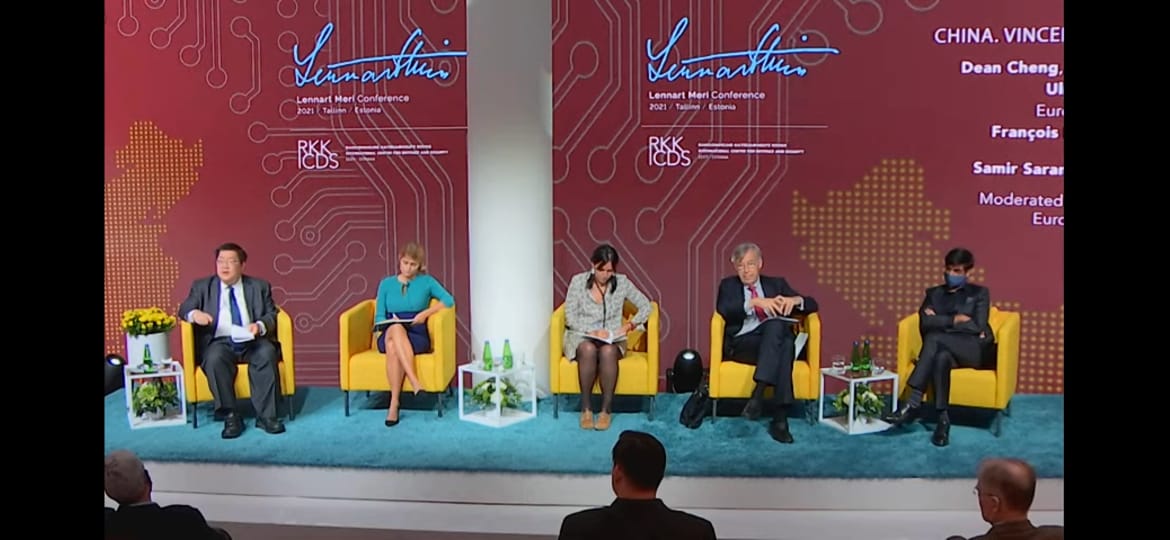
This interview appeared in The Eastern Focus
Standard
China, India, Indian Defence, Internal Security, Strategic Studies

Celebrating Rafale, rethinking India’s national security

Indian Air Force, Media Wars

As five Dassault Rafale fighter jets – the first of 36 India agreed to purchase from France four years ago – landed at Ambala Air Force base, there was understandable celebration among civilians and those who don the military uniform in India. After all, this is the first high profile defence acquisition, barring the American assault helicopters, in decades.

The celebratory mood, however, must not hide the dark reality of India’s inept defence procurement process. The Indian Air Force, hobbled by fleet depletion and aircraft well past their fly-by-date, first communicated its desire to procure 126 Medium Multi-Role Combat Aircraft (MMRCA) to the Ministry of Defence in 2000.  After two decades, three prime ministers, four Governments, and a dizzying number of flip-flops and somersaults, the first five Rafale fighter jets finally landed in India on 29th July.

Opportunistic media hype apart, the arrival of these jets should be a moment of sombre national introspection. A nation that set out to procure 126 aircraft is able to obtain just five after two decades, that too by having to throw away piles of files that prevented any progress. This is a saga of a nation with an incompetent ‘system’.

The arrival of these jets should be a moment of sombre national introspection. A nation that set out to procure 126 aircraft is able to obtain just five after two decades, that too by having to throw away piles of files that prevented any progress

India is unprepared for the ensuing decade that will witness a world in upheaval and where national security will demand a significant share of resources and human capital. The Biblical ‘Four Horsemen’ have long symbolised the end of times. An honest enquiry into India’s national security preparedness will be defined by the four horsemen whose arrival portend the coming of the Apocalypse.

First, as the MMRCA saga shows, is India’s institutional inability to quickly arrive at a decision, which is invariably followed by inadequacy when it comes to swift execution of that decision.

The Rafale story serves as a demonstrator of the Indian state’s woeful (in)capacity – of its severe budgetary constraints; its inept (and self-serving) bureaucracy; its crusty defence establishment riddled with turf wars, ego battles and a vaulting sense of entitlement; and its incompetent political class that has spectacularly failed to rise to the defence of India by putting national security above party politics.

These stakeholders must be reminded of history’s abiding lesson: No nation has achieved its full potential without first establishing a strong national security industrial base. In recent times, India has set itself on the path to realising this goal with an overwhelming dependence on foreign powers. Even then, it has repeatedly stumbled due to procrastination by the ‘babu-neta’ combine.

Second, the inability to be honest with oneself. This is marked by the inability to read history correctly and to recognise India’s real enemy. Despite the obvious lessons New Delhi should have drawn from its defeat in 1962, it has largely privileged placating Beijing only to further fuel China’s untenable ambitions. As part of this perverse posture, India’s custodians of discourse have downplayed the bloody nose India has given China on at least two occasions last century and even the significant battlefield losses inflicted on China this summer.

India’s many dalliances with China, be it at BRICS or over the AIIB (Asian Infrastructure Investment Bank), were shaped by the romanticism of co-creating an ‘Asian Century’. That should have ended with Doklam in 2017. It was a promise China never meant to keep or maybe never even made at all.

India’s many dalliances with China, be it at BRICS or over the AIIB (Asian Infrastructure Investment Bank), were shaped by the romanticism of co-creating an ‘Asian Century’. That should have ended with Doklam in 2017.

We have hidden facts from 1962 onwards from all, and we continue to hide facts about Chinese behaviour and action even today. Since 2013, Chairman Xi has made abundantly clear his absence of interest in Asian multi-polarity. In Doklam, he shouted it through a megaphone for all the world to hear. China apologists do not hear and do not care.

They fail to assess China as an implacable neighbour and Xi as afflicted with an insatiable lust for power and territory. They ignore the China that views India as a civilisational foe and the Communist Party that seeks to undermine its neighbour’s political, economic and social architecture. Instead, these ‘experts’ crowd out other views from powerful pages, explaining Beijing’s malfeasance as a consequence of India’s sovereign decisions, internal politics and enhanced partnership with America.

What will it take for India to admit, unambiguously, that its neighbour is a long-term geopolitical rival and an existential threat? The tangential elements of this outlook are in place: India’s rejection of China’s Belt and Road Initiative and, more recently, its digital avatar. But the question is: Will such tactical moves serve as the cornerstone of a long-term strategy? Or, since the elephant in the room can no longer be ignored, is the template for Wuhan 2.0 being drafted by the blind men (and women) who have over the decades led India to its China conundrum?

Third, the inability to sense and seize an opportunity. Many countries have realized, or are beginning to, that they hedged their bets in Asia incorrectly. Their misplaced mission to socialise China into a rules-based international order having totally failed, they are now confronted by the reality of an imperial Beijing. Can New Delhi leverage this opportunity?

In 1972, China sensed America’s need to counterbalance the USSR and used that moment to sneak past the Iron Curtain. The Great Thaw was less a Henry Kissinger masterstroke and more a Mao success. The historic photograph in The Washington Post of a grinning President Richard Nixon with an inscrutable Paramount Leader Mao Zedong told the story best.

Beijing thought ahead and seized the moment, letting Washington foolishly believe it had stolen a march over China. Neither Nixon nor Kissinger could look beyond their immediate political imperative; China looked into the future, almost into the next century.

The lesson from that singular act of China was, and remains, that shadows of the past should not be allowed to precede India’s foray into a new world order. In 1971, Nixon ordered the US Seventh Fleet’s Task Force 74 into the Bay of Bengal as a nod to America’s ‘tilt’ towards Pakistan and to signal opposition to the Indo-Soviet Treaty.

But history moves in unpredictable cycles. The contrast between then and now is striking: The US has sent a carrier battle group into the region at a time when India and China are locked in a border confrontation. This time round, the group is exercising with Indian naval forces, bolstering a US-India partnership dedicated to resisting China’s coercive tactics and ensuring that the Indo-Pacific remains free and open. Clearly, 2020 is not 1971.

Asia has come a long way since the 1970s. In the retail market of the region’s geopolitics, India still commands a premium. As prospects of a two-front war become increasingly probable, can India shed its coy reluctance and operationalise arrangements that will welcome American naval presence in the Arabian Sea and the Bay of Bengal? A US frigate or two would send the signal to Rawalpindi to behave if India and China do engage militarily in the Himalayas. It would, in the medium term, also allow India and the US to manage the inevitable increase of Chinese presence in the Indian Ocean.

The first step towards this would be operationalising, even if for optical purposes, the Logistics Exchange Memorandum of Agreement by inviting US ships exercising in the region to use Indian facilities. This should further expand into the Indian Ocean with India facilitating an agreement on the Chagos Islands by leveraging its bilateral relations with Mauritius. A US presence at Diego Garcia is in India’s interest. It always was; now more than ever before.

Simultaneously, and before it’s too late, India must militarise its southern tip, the Andaman and Nicobar Islands: An air base and a naval docking facility are passé; India needs its very own Diego Garcia in its own national waters. If India does not do it now, very soon a rising crimson tide will leave it with no political room to have any choice. Far from matching China on the seas, if the Rafale saga is a pointer, Indian boats may need Chinese permission to leave the lagoons as our hardware would be weak and partnerships non-existent.

Although there is bi-partisan consensus in the US on Washington’s China policy, it is worth recalling that Joe Biden was part of an Administration that once harboured imaginations of a ‘G-2’ world. Drawing the US into the Indian Ocean and India’s seas will stymie such inclinations as well as get rid of the shadows of 1971 that lurk in some minds.

Although there is bi-partisan consensus in the US on Washington’s China policy, it is worth recalling that Joe Biden was part of an Administration that once harboured imaginations of a ‘G-2’ world

From the seas to the mountains, India must use the response to China’s hostility to its advantage – boldly, robustly and openly. For instance, the Quad can be taken beyond maritime security if India were to invite its partners for mountain exercises in the Himalayas next summer. China has militarised the Line of Actual Control (LAC). India militarising its Himalayan zone and creating special multilateral training and collaboration programmes would be an apt sovereign response.

The ongoing confrontation in Ladakh reminds us that claims over territory have to be backed up by connectivity, military presence and control. We may need to prepare for a highly militarised and un-tranquil LAC in the coming years.

As always, our commentariat will be pleading and pushing for ‘inaction’ as a policy option, in the mountains and in the seas. The underlying argument will be consistent with the ones deployed in the past – our actions must not provoke the dragon. The fact remains that China’s belligerence is not predicated on India’s actions, it flows from Beijing’s hostile and expansionist worldview.

Last, though not least, the inability to take its citizens into confidence. India is the only nation with great power ambition that has not adopted a formal and declared national security strategy. What passes for one is the frail doctrine of ‘strategic autonomy’, open to multiple subjective interpretations. Like ‘Panchsheel’, ‘Non-Alignment’ and ‘South-South Cooperation’, it is just another convenient phrase. It serves as a shield for indecisiveness, not as a lighthouse for agile decision-making.

Beyond the shrill prime time media wars that shape the foreign policy outlook of India’s voters, they largely have no metrics through which to judge the actions of their elected Government. India’s 1.3 billion citizens deserve far better. But since that awareness is denied to them, they applaud the landing of five fighter jets while awaiting another 31 on some unknown date, even as the country faces off Xi’s forces in the north and a ‘terror factory’ to its west.

Beyond the shrill prime time media wars that shape the foreign policy outlook of India’s voters, they largely have no metrics through which to judge the actions of their elected Government

The question is, should we ignore the four horsemen and continue marching straight into a geopolitical Apocalypse?

Standard
China, Cyber and Technology, foreign policy, Great Power Dynamics, Indian Froeign Policy

Letters from Peking: What Galwan Valley taught us this summer

Galwan, Huawei, Battlefield, Determination, Chinese Space, Atmanirbhar Bharat, Mandarin, App Ban, Escalate costs, misinformation, propaganda, Washington, Xi Jinping

There are five major takeaways from the ongoing crisis in Ladakh that will inevitably shape India’s China policy significantly. The first is that Xi Jinping’s China is at a stage—and in a year—where it has simply ceased to care about global public opinion or parameters of reasonable conduct. It has little interest in healthy relations with India and considers the diminishing of India’s role, growth, weight and presence as a key foreign policy objective.

Xi Jinping’s China is at a stage—and in a year—where it has simply ceased to care about global public opinion or parameters of reasonable conduct. It has little interest in healthy relations with India and considers the diminishing of India’s role, growth, weight and presence as a key foreign policy objective.

From its blatant support of terrorist infrastructure directed against India to its defence of terror states, the Chinese world view sees an India under siege as necessary and useful for its own strategic comfort. By seeking to grab territory by force, it has announced it considers India an adversary and will seek to harm it more directly. Some in India can continue to sink their heads deeper in the sand and avoid reading the letter from Beijing, but the message is clear—the “Hu & Wen” days of “partnership”, of an “Asian Century for all”, of “BRICS for a better world” are passé. This is Imperialism with Chinese Characteristics.

The second takeaway is that China is perfectly at ease with the coexistence of commerce and conflict, trade and war. It has perfected the ability of sleeping with its enemies and selling to them as well. Beijing has successfully done so with the Americans for decades. It has inveigled successive regimes in Washington to underwrite and create the biggest geopolitical risk to a world order crafted by the US and its allies. With this experience, China believes it can attack India, abuse Indians and support violence against Indian interests, all while conducting economic statecraft and everyday business. The Chinese are smug in their belief that actions in Ladakh will not hinder trade with India but may even win it negotiating space vis-à-vis a diminished India. It is for New Delhi to puncture this notion.

Beijing has successfully done so with the Americans for decades. It has inveigled successive regimes in Washington to underwrite and create the biggest geopolitical risk to a world order crafted by the US and its allies

The third takeaway points to the Chinese strategic ability to manipulate and game democratic societies. China creates dissent and discord through misinformation and propaganda. This summer, it has weaponised the openness of the Indian public sphere. And it will continue to do so. Delegitimising the government and political system of the enemy is a central objective of long wars, and there should be no doubt that this is an epic struggle, which may have started in the Himalayas but will travel to maritime Asia and the Pacific. India cannot ignore the propensity of the Chinese to turn Indian democracy against India itself.

China creates dissent and discord through misinformation and propaganda. This summer, it has weaponised the openness of the Indian public sphere. And it will continue to do so

In the recent episode, if the Chinese attempt at information warfare was thwarted, it was only because of the inability of Chinese influence operations to overcome the domestic media/social media bulwark. This provided a teflon coating to the national leadership that the Chinese found hard to breach. But such dynamics cannot be taken for granted forever. They have to be future-proof and individual-agnostic.

The fourth takeaway is simply: “No way, Huawei”. India must attach costs to Chinese ambitions. Even though there is stark asymmetry between the economic and military capabilities of the two countries, the defender has the advantage of being able to deploy specific tools that even unequal realities. Banning Chinese apps and making this tendency viral globally must be an Indian priority.

We must also draw lessons from recent history. India was the lone significant absentee when the nations of the world presented themselves at the court of Emperor Xi in 2017, at the Belt and Road Forum. Today, India is no longer alone and there is a considerable coalition against BRI. Similarly, India’s app ban and digital wall against China must be evangelised and turned into a global endeavour, particularly in the developed world—the key geography that matters to Beijing.

India’s app ban and digital wall against China must be evangelised and turned into a global endeavour, particularly in the developed world—the key geography that matters to Beijing

The final takeway relates to the unpredictability of the actions of the 16 Bihar Regiment, their dogged resistance and their fierce aggression. Besides economic costs, battlefield costs must also be imposed. Towards this, 16 Bihar and its brave soldiers inflicted costs that the Chinese are still assimilating and factoring into their land grab programme. Causalities in the battle theatre were the ‘unknown unknown’ even for the Mandarins in Beijing. As the defender of sovereign territory, India will need to be ready to escalate costs for Chinese adventurism.

Battlefield grit and determination will be of utmost importance in the dark days that may define the Himalayan relationship. Similarly, interdiction and disruption capability in the oceans will be crucial. To count on others to intervene and assist in these objectives may be a bonus but must not be our core strategy. Atmanirbharta to handle China across terrains and domains is what India needs. To this end, it is time to shed inhibitions and build capacities and partnerships—where feasible—that will deny China space, literally and figuratively. Politics of presence is the essence of sovereignty. India must be present through roads, infrastructure and potent force in the mountains and in the seas, which may well be the next theatre of action.

Standard
China, Commentaries, foreign policy, India, Strategic Studies, tech and media

Resisting Chinese encroachment

India must not contribute to the digital and economic rise of the same power that harms it

 Chinese encroachment, China Tech, apps, Hegemony, Xi Jinping, Huawei, Samir Saran

On June 29, the minister for electronics and information technology and law and justice, Ravi Shankar Prasad, tweeted that “For safety, security, defence, sovereignty & integrity of India and to protect data & privacy of people of India the government has banned 59 mobile apps.” After the usual partisan bluster surrounding this move subsides, India must operationalise and strengthen this momentous decision. India, its people, and its territory that are now increasingly digital, must be protected from China’s encroachment and influence.

This long-term response has to be shaped by three ideas. First, India must not contribute to the success, proliferation and performance of digital weapons that will be ranged against it. China’s tech must be recognised as one. Second, it must wean itself away from an iniquitous trade relationship that makes it dependent on a country that seeks to harm it. And, third, India needs to step out of the shadow that stunts its own economic growth, diminishes its political clout and limits its digital ambitions.

The presence of China’s hardware and platforms in India’s digital ecosystem constitutes a long-term security threat. Arriving at this conclusion requires no strenuous leap of logic. A level-headed assessment of China’s stated intentions and observable actions is enough. China has manipulated democratic means to transmit its propaganda and advertised its way to ensure suitable reportage and headlines. It has leveraged WeChat to interfere in Canadian politics, and to intercept content beyond its jurisdiction, and adopted western social media platforms to target dissidents abroad, exacerbate racial tensions in the United States (US), interfere in Taiwan’s political processes and spread disinformation about the coronavirus. China has entrenched the influence of its tech platforms in key global institutions such as the United Nations in an attempt to redraw the rules of information flows and the ethical applications of emerging technologies like facial recognition systems.

China has entrenched the influence of its tech platforms in key global institutions such as the United Nations in an attempt to redraw the rules of information flows and the ethical applications of emerging technologies like facial recognition systems.

These are fundamental to China’s great power ambitions — they assist Beijing to expand its “discourse power”, develop indigenous technologies, create lock-ins through standards and infrastructure, weaponise its economic and technological interdependence, and emerge as a technology superpower. Relations with India are inconsequential to Beijing’s imagination of the world. India has to look out for itself. This new mindset to review engagement with China tech is a vital first step to protect itself.

China will continue to gather information on Indians. More worrisome is the insidious ability of the Communist Party of China (CPC) to interfere in or influence India’s political and social spheres. During the Doklam stand-off, the security establishment discovered that the Chinese-owned UC Browser was filtering certain news on Android handsets in India to shape perceptions and outcomes — classic information warfare in the digital age. Recently, we have seen content critical of China being taken down on one of the banned apps and moderation of other incidents and images as well.

This is not unique to Chinese platforms. But far-reaching national security legislations, and subservience to a one man-led party that is inimical to India, make their continuance untenable. Indian democracy, howsoever flawed, must steer clear of the digital “tea rooms” owned by the CPC.

Will this Indian decision cause economic harm to Chinese platforms? In terms of revenues, clearly it will not. In terms of value, tremendously so. Platforms rely on network effects to scale — every additional user drives up valuations and the aggregate data that they produce feeds into other commercial and research and development activities and product development. Indian eyeballs and data should not fuel Chinese malfeasance directed against them.

Similarly, India must bar China’s telecommunications infrastructure from its 5G networks. It is time to say “No way Huawei”. Countries such as Singapore, the US, Australia and others have already signalled different degrees of intent to manage the Dragon. New Delhi’s decision should strengthen this trend and encourage others. Political trust is increasingly going to shape the direction of technology flows. India must work with its allies and partners through new initiatives such as the Global Partnership on Artificial Intelligence to compete with and contain China.

India must bar China’s telecommunications infrastructure from its 5G networks. It is time to say “No way Huawei”

India’s actions will invite consequences. China will respond using other aspects of the economic relationship. India’s dependence on electronics, pharmaceuticals and other industrial inputs are well-documented and easy pickings. China’s response could manifest itself along the Line of Actual Control or through cyber intrusions. China’s ability to impose costs must serve to motivate India.

Bilateral trade is healthy when there is a balance. With China, it is a doubled-barrelled shotgun trained between India’s eyes. It is important that we fix this now as a three trillion dollar economy. Otherwise, all our future growth will only serve to strengthen the entity which seeks to weaken us.

India’s decision has come at a time when economic activity is already under siege from the Wuhan virus and when major economies are also questioning their dependence on China. A reconfiguration of value chains is inevitable. Public opinion favours this and the short-term pain will be acceptable to many. As India restarts its pandemic-stalled economy, let us create value chains that are not of dubious origin.

Standard