Uncategorized

OBOR: Asian Project or Pax Sinica?

Ritika Passi| Samir Saran

The central feature of United States’ external engagement — financial institutions, military posture, diplomatic overtures — for much of post-WWII twentieth century and beyond has been the security of its energy interests. Likewise, recent conversations with Chinese scholars, party members and officials indicate that the ‘One Belt, One Road’ (OBOR) initiative of Xi Jinxing’s government is likely to become the lynchpin of Chinese engagement with the world in the decades ahead. If to understand American foreign policy of the days past, many have ‘followed the oil,’ to decipher Chinese interests going forward, we may just have to ride the Belt and the Road.

At the third edition of the India-China Think-Tank Dialogue in Beijing, hosted in early January, a cross-section of Chinese scholars (from Beijing, Guangzhou, Shanghai, Yunnan) and personnel from the official machinery discussed India-China relations and prospects for regional cooperation. Unlike at previous meets, this time around the conversation cursorily engaged with old tensions, contests and irritants in the bilateral relationship; instead, the centerpiece of all discussion was the OBOR initiative. Be it matters of security, climate change and sustainability, or trade and economics, each Chinese intervention located OBOR as its locus, projecting it as the response to a multitude of challenges and opportunities. To some Chinese scholars, OBOR represented but the second act of their country’s opening up and reform process, no doubt intended to be the crowning feature of Xi Jinping’s Chinese dream.

A Mandarin Tale

Every project must have a compelling narrative. Towards this end, the Chinese have begun to weave new formulations that are giving shape to Beijing’s vision for OBOR and Asia. Some facets could be discerned at this recent interaction.

The first was the novel idea of ‘entity diplomacy’. This construction argues for engaging within and across regions to secure the best interests of an entity that is necessarily larger and with interests broader than those of any sovereign. This follows from the argument of a revival of ‘continentalism’ as the Eurasian landmass deepens linkages and ‘Asia’ emerges, OBOR segues perfectly into this framework. It becomes, for the Chinese, an Asian undertaking that needs to be evaluated on the gains it accrues to the entity, i.e., Asia, as opposed to China alone. It therefore follows, from Beijing’s perspective, that Indian and other Asian nations must support and work for the OBOR initiative.

Entity diplomacy also translates into the establishment of “one economic continent,” the second theme undergirding the conversation. OBOR, then, becomes a vehicle that promotes convergence and alignment of infrastructure, trade and economic strategies. Indeed, for some Chinese speakers, India is already part of the initiative, as its own projects like Project Mausam and economic initiatives such as Make in India and Digital India complement and complete OBOR. Indian participation in the Asian Infrastructure Investment Bank and joint ownership of the New Development Bank only reaffirm India’s partnership in this Asian project for many in Beijing.

To counter popular allegations of OBOR being a “Chinese scheme” à la US Marshall Plan, the Chinese were quick to clarify that the original project is named the Belt and Road Initiative; the ‘One’ has been an English effect that has popularised a mien of exclusivity around OBOR, to the primary advantage of China, instead of an inclusive Asian economic project in which all participating nations would partake benefit.

The third formulation was that of a mutually beneficial ‘swap’ — India understanding and protecting Chinese interests in the Indian Ocean, and China securing India’s essential undertakings in their part of the waters, read the South and East China Seas. This was in the vein of prompting a “new thinking” of “inclusive collaboration” instead of “exclusive alliances.” However, there was unambiguous clarity that if India cannot assume more responsibility in the Indian Ocean, China will step in. (Coincidentally, this is telling of a Chinese Navy that is comfortable in securing its own extended waters.)

Core Conflicts

 There are some structural challenges that confront the Chinese formulations and the OBOR proposal.

First, the perception, process and implementation till date do not inspire trust in OBOR as a participatory and collaborative venture. The unilateral ideation and declaration — and the simultaneous lack of transparency — further weaken any sincerity towards an Asian entity and economic unity. When questioned, the Chinese recognised this lacuna and remained convinced that the regime in Beijing is committed to pursuing wide-ranging consultations with 60+ nations OBOR implicates. An ‘OBOR Think Tank’ is also being established to engage scholars from these countries.

The second poser for the Chinese is on the appetite in Beijing to commit its political capital to this project and to ensure the security of its economic interests. While for obvious reasons the Chinese would not want to be seen as projecting their military and political presence along OBOR, it was clear that China is willing to underwrite security through a collaborative framework, minimising the anxieties that are already palpable. The success of the OBOR initiative will depend on their ability to fashion such a new security arrangement.

The third challenge deals with the success of the ‘whole’ scheme. OBOR is a five-layered lattice that promotes regional integration — the Chinese vision document lays out five components of connectivity: policy, physical, economic, financial and human. While no developing country will turn away infrastructure development opportunities financed by the Chinese, they may not necessarily welcome a rules regime built on a Chinese ethos. Could the physical layer translate into a buy-in to a Chinese-led global economic and financial order or trade architecture?

Finally, how can this initiative navigate the irreconcilable geometries of South Asia that prevent India from providing full backing to OBOR? A formal nod to the project from India will serve as a de-facto legitimisation to Pakistan’s rights on Pakistan Occupied Kashmir and Gilgit Baltistan under the China-Pakistan Economic Corridor (CPEC) that is “closely related” to OBOR.

Options for India

 The blueprint for OBOR remains fairly ambiguous as of now, and New Delhi does have options it can explore in the meantime. Fundamentally, it needs to resolve for itself whether OBOR represents a threat or an opportunity. The answer undoubtedly ticks both boxes. Chinese political expansion and economic ambitions, packaged as OBOR, are two sides of the same coin. To be firm while responding to one facet, while making use of the opportunities that become available from the other, will largely depend on the institutional agency and strategic imagination India is able to bring to the table.

First and foremost, India needs to match ambition with commensurate augmentation of its capacities that allows it to be a net security provider in the Indian Ocean region. This will require New Delhi to not only overcome its chronic inability to take speedy decisions with respect to defence partnerships and procurement deals, but will also necessitate a sustained period of predictable economic growth. OBOR can assist in the latter; in doing so, it becomes its own antidote that allows India’s political capacity to secure its strategic waters and territory.

Therefore, just as US trade and economic architecture underwrote the rise of China, Chinese railroads, highways, ports and other capacities can serve as catalysts and platforms for sustained Indian double-digit growth in the coming decades. Simultaneously, India can focus on developing last-mile connectivity in its own backyard linking to the OBOR — the slip roads to the highways, the sidetracks to the Iron Silk Roads. South Asia is among the fastest growing regions in the world. Such ‘niche’ infrastructure thus doubly makes sense, as India neither has the wherewithal to advance an alternate economic proposition nor the luxury to entirely shun OBOR.

Arguably, OBOR offers India another political opportunity. There seems to be a degree of Chinese eagerness to solicit Indian partnership, or at least a positive disposition; at the same time, the Chinese do realise that New Delhi is unlikely to endorse OBOR as long as CPEC remains part of the project. Can India, therefore, on its end, seek reworking of CPEC by Beijing in return for its active participation? It could, for instance, encourage progress in other regional connectivity offshoots of greater mutual interest — such as the Bangladesh-China-India-Myanmar Economic Corridor — or incentivise Chinese participation in newer tangents, such as in the maritime sphere or transport corridor projects across India. Effectively, OBOR could allow India a new track to its own attempt to integrate South Asia.

Furthermore, for the stability of the South Asian arm of OBOR, can Beijing be motivated to become a meaningful interlocutor prompting rational behavior from Islamabad? A new China-Pakistan-India equation has the potential to ensure that development concerns are not sacrificed at the altar of security considerations.

This is a longer version of an article that appeared in The Hindu.
Standard
Columns/Op-Eds, Politics / Globalisation

Engage the dragon on Balochistan

February 4, 2016, 2:38 am IST TOI

Original link is here

By Samir Saran and Abhijnan Rej

How New Delhi can counter Islamabad/ Rawalpindi’s good cop, bad cop routine

The Pathankot attack has once again confirmed that Rawalpindi – as a rational strategic actor – realises that playing “bad cop” to Islamabad’s “good cop” allows it use of a sub-conventional space to strike at India and undermine any Indian strategy on Pakistan. The shrill “talk/ don’t talk” debate in India post Pathankot is a case in point. The Indian strategic commentariat –predictably – went into overdrive with the usual liturgical analysis.

What, however, is significant this time around is how a cross-section of analysts openly advocated the need for India to acquire greater sub-conventional retaliatory capabilities. Among the pressure points that India could leverage are Balochistan’s festering separatist movements.

A year or so before Ajit Doval became national security adviser, he famously warned Pakistan that a repeat of the Mumbai 26/11attack could lead to Pakistan losing Balochistan. The Doval Doctrine – as it has now come to be known – involves what he calls a “defensive-offensive” strategy where India’s security establishment acquires a sub-conventional secondstrike capability, to be wielded as and when needed.

The Pakistan military establishment is aware that Balochistan is a natural weakness India could exploit with telling impact. In May last year, the Pakistan army’s media machinery all but accused India of fermenting secessionism there.

But here lies the twist. China – as part of the China-Pakistan Economic Corridor (CPEC) – sees the Balochistan port of Gwadar as an integral part of its One Belt, One Road (OBOR) initiative. Indeed, as former foreign secretary Shyam Saran recently wrote, Gwadar is significant precisely because it is where China’s Maritime Silk Route (“the Road”) meets its Eurasian landbased connectivity project (“the Belt”).

The geopolitical significance of Gwadar to China makes any Indian subconventional response in Balochistan exceedingly complicated. The reality is that the same Balochi rebels who want to secede from Pakistan have also opposed Chinese activities.

This was evident last March when Balochi rebels set fire to five oil tankers servicing a Chinese company. However, it is likely that unrest in that region, organic or manipulated, that hurts Chinese interests could be viewed by Beijing (or could be sold to them), as Indian provocation.

It is also inconceivable that China would sit idle if the separatists, allegedly backed by India, move from being a mere nuisance and acquire the potential to seriously jeopardise their prize – Gwadar – of the $46 billion CPEC investment. China could initiate and enhance its support for militants in the Indian northeast, or worse, encourage and abet Pakistan’s proxy warriors.

Meanwhile, an assertive US AsiaPacific re-balance in the region – in response to China’s naval activism in the South China Sea – is likely to ensure greater US control of the Malacca Strait in order to deter the Chinese from revising marine territorial borders.

China, therefore, seeks alternative routes for its energy supply and goods, which would connect the Strait of Hormuz to a port in the Arabian Sea, along with better land connectivity through the Eurasian landmass.

Even as these new realities reshape multiple arrangements in the region, the challenge for India is to ensure that Balochistan does not transform from being Pakistan’s quagmire to another thorn in the Sino-Indian relationship. India must wean China away from the Gwadar port, and CPEC in general, by offering credible alternatives.

India could fast track its commitment to the Bangladesh-China-India-Myanmar (BCIM) corridor and invite the Chinese to set up a land connectivity corridor from Kolkata to Gandhinagar, passing through Mumbai. It should also offer to partner with the Chinese to refurbish the NH-6 linking Kolkata to Mumbai.

Finally, it should get the Chinese on-board the Sagarmala initiative, and allow the Chinese to co-develop a port off the coast of Gujarat, which would link up with the Indian-Chinese land connectivity corridor running roughly parallel to the Tropic of Cancer. The financial model for this land initiative could be along the lines of what has been proposed for the Delhi-Mumbai Industrial Corridor in collaboration with Japan, and implemented through the China-led Asian Infrastructure Investment Bank in which India is the second-largest shareholder.

The land corridor would cut through central India, which means that access can be controlled at will in event of an India-China conflict, vastly diminishing its dual-use potential. The fact that China should be made a partner in servicing India’s infrastructure needs has been argued for some time; the proposed connectivity projects could help India target its infrastructure deficit.

The Kolkata-Gandhinagar land corridor could be developed into a full-fledged manufacturing hub, linking one of the most resource rich Indian states to one of the least. From the point of view of domestic politics, West Bengal state assembly elections are scheduled this year. A credible proposal for the land corridor with Chinese backing will certainly do no harm to BJP’s electoral prospects there.

Geo-economics – as defined by the scholar and former US ambassador to India, Robert Blackwill – is the theory and practice of leveraging economic tools for strategic gains. A vigorous India-China connectivity partnership that offers China what it seeks on the Arabian Sea in return for the freeing up of sub-conventional space for India and/ or to encourage good behaviour from Pakistan, is a way by which India’s geo-economic strategy would serve India’s security strategy.

Samir Saran is Vice President, Abhijnan Rej is Fellow at Observer Research Foundation

Standard
Columns/Op-Eds, Water / Climate

Indian climate policy in a post-Paris world

2 Feb 2016| and

Original link is here

Pic new 2

Most experts agree that the consensus achieved at COP21 in Paris, like most global agreements, produced a sub-optimal outcome, and by itself, is unlikely to limit global average temperature rise to two degrees centigrade (much less 1.5 degrees). The real work will happen within nations, as countries begin to roll out the implementation of their Nationally Determined Contributions (NDCs).

Going forward, India’s climate policy and energy policies are likely to be shaped by three documents: the Paris Agreement, the Sustainable Development Goals (SDGs) Agenda and the Indian NDC submitted to the United Nations Framework Convention on Climate Change (UNFCCC). All three have implications for India’s national ambitions to grow infrastructure, ensure inclusive development and maintain sustained economic growth. The agreements also raise questions around financing, namely whether the global financial architecture can respond to the needs of this new development paradigm.

India requires in excess of $1 trillion in the next five years for meeting its stated national goals. Besides the domestic mobilisation of resources, there are two fundamental challenges that need to be resolved if the country is to meet its climate and energy goals. The first is to ensure steady global funding for its traditional infrastructure and energy projects in a carbon-constrained world. That will be difficult. The World Bank has already restricted loans for building coal-fired power plants since 2013; and in November 2015, the Organization for Economic Cooperation and Development (OECD) agreed to limit most state financing to ‘ultra-supercritical plants,’ which burn less coal to produce the same amount of electricity.

The second challenge is to reform the structural bias in the global financial architecture, which, since the global crisis, pays more attention to ‘credit adequacy’ rather than the ‘credit enhancement’ that India and other developing countries so urgently require. Aligning those banking needs and the global banking mood is an imperative for traditional, renewable and low-carbon projects.

Understanding India’s energy options is also a crucial task. On the mitigation front, the Indian NDC commits to reducing the emissions intensity of its economy by 33–35% by 2030 from 2005 levels and achieving 40% of its installed electrical capacity from non-fossil fuel sources by 2030. The latter commitment is conditional on receiving adequate technological and financial support. The NDC also signals that India’s per capita energy consumption may grow up to more than six times beyond 2015 levels.

As of the end of 2015, the installed capacity of clean energy sources (renewables, hydro and nuclear) in India was 30% of the total installed capacity. Therefore, even if that were to be scaled up to 40% by 2030, 60% of capacity would still be based on fossil fuels. The real room for India to maneuver is in this large block of base-load conventional generation, which will account for a majority of the actual power generation, given the low capacity factors of renewable sources of power.

According to analysis done by the Centre for Policy Research, India could have something between 600–800 GW of total electrical capacity by 2030. Taking the median figure of 700 GW, 60% of fossil fuel capacity would add up to 420 GW. The current fossil fuel capacity stands at 198 GW with 173 GW of coal and just over 24 GW gas. India is therefore likely to more than double its fossil fuel capacity by 2030, alongside the impressive commitment on increasing renewable installations.

To ensure that India’s path to development doesn’t compromise its climate action, India has a few options. First, it can ensure that the additional 200 GW of fossil fuel capacity that’s to be added up to 2030 is significantly fueled by gas. Gas-based power has roughly half the emissions of coal fired power plants. 24 GW of current gas capacity points to the limited presence of gas in India’s current energy mix and also to the potential to dramatically scale that up.

Two market conditions allow India to pursue that policy path aggressively. First, the slump in global gas prices following the restart of Japanese nuclear reactors and an oversupply in the market means that it’s the perfect time for India to negotiate new gas deals and secure long term supply at competitive prices. In fact, a lot of Indian gas plants were idle in 2015 as the prices of importing gas was more expensive than the cost of selling power. The Indian government has had to recently renegotiate the price with Qatar, its main supplier, and achieved a price reduction of about 50%. The second follows from the Iran nuclear deal, which could see Iranian gas becoming available as a viable source. Just last month, it emerged that India and Iran are considering a US$4.5 billion undersea pipeline that would connect Iran to India’s west coast via the Oman Sea. Iran has the largest gas reserves in the world and the availability of Iranian gas changes India’s energy calculus significantly.

India’s second option is to significantly scale-up nuclear power. Nuclear energy has the advantage of being both carbon free and, like gas power, available all the time. It’s therefore the only clean energy option to substitute coal in the electricity grid. However, India’s tardy rate of growth in the nuclear sector so far, with only 5.8 GW of current capacity, as well as issues with the liability law, procurement of technology and long construction times, mean that gas remains the only viable and cleaner option over the short term.

However, to make this shift to gas India needs to work on three key areas. First, the country’s gas infrastructure needs to be scaled-up so that it can link to transnational pipelines, draw from regasification terminals of Liquefied Natural Gas (LNG) and develop last-mile connectivity to consumers.

Second and more importantly, the political will to allow for the development of an integrated gas market is needed. The difficult decision to remove direct and quasi control over pricing and end-use needs to be taken. Such a move will create conditions where benefits and costs are accrued through market operations and will help attract interest from investors, producers and distributors.

Finally, India’s geopolitical overtures need to support this new energy agenda. Financing and infrastructure development require strong global support and partnerships. India’s relationships with Iran, Qatar and Turkmenistan among others also needs to be re-energized and must be seen as part of the national imperative of seeking energy security and more robust climate action.


Standard
Columns/Op-Eds, Politics / Globalisation

Seizing the ‘One Belt, One Road’ opportunity

Updated: February 2, 2016 00:17 IST | Samir Saran, Ritika Passi

Original link is here

Pic new

“The ‘One Belt, One Road’ initiative of Xi Jinping’s government is likely to become the lynchpin of Chinese engagement with the world.” Picture shows Iranian President Hassan Rouhani with the Chinese President at the Sa’dabad Palace in Tehran, Iran. The two leaders signed several agreements, including on the OBOR. | AP


China’s ‘One Belt, One Road’ could potentially allow India a new track on its own attempt to integrate South Asia.

The central feature of much of the post-World War II American external engagement has been the security of its energy interests. Likewise, recent conversations with Chinese scholars, Communist Party of China members and officials indicate that the ‘One Belt, One Road’ (OBOR) initiative of Xi Jinping’s government is likely to become the lynchpin of Chinese engagement with the world. If, to understand American foreign policy of the years past, many have ‘followed the oil’, to decipher Chinese interests going forward, we may just have to ride the Belt and the Road.

At the third edition of the India-China Think-Tank Dialogue in Beijing, hosted in early January, a cross-section of Chinese scholars and officials discussed India-China relations and prospects for regional cooperation. Unlike at previous meets, this time the conversation cursorily engaged with the usual tensions in the bilateral relationship; instead, the centrepiece of all discussion was the OBOR initiative.

A Mandarin tale


Some facets of the new formulations that are giving shape to Beijing’s vision for OBOR and Asia could be discerned at this recent interaction.

The first was the novel idea of ‘entity diplomacy’. This construction argues for engaging within and across regions to secure the best interests of an entity that is necessarily larger and with interests broader than those of any sovereign. This follows from the argument of a revival of ‘continentalism’ as the Eurasian landmass deepens linkages and ‘Asia’ emerges. OBOR segues perfectly into this framework. It becomes, for the Chinese, an Asian undertaking that needs to be evaluated on the gains it accrues to the entity, i.e. Asia, as opposed to China alone. It therefore follows, from Beijing’s perspective, that Indian and other Asian nations must support and work for the OBOR initiative.

Entity diplomacy also translates into the establishment of “one economic continent”, the second theme undergirding the conversation. OBOR, then, becomes a vehicle that promotes alignment of infrastructure, trade and economic strategies. Indeed, for some Chinese speakers, India is already part of the initiative, as its own projects like Project Mausam and economic initiatives such as Make in India and Digital India complement and complete OBOR. Indian participation in the Asian Infrastructure Investment Bank and joint ownership of the New Development Bank only reaffirm India’s partnership in this Asian project for many in Beijing.

To counter popular allegations of OBOR being a “Chinese scheme”, à la the U.S. Marshall Plan, the Chinese were quick to clarify that the original project is named the Belt and Road Initiative; the ‘One’ has been an English effect that has popularised a mien of exclusivity around OBOR, to the primary advantage of China, instead of an inclusive Asian economic project.

The third formulation was that of a mutually beneficial ‘swap’ — India protecting Chinese interests in the Indian Ocean, and China securing India’s essential undertakings in their part of the waters, read the South and East China Seas. However, there was unambiguous clarity that if India cannot assume more responsibility in the Indian Ocean, China will step in.

Core conflicts

Structural challenges confront the Chinese formulations and the OBOR proposal. First, the perception, process and implementation to date do not inspire trust in OBOR as a participatory and collaborative venture. The unilateral ideation and declaration — and the simultaneous lack of transparency — further weaken any sincerity towards an Asian entity and economic unity. The Chinese participants explained that Beijing is committed to pursuing wide-ranging consultations with the 60-plus nations OBOR implicates; an ‘OBOR Think Tank’ is also being established to engage scholars from these countries.

The second poser for the Chinese is on Beijing’s appetite for committing its political capital to the project. While for obvious reasons the Chinese would not want to be seen as projecting their military and political presence along OBOR, it was clear that China is willing to underwrite security through a collaborative framework.

The third challenge deals with the success of the ‘whole’ scheme, given that the Chinese vision document lays out five layers of connectivity: policy, physical, economic, financial and human. While no developing country will turn away infrastructure development opportunities financed by the Chinese, they may not necessarily welcome a rules regime built on a Chinese ethos.

Finally, how can this initiative navigate the irreconcilable geometries of South Asia that prevent India from providing full backing to OBOR? A formal nod to the project will serve as a de-facto legitimisation to Pakistan’s rights on Pakistan-occupied Kashmir and Gilgit-Baltistan under the China-Pakistan Economic Corridor (CPEC) that is “closely related” to OBOR.

Options for India

Fundamentally, New Delhi needs to resolve for itself whether OBOR represents a threat or an opportunity. The answer undoubtedly ticks both boxes. Chinese political expansion and economic ambitions, packaged as OBOR, are two sides of the same coin. To be firm while responding to one facet, while making use of the opportunities that become available from the other, will largely depend on the institutional agency and strategic imagination India is able to bring to the table.

First and foremost, India needs to match ambition with commensurate augmentation of its capacities that allows it to be a net security provider in the Indian Ocean region. This will require New Delhi to not only overcome its chronic inability to take speedy decisions with respect to defence partnerships and procurement, but will also necessitate a sustained period of predictable economic growth; OBOR can assist in the latter.

Therefore, just as U.S. trade and economic architecture underwrote the rise of China, Chinese railways, highways, ports and other capacities can serve as catalysts and platforms for sustained Indian double-digit growth. Simultaneously, India can focus on developing last-mile connectivity in its own backyard linking to the OBOR — the slip roads to the highways, the sidetracks to the Iron Silk Roads.

Arguably, OBOR offers India another political opportunity. There seems to be a degree of Chinese eagerness to solicit Indian partnership. Can India seek reworking of the CPEC by Beijing in return for its active participation? Furthermore, for the stability of the South Asian arm of OBOR, can Beijing be motivated to become a meaningful interlocutor prompting rational behaviour from Islamabad? OBOR could potentially allow India a new track to its own attempt to integrate South Asia.

(Samir Saran is vice president and Ritika Passi is associate fellow at the Observer Research Foundation, Delhi.)


Standard
Columns/Op-Eds

How to deal with Facebook’s Free Basics

January 28, 2016, 5:40 AM IST in ET Commentary | Edit Page, India | ET

By Samir Saran & Arun Mohan Sukumar

Original link is here

In his monograph, The History of Computing in India (1955-2010), Indian Institute of Science professor V Rajaraman notes the work of the Dandekar Committee on Automation set up by the government in 1969 to assess whether computers would put Indians out of jobs. These were the heady days of socialism in India, and our computing sector was dominated then by one global giant: International Business Machines (IBM).

IBM had a difficult relationship with the Indian government right from the days of Jawaharlal Nehru. It was battling a hostile regulatory environment with capital controls and local manufacturing requirements. But the straw that broke the camel’s back — leading to IBM quitting India for decades — was the Dandekar Committee report.

Egged on by vocal labour unions, the committee recommended sweeping restrictions on the “use of computers in banks, government departments, private companies and insurance organisations”. Parliament was convinced that the introduction of computers would “increase efficiency”, but opted against the “social cost of computerisation”.

Today, we are in the middle of a noisy debate on Free Basics, a platform devised by Facebook for free “access to useful services on mobile phones in markets where internet access may be less affordable”. The debate has been characterised by extreme opinions. Some have argued for a complete ban of the initiative, pointing out that Free Basics will be a walled garden that conditions access to information for millions of Indians. Those across the aisle view this as an ‘elite’ argument, and see Free Basics as a tool to provide affordable access to first-time users, who can then choose to go beyond the initiative’s services.

2016 is not 1969, and Facebook is not IBM. But the public policy questions around Free Basics — affordable access, consumer choice, free speech — will determine India’s internet landscape for years to come. Here are some markers for India’s regulators to evaluate this debate.

Hang Around with the Cable

Consider a ‘must-carry, must-provide’ rule: The ‘must-carry’ rule, present in broadcasting rule books in India and the US, imposes an obligation on cable TV networks to carry public or local broadcasters. Its corollary, the ‘must-provide’ rule, requires channels to provide their content to all networks without discrimination. Were the ‘must-carry, must-provide’ rule be transposed on to the Free Basics context, it would require Facebook to carry applications without discrimination on its platform.

Conversely, internet applications would be platform-agnostic, providing the same content to Free Basics as they do to other such initiatives. The rule would provide a level playing field for emerging startups and local (language) content providers, who would have the same opportunity to feature on Free Basics as Facebook’s home-grown applications. Qualitative standards can be enforced by the zero-rating platform, but evaluated by the regulator.

Regulatory commitment to free speech: Zero-rated plans like Free Basics can have varying effects on free speech and access to information. Do Indian regulators have the policy tools to correctly evaluate the effects?

Last year, a UN high-level meeting to review the World Summit on Information Society goals concluded that the free flow of information can take place through nine policy interventions, including “open access to data”, “fostering of competition”, “creation of transparent, predictable, independent and non-discriminatory regulatory and legal systems”, “efficient allocation of spectrum” and “infrastructure-sharing models”.

Rather than second-guessing the impact of Free Basics on free speech, the government should put in place regulatory regimes that make this assessment more accurate. These nine areas make for a good start.

Skip the development Kool-Aid: Whatever Free Basics may claim to offer, it is first and foremost an initiative advanced by a for-profit corporation. Corporations should not define India’s development agenda, but their projects should refine it.

In the short term, regulators should assess Free Basics on three simple questions. One, has it limited or facilitated the entry of new data-farming platforms in the market? Two, does it discriminate between internet applications, especially local language content and emerging startups? And three, has it restricted or broadened consumers’ choice on eservices and applications?

In the long term, regulators should also see Free Basics as a test bed for data protection norms in India. If public services and payment portals were to be part of zero-rated platforms, what would happen to sensitive data of Indians stored in such applications? Free Basics is as much about the privacy of data as it is about net neutrality.

The Book’s Face Value

Assess through empirical evidence: Assessing empirical evidence of Free Basics’ impact on the market is not easy. But in the absence of precedent, there is little choice. Regulators could recommend that Facebook deploy Free Basics for a limited window — say, six months — in line with the ‘must-carry, must-provide’ rule. At the end of this ‘trial run’, the programme would automatically be rolled back, providing both regulators and researchers with valuable data to assess its impact on connectivity, consumer choice and competition.

The Free Basics debate is a classic sign of the digital economy teething. How we respond will determine its forecast for decades to come. It is also a choice between being a ‘ban’ economy to evolving to one that ‘regulates’.

Saran is vice-president, Observer Research Foundation, and Sukumar heads the Cyber Initiative, ORF


Standard
Politics / Globalisation

The Heat: The Asian Infrastructure Investment Bank officially opens

CCTV America, January 18, 2016

The Asian Infrastructure Investment Bank is now officially open for business. How important is the AIIB for China and the global economy?

China’s President, Xi Jinping, has called the opening of the Asian Infrastructure Investment Bank an historic moment.The formal inauguration ceremony took place in Beijing on Saturday. The new international development bank has 57 member states and is expected to lend billions of dollars over the coming years.

461

The Heat was joined by the following guests to discuss:

  • From New York is Victor Gao who is the Director of the China National Association of International Studies.
  • From London is Duncan Innes-Ker who is regional director for Asia at The Economist Intelligence Unit.
  • In the Washington, D.C. studios for CCTV America is Pieter Bottelier who is Senior Adjunct Professor of China Studies at Johns Hopkins University.
  • From New Delhi is Samir Saran who is the Senior Fellow and Vice President at the Observer Research Foundation


The Heat: The Asian Infrastructure Investment Bank officially opens

Sequence 03.00_00_59_16.Still001

http://platform.twitter.com/widgets/tweet_button.24a8e21c9032b45e8d193d263743d845.en.html#dnt=false&id=twitter-widget-1&lang=en&original_referer=http%3A%2F%2Fwww.cctv-america.com%2F2016%2F01%2F18%2Fthe-heat-the-asian-infrastructure-investment-bank-officially-opens&size=l&text=The%20Heat%3A%20The%20Asian%20Infrastructure%20Investment%20Bank%20officially%20opens%20%7C%20CCTV%20America&time=1453179450092&type=share&url=http%3A%2F%2Fwww.cctv-america.com%2F2016%2F01%2F18%2Fthe-heat-the-asian-infrastructure-investment-bank-officially-opens

The Asian Infrastructure Investment Bank is now officially open for business. How important is the AIIB for China and the global economy?

China’s President, Xi Jinping, has called the opening of the Asian Infrastructure Investment Bank an historic moment.

The formal inauguration ceremony took place in Beijing on Saturday. The new international development bank has 57 member states and is expected to lend billions of dollars over the coming years.

CCTV’s Wang Tongxuan reports from Beijing.


The Heat was joined by the following guests to discuss:

  • From New York is Victor Gao who is the Director of the China National Association of International Studies.
  • From London is Duncan Innes-Ker who is regional director for Asia at The Economist Intelligence Unit.
  • In the Washington, D.C. studios for CCTV America is Pieter Bottelier who is Senior Adjunct Professor of China Studies at Johns Hopkins University.
  • From New Delhi is Samir Saran who is the Senior Fellow and Vice President at the Observer Research Foundation.

Read more: http://www.cctv-america.com/2016/01/18/the-heat-the-asian-infrastructure-investment-bank-officially-opens#ixzz3xfDvQfeU
Watch us live anywhere at http://www.cctvamericalive.com
Follow us: @cctv_america on Twitter | CCTVAmerica on Facebook

Standard
In the News

‘Outside ideas’ trickle in as think tanks set up base

| TNN | Jan 17, 2016, 04.28 AM IST

Original link is here

New DELHI: With top US think tanks setting up offices in India, the Indian marketplace for ideas is beginning to buzz. This week, Carnegie Endowment announced it would be opening its India office. It will follow Brookings Institution which has been around for a couple of years now. As the nature of Indian governance, policy-making and the international context evolves rapidly, the hope is that these outside “inputs” would help to create more “informed” decisions by government.

These think tanks are coming into India at a time when there is a flowering of Indian research organisations here. The government for long operating with brahminical inscrutability, is more welcoming of ideas, inputs and research from outside.

C Raja Mohan, founder-director of Carnegie’s India office said he envisages a triad of sectors which will benefit from the think tank – “foreign policy and security, politics of India’s economic reforms and the rapidly developing technology policymaking space.” Brookings and Carnegie, voted the top think tanks in the world, have extensive experience in producing policy inputs for the US government.

Indian think tanks too are evolving rapidly. The best known, Observer Research Foundation (ORF) and Centre for Policy Research (CPR) will inundate your inbox, and have increased their government footprint in recent years. Their playing fields mostly remain in the realm of foreign and security policy with a clutch of former diplomats and military officers taking the lead in the ideas and opinions bazaar, relying on their long engagement with government.

There are also a growing number of organisations working closely with the government in its public diplomacy outreach, holding seminars and big think-fests. The MEA-MOD sponsored IDSA and ICWA are the official organisations in this field. But this year, MEA is working with ORF to execute one of its three flagship events – the Raisina Dialogues in spring, and with Mumbai-based Gateway House for the Gateway of India Dialogues on geo-strategic and geo-economic issues respectively.

Samir Saran of ORF said the Raisina Dialogue this year would feature about 100 speakers from 30 countries, but in a few years they hope to scale it up to become a second Shangrila Dialogue (organised by London-based IISS) which prompts defence ministers and experts from round the world to flock to Singapore every summer.

ORF has also got into the pleasurable business of Track 1.5 dialogues with select countries. Saran says they now conduct dialogues with France, Australia, BRICS and now Egypt. The frontrunner in this area is the Ananta Aspen Centre which has been running the longest and possibly most influential dialogues with US, China, Israel and Turkey, Singapore and Bhutan and an India-Japan-US trilateral, which paved the way for the official dialogue that started a few years later.
The government used think tanks extensively during climate change negotiations, where, the space is filled by specialised organizations like CEEW, CSE and TERI. Saran of ORF says “some sectors need outside expertise like outer space, Indian Ocean etc. We are developing our expertise in these areas.”

 How does the government evaluate the inputs from think tanks? The foreign ministry is the biggest consumer of these ideas from ‘outside’. In the last year, foreign secretary S Jaishankar has placed additional responsibility on a virtually defunct Policy Planning division. The ministry has broken new ground by hiring consultants not employed by the government. But in the new atmosphere of the state interacting with think tanks, the experience for government has not been one of unalloyed satisfaction.

“There are some brilliant minds out there,” said an official on condition of anonymity. “But most of the research papers we see are too theoretical or academic in nature. We need them to be consistent and more policy relevant.” Giving examples from the US, he said academics like Ashley Tellis provide detailed policy inputs to the US government. “We need more of those. For this, we need research organisations to talk to government much more.” Researchers say government officials are very hard to access, and this limits their sources.

On the brighter side, foreign and security policies have many voices in the marketplace today. It’s trade, commerce etc that have very few outside think tanks providing inputs. The government has its own – ICRIER, NIPFP and Institute of Economic Growth, but in the private space there are few of the number-crunchers that governments could use.

Raja Mohan says partly this is because governments have been unusually welcoming of outside economic thinking and economists within government. From P C Mahalanobis to Raghuram Rajan, India has been very accommodating of different economic brains. However, countries like South Korea show much more is possible – their economic and trade think tanks provide crucial inputs to their trade negotiators which may explain why Korea is more willing to engage the world on trade issues, unlike India.

Standard
Uncategorized

Deconstructing the Conference of Parties, 21, at Paris

Samir Saran| Shubh Soni

What was at stake at COP21?

The meeting of world leaders at Paris for the Conference of Parties (COP) 21 was being seen by the international community as a landmark opportunity to seize the momentum for decisive climate action. Nations, institutions, corporations and individuals alike were looking to this meet in Paris to deliver a legally binding and workable agreement, which would ensure temperatures did not rise above two degree Celsius by the end of this century and indeed strive for limiting the temperature rise to the 1.5 degree Celsius mark. The developing world in particular was seeking a commitment on financial and technological flows, which would enable them to mitigate and adapt to the ongoing and impending impacts of climate change. The stakes had never been higher –to get 192 countries to sign off on such an agreement would require both shrewd diplomacy, and the moral and political will of world leaders, to act on the biggest threat facing our planet.

To fully appreciate what was at stake in Paris at COP21, it is important to look back at four previous climate summits –COP3 at Kyoto, COP15 at Copenhagen, COP19 at Warsaw and COP20 at Lima. During COP3, the world agreed to the ‘Kyoto Protocol,’which acknowledged historical responsibility of the developed world to combat climate change. The agreement institutionalised the concept of Common But Differentiated Responsibility (CBDR) by drawing up a list of developed countries, known as Annex 1, which committed themselves to targets for cutting or slowing down their emissions of greenhouse gases that adversely impact the climate.[1]

However, a lot of what was agreed at COP3 was undone at Copenhagen. The developing world was left disappointed at COP15 as the international target of cutting emissions by 80% by 2050 was dropped, along with the target of ensuring global temperature does not rise above 1.5 degree Celsius compared to pre-industrial levels. Moreover, the remark made by the United States’ president that developing countries should be “getting out of the habit”of looking at previous agreements, which made a distinction between developed and developing countries, was considered a serious setback, and was seen as a tactic by the developed world to wriggle its way out of its responsibility to address climate change.[2]

COP15 at Copenhagen was a failed culmination of the process started at COP13 at Bali, most of which was ultimately completed at Cancun during COP16. The Paris process began with the The Ad Hoc Working Group on the Durban Platform for Enhanced Action (ADP) at COP17 at Durban and the concept of Intended Nationally Determined Contributions (INDCs) was formulated at Warsaw during COP19 –where it was agreed that countries were to submit their respective INDCs prior to the commencement of COP21. The INDCs were further institutionalised at COP20 as Lima’s ‘Call for Climate Action’dedicated eleven of its 103 clauses to the INDCs, and it was agreed that these individual country commitments were going to be the central feature of global climate action post 2020.

Once all countries had declared their INDCs, the stage was set for Paris to bring all countries to the table and flesh out a global agreement.

Key Actors–US, EU, China, India, Africa

Even though 192 countries were present at Paris and a successful agreement would require all of them to sign on, the narrative of the summit was to be dominated by five actors –S, the European Union, China, India and Africa.

The US went into the climate negotiations looking to assure the world that joint cooperation on climate change was the only way forward. The US could not be seen as the flag-bearer of the developed world trying to force an agreement that would severely constrain the economic development of developing countries. A repeat of the upheaval at Copenhagen needed to be avoided at all costs. And to achieve these goals, the US made significant efforts to showcase its leadership on climate action. The Climate Action Plan, which aims to reduce emissions by 26-28 percent below 2005 levels by 2025, was designed in such a way that it would not be held hostage by the divisive political narrative in the country (however, certain elements of this plan are being legally challenged by state governments). The American delegation also assured the developing world of its efforts to mobilise $100 billion. However, America’s weak INDC declaration –many felt the leader ought to lead by example and not hide behind domestic pressure –left enough room for scepticism heading into the summit.[3]

The failure of the Copenhagen summit was felt the hardest by the EU, as the continent had invested the most domestic and diplomatic stock at COP15. At Paris, then, the objective of the EU was to re-establish its agency as a leading global actor on not just climate change, but also on international diplomacy. And it was not just COP15 that had weakened its agency –the financial crises of 2010, and the recent political disruptions in Ukraine, have meant the legitimacy of the ‘Union’is now under intense scrutiny. Moreover, external factors, such as the refugee crises in West Asia and the backlash against those seeking shelter in the old continent, meant Europe desperately needed a positive outcome at COP21. France, in this instance, was not playing host as a western European power, but was representing the entire continent. On specific details of the negotiations, Europe had nuanced differences with both the US and the developing world. With America, the conflict was on the legal nature of the outcome as the US, due to its domestic political dynamics, was incapable of signing a strong legal document which Europe desired. With India and China, the disagreement was on mitigation efforts, since these two countries and the rest of the developing world argued for protecting their carbon space for economic growth while seeking greater commitment from the developed world.

As the world’s largest emitter of greenhouse gas emissions, all eyes were on what the Chinese INDCs entailed. Following the successful bilateral meeting between President Obama and President Xi Jingping, China reiterated its ambitions to lower carbon emissions intensity by 60-65 percent from 2005 levels, increase non-fossil fuels in primary energy consumption to around 20 percent, and increase the forest stock volume by around 4.5 billion cubic metres on the 2005 level. Coming into the summit, Warwick J. McKibben of the Brookings Institute found that the targets announced by China would mean the country faced the second highest economic cost to GDP of all countries modelled –a significant commitment by the Chinese.[4]

Coming into Paris, India was carrying the unfair tag of a spoiler in climate debates –a country unrelenting in its position to give up its dependence on carbon and fossil fuels. In this context, the Indian INDCs and the Indian delegation at Paris looked to achieve two objectives –to highlight to the world one, India’s leadership on renewable energy, and two, India’s structural dependence on coal for the foreseeable future (unlike China which is now at a stage in its economic growth where it can transition towards green energy). India also made clear that global technology and financial regimes needed to evolve and create “a  regime  where  facilitative  technology  transfer  replaces  an  exploitative  market  driven  mechanism  [which] could  pave  the  way  for  a  common  understanding  of  universal  progress.”[5]

The African continent contributes least to climate change, both in absolute and per capita terms. An entire continent, with 54 countries, accounts for only 3.8 percent of global greenhouse gas emissions. And yet, despite having minimal emission levels, the continent is the most vulnerable to global warming. Its high dependence on low-yielding agriculture for food and income means even if global warming is restricted to two degrees Celsius, much of southern and central Africa would be at risk of severe drought, while east Africa will face the brunt of large-scale floods. The negative impacts on human development indicators, from health to child educational performance, will have serious and adverse impact on any progress made by individual countries.[6] For Africa therefore, the Paris summit was important not just from a mitigation perspective, but also from a climate change adaptation point of view. In contrast to the developed world, and much of the developing world, the African continent and small island states needed a positive signal on adaptation finance (thus far most of the funds for climate action have primarily focused on mitigation) and the inclusion of ‘loss and damage’in the agreement. The latter in particular was of critical importance to these two regions, as economic cost related to loss and damage can be very high.

In addition to these nations and groupings of nations, there were other significant actors who had a decisive impact on the outcome. For instance, least developing nations, the Like Minded Group of Developing Countries and Brazil-South Africa-India-China groupings wanted differentiation in climate action and significant space for their domestic economies to grow. The Alliance of Small Island States demanded greater global ambition on ensuring global temperature rise be restricted to 1.5 degree Celsius.

The Paris Agreement

In the context of what happened at Copenhagen, and the following COPs at Warsaw and Lima, Paris made significant gains in getting the climate agenda back on track. Many positives can be taken away from the agreement, particularly from a developing country perspective, and more specifically from an Indian point of view. The biggest takeaway was that this agreement was an all-round diplomatic success – with all countries but Nicaragua on board and no public display of acrimony between the global ‘North’and the global ‘South.’

From an Indian perspective, while the inclusion of the phrase ‘climate justice’only in the preamble weakens its larger mandate, it is still a step in the right direction for the developing world, sufficiently that the UN has for the first time acknowledged it in the final agreement. Moreover, several of the provisions of the agreement incorporate the foundations of the concept of climate justice, i.e., historical responsibility of the developed world to correct the ‘original sin’committed by them, of leading by example by adopting more sustainable lifestyles, and the acknowledgment of the fact that those who have contributed least to global warming are the most vulnerable to its impact.

Additionally, the Paris agreement, while not specifically mentioning CBDR, incorporates within it both this principle and the notion of equity, albeit in a slightly nuanced manner. Several provisions of the agreement are predicated on these concepts, none more so than the one on the long-term global goal. The agreement makes it clear that there will be no peak emission targets for developing countries for the time being, giving these nations adequate carbon space and the corresponding development space. From an Indian perspective, it gives the country enough room to manoeuvre by recognising its exceptional status as a country with the fastest growing economy and the best chance the world has to eradicate large-scale poverty.

On highly contested topics such as mitigation and finance, characteristics of climate justice can be found in the agreement. On finance, making the $100 billion agreed in Copenhagen the floor (minimum)amount to be mobilised by the developed world to assist climate action of developing nations achieved the twin objectives of increasing the base amount and incorporating differentiation. Moreover, finance will be provided for both mitigation and adaptation initiatives. On mitigation, keeping the should/shall ‘typography error’aside, differentiation is focused both on ‘scale’and ‘nature’–developed countries will take the lead and have the responsibility of achieving absolute reduction in emissions, while developing nations will continue efforts under nationally determined circumstances (thus taking into account the challenges of lack of energy access, unsustained economic growth, and the simultaneous objective of poverty alleviation facing these latter).

The allusion to the word ‘sustainable’in Article 2, which focuses on purpose, and Article 4 on mitigation, links the Paris Agreement with the Sustainable Development Goals agenda agreed to in 2015. This is of particular importance for the developing world as the SDGs, with their 17 goals and 169 targets, give prime importance to poverty eradication, and endorse within them infrastructure development and manufacturing-led industrialisation. By situating climate change within the overall context of sustainable development, the agreement further allows significant development space to developing nations.

While a differentiated transparency framework could not be established, the framework agreed to cover not only action of individual nations, but also the necessary support developed nations are required to extend for climate action. Moreover, the agreement also allows enough flexibility to developing nations even as they declare their efforts –the concept of CBDR is maintained, as emission cuts can be declared according to national circumstances and the respective capacity of nations to act. In a particular win for the Indian delegation, its demand to linking capacity building with transparency was met.

Finally, while the relationship between the Agreement and the Convention remains precarious, particularly with the US insisting dropping the words “under the Convention,” Article 2.1 of the agreement and Paragraph 1 of the COP decision do establish a subsidiary relationship of the agreement to the Convention. However, developing countries, particularly India, need to keep re-emphasising this demand and ensure a deeper relationship between the two as the agreement is fleshed out and implemented in the months ahead.

However, the agreement may disappoint developing countries on certain counts. For instance, on finance, Article 2.1 (c) states that “[m]aking financial flows consistent with a pathway towards low GHG emissions and climate resilient development.” Including this statement, despite strong opposition, could be interpreted as encouraging an era of ‘green conditionalities’for development and infrastructure finance. Following the decision of the US export-import bank to shift funding away from coal plants, such language does add to developing world scepticism.

Furthermore, the transparency framework will be built upon the existing international assessment and review and international consultations and analysis arrangements, and much can change from now till when the modalities are finalised. From a developing country perspective, the details of the framework must incorporate a common matrix on climate finance –an aspect on which there is currently no consensus.

Road ahead for India

India highlighted in its NDCs that over the next decade and a half its electricity demand is set to increase from 776 TWh in 2012 to 2,499 TWh in 2030.[7] This increase in demand is borne out of the country’s efforts to industrialise, urbanise, eradicate poverty and provide its population with a higher standard of living. This industrialisation will require bolstering the manufacturing sector, building reliable infrastructure and ensuring rapid urbanisation. Thus, despite efforts to strengthen its renewable energy sector, the majority of India’s energy needs will be met through coal and fossil fuels. In light of what was achieved at Paris, it is clear that the agreement allows India enough room to manoeuvre and undertake an industrialisation process largely predicated on these two sources of energy.

On the renewable energy front, as these authors have argued in a recent publication,[8] India already punches well above its weight when compared to the US, China and Japan, and is only marginally behind Germany. The INDC document submitted to the UN Framework Convention on Climate Change also highlights that between 2002 and 2015, the share of renewable grid capacity has increased over six times, from 2% (3.9 GW) to around 13% (36 GW). In its nationally determined contribution, the government has made clear its intention to significantly scale up these efforts to achieve the target of 175 GW renewable energy capacity in the next few years.[9] Prime Minister Modi’s Solar Alliance with 120 countries is one such effort aimed at capitalising India’s leadership and the global momentum on green energy.

The success of these efforts, however, requires technological and financial flows from the developed world to make renewable sources easily accessible and affordable for India’s 300 million poor people. Unfortunately, as per the existing property regimes, the cost of green energy installations in countries that have the potential to ramp up such installations the fastest and widest, such as India, is 24% to 32% more costly.[10] It is therefore in India’s and the world’s interest to develop an Indian model of industrialisation that relies significantly on green sources of energy catering to the aspirations and needs of the people at the bottom of the pyramid. Such a successful model can then be replicated in others parts of Asia and Africa.

In this context, Paris is the beginning of a process, which could take up to two years during which ‘t’s will have to be crossed and ‘i’s dotted. Paris has given sufficient negotiation space to all stakeholders without meeting the wish list of any single actor completely. The interpretation, implementation and fleshing out of what was achieved at Paris is still ahead of us, and each party will have to brace itself for fresh rounds of determined negotiations to secure their own specific national objectives based on their circumstances. For India the objectives are threefold. First is to mobilise global support and domestic resources to develop a robust climate adaptation framework. Second is to ensure that adequate funds and finances are available for it to secure its lifeline energy at affordable prices and complete its industrialisation project and offer better life to its people. And, finally, it must seize the opportunity to develop a ‘clean energy’growth model, foster product and process innovation and develop an “India Model”that could be replicable and a benchmark for others further below on the development ladder. It will need to ensure that the global climate agenda allows and supports these rational ambitions.

Standard
Columns/Op-Eds

Forget Odd and Even, Delhi Needs a Total Disruption of its Transport Model

by Samir Saran and Prashant Kumar, January 5, 2016, The Wire

Original link is here 

The present attempt to reduce the number of cars on the road is well-intentioned but misguided in the long-run unless there is the political will to adopt a wider set of restrictions

Delhi Traffic Police issue a ticket to a motorist on the Delhi Gurgaon expressway for violating the Odd- Even scheme on Monday. Credit: PTI

The Aam Aadmi Party government’s odd/even formula to manage Delhi’s traffic and curb pollution has been met with extreme opinions and impulsive reactions. Some have applauded Chief Minister Arvind Kejriwal’s attempt to tackle these two seemingly intractable problems, while others, mostly those inconvenienced by the regulation, or by his style of politics, have been quick to criticise the plan.

The question, however, is not whether the odd/even formula will be complied with fully or will be spectacularly successful. Similar strategies have failed in other mega cities and have had modest success in some. More crucial is whether this new rule can serve as a catalyst for disrupting what has become the ‘’Delhi transport normal”.

What is the Delhi “normal”? Simply put, it is an archaic 20th century notion of urban transportation being played out in the 21st century. Vehicle ownership has become associated with class, wealth and prestige in Delhi. The appearance of status is more important than functionality, efficiency and the environment. Ironically, Delhi’s car obsession is actually far removed from the reality of those cities it is trying to emulate. Can the new rule change this paradigm?

The odd/even formula’s attempt to reduce the number of cars on the road is well-intentioned but misguided in the long-run unless there is the political will to adopt a wider set of restrictions. As in Beijing, the rule may result in car owners simply buying more cars to circumvent it. Rather than trying to target the number of cars on the road, then, the government would be wise to target the time vehicles spend on the road. Stagnant traffic has a greater causal relationship with environmental degradation and economic inefficiency than freely moving larger numbers. Can this be achieved under this new regime? May be not.

The odd/even rule’s other objective of improving air quality in the city may not be realistic either. In a recent study, it was shown that only 9% of Delhi’s bad air quality and environmental deterioration was caused by private vehicles. Given that two wheelers and certain commercial vehicles – that form the majority of automobiles on the road – have been exempted, the rule cannot be expected to improve air quality dramatically. A slight decrease in pollution levels has been noted since January 1 (data points are too small to draw any conclusions), but for the government to meet its own environmental goals, it will gradually have to bring other vehicles into the ambit of the odd/even formula. Will it have the stomach to do that?

What is clear is that to meet these ambitious goals, the odd/even rule is not enough. If Delhi traffic is to be managed, both regulatory and behavioural changes are required.

A question of disincentives, and social justice

First, the ruling must be supplemented by other initiatives. Car ownership has to be disincentivised. Measures can include car owners paying punitive taxes on each additional car, the imposition of a congestion charge on usage of arterial routes and making ownership of a vehicle difficult.

Global examples of such strategies include additional registration taxes on a second car in the same family; London, where congestion charges are imposed on certain zones to limit heavy traffic; and Singapore, whose Vehicle Quota System (VQS)makes vehicle prices nearly 3-5 times the actual cost. In Singapore, it is in fact more expensive to buy the right to purchase a car, then to buy the car itself. The 41% ad valorem custom duty on all cars does not make it cheaper either. But each of these cities were in the first instance able to create public transport infrastructure. It could be argued that perhaps Delhi is the best suited amongst Indian cities to embark on moving the middle class to public transport.

But for this, besides enacting rules and regulations, a behavioural shift among NCR residents is urgently required. The aim of the city’s government must be to catalyse the preference of the growing middle class towards a “new normal”. This attitudinal change, evident in global cities like New York, London, Singapore, Tokyo and others is rooted on the usage of public transportation rather than private car ownership. It is absolutely respectable for a CEO to use the subway or an office worker to ride the bus; and carpooling is in fact encouraged, with lanes of roads dedicated to those who carpool.

Another behaviour change that must be favourably considered is to dispel the notion that people must work in offices. In an age so intertwined with technology, it is unimaginable that physical presence in offices is still a requirement. To reduce the number of cars, this notion must be challenged and provisions to facilitate telecommuting, especially for non-essential personnel, by offering broadband charges as part of an employee’s income, as against a fuel allowance or conveyance costs, must become an attractive option.

Finally, Delhi must realise the social injustice embedded within the phenomenon of car ownership. Each car occupies real estate in a city that lacks space. Car owners are effectively squatters, occupying high value land – which they don’t own and which they don’t pay for – to park their vehicles, to ride across the city, to conduct personal and official engagements. This same land is denied to countless others in their pursuit of a basic livelihood. Hawkers and vendors are often turned away from setting up stalls in the pursuit of ample parking space. The right to luxury and leisure has eclipsed the right to a livelihood and if Delhi is to be a global city, it must address this imbalance immediately.

The jury’s out on the Delhi government’s ambitious experiment. But there is no denying the urban landscape will become unmanageable if corrective measures, at a structural, regulatory and behavioural level are not initiated. The “Delhi normal” should reflect a modern, sustainable ideology of urban governance that is rooted in social justice, propelled by new technologies and embraced by new attitudes. Otherwise, this city will remain stuck in the 20th century, no matter what regulation any government adopts.

Samir Saran is Vice President, Observer Research Foundation and Prashant Kumar is Associate Fellow, Observer Research Foundation, New Delhi

Standard
Uncategorized

India-Africa co-operation in science, technology goes a gear up

Malancha Chakrabarty|Samir Saran

India and Africa have a long history of partnership. Technology co-operation has been an essential ingredient in India’s development co-operation with Africa since mid 1960s when the Indian Technical and Economic Co-operation (ITEC) Programme was launched. ITEC was formulated with the intention of providing technical assistance to partner countries by focussing on manpower development. African countries have been the largest recipients under the ITEC Programme.

The need for technology co-operation between the countries of the South was felt early on because direct application of technologies developed in the West may not be appropriate for developing countries as they face complex challenges. On the other hand, the technology gap between the Southern countries is smaller. In this regard, Indian technology may be more suited to the needs of African countries, particularly in the field of agriculture and renewable energy technology.

However, given the fact that India itself was a large aid recipient till early 1990s, the scope of India co-operation with African countries was limited. With the rapid growth of the Indian economy in the last two decades, an increase in the role of information technology in India’s growth story and given that Africa is now the fastest growing region in the world and rapidly innovating in its own right, the scope of technology co-operation between India and Africa has now widened.

During the India-Africa Forum Summit in 2008, India committed substantial support towards science and technology development in Africa.

The Department of Science and Technology is implementing a number of programmes and activities under the India-Africa Science and Technology Initiative. The CV Raman Fellowship for African researchers was started in 2010 with the objective of providing opportunities to African researchers to engage in collaborative research in science and technology in Indian universities and institutions under eminent Indian scientists. So far about 164 candidates from African countries have been awarded fellowships under this programme.

The Department of Science and Technology is also providing technical assistance to African institutions engaged in research and development by training African researchers, sharing technological know-how and developing academic linkages with African institutions.

In addition, India has also signed technology co-operation agreements with four African countries namely South Africa, Tunisia, Egypt, and Mauritius. India’s co-operation with South Africa in the field of technology started in 1995. This agreement was recently renewed in 2015. So far 74 joint research projects have been undertaken in areas such as biotechnology, information science, astronomy, food science technologies for rural applications, indigenous knowledge systems, nanotechnology, and renewable energy and more than 220 South African researchers have received funding from the government of India .

According to the author’s estimates from the data available in the Department of Science and Technology’s website, so far India has sanctioned research projects worth Rs122,7 million to South Africa. The total value of projects sanctioned to Tunisia is estimated to be Rs21,5 million .

India-Africa technology co-operation in the field of agriculture, renewable energy technology, and information technology bears a special mention.

India-Africa science and technology co-operation offers a unique opportunity for agricultural growth in Africa. The case for greater agricultural co-operation between India and Africa is stronger because of the similar agro-climatic conditions in India and Africa. African agriculture suffers from low productivity and limited use of technology. On the other hand, India has built considerable capacity in agricultural research. Two Indian institutions, namely International Crop Research Institute for the Semi-Arid Tropics (ICRISAT) and International Livestock Research Institute (ILRI) lead India-Africa co-operation in agriculture.

ICRISAT has established agri-business incubators and value-chain incubators in five African countries viz. Angola, Cameroon, Ghana, Mali and Uganda by partnering with local bodies. ILRI focuses on reducing poverty and improving food security in African countries through more sustainable use of livestock. It has ongoing India-Africa programmes in Mozambique, Tanzania, Ethiopia, and Kenya. Given that less that 10% of the African farmers use high yielding varieties of crops, production of good quality seeds is a major challenge for most African countries.

The National Seed Association of India is partnering with the Syngenta Foundation India in the “India-Africa Seeds Bridge” project. This project aims to develop the seed system in Africa by providing better seeds to African farmers and creating a market for Indian seed companies. In addition to these initiatives, India has also committed to providing 25 PhD and 50 Masters Scholarships a year to African students.

India is also playing a significant role in the deployment of renewable energy technologies in Africa. It has extended credit lines to facilitate the construction of power transmission lines in Kenya and Mali, hydro power plants in Burundi, the Central African Republic, and the Democratic Republic of Congo, and solar power plants in Niger.

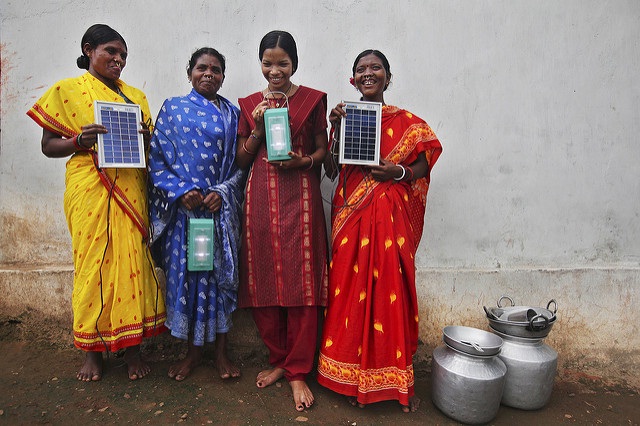
Indian institutions such as The Energy and Resources Institute (TERI) are promoting the use of solar lanterns and clean cooking options in many African countries. Promotion of decentralised solar energy options and improved cook stoves not only provides energy access to the energy poor rural households in Africa but also improves their quality of life.

India is also helping African countries bridge the digital divide. The Pan-Africa e-Network was launched in 2009 with the aim of narrowing the digital divide in Africa and harnessing socio-economic benefits of ICT. Under this project, India has set up a fibre-optic network to provide satellite connectivity, tele-medicine and tele-education to African countries .

The total value of the project is Rs 452 crores . 48 African countries are part of the project and 169 centres have been commissioned and integrated with the network . Moreover, 80 candidates from various Africa countries have participated in training programmes in IT sector in CDAC Noida and CDAC Pune . India’s lines of credit was used to construct the Technology Development and Innovation Centre in Science and Technology Park in Mozambique, Technology Park in Cape Verde and the Mahatma Gandhi IT and Biotechnology Park in Cote d’Ivoire.

This article originally appeared in The Herald.

Standard